In apron sourcing, shrinkage failures usually start as small measurement drift and end as bulk claims. A bib apron approved at 80 cm body length can lose 1.6 to 2.4 cm after the first wash if the cotton fabric is not properly controlled. That movement is enough to lift the hem, shift a chest logo, shorten tie balance and make patch pockets look visibly high or uneven. On a 5,000-piece order, even a 2% to 3% miss can turn a clean pre-shipment result into post-delivery complaints once the aprons are laundered in service.
For professional buyers, preshrunk apron fabric needs a numeric definition. Terms such as washed, prewashed and soft finish do not say whether the fabric will hold dimensions after dyeing, cutting, sewing, printing, embroidery and packing. Aprons are visually simple, so distortion is easy to spot: a crooked lower pocket, slanted towel loop, short tie set or off-center logo is harder to hide on an apron than on many other uniform items.
The practical sourcing choices for woven aprons are sanforized cotton twill, compacted lighter-weight cotton fabrics, and tenter-finished constructions used to control width and skew. Each route changes fabric MOQ, usable width consistency, post-wash stability and final piece cost. The right finish depends on apron category, target hand feel, decoration load, laundering method and how tightly the buyer needs washed measurements to match the approved spec.
- Specify preshrunk apron fabric by residual shrinkage result, wash method, usable width and tolerance, not by finish name alone.
- For most bib, waist and cross-back aprons, sanforized cotton twill at 240-320 GSM or 7.1-9.4 oz/yd2 is the most dependable sourcing base.
- Compacted fabric is mainly suitable for softer, lighter apron programs around 180-220 GSM; it is rarely the best route for heavy-duty workwear twill.
- Tenter finishing improves width, skew and cutting efficiency, but it does not by itself guarantee low shrinkage after washing.
- A realistic target for standard professional aprons is 3% warp x 3% weft max after one agreed wash; higher-control hospitality programs often require 2% x 2% max.
- Improved shrink control typically adds $0.08-$0.22 per pc on medium-weight cotton aprons, which is usually lower than the cost of rework, debit notes or reorder fabric.
Why preshrunk apron fabric matters before bulk cutting
Aprons show dimensional change faster than more complex garments because their main panels, pockets, ties and logo areas sit in open view. A 3% length loss on a 75 cm bib apron removes 2.25 cm of front coverage. A 3% width loss on a 70 cm waist apron removes 2.1 cm from the top edge, which can pull tie attachment points inward and change how the apron hangs on staff across a restaurant or hotel line.
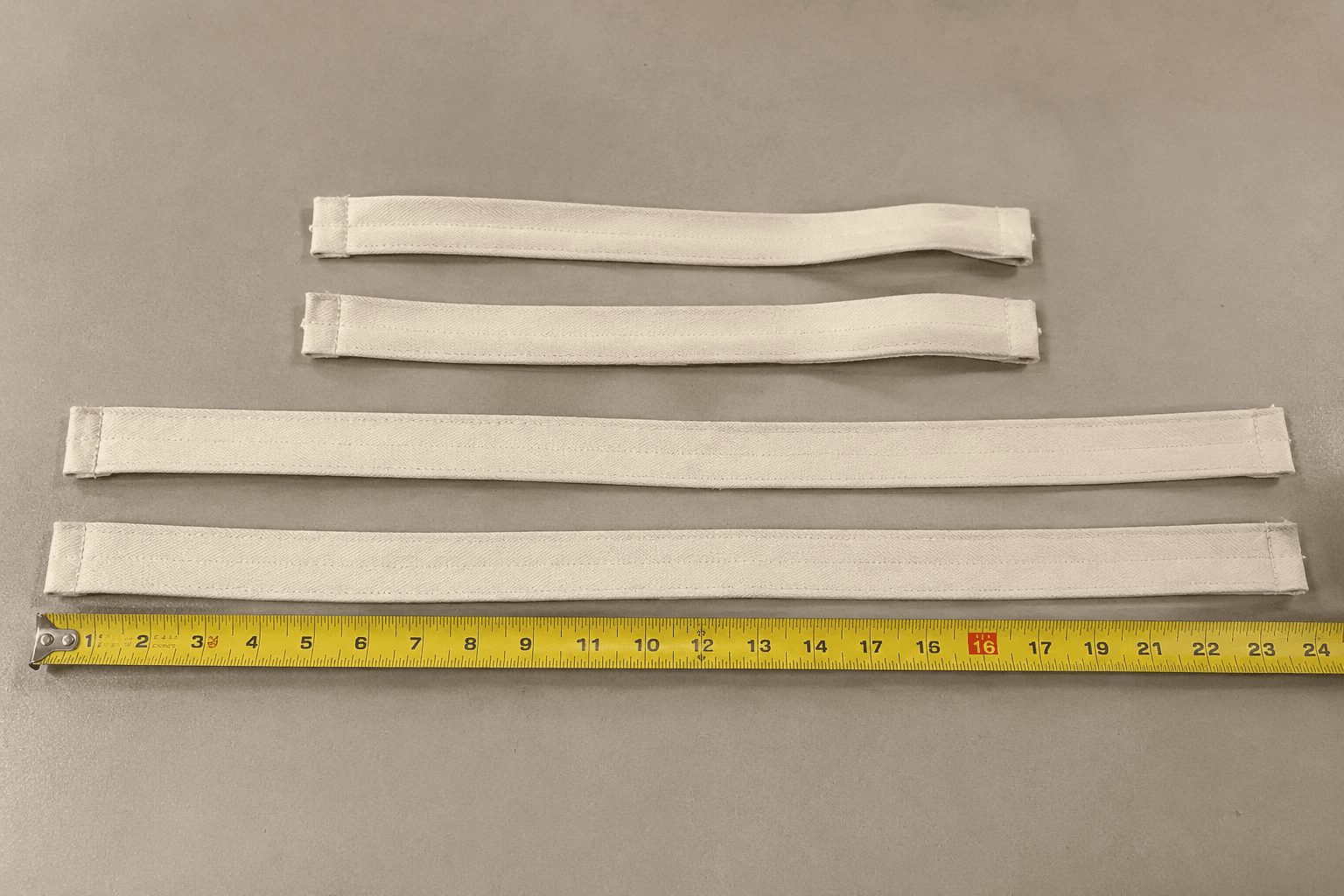
The risk is higher when the apron includes visible reference points. Chest embroidery placed 8 to 10 cm below the neckline, a large lower patch pocket, contrast webbing straps, towel loops and bar-tacked utility divisions all depend on stable panel dimensions. Once post-wash movement passes about 1.5 cm on the body or pocket area, buyers begin to see pocket drift, logo height inconsistency and mismatch between approval sample and in-use appearance.
This is mainly a cost issue. On a 270 GSM cotton twill bib apron, moving from a basic dyed finish to a controlled preshrunk apron fabric program usually adds around $0.08 to $0.22 per piece at 3,000 to 10,000 units. That is normally less than one extra PPS round, one delayed shipment window or one customer claim tied to washed measurement failure.
- Standard woven apron target: 3% warp x 3% weft max after one agreed wash cycle.
- Higher-control chain hospitality target: 2% x 2% max where logo and pocket placement are tightly controlled.
- Typical cost uplift for shrink control: $0.08-$0.22 per pc on 8.0-9.5 oz cotton apron programs.
Sanforized preshrunk apron fabric for 240-320 GSM twill programs
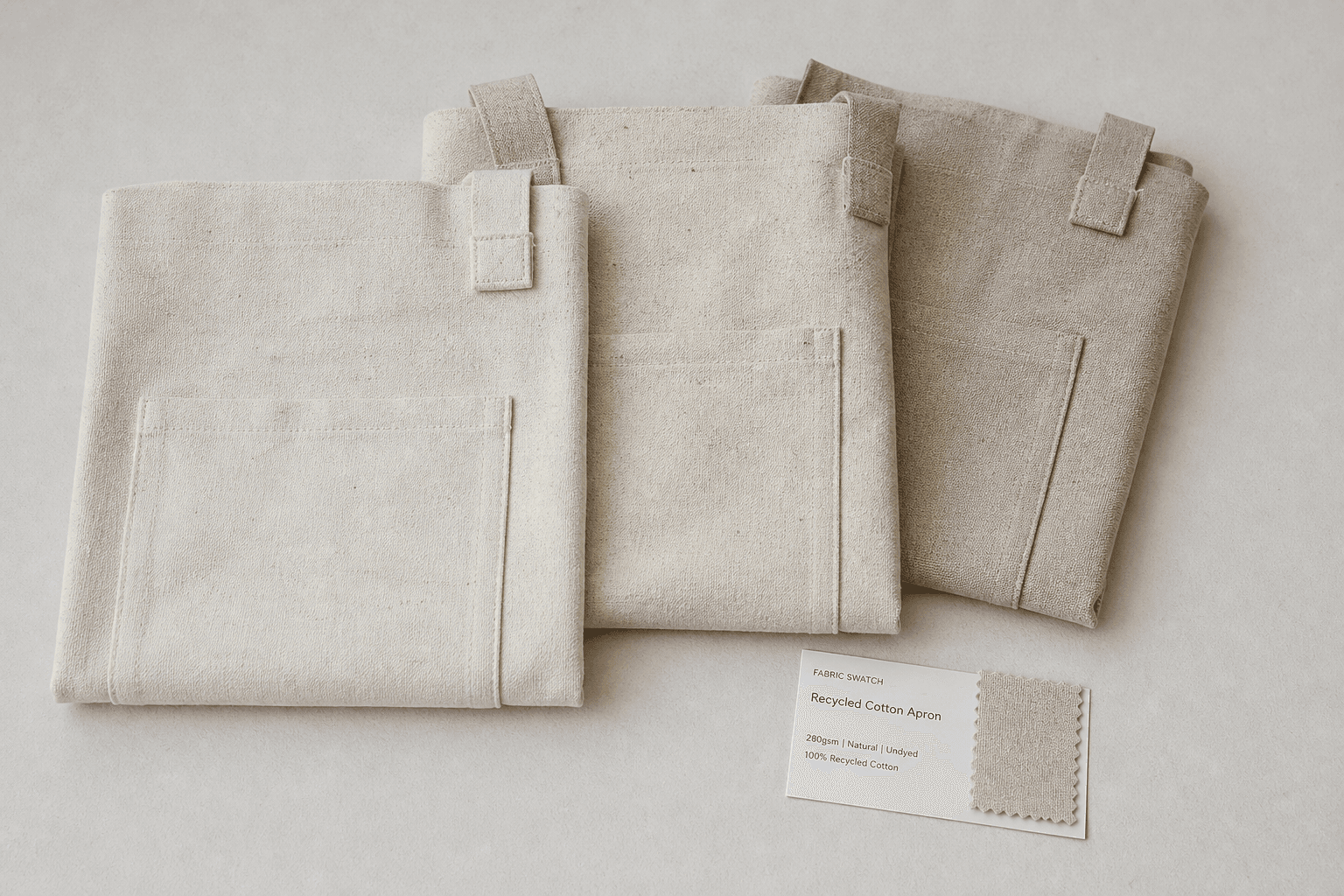
For most OEM apron orders, sanforization is the most commercially reliable option. It is a compressive shrinkage process used mainly on woven cotton and cotton-rich fabrics after dyeing and drying. In apron production, it is standard on 240-320 GSM cotton twill, drill and light canvas used for chef aprons, bakery bib aprons, barista aprons, butcher aprons and heavy waist aprons. This weight range gives enough body for repeated use while remaining workable for embroidery, screen printing and adjustable strap construction.
Under normal mill control, a 100% cotton 2/1 or 3/1 twill at 245-310 GSM can usually achieve residual shrinkage of about 2.0% to 3.0% in warp and 2.0% to 3.0% in weft after one agreed wash test. For many buyers, that is the most practical range for stable hemming, repeatable pocket setting and consistent chest-logo placement. If a softer hand is required, mills may add enzyme softening after sanforization, but the buyer should confirm the result with a washed sample because softening can change final movement.
Sanforized twill also fits mainstream China apron sourcing better than most alternatives. Custom-dyed fabric MOQs are commonly 1,500 to 3,000 meters per color, with mill lead time around 18 to 28 days after lab dip approval. Cut-make-trim then usually adds 20 to 35 days depending on hardware, leather trims, prints, embroidery and folding method. Buyers should treat any change in usable width, yarn count or post-sew wash as a new stability risk, because old shrink data does not automatically transfer to a different construction.
- Common apron weight band: 240-320 GSM, about 7.1-9.4 oz/yd2.
- Typical custom fabric MOQ: 1,500-3,000 meters per color.
- Usual total timing from fabric approval to shipment: 38-63 days for custom apron orders.
- Typical residual shrinkage benchmark: 2.0%-3.0% warp and 2.0%-3.0% weft after one agreed wash.
Compacted apron fabric for 180-220 GSM light-service aprons
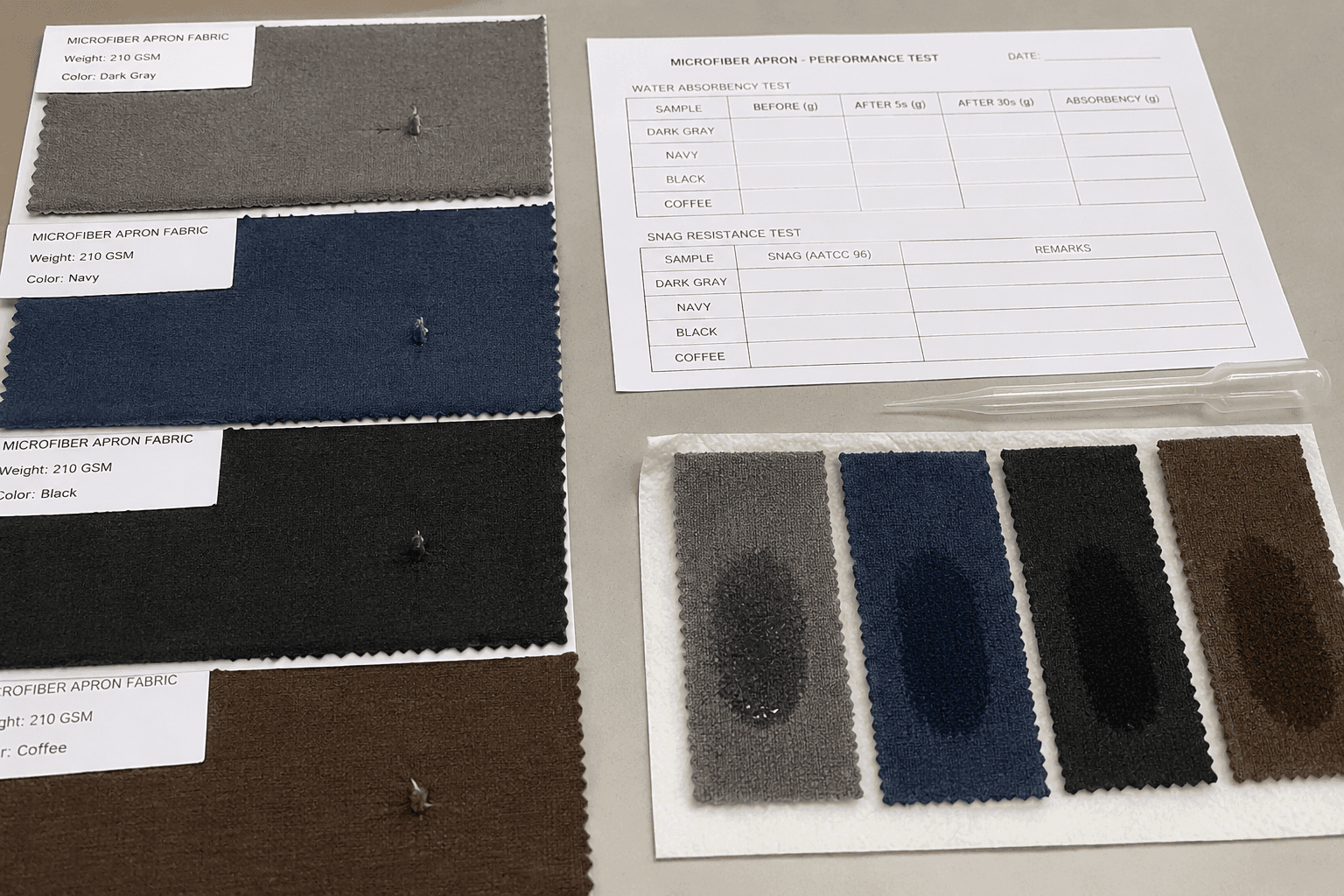
Compacting is useful in apron sourcing, but its role is narrower than many sellers suggest. In practice, compacted fabric suits lighter cotton constructions and softer service aprons better than heavy utility twill. It can reduce some post-wash movement and improve hand feel, but it is not automatically the best preshrunk apron fabric choice for every apron program. Performance still depends on the base weave, yarn quality, dyeing control and the wash method used for approval.
A realistic application is a 180-220 GSM plain weave or light twill apron for cafe merchandise, retail, front-of-house service or lifestyle food concepts where softness and drape matter more than industrial durability. In this range, a well-finished compacted fabric may deliver residual shrinkage around 2.5% to 3.5% after one wash. That can be acceptable for simple waist aprons or light bib aprons with small logos and low pocket load. Once the program moves into 280-340 GSM utility cotton with reinforced pockets and bartacks, sanforization is usually the safer route.
Because the term compacted is often used loosely, buyers should ask for finished numbers instead of relying on the label. The mill should confirm actual GSM after finishing, usable width, residual shrinkage, skew or bow result and colorfastness where relevant. If the final apron will be printed, embroidered or washed after sewing, a washed PPS remains necessary because added layers and heat can still distort the garment.
- Best-fit apron weight range: 180-220 GSM, about 5.3-6.5 oz/yd2.
- Typical added cost versus a basic soft finish: $0.05-$0.15 per pc on light aprons.
- Realistic residual shrinkage for many compacted cotton aprons: 2.5%-3.5% after one agreed wash.
- Best suited to light bib aprons, waist aprons and retail-service aprons, not heavy utility twill.
Tenter-finished preshrunk apron fabric for width control and straighter cutting
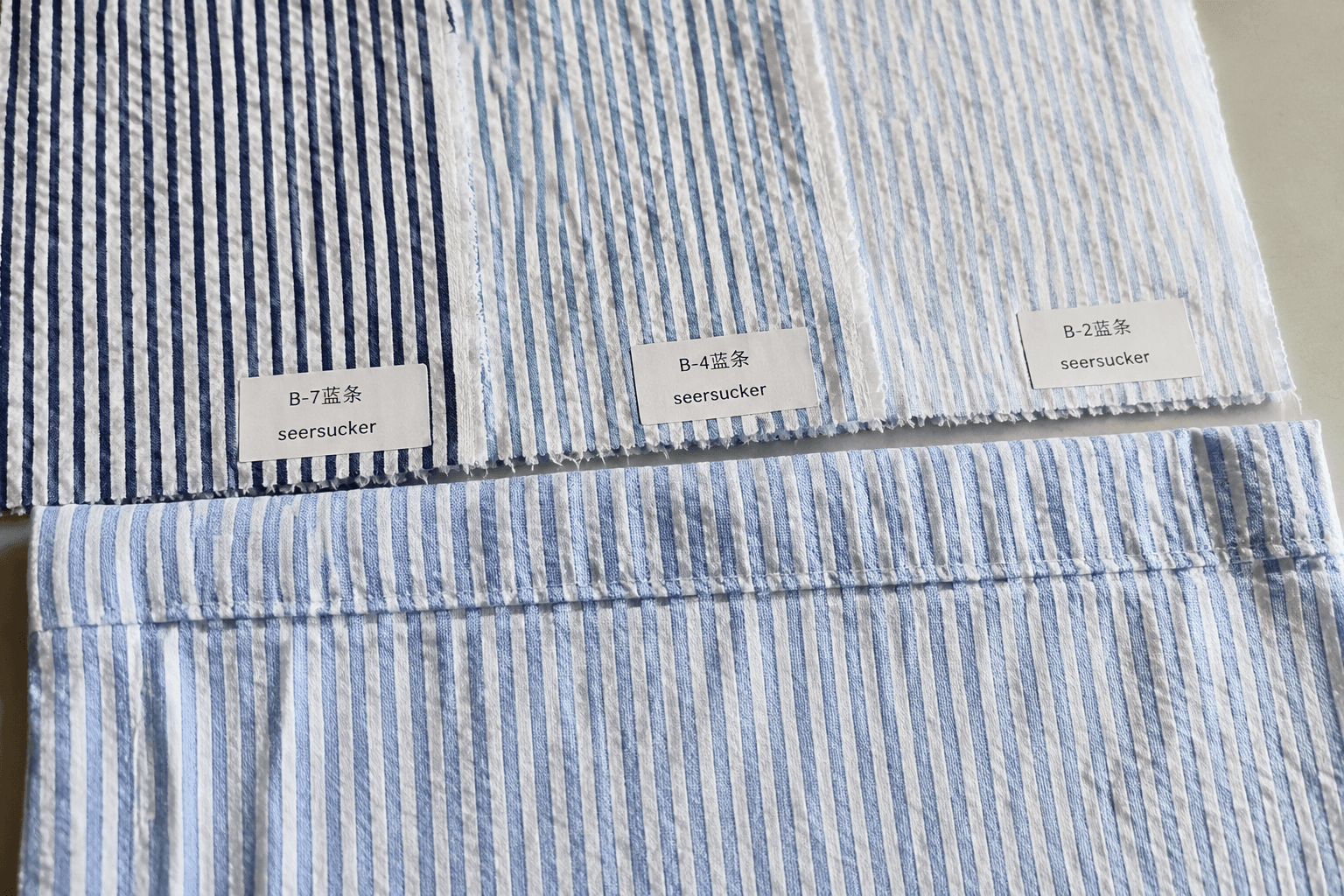
Tenter finishing matters in apron manufacturing because usable width, grain alignment and skew directly affect both cutting yield and finished appearance. The tenter frame sets width during drying and helps control skew and bow. This is especially important for long waist ties, rectangular bib panels, striped layouts, checked fabrics and patch pockets that must sit square on the body panel. On yarn-dyed stripes or herringbone twills, weak skew control is visible immediately after sewing and can make the apron fail visual inspection even when shrinkage is technically within target.
The impact is not only cosmetic. Width variation changes marker efficiency and fabric consumption. If the costing assumes a usable width of 58/59 inches but part of the lot arrives at 56.5 inches, the marker can lose yield and fabric usage rises. On a 5,000-piece apron order, that difference can consume several hundred extra meters, especially for wide-body bib aprons with large pockets and long tie sets. Better tenter control reduces that risk and gives the sewing line straighter panels, better tie pairing and fewer balance issues at final inspection.
The limit is straightforward: tentering does not replace compressive shrinkage control. A woven apron fabric can be properly tenter-finished and still fail a 3% x 3% post-wash target. For buyers, tentering should support the overall preshrunk apron fabric specification, particularly where width consistency and stripe alignment matter, but it should not be accepted as the only shrinkage control step.
- Practical width target: usable width within +/-1 inch across the bulk lot.
- Useful for striped, checked, yarn-dyed and herringbone apron fabrics.
- Typical visible defects from poor skew: twisted bib panels, slanted pockets, uneven tie hang and off-square hems.
How to write apron shrinkage, AQL and test standards into the PO
Many apron disputes begin with weak purchase specifications. A PO that says only preshrunk or prewashed leaves room for different assumptions between mill, factory and buyer. A usable apron fabric specification should state composition, weave, yarn count where relevant, target GSM with tolerance, usable width, finish route, residual shrinkage target, test method, skew limit and whether approved garment measurements are based on before-wash or after-wash condition.
A workable line item for a medium-weight bib apron could read: 100% cotton 2/1 twill, 270 GSM +/-5%, usable width 58/59 inch, reactive dyed black, sanforized and tenter-finished, residual shrinkage max 3% warp and 3% weft after one home-laundry cycle at agreed method, skew max 3%, approved garment measurement based on post-wash condition. That level of wording is not excessive. It is the minimum needed to prevent later argument over whether the supplier was selling softness, visual appearance or actual dimensional stability.
Inspection language should be equally specific. For many OEM apron programs, AQL 2.5 major and AQL 4.0 minor is a practical finished-garment standard. Premium hotel, restaurant chain and licensed brand programs often tighten that to AQL 1.5 major and AQL 2.5 minor, especially when pocket symmetry, logo placement and washed measurements are contract-sensitive. If shrinkage risk is high, pilot cutting should use actual bulk fabric instead of relying only on swatches or handloom yardage.
- Minimum PO points: composition, weave, GSM tolerance, usable width, finish route, residual shrinkage, skew limit and wash test method.
- Common pre-shipment standard: AQL 2.5 major / 4.0 minor.
- Higher-control uniform programs: AQL 1.5 major / 2.5 minor plus post-wash measurement approval.
- Useful tolerance reference for finished apron measurements: +/-1.0 cm on key points after agreed wash, unless the program specifies otherwise.
Sampling plan, wash checkpoints and lead-time math for stable apron production
The safest way to control apron shrinkage is to test in stages instead of waiting for final inspection. The first checkpoint is finished bulk fabric, where width, GSM, shade, skew and residual shrinkage are verified before cutting. The second is a pre-production sample made from actual bulk fabric and washed if the end use includes laundering. The third is an inline or mid-bulk recheck, especially when the order covers multiple dye lots, more than one finishing date or several cutting batches. On orders above 10,000 pieces, this sequence is usually more effective than relying on a single final random inspection.
These checkpoints matter because fabric lab results do not capture every garment interaction. A fabric can pass on the roll but still move once the apron includes embroidery backing, heavy bartacks, contrast tape, top-applied pockets, heat-cured print or a post-sew enzyme wash. A washed PPS reveals those interactions early enough for the factory to adjust pattern allowance, pocket position or tie length before the full line is loaded. This is especially important on cross-back and bib aprons where a 1.0 to 1.5 cm shift in body length or strap balance becomes visible when worn.
Lead-time planning should reflect this control sequence honestly. For a custom-color apron using new fabric approval, mills typically need 20 to 30 days for dyeing, finishing and shrink verification before cutting starts. CMT, inline control, final inspection and export packing usually add 20 to 35 days. A realistic total for a new apron program is therefore 40 to 60 days ex-factory. More complex orders with embroidery, screen print, mixed trims or repeated wash approvals often need 55 to 70 days. Faster promises are possible, but in most cases they reduce verification time rather than production risk.
- Recommended checkpoints: bulk fabric test, washed PPS and inline or mid-bulk recheck.
- Typical new-program timing: 20-30 days fabric stage plus 20-35 days CMT, inspection and packing.
- Complex custom apron orders often require 55-70 days ex-factory planning.
- Orders above 10,000 pcs should usually include at least one mid-bulk wash verification on actual production fabric.