For a bulk apron program, carbon reduction is usually decided before the first production stitch. The largest drivers are fabric fiber, fabric weight, cutting efficiency, dyeing method, packaging specification, and logistics mode. A buyer asking for a lower apron carbon footprint should therefore treat sustainability as a sourcing specification, not only as a compliance document.
In our Zhejiang apron factory, we see the same trade-off repeatedly: a lower impact apron must still pass commercial wash, colorfastness, abrasion, shrinkage, metal detection, and buyer inspection. A 7 oz recycled cotton apron that fails after 20 washes is not lower impact than a 9 oz cotton-poly apron that stays in service for two years. The practical target is to reduce carbon per usable wear, not only carbon per piece.
This article explains where emissions typically sit in a custom apron order, how to read an apron lca at a sourcing level, and which specification changes can reduce footprint without creating quality, lead-time, or cost problems.
- Fabric normally contributes the largest share of apron carbon footprint, especially cotton, heavy canvas, denim, and yarn-dyed constructions.
- Weight control matters; moving from 12 oz canvas to 9 oz twill can reduce material input by roughly 20-25% if durability remains acceptable.
- Recycled fibers help most when quality is stable; inconsistent recycled yarn can increase waste, rework, and rejected finished goods.
- Packaging changes are low-risk, but they rarely offset poor fabric selection or air freight.
- Sea freight planning is critical; switching a 5,000 pc order from air to ocean can cut transport emissions sharply but requires 25-35 extra days.
- A sustainable apron program needs measurable rules, including GSM tolerance, wastage target, approved trims, test standards, and shipment mode.
What actually drives apron carbon footprint
When buyers ask about apron carbon footprint, many first focus on the final factory sewing process. Sewing is visible, but it is usually not the main carbon driver. For a standard bib apron, the fabric can account for a large share of the product footprint because fiber production, spinning, weaving, dyeing, finishing, and fabric transportation all happen before the cut panels reach the sewing line. The heavier the fabric and the more complex the finish, the more important this upstream footprint becomes.
A typical 70 x 85 cm bib apron in 240-280 GSM twill may use around 0.55-0.75 meters of fabric depending on width, pocket layout, strap construction, and cutting efficiency. A heavy 10 oz or 12 oz canvas apron with cross-back straps, patch pockets, reinforcement bar tacks, and metal hardware can use more material and more processing time. If the apron includes denim washing, enzyme wash, pigment dye, wax coating, leather patches, or antique metal trims, each addition has a carbon and wastewater implication.
For OEM sourcing, the useful question is not whether an apron is simply eco or non-eco. The useful question is: which specification line creates the most impact, and can it be changed without harming service life? A lower impact apron often comes from several small, controlled adjustments rather than one dramatic material switch.
- Fabric fiber, fabric weight, and dyeing process are usually the first items to review.
- Cutting marker efficiency can influence waste by 3-8 percentage points on pocket-heavy styles.
- Apron trims such as buckles, eyelets, rivets, cord ends, and leather patches add impact and may complicate recycling.
- Packaging and carton design are visible to customers but normally secondary to material and freight choices.
- Air freight can erase many gains achieved through recycled fabric or reduced packaging.
Using apron lca thinking without slowing sourcing
A formal apron lca can be useful for corporate reporting, but most bulk sourcing decisions are made faster than a full life-cycle assessment timeline allows. Buyers still need a practical framework. We recommend separating the apron program into five stages: raw material, fabric processing, garment manufacturing, packaging, logistics, and use phase. This creates a clear checklist for product developers and allows the supplier to quote realistic alternatives.
For example, if a buyer requests a 300 GSM organic cotton canvas apron with yarn-dyed straps, metal adjuster, leather logo patch, individual polybag, and air shipment for a launch date in 18 days, the footprint is driven by several fixed choices. The factory can optimize sewing efficiency and carton fill, but those changes will not transform the result. If the buyer instead allows 260 GSM recycled cotton-poly twill, screen print logo, cotton tape ties, recycled polybag or paper band, and ocean freight, the carbon profile changes much more significantly.
In early development, we suggest asking suppliers to provide comparison quotations for two or three constructions. The comparison should show fabric composition, GSM or oz, estimated consumption, MOQ, dyeing method, lead time, test risk, and unit price. This is more useful than a general sustainability claim because it connects carbon direction to cost, delivery, and quality.
- Ask for fabric consumption per piece in meters or grams, not only a unit price.
- Request GSM tolerance, normally +/-5% for many woven apron fabrics, because overweight fabric increases both cost and footprint.
- Compare lead time by fabric route: stock fabric, lab-dip dyeing, piece dyeing, yarn dyeing, or garment washing.
- Separate product carbon reduction from packaging reduction so the largest driver is not hidden.
- Keep a version record for each apron specification so later reorders do not drift back to heavier or higher-impact materials.
Fabric choices for a sustainable apron program
Fabric selection is the main technical lever in most apron sourcing projects. Cotton is familiar, printable, breathable, and accepted by hospitality and retail buyers, but virgin cotton has a high agricultural footprint. Polyester is lower moisture absorbent and can be durable, but virgin polyester is fossil-based. Cotton-poly blends are often practical for commercial aprons because they improve wash durability, reduce shrinkage, and can extend product life. Recycled polyester and recycled cotton can reduce virgin material demand, but they must be specified carefully.
A common restaurant apron program might use 65/35 poly-cotton twill at 195-240 GSM for waist aprons and 240-280 GSM for bib aprons. For heavier workwear or barista aprons, buyers may choose 280-340 GSM canvas or denim. If the original design uses 360 GSM canvas only for a premium hand feel, we often test a 300 GSM canvas with reinforced stress points. This can reduce fabric input by around 15-17% while keeping a similar appearance. The final decision should be based on wash testing, seam slippage, tear strength, and customer usage, not hand feel alone.
Recycled cotton needs special attention because fiber length is shorter after mechanical recycling. A 100% recycled cotton apron may have lower strength and more shade variation, especially in dark colors. Many stable commercial constructions use 20-50% recycled cotton blended with virgin cotton or polyester. Recycled polyester, often from bottle flakes, is more consistent, but buyers should confirm certificate scope and batch traceability. For eco apron sourcing, the most workable option is frequently a certified recycled poly-cotton blend with moderate GSM and conventional finishing, rather than a fragile headline material.
- 195-220 GSM twill is suitable for many light waist aprons, promotional aprons, and short-service programs.
- 240-280 GSM twill or canvas is a balanced range for restaurant bib aprons and retail staff aprons.
- 300-340 GSM canvas or denim fits heavier barista, workshop, and premium hospitality use, but increases material footprint.
- 20-50% recycled cotton blends are often more stable than 100% recycled cotton for repeated wash programs.
- Recycled polyester blends can improve durability and reduce shrinkage, especially for commercial laundry requirements.
Lowering apron carbon footprint through design engineering
Design engineering is often overlooked because it feels less visible than fabric selection. In apron production, however, pattern layout, pocket size, strap design, and hardware choice can change both waste and labor time. A bib apron with a large kangaroo pocket, pen pocket, towel loop, cross-back straps, and four metal rivets has a different footprint from a simple bib apron with two patch pockets and self-fabric neck tie. The difference is not only material; it also affects cutting, fusing, sewing minutes, inspection time, and defect risk.
Pattern efficiency depends on fabric width and panel geometry. Many apron fabrics are 57/58 inches or 150 cm usable width. If a buyer supplies a panel size that fits poorly into the marker, wastage can rise from a normal 8-12% to 15-18%. For a 10,000 pc order using 280 GSM fabric, a few percentage points of waste can represent hundreds of kilograms of additional fabric. That is a real cost and carbon issue.
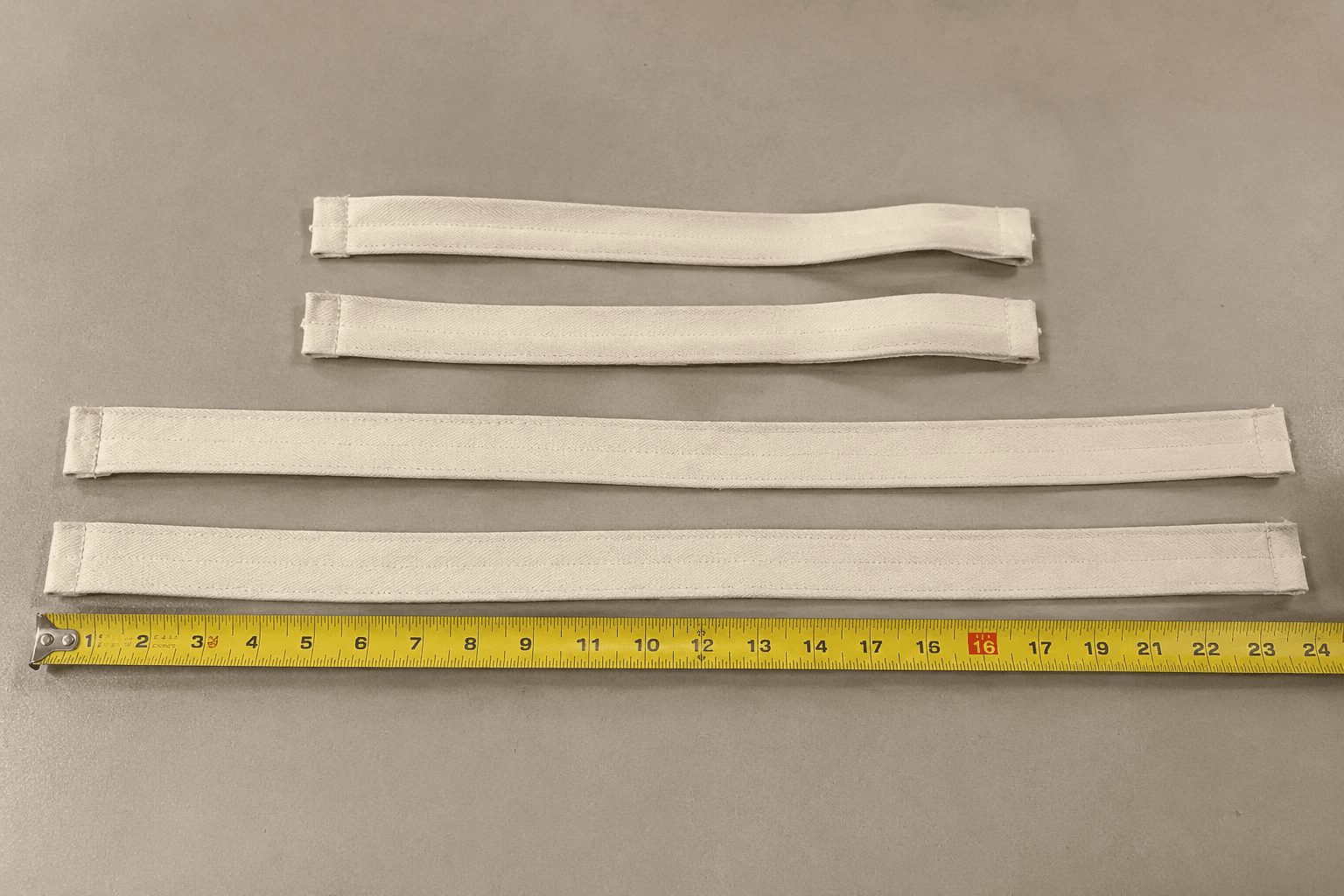
Small construction changes can be effective. Replacing metal eyelets with stitched buttonholes may reduce metal content and simplify needle detection, although buttonholes must be tested for fraying. Changing a cross-back strap system from detachable metal hooks to sewn cotton tape can reduce trims, but may reduce adjustability. Reducing pocket layers in non-critical areas saves fabric, but not if it weakens the product and causes early replacement. The factory should review these choices with a sample room and production team, not only with a sales person.
- Keep apron panel shapes marker-friendly and confirm fabric width before finalizing pattern measurements.
- Use reinforcement only at real stress points such as pocket corners, tie attachment, and neck strap points.
- Avoid decorative rivets, imitation leather patches, and excess metal hardware unless they are part of the brand requirement.
- Specify pocket depth by function; oversized pockets can increase fabric consumption without improving user experience.
- Approve a production marker efficiency target before bulk cutting for high-volume programs.
Dyeing, printing, and finishing decisions
Color and finish can change the environmental profile of an apron as much as the fabric composition. Dark reactive dye cotton, sulfur black denim, garment pigment wash, stone wash, enzyme wash, water-repellent finish, and wax finish all have different energy, chemical, and wastewater considerations. A low impact apron should not rely on vague color naming. It should specify dye route, colorfastness target, and whether washing is decorative or functional.
For solid-color programs, piece-dyed fabric is often more efficient than garment dyeing because it allows fabric inspection before cutting and more stable shade control across panels. Stock fabric can reduce lead time to 7-15 days for simple orders, but color options are limited and repeatability may be weaker. Lab-dip custom dyeing normally adds 5-7 days for approval and 12-18 days for bulk dyeing and finishing, depending on mill capacity and color. Yarn-dyed stripes or checks can create a strong brand look, but MOQs may rise to 1,000-3,000 meters per colorway and lead time may reach 30-45 days.
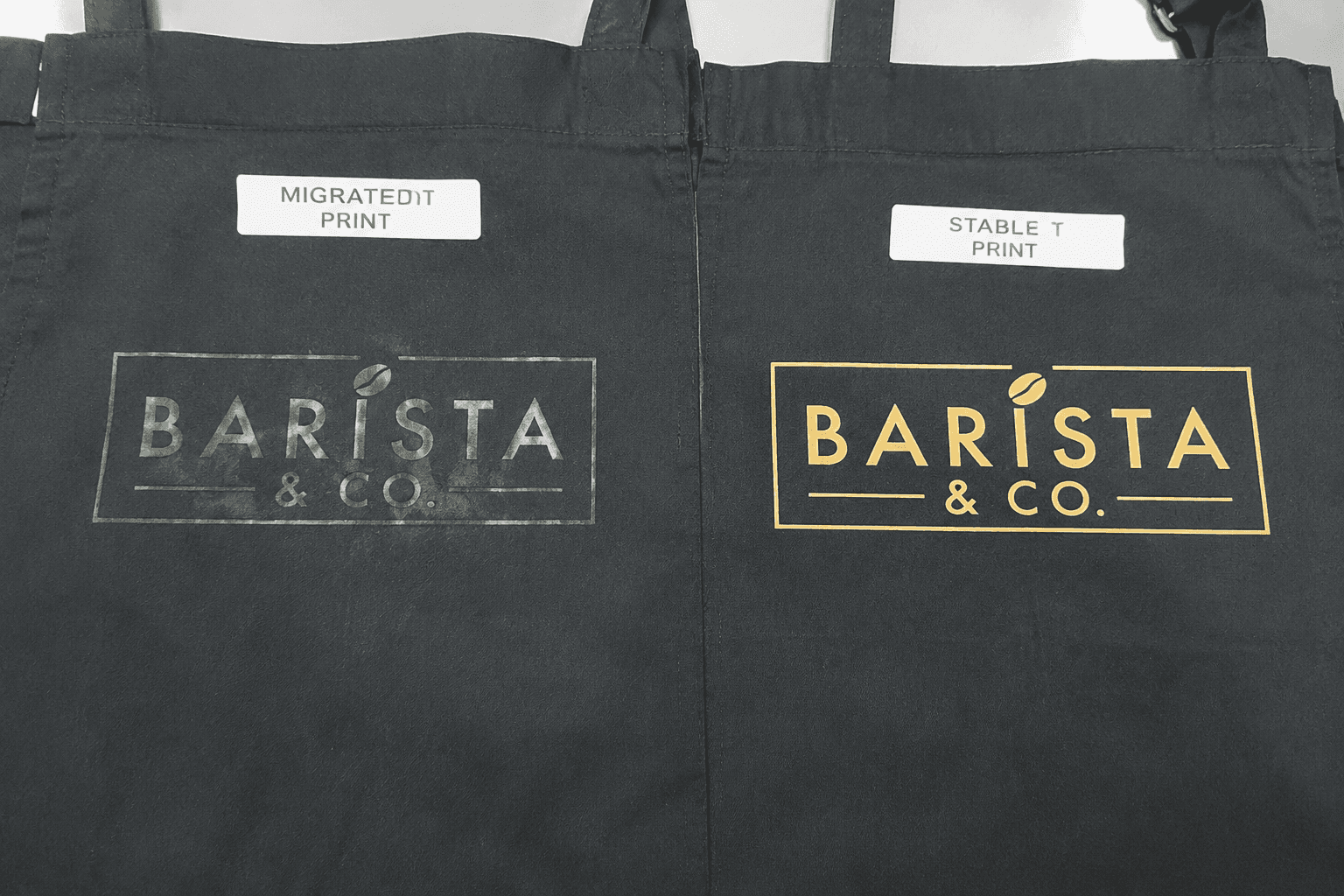
Logo application also matters. Screen printing is efficient for medium to large quantities, especially 1-3 color logos. Embroidery is durable and premium, but thread, backing, machine time, and rejected pieces add impact. Heat transfer can work for detailed logos but may reduce recyclability and can fail under industrial washing if not specified correctly. For a sustainable apron program, decoration should be chosen according to wash requirement, order quantity, and expected service life.
- Use stock color only when shade tolerance and reorder consistency are acceptable.
- Choose custom piece dyeing when brand color control is more important than the lowest lead time.
- Avoid unnecessary garment washing on aprons used mainly for food service or uniform programs.
- Use screen print for simple medium-volume logos and embroidery only where durability or brand positioning justifies it.
- Confirm colorfastness to washing, rubbing, perspiration, and chlorine where commercial laundry is involved.
Packaging and logistics in eco apron sourcing
Packaging is the part of sustainability that end customers notice first, but it is rarely the largest part of apron carbon footprint. Still, it is worth improving because changes are usually low-risk and easy to verify. Standard export packing for aprons may use one individual polybag per piece, 50-100 pieces per carton, inner cartons for retail sets, and silica gel if moisture risk is high. For B2B uniform programs, individual polybags are often unnecessary unless size sorting, barcode scanning, or warehouse handling requires them.
A practical packaging reduction plan may use bulk packing by size and color, recycled LDPE bags at 25-40 microns, FSC paper belly bands, or no individual bag for internal distribution. Carton strength must not be reduced too far. A weak carton that collapses during ocean freight creates dirty goods, rework, repacking, and claims. For a 5,000 pc apron order, optimizing carton dimensions to improve container or pallet loading can save more transport space than changing a hangtag material.
Logistics is the larger decision. Air freight is sometimes required for urgent launches, but it should be treated as an exception. A normal Zhejiang factory timeline for custom apron production may be 7 days for sample, 5-7 days for lab dip, 20-30 days for bulk production after approvals, and 25-35 days ocean transit to many European or North American ports. If the buyer confirms artwork, fabric, and packaging early, ocean shipment becomes feasible. Late approvals are one of the hidden causes of higher emissions.
- Replace individual polybags with bulk packing when the receiving warehouse can handle it.
- Use recycled polybags only with clear thickness and strength requirements to avoid tearing in cartons.
- Consolidate apron orders by color or fabric base to improve mill efficiency and carton loading.
- Plan approvals 10-14 days earlier if the goal is to avoid air freight.
- Use air freight only for launch shortage quantities and ship the balance by sea where possible.
Cost, MOQ, and lead-time trade-offs
Lower carbon sourcing is not always more expensive, but it is rarely free. Some changes reduce cost, such as lowering GSM, removing unnecessary hardware, improving marker efficiency, or reducing packaging. Other changes add cost, especially certified recycled fibers, organic cotton, small-batch custom dyeing, and special testing. Buyers should evaluate the complete landed cost and product life instead of only FOB price.
For reference, a simple 240 GSM poly-cotton bib apron in China may quote in the range of about $1.60-$2.40 per piece FOB for a basic bulk order, depending on size, pockets, trims, logo, and quantity. A 280-320 GSM recycled cotton blend apron with custom dye, reinforced pockets, and branded packaging may be closer to $3.20-$5.80 per piece. Heavy denim or canvas aprons with cross-back straps, metal hardware, washing, and embroidery can move higher. These are indicative ranges only; fabric price, exchange rate, dye lot size, and inspection level can change them quickly.
MOQ is another practical issue. Stock fabric programs can sometimes start from 300-500 pieces per color if the fabric is available. Custom dyed fabric often requires 800-1,500 pieces per color to absorb dyeing and setup costs. Yarn-dyed or special recycled fabric may require fabric MOQ rather than garment MOQ, commonly 1,000-3,000 meters. A sustainable apron program with too many colors and small quantities can become inefficient at the mill and factory level. Consolidating colors, using shared fabric bases, and planning repeat orders will usually reduce both cost and impact.
- Expect stock fabric apron lead times of roughly 15-25 days after sample approval for simple styles.
- Allow 30-45 days for custom dyed or certified recycled fabric programs after lab dip approval.
- Budget 5-10% higher fabric cost for many recycled polyester blends, depending on certificate and market price.
- Budget 10-30% higher material cost for organic cotton or specialty recycled cotton blends in small batches.
- Keep color counts low when order quantity is below 1,000 pieces per color.
How to manage claims for a lower apron carbon footprint
Carbon and sustainability claims need disciplined documentation. A buyer may want to say recycled, organic, low impact, carbon reduced, or responsibly sourced. Each claim has a different evidence requirement. From the supplier side, we recommend keeping product claims narrow and factual: recycled polyester content, organic cotton certificate scope, reduced packaging, ocean freight, or lower fabric weight compared with the previous specification. Broad claims are harder to defend and can create compliance risk in the buyer's market.
For apron lca reporting, the supplier can support with bill of materials, fabric weight, fabric composition, trim details, packaging weight, carton size, production location, and shipment mode. Some mills can provide energy and water data, but availability varies. If a full third-party LCA is required, it should be planned at the development stage because data collection after shipment is slow and often incomplete.
The most effective approach is to build a controlled sourcing file for each apron program. It should include the approved sample, fabric test report, certificate copies where applicable, final tech pack, carton packing method, and change history. On repeat orders, the factory and buyer can compare actual fabric consumption, defect rate, carton quantity, and shipment method against the previous run. That makes apron carbon footprint improvement measurable, not decorative.
- Use specific claims such as made with 50% recycled polyester rather than broad unsupported wording.
- Keep certificate transaction documents aligned with order quantity, fabric supplier, and production batch.
- Record fabric GSM, garment weight, packaging weight, and carton dimensions for every bulk order.
- Compare carbon-related metrics per piece and per usable wear, especially for commercial laundry aprons.
- Review rejected goods and rework rates because waste reduction is part of carbon reduction.