For professional apron sourcing, chemical compliance is no longer a last-minute document request. A cotton canvas bib apron, a polyester waist apron and a PU-coated dishwasher apron can carry different risk points because the fabric, dyeing route, coating, printing ink, metal hardware and packaging all have separate chemical profiles. When buyers ask for apron reach prop 65 support, a factory must translate legal requirements into real production controls: approved materials, restricted chemical lists, test scope, sampling stage and document traceability.
From our Zhejiang apron production experience, the main problem is not that compliant aprons are difficult to make. The main problem is that compliance is often specified too late, after fabric has been booked or trims have been purchased. If a buyer needs EU REACH compliance, California Prop 65 warning risk control, LFGB food-contact positioning, or a brand-specific RSL, those requirements should be confirmed before quotation. They affect fabric source, dyehouse choice, print method, hardware selection, testing cost and delivery calendar.
This article explains how to manage apron reach compliance and Prop 65 risk in bulk apron orders from China. It is written for sourcing managers and product developers who need practical answers: what to test, when to test, what an apron testing report should contain, how much time and cost to allow, and where factories and buyers must share responsibility.
- REACH and Prop 65 are different systems, so one apron testing report may not cover both unless the test plan is built correctly.
- Apron risk points usually come from dyes, coatings, prints, metal trims, PVC parts and packaging, not only from the base fabric.
- Testing should be planned before bulk fabric booking because a failed test after cutting can delay shipment by 10-25 days.
- A realistic compliance budget is usually USD 180-650 per style/color group, depending on lab, market and material complexity.
- Low-cost apron sourcing can still be compliant, but only if the buyer avoids high-risk materials and confirms the RSL at quotation stage.
- Document traceability matters; buyers should request reports tied to material composition, color, supplier lot and production date.
What apron reach prop 65 compliance means in real sourcing
REACH is an EU chemical regulation that restricts or controls substances of very high concern, azo dyes, heavy metals, phthalates and other chemicals that may be present in textile products. Prop 65 is a California law requiring warnings for exposure to listed chemicals that can cause cancer or reproductive harm. For apron importers, the two systems overlap in some areas, but they are not the same. A fabric that passes a common EU azo and formaldehyde test may still need Prop 65 review for lead, cadmium, phthalates or BPA depending on trims, coating and packaging.
In apron sourcing, compliance should be treated as a product engineering item, not a certificate collected at the end. A plain 10 oz cotton canvas apron with reactive dye and no metal parts is usually lower risk than a black PU-coated apron with screen print, brass rivets and PVC label patch. The first style may need standard textile chemical compliance checks; the second may require additional heavy metal, phthalate and coating-related testing. If the buyer sells to both EU and California, the testing plan should be built to cover both markets from the first sample stage.
A supplier can support apron reach compliance by using nominated dyehouses, compliant trims and updated restricted substance controls. However, the importer remains responsible for market placement and legal interpretation. The factory can provide production records, material declarations, third-party apron testing report documents and corrective action if a component fails. The buyer should confirm target market, applicable brand RSL, required test standard and whether Prop 65 warning strategy is managed by legal counsel.
- REACH mainly controls restricted substances in products entering the EU market.
- Prop 65 focuses on exposure warnings for products sold in California.
- A single apron may need different test items for fabric, print, coating, metal trims and plastic parts.
- The safest timing is to confirm compliance requirements before lab dip, strike-off and bulk fabric booking.
Where chemical risk appears in custom aprons
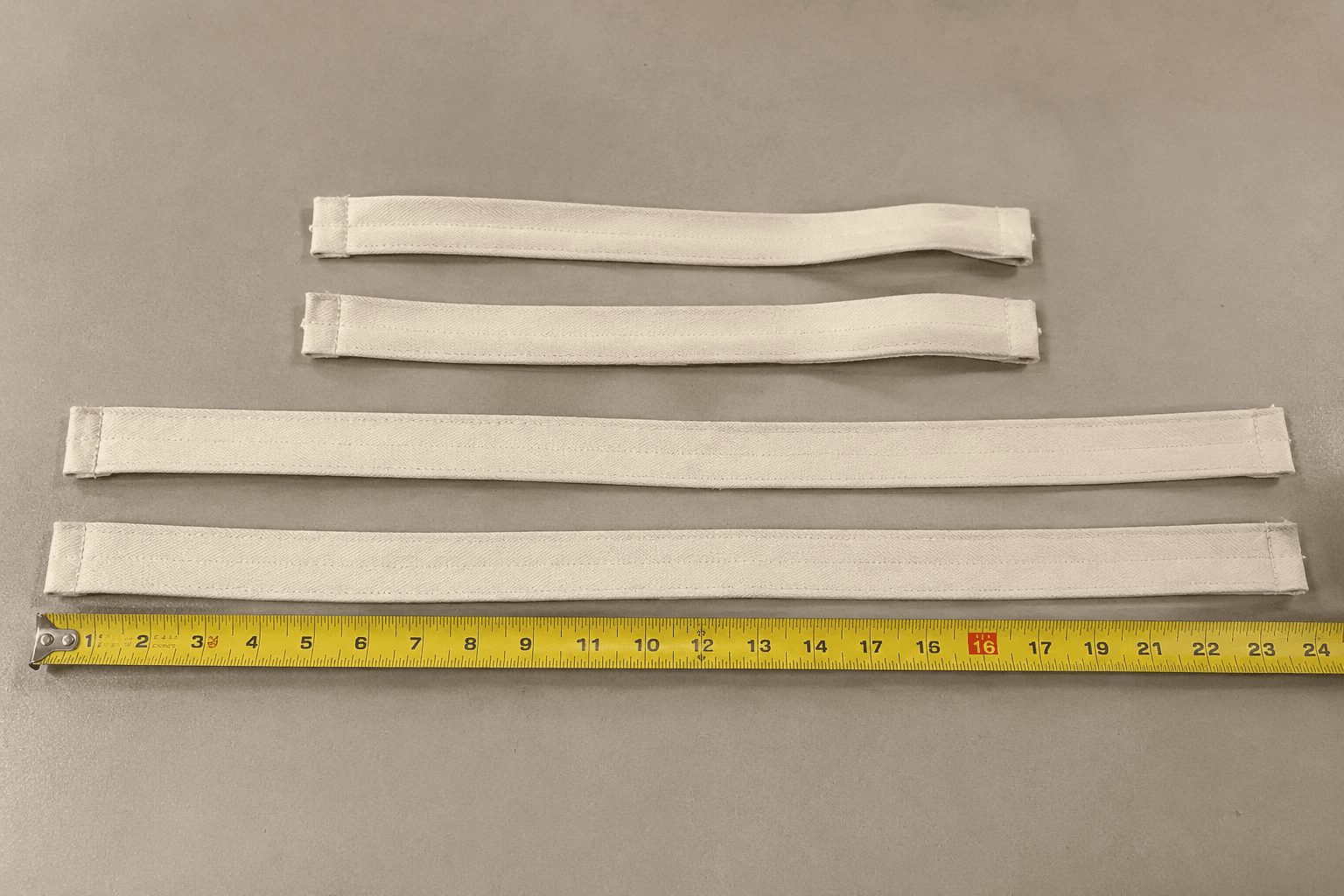
Aprons look simple, but a finished apron can include 8-15 separate material inputs. A basic bib apron may include shell fabric, neck strap, waist ties, sewing thread, care label, brand label, metal eyelets, buckles, rivets, pocket reinforcement, embroidery thread, printing ink, polybag and carton ink. Every component is a possible compliance variable. When a buyer changes only the trim color or label material, the previous report may no longer be fully representative.
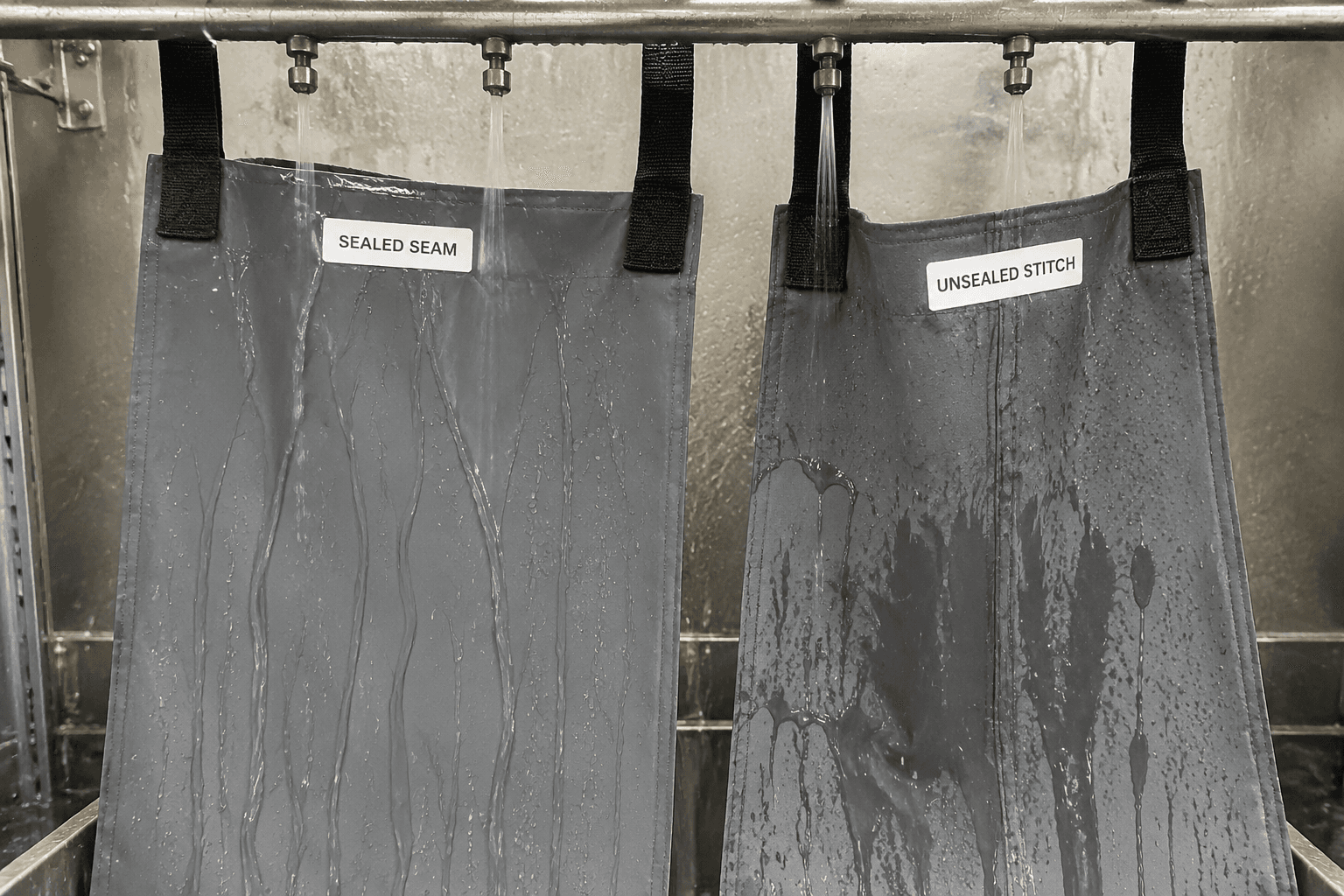
Fabric is the largest component, so buyers usually focus there first. For cotton twill, canvas and denim aprons, common checkpoints include banned azo dyes, formaldehyde, extractable heavy metals, pH value, color fastness and sometimes pesticide residues for organic claims. For polyester or poly-cotton aprons, disperse dyes may bring different risks. For coated aprons used in dishwashing, cleaning or industrial environments, the coating chemistry is important. PVC coatings can trigger phthalate concern; PU coatings are usually preferred for lower phthalate risk, but they still need verification.
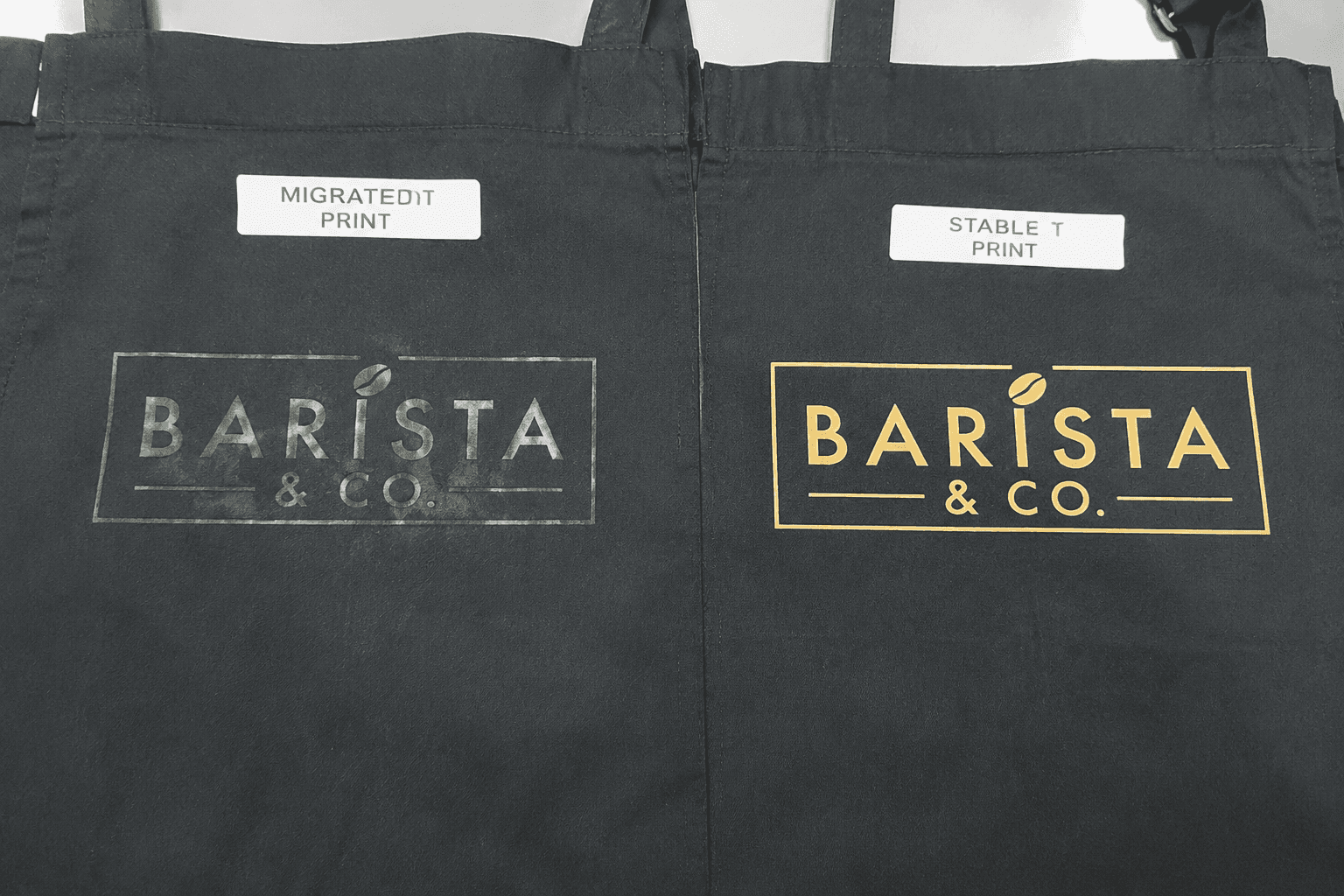
Branding methods also matter. Embroidery is generally lower chemical risk than large-area screen print, but embroidery thread must still match color fastness and restricted substance expectations. Plastisol print, silicone print, heat-transfer film and reflective tape all add chemical variables. A buyer asking for a low MOQ promotional apron at USD 1.20-1.80 per piece may be tempted to accept stock fabric and stock transfer prints, but stock components are harder to trace. For regulated markets, custom-dyed or controlled-source components are usually safer than unknown surplus materials.
- Base fabrics include cotton canvas, cotton twill, denim, polyester, TC blend, nonwoven PP, PU-coated and PVC-coated materials.
- High-attention trims include metal rivets, eyelets, buckles, snaps, zipper pullers, faux leather patches and PVC labels.
- Print and decoration risks include plastisol ink, heat-transfer film, reflective tape, rubber badges and coated woven labels.
- Packaging should not be ignored because printed polybags, stickers and hangtags may be included in retailer compliance reviews.
REACH controls buyers should specify for aprons
For apron reach compliance, buyers should avoid vague wording such as “must be eco-friendly” or “must pass Europe standard.” A workable purchase specification should state the target regulation, test version if known, product category, material composition and whether all colors or selected colors need testing. For example: “Adult cotton canvas apron, EU market, test according to current REACH restricted substances requirements and SVHC screening as applicable to textile articles.” That is much clearer than a general compliance sentence on a PO.
In practice, many apron orders use a risk-based testing plan. For a repeat cotton apron style made from the same approved fabric mill, the buyer may test one dark color and one light color per season, then maintain supplier declarations for other colors. For a new coated apron, new black dye, new metal trim or new print technique, broader testing is more sensible. Dark navy, black, red and fluorescent colors often receive more attention because dye chemistry and color fastness can be more challenging than natural, white or beige.
SVHC screening is another area that needs clear expectation. A full SVHC screening list can be more expensive and may not be necessary for every low-risk textile order, but some European retailers require it. A normal lab package for textile REACH testing may cost around USD 220-450 per material/color set in China, while broader SVHC screening or multi-component testing can reach USD 500-900 or more. Lead time is usually 5-7 working days for standard textile chemical tests and 7-10 working days for broader screening, excluding sample preparation and courier time.
- State the destination market as EU, UK, California, Canada, Australia or multi-market because test scope changes by market.
- Define whether testing applies to fabric only, finished apron, trims only, print only or all accessible components.
- Confirm whether testing is required before production, during production or from final packed goods.
- Use current RSL documents from the brand or retailer instead of relying on a supplier’s old certificate.
Prop 65 apron risk and practical control points
For a prop 65 apron, the discussion usually centers on lead, cadmium, phthalates, BPA, formaldehyde and certain flame retardants or coating-related substances, depending on the product design. California Prop 65 does not simply work as a pass/fail textile standard. It is about exposure to listed chemicals and warning obligations. A factory cannot replace legal advice, but it can help reduce risk by selecting lower-risk materials and providing test data on likely concern points.
Aprons with metal hardware deserve special attention. Brass-colored rivets, antique copper eyelets, snaps and adjustable buckles can contain lead or cadmium if sourced from low-grade suppliers. For kitchen aprons, coffee shop aprons and barber aprons sold through US retail, we normally recommend nickel-free or low-lead hardware from approved trim suppliers, with test reports updated annually or per purchase lot for large orders. Hardware testing is relatively inexpensive compared with shipment risk; a heavy metal test on trims may cost USD 80-180 and take 4-6 working days.
Plasticized components are another common Prop 65 concern. Soft PVC labels, transparent PVC pockets, synthetic leather patches and some heat-transfer films may contain phthalates. If the apron is for food service, hospitality, beauty salon or children’s craft use, avoiding PVC is usually the simpler sourcing decision. PU patches, woven labels, silicone badges or direct embroidery can reduce chemical complexity. For waterproof aprons, PU-coated polyester is generally easier to manage than PVC-coated fabric, though both still require testing if the buyer sells into California.
- Use low-lead or tested metal trims for rivets, eyelets, buckles, snaps and zipper parts.
- Avoid soft PVC where possible, especially in labels, transparent pockets, piping and transfer films.
- Ask whether black coating, rubber patch or synthetic leather trim has recent phthalate and heavy metal data.
- Review Prop 65 warning strategy separately because testing data and warning obligations are not the same decision.
How to read an apron testing report
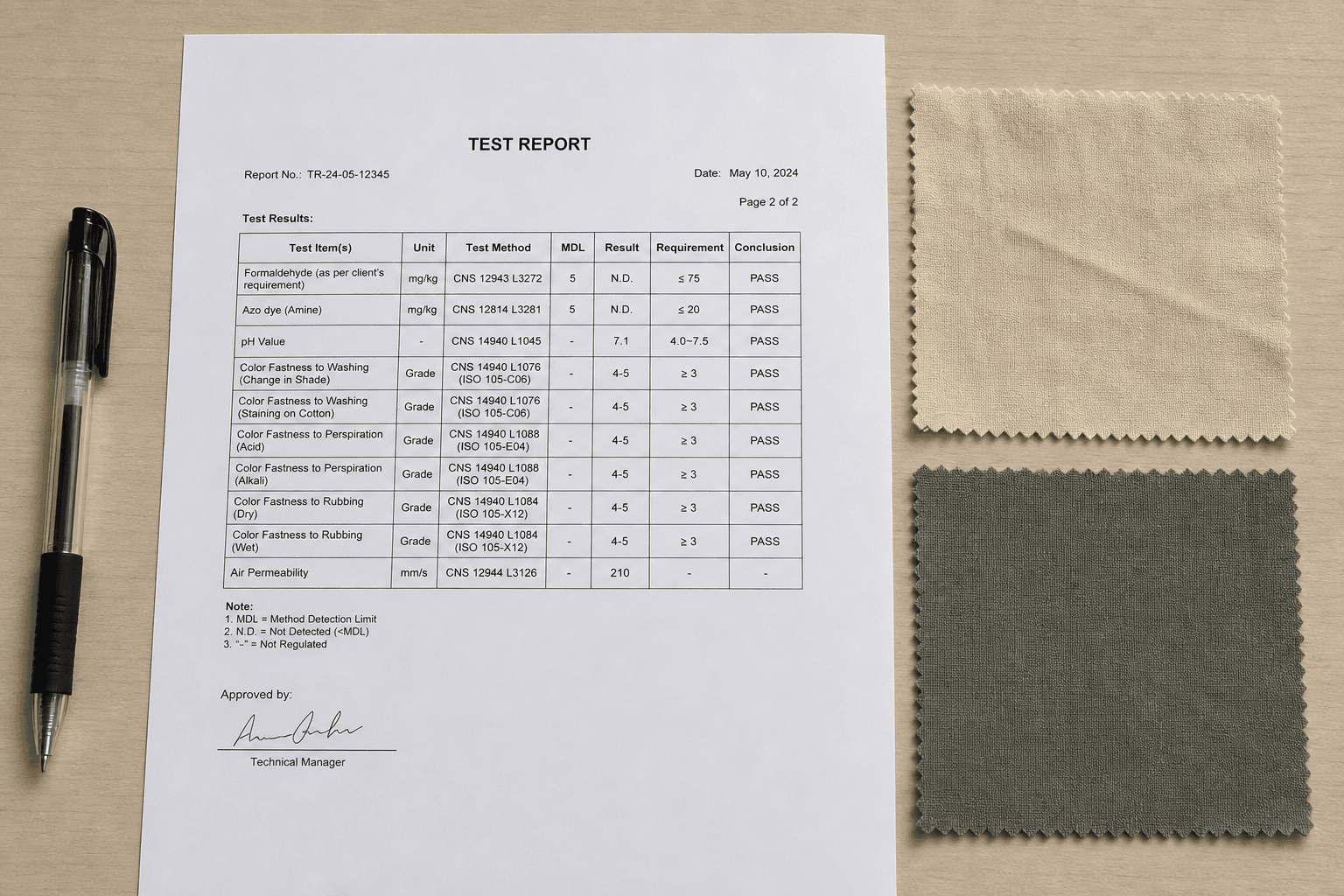
An apron testing report is useful only if it matches the actual product. Buyers should check the sample description, color, material composition, component list, photo, test method, report date, applicant name and conclusion. A report for “cotton fabric, black” does not automatically cover a finished apron with antique brass rivets and PU patch. A report from 2021 may not satisfy a retailer in 2026. A report for a supplier’s stock fabric may not apply if bulk production uses another dye lot or another mill.
For custom apron programs, the best documentation package includes three layers: material supplier declarations, third-party lab reports and factory traceability records. Supplier declarations are low cost but not enough for high-risk materials. Third-party testing gives stronger evidence but only for the tested sample. Factory records connect the tested material to the actual order through fabric lot number, trim purchase order, cutting record and shipment batch. This traceability is what buyers need when a retailer asks questions after delivery.
Common labs used by export factories include SGS, Intertek, Bureau Veritas, TUV, QIMA and CTI. Buyers may nominate a specific lab, especially for retailer programs. If no lab is nominated, the supplier should confirm whether the buyer accepts local China lab reports in English. Report cost and lead time should be added to the development calendar. A standard lab test after salesman sample approval can add 7-12 calendar days. If failure occurs, replacing fabric or trims can add 10-25 days, depending on material availability and dyehouse schedule.
- The report should show the exact article name, such as bib apron, waist apron, cross-back apron or waterproof apron.
- The report should identify color and material, such as 100% cotton 10 oz canvas, black PU-coated polyester or indigo denim.
- The report should include tested components if trims, prints, coatings or labels are part of the claim.
- The report date should be recent enough for the buyer’s retailer or internal compliance policy.
- The applicant and manufacturer names should be acceptable for the buyer’s document control process.
Cost, MOQ and lead-time impact of apron reach prop 65 testing
Compliance affects quotation because it changes material selection, sourcing flexibility and testing workload. For a simple adult cotton bib apron, 280-320 GSM, reactive dyed, no metal trims, MOQ may remain around 500-1,000 pieces per color if stock compliant fabric is available. For custom dyed 10 oz cotton canvas with retailer RSL requirements, MOQ often increases to 1,000-2,000 pieces per color because the dyehouse needs a controlled production lot. For PU-coated waterproof aprons, MOQ may be 1,000-3,000 pieces per color depending on coating line minimums.
Testing cost should be separated from unit price unless the buyer wants it amortized into the FOB price. For small orders, hiding a USD 350 test inside 500 pieces adds USD 0.70 per apron, which can distort price comparison. For a 10,000-piece order, the same test adds only USD 0.035 per apron. This is why professional sourcing teams usually list compliance testing as a separate development or order cost, especially when several colors or components must be tested.
Lead time also changes by compliance route. A non-tested promotional apron may ship in 20-30 days after deposit if stock fabric is used. A custom apron with lab dip, pre-production sample, REACH/Prop 65 testing and final inspection is more realistically 45-60 days. For large retailer programs with multiple colors, nominated trims and carton drop tests, 60-75 days is common. Rushing compliance at the end is expensive because failed goods may already be cut, sewn or packed.
- Basic textile chemical test package: typically USD 180-350 per fabric/color group, 5-7 working days.
- Broader REACH or SVHC-related screening: typically USD 450-900 depending on scope and component count.
- Metal trim heavy metal test: typically USD 80-180 per trim type, 4-6 working days.
- Phthalate test for PVC, PU patch or transfer film: typically USD 120-250 per material, 5-7 working days.
- Full finished-apron multi-component review: typically USD 500-1,200 when fabric, print, coating, trims and labels are included.
Building compliance into apron development
The most efficient method is to integrate textile chemical compliance into the normal apron development path. At quotation stage, the buyer should send the target market, RSL, design file, material preference, estimated order quantity and delivery window. The factory can then identify risk points before pricing. If a buyer asks for a USD 2.40 FOB cross-back apron with 12 oz cotton canvas, antique rivets, leather patch, discharge print and full Prop 65 support at 500 pieces, the correct response is to separate the must-have features from the nice-to-have features. The target may be possible, but not with every trim and test included.
At sample stage, the factory should use intended bulk materials rather than convenient substitutes whenever compliance matters. A prototype made from available fabric can confirm fit and pocket layout, but it cannot support final chemical approval. For serious retailer or brand programs, we recommend a material confirmation sample or pre-production sample made from actual bulk fabric and trims. Testing should be performed on that sample or on representative bulk materials before mass cutting.
During production, controls should be simple and documented. Approved material lots should be stored separately. Substitute trims should not be used without buyer approval. Cutting records should identify fabric roll numbers. Packing records should connect finished cartons to the order and production date. These factory controls are not complicated, but they prevent confusion when a buyer asks why a report says one material and the shipment appears to contain another.
- Quotation stage: confirm market, RSL, material composition, colors, decoration method and compliance budget.
- Sample stage: use intended bulk fabric, trims, print ink and label materials for approval when possible.
- Pre-production stage: test high-risk components before cutting bulk fabric.
- Production stage: control substitutions, record lot numbers and keep approved components separated.
- Shipment stage: provide final invoice, packing list, test reports, declarations and inspection records as required.
Common sourcing mistakes and how to avoid them
The first common mistake is using old fabric certificates as proof for a new apron. A mill certificate can be useful, but it may not cover the exact color, finish, coating or production lot used in the buyer’s order. The second mistake is testing only the fabric while ignoring trims and decoration. For aprons, the small components are often where Prop 65 questions appear. A third mistake is assuming that “OEKO-TEX fabric” automatically covers the finished apron. It may reduce risk, but it does not automatically certify the print, hardware, label or packaging unless those items are included in the certified scope.
Another frequent issue is ordering very low MOQ styles in many colors while demanding full compliance testing for every SKU. The math becomes difficult. Ten colors at 300 pieces each may require more test spend than the sewing value justifies. A practical solution is to consolidate colors, use approved stock fabrics with recent reports, remove high-risk trims, or test representative worst-case colors. For example, black and red may be tested first, while natural and white are supported by fabric supplier declarations if the buyer’s compliance policy allows this approach.
The best safe apron import process is cooperative. The buyer defines legal market and retailer expectations. The factory identifies material risk and feasible substitutions. The lab confirms test scope. The final PO records what has been agreed. When this is done early, compliance becomes a normal production control rather than an emergency. For bulk apron orders, that usually means fewer delays, clearer cost ownership and stronger documents if customs, retailers or internal quality teams request evidence after shipment.
- Do not rely on a fabric report when the finished apron includes untested metal, PVC, PU, print or label components.
- Do not change trims after testing unless the new trim is also reviewed or tested.
- Do not assume one country’s certificate satisfies another market’s chemical compliance requirement.
- Do not wait until final inspection to ask for apron reach compliance or Prop 65 documentation.
- Do not compare FOB prices fairly unless testing cost, material source and compliance scope are included.