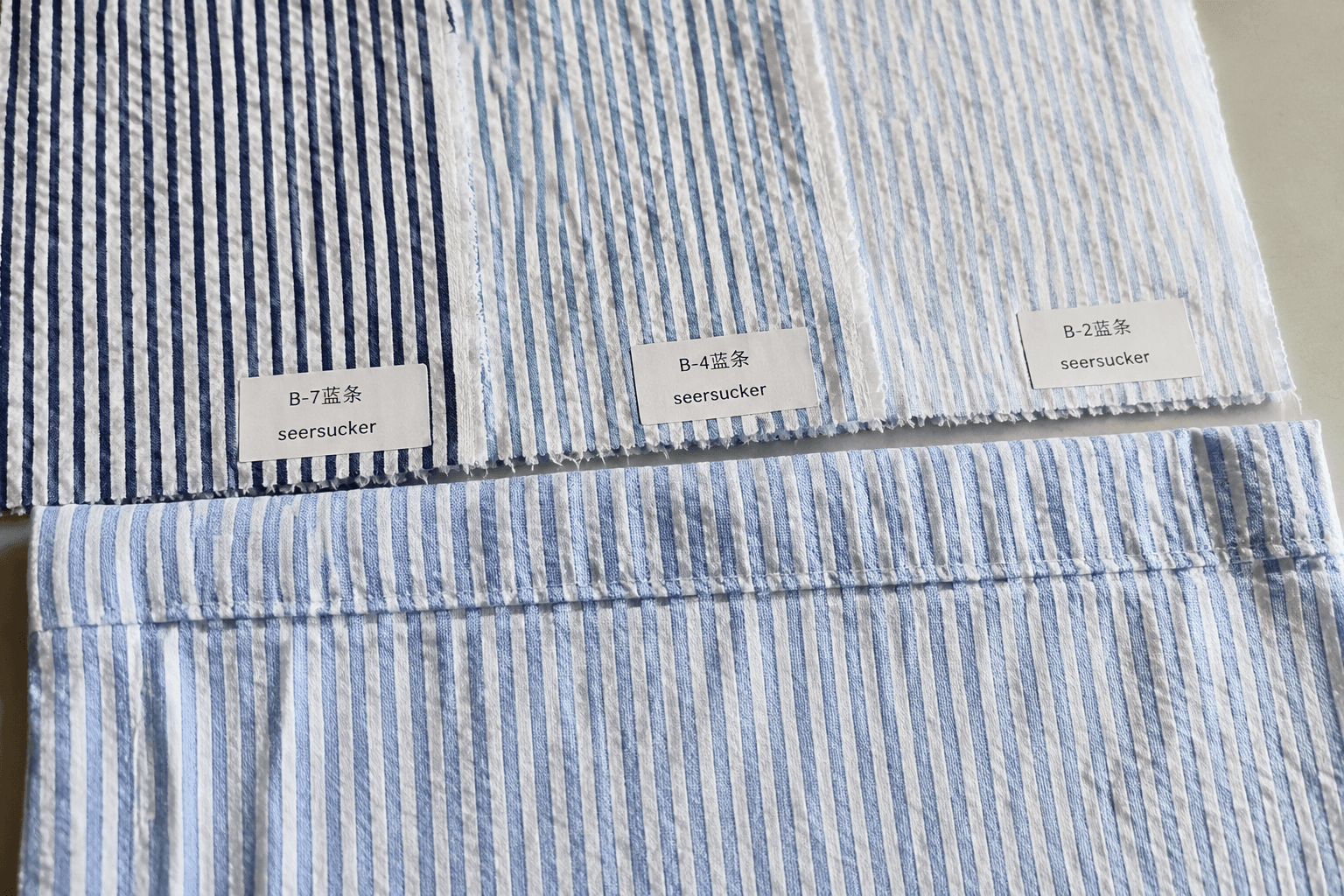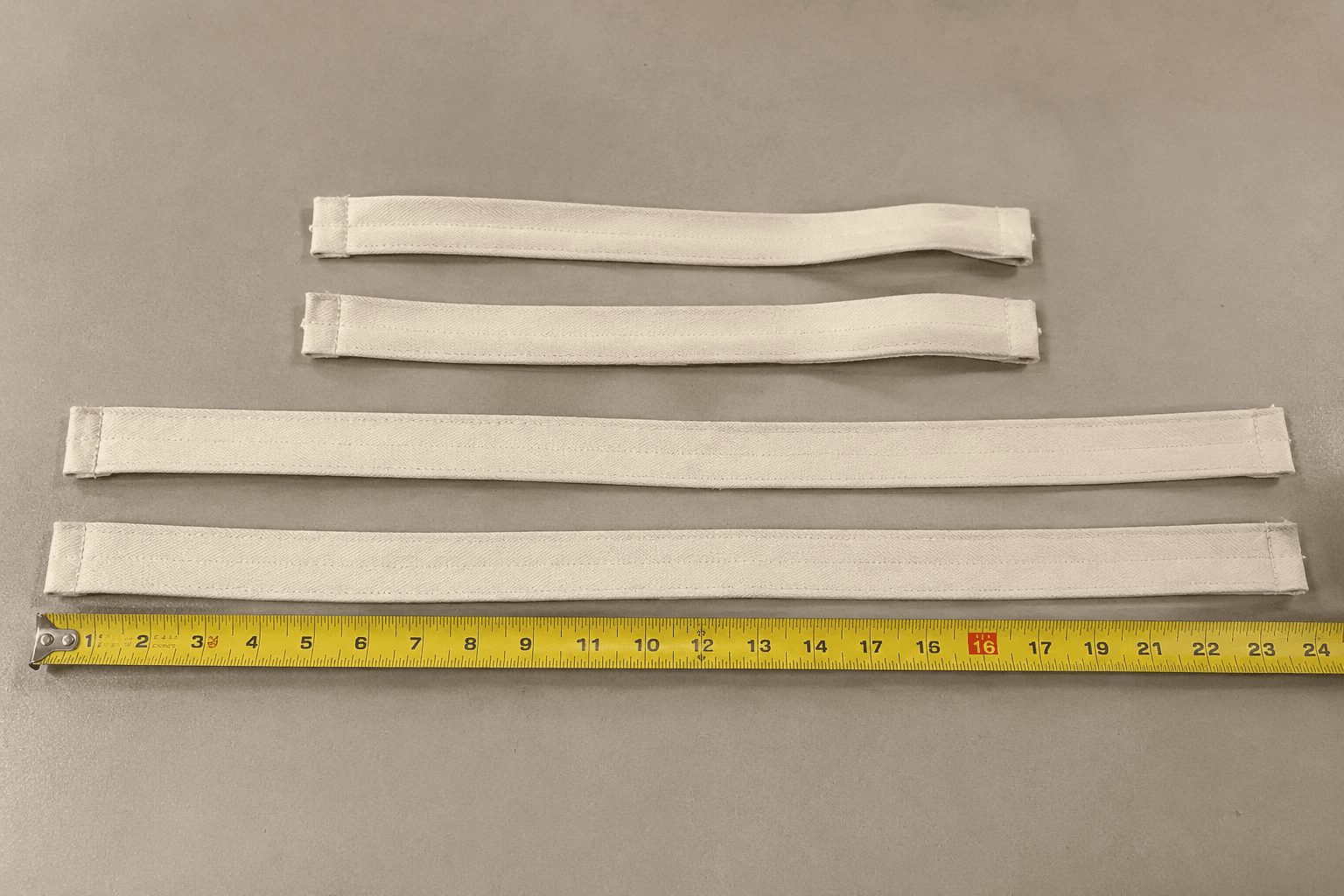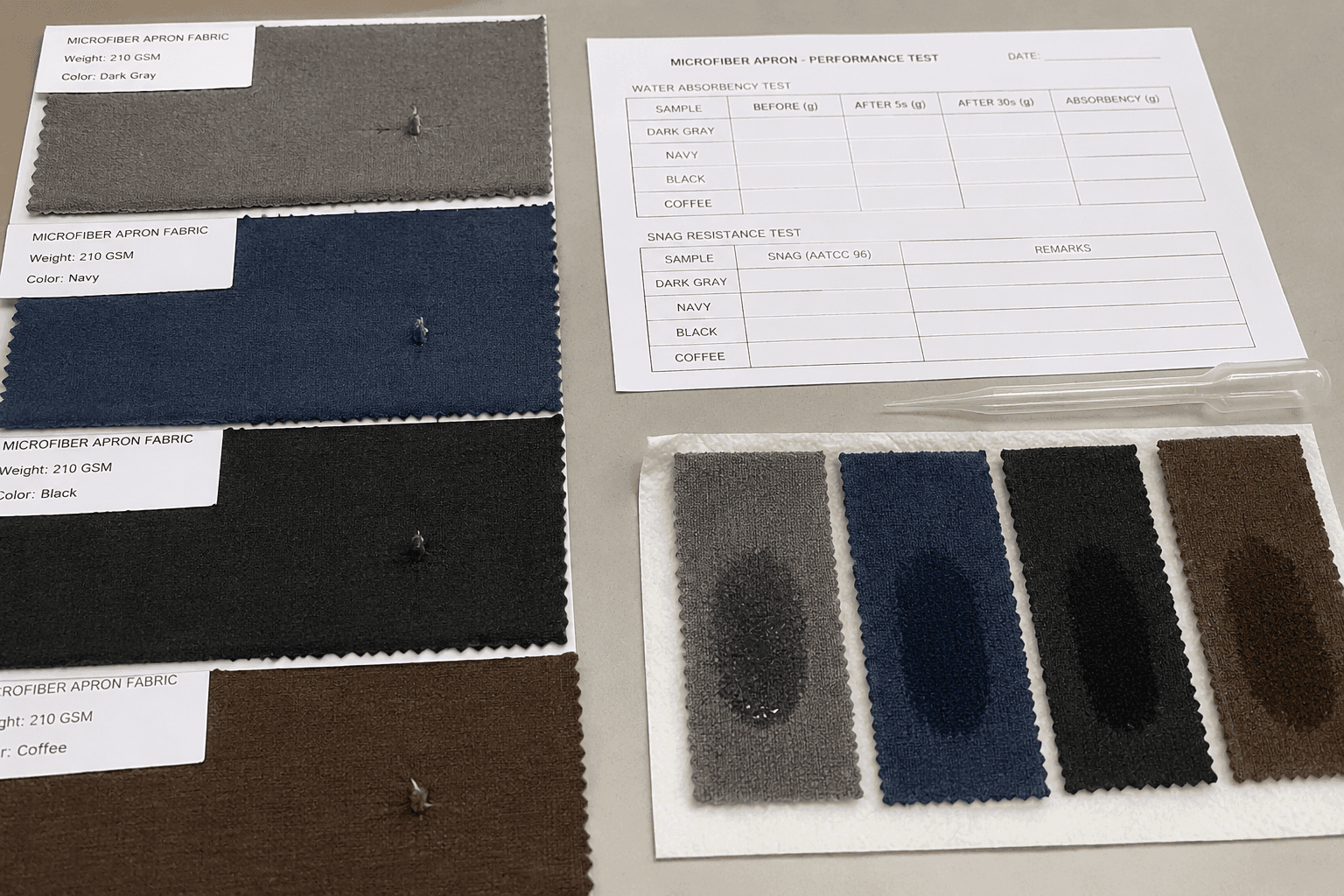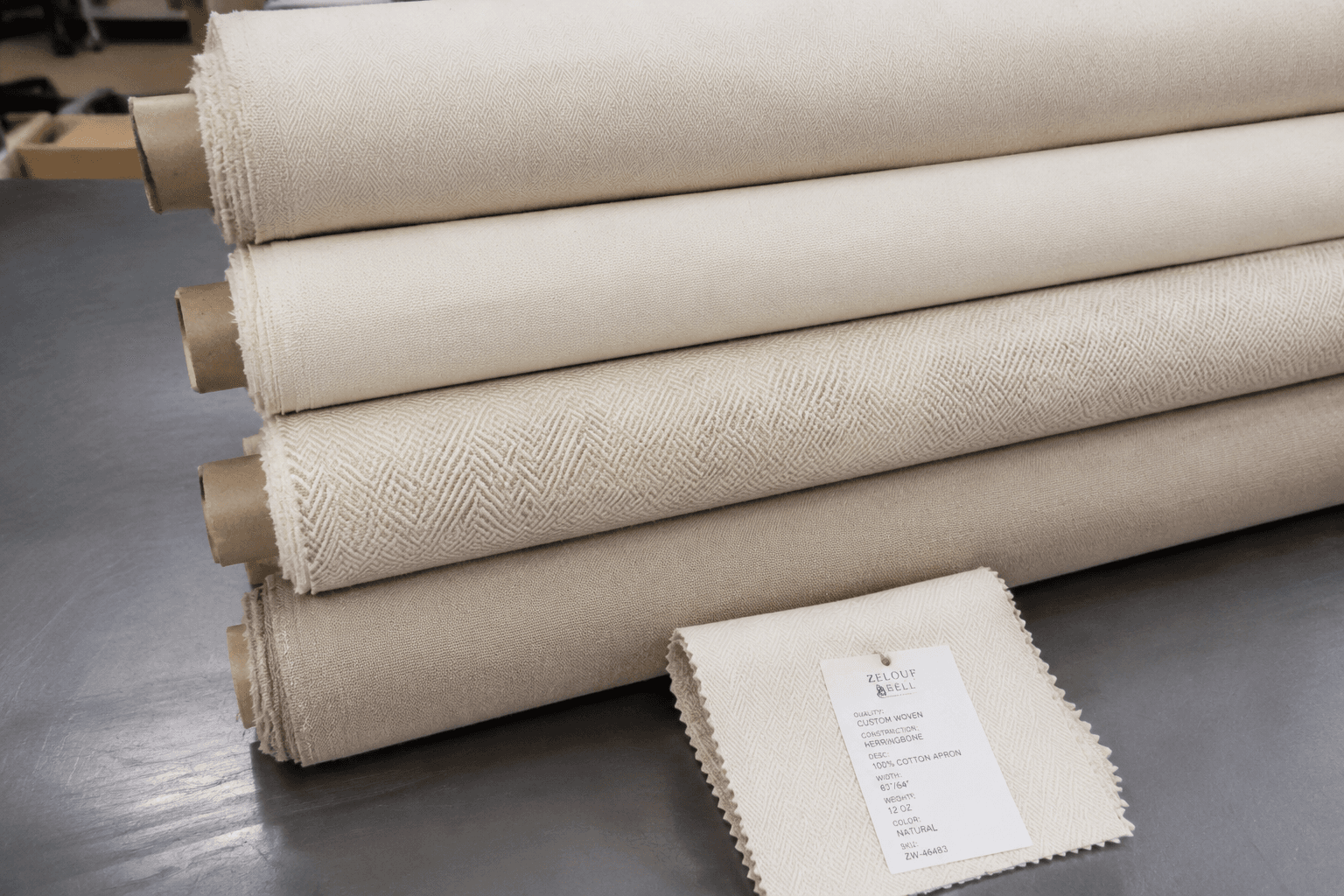
For apron programs, the fabric decision usually determines the commercial result before trim, packaging, or print method is even considered. Stocked apron fabric gives speed and lower development risk, while custom woven apron fabric gives tighter brand control, but only when the order size can support the mill minimum and the extra sampling cycle.
In China sourcing, the difference is not abstract. A stocked twill or canvas may be available from a local dyehouse at 200 to 500 meters per color and ship in 20 to 35 days, while a custom weave may require a mill minimum of 3,000 to 10,000 meters per construction and add 30 to 60 days before bulk cutting starts. That gap affects MOQ, cash flow, and whether a buyer can launch a new apron line on time.
The right choice depends on the end use. A café apron, chef apron, or retail gift apron may all use similar silhouettes, but they do not always justify the same fabric strategy. The question is not only which cloth looks better. The real question is which construction creates stable costing, acceptable hand-feel, and a predictable apron fabric lead time for the season you are buying into.
- Stocked fabric usually wins when the buyer needs 300 to 1,000 pcs fast and cannot wait for mill development.
- Custom woven fabric is justified when the apron is core to the brand and the cloth itself must carry color, texture, stripe width, or logo detail.
- Apron fabric MOQ is often lower at the sewing factory than at the mill, so the true constraint is usually the fabric lot, not the apron assembly order.
- A stocked canvas at 8 to 12 oz or a twill at 180 to 260 GSM can often cut unit cost by $0.40 to $1.20 versus a custom weave on the same apron style.
- Lead time risk is usually hidden in weaving, dyeing, and finishing, not in stitching, so the fabric plan must be locked before sampling is approved.
- When a buyer needs repeat orders, a custom weave can improve consistency, but only if the program is sized to absorb the initial mill minimum and extra development cost.
Stocked apron fabric versus custom woven apron fabric: what changes in practice
The practical difference starts with where the cloth comes from. Stocked apron fabric is already woven or knitted, often kept in greige, dyed, or finished inventory by a mill, trader, or local dyehouse. The factory can inspect, reserve, and cut it quickly. Custom woven apron fabric is made to your specification, which means yarn selection, weave density, stripe or check layout, color matching, and finishing are all controlled for your program, but they also create more steps and more points of delay.
For apron buyers, the most common stocked options are cotton canvas, cotton twill, cotton-poly twill, denim, and polyester-cotton blends in the 180 GSM to 340 GSM range, or roughly 5.3 oz to 10 oz depending on weave and finishing. These fabrics already exist in standard widths such as 57/58 inch, and the factory can often source them in 100 to 300 meter lots for sampling or 500 to 2,000 meter lots for production reservation.
Custom woven fabric becomes relevant when the apron is not just a garment but a brand asset. Examples include a specific yarn-dyed stripe width, an exclusive heather effect, a tighter canvas with a particular drape, or a proprietary color that must remain consistent across apron, tote, and oven mitt programs. The trade-off is clear: better control over appearance and repeatability, but higher upfront engineering and a longer path to the first approved bulk roll.
- Stocked fabric is best for speed, price stability, and smaller launch quantities.
- Custom woven fabric is best for proprietary appearance, repeatability, and stronger brand differentiation.
- The key variable is not only fabric type, but whether the mill can support your apron fabric MOQ without compromising quality.
- If the apron needs a common base cloth with simple decoration, the stocked route is usually the safer commercial choice.
Apron fabric MOQ: mill minimum apron order versus factory sewing MOQ
Buyers often ask for apron MOQ as if the number is controlled by the sewing line alone. In reality, the fabric source usually sets the true floor. A cut-and-sew apron factory may be willing to assemble 300 pcs or even 100 pcs for a test run, but if the fabric is custom woven, the mill may require 3,000 meters minimum per color and 5,000 meters per construction before production starts. That means the factory MOQ can look small while the fabric commitment remains large.
For stocked apron fabric, the situation is more flexible. A supplier may agree to reserve 200 to 500 meters from existing stock or dye a small lot if the color is standard. This is why many private label apron buyers can order 300 to 1,000 pcs with manageable risk. On a 90 cm long apron consuming around 0.8 to 1.1 meters of cloth, a 500-meter reservation can support roughly 450 to 600 aprons before allowances, shrinkage, and defects are included.
With custom woven fabric, the mill minimum apron requirement is not just a number; it is a working capital commitment. If the cloth cost is $2.10 to $4.80 per meter, a 5,000-meter order can tie up $10,500 to $24,000 before sewing begins. Add weaving lead time, lab dips, strike-offs, and approval rounds, and the effective cash cycle is much longer than with stocked options. For new programs, that can be the real barrier, not the sewing price.
The buyer should also separate the mill MOQ from the final apron MOQ. A supplier may be able to sew 1,000 pcs from a 3,000-meter fabric lot, but if the fabric overage is not used elsewhere, the effective unit cost rises sharply. That is why fabric planning must be tied to the forecast, not just to a one-time purchase order.
- Typical stocked fabric reservation: 200 to 500 meters per color if the base cloth exists.
- Typical custom woven fabric minimum: 3,000 to 10,000 meters per construction, depending on yarn and loom setup.
- Typical sewing MOQ for a simple apron: 300 to 1,000 pcs, but the fabric lot may be the limiting factor.
- For repeated programs, aligning the apron fabric MOQ with 2 to 3 months of demand is more efficient than forcing a one-off development lot.
Lead time reality for custom woven apron fabric
Apron fabric lead time should be measured from approval of construction, not from the date the PO is issued. For stocked cloth, a realistic timeline is often 7 to 15 days for reservation and inbound inspection, then 10 to 20 days for cutting and sewing, with 2 to 5 days for packaging and final QC. In a simple case, a stocked program can ship in 20 to 35 days after confirmation if trims and artwork are already approved.
Custom woven apron fabric follows a different schedule. Yarn sourcing or allocation can take 7 to 14 days, weaving 10 to 25 days, dyeing or finishing another 7 to 15 days, then inspection, shrinkage testing, and bulk approval can add another 7 to 10 days. A realistic apron fabric lead time is often 35 to 60 days before the factory can begin full cutting. If the buyer needs yarn-dyed stripes or a custom dobby effect, the timeline can move toward 60 to 90 days.
The hidden delay is usually approval churn. A lab dip that looks acceptable under office light may fail against the buyer’s Pantone expectation, or the weave density may be slightly too open after finishing. Each revision resets part of the schedule. For this reason, a custom woven apron fabric order should always carry a time buffer if the aprons are tied to a trade show, seasonal menu rollout, or retail launch.
Sourcing managers should also ask whether the factory is working with a direct mill or a trader. A direct mill relationship is usually faster for standard yarns and larger programs, but a trader may offer better flexibility for small MOQ orders by consolidating demand. The right path depends on whether speed, color precision, or minimum order size matters most.
In practice, the best forecasting method is simple: count backward from the in-store or in-use date, then subtract the longest likely approval path. If the fabric schedule is already tight before cutting starts, the safer decision is usually stocked cloth rather than forcing a custom weave into a compressed calendar.
- Stocked fabric program: often 20 to 35 days total if artwork and trims are ready.
- Custom woven program: often 35 to 60 days before sewing, and 45 to 90 days total for complex constructions.
- Add at least one approval buffer for color, shrinkage, and handle handfeel.
- If the order is seasonal, lock fabric before the final garment size breakdown to avoid later delays.
Cost structure: why custom woven apron fabric changes the landed price
The price difference between stocked and custom woven cloth is not only the meter price. It includes sampling, loom setup, dye approval, wastage, and the cost of holding inventory. A stocked apron fabric may cost $1.20 to $2.80 per meter depending on fiber content, weight, and finish. A custom woven apron fabric can easily rise to $2.50 to $5.50 per meter once special yarns, tighter construction, and smaller lot economics are included.
On an average bib apron using 0.9 meter of fabric, that difference can add $1.00 to $2.50 per piece before labor. If the apron has pockets, contrast straps, bartacks, and a woven neck loop, the sewing cost may stay similar, but the fabric premium still pushes the landed cost up. For buyers targeting a retail price point or a foodservice contract bid, that is often the difference between acceptable margin and a failed quotation.
The economics also depend on utilization. A custom weave with a 5,000-meter lot may produce excellent consistency, but if the buyer only needs 2,500 aprons and has no second order, the surplus fabric becomes hidden inventory. By contrast, stocked fabric can usually be replenished or substituted with less dead stock risk. That flexibility lowers effective cost even when the meter price is slightly higher than a volume custom run.
A practical sourcing comparison should therefore include more than the apron FOB price. It should include fabric development fee, strike-off fee, overage allowance, wastage percentage, packing cost, and the probability of future reorders. For repeat programs, the first PO may look expensive, but the second and third order can become more efficient if the same custom woven fabric is reused without re-engineering.
- Stocked fabric meter price is usually lower, but not always the lowest landed cost once speed and flexibility are included.
- Custom woven fabric can add $1.00 to $2.50 per apron on a typical bib style, depending on usage and weave complexity.
- Development fees and overage should be budgeted as part of the first order, not treated as exceptions.
- When comparing suppliers, ask for both FOB apron price and a separate fabric development cost breakdown.
How to choose the right fabric path for apron programs
The best choice depends on program maturity. If the apron is for a restaurant group, café chain, or promotional event with a fixed launch date, stocked apron fabric is usually the lower-risk option. It reduces calendar risk, simplifies testing, and makes it easier to hit a target cost under pressure. If the program is a branded retail item, a premium chef apron, or a long-term uniform line with recurring orders, custom woven fabric becomes more attractive because the cloth itself can support brand recognition.
A useful rule is to match fabric strategy to expected repeat volume. If a buyer expects one order of 300 to 800 pcs, stocked fabric is usually enough. If the buyer expects 2,000 pcs now and another 5,000 pcs over the next 12 months, custom woven apron fabric may make more sense because the mill minimum is easier to absorb and the design can be protected from copycats. In that case, the first order is not just a purchase; it is the start of a fabric program.
Program complexity also matters. A plain apron in a standard canvas can be sourced from stock quickly, but if the buyer needs yarn-dyed checks, solution-dyed color stability, or a custom stripe aligned with corporate identity, the fabric should be developed early. The apron itself may still be simple, but the cloth becomes the differentiator. In those cases, the sourcing team should treat the fabric as the critical path item and not wait until after style approval to start mill discussions.
The factory should be able to advise on shrinkage, colorfastness, wash performance, and cutting yield before the buyer commits. For example, a 240 GSM cotton twill may feel ideal on paper, but after wash and tumble it can tighten more than expected, changing apron length and pocket positioning. A responsible supplier will flag that during development rather than after bulk production has started.
For commercial buyers, the decision is not ideological. It is a balance among MOQ, lead time, quality risk, and landed cost. The wrong decision is to assume custom woven fabric is always better or always too expensive. The correct decision is to size the fabric path to the actual supply chain window and the expected life of the apron program.
- Use stocked fabric for launches, trials, and short-run uniform programs.
- Use custom woven fabric for repeat programs, branded retail aprons, and proprietary constructions.
- If the fabric will appear in multiple products, custom weaving may improve total program economics.
- If the launch date is fixed, back-plan the fabric approval window before confirming the style.
What buyers should ask before approving a custom woven apron fabric program
The fastest way to avoid a bad decision is to ask for a technical quote, not just a sewing quote. Buyers should request fabric composition, yarn count, weave structure, weight in GSM or oz, width, shrinkage range, colorfastness standard, and the minimum lot for both sample and bulk. Without those details, the quoted apron price is only a rough estimate and may not survive development.
A strong supplier answer will also explain how the fabric behaves after washing. An apron for a bakery or café may need repeated laundering at 60 C, while a retail apron may need better drape and color retention. A 280 GSM cotton canvas can be durable, but if the handfeel is too stiff, the apron may not hang correctly or may feel bulky around the waist. A 210 to 240 GSM twill may be more comfortable, but it may need reinforcement at stress points.
For custom woven programs, ask where the risk sits. Is the issue yarn availability, loom occupancy, dye match, or finishing capacity? These constraints affect the apron fabric lead time more than the sewing operation does. The supplier should also clarify whether the mill minimum apron lot is per color, per pattern, or per order. Those distinctions change the economics materially.
A good sourcing checklist should include the expected wastage rate and whether the factory will keep reserve stock for repeat orders. For example, if a style needs 3,200 meters and the mill minimum is 5,000 meters, the buyer should understand whether the extra 1,800 meters can be used for matching waist aprons, tote bags, or future replenishment. That single question often determines whether custom weaving is commercially rational.
In apron sourcing, the fabric decision is part of the product architecture. Buyers who treat it that way usually get better control over price, fewer surprises in sampling, and a more reliable replenishment path. Buyers who leave fabric until the end often end up paying for speed twice: once in development fees and again in emergency freight or rushed substitutions.
- Ask for fabric composition, GSM, width, shrinkage, and colorfastness before approving the quote.
- Confirm whether MOQ is per color, per pattern, or per order.
- Request a wastage and overage plan for the extra meters above the apron production need.
- Clarify whether the supplier can store fabric for repeat orders or future replenishment.