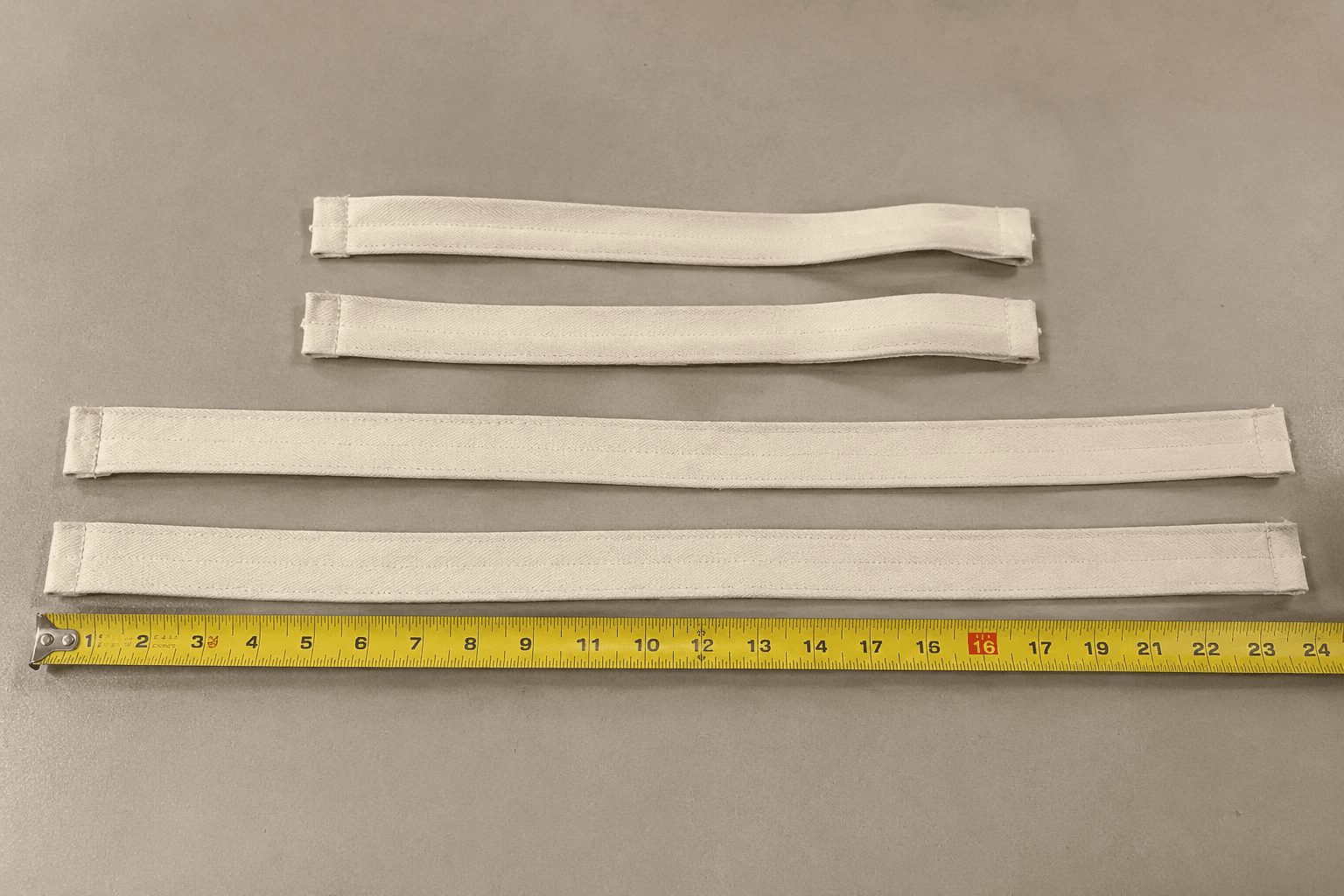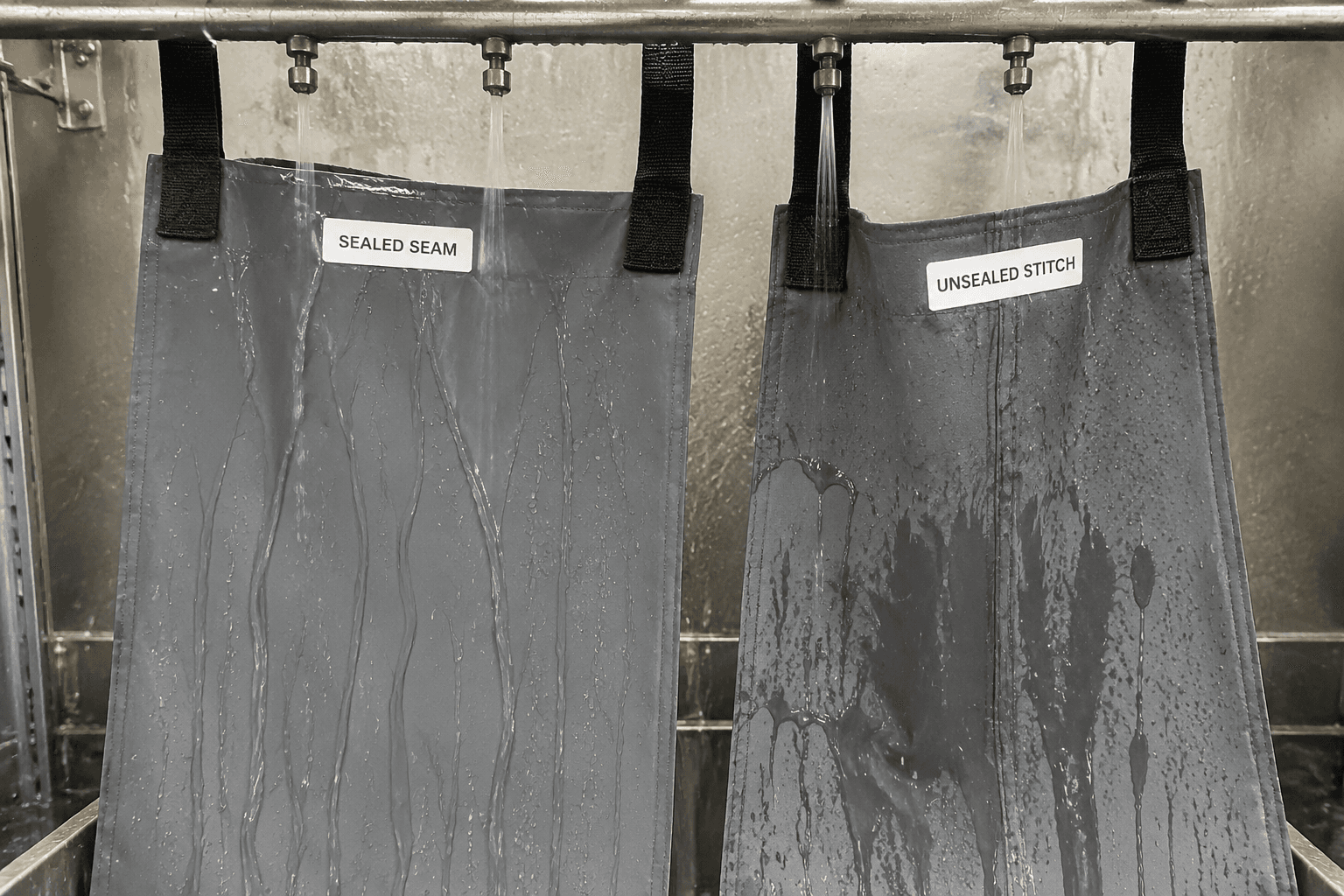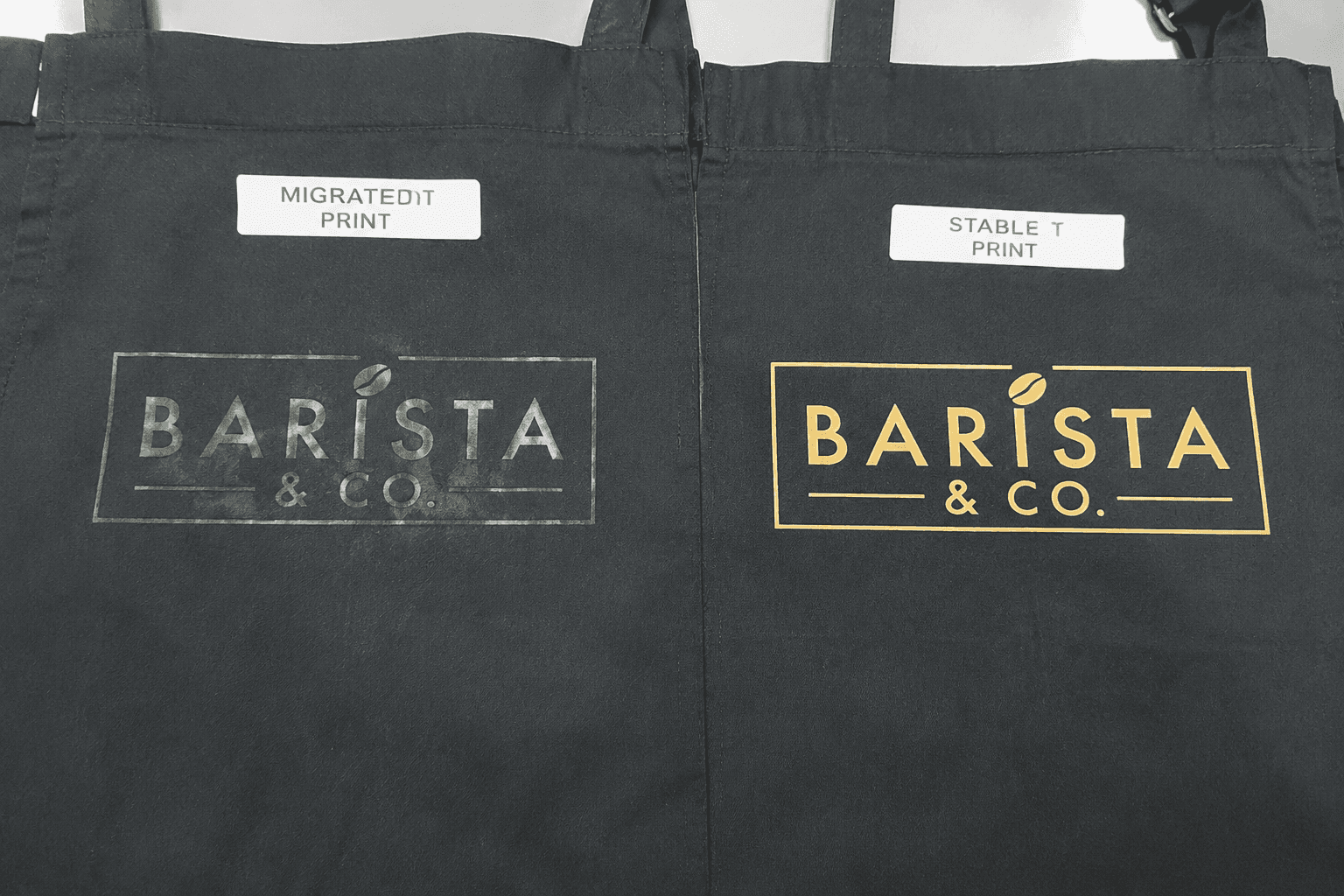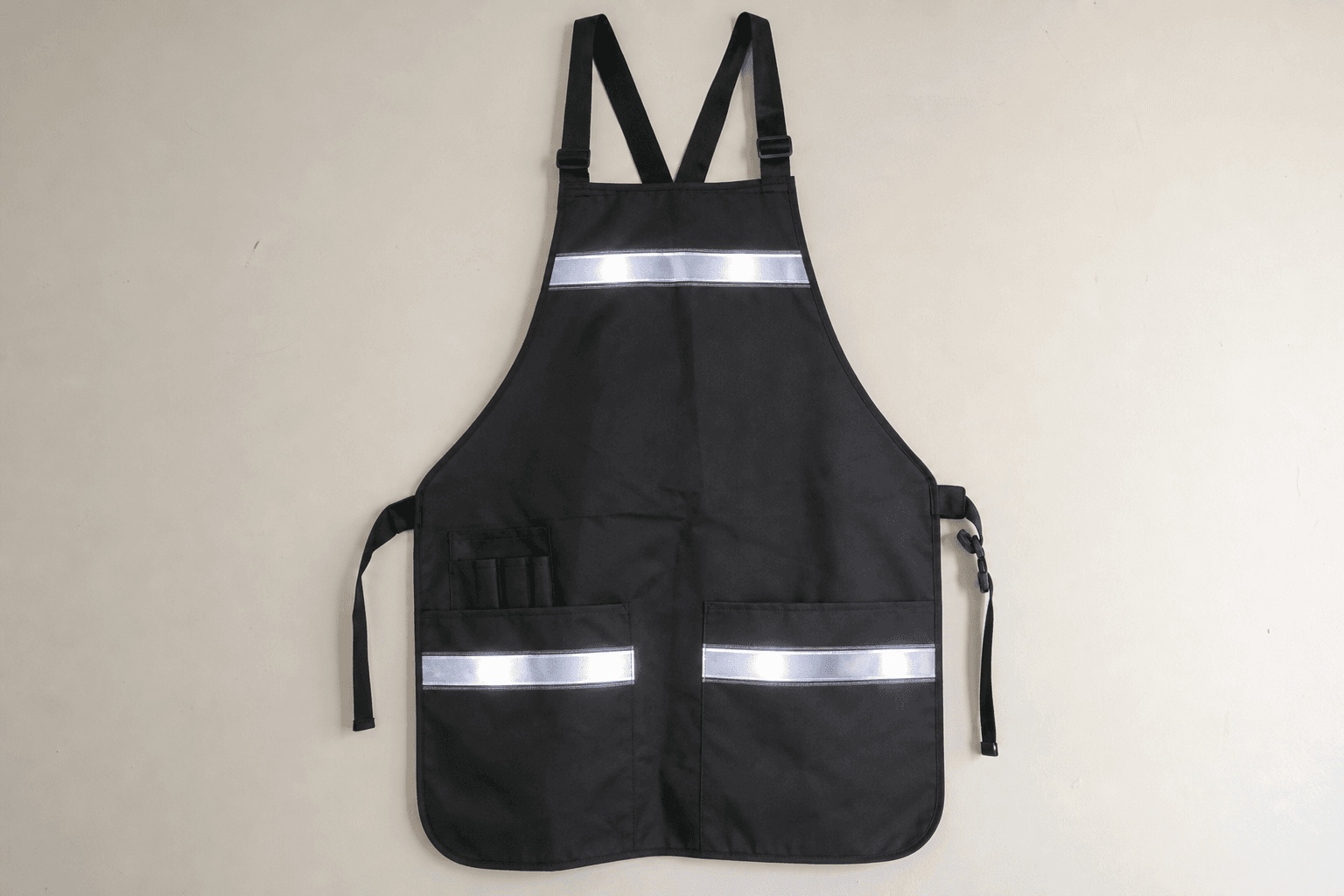
Many buyers still collect chemical reports at the end of production as filing documents. In apron sourcing, that timing is costly. Apron textile lab testing creates the most value before bulk sewing is locked, when a buyer can still stop a risky dyed canvas lot, reject an unapproved 38 mm black polyester neck strap, or question a last-minute chest print substitution. Azo dyes, formaldehyde, and pH reports are not generic factory certificates. They are sample-specific evidence tied to one apron construction, one method, one limit, and one production stage.
That matters because aprons often combine several risk points in one commercial style. A 10 oz, 340 GSM reactive-dyed cotton canvas bib apron with a white chest print, PU-coated utility pocket, 1.5 inch polyester webbing, and a woven brand label does not carry the same chemical profile as a 7.5 oz, 255 GSM 65/35 polycotton waist apron with self-fabric ties and no print. Even within one SKU, the body fabric may be low risk while the dark webbing, pigment print, binding, care label, or outsourced pocket facing creates the actual compliance exposure.
In OEM production, the biggest failure is usually not no testing. It is testing the wrong sample at the wrong moment. A fabric pass issued on day 12 does not automatically cover a finished apron packed on day 33 after printing, heat curing, softening, final pressing, and trim changes. Buyers who read apron textile lab testing as sample-specific evidence, not blanket approval for every variation, make better release decisions and avoid preventable 7-14 day shipment delays.
- Apron textile lab testing is only decision-ready when the report matches the final apron materials, colorway, trims, print process, and production stage.
- For aprons, the highest azo and formaldehyde risk often sits in black webbing, dark contrast ties, pigment prints, coated pockets, labels, and outsourced accessories rather than the main body fabric.
- A fabric formaldehyde result below 20 mg/kg does not automatically cover a finished apron after screen printing, curing, fusing, pressing, or polybag packing.
- An out-of-range fabric ph test apron result usually points to incomplete rinsing or neutralization and often signals wider wet-process instability.
- Useful reports show sample identity, method code, customer limit, measured value, unit, and test date; a simple PASS line is not enough for B2B approval.
- Targeted submissions typically cost $120-$350 per apron style set and take 3-5 working days, which is usually cheaper than a 7-12 day rework delay on a 3,000-10,000 piece order.
What a usable apron report must show before bulk approval
A usable apron chemical report should answer six questions in under a minute: what was tested, which method was used, what limit applies, what result was measured, what unit was reported, and whether the tested sample truly represents the PO under review. In professional sourcing, vague descriptions such as cotton fabric or red material are weak evidence. A stronger report identifies the item as a finished bib apron, cross-back apron, or waist apron; states fiber content such as 100% cotton canvas or 65/35 polycotton twill; notes weight such as 240 GSM, 280 GSM, or 340 GSM; and records the exact colorway, print type, and key trims.
The scope line matters as much as the result. If the lab tested only a 280 GSM natural cotton canvas panel, that report does not automatically cover a finished apron with 38 mm black webbing, a white plastisol chest logo, and a woven care label from another vendor. The chemistry result may be accurate for the panel, but its coverage is too narrow for the goods shipping in the carton. This is a common retailer file problem: the report exists, yet the tested sample does not match the final apron configuration.
For custom apron programs from China, standard turnaround for azo dyes, formaldehyde, or pH is usually 3-5 working days after the lab receives the sample. A 24-48 hour rush service is common but often adds 25%-50% to the fee. Single-parameter checks may cost $25-$60 per sample, while a finished-apron submission split into body fabric, dark webbing, and print area usually lands around $120-$300. On a 5,000-piece order priced at $2.90-$4.80 FOB per apron, that cost is small compared with a missed ex-factory date or a retailer hold.
- Confirm the report names the finished apron or clearly states it is fabric only.
- Confirm the sample description includes style number, fiber content, colorway, GSM or oz weight, and key trims.
- Confirm the report shows method code, reporting unit, customer limit, measured result, and test date.
- Confirm whether the lab tested a composite sample or separated apron components.
- Confirm the tested lot still matches the current PO after any trim, print, or supplier change.
Apron textile lab testing for azo dyes: why dark trims need separate control
When buyers request azo testing, the practical question is whether restricted aromatic amines can be released from dyed or printed apron components under the stated method. In aprons, risk is rarely spread evenly across the style. Light ecru 8 oz cotton canvas or undyed 300 GSM cotton drill is often lower risk than smaller dark accessories. The higher-risk zones are usually black polyester neck webbing, navy waist ties, burgundy herringbone tape, orange contrast binding, logo prints, and low-cost dyed trims sourced outside the main fabric mill.
This is why one blended composite test can mislead a buyer. If the lab cuts the whole apron into one mixed sample, a small but risky dark trim can be diluted by a large area of low-risk body fabric. The report may still show a pass while the darkest component remains the real commercial concern. On private-label apron programs with mixed materials, it is usually better to separate the body fabric, dark strap, print area, and binding. The lab bill may rise by $80-$180, but the report becomes far more useful for supplier approval and shipment release.
The sourcing math is simple. On a 3,000-piece bib apron order at $3.20 FOB, saving $120 by reducing the azo scope is not worth the exposure if one black webbing lot later fails. Replacing sewn-in neck straps often adds 7-10 calendar days, plus labor for seam opening, resewing, pressing, inline reinspection, and repacking. During peak season, a trim replacement can also miss vessel cutoff and push part of the order to air freight. For that reason, azo control works best upstream through approved dyehouses, stable trim vendors, and pre-production submissions on the darkest apron components.
- Treat black webbing, navy straps, dark red ties, and print areas as first-check azo candidates.
- Do not assume a passing natural canvas result covers attached dark accessories.
- Use component-level testing on mixed-material aprons, especially on 500-1,500 piece MOQ programs with fragmented trim sourcing.
- File past reports by trim supplier, material, and color code, not only by apron style number.
Formaldehyde on finished aprons: where residue enters after fabric approval
Formaldehyde is often discussed as a general apparel issue, but finished aprons can also pick up residue from resin finishes, pigment binder systems, fusible reinforcement, coated pocket panels, packaging treatments, and aggressive final pressing. In a simple 280 GSM cotton canvas apron with self ties and no print, the risk is usually low and manageable. The risk rises when the apron includes a large chest print, a stiffened top edge, fused pocket mouth, water-resistant coating, or several outsourced trim components.
For buyers, the key question is not did the fabric pass. The better question is where could formaldehyde enter this apron build. A fabric panel may test below 20 mg/kg at pre-production stage, then the finished apron moves higher after printing, curing, heat pressing, and polybag packing. We also see cases where a plain colorway passes comfortably, but a second colorway with a heavy pigment logo or contrast binding runs much closer to the customer threshold. If the report does not identify the exact tested construction, the buyer cannot tell whether the result still applies to the shipped goods.
Representative sampling is the most practical control tool. If one colorway has a 12 cm chest print and another is plain dyed, test the printed version first. If the style includes a PU-coated tool pocket or fused reinforcement patch, include that feature in the lab submission. Standard turnaround remains about 3-5 working days, but any failure is slower than the original test. A failed finished-goods submission often triggers root-cause review, corrective processing, and retest, adding 5-9 calendar days before bulk release can resume.
- Prefer finished-apron submissions when printing, coating, fusing, or heavy pressing is involved.
- Use the most chemically complex apron version as the representative test sample.
- Check the customer limit carefully; adult hospitality aprons and children’s craft aprons may not use the same threshold.
- Reserve at least 5-7 calendar days in the production plan for report review and possible resubmission.
Apron textile lab testing for pH: a fast indicator of wet-process discipline
pH is often treated as the simplest line on the report, but for apron buyers it is a useful process-control signal. The result shows whether bleaching, dyeing, washing, and finishing were neutralized correctly. A pH failure does not usually indicate a banned substance. On aprons, it more often points to incomplete rinsing, residual alkali or acid, inconsistent wash timing, or weak control on a rushed dye lot.
This matters because pH instability often appears alongside broader production inconsistency. On dyed cotton canvas aprons, enzyme-washed utility aprons, or heavily printed waist aprons, an out-of-range pH may sit beside handle variation, residual odor, crocking differences, or unstable shrinkage. That does not mean pH causes every defect, but it is a credible warning sign that the wet process was not fully controlled. For sourcing teams managing repeat programs, pH is therefore not just a compliance line; it is early evidence of mill discipline and process stability.
Correction is usually easier at fabric stage than after sewing. A fabric lot can often be re-washed, neutralized, dried, and retested within 2-4 days. A finished-goods correction is slower because packed aprons must be reopened, reprocessed, dried, pressed, passed through final QC again, and repacked. On a 10,000-piece order, that can add 3-6 days in normal season and longer during humid weather. For most apron programs, the lower-cost decision is to identify unstable pH before cutting begins.
- Treat pH as a process-control result, not only as a pass-fail formality.
- Watch dyed canvas, enzyme-washed fabrics, and rush color lots more closely than stable stock shades.
- Expect faster and cheaper correction at fabric stage than after finished aprons are packed.
- If pH fails, review neutralization, rinse records, drying conditions, and retest timing before approval.
How to match reports to the exact apron PO, BOM, and supplier set
Many compliance mistakes are administrative before they are technical. A report can be genuine and still be unusable if it belongs to last month’s fabric lot, a similar shade, or another apron version without the same webbing, print package, or label set. This happens frequently when buyers file documents only under the factory name instead of by style, colorway, and PO. In multi-style apron programs, that shortcut creates avoidable approval errors.
Buyers should compare the full standard and pass limit rather than reading only the word PASS. A formaldehyde result of 30 mg/kg may pass one customer protocol and fail another depending on market, retailer requirement, and product category. Azo conclusions depend on the stated method and threshold. A pH number means little without the accepted range printed beside it. The usable part of the report is therefore the sample identity, method code, unit, limit, and test date, not just the verdict line.
A practical control tool is a one-page compliance matrix for each apron program. It should list style number, apron type, body fabric, fabric weight, strap material, trim supplier, print process, required tests, target limits, submission stage, and internal approver. This becomes critical when the commercial team changes construction to solve costing or MOQ pressure. A switch from 280 GSM cotton canvas to 220 GSM 65/35 polycotton may save $0.25-$0.45 per piece, and replacing cotton tape with polyester webbing may help reach a 1,000-piece MOQ, but those substitutions can also invalidate the original chemical file.
- File reports by style number, colorway, material set, supplier, and PO.
- Compare method code, limit, unit, and sample description before accepting any pass result.
- Treat fabric changes, trim substitutions, print changes, and new suppliers as new compliance events.
- Use one internal matrix so purchasing, QA, and merchandising review the same apron version.
When to schedule lab testing in the apron production calendar
Testing too early creates false confidence; testing too late creates expensive delays. The right timing depends on the actual risk points in the apron build. For a repeat natural-canvas bib apron with stable suppliers, fabric-stage verification plus periodic finished-goods confirmation may be enough. For a new dark utility apron with contrast webbing, large logo print, and coated pocket details, buyers need a stricter staged plan.
A realistic OEM calendar often looks like this: 2-3 days for lab dip review, 5-7 days for bulk material booking, 10-15 days for fabric arrival, 3-5 days for incoming inspection and cutting prep, 8-15 days for sewing and finishing, and 3-5 working days for chemical testing before shipment release. If a failure appears only after final sewing, the correction cycle can easily add 7-14 calendar days depending on whether the issue sits in fabric, trim, print, or finishing. That is long enough to miss vessel cutoff on many FOB orders.
From a cost standpoint, targeted testing is one of the cheapest controls in the apron project. On a basic custom bib apron at $2.40-$3.60 FOB, or a heavier tool apron at $4.80-$6.90 FOB, spending $150-$400 on well-scoped chemical submissions is modest. The key is not to test everything blindly. Test the darkest trim, the heaviest print, or the most processed construction first, and do it early enough that corrective action is still practical.
- Schedule fabric-stage checks when the main risk is dyeing, washing, or finishing chemistry.
- Schedule finished-goods checks when prints, coatings, webbings, or trim changes may affect results.
- Protect at least 7 calendar days before vessel cutoff for review, retest, and corrective action.
- Use the highest-risk SKU or colorway as the first submission in a multi-style apron program.
How B2B buyers reduce apron chemical risk before placing bulk orders
The most effective compliance decision is often made before bulk production starts. Buyers should ask about the fabric mill, dye route, webbing source, print method, and recent apron test history during quotation and sample review, not after PO release. A very low unit price or low MOQ offer can depend on several small outside suppliers for canvas, ties, labels, webbing, and print service. That sourcing model is common in aprons, but it raises the need for tighter approval control and more selective testing.
A stronger sourcing method is to freeze approved materials early and define which substitutions trigger a new review. If the factory changes from 1.5 inch cotton herringbone tape to polyester webbing, swaps embroidery for pigment print, or replaces a 240 GSM twill with a 300 GSM canvas from another mill, that is not only a costing decision. It changes the chemical profile of the apron and may make prior reports irrelevant. Buyers who write those trigger points into the tech pack, BOM, and PO terms usually reduce disputes later.
For annual programs and chain-store business, build a rolling database by apron family. Track style number, supplier, fabric weight, color, trim source, test date, result, and corrective action if any. Over two or three seasons, that record shows which mills stay stable, which webbing suppliers create repeat risk, and which dark shades need routine extra attention. In apron sourcing, the goal is not maximum paperwork. It is fewer surprises between sample approval, bulk sewing, final inspection, and shipment release.
- Request recent test history on similar apron constructions before confirming bulk materials.
- Define in writing which fabric, trim, print, or supplier changes require renewed testing.
- Track repeat risks by style family, color, mill, and trim vendor across seasons.
- Use compliance planning to support MOQ, lead time, costing, and supplier decisions before production starts.