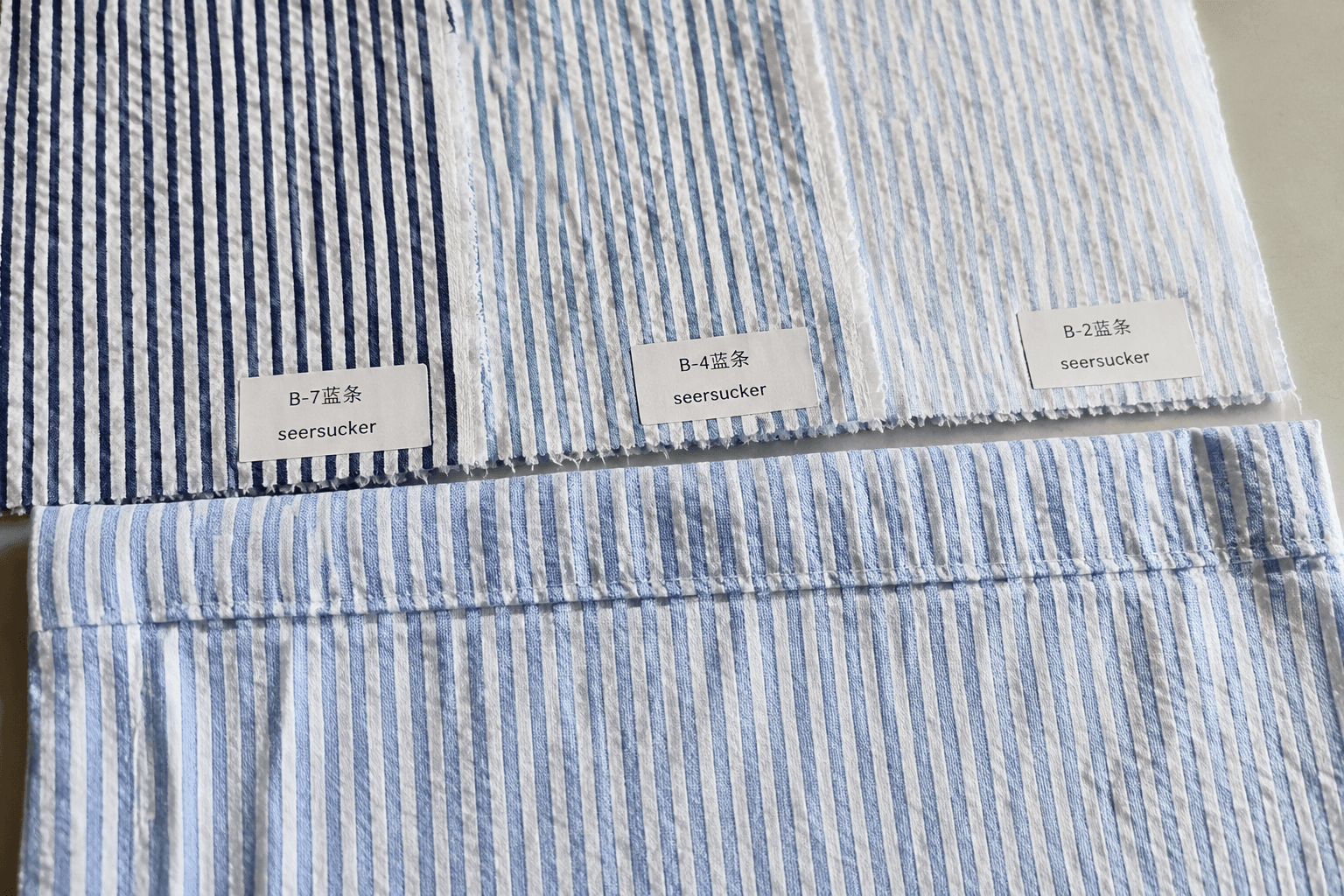
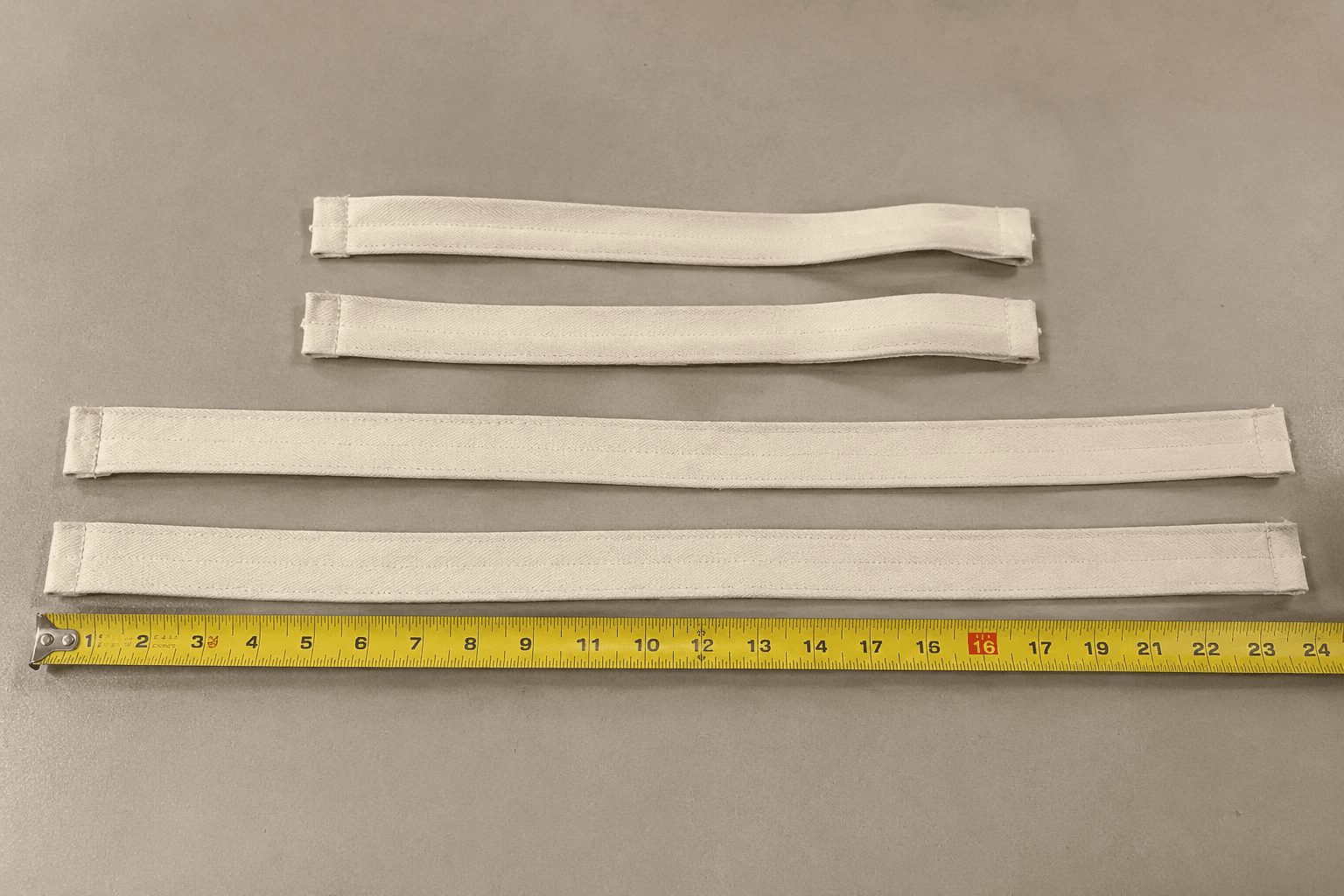
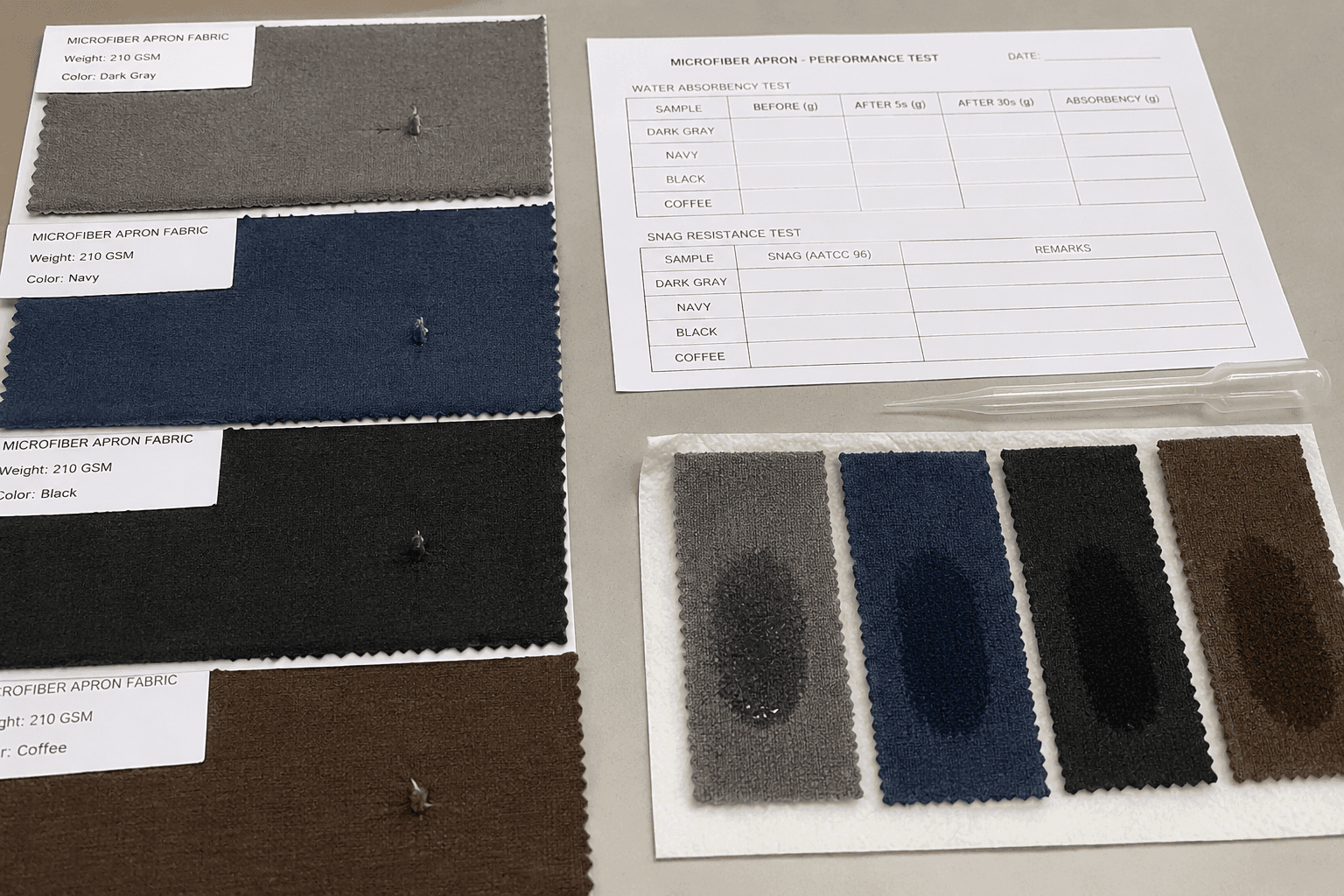
For professional apron buyers, lyocell blend aprons are a fabric-performance choice, not a trend item. Compared with 100% cotton twill or canvas, they usually hang closer to the body, crease less aggressively during wear and present a cleaner premium look for café, bakery, wine, retail and branded resale programs. Those benefits are real, but they depend on disciplined sourcing control.
In OEM apron production, the most workable constructions are usually 55/45, 60/40 or 70/30 cotton-lyocell blends at 230 to 300 GSM, or about 6.8 to 8.8 oz/yd². That range gives enough body for bib panels, lower patch pockets, chest embroidery and bartack reinforcement without reverting to the stiff hand common in 300 to 340 GSM cotton canvas aprons.
The commercial question is simple: when do lyocell blend aprons create measurable value over cotton, and when do they add cost without solving the buyer’s real problem? The answer comes down to end use, laundry regime, accepted defect level, color MOQ, replenishment speed and whether the program can support an ex-factory premium of roughly $0.60 to $1.80 per piece on basic bib styles.
- Lyocell blend aprons usually fit front-of-house, café, bakery, wine service, boutique retail and apron resale programs better than heavy-prep, bleach-exposed or dishwashing use.
- The most reliable spec window is 230 to 280 GSM for softer drape and 280 to 300 GSM where buyers need more body for larger pockets, embroidery and packaged retail presentation.
- Compared with similar cotton apron styles, lyocell-blend versions commonly add $0.60 to $1.80 per piece ex-factory on simple bib patterns at 1,000 to 3,000 pieces.
- Buyers should lock blend ratio, pre-shrink finish, shrinkage tolerance, wash method, seam reinforcement map and logo application before PP approval.
- A practical inspection target is AQL 2.5 major / 4.0 minor, with extra checks on shade continuity, seam puckering, bartacks, tie symmetry and post-wash measurements.
- MOQ and lead time improve when buyers standardize base fabric colors, strap widths and hardware across multiple apron SKUs instead of splitting small custom dye lots.
1. Where lyocell blend aprons make commercial sense in a B2B apron line
Lyocell blend aprons work best when the apron is part of the brand image as well as a uniform item. In sourcing terms, they sit between commodity uniform twills and rugged cotton canvas: softer and more refined than basic workwear, but less tolerant of abusive wash conditions than heavy-duty kitchen fabrics.
That makes them a strong fit for customer-facing apron programs where the garment stays visible for a full shift. Typical channels include café chains, bakery counters, barista teams, wine bars, hotel coffee concepts, florist retail, homeware stores and branded merchandise programs. In those settings, a 250 to 270 GSM cotton-lyocell bib apron usually hangs cleaner than a 10 oz cotton canvas equivalent and reads as a premium uniform rather than a utility layer.
The visual difference is not minor. On long bib aprons with lower patch pockets, towel loops or cross-back straps, the fabric falls in softer folds and produces less boxiness through the torso. Buyers trying to improve presentation often get more value from this fabric change than from adding a rivet set, extra trim or decorative top panel that raises BOM cost without changing the core hand feel.
The limit is operational severity. If the apron will be exposed to bleach splash, heavy grease, sharp-edge abrasion, prep-kitchen friction, dishwashing steam or hard industrial laundry, cotton canvas or poly-cotton twill remains the safer specification. Lyocell blends solve a presentation problem first; they should not be positioned as a heavy-protection apron fabric.
- Best-fit channels: café uniforms, bakery service, bar programs, wine service, boutique retail, hotel gifting and apron resale.
- Poor-fit channels: butcher counters, dishwashing stations, heavy-prep kitchens, janitorial work and bleach-intensive cleaning operations.
- Typical sourcing window: 230 to 280 GSM for softer drape; 280 to 300 GSM when buyers need more structure and logo support.
2. Fabric specifications for lyocell blend aprons: ratio, GSM, weave and yield
For apron sourcing, fiber content alone is not enough. Buyers need the full construction sheet: blend ratio, weave, finished GSM, usable width, shrinkage finish, color route and hand-feel standard. Two fabrics both described as cotton-lyocell can perform differently in cutting, sewing and laundering if density, finishing or width changes.
The most repeatable apron constructions are usually 55/45, 60/40 or 70/30 cotton-lyocell blends in twill, compact plain weave or light canvas structures. A 55/45 blend typically keeps more cotton firmness, which helps pocket setting, chest panel stability and topstitch definition. A 60/40 or 70/30 lyocell-rich blend normally improves hand feel and drape, but it can shift more on the cutting table and may show seam puckering faster if feeding tension is not controlled.
For first development, 235, 250, 270 and 300 GSM are the most practical checkpoints. Below 220 GSM, bib aprons often lose enough body that patch pockets pull down, embroidery distorts and the garment feels closer to a soft fashion apron than a professional service apron. Above 300 GSM, the drape advantage narrows and the product begins to behave like cotton canvas while still carrying the higher material cost.
Fabric yield affects cost more than many buyers expect. Most mills supply these constructions at 57/58 inch usable width. A standard bib apron with one chest pocket, one divided waist pocket and self ties usually consumes about 0.95 to 1.25 meters per piece, depending on body length, strap style and marker efficiency. A longer bib body, separate neck strap, contrast pocketing or cross-back straps can push consumption beyond 1.30 meters, especially on smaller marker runs.
Finish should be approved before sample sign-off. Enzyme finishing improves softness and surface cleanliness. Pre-shrink finishing helps stabilize dimensions. Peach or brushed finishing can create a softer hand, but may reduce crisp logo edges on fine embroidery or high-detail print. For branded aprons, compact smooth-face weaves usually outperform slub or heavily textured surfaces for embroidery clarity and re-order consistency.
- Common blend ratios: 55/45, 60/40 and 70/30 cotton-lyocell.
- Common apron weights: 235, 250, 270 and 300 GSM, equal to about 6.9, 7.4, 8.0 and 8.8 oz/yd².
- Common usable width: 57/58 inches; common bib apron consumption: about 0.95 to 1.25 meters per piece.
3. Why lyocell blend aprons drape better than cotton canvas in front-of-house use
The main buying argument for lyocell blend aprons is drape. Compared with a standard 10 oz cotton canvas apron, a 250 to 270 GSM cotton-lyocell apron usually lies flatter across the bib, gathers less bulk at the waist tie and falls in smoother folds below the pocket line. The result is a cleaner silhouette through service, especially on long bib and cross-back styles.
This matters because front-of-house aprons function as visible branding. Staff move between POS, counter service, guest interaction and social-media photography all day. A softer-falling apron creates a more consistent presentation across different body types and shift conditions. For multi-store buyers, that can improve brand uniformity without changing the overall pattern block.
The benefit is also commercial in resale. When aprons are sold in-store, online or as part of a gift set, customers judge quality in the first few seconds by hand feel and hang. A smoother, less rigid body often supports a stronger retail price than a comparable cotton apron with extra trim. In other words, fabric hand can lift perceived value faster than a woven label, rivet or swing tag upgrade.
The trade-off is body retention. If the construction goes too light, lower patch pockets sag, folded retail presentation weakens and embroidery can pucker after wash. For most professional apron programs, 250 to 280 GSM is the safest middle ground: enough drape improvement to be visible, enough structure to support daily wear, logo placement and pocket function.
- Drape improvement is most visible on bib aprons, long waist aprons and cross-back styles with wider front panels.
- The most balanced drape range for repeat B2B orders is usually 250 to 280 GSM.
- For resale aprons, hand feel often adds more perceived value than minor trim upgrades.
4. Wet strength and wash durability: where lyocell blend aprons can fail
The technical concern with lyocell-blend aprons is not brief wet contact during service. The real risk is repeated wet abrasion under uncontrolled laundering. In bulk programs, the common failure points are seam puckering, hem roping, edge distortion, surface fibrillation, pocket sag after washing and faster face wear where the apron folds or rubs during daily use.
Buyers should test sewn garments, not just fabric swatches. A dry lab swatch can look stable, then behave differently once it is cut into a bib body with bartacks, pocket corners, tie attachments and embroidery. At minimum, buyers should request one sewn-garment wash test before PP approval. If the customer uses a service laundry or central uniform facility, three wash cycles under actual agreed conditions give a much more reliable read than a single cosmetic rinse test.
Shrinkage limits should be written into the approved file. For a 250 to 280 GSM apron, a realistic target is no more than 3% shrinkage in warp and 5% in weft after the agreed wash method. If the buyer expects tumble drying, that must be included in the test. If the buyer expects line dry only, the factory should not be asked to guarantee tumble results later in claims review.
Construction support matters as much as fabric choice. Neck joins, tie ends, towel loops, pocket corners and strap inserts should use bartacks or box-X reinforcement. A lockstitch density around 8 to 10 stitches per inch is common on apron bodies, while 10 to 12 stitches per inch can help narrower strap sections hold shape cleanly. Pressing temperature also needs control, because over-pressing can flatten the face unevenly and exaggerate seam marks on softer blends.
Wash regime determines whether the fabric succeeds. Aprons washed at 30°C to 40°C with mild detergent and moderate tumble or line dry settings usually retain appearance well in café and retail use. The same apron may degrade much faster under chlorine bleach, high-alkali chemistry, tunnel finishing or repeated high-heat drying. Fabric selection must match the actual laundry system used after delivery, not the ideal system described in a meeting.
- Request at least one sewn-garment wash test before approval; request three cycles for service-laundry programs.
- Set shrinkage tolerances such as maximum 3% warp and 5% weft after approved care conditions.
- Do not specify lyocell blends for bleach-heavy apron programs unless supporting mill and garment test data is available.
5. Lyocell blend aprons cost versus cotton: ex-factory pricing, MOQ and lead times
The price comparison starts at fabric level. In typical OEM apron production, a midweight cotton twill or light canvas suitable for bib aprons may cost about $2.20 to $3.10 per meter depending on volume, finish and dye route. A comparable cotton-lyocell construction often lands around $2.80 to $4.00 per meter. That means a fabric premium of roughly 12% to 30%, with the widest gap usually appearing on custom-dyed colors and smaller lot sizes.
At finished-garment level, style complexity changes the impact of that premium. A simple bib apron with one chest pocket, one divided waist pocket and self-fabric ties may cost around $3.90 to $5.40 per piece ex-factory in cotton at 1,000 to 3,000 pieces. The same style in a lyocell blend commonly lands around $4.50 to $6.80. That is where the practical premium of $0.60 to $1.80 per piece is most often seen.
On more developed styles, the fabric premium matters less as a percentage of total BOM. A cross-back apron with antique brass hardware, contrast webbing, rivets, custom embroidery, branded labels and polybag plus insert-card packaging may run $7.20 to $10.80 ex-factory. In those cases, the buyer may accept lyocell more easily because hardware, packaging and trim already account for a larger share of total cost.
MOQ discipline is critical. If the factory uses stocked greige or a repeat ready-dyed base, 300 to 500 aprons per color per style is often workable. For custom dyeing, mills commonly require 800 to 1,500 meters per color. Depending on marker efficiency and style size, that may convert to roughly 650 to 1,400 aprons. Buyers who split five colors across small volumes usually lose both price efficiency and delivery speed.
Lead time must be quoted by fabric route, not as one generic promise. Repeat-color orders using available fabric can often ship in 25 to 35 days after PP approval. Custom dye orders more commonly need 35 to 50 days. In peak season, or where custom hardware is added, 45 to 60 days is more realistic. Buyers needing fast replenishment usually get better results by standardizing body colors such as black, stone, khaki or navy and putting brand variation into embroidery, labels or packaging instead of opening new dye lots.
- Typical ex-factory premium versus cotton: about $0.60 to $1.80 per apron on basic bib styles.
- Typical MOQ: 300 to 500 pieces per color for stocked fabric; 800 to 1,500 meters per color for custom dye lots.
- Typical lead time: 25 to 35 days for repeat colors; 35 to 50 days for custom dye; up to 60 days in peak season.
6. QC standards for lyocell blend aprons: AQL, pre-production control and defect focus
Because lyocell blend aprons are less forgiving than standard cotton twills, the tech pack has to be more exact. Buyers should specify composition tolerance, finished GSM tolerance, approved finish, washed measurement chart, reinforcement map, logo method, stitch density target, packing method and carton ratio. Without these controls, two production lots can share the same fabric name but arrive with different hand feel, shade depth and post-wash dimensions.
A workable inspection target for many professional apron orders is AQL 2.5 major / 4.0 minor. The defect list, however, should reflect the fabric’s real risk points. Inspectors should pay close attention to panel shade variation, seam puckering, seam grin on dark colors, embroidery pull, tie symmetry, skew after wash, missed bartacks and pocket placement drift. These problems tend to show faster on softer-face blends than on rigid canvas.
Pre-production approval should include a lab-dip sign-off for custom colors, one fit sample in final fabric, one washed PP sample and a signed size chart based on washed dimensions rather than cut dimensions. For orders above 3,000 pieces, an early-line review after the first 50 to 100 pieces is a useful control step because it catches feed tension, pressing marks and reinforcement errors before full packing begins.
Trim simplification also improves quality. Keeping one strap width, one hardware finish and one body block across several apron SKUs reduces setup variation and makes line control easier. That matters with lyocell blends because process drift appears faster in seam appearance and final measurements than it does on coarse, rigid cotton fabrics.
- Specify washed measurements, not only cut measurements, in the approved apron spec.
- Use AQL 2.5 major / 4.0 minor with extra checks on shade, puckering, bartacks, tie symmetry and post-wash size.
- Approve embroidery or print only on final finished fabric because logo appearance can change after softening and washing.
7. Buying framework: when to choose lyocell blend aprons and when cotton is the better apron spec
The cleanest sourcing method is a controlled apron-to-apron comparison. Develop one cotton control sample and one lyocell blend apron in the same pattern, same pocket layout, same strap format and same logo position. Then compare drape, hand, shrinkage, seam appearance, washed measurements, ex-factory cost and confirmed lead time. That gives a procurement answer based on real apron performance rather than on fiber marketing.
Cotton remains the stronger specification for heavy abrasion, rough laundering, broad stock-color support and the lowest replenishment cost. It spreads more easily in cutting, tolerates harder wash systems and is simpler to reorder across large volume programs. For hard-use aprons, these practical advantages usually outweigh the visual benefit of softer drape.
Lyocell blends become the better option when the apron is part of the service image or retail offer. If the buyer needs a smoother face, less rigid hang and a more premium in-hand feel, the premium can be justified, especially when the apron is customer-facing all day or sold as merchandise. In those cases, the fabric can improve perceived value more effectively than adding trims.
The decision should pass three procurement filters. First, is the apron mainly for protection, presentation or resale? Second, what exact wash system will it face after shipment: store wash, domestic wash or industrial contract laundry? Third, can the order quantity support fabric MOQ without fragmenting colors? If the answers point to presentation, controlled laundering and disciplined volume, lyocell blends deserve sampling. If they point to punishment, bleach and lowest-cost replacement, cotton should remain the benchmark.
- Choose cotton for heavy abrasion, bleach exposure, industrial laundry and the lowest unit cost.
- Choose lyocell blends for softer hand, cleaner drape, premium front-of-house image and merchandise-friendly presentation.
- Approve two matched prototypes before booking bulk fabric so the trade-off is visible in actual apron use.