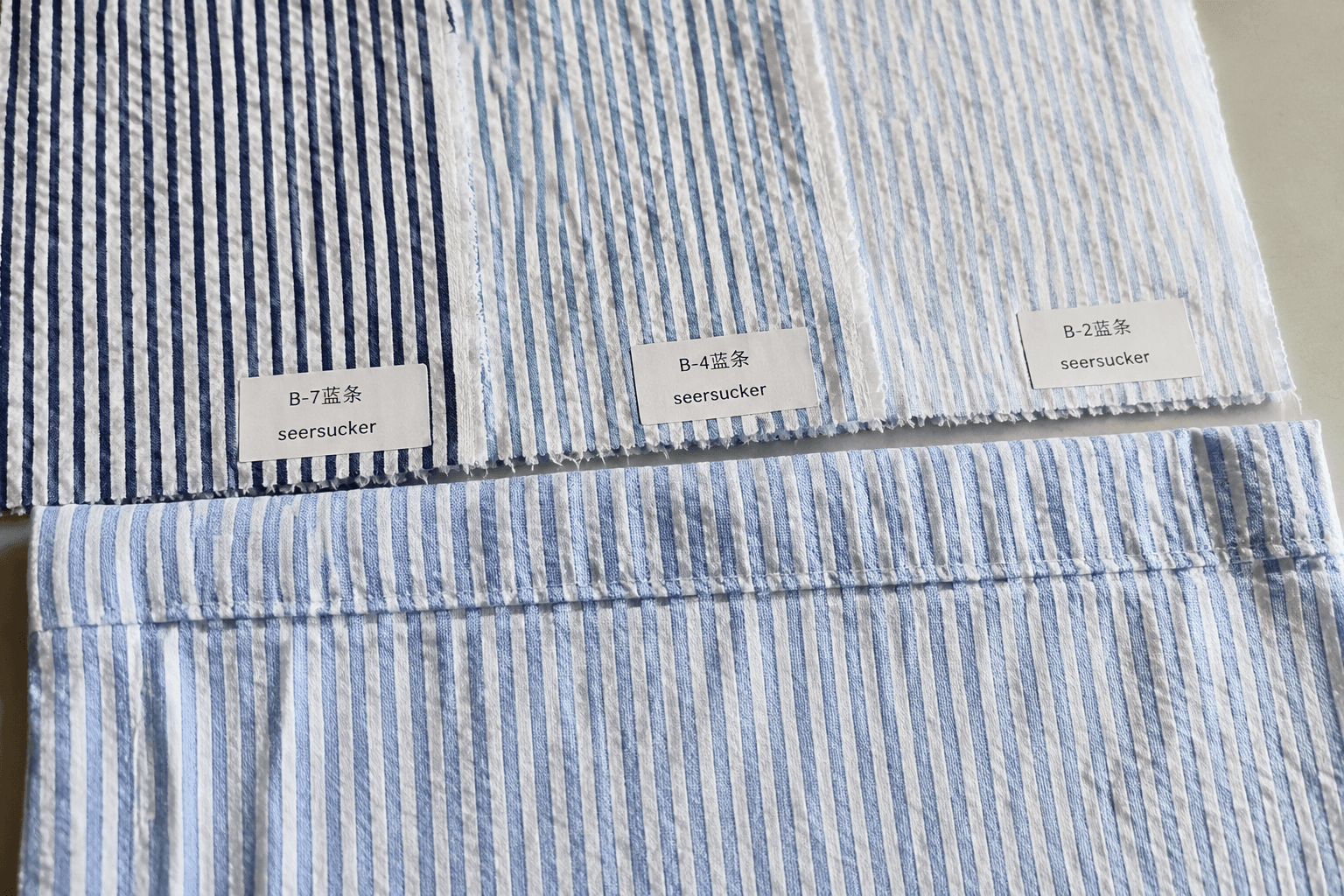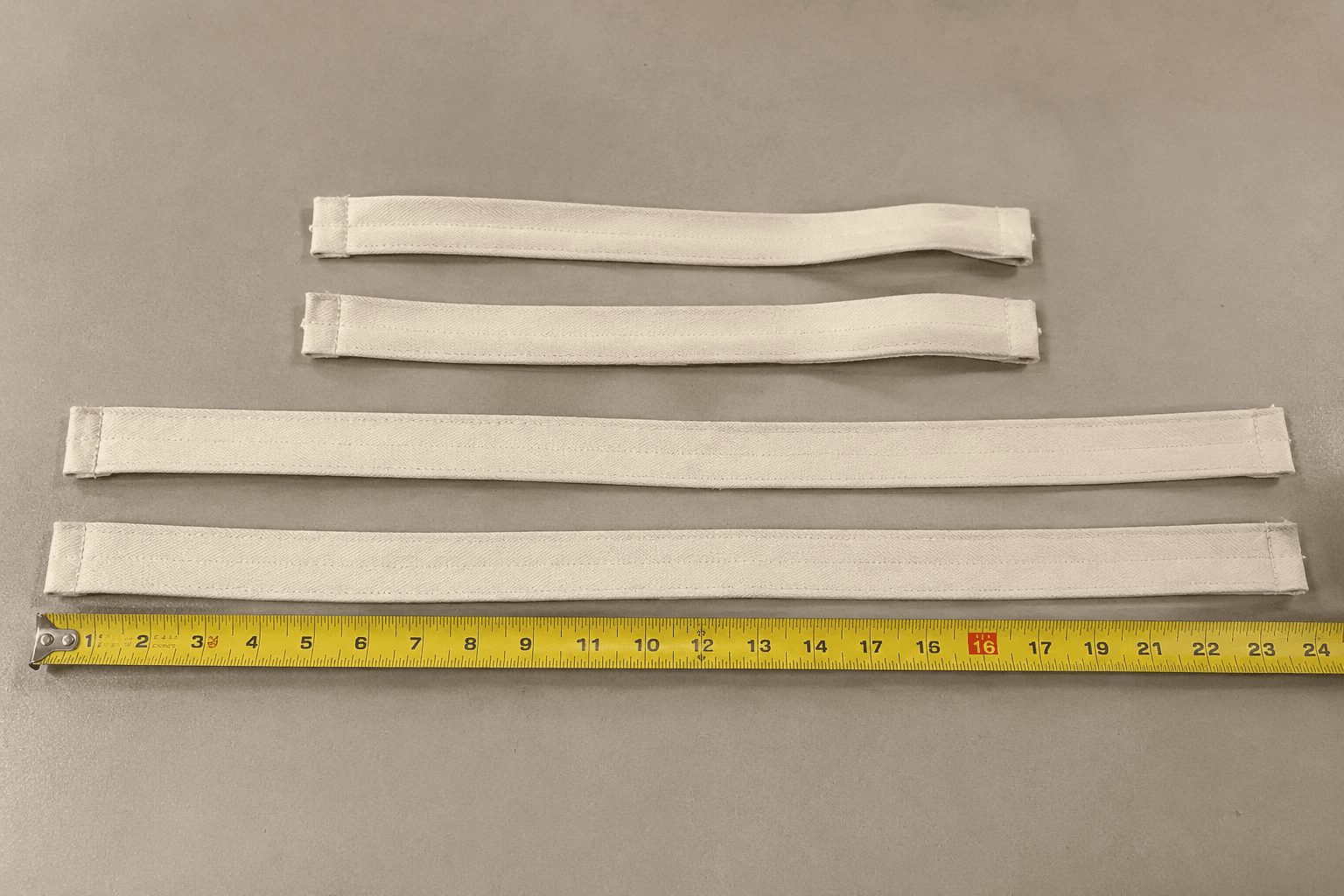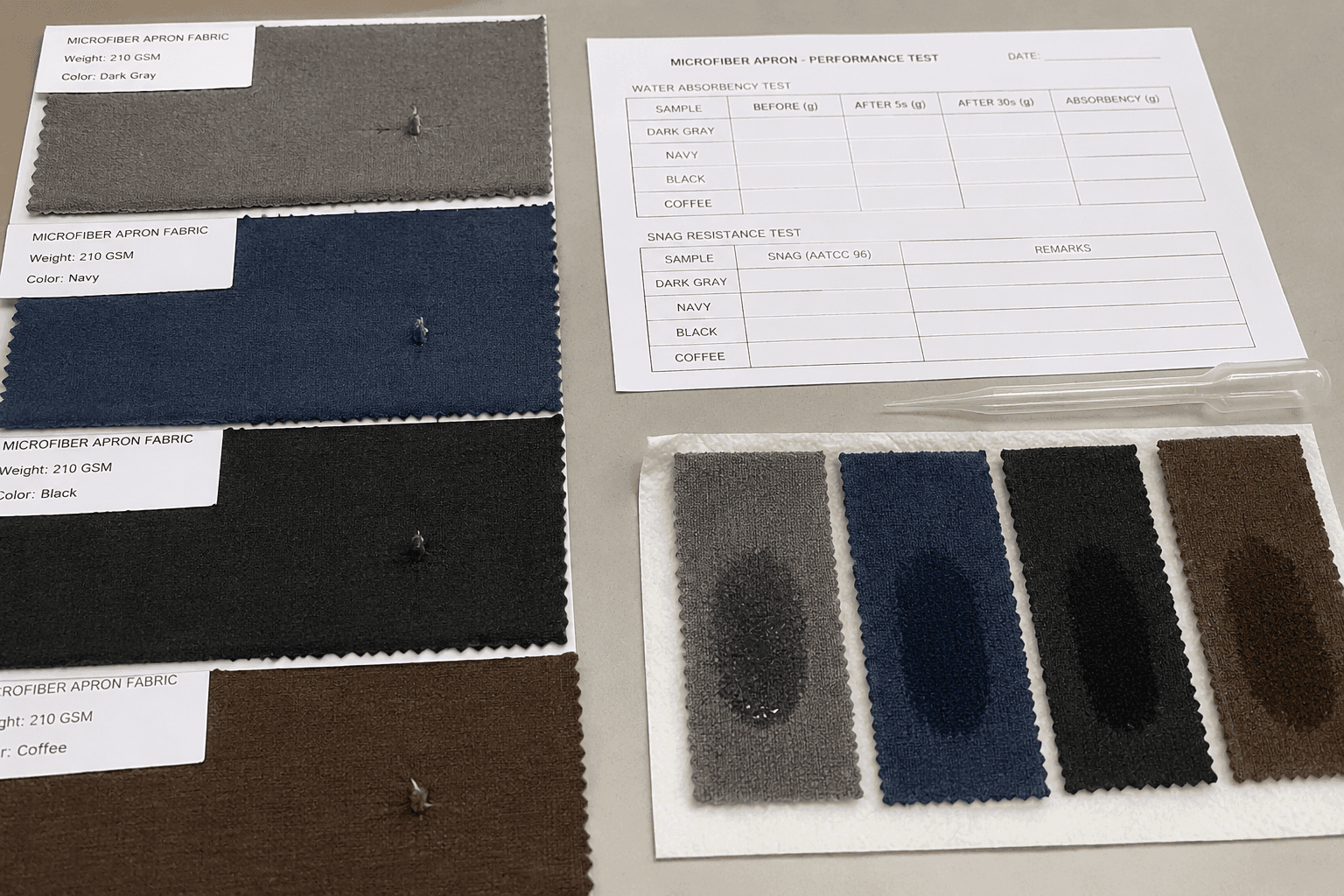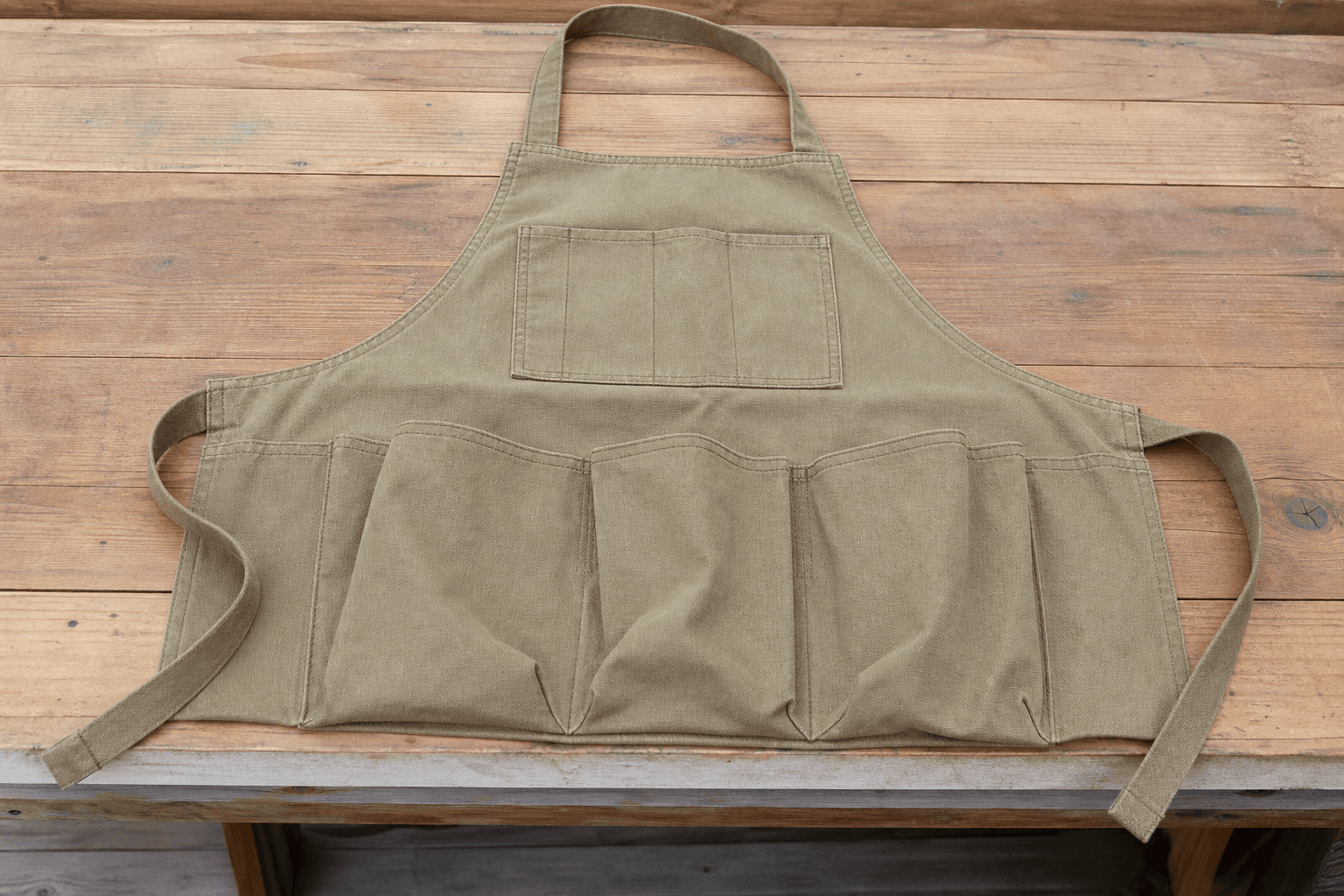
Many apron RFQs still list only fiber content, color and weight. That is not enough for reliable sourcing. In professional apron programs, apron fabric warp weft density often decides whether a white bib apron stays opaque under restaurant lighting, whether a waist apron keeps a clean front edge after 30 commercial wash cycles, and whether actual fabric consumption matches the quoted marker at bulk cutting.
Density is the number of warp ends and weft picks in a fixed distance, usually written as ends x picks per inch. On aprons, that construction detail changes cover, handfeel, seam behavior, shrinkage response and finished width. A 65/35 poly-cotton twill at 245 GSM with 96 x 52 construction will not behave like another 245 GSM twill at 82 x 46, even if both are within a GSM tolerance of plus or minus 5%.
For B2B buyers, density is a commercial control point as much as a technical one. A tighter apron cloth can improve front coverage, pocket shape and logo sharpness, but it can also reduce finished width from 58 in to 56.5 in, extend bulk fabric lead time from 25-30 days to 40-45 days, and add $0.12-$0.38 per apron depending on volume and marker efficiency. The right target is not the highest pick count on paper; it is the construction that meets end use, FOB target, MOQ and wash performance without avoidable cost.
- Apron fabric warp weft density should be reviewed together with GSM, yarn count, weave, finish, finished width and shrinkage before any bulk fabric approval.
- For white, natural, stone, beige and pastel aprons, a higher weft pick count often improves coverage more efficiently than adding 20-30 GSM alone.
- Dense apron cloth supports cleaner embroidery, sharper print edges and firmer pocket shape, but it can also increase stiffness, seam puckering risk and sewing time.
- A tighter construction can reduce cutting yield if finished width drops by 1.5-3.5 in or if wash shrinkage requires extra marker allowance.
- For most custom apron programs, the commercial target is balanced performance: stable cover, shrinkage under 3%, acceptable drape and predictable $/pc at the agreed MOQ.
- Bulk submissions should show finished ends and picks, finished GSM, finished width, shrinkage, colorfastness and AQL level so mills and factories are compared on the same basis.
How to specify apron fabric warp weft density in a usable RFQ
Warp density is the number of lengthwise yarns in the cloth. Weft density is the number of crosswise yarns. Mills normally state construction as ends x picks per inch, such as 72 x 48, 88 x 50 or 96 x 52. For apron buyers, this matters because density is separate from GSM. It indicates how tightly yarns occupy the fabric surface, which directly affects coverage, firmness, seam behavior and marker yield.
A workable apron fabric line should read like this: 65/35 poly-cotton twill, 21s x 16s, 96 x 52, 245 GSM finished, 57/58 in finished width, sanforized, shrinkage under 3% after 40 degrees C wash. Without yarn count and density, two mills can send back fabrics with the same weight but visibly different opacity, handle and width retention. That is a common source of apron sampling delays, cost changes and bulk approval disputes.
Aprons sit between uniform apparel and light workwear, so density should be treated as both a performance signal and a costing signal. A server waist apron, a cafe bib apron and a grill apron can all use twill, but they should not all use the same construction. The quote that looks cheapest on a fabric line can still be the wrong cloth once logo clarity, panel shape and wash life are reviewed.
- Ask mills to quote density on finished fabric, not greige fabric only.
- Request fiber content, yarn count, weave, finished ends x picks, finished GSM, width and shrinkage on every apron swatch.
- If a supplier gives only 7 oz, 8 oz or 240 GSM, the apron fabric description is incomplete for bulk approval.
Why apron fabric warp weft density changes coverage, opacity and logo definition
In apron sourcing, weft pick count is often the first density variable that shows up in visual review. More picks per inch usually close the visible gaps across the cloth width, which makes the apron face look fuller under daylight, kitchen backlight or retail spotlighting. This matters most on white, natural, khaki, beige and light grey aprons, where open construction can show the darker uniform or shirt underneath.
Consider two beige bib apron options at nearly the same weight. Option A is 240 GSM, 20s x 16s, 84 x 48. Option B is 244 GSM, 21s x 16s, 96 x 52. On paper the weight difference is minor. In production, Option B will usually show less panel shadowing around the chest and lower pocket area, better front coverage and a more even face after 15-20 wash cycles. Buyers often see that difference immediately during fit and light-box review.
Branding performance also changes. Denser cloth gives embroidery thread a firmer base and helps small satin-stitch logos keep cleaner edges. In screen print, a tighter surface reduces ink spread and fuzzy outlines, especially on one-color chest logos under 10 cm wide. On a 5,000-piece hospitality apron order, that can reduce repeat strike-offs, rework and claims tied to appearance rather than seam failure.
- For light-color aprons, compare opacity under strong front light and backlight before approval.
- A 6-10 pick increase in weft density can improve cover without forcing the fabric from 240 GSM to 280 GSM.
- Check print and embroidery samples on the approved apron base cloth, not on a similar stock fabric.
When higher pick count improves apron body and when it creates stiffness
Higher density usually adds body before it adds comfort. That can be useful in premium bib aprons where the front panel needs to hang straight, support heavy topstitching and keep patch pockets from collapsing. In cotton twill and cotton-rich canvas, that structured feel often works well at 260-300 GSM with compact constructions such as 84 x 54 or 96 x 50, depending on yarn count.
The limit appears in wear and sewing. Dense cloth resists needle penetration more than open cloth, especially after resin finish, water-repellent treatment or heavy pigment dyeing. Sewing lines may need a stronger needle size, lower bartack speed and closer control of puckering at hem turns, strap joins and pocket corners. If the line trial is skipped, the apron can pass fabric approval but lose efficiency in production through skipped stitches, broken needles and uneven topstitching.
Drape matters because aprons are worn for full shifts. A 300 GSM canvas bib apron with high pick count may look premium on the hanger but feel hot and rigid after 8-10 hours in a cafe, bakery or open kitchen. Many buyers settle in the middle: enough density to hold shape and support branding, but not so much that the cloth feels boardy. That decision should come from wear trial and sewing trial, not from handfeel comments alone.
- Structured bib aprons often perform well at 260-300 GSM with compact twill or canvas construction.
- Soft service waist aprons are commonly more practical at 180-230 GSM with moderate density and a softer finish.
- Before bulk approval, run seam puckering, bartack and skipped-stitch tests on the approved apron fabric after finishing.
Read density together with GSM, yarn count and finish before approving apron cloth
B2B buyers often rely too heavily on GSM because it is easy to compare across quotations. In apron development, GSM alone does not predict performance well enough. A 280 GSM cotton canvas made from coarse yarn at lower density can feel bulky but still show a relatively open face. A 245 GSM twill made from finer yarn at higher density can present a cleaner surface, better coverage and better logo definition at lower weight.
Yarn count changes the result sharply. A 16s x 12s cotton twill at 72 x 48 usually reads more rugged and workwear-oriented. A finer 20s x 16s construction at 84 x 54 often delivers a smoother apron face and better embroidery support at similar or slightly lower GSM. That is why mills should not be asked to match only weight and color. Professional apron sourcing requires comparison of the full construction line.
Finish changes the final reading again. Enzyme wash softens handfeel, resin adds crispness, and sanforization or compaction can tighten the finished structure while reducing residual shrinkage. A loom-state swatch may feel too hard, while the finished apron panel lands correctly after wash and tumble. Development decisions should therefore be made on finished swatches or finished garment panels whenever possible, especially for washed, coated or water-repellent apron programs.
- GSM measures fabric mass; density measures yarn packing and surface closure.
- Finer yarn with higher density often gives a better print and embroidery ground than heavier coarse yarn.
- Review finished shrinkage, width and handfeel after the intended finish, not before.
The real cost impact: yield, MOQ and lead time on apron programs
Density affects apron cost through more than the quoted fabric price per meter. A compact construction may finish narrower, require more stabilization in finishing or need a larger weaving allowance to hold quality consistently. Those factors reduce cutting yield. If a standard bib apron consumes 0.92 m at 58 in finished width, the same pattern can rise to 0.97-0.99 m when the approved fabric finishes at 56.5 in or when marker allowance increases from 2.0% shrinkage to 3.5%.
The arithmetic is small per unit and significant in bulk. At $2.85 per meter, 0.92 m consumption equals $2.62 of base fabric cost per apron. At 0.98 m, that becomes $2.79. Add self-fabric ties, pocket components and a 2.5% cutting loss allowance, and the difference can reach $0.17-$0.34 per piece before labor, trims and overhead. On 10,000 aprons, that is $1,700-$3,400 against margin.
Lead time can shift just as much. A stock greige twill dyed to shade may ship in 22-28 days, while a custom-woven compact cloth can take 38-45 days depending on loom allocation, lab dip approval and finishing queue. MOQ also rises with customization. Custom-dyed apron fabric often starts around 1,500-3,000 meters per color, while custom-woven constructions may require 3,000-5,000 meters. An apron factory may be able to cut and sew 600 pieces per color, but specialized fabric can push the practical MOQ much higher than the sewing minimum.
- Check finished width, shrinkage allowance and marker efficiency before locking FOB.
- A consumption increase of 0.05-0.07 m per apron becomes material at 5,000 pieces and above.
- Dense custom constructions usually carry longer lead times than stock base cloth converted to color.
Put apron fabric warp weft density into approvals, QC and bulk POs
A strong apron tech pack should leave little room for fabric substitution. State fiber content, weave, yarn count, apron fabric warp weft density, finished GSM, finished width, finish, color standard, shrinkage target and branding method. If the apron is intended for chain-store replenishment, food service or repeated industrial laundering, include the expected wash condition and minimum performance after the agreed number of cycles.
Tolerance control should be practical and easy to inspect. For many apron programs, buyers can specify finished GSM tolerance of plus or minus 5%, width tolerance of plus or minus 1 in, and shrinkage under 3% in warp and under 3% in weft after the agreed test method. Inspection levels should also be explicit. AQL 2.5 for major defects and 4.0 for minor defects is common for mid-volume uniform aprons, while premium retail aprons may tighten visual review for face appearance, logo placement and shade continuity.
Sampling should compare at least two nearby constructions when end use is still open. For example, a buyer can evaluate 88 x 48 against 96 x 52 at similar GSM to decide whether the extra cover justifies the cost and lead-time increase. That side-by-side review turns a subjective fabric discussion into a sourcing decision with visible tradeoffs in opacity, drape, sewing efficiency and final $/pc.
- Include finished ends x picks on the apron approval sheet and on the bulk PO.
- State whether density is measured per inch or per centimeter and keep one unit across all documents.
- Define AQL, shrinkage method, colorfastness target and approved handfeel reference before bulk cutting.
Where denser apron cloth earns its premium and where balanced construction is the better buy
Higher density usually pays back when the apron is customer-facing and brand presentation matters daily. Cafe chains, hotel F&B teams, culinary retail brands and premium home-kitchen labels often benefit from cleaner front coverage, better logo support and stronger shape retention. In these programs, FOB commonly lands around $6.80-$12.50 per piece depending on fabric, trims and order volume, so a fabric premium of $0.20-$0.40 per apron can be justified if it reduces appearance claims and improves presentation on staff or at retail.
The case is weaker in promotional or short-cycle programs. An event apron or giveaway apron with a target FOB of $2.90-$4.80 usually does not need the densest available cloth. In that segment, stable shade, manageable MOQ, 20-30 day fabric lead time and clean basic sewing usually matter more than pushing pick count for a premium handfeel. A balanced 180-220 GSM poly-cotton twill with moderate density is often the better commercial choice.
Utility and grill aprons sit between those extremes. Buyers may want more compact cloth for abrasion resistance and pocket stability, but excessive density can trap heat and reduce comfort over long shifts. The correct sourcing decision is to specify only enough density to meet the use case, then confirm it through wear trial, wash test and line trial. In apron sourcing, the best fabric is rarely the heaviest or the tightest; it is the one that delivers the target look, service life and margin at bulk scale.
- Premium hospitality aprons usually justify denser construction because appearance and branding affect claims and replacement rates.
- Promotional aprons usually benefit more from cost stability and shorter lead time than from maximum pick count.
- Utility aprons should balance coverage and abrasion resistance against heat buildup and wearer comfort.