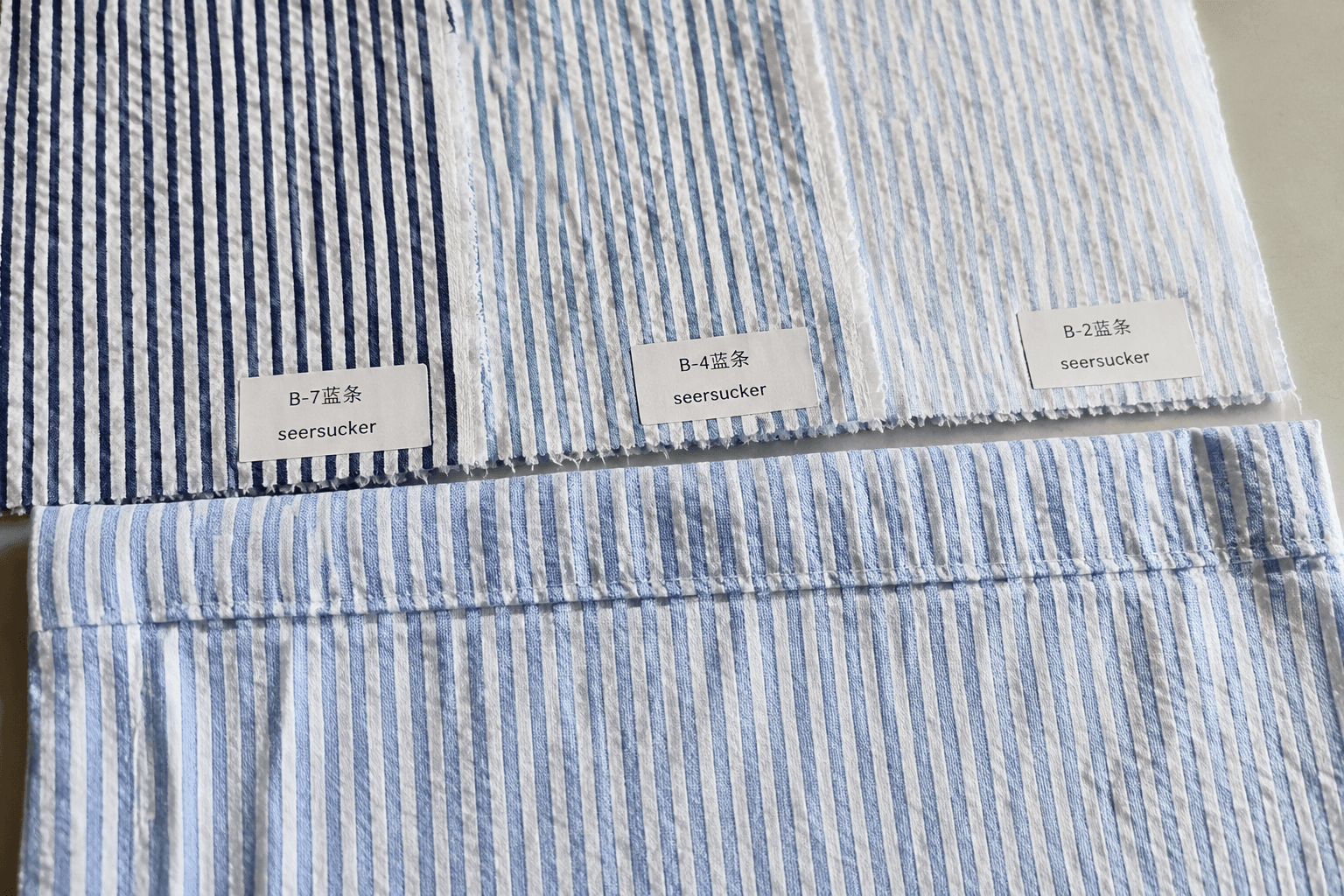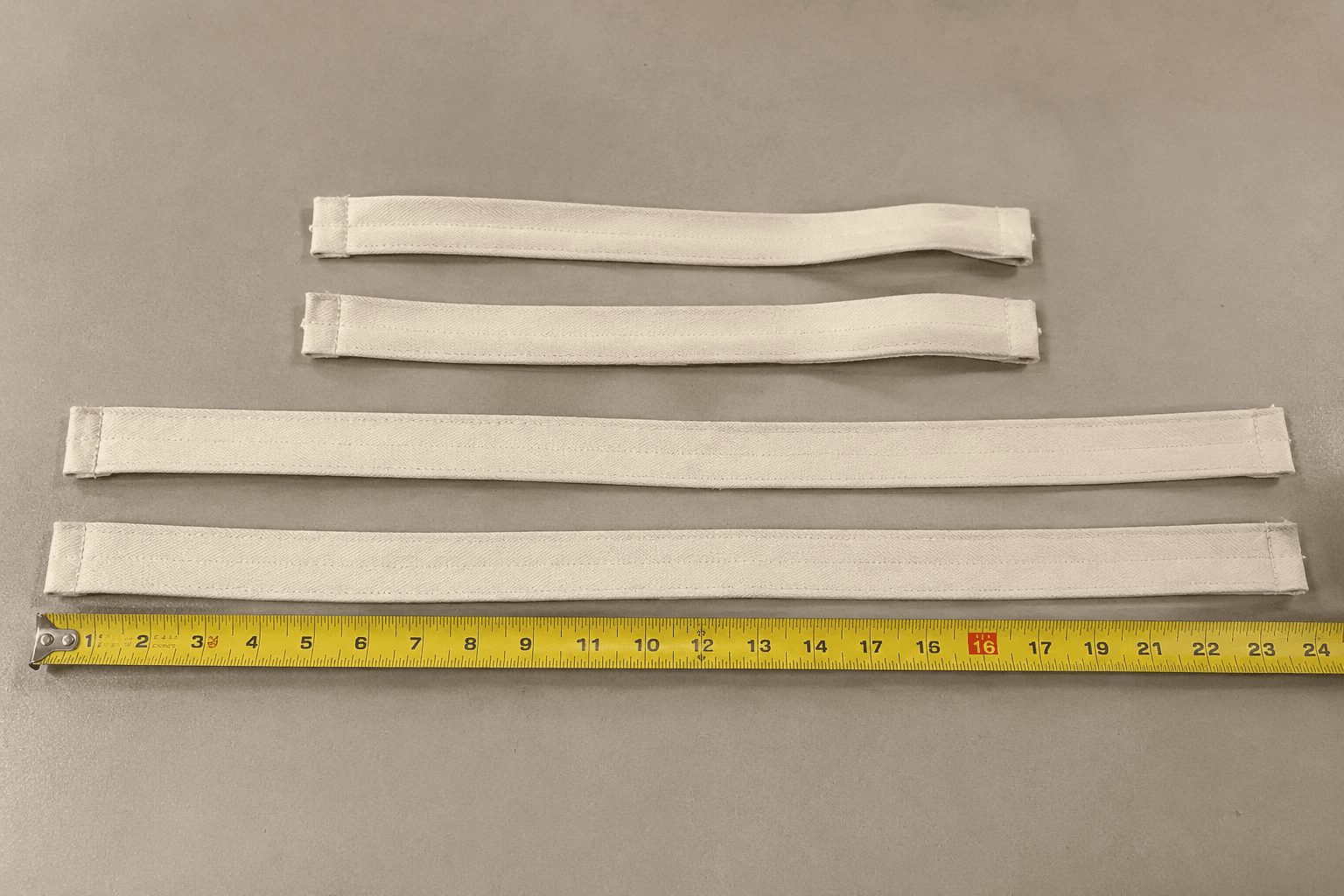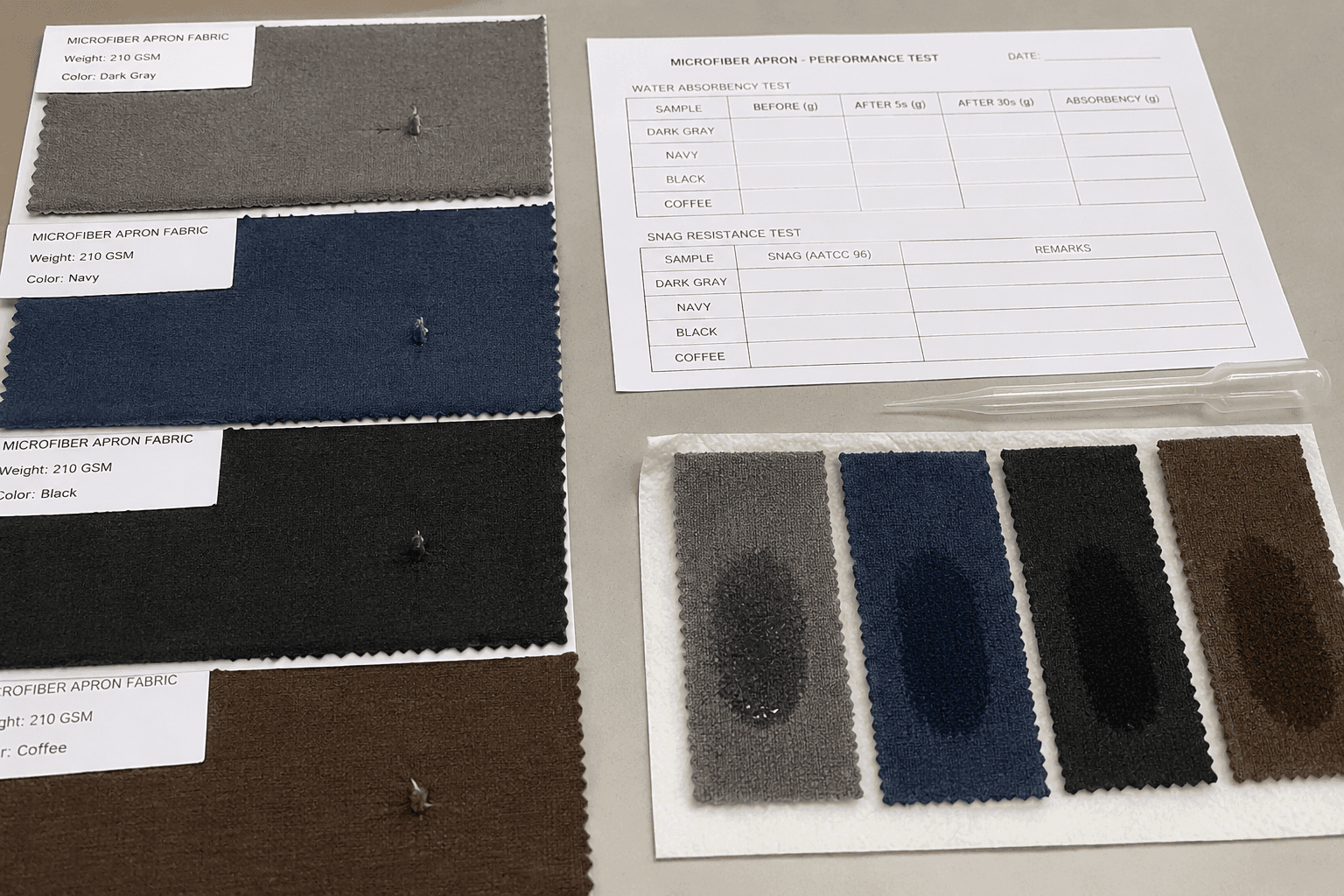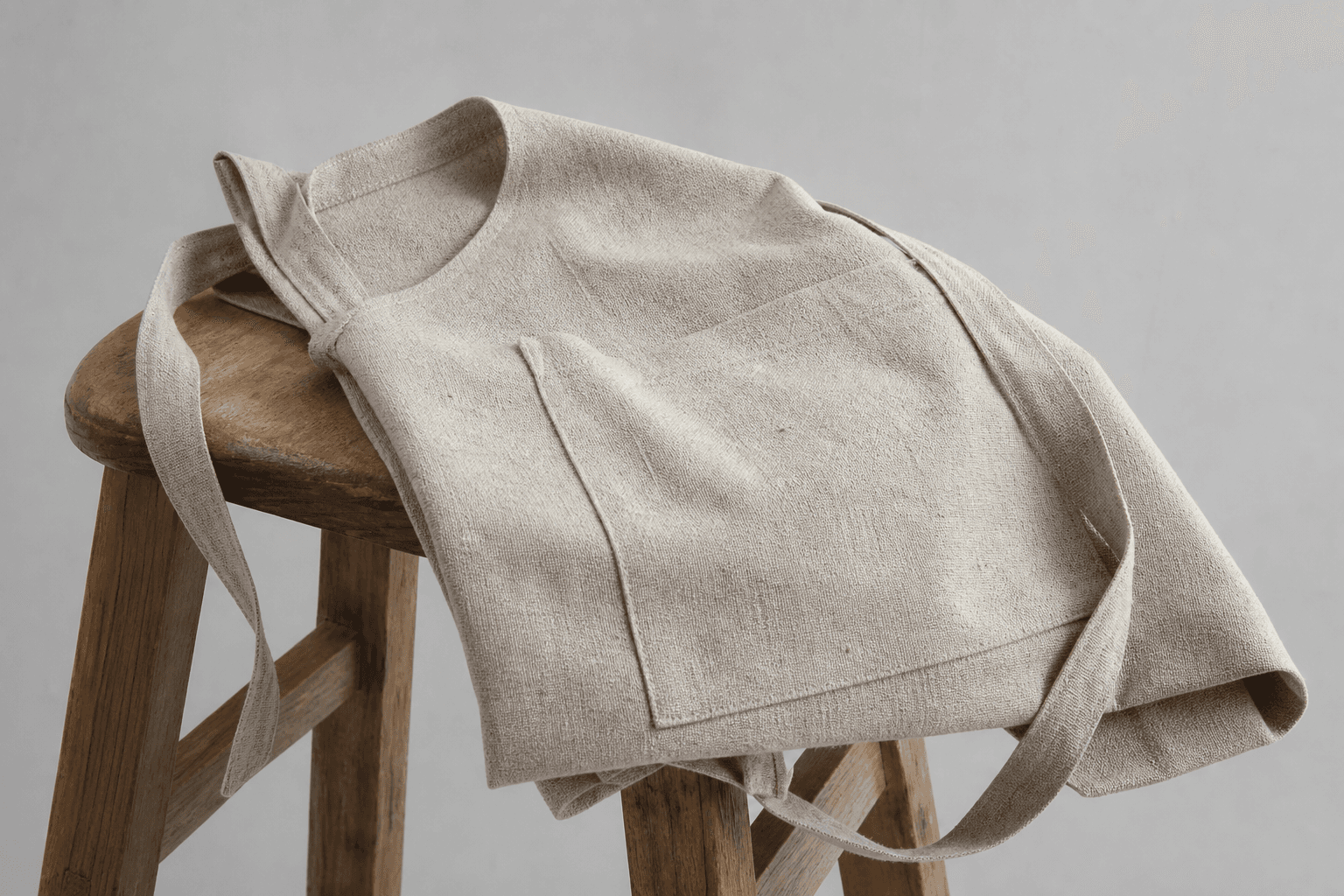
For apron programs where durability and sustainability must sit in the same specification, hemp deserves serious consideration. A well-built hemp apron can handle repeated washing, counter friction, tool contact and daily service wear better than many lightweight cotton options, while giving brands a clear natural-fiber story. The sourcing challenge is that hemp is not a single fabric. Fiber quality, spinning method, blend ratio, weave, dyeing and finishing all change the final handfeel, shrinkage, color stability and cost.
From a factory perspective, hemp works best when the buyer treats it as a performance material, not only as a sustainability label. A 55% hemp / 45% cotton canvas at 280-320 GSM behaves very differently from a 20% hemp / 80% cotton twill at 240 GSM. Both can be called a hemp blend apron, but their drape, seam bulk, color depth and unit cost will not be the same.
This article explains the practical sourcing decisions behind hemp and hemp-blend aprons: fabric structures, GSM ranges, wash performance, MOQ, lead time, trims, testing and price drivers. The goal is to help sourcing managers and product developers brief suppliers with enough detail to get consistent samples and realistic quotations.
- Hemp is durable but not automatically soft, so blend ratio and finishing must match the apron use case.
- Most commercial apron orders use hemp-cotton blends because they balance strength, handfeel, dyeing and cost.
- Recommended apron weights usually sit between 240 and 360 GSM, depending on whether the style is cafe, bib, barista or workwear.
- Shrinkage control must be agreed before bulk, especially for garment-washed hemp cotton apron styles.
- MOQ is usually higher than standard cotton canvas because hemp yarn and greige fabric availability are more limited.
- Testing should cover dimensional stability, crocking, tensile strength and seam slippage, not only fabric composition.
Why a hemp apron is different from a cotton apron
Hemp fiber has a long, strong bast structure. In apron fabric, this gives better abrasion resistance and tensile strength than many short-staple cotton fabrics at a similar weight. For buyers sourcing chef aprons, cafe aprons, garden aprons or workshop aprons, that strength is useful because the garment is exposed to friction at the waist, pressure at pocket corners, repeated tying and laundering. A hemp apron is not selected only because it is natural; it is selected because the fiber can support a longer service life when the construction is correct.
The trade-off is handfeel. Pure hemp canvas can feel dry, firm and slightly coarse, especially before washing. This may be acceptable for utility aprons or rugged workwear styles, but less suitable for front-of-house hospitality where staff expect comfort during an 8-10 hour shift. Blending hemp with cotton, organic cotton, recycled cotton or linen can improve softness and reduce fabric stiffness while preserving part of the durability benefit.
Color is another difference. Hemp does not always take dye in exactly the same way as cotton. Dark navy, black, charcoal and saturated brand colors may require extra lab dip rounds, stronger fixation and careful crocking control. For retail or uniform programs where color repeatability matters, the supplier should confirm whether the fabric is piece-dyed, yarn-dyed, garment-dyed or washed after sewing.
- Choose 100% hemp when a dry, rugged texture and strong sustainability message are more important than soft drape.
- Choose a hemp cotton apron when the program needs a more familiar handfeel, easier sewing and better color consistency.
- Choose a low hemp-content blend when the buyer wants hemp in the material story but must stay close to standard cotton apron pricing.
Common hemp blend apron fabrics and realistic GSM ranges
Most bulk orders do not use 100% hemp. In our apron sourcing work, the most practical options are hemp-cotton canvas, hemp-cotton twill and hemp-cotton-linen blends. The ratio depends on target price, texture and durability. A 15-25% hemp blend gives a visible sustainability claim with moderate cost increase. A 45-55% hemp blend gives a stronger material story and more durable apron material performance, but the fabric becomes firmer and the yarn supply becomes less flexible.
For aprons, GSM should be specified together with weave. A 280 GSM twill can feel softer and more flexible than a 280 GSM plain canvas. A 340 GSM canvas may look premium but can create thick seams at pocket openings, waist tie insertions and cross-back strap attachment points. If the buyer requests metal hardware, double-layer pockets and binding, the sewing team must check needle size, seam allowance and machine setting during sampling.
As a practical range, light cafe or server aprons usually work at 220-260 GSM. Standard bib aprons for restaurants and retail uniforms are commonly 260-320 GSM. Heavy barista, florist, maker and workshop aprons can sit at 320-380 GSM, but above 360 GSM the garment becomes noticeably heavier. For a full bib apron with pockets and long straps, every additional 50 GSM may add roughly 50-90 grams per piece depending on pattern size.
- 220-260 GSM hemp-cotton twill is suitable for light hospitality aprons and promotional retail programs.
- 260-320 GSM hemp-cotton canvas is suitable for standard bib aprons, cafe aprons and branded staff uniforms.
- 320-380 GSM hemp canvas or high-hemp blend canvas is suitable for barista, gardening, workshop and utility apron styles.
- 10-12 oz fabric is often a useful workwear range, but buyers should confirm whether the supplier quotes oz per square yard or approximate GSM conversion.
Durability performance: what to specify beyond the word hemp
A durable apron material is not created by fiber alone. The fabric construction, yarn count, weave density, pocket reinforcement, bartack placement and washing finish all decide how the apron performs in use. Hemp gives a strong starting point, but weak pocket corners or narrow ties can still fail before the fabric body wears out. For commercial buyers, the technical pack should show reinforcement details around stress points.
For a standard bib hemp apron, we recommend bartacks at upper pocket corners, lower pocket corners, waist tie exits and neck strap stress points. For cross-back aprons, reinforce the strap entry points because the load is distributed differently from a neck-loop design. If the apron carries tools, order books, pruning scissors or coffee equipment, pocket bag depth and corner construction should be tested with actual objects, not only reviewed on a flat sample.
Laundry is the other durability test. A hemp blend apron used in cafes may be washed 2-5 times per week. Industrial laundry is harsher than domestic washing because of higher temperature, stronger detergent and mechanical action. If the buyer expects industrial laundry, the fabric and trims should be tested accordingly. A sustainable apron fabric still needs to survive the buyer's real cleaning process.
- Request tensile strength and tear strength data for the selected bulk fabric, especially for aprons above standard hospitality use.
- Specify bartack positions in the tech pack instead of leaving reinforcement to supplier judgment.
- Use pocket lining or double-layer pocket panels only where needed, because heavy hemp fabric can become bulky.
- Confirm tie width and finished tie thickness after washing, since narrow hemp ties can twist if the fabric is too firm.
- Test the apron after 5 domestic washes or 3 industrial-style washes before confirming bulk production.
Sustainability claims and material traceability
Hemp is often presented as a sustainable apron fabric because the crop can require less irrigation and fewer pesticides than conventional cotton. That statement may be directionally true, but brand buyers still need disciplined documentation. A supplier should not turn a natural fiber into an unsupported claim. For B2B orders, the purchase specification should separate composition, certification, dyeing process and packaging requirements.
Composition can be verified by fiber content testing. Certification is separate. If the buyer needs organic hemp, OEKO-TEX, GOTS-related processing, recycled cotton blending or specific restricted substance compliance, those requirements must be stated before quotation. Many mills can provide conventional hemp-cotton fabric more easily than certified organic hemp fabric. Certified supply may increase MOQ, extend lead time and limit color availability.
Packaging also affects the sustainability profile of a hemp apron program. Individual polybags may be required for logistics or retailer intake, but some wholesale uniform buyers can accept bulk packing by size and color. Switching from individual polybags to master polybag bundles can reduce plastic use and packing labor, but only when the buyer's warehouse can handle it.
- Ask for fabric composition, mill source and test report availability before approving the sales sample.
- State whether sustainability claims require certification or only declared fiber content.
- Confirm whether azo, formaldehyde, heavy metal and pH testing is required for the destination market.
- Decide between individual packing and bulk packing before price confirmation, because packing labor and materials affect the final $/pc.
Hemp apron dyeing, washing and shrinkage control
Dyeing is one of the most important cost and risk areas for hemp aprons. Natural, oatmeal, undyed and lightly dyed colors are usually easier to manage. Dark black, espresso, forest green, burgundy and deep navy require tighter lab dip control and stronger colorfastness testing. Hemp blends can show a slightly heathered or slubbed surface because hemp fibers are less uniform than combed cotton. Many buyers like this texture, but it should be approved as part of the design, not discovered in bulk inspection.
Shrinkage must be discussed early. Hemp and hemp-cotton fabrics may shrink meaningfully if not pre-shrunk, sanforized or garment-washed. For apron programs, a practical target is often within +/-3% after washing for body width and length, though some washed rustic styles may accept up to 5% if the pattern is adjusted. If the apron has adjustable neck straps, cross-back straps or fixed-length ties, shrinkage affects fit and tying comfort, not just measurement compliance.
Garment washing can improve handfeel. A heavy hemp blend apron may feel much better after enzyme wash, soft wash or stone wash. However, washing adds cost, time and variation. It can also reduce color depth and create shade differences between batches. If the buyer wants a garment-washed look, approve a washed sample, not a raw fabric sample. Bulk measurement tolerances should reflect the washing method.
- For piece-dyed fabric, allow 5-8 days for lab dips and 7-12 days for bulk dyeing after approval.
- For garment-washed aprons, add 3-6 production days depending on wash type and factory capacity.
- Set a shrinkage target in the PO, such as maximum 3% after 40 degrees C wash, if fit consistency matters.
- Request dry and wet crocking results for dark colors, especially black, navy, charcoal and red-brown shades.
- Approve color under D65 and TL84 light sources when the apron is used in both retail and hospitality environments.
Cost drivers for hemp cotton apron production
A hemp cotton apron normally costs more than a standard cotton canvas apron. The difference depends on fiber percentage, fabric weight, finishing, order quantity and hardware. For reference, in China bulk production, a simple 260-280 GSM cotton canvas bib apron may quote around US$2.20-3.40 per piece at 1,000-3,000 pcs, depending on size and trims. A comparable hemp-cotton blend apron may sit around US$3.20-5.80 per piece. Heavy washed high-hemp aprons with metal hardware, large pockets and cross-back straps can move above US$6.00-9.50 per piece.
Fabric is the main driver. Hemp yarn is more expensive and less widely stocked than standard cotton yarn. Higher GSM increases consumption per piece. Garment washing adds processing cost and handling loss. Hardware such as brass rivets, metal grommets, detachable straps and leather patches can make the apron look more robust, but they also increase inspection requirements and may complicate wash testing.
Printing and branding also need attention. Screen printing on hemp canvas can work well, but the surface texture may reduce edge sharpness compared with smooth cotton twill. Embroidery is durable but can pucker on lighter weights if backing and tension are not controlled. Woven labels, cotton labels and recycled polyester labels are all possible, but label claims must align with the buyer's sustainability policy.
- At 500 pcs, expect higher unit cost and fewer fabric choices because hemp fabric procurement is less flexible.
- At 1,000-2,000 pcs, custom color and standard hemp-cotton fabric development become more realistic.
- At 3,000-5,000 pcs, buyers can usually negotiate better fabric purchasing and more stable shade control.
- At 10,000 pcs and above, mill booking, lab testing and phased delivery planning become more important than sample speed.
MOQ, sampling and lead time for hemp apron orders
MOQ depends on whether the fabric is available in stock or must be woven or dyed. For stock hemp-cotton fabric in natural or common colors, a factory may accept 300-500 pcs per color for simple apron styles. For custom dyed fabric, the practical MOQ is often 800-1,500 pcs per color. For custom woven hemp fabric, the MOQ can rise to 2,000-3,000 meters, which may translate into several thousand aprons depending on pattern consumption.
Sampling usually needs more time than standard cotton aprons. If the buyer selects an available fabric, a proto sample can often be made in 5-7 days. If lab dips are required, add 5-8 days. If the fabric must be washed, dyed or specially finished before sample sewing, the sample stage may take 12-18 days. Buyers should avoid approving only a digital photo for hemp texture; the handfeel, weight and stiffness should be checked physically.
Bulk lead time for hemp apron production is usually 30-45 days after sample approval and deposit for ordinary orders. For custom fabric weaving, certified materials, garment washing or large multi-color programs, 50-70 days is more realistic. Peak season and dye-house capacity can add another 7-10 days. A reliable production calendar should include fabric booking, dyeing, shrinkage testing, cutting, sewing, washing if needed, final inspection and packing.
- Stock fabric sample: usually 5-7 days for sewing after design confirmation.
- Custom lab dip: usually 5-8 days per round before sample or bulk dyeing.
- Salesman sample with wash: usually 12-18 days depending on fabric and wash process.
- Bulk production from stock fabric: usually 25-35 days after approval and deposit.
- Bulk production with custom dyed or woven hemp fabric: usually 40-70 days depending on MOQ and testing.
How to brief a supplier for a reliable hemp apron quotation
The best hemp apron quotations come from complete specifications. If a buyer only asks for a sustainable apron with pockets, suppliers must guess the blend ratio, weight, finishing, size, strap structure and packing. The result is a wide price range that is difficult to compare. A more useful RFQ states the apron type, target use, annual volume, fabric preference, GSM, color, branding method, testing needs and delivery terms.
For product developers, the first sample should confirm fabric direction and fit. The second sample should confirm construction, color, branding and shrinkage. For large programs, a pre-production sample made from bulk fabric is strongly recommended before cutting all goods. Hemp fabric has enough natural variation that buyers should define acceptable slub, nep and shade range in approval comments.
A good supplier will also challenge unrealistic combinations. For example, a buyer may request a 360 GSM high-hemp cross-back apron with large double pockets, heavy embroidery, garment wash and a price below US$3.00 at 500 pcs. Technically, the apron can be made, but not at that cost. Clear trade-off discussions save time: reduce GSM, lower hemp percentage, simplify hardware, increase order quantity or accept a higher target price.
- Provide target fabric composition, such as 55% hemp / 45% cotton or 20% hemp / 80% cotton.
- State GSM or oz clearly and confirm whether the fabric should be canvas, twill or yarn-dyed stripe.
- Include finished apron dimensions, pocket size, strap type and reinforcement points.
- Specify branding method, artwork size and position before quotation.
- Confirm test standards, packing method, destination port and expected delivery date.
- Share a target price range when possible, so the supplier can recommend realistic fabric and construction options.