For many hospitality, coffee, bakery, garden, wellness and homeware brands, the organic cotton apron has moved from a niche item to a regular development request. Buyers usually ask for cleaner raw material, credible certification, and a softer hand feel, while still expecting industrial stitching, stable color, predictable shrinkage and bulk pricing that can work for wholesale channels.
From the factory side, organic cotton is not simply the same apron with a different hangtag. The sourcing route changes at yarn, weaving, dyeing, printing, sewing, labeling and packing stages. A gots certified apron requires transaction certificates and chain-of-custody control, while a non-certified sustainable cotton apron may only use organic cotton fabric without full product certification.
This article explains how an organic apron manufacturer in China evaluates GOTS certification, fabric sourcing, MOQ, lead time and cost. The goal is to help sourcing managers decide when full certification is necessary, when organic-content claims are enough, and what technical details should be confirmed before placing a bulk order.
- A GOTS product claim requires certified processing from fabric through finished apron, not only organic cotton yarn.
- Most organic cotton apron programs use 200-320 GSM twill or canvas, depending on whether the apron is for retail, cafe service or workshop use.
- GOTS-certified dyeing and printing usually add 7-15 days compared with conventional reactive dyeing or pigment printing.
- A realistic MOQ is often 500-1,000 pcs per color for stock organic fabric and 1,500-3,000 pcs per color for custom dyed fabric.
- Full GOTS control can add approximately USD 0.35-1.20 per piece, depending on fabric weight, trim selection, testing and audit documentation.
- Buyers should separate organic material, certified processing and finished-product labeling rights in the purchase specification.
What an organic cotton apron actually means in bulk sourcing
In apron sourcing, the term organic cotton apron can mean three different things. The first is an apron made from cotton fiber grown under an organic farming standard, but with no certified control after the spinning stage. The second is an apron made from certified organic cotton fabric, where the fabric supplier can provide a valid transaction certificate but the garment factory does not hold GOTS scope for cut-and-sew. The third is a finished gots certified apron, where the entire chain from certified input material to sewing, labeling and packing is covered by GOTS-approved facilities and documents.
These distinctions matter because they affect labeling, price, lead time and legal risk. A buyer may be able to describe a product as made with organic cotton only if the evidence supports that claim in the selling market. To use GOTS marks or make a finished-product GOTS claim, the apron must be produced under a certified chain of custody. A normal factory cannot simply buy GOTS fabric, sew the aprons, and apply a GOTS hangtag unless its process is covered and approved.
For custom apron orders, we normally ask the buyer to define the claim before sampling. If the product is for a private-label cafe uniform, organic fabric with a material certificate may be sufficient. If it is for a retail homeware line sold in the EU, US, UK or Japan with sustainability wording on the packaging, the buyer should confirm the exact claim with its compliance team before artwork and labeling are finalized.
- Organic cotton fabric only: useful for brands that want improved material sourcing but do not need a finished-product certification logo.
- GOTS-certified fabric: suitable when the buyer needs traceable input material, but finished-product GOTS labeling is not required.
- Finished gots certified apron: required when the apron, label or packaging will carry a GOTS claim or certification mark.
- Blended organic content: possible with organic cotton and recycled polyester, but the certification and claim wording must be checked before production.
Organic cotton apron fabric options: GSM, weave and performance
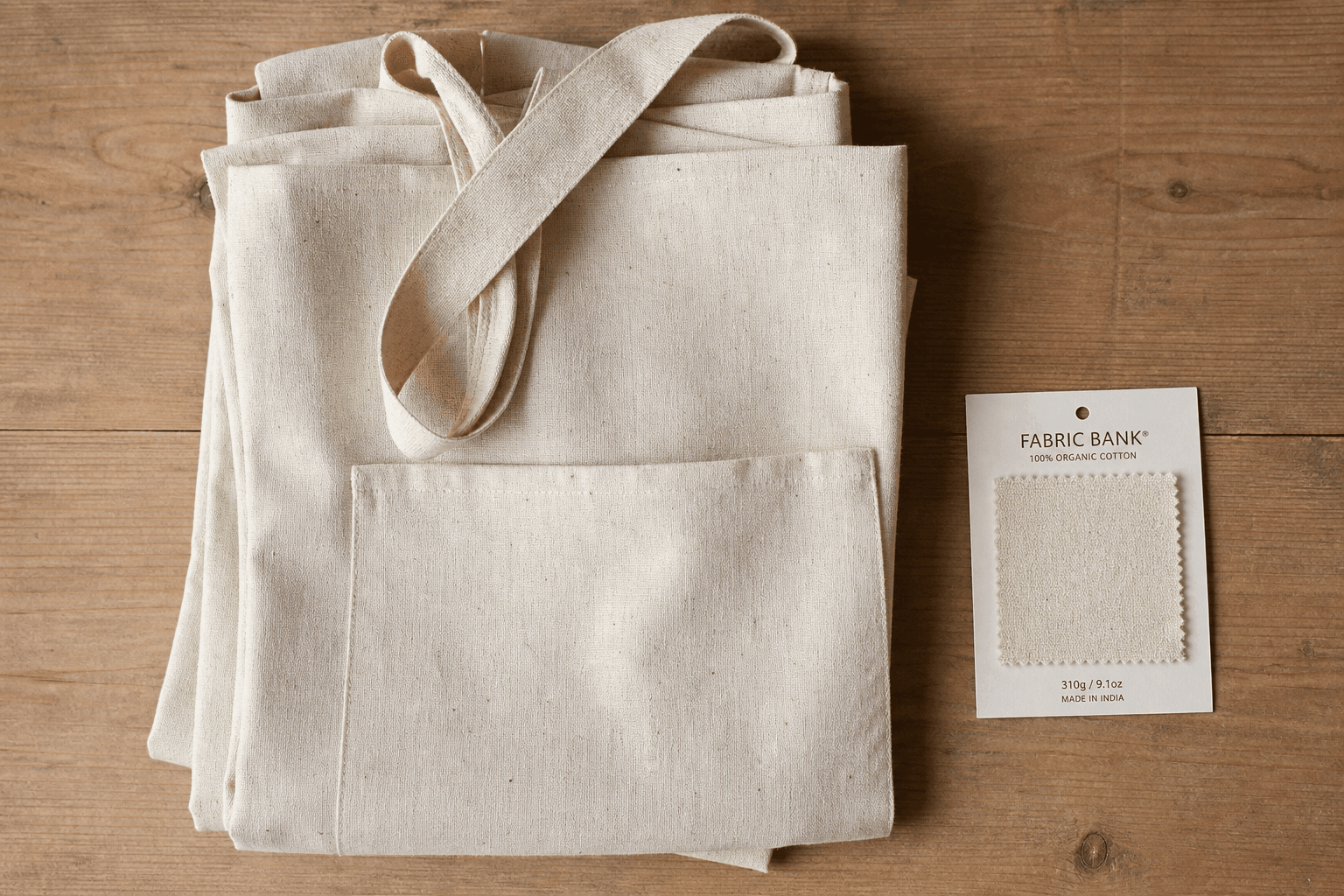
Most custom apron programs use twill, canvas, plain weave, denim or herringbone. For an eco friendly apron sold as a retail kitchen or lifestyle product, 200-240 GSM organic cotton twill is common because it folds neatly, feels soft after washing and keeps parcel weight under control. For cafe, barista and florist aprons, 260-300 GSM twill or canvas gives better body and durability. For workshop or maker aprons, buyers often request 10-12 oz cotton canvas, roughly 340-410 GSM, but organic versions at that weight are less commonly stocked and may require custom weaving.
Fabric weight should be selected according to use, not only perceived premium level. A 320 GSM canvas apron looks substantial, but it can feel heavy during a full shift and may raise freight cost by USD 0.08-0.18 per piece compared with a 240 GSM twill, depending on carton size and destination. A lighter 200 GSM apron may be acceptable for retail gifting, but it will not perform the same way in a restaurant laundry cycle. For commercial uniform use, we usually recommend testing at least 5 home washes and, when relevant, 3 industrial wash trials before bulk confirmation.
Shrinkage is another practical point. Organic cotton behaves like conventional cotton after spinning and weaving; it is not automatically more stable. For dyed organic cotton twill, a reasonable target after pre-shrinking is 3-5% shrinkage in warp and weft at 40 degrees C home wash. For heavier canvas, 4-7% may be more realistic unless the fabric is sanforized. If the buyer requires strict finished size, the pattern must include shrinkage allowance and the pre-production sample should be washed before approval.
- 180-220 GSM plain weave: suitable for promotional cooking aprons, light retail sets and low freight-weight projects.
- 220-260 GSM twill: suitable for kitchen aprons, bakery aprons and homeware programs requiring soft drape.
- 260-320 GSM twill or canvas: suitable for cafe, florist, barista and service aprons needing better structure.
- 340-410 GSM canvas: suitable for workshop aprons, but MOQ and fabric lead time are usually higher.
- Organic cotton denim: suitable for fashion-driven apron designs, though indigo shade control and crocking tests are important.
GOTS certification scope for a gots certified apron
GOTS certification is a chain-of-custody system. It controls certified organic fiber, processing chemicals, environmental criteria, social criteria and transaction documentation. For an apron buyer, the important point is scope. The spinning mill, weaving mill, dyeing mill, printing unit and sewing factory all need proper coverage if the finished product will be sold as a gots certified apron. If one step is outside the certified chain, the final product claim may fail even if the cotton itself is organic.
In practice, a factory must confirm three documents before accepting a certified order. First, the supplier needs a valid GOTS certificate showing the certified operation and product category. Second, the order needs transaction certificate coverage for the material purchased. Third, the finished goods may require a transaction certificate issued to the buyer or importer, depending on the selling arrangement. Documentation lead time is not instant; after shipment, a TC may take 7-21 days depending on the certifier, invoice data, packing list and upstream document status.
A common problem is late artwork approval. If a buyer designs a neck label or hangtag with the GOTS logo after bulk sewing has started, the factory may not be able to use it without certifier approval. Label wording, logo size, license number, certification reference and product category should be submitted early. For certified apron orders, our preferred sequence is fabric TC confirmation, lab dip approval, pre-production sample approval, label artwork approval, bulk cutting, inline inspection, final inspection and then TC application.
- Certificate validity: check that the certificate is current and covers the product or processing category required.
- Transaction certificate: confirm that the organic cotton fabric quantity is covered for the specific order.
- Factory scope: verify that cutting, sewing, packing and labeling are covered if the finished apron carries a GOTS claim.
- Artwork approval: submit GOTS logo, label and packaging layouts before bulk production.
- Mass balance: match ordered fabric weight, cutting loss, finished quantity and remaining stock in the certification records.
Sourcing routes for an organic cotton apron in China
There are two main sourcing routes. The faster route is to use available organic cotton greige or dyed fabric from certified mills in China. This can support sample development in 5-10 days if the fabric is in stock, and bulk production in 25-40 days after deposit and approvals. Color choice is limited, usually natural, white, black, navy, olive, khaki or a few seasonal shades. For many cafe uniform and retail kitchen apron orders, this is the most efficient route.
The second route is custom fabric or custom dyeing. This is needed when the buyer has a specific Pantone shade, unusual GSM, yarn-dyed stripe, herringbone structure or wide fabric width requirement. For custom dyed organic cotton twill, a realistic lead time is 45-65 days after lab dip approval. If the greige fabric must be woven first, the total timeline can extend to 60-90 days. The MOQ also rises because the dyeing mill needs to run an efficient vat, often 800-1,500 meters per color for medium-weight twill and more for special canvas.
For an organic apron manufacturer, fabric yield is a major cost driver. A standard bib apron measuring about 70 x 85 cm may consume 0.75-0.95 meters of 150 cm wide fabric, depending on pocket layout, strap cutting and marker efficiency. A cross-back apron with long straps and wide waist ties may consume 1.05-1.35 meters. If the buyer requests self-fabric straps, large patch pockets and contrast panels, cutting loss can move from 8-12% to 14-20%. These numbers should be calculated before quoting, not adjusted after order placement.
- Stock fabric route: sample in 5-10 days, bulk in 25-40 days, lower MOQ, limited colors.
- Custom dyed route: lab dips in 5-8 days, bulk in 45-65 days, MOQ often 1,500-3,000 pcs per color.
- Custom woven route: total lead time commonly 60-90 days, suitable for exclusive fabric structure or high-volume programs.
- Natural undyed route: lower chemical processing, but shade variation and cottonseed specks should be accepted in the specification.
Cost structure: fabric, trims, certification and sewing minutes
Organic cotton apron pricing is usually driven by fabric weight first, then construction complexity, certification scope, washing, trims and packing. As a working reference, a simple 240 GSM organic cotton twill bib apron with one front pocket, neck strap, waist ties and basic polybag packing may quote around USD 3.20-4.60 per piece at 1,000-3,000 pcs, depending on fabric market and exchange rate. A 300 GSM canvas cross-back apron with metal hardware, reinforced bar-tacks, two pockets and paper belly band may fall around USD 5.20-7.80 per piece.
The gap between conventional cotton and organic cotton changes by season. Organic cotton fabric may add 15-35% to fabric cost, but the final apron increase is not always the same percentage because sewing, packing and freight remain similar. On a light apron where fabric is 40% of FOB cost, organic material may add USD 0.35-0.70 per piece. On a heavy canvas apron where fabric is 55-65% of FOB cost, the increase may be USD 0.80-1.80 per piece.
Certification control also has a cost. For a finished gots certified apron, the factory must manage certified input records, segregated storage, approved labels, certifier communication and TC application. If the order quantity is small, the documentation cost per unit is high. For 500 pcs, the certification handling cost may be USD 0.25-0.60 per piece before considering higher fabric cost. At 5,000 pcs, the same administrative burden is spread more efficiently and may be below USD 0.10-0.18 per piece.
- Fabric weight: moving from 240 GSM to 300 GSM can add about USD 0.35-0.90 per piece, depending on consumption.
- Cross-back straps: adjustable cross-back construction can add USD 0.25-0.65 per piece in labor and hardware.
- Metal trims: brass or antique nickel buckles and rivets may add USD 0.10-0.45 per piece.
- Washing: enzyme wash or garment wash can add USD 0.20-0.55 per piece and 5-8 production days.
- Retail packing: belly band, hangtag, barcode sticker and carton sorting may add USD 0.08-0.35 per piece.
Dyeing, printing and color control for sustainable cotton apron orders
Color development for a sustainable cotton apron needs early discipline. Organic cotton fabric can be dyed with approved dyestuffs under GOTS rules, but the chemical list is narrower than conventional production. If the buyer requires a very bright shade, deep black, sulfur-look finish or special washed effect, the factory should confirm whether the dyeing route is compatible with the required certification. Some finishes that are easy in conventional cotton are not acceptable for GOTS-certified production.
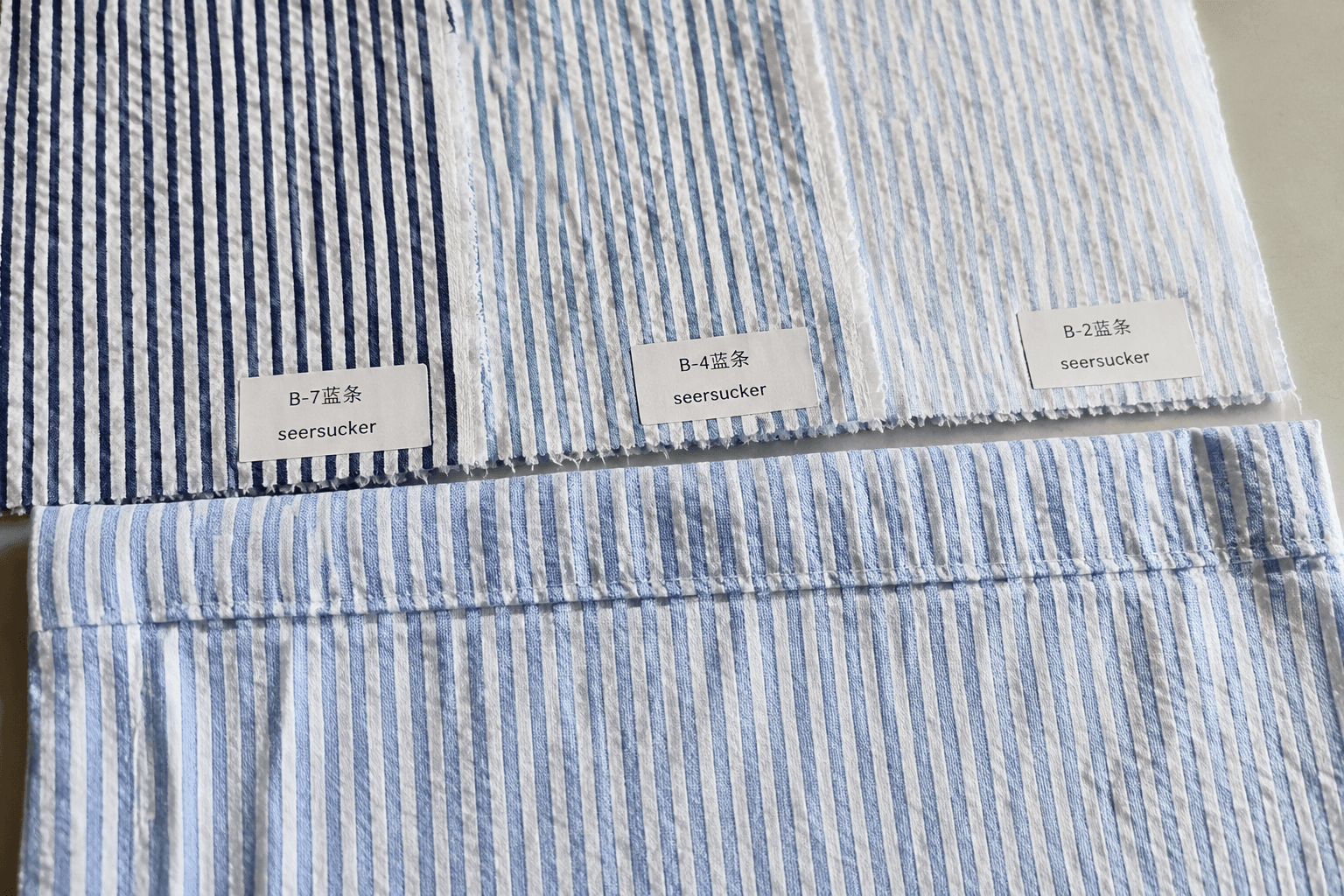
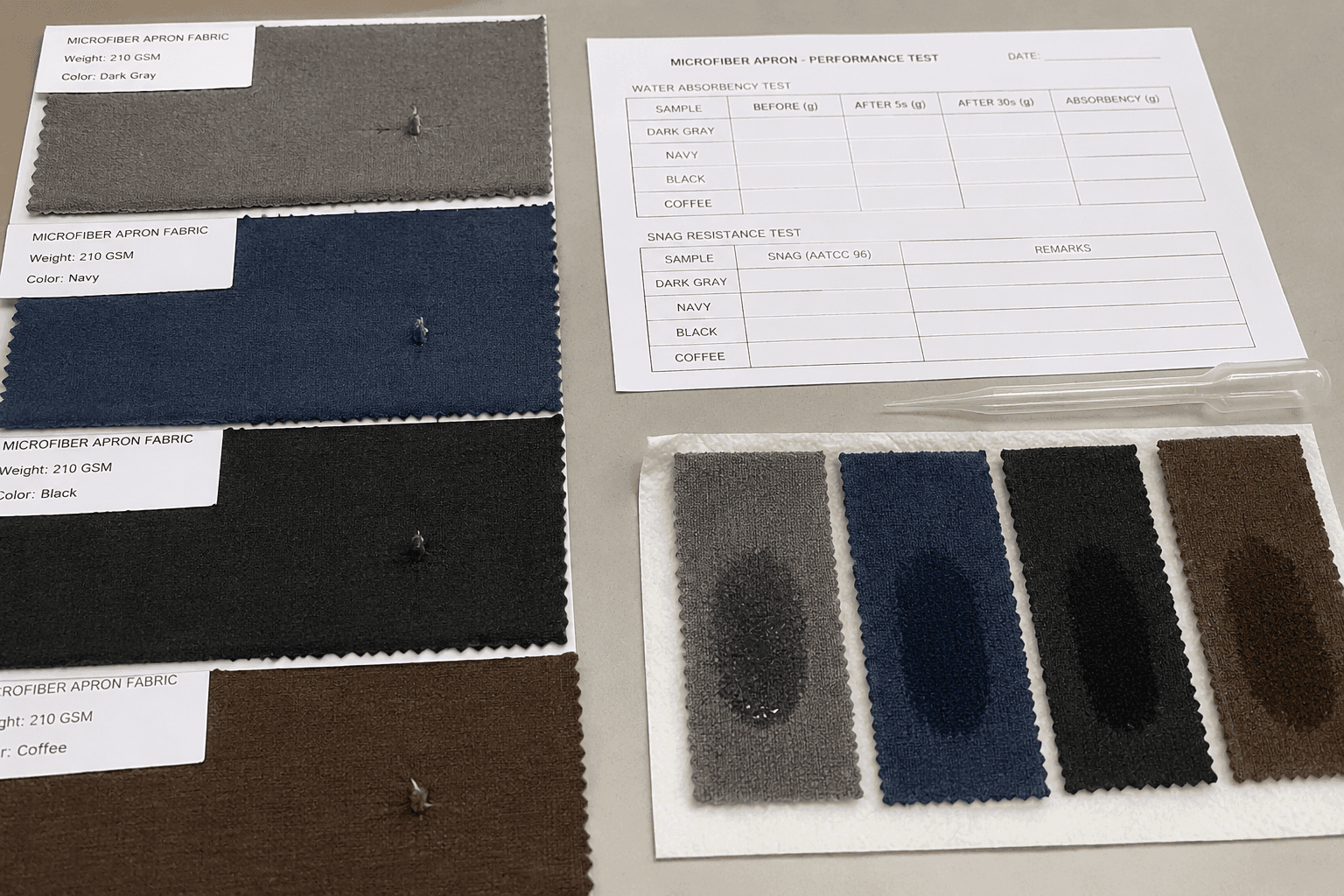
For solid color aprons, the normal process is lab dip, buyer approval, bulk dyeing, shade band control and fabric inspection. Lab dips usually take 5-8 days. Bulk fabric inspection should check shade variation, width, GSM, skew, stains, slubs and colorfastness. For apron use, rubbing fastness is important because the fabric contacts shirts, counters and hands. Dark organic cotton aprons should be tested for dry and wet crocking, especially denim, black, navy, bottle green and burgundy.
Printing also needs a clear specification. Water-based screen printing is common for logo aprons, but large plastisol-style prints may conflict with an eco friendly apron positioning and may not fit GOTS requirements. Embroidery is durable and premium, but it adds sewing time and can pucker on lighter fabrics if backing and stitch density are not controlled. For a 7 x 7 cm chest logo, embroidery may add USD 0.12-0.35 per piece. For a large 25 cm front print, screen setup and color count become more important than unit print time.
- Lab dip approval: allow 5-8 days for first submission and 3-5 days for a revised shade.
- Color tolerance: define approval under D65 light and agree whether a 4-grade grey scale or visual standard applies.
- Rubbing fastness: request testing for dark shades, especially when aprons may contact light uniforms.
- Logo method: choose embroidery for durability, screen print for larger flat artwork, and woven label for low-impact branding.
- Certification compatibility: confirm ink, thread, backing, washing agent and packing material before using GOTS wording.
MOQ, sampling and production timeline for certified apron programs
MOQ depends on fabric availability more than sewing capacity. A sewing line can make 800-2,000 basic aprons per day depending on construction, but dyeing mills and fabric suppliers set the practical minimum. For stock organic cotton fabric, 500 pcs per style and color is often workable if the buyer accepts existing shades. For custom dyed fabric, 1,500 pcs per color is a more realistic starting point. For custom woven organic cotton canvas, 3,000-5,000 pcs may be needed to make the fabric run economical.
Sampling should be divided into proto sample, salesman sample and pre-production sample. A proto sample can be made from available similar fabric in 3-7 days to confirm dimensions and construction. A salesman sample in the correct organic fabric may take 7-15 days if the fabric is available, or 20-35 days if custom dyeing is needed. A pre-production sample should use bulk fabric, bulk trims, approved labels and final packing method. For certified products, the PP sample should also reflect the approved certification label wording.
For planning, a standard organic cotton apron order using stock fabric normally takes 30-45 days after deposit, artwork and sample approval. A custom dyed certified order normally takes 50-70 days. Add 7-14 days when garment washing, special packing, third-party inspection or documentation delays are involved. During peak season before Christmas retail shipment or spring gardening programs, buyers should place fabric booking 2-4 weeks earlier than for conventional apron orders.
- Proto sample: 3-7 days using substitute fabric for shape, pocket and strap review.
- Correct-fabric sample: 7-15 days when organic fabric is in stock, longer when custom dyeing is required.
- PP sample: 5-10 days after bulk fabric and trims arrive at the sewing factory.
- Bulk sewing: 10-20 days for 1,000-5,000 pcs, depending on pockets, hardware and logo work.
- Final inspection and packing: 2-5 days for normal export cartons, longer for retail assortments or carton-level labeling.
Buyer checklist before placing an organic cotton apron order
The most efficient way to source an organic cotton apron is to make the claim, fabric and testing requirements clear at quotation stage. If the buyer only says eco friendly apron, the factory must guess whether this means organic cotton, recycled packing, low-impact dyeing, GOTS certification, plastic-free packing or all of these together. Each choice changes cost and lead time. A precise tech pack avoids several rounds of re-quoting and reduces the risk of rejected labels or delayed shipment.
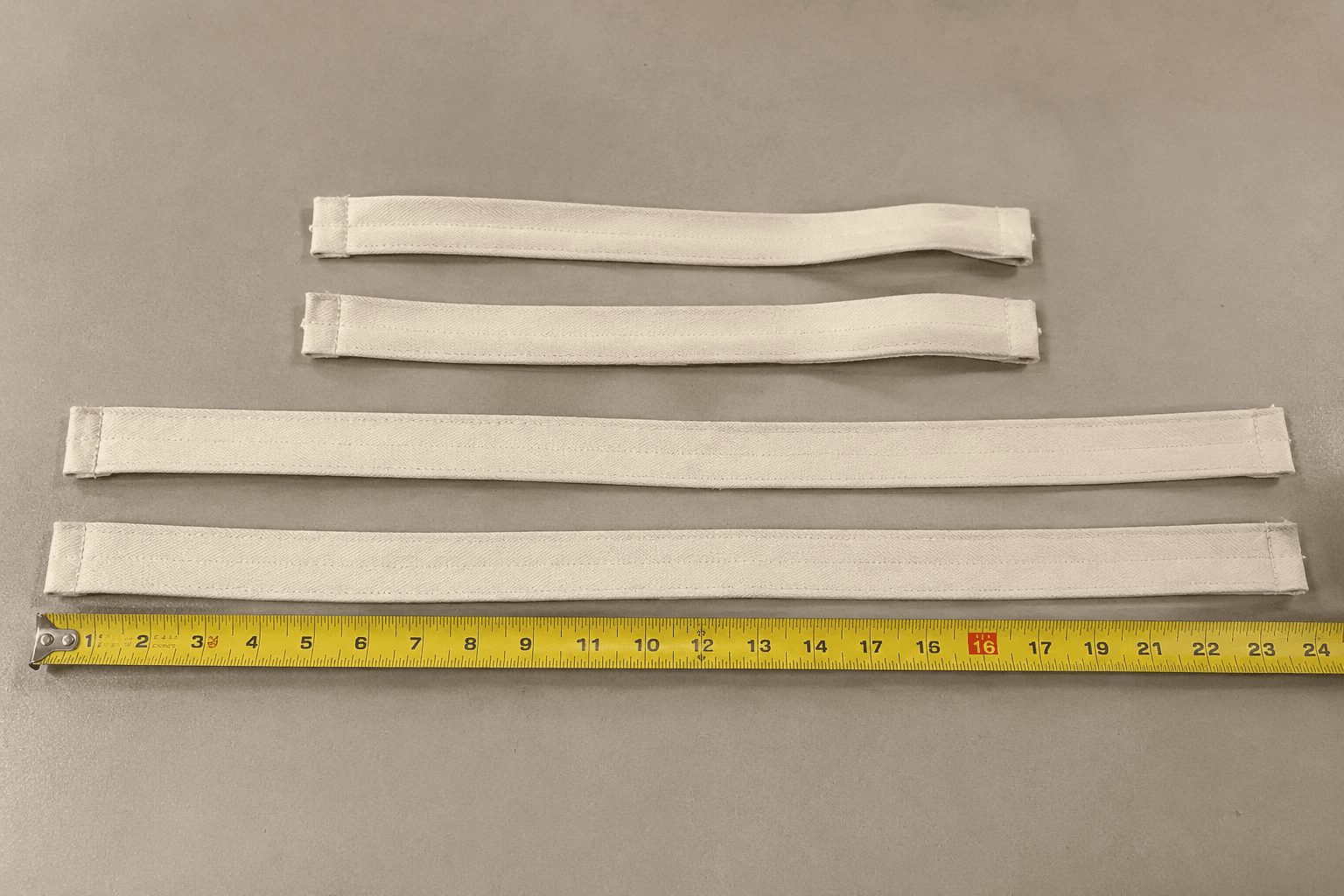
The purchase specification should include finished dimensions, tolerance, fabric GSM, weave, color standard, pocket size, strap construction, hardware material, logo method, packing method and target certification. For aprons, strap length and pocket placement are especially important because different markets expect different body coverage. A 68 cm wide bib apron may be acceptable for home cooking, while a cafe buyer may request 72-78 cm width and longer waist ties for staff uniforms.
From the factory perspective, the best buyers lock the fabric route early. Changing from non-certified organic fabric to finished GOTS certification after sample approval can restart sourcing and artwork approval. Changing from 240 GSM to 300 GSM after price confirmation can alter fabric consumption, sewing tension, packing volume and freight. Organic apron manufacturer selection should therefore consider not only unit price, but whether the supplier can explain certification scope, fabric yield, shrinkage and production controls in practical terms.
- Define the claim: organic cotton content, GOTS fabric, finished gots certified apron, sustainable cotton apron or broader eco friendly apron positioning.
- Confirm fabric: GSM, weave, width, shrinkage target, dyeing route and whether stock or custom production is required.
- Check trims: thread, labels, tapes, buckles, rivets, packaging and logo materials must match the certification and brand requirement.
- Approve tests: include shrinkage, colorfastness to washing, rubbing fastness, seam strength and needle detection if required.
- Plan documentation: allow time for certificates, transaction certificates, label approval and final shipment records.
- Reserve production time: add buffer for lab dips, washed samples, inspection booking and export documentation.