A tattoo apron has to do a different job from a cafe, barber, or kitchen apron. It must protect clothing from diluted ink, disinfectant splash, ointment, stencil residue, and occasional pigment transfer, while still allowing the artist to sit, lean forward, reach tools, and clean the surface between clients. For bulk buyers, the main sourcing question is not simply whether the apron looks premium. It is whether the selected fabric, coating, seam construction, and pocket layout can survive repeated studio use without becoming stiff, noisy, stained, or difficult to launder.
For custom apron orders from China, most tattoo studio apron projects sit between two product directions: a lightweight wipe clean apron for daily procedure rooms, or a heavier stain resistant studio apron with branding, retail packaging, and a more structured silhouette. These two directions require different fabric specifications, MOQ planning, and cost expectations. A PU-coated polyester apron may be easier to wipe and faster to produce, while waxed canvas or coated cotton blends may offer a stronger brand feel but require more careful testing for colorfastness, odor, and coating consistency.
This guide explains the practical choices we discuss with sourcing managers and product developers before sampling: fabric weights, coating types, pocket placement, strap systems, hardware, logo methods, packing, compliance, and lead times. The numbers are typical factory ranges for custom tattoo apron programs, not promises for every design, because price and schedule depend on fabric availability, order volume, color, trim selection, and testing requirements.
- PU-coated polyester at 210-300 GSM is usually the most economical wipe-clean option for studio-issued tattoo aprons.
- Pocket layouts should avoid deep lower pockets that collect ink caps, wipes, and residue near the lap when the artist is seated.
- For bulk OEM orders, 500-1,000 pcs per color is a realistic MOQ for custom fabric color, while stock black can often start lower.
- Logo placement should be tested after coating selection because heat transfer, embroidery, and screen print behave differently on wipe-clean surfaces.
- Production lead time commonly runs 25-40 days after sample approval, with extra days needed for lab testing, custom dyeing, or retail packing.
What Makes a Tattoo Apron Different From a General Work Apron
A tattoo studio apron is used in a controlled but demanding environment. The artist may wear gloves, move between the workstation and client chair, clean surfaces with alcohol-based products, and sit for several hours at a time. The apron is exposed to small but persistent contact with black and colored ink, green soap solution, petroleum-based ointments, stencil transfer products, and disinfectant overspray. A standard cotton canvas apron can look attractive in a catalog, but once it absorbs pigment or ointment, the stain may remain even after washing.
The first sourcing decision is therefore functional: should the apron be mainly wipe clean, mainly washable, or a hybrid? A wipe clean apron normally uses coated polyester, coated nylon, PVC-free PU coating, TPU film, or laminated fabric. A washable apron may use cotton twill, poly-cotton canvas, or denim with stain-resistant finishing. A hybrid specification might use 260 GSM polyester-cotton fabric with a water-repellent finish, but it will not perform like a fully coated surface against wet ink.
The second decision is ergonomic. Many tattoo artists sit while working, so long bib aprons with bulky lower pockets can bunch at the lap. Cross-back straps may reduce neck pressure during long sessions, but they also add sewing time and trim cost. Metal hardware may give a premium look, but some studios prefer plastic adjusters for lighter weight, lower noise, and easier laundering. These details affect real use more than a buyer may see from a flat sample photo.
- A studio-issued tattoo apron usually prioritizes wipeability, low lint, dark color, and easy replacement cost.
- A retail tattoo artist apron usually prioritizes stronger fabric handfeel, visible branding, packaging, and a more distinctive silhouette.
- A guest-artist or event apron often prioritizes fast lead time, low MOQ, and simple black fabric with printed logo.
- A premium stain resistant studio apron may combine heavier fabric, reinforced pockets, and branded trims, but the unit price increases quickly.
Tattoo Apron Fabric Options: GSM, Coatings, and Real Trade-Offs
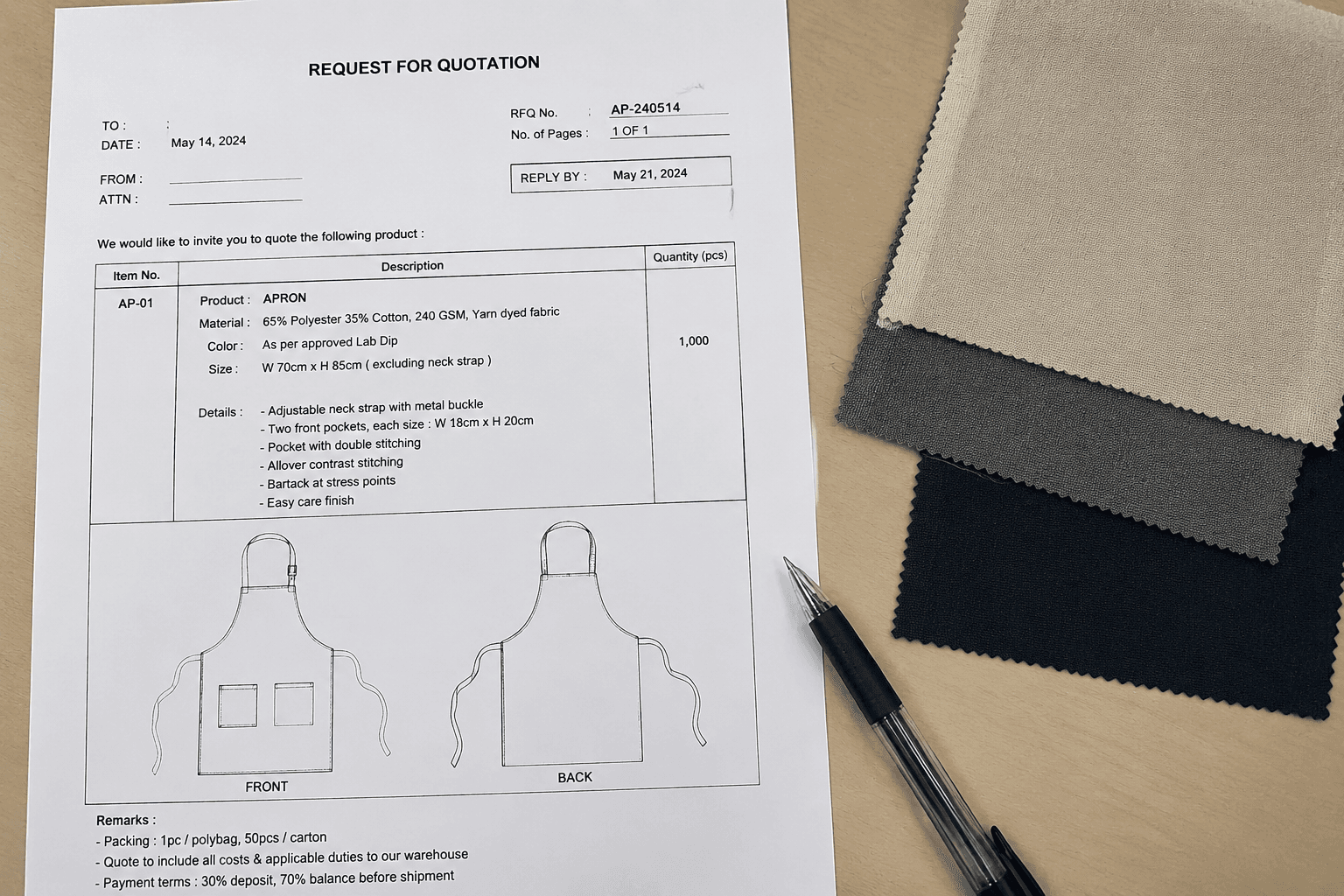
For sourcing, fabric specification should start with weight and surface behavior. A 190T or 210D polyester may be too thin for a professional studio apron unless used for a disposable-style promotion. A more durable wipe clean apron normally starts around 210 GSM and may go up to 300 GSM for coated polyester. At this range, the apron has enough body to hang properly without feeling like rainwear. Above 350 GSM, coated fabrics can become warm and less comfortable for long sessions, especially in full bib styles.
PU-coated polyester is the most common option for bulk tattoo apron production because it balances wipeability, price, and sewing efficiency. In black or dark gray, a 240-280 GSM PU-coated polyester can often be sourced at stable cost and supports relatively clean cutting and stitching. TPU laminated fabric can offer a smoother and sometimes softer handfeel, but material cost is higher and MOQ may be larger. PVC-coated fabric is durable and inexpensive in some markets, but many brand buyers avoid PVC because of odor, handfeel, and compliance concerns.
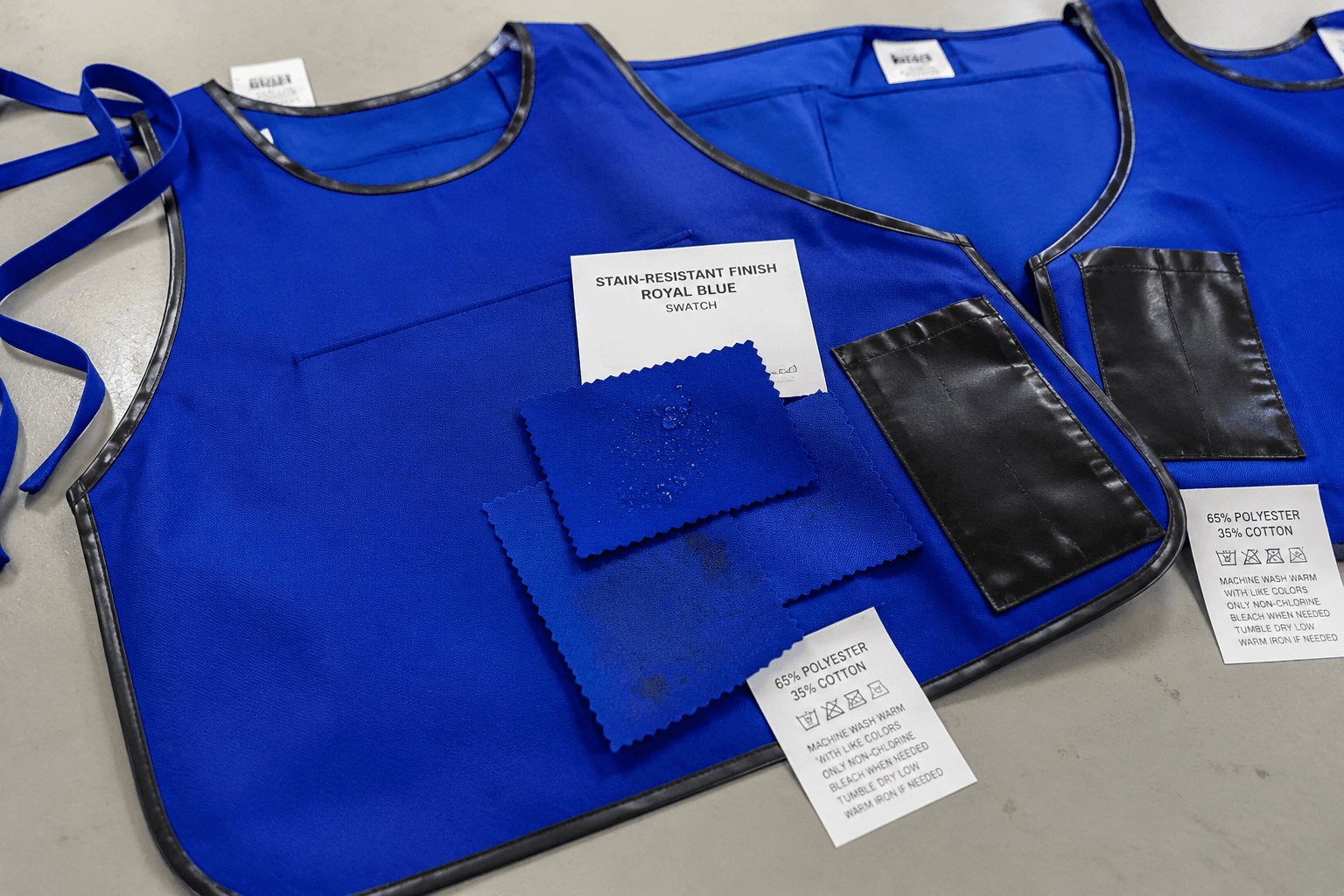
Cotton canvas and denim are still used for tattoo artist apron designs, especially for retail or lifestyle-positioned brands. A 10 oz cotton canvas or 11-12 oz denim gives structure and a familiar workwear look. However, cotton absorbs liquid. A fluorine-free water-repellent or stain-resistant finish can improve performance, but it is not the same as a non-absorbent coated surface. If the buyer wants a cotton look with better resistance, a poly-cotton canvas around 280-340 GSM with a C0 durable water repellent finish is a practical middle direction.
- 210-240 GSM PU-coated polyester is suitable for economical studio aprons and promotional bulk orders.
- 250-300 GSM PU-coated polyester gives better drape, opacity, and perceived durability for professional studio uniforms.
- 280-340 GSM poly-cotton canvas with stain-resistant finishing offers a workwear look but remains partly absorbent.
- 10-12 oz cotton canvas or denim is strong and brand-friendly, but it needs realistic stain expectations and washing instructions.
- TPU laminated fabric can feel cleaner and more flexible, but it normally increases material cost by about USD 0.40-1.20 per apron depending on width and weight.
Wipe Clean Apron Performance: Testing Before Bulk Production
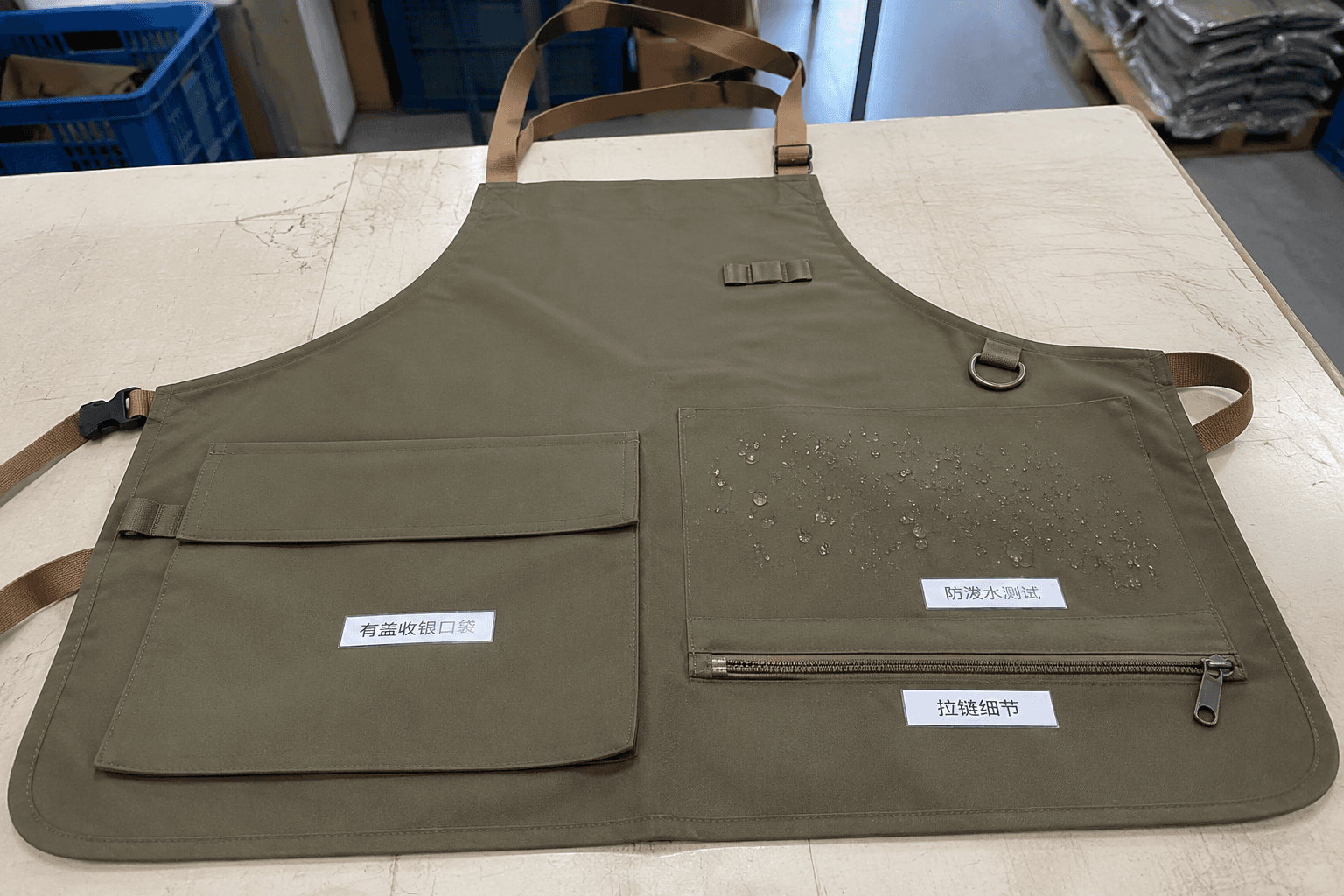
A wipe clean apron should be tested with the actual liquids the studio uses, not only with plain water. Water beading is easy to achieve. The harder questions are whether black tattoo ink leaves a shadow after wiping, whether red and blue pigments migrate into the coating, whether alcohol dulls the surface, and whether ointment creates a greasy mark that attracts dust. Before approving bulk production, buyers should request fabric swatches or proto samples and run simple in-studio tests for 24-48 hours.
From a factory standpoint, there are two performance levels to define. The first is water resistant, where liquid does not immediately penetrate but may sit on the surface temporarily. The second is wipe-clean coated, where the surface can be cleaned with a damp cloth or mild disinfectant without obvious absorption. Buyers sometimes use these terms interchangeably, but they lead to different materials and pricing. A water-repellent cotton apron is not a substitute for a coated polyester tattoo apron if the artist expects to wipe off fresh pigment during a workday.
Abrasion also matters. A coating can look excellent on a new sample but scuff at the pocket edge or center front after repeated leaning against a workstation. For larger programs, we suggest at least basic rub testing and colorfastness checking. Formal lab tests such as ISO 105-X12 rubbing fastness, AATCC 8 crocking, or water spray rating can be arranged, but they add time and cost. For a 1,000 pc order, buyers often choose internal functional testing. For a chain studio rollout or retail brand, third-party testing is more appropriate.
- Test black, red, and blue tattoo ink separately because darker pigments and bright pigments can stain coatings differently.
- Wipe the sample with the studio's normal cleaning liquid, then check surface dulling after drying.
- Fold and crease the coated fabric to see whether the coating turns white or cracks at stress points.
- Rub the pocket opening and waist area because these zones receive the most abrasion in daily use.
- Check odor after unpacking, especially for coated materials shipped in sealed polybags.
Pocket Layouts for Tattoo Studio Apron Orders
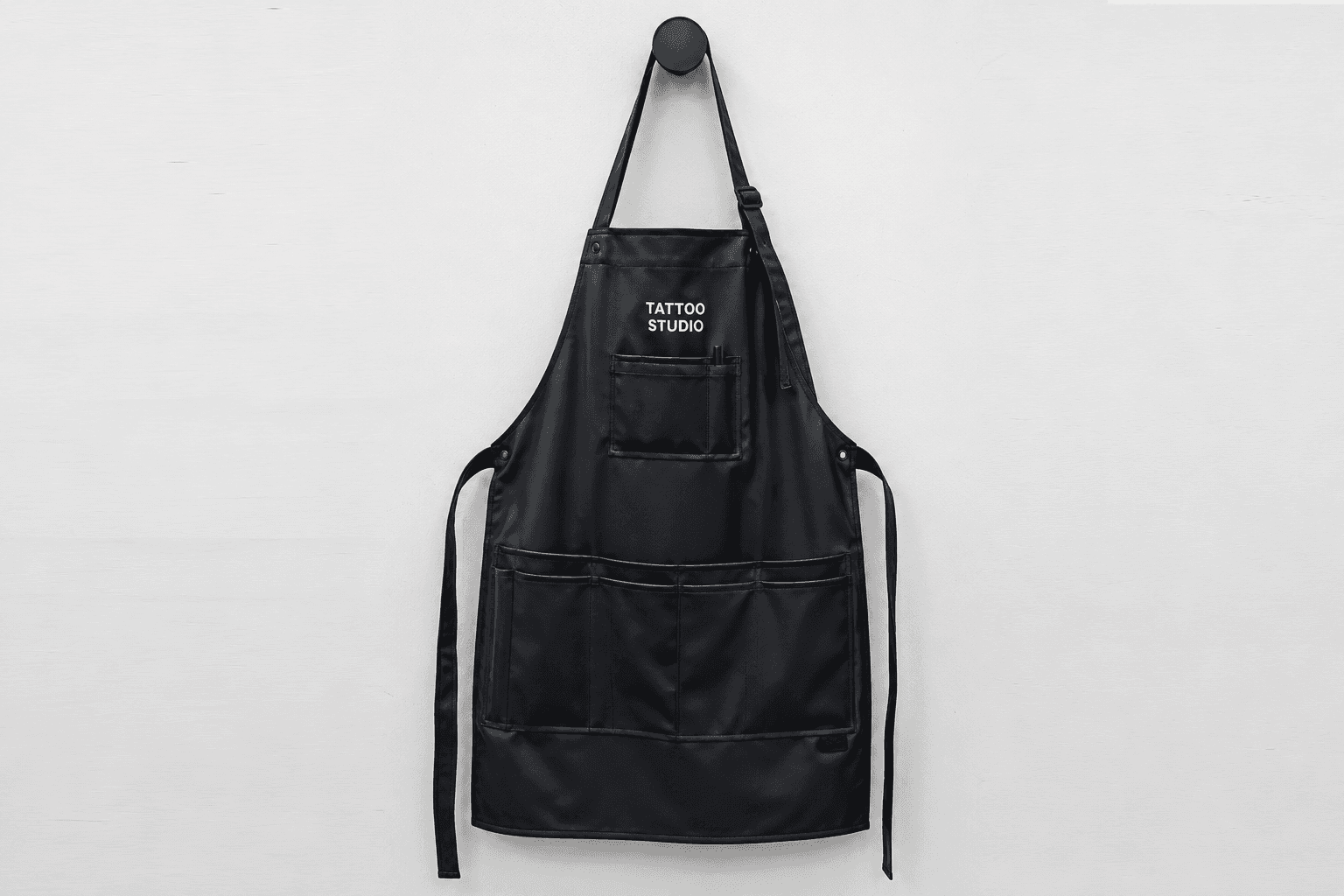
Pocket design is one of the most overlooked areas in tattoo apron sourcing. In kitchen and workshop aprons, buyers often ask for large lower pockets because they look useful. In a tattoo studio, large open lower pockets can become a problem. They may collect used gloves, wipes, ink caps, tape pieces, or residue. When the artist sits, these pockets can tilt upward or compress against the lap. A cleaner layout is usually a chest pocket for small clean items plus narrow side-access or shallow waist pockets that do not interfere with seated work.
For a tattoo artist apron, pocket depth should be specified in centimeters, not left to factory interpretation. A common chest pocket is 12-14 cm wide by 13-15 cm high, with a pen slot of 2.5-3.0 cm. Lower pockets may be 16-18 cm wide by 17-19 cm high, but for seated artists we often reduce depth or move pockets slightly toward the side. Pocket openings should be reinforced with bartacks because artists frequently pull tape, clips, or small bottles in and out with gloved hands.
Pocket lining also deserves attention. A coated apron with uncoated cotton pocket bags can defeat the wipe-clean purpose if liquid enters the pocket. For studio use, self-fabric pockets or coated lining are more practical. If the design uses canvas or denim for a retail look, the pocket interior can remain fabric, but buyers should consider dark lining to reduce visible staining. Drainage eyelets are usually unnecessary for tattoo aprons and may create cleaning concerns; clean stitching and simple pocket shapes are more useful than complex utility features.
- A chest pocket works best for clean items such as pens, cards, small ruler tools, or disposable marking accessories.
- A divided chest pocket should include at least one 2.5-3.0 cm pen channel if the buyer wants tool separation.
- Lower pockets should be shallow enough to avoid catching debris when the artist is seated.
- Side-positioned pockets reduce lap bulk compared with large center-front pouch pockets.
- Bartacks at pocket corners are recommended, with 28-36 stitches per bartack depending on fabric thickness.
Sizing, Coverage, and Strap Systems for Tattoo Artist Aprons
Most bulk tattoo apron programs use one-size adult patterns, but the dimensions should still be controlled. A common bib apron size is 70-76 cm wide by 80-88 cm long. For taller artists or more protective studio uniforms, length may increase to 90-95 cm. However, a very long apron can bunch when sitting and may rub against the chair. For seated tattoo work, we often recommend a front length around 82-86 cm for general adult sizing, with a curved or split lower edge only if the buyer accepts extra cutting and sewing time.
Neck straps are simple and economical, but they place weight on the neck during long sessions. A basic adjustable neck strap with plastic slider keeps cost down and works for lower-MOQ orders. Cross-back straps distribute weight better and are preferred for heavier fabrics above 300 GSM or for aprons with multiple pockets. The trade-off is cost and production complexity. Cross-back systems need longer webbing, more attachment points, and sometimes detachable buckles. Depending on trim quality, this can add USD 0.25-0.80 per piece.
Strap material should match the cleaning method. Cotton tape feels good but absorbs liquids and can stain. Polyester webbing is more stable, dries faster, and works well with wipe-clean apron bodies. For premium canvas tattoo artist apron styles, cotton webbing may fit the brand image, but dark colors are safer. Metal grommets and rivets can strengthen the workwear look, but they should be nickel-safe if required by the buyer's market. Plastic hardware is less premium visually but often more practical for laundering and lower noise in the studio.
- Standard adult bib size is often 70-76 cm wide by 80-88 cm long for studio programs.
- Longer aprons at 90-95 cm improve coverage but may be less comfortable for seated work.
- Cross-back straps are recommended for heavy canvas, denim, or coated aprons with multiple pockets.
- Polyester webbing is preferred for wipe-clean studio use because it absorbs less liquid than cotton tape.
- Adjustable waist ties should allow at least 95-105 cm per side for broad size coverage.
Branding Methods on a Stain Resistant Studio Apron
Logo method should be selected after fabric choice, not before. On PU-coated polyester, embroidery can puncture the coating and create stitch holes where liquid may sit. It can still be used for small logos, but it changes the wipe-clean surface. Screen print and heat transfer are common alternatives, but adhesion depends on coating chemistry. A logo that bonds well on ordinary polyester may peel from a slick coated surface after flexing or cleaning. For this reason, pre-production logo testing is not optional for coated tattoo apron orders.
For dark wipe-clean aprons, single-color white, gray, or metallic-effect prints are common. The artwork should avoid very fine lines below 0.3 mm because coatings and textured surfaces reduce edge sharpness. Heat transfer can look clean, especially for small chest logos, but buyers should test rubbing and disinfectant exposure. Silicone print can give a raised premium effect, but it increases cost and may require higher MOQ depending on the print supplier. Woven labels and rubber patches are safer for brand identity, but they add sewing steps and can create edges that collect residue.
On cotton canvas, denim, or poly-cotton aprons, embroidery is more suitable. A 6,000-10,000 stitch chest logo may add approximately USD 0.25-0.70 per piece depending on size and thread count. Larger embroidery can make the bib stiff and may distort lighter fabrics. For retail tattoo artist apron programs, buyers often combine a small woven neck label, side seam care label, and retail hangtag. For studio uniform programs, simpler branding is usually better because the apron must be easy to clean and replace.
MOQ, Price Ranges, Sampling, and Lead Time
MOQ depends mainly on fabric and color. If the buyer accepts stock black PU-coated polyester and standard black polyester webbing, a custom tattoo apron can sometimes start at 300-500 pcs per design, depending on the factory schedule and logo method. For custom dyed fabric, custom coating color, or special webbing, MOQ commonly rises to 1,000-2,000 pcs per color because fabric mills and dye houses set their own minimums. For waxed canvas or specialty laminated fabric, MOQ may be higher or material may need to be purchased by full roll.
Price ranges vary widely, but buyers need starting numbers for planning. A simple black 240 GSM PU-coated polyester wipe clean apron with one chest pocket, basic neck strap, waist ties, and one-color print may fall around USD 2.20-3.60 per piece at 1,000 pcs, excluding special testing and premium packing. A heavier 280-300 GSM coated apron with cross-back straps, reinforced pockets, branded label, and individual polybag may be around USD 4.20-6.80 per piece. A 10-12 oz canvas tattoo artist apron with metal hardware, embroidery, and retail hangtag can reach USD 6.50-11.00 per piece or more depending on trims and washing.
Sampling usually takes 5-10 days if fabric and trims are available. A first sample with custom logo may take 7-14 days, especially if screen setup, heat transfer film, or embroidery digitizing is required. After sample approval, bulk production normally requires 25-40 days. Add 7-15 days if fabric must be dyed or coated, and add 3-7 days for third-party testing depending on lab capacity. Buyers should also allow time for carton inspection, carton mark confirmation, and any retail packaging approval.
- 300-500 pcs may be possible for stock black fabric and simple logo programs.
- 1,000 pcs per color is a more realistic planning MOQ for custom specifications.
- 2,000 pcs or more may be needed for custom dyed coated fabric or specialty trims.
- 5-10 days is typical for a plain proto sample using available fabric.
- 25-40 days after approval is a practical bulk lead-time range for many OEM apron orders.
Quality Control Points Before Shipping Bulk Tattoo Apron Orders
Inspection for tattoo apron orders should focus on both appearance and functional consistency. Coated fabric should be checked for scratches, pinholes, coating streaks, uneven gloss, creasing, and color shade variation between rolls. On black aprons, shade difference can be subtle under factory lighting but visible in a studio with bright task lights. If the order uses multiple fabric rolls, roll-to-roll shade control should be agreed before cutting. For premium retail programs, buyers may request fabric roll inspection before production cutting starts.
Sewing quality is especially important at straps, pockets, and pocket corners. A coated fabric can show needle marks more clearly than cotton, so excessive rework is visible. Stitch density should be balanced: too few stitches weaken the seam, while too many perforate the coating. For medium coated polyester, 8-10 stitches per inch is often suitable. For heavy canvas, 7-9 stitches per inch may be enough, depending on needle size and thread. Bartacks should be clean and positioned consistently at pocket stress points and tie attachments.
Packing should match the fabric. Coated aprons should be fully dry and aired before packing to reduce odor inside polybags. Folding lines may remain on PU-coated fabrics, so the factory should test the folding method during pre-production. For e-commerce or retail distribution, individual polybag with size, barcode, and warning text may be required. For direct studio uniform delivery, bulk packing of 20-50 pcs per carton can reduce cost. A typical carton may hold 50 pcs of lightweight coated aprons or 20-30 pcs of heavy canvas aprons, depending on weight and folding size.
- Check coating surface for scratches, pinholes, gloss variation, and permanent fold marks.
- Confirm pocket dimensions within tolerance, commonly plus or minus 0.5 cm for small pockets and 1.0 cm for overall length.
- Inspect strap attachment strength with pull testing suitable for the fabric and trim construction.
- Verify logo position because coated apron surfaces make crooked prints more visible.
- Air coated goods before final packing to reduce trapped material odor in sealed polybags.