Fabric grain direction affects apron cost, wash stability, sewing accuracy, and wearer comfort. A request for a softer premium apron does not always require a new fabric or heavier construction. In some cases, a bias cut apron changes the hang more than moving from 8 oz cotton twill to 10 oz twill, or from 210 GSM poly-cotton twill to 270 GSM cotton canvas.
For an apron factory, bias cutting is a production decision, not a decorative note. It changes marker efficiency, cutting-room handling, edge stretch, hemming control, pressing behavior, and final inspection criteria. Once a bib panel, strap, or tie is rotated toward 45 degrees, the fabric can drape better, but it also grows more easily during spreading, sewing, steaming, and laundering.
For B2B buyers ordering 1,000 to 20,000 custom aprons, the practical question is component-level: which parts should stay on warp or weft, which parts can move to bias, and what does that change in meters, dollars, MOQ, lead time, and AQL risk? The right answer depends on apron type, fabric weight, laundry method, pocket load, and whether the wearer will actually see or feel the improvement.
- Full-bias apron bodies usually consume 8% to 18% more shell fabric than straight-grain markers, with the largest penalty on wide bibs, long ties, and 44/45 inch fabric widths.
- A bias cut apron works best when used selectively on shaped bib edges, neck straps, waist ties, or cross-back straps, not on rectangular utility bodies.
- Typical added FOB cost is $0.35 to $1.20 per piece, including extra fabric, slower cutting, more careful sewing, and higher rework risk.
- Straight-grain pockets and main panels perform better in repeated washing, especially in 240 to 320 GSM canvas, denim, and poly-cotton twill.
- For most bulk programs, selective bias gives a better commercial result than a full-bias body: softer handling where needed without paying for avoidable offcut.
- Before approval, ask for marker efficiency, added meters per piece, MOQ impact, lead-time days, AQL assumptions, and wash-test results.
Bias cut apron behavior at 45 degrees
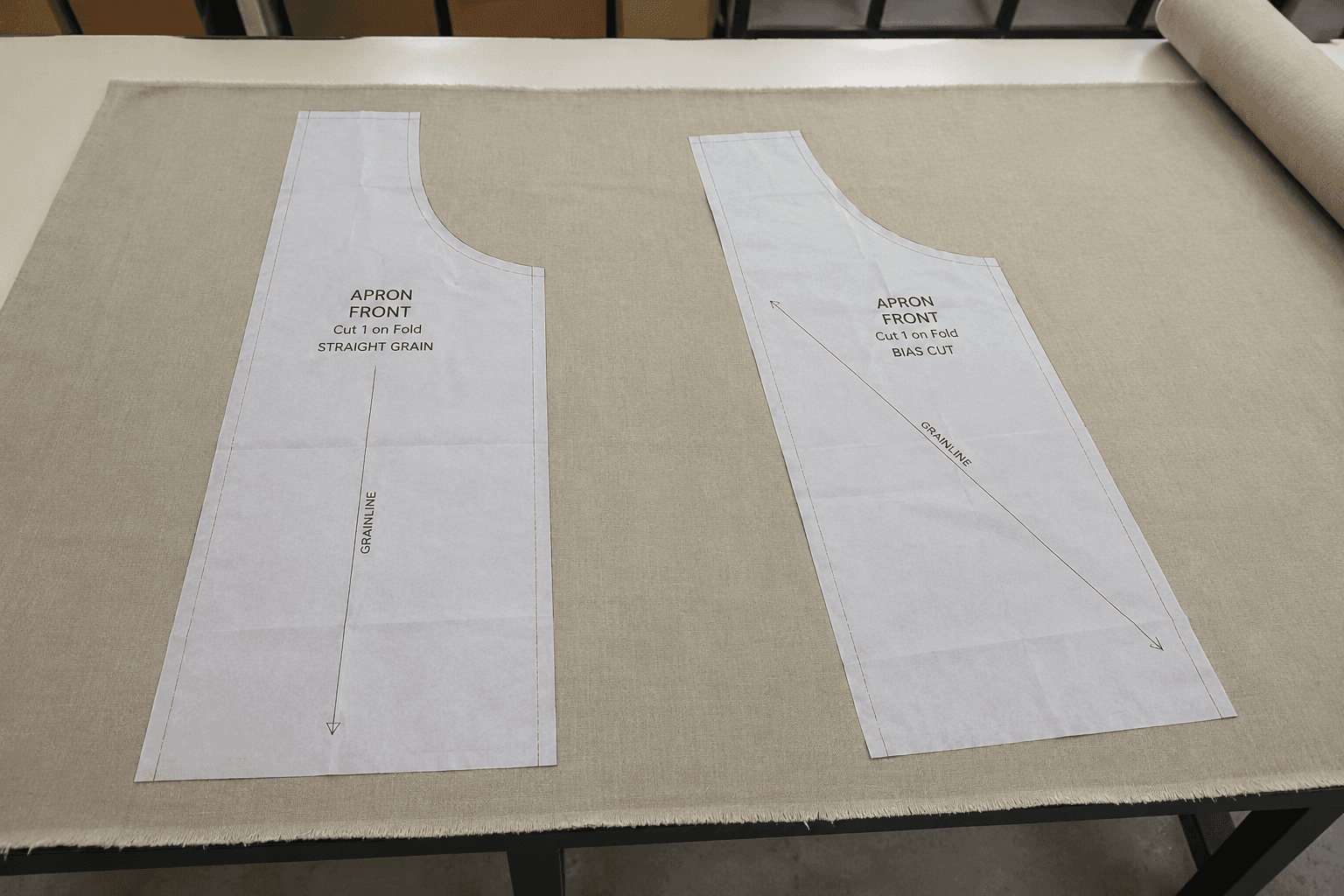
Woven apron fabrics have three useful directions: warp, weft, and bias. Warp runs along the roll length and is usually the most stable. Weft runs across the fabric width and may give slightly more movement. Bias sits around 45 degrees, where yarns can shift against each other. That movement improves drape, but it also increases stretch, edge waviness, and measurement drift.
This matters because aprons carry strain at predictable points: neck edges, waist ties, pocket mouths, bartacks, towel loops, and lower hems. A straight-grain bib apron in 210 GSM poly-cotton twill, 270 GSM cotton canvas, or 11 oz denim usually hangs flatter, keeps topstitching cleaner, and holds finished dimensions better after 30 to 50 industrial wash cycles. A full bias cut apron in the same fabric may look softer across the upper body, but it is harder to keep square during bulk production.
The sourcing mistake is treating better drape as automatically better performance. Aprons are workwear, even when used in premium hospitality. If the style is rectangular, heavily pocketed, or commercially laundered every day, the extra movement from bias can create more distortion than value. Bias should solve a defined problem: a shaped bib that gaps at the chest, ties that feel stiff, cross-back straps that resist the shoulder curve, or a front-of-house silhouette that looks too rigid on straight grain.
- Warp grain: best for main bodies, pockets, waistbands, and utility aprons requiring wash stability.
- Weft grain: useful on some waist aprons when fabric width improves marker yield without changing wear performance.
- Bias grain: best for softer drape and body follow, but highest risk for edge stretch, hem ripple, and size variation.
Where bias cut apron construction helps
The best bulk results usually come from mixing grain direction by component. Main body panel, upper bib, neck strap, waist ties, patch pockets, and cross-back straps do not behave the same way in wear or on the sewing line. A full-bias instruction across the whole style is often too blunt for professional apron sourcing.
On bib aprons, the main front panel should stay on straight grain for most chef, barista, bakery, workshop, and service programs. This is especially true above 240 GSM or when the apron includes large patch pockets. The upper bib is different. If it is narrow, curved, or designed for a closer front-of-house fit, partial bias placement can help the top edge sit closer to the chest without adding darts or extra seam lines.
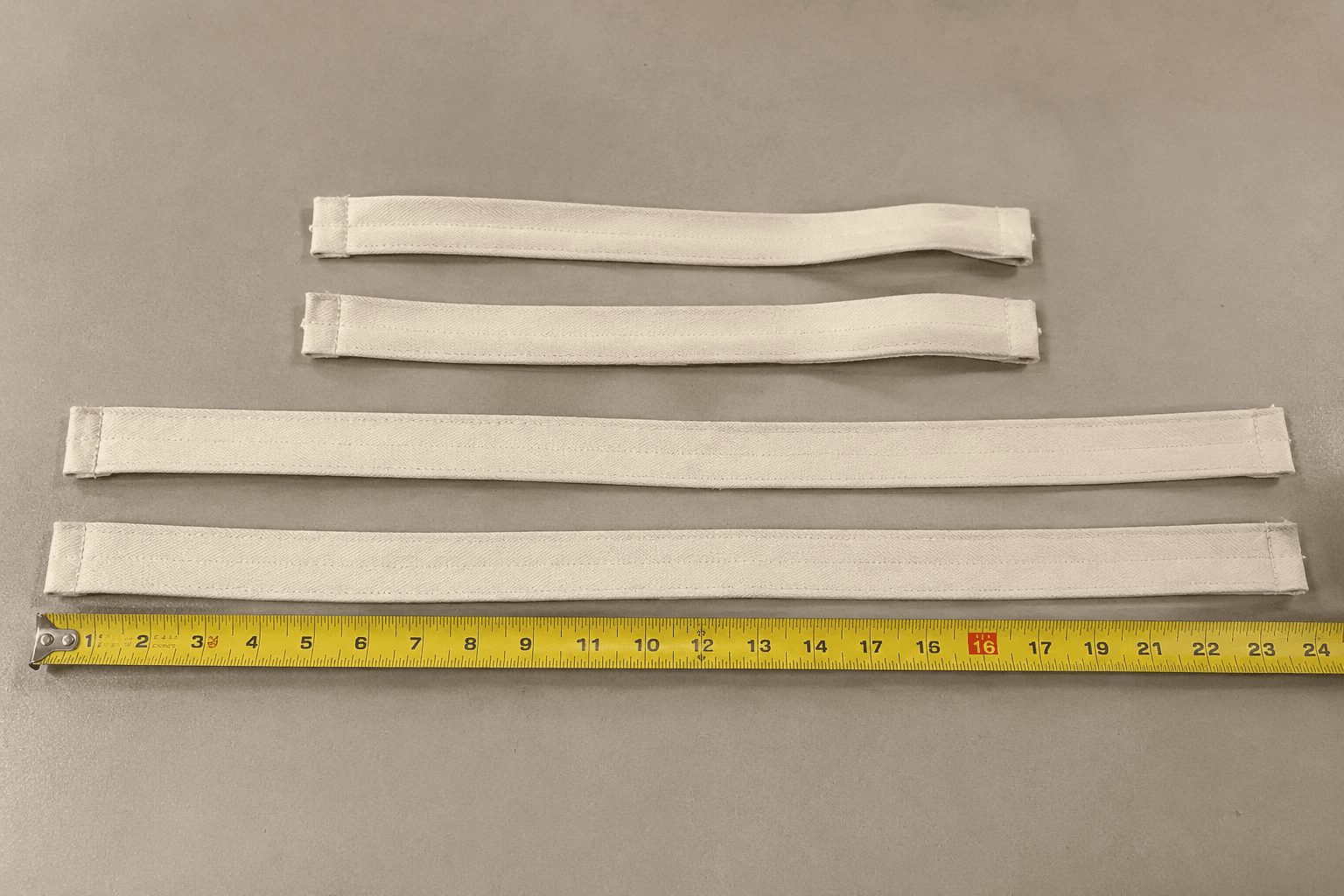
Long ties are one of the clearest uses for bias. A neck strap or waist tie cut on bias or semi-bias knots more easily, twists less, and feels less rope-like in 8 oz to 10 oz twill. The trade-off is elongation. A finished 95 cm waist tie can grow 1.5 to 3.0 cm during sewing and first wash if it is fully bias cut and not controlled. Factories usually manage this with stay-stitching, tighter folder settings, careful pressing, or light reinforcement near buckle, button, or D-ring zones.
Pockets should almost always remain on straight grain. A restaurant apron pocket carries pens, order pads, thermometers, card terminals, or phones. A bias pocket can skew after repeated laundering, and bartacks can pull the pocket mouth out of square. Cross-back straps sit between the two positions: semi-bias placement can improve shoulder lay in 240 to 280 GSM fabrics without making the entire apron body unstable.
- Main body panel: straight grain for durability, clean topstitching, and wash control.
- Shaped upper bib: selective bias can soften the neckline and reduce chest gaping.
- Neck straps and waist ties: bias improves knotting and hand feel, but needs length control.
- Patch pockets: straight grain reduces skew, pocket-mouth growth, and distorted bartacks.
- Cross-back straps: semi-bias often balances shoulder comfort with production stability.
Cost, MOQ, and lead time for diagonal cutting
The first cost impact appears in marker efficiency. On a standard straight-grain bib apron using 57/58 inch fabric, marker utilization commonly runs 82% to 88%, depending on apron length, tie length, size spread, and pocket count. If the main body is rotated to full bias, utilization often falls to 68% to 78%. On 44/45 inch fabric, larger bib sizes can push yield below 70%. The buyer is paying for extra offcut as well as usable apron panels.
In consumption terms, an 80 to 86 cm mid-length bib apron may use an additional 0.10 to 0.22 meters per piece when the body moves from straight grain to bias. A longer hospitality apron with self-fabric ties can add 0.25 meters or more. If shell fabric costs $2.20 to $3.80 per meter at factory input, the extra material alone is usually $0.22 to $0.84 per apron. On yarn-dyed, enzyme-washed, linen-blend, or premium cotton fabrics above $4.50 per meter, the increment rises quickly.
Labor also changes. Bias panels need more careful relaxation, slower spreading, accurate notching, and controlled handling at curved edges. Sewing operators must avoid stretching upper bib edges and side hems, especially when contrast topstitching exposes waviness. In many apron factories, full-bias construction adds 1.5 to 4.0 sewing minutes per piece and increases inline rework. That pushes the typical total added FOB cost to $0.35 to $1.20 per apron on 3,000 to 10,000 piece orders.
MOQ and planning should be discussed before sample approval. A supplier that accepts 800 to 1,000 pieces per color for a straight-grain apron may raise the MOQ to about 1,200 pieces per color for a full-bias body, or add an $80 to $150 colorway surcharge for small runs. Lead time usually extends by 3 to 7 calendar days because of fabric relaxation, more cautious cutting-room scheduling, slower pilot output, and a higher chance of first-line correction.
- Straight-grain bib apron marker efficiency: commonly 82% to 88%.
- Full-bias body marker efficiency: commonly 68% to 78%.
- Added shell consumption: usually 0.10 to 0.22 meters per piece; up to 0.25 meters on longer styles.
- Common added FOB cost: $0.35 to $1.20 per apron.
- Typical MOQ shift: 800 to 1,000 pcs/color may become about 1,200 pcs/color.
- Typical lead-time extension: 3 to 7 calendar days.
When a bias cut apron justifies the premium
Bias cutting deserves approval when the apron is presentation-led and the fabric is soft enough for the difference to be visible. The best candidates are premium café aprons, wine service aprons, boutique retail uniforms, slim bib aprons worn over tailored garments, and women-specific hospitality styles with shaped upper sections. In these cases, the apron is part of the service image, so a cleaner body-following drape has commercial value.
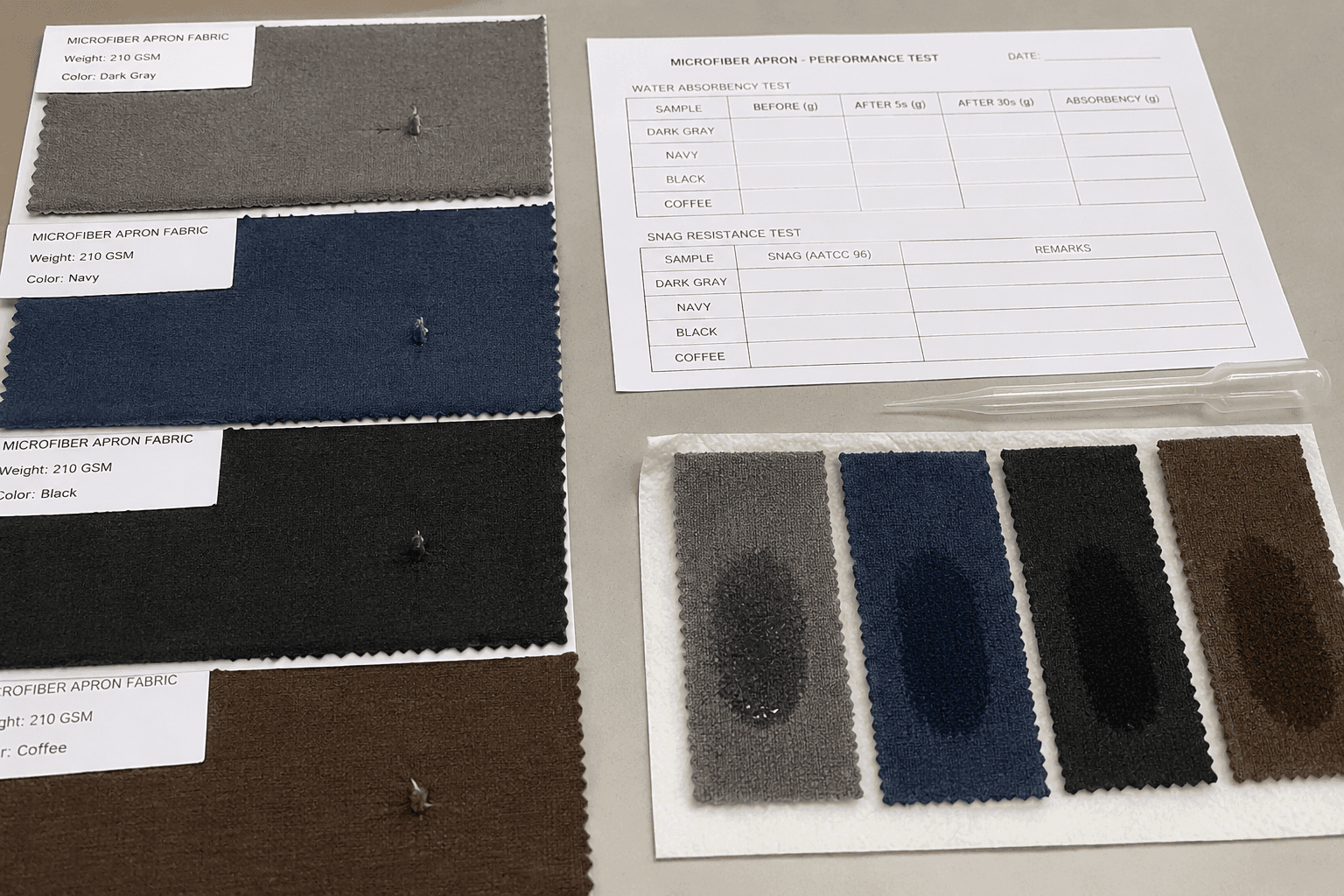
Fabric weight is the main filter. Soft to medium wovens from 160 to 220 GSM show the clearest improvement. A 180 GSM rayon-blend twill, 190 GSM Tencel-cotton plain weave, or 210 GSM soft-finished cotton twill can drape noticeably better when selected components move to bias. A 300 GSM canvas or 12 oz rigid denim may absorb the cost penalty while showing little improvement once pockets, bartacks, rivets, and ties are added.
Bias can also solve fit issues without redesigning the whole apron. If a shaped upper bib stands away from the body, selective bias on that section can help it settle closer. If self-fabric ties feel too stiff to knot cleanly, bias ties improve handling immediately. If a cross-back style feels rigid over the shoulder, semi-bias straps can reduce pressure and twisting. These are narrow, valid use cases where the extra cloth and labor create a result the wearer can feel or the hospitality buyer can see.
- Best fabric range for visible benefit: 160 to 220 GSM soft or medium wovens.
- Best end uses: wine service, premium café, boutique retail, and front-of-house hospitality.
- Best component uses: shaped bib tops, soft shoulder straps, and long self-fabric ties.
- Weak candidates: 280+ GSM canvas, heavy denim, rigid twill, and tool-loaded utility aprons.
Where diagonal cutting wastes fabric
Many apron styles do not gain enough from bias to justify the cost. A rectangular waist apron in 240 to 280 GSM twill with two patch pockets is the common example. Once tied, loaded with order pads or tools, and washed repeatedly, its performance is driven by waistband tension, pocket reinforcement, and hem construction, not by fabric drape. A bias body in this category usually adds cost and distortion risk without improving function.
Heavy utility bib aprons are also poor candidates. When the design includes multiple compartments, rivets, bartacks, contrast topstitching, towel loops, or reinforced corners, the intended look is structure and durability. Straight grain supports that. Full bias works against it by making long edges less stable and topstitching harder to keep flat. In production, the result often appears as side-hem waviness, uneven top-edge length, twisted tie seams, and more final inspection disputes.
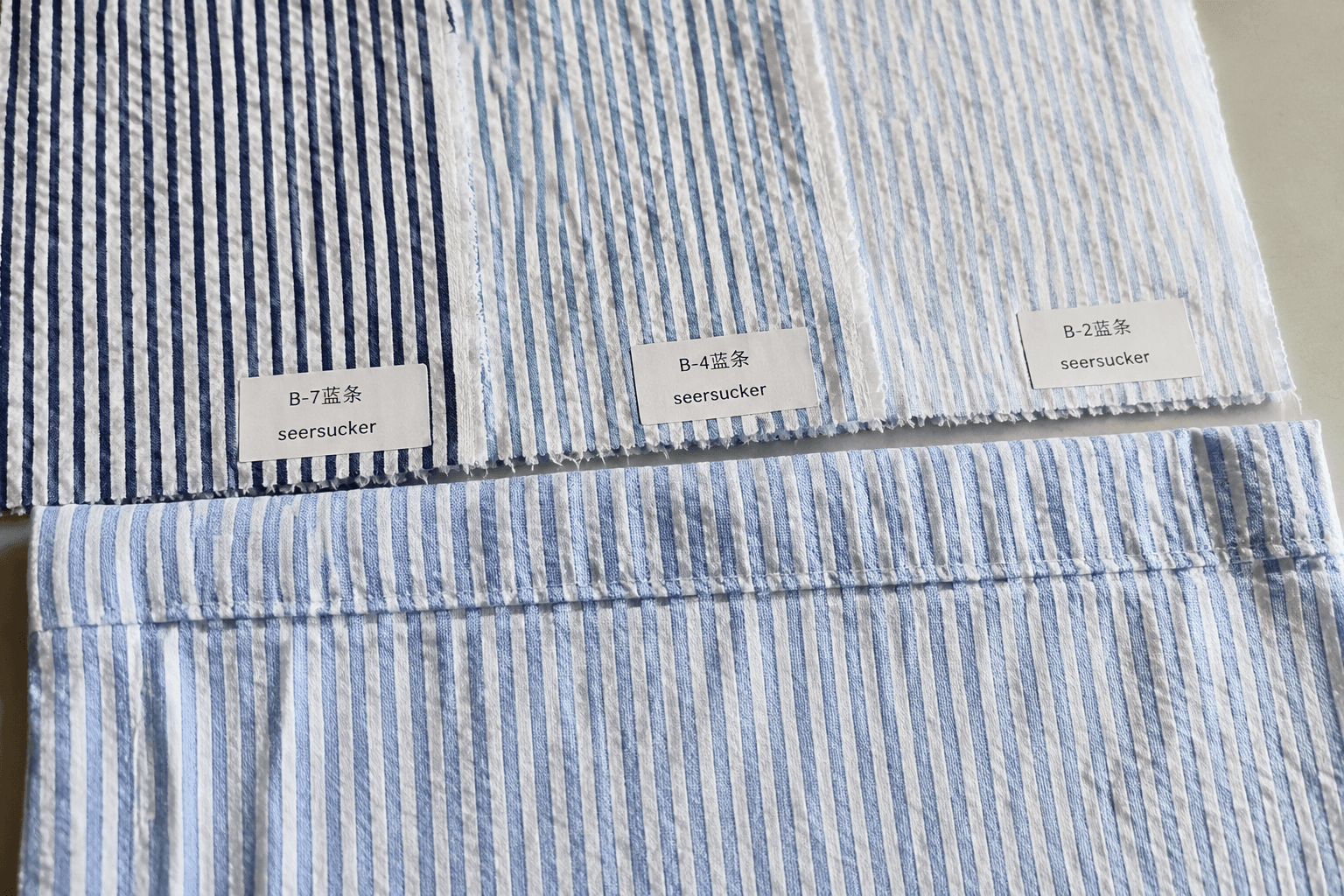
Striped and yarn-dyed fabrics add another risk. Some buyers request bias cutting to turn stripes diagonally for a fashion effect. That can work on a small bib insert or tie, but it creates left-right symmetry problems on bulk apron bodies. Pocket matching becomes harder, small sewing skew becomes obvious, and inspection time increases. If the goal is only to break the stripe direction, a cross-grain pocket, contrast bib facing, or separate tie fabric usually gives a better cost-to-effect ratio.
As a sourcing rule, diagonal cutting is weak on rectangular, pocket-heavy, industrial-wash, or heavyweight apron styles. If the apron must hold tools, survive hot tumble drying, or keep crisp topstitch lines, stable grain direction is usually the better commercial choice.
- Rectangular waist aprons rarely justify full-bias bodies.
- Heavy utility bib aprons need grain stability more than soft drape.
- Fabrics above 280 to 300 GSM usually show low return on full bias.
- Bias-cut stripes increase matching risk, rejection risk, and inspection time.
- Industrial-wash aprons should keep main panels, pockets, and waistbands on straight grain.
QC standards for a bias cut apron order
If a buyer specifies bias, the control points should be written into the tech pack and pre-production comments. Fabric relaxation is first. For cotton twill, denim, canvas, and poly-cotton apron fabrics, 12 to 24 hours before spreading is a practical minimum. Washed fabrics, compressed rolls, and high-tension deliveries may need the full 24 hours. Without relaxation, bias-cut panels can shift after cutting and cause hem mismatch or tie-length variation during sewing.
The cutting room should separate large bias parts from stable small parts and bundle clearly by orientation. Operators need handling rules for upper bib curves, side hems, and ties. Depending on the fabric, the line may use stay-stitching, temporary fusible strips in stress zones, differential feed, or reduced steam at intermediate pressing. These are modest process changes, but each one adds time and should be included in the quotation before bulk approval.
Quality control also needs different measurement logic. A full-bias body should not always be judged only by the flat-table standard used for rigid straight-grain aprons. Buyers should define finished measurements after a hanging rest period of at least 2 hours, plus wash-test review after 3 home-laundry cycles or 5 commercial cycles, depending on end use. For final inspection, AQL 2.5 for major defects and AQL 4.0 for minor defects is common, but defect definitions must be explicit. A soft ripple at a bias hem may be acceptable; a twisted tie seam, skewed pocket, or bib growth outside tolerance is not.
The most useful tech-pack additions are concrete: grain direction by component, fabric relaxation time, finished tie-length tolerance, acceptable hem ripple standard, wash shrinkage target, and inspection method on hanger. Without these details, a bias style can turn into approval arguments during PP sample review, inline audit, and final inspection.
- Fabric relaxation before cutting: 12 to 24 hours.
- Measurement check: after at least 2 hours hanging rest.
- Wash-test protocol: 3 home washes or 5 commercial washes, based on end use.
- Common final inspection benchmark: AQL 2.5 major, AQL 4.0 minor.
- Tech-pack details: component grain direction, tie-length tolerance, hem ripple standard, and shrinkage target.
Sourcing framework: selective bias before full bias
For most professional buyers, selective bias is the best starting point. Begin with the apron’s use case. If the style must survive daily restaurant laundering, pocket loading, hot drying, and frequent replenishment, keep the main body and pockets on straight grain. Then identify whether any single component has a real comfort or appearance issue. Often the most commercial construction is simple: straight-grain body, straight-grain pockets, semi-bias cross-back straps, and a shaped upper bib cut slightly off grain.
Request a three-way costing comparison from the supplier before committing. Use the same fabric, trims, size range, label method, and packaging so the bias effect is isolated. The three samples should be straight grain, selective bias components, and full-bias body. Ask for marker efficiency, shell consumption in meters, cutting comments, sewing minutes, MOQ, and lead-time difference. On a 5,000 piece bib apron order, a $0.65 unit difference equals $3,250 before freight, duty, or distributor margin.
Review samples after use, not only on a mannequin. Knot and unknot ties repeatedly. Load pockets with the items the wearer actually carries. Check whether the upper bib keeps shape after washing. Measure whether side hems grow beyond tolerance. A sample that looks elegant on day one but twists after five washes is not suitable for a replenishment uniform program.
The durable B2B approach is to use bias where the customer can see or feel the gain, and keep structural apron parts on stable grain. That preserves the useful benefit of a bias cut apron while controlling fabric waste, labor minutes, MOQ pressure, and preventable rejects.
- Default main bodies, pockets, and waistbands to straight grain unless a clear drape issue exists.
- Cost three options side by side: straight grain, selective bias, and full bias.
- Compare marker yield, added meters, FOB change, MOQ, lead-time days, and QC risk.
- Approve only after wash, wear, pocket-load, and tie-knot testing.
- Use hybrid construction to capture premium feel without full-bias waste.