In pastry production, apron performance is decided on the line, not in a showroom sample. Warm cocoa butter can strike into open or cotton-rich surfaces within minutes, sugar syrup dries into a brittle film across the front body, and flour dust settles into pocket edges, bartacks and textured weaves. For B2B buyers, the goal is a bib apron that keeps a presentable face through a full shift, launders without heavy residue retention, and holds size and shape for 40 to 60 commercial wash cycles.
That is why pastry lab aprons should be sourced differently from café, barista or retail hospitality styles. A 180 GSM cotton apron may feel soft in hand, but in a chocolate kitchen it often shows grease strike-through, wrinkling and visible dusting within the first 2 to 4 weeks of use. Most production teams get a better balance of wear life, cleanability and cost from 220 to 270 GSM fabrics, especially 6.9 to 8.0 oz dense 65/35 poly-cotton twill or compact plain weave constructions.
For OEM and private-label buyers, the strongest sourcing decisions come from matching apron specification to contamination type, laundry process, replacement window and landed cost target. Fabric weight, weave, strap width, pocket count, shrinkage tolerance, AQL level and replenishment timing all affect reject rates and reorder stability. When those points are fixed before bulk production, the apron program is easier to control across sampling, inspection, wear testing and repeat orders.
- Pastry lab aprons usually perform best at 220 to 270 GSM, or about 6.5 to 8.0 oz, in bakery and chocolate production environments.
- A dense 65/35 poly-cotton twill at 235 to 245 GSM is a reliable baseline because it releases flour better than brushed cotton and keeps shape through 40 to 60 wash cycles.
- Dark charcoal, cocoa brown and navy usually mask mixed cocoa butter and flour buildup better than black, white or beige under bright production lighting.
- Typical OEM MOQs are 600 to 1,000 pieces per color with stock fabric, rising to 1,500 to 3,000 pieces for custom dye lots, special finishes or non-standard trims.
- FOB pricing commonly runs about $2.40 to $3.20 per piece for a basic bib apron at 3,000 units, and $4.20 to $5.80 for cross-back straps, embroidery or upgraded hardware.
- Bulk approval should include wash appearance, seam security and measurement checks under agreed standards such as AQL 2.5 for major defects and AQL 4.0 for minor defects.
Why pastry lab aprons fail first in chocolate rooms and bakery prep lines
Chocolate kitchens and pastry labs create a consistent contamination pattern, but each soil type stresses an apron differently. Cocoa butter lands warm and can wick into absorbent yarns quickly, leaving a dark halo that may remain visible after laundering. Sugar syrup dries hard and can glaze the front panel if the garment sits too long before wash-in. Flour and powdered sugar do not always create deep stains, but they collect in seam ridges, pocket tops and textured surfaces, making an apron look old before the fabric is structurally worn out.
In most production settings, the first failure is visual rejection rather than seam breakage. Operators may wear one apron for an 8 to 10 hour shift, while high-soil stations such as enrobing or dough scaling may require a change after 4 to 5 hours. Laundry commonly runs at 40 to 60 degrees Celsius, with some facilities pushing to 70 degrees on heavily soiled loads. If the face fabric traps powder or absorbs fat too readily, the apron can look unacceptable after 20 to 30 washes even though the base cloth still has usable tensile strength.
Construction details often accelerate the problem. Deep pouch pockets hold flour and scraps, bulky seam allowances retain residue after wash, and neck straps under 2.0 cm tend to twist or roll after repeated laundering. For procurement teams, these are not cosmetic complaints. They directly affect reject rate, laundry labor, operator acceptance and the timing of emergency replenishment.
- Cocoa butter: highest staining risk because warm fat penetrates cotton-rich surfaces fast and can oxidize into yellow-brown marks over time.
- Flour and powdered sugar: highest appearance risk because fine particles collect along stitch lines, bartacks and pocket openings.
- Syrup residues: highest stiffness risk when soiled aprons remain unwashed for 12 to 24 hours.
- Complex styling: layered pockets, contrast binding and decorative topstitching create more residue traps than plain production styles.
Best fabric specification for pastry lab aprons: 220 to 270 GSM, blend and weave
For most professional bakery and confectionery programs, the practical fabric window is 220 to 270 GSM. Below 200 GSM, aprons often show grease strike-through, lose body after hot washing and wrinkle heavily at the lower panel and ties. Above 300 GSM, the garment becomes hotter, slower to dry and less comfortable during long bench work, even though abrasion resistance improves. In repeat OEM orders, 235 GSM and 245 GSM are common working weights because they balance structure, wash resilience and unit cost.
Fiber blend determines how the apron reacts to oil, dust and laundering. A 65/35 polyester-cotton twill is often the safest standard for pastry lab aprons because it controls shrinkage better than all-cotton, dries faster after washing and usually keeps a cleaner front profile through 40 to 60 wash cycles. An 80/20 blend can improve drying speed and dimensional stability further, but some buyers find the hand feel firmer and less suitable for premium culinary branding. A 100% cotton apron at 9 to 10 oz can feel richer in hand, yet it generally absorbs grease faster and often needs earlier replacement in chocolate rooms.
Weave matters as much as blend. Dense twill and compact plain weave outperform brushed, slubbed or heavily textured fabrics because they offer fewer catch points for flour and sugar. If a buyer wants a water-repellent or oil-slowing finish, the factory should provide retention results after 10, 20 and 30 washes, not only fresh-fabric claims. In practice, a dense woven face with a light fluorine-free finish is usually more acceptable on the floor than a stiff coated fabric.
- Recommended range: 220 to 270 GSM for most pastry and chocolate production use.
- Common baseline: 65/35 poly-cotton twill at 235 to 245 GSM for repeatable wash performance and stable costing.
- Alternative blend: 80/20 poly-cotton where faster drying and lower shrinkage matter more than softer hand feel.
- Premium option: 9 to 10 oz cotton only when brand image outweighs stain resistance and faster replacement is acceptable.
- Fabric cost share: body fabric and cutting set commonly account for about $1.10 to $2.10 of unit FOB cost depending on GSM, blend and finish.
Color selection and finish choices for pastry lab aprons in cocoa butter zones
For bonbon lines, enrobing stations and ganache rooms, buyers should judge color by mixed-soil visibility rather than hospitality aesthetics. No cotton-rich apron is stain-proof in normal chocolate production. The realistic target is to slow wetting, reduce contrast marks and maintain acceptable wash appearance over a defined replacement cycle. Dense woven fabrics with moderate polyester content usually outperform soft cotton canvases because the face absorbs warm cocoa butter more slowly and rinses more evenly.
Color choice has a measurable effect on rejection rates. Black hides fresh grease well but often shows flour sharply under white LED production lighting. White, cream and beige support a clean pastry image, but they reveal both fat halos and sugar splash almost immediately, which can double perceived soil visibility within the first few shifts. Dark charcoal, cocoa brown and navy are usually the most balanced choices because they mute both oily and powdery contamination without looking overly industrial.
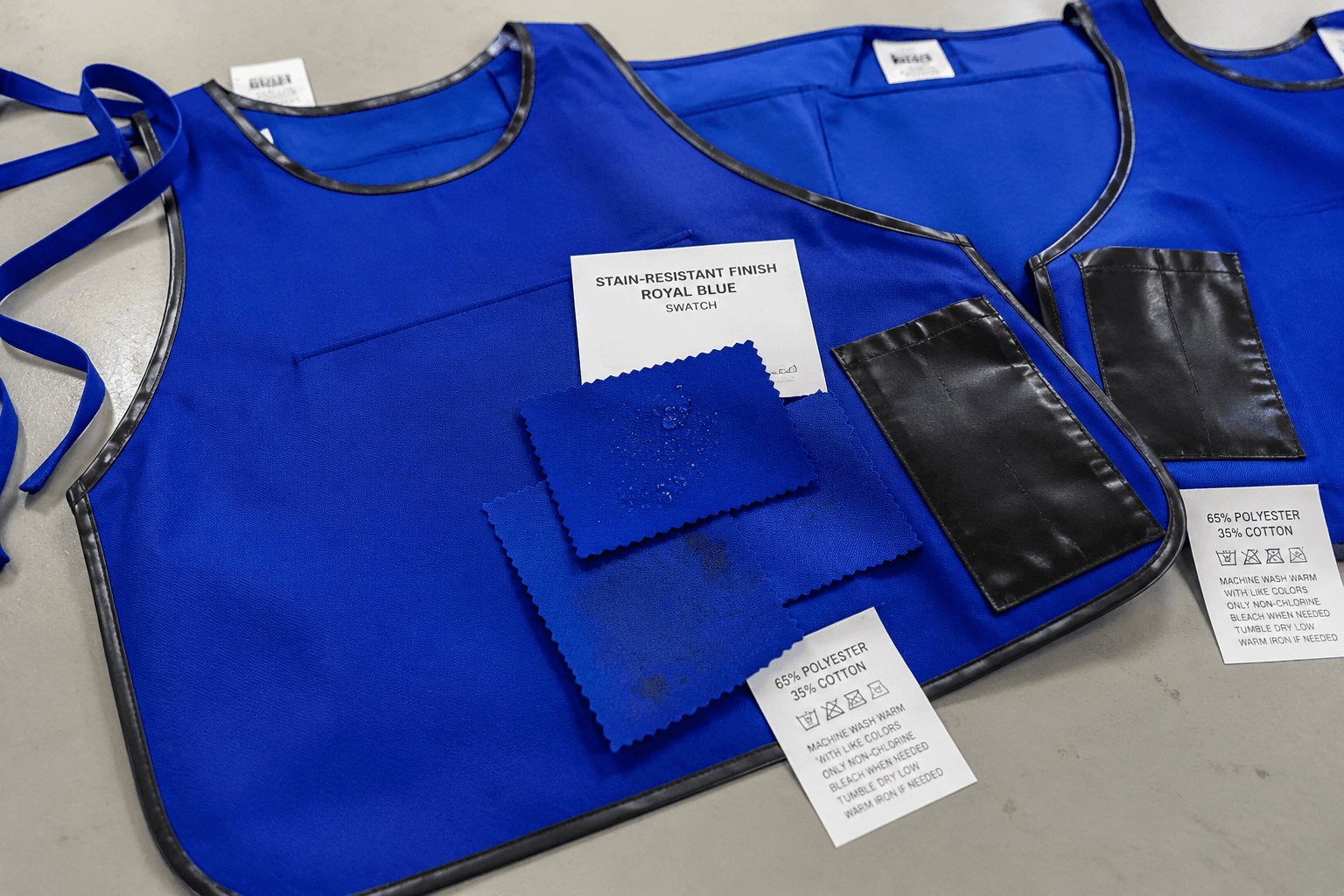
Finishes should be specified with realistic expectations. A light C0 water-repellent finish may delay first contact from syrup or butter droplets, but it will not stop cocoa butter penetration under pressure or long exposure. PU- or PVC-coated fabrics resist grease better, yet many pastry teams reject them because they reduce breathability, feel heavy after several hours and may crack or delaminate after repeated washing. For most B2B buyers, the highest wear acceptance comes from an uncoated or lightly finished dense weave that remains comfortable for a full shift.
- Best all-around shades: dark charcoal, cocoa brown and navy for mixed flour, sugar and chocolate exposure.
- Higher-maintenance shades: white, cream, beige and light gray because visible rejection happens sooner.
- Finish reality: light repellents delay wetting but do not make an apron grease-proof.
- Typical service window: dark shades often remain acceptable for 6 to 12 months, while light shades may need replacement in 3 to 6 months under the same wash conditions.
Construction details that keep pastry lab aprons cleaner and more stable after washing
An apron that stays presentable longer usually comes from disciplined construction, not one marketing finish. The smoother the front panel and the fewer exposed seam lines, the less flour settles into the garment between washes. Buyers sourcing pastry lab aprons for bench work should prioritize clean bib panels, limited pocket layouts and stable strap geometry over café-style details such as decorative stitching, rivets or multi-panel fronts.
Coverage should match how pastry staff actually work. Operators lean against worktables, marble benches and tray edges, so the apron should cover the upper thigh without hanging low enough to snag on racks or drawer pulls. A practical production size is usually 72 to 78 cm wide and 86 to 95 cm long. Waist ties of 95 to 110 cm on each side improve fit flexibility, while strap widths of 2.5 to 3.0 cm reduce twisting and edge rolling after laundering. Cross-back styles can improve comfort during 8 to 10 hour shifts, but they typically add $0.20 to $0.45 per piece and increase sewing minutes compared with a basic neck-loop style.
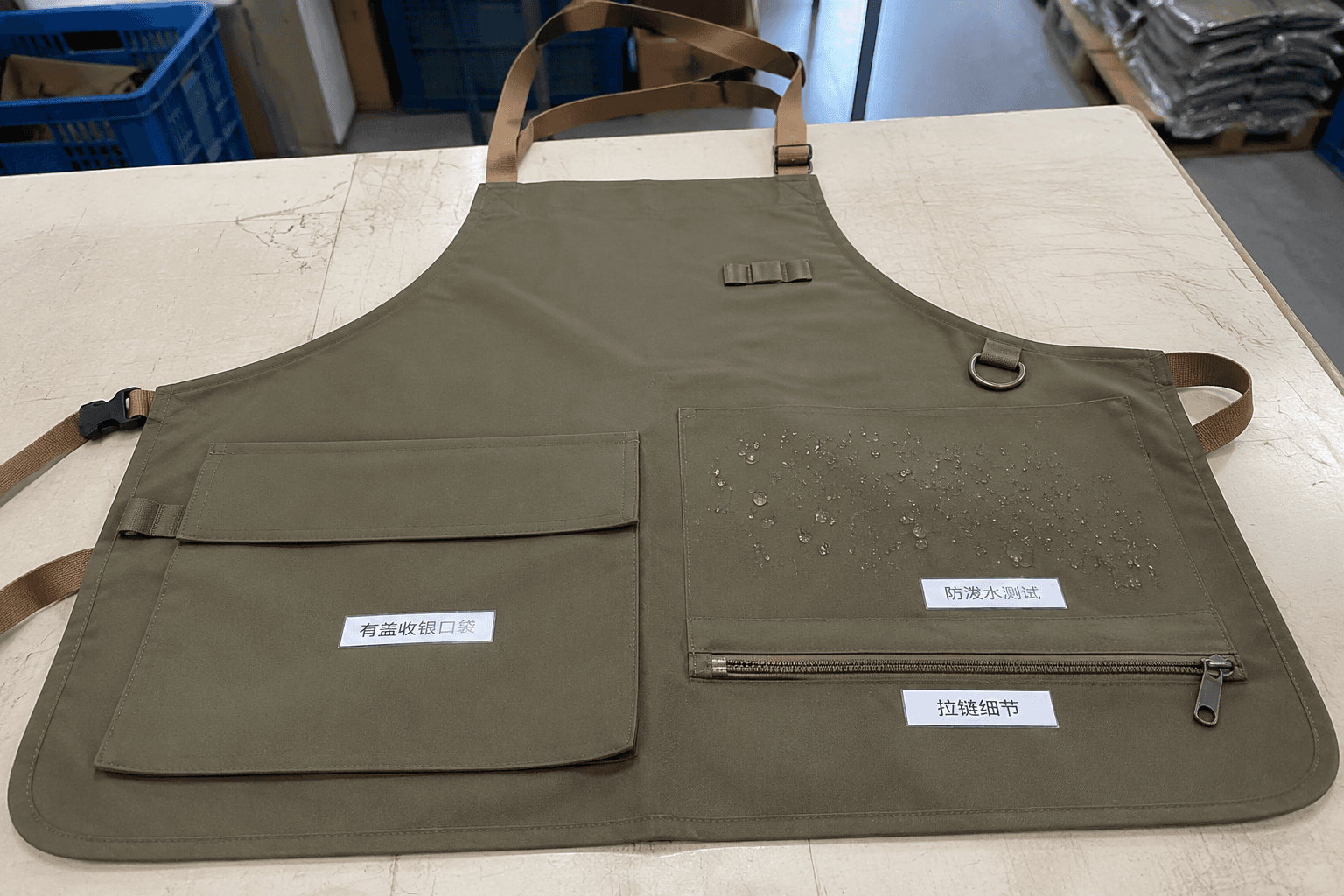
Pocket count should stay controlled. One chest pen slot and one low-profile waist pocket are enough for many pastry teams. Deep kangaroo pockets and divided utility pouches collect flour, labels and scraps, then stay visibly dusty even after shake-out. Where thermometers, markers or scrapers are necessary, narrow angled compartments or removable loops are easier to empty before washing and create fewer daily appearance failures.
- Front panel rule: choose smooth faces with minimal horizontal seams and limited decorative topstitching.
- Pocket rule: keep to one or two low-profile pockets unless workflow clearly requires more storage.
- Reinforcement points: bartack tie joins, top bib corners and pocket ends because these take the highest pull stress.
- Strap specification: 2.5 to 3.0 cm strap width improves comfort and reduces twist after repeated wash cycles.
MOQ, lead time and FOB cost benchmarks for bulk pastry lab apron sourcing
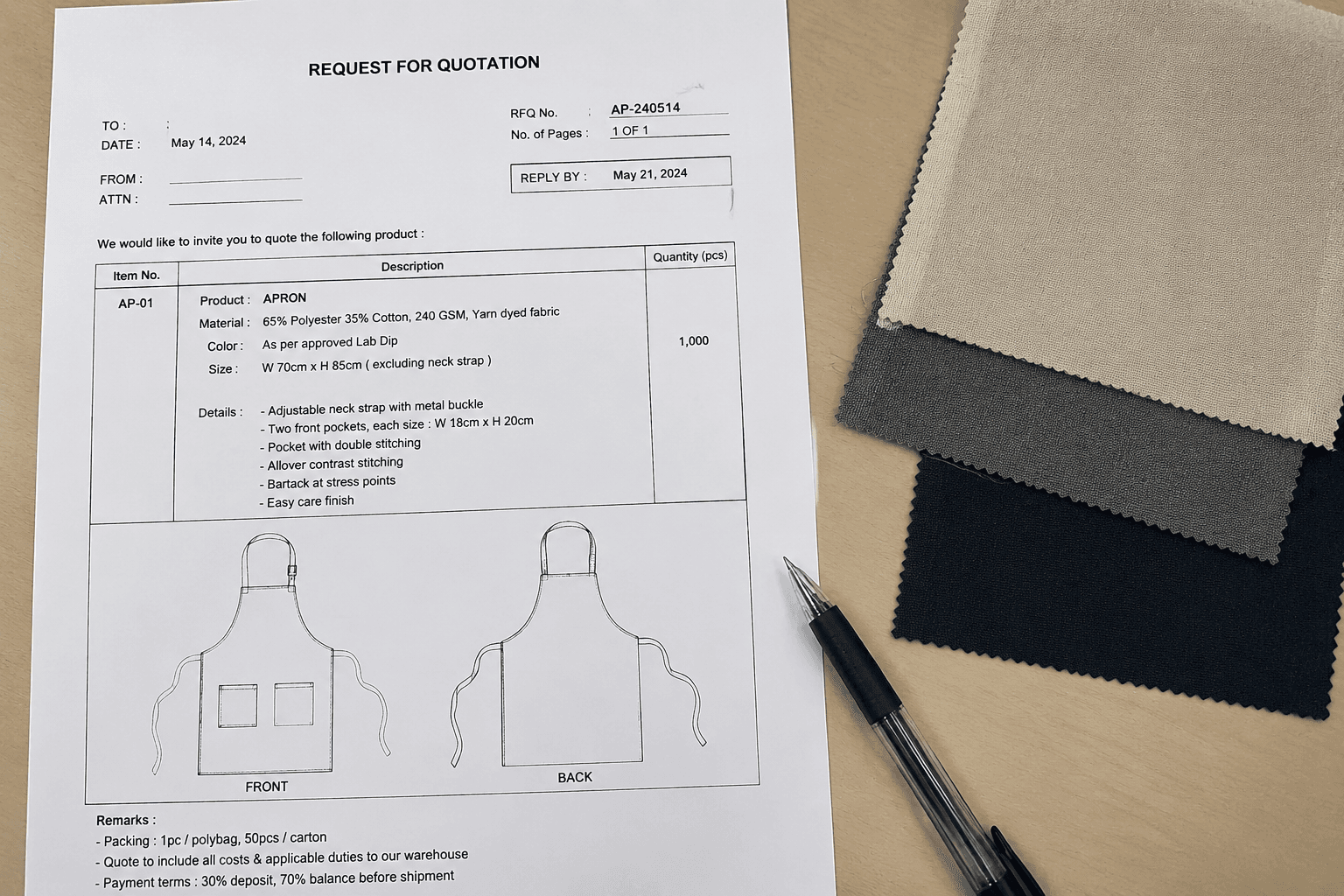
Apron sourcing is easier to control when buyers lock a base fabric, fit block and sewing method, then vary only logo application, color and minor trims between SKUs. In many China OEM programs, the standard MOQ is 600 to 1,000 pieces per color per style when stock fabric is available. If the order requires custom dyeing, yarn-dyed fabric, a special finish or non-standard hardware, MOQ usually moves to 1,500 to 3,000 pieces to cover setup and fabric minimums.
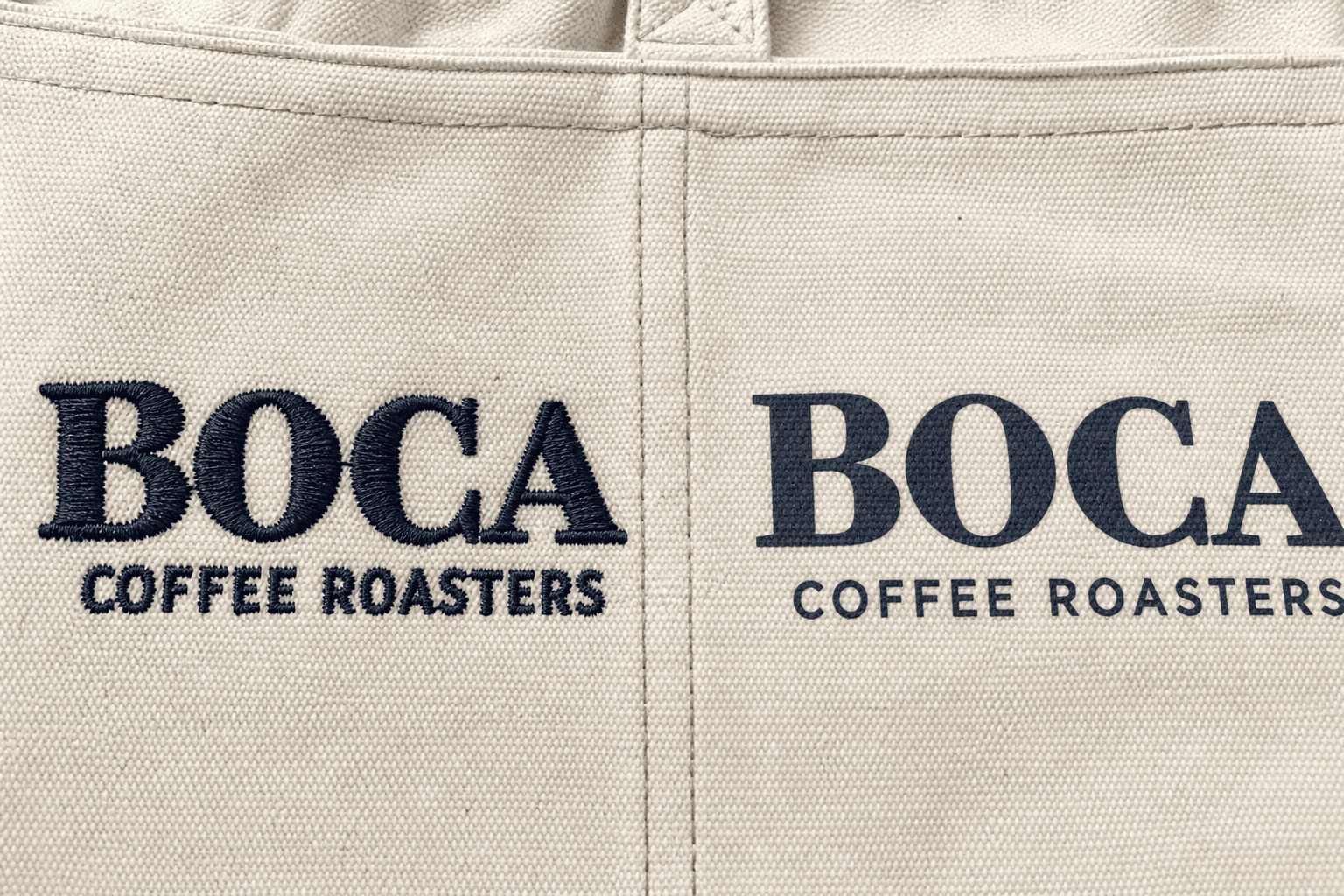
Sampling is usually straightforward if the tech pack is complete. A basic fit sample for a simple bib apron commonly takes 5 to 7 days. A pre-production sample with revised patterning, custom embroidery placement or wash testing usually takes 10 to 14 days. After approval and deposit, bulk production with stock fabric typically needs 20 to 35 days, covering cutting, sewing, in-line inspection, final QC and export packing. Custom fabric development can extend the schedule to 30 to 45 days, and peak-season congestion may add another 7 to 10 days.
Pricing should be compared by construction level rather than by opening quote. A simple 235 GSM poly-cotton bib apron with one pocket, woven label and standard carton packing usually lands around $2.40 to $3.20 FOB at 3,000 units. Add cross-back straps, embroidery, D-rings, heavier bartacking, custom Pantone dyeing or branded trims, and the price commonly rises to $4.20 to $5.80. Buyers who compare unit cost against wash life and reject rate usually make better sourcing decisions than buyers who chase the cheapest sample price.
- Stock-fabric MOQ: 600 to 1,000 pieces per color per style.
- Custom-fabric MOQ: 1,500 to 3,000 pieces for custom dye lots, specialty finishes or unusual trim packages.
- Sample timing: 5 to 7 days for basic samples and 10 to 14 days for revised or wash-tested samples.
- Bulk timing: 20 to 35 days with stock fabric and about 30 to 45 days with custom fabric development.
- FOB guide: about $2.40 to $3.20 for a basic bib apron and $4.20 to $5.80 for upgraded constructions at 3,000 units.
QC standards, wash testing and acceptance criteria before bulk approval
Quality control for pastry and chocolate apron programs should focus on repeatable wash behavior, sewing stability and visible contamination performance. A neat first sample is not enough if bulk fabric shrinks 4% to 6%, ties torque after laundering or pocket tops trap flour after every shift. Those failures are usually preventable when the pre-production checklist reflects actual use conditions instead of showroom appearance.
A practical approval protocol starts before cutting. Buyers should confirm actual GSM, stated blend where tested, color consistency to the approved standard, finish uniformity and dimensional stability. Wash testing should cover at least 1 and 3 cycles under the intended laundry method, while larger or higher-risk programs often require a 5-cycle check for shape retention, shade change and torque. For acceptance sampling, AQL 2.5 for major defects and AQL 4.0 for minor defects remains a common benchmark, provided defect definitions are written clearly in advance.
Finished-garment measurement control is also important because small deviations affect drape and fit. A tolerance of plus or minus 1.0 to 1.5 cm is typical for apron width and length, and strap lengths should be controlled just as tightly because mismatch is obvious in wear. Buyers comparing two candidate fabrics should also run simple contamination panels using flour, cocoa butter and syrup swatches before signing off a full production run.
- Shrinkage target: under 3% after the agreed wash method.
- Measurement tolerance: typically plus or minus 1.0 to 1.5 cm on body dimensions and straps.
- AQL benchmark: AQL 2.5 for major defects and AQL 4.0 for minor defects.
- Wash review points: check appearance after 1, 3 and ideally 5 cycles for twist, residue retention and shape loss.
- Critical sewing checks: pocket symmetry, bartack security, bib balance and strap attachment strength.
Laundry control and replacement-cycle planning for professional apron programs
Even a well-specified apron will underperform if laundry timing and process control are weak. In pastry and chocolate operations, the biggest variable is how quickly the soiled garment enters wash. Cocoa butter, ganache and sugar residues become harder to remove the longer they remain on the surface, especially in warm production rooms. For B2B buyers, care conditions should be part of the sourcing specification because they influence shrinkage, finish retention and actual replacement timing.
Most 235 to 245 GSM poly-cotton bib aprons perform well when washed at 40 to 60 degrees Celsius with standard detergent and separated from lint-heavy items. Excessive tumble-dry heat can set residual stains, harden the hand feel and increase wrinkling at ties and corners. Bleach should be approved only if the base fabric, sewing thread and branding method are compatible, because aggressive chemistry can shorten appearance life quickly, particularly on dark shades or lightly finished cloth. If laundering is outsourced, these process limits should be agreed before bulk ordering.
Replacement planning should be budgeted in advance rather than treated as an exception purchase. In a medium-duty pastry lab where staff change once per shift and wash control is consistent, a 235 to 245 GSM poly-cotton bib apron often stays serviceable for 6 to 12 months. In a high-fat chocolate room or a heavy-flour department with frequent commercial washing, the realistic service window may drop to 3 to 6 months. Buyers who track annual cost per wearer instead of FOB price alone usually achieve more stable forecasting and fewer urgent reorders.
- Wash-in timing: clean contaminated aprons within the same shift or within 24 hours whenever possible.
- Sorting rule: separate dark chocolate-room aprons from lint-shedding textiles to reduce visible contrast buildup.
- Medium-duty service life: often 6 to 12 months for a well-specified 235 to 245 GSM poly-cotton style.
- Heavy-soil service life: often 3 to 6 months in high-fat or high-flour departments with frequent laundering.
- Useful cost metric: calculate annual cost from unit price, reject rate, wash life and replacement frequency together.