A welding apron is a simple garment, but it is not a simple sourcing item. Buyers are balancing spark resistance, radiant heat exposure, abrasion, weight, fit, wash performance, labeling claims and price. A 520 GSM FR cotton apron and a 1.2 mm split leather welding apron may both be sold as flame resistant, but they behave very differently at the workbench and on the production line.
For bulk custom apron orders from China, the main risk is over-specifying in the wrong direction. A heavier apron is not automatically safer if the wearer removes it because it is too hot. A low-cost FR cotton apron may pass a vertical flame test but fail quickly in grinding, spatter or sharp-edge environments. Leather can provide strong physical protection, but it brings variation in hide quality, color, odor, moisture content and carton weight.
This article explains the practical sourcing choices behind leather welding aprons, FR cotton aprons and industrial safety apron standards. The focus is on OEM production: fabric and leather grades, pattern construction, trims, test reports, MOQ, lead time and the questions a buyer should settle before placing a purchase order.
- A leather welding apron is usually better for heavy spatter and abrasion, but it has higher weight, greater material variation and higher freight cost.
- An FR cotton apron is more breathable and easier to brand, but it must be matched to the correct FR treatment, GSM and wash expectation.
- EN ISO 11611, EN ISO 11612, NFPA 2112 and ASTM methods are not interchangeable, so buyers should define the target market before sampling.
- Metal eyelets, leather straps, aramid thread and FR binding can raise unit cost by USD 0.25-1.20 per piece, depending on apron size and trim quality.
- For OEM orders, a realistic development timeline is 7-10 days for sampling, 5-12 days for lab testing coordination and 25-45 days for bulk production after approval.
What a welding apron must protect against
A welding apron is designed for localized protection, mainly covering the front torso and upper legs. In factory use, it normally protects against sparks, small molten metal droplets, grinding debris, short contact with hot surfaces and abrasion from benches or metal parts. It is not a full welding garment, and it should not be specified as a substitute for jackets, sleeves, gloves or leg protection where those items are required.
The most important sourcing question is the work process. TIG welding, MIG welding, stick welding, plasma cutting, grinding and foundry maintenance do not produce the same exposure. Light TIG work may need a flexible flame resistant apron that allows movement and comfort. Heavy stick welding or frequent grinding often needs split leather or reinforced panels. Buyers should ask the end user how many hours per shift the apron is worn, whether sparks hit the chest or lap directly, and whether the apron contacts oil, moisture, edges or hot workpieces.
Sizing also changes protection. A common industrial safety apron size is 24 x 36 inches, 24 x 42 inches or 27 x 42 inches. For European buyers, 60 x 90 cm and 70 x 100 cm are common. Long aprons protect the lap better but can restrict walking or stair movement. For seated welding, a 42 inch length can be useful. For standing work with frequent movement, 36-39 inches is often more accepted by wearers.
- For light TIG or inspection work, specify 300-450 GSM FR cotton or light side-split leather if sparks are limited.
- For MIG, stick welding and grinding, specify 1.1-1.4 mm split cowhide, selected buffalo split or leather-reinforced FR cotton.
- For hot, humid workshops, compare wearer acceptance before moving directly to heavy leather.
- For apron programs covering multiple plants, define two or three protection levels instead of forcing one universal product.
Leather welding apron options: split, grain and reinforcement
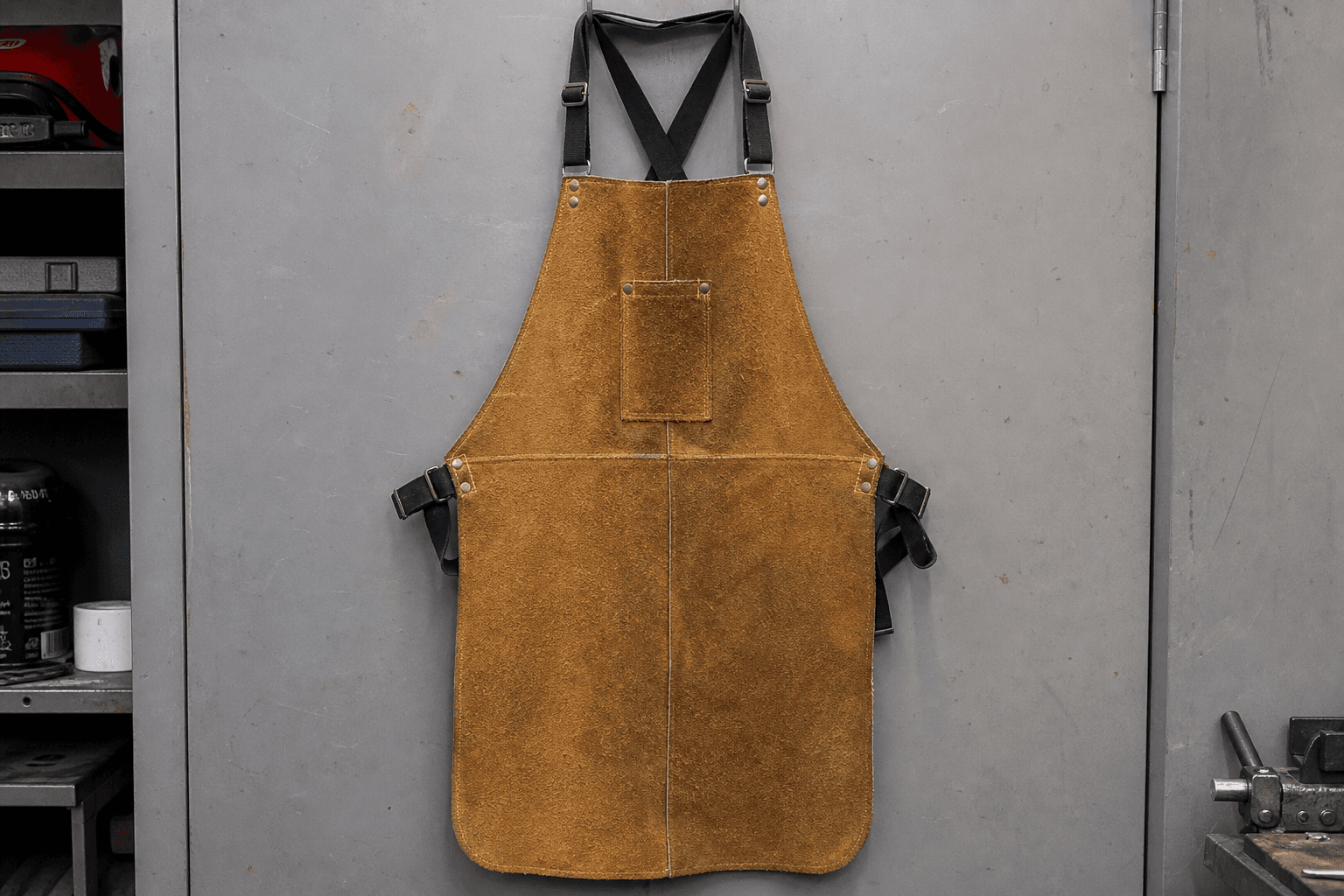
A leather welding apron remains the traditional choice for high spatter and abrasion. The most common material is cow split leather, usually 1.0-1.4 mm thick. Split leather has a fibrous surface, good heat resistance for sparks, and a cost level suitable for industrial bulk orders. Full grain leather is smoother and stronger, but it is usually too expensive for disposable or high-consumption industrial apron programs. Buffalo split is also used, especially where buyers want a lower-cost heavy apron, though it can be stiffer and more variable in appearance.
For sourcing managers, leather quality control is less standardized than woven fabric inspection. Thickness, softness, color shade, scars, loose grain, odor and moisture must be controlled by approved swatches and production limits. A 1.2 mm leather welding apron can feel quite different if the split is dry and boardy versus soft and properly finished. In bulk production, we normally recommend approving a leather range rather than one small hand sample. The buyer should accept natural variation, but not excessive powdering, cracking, mold marks or strong chemical smell.
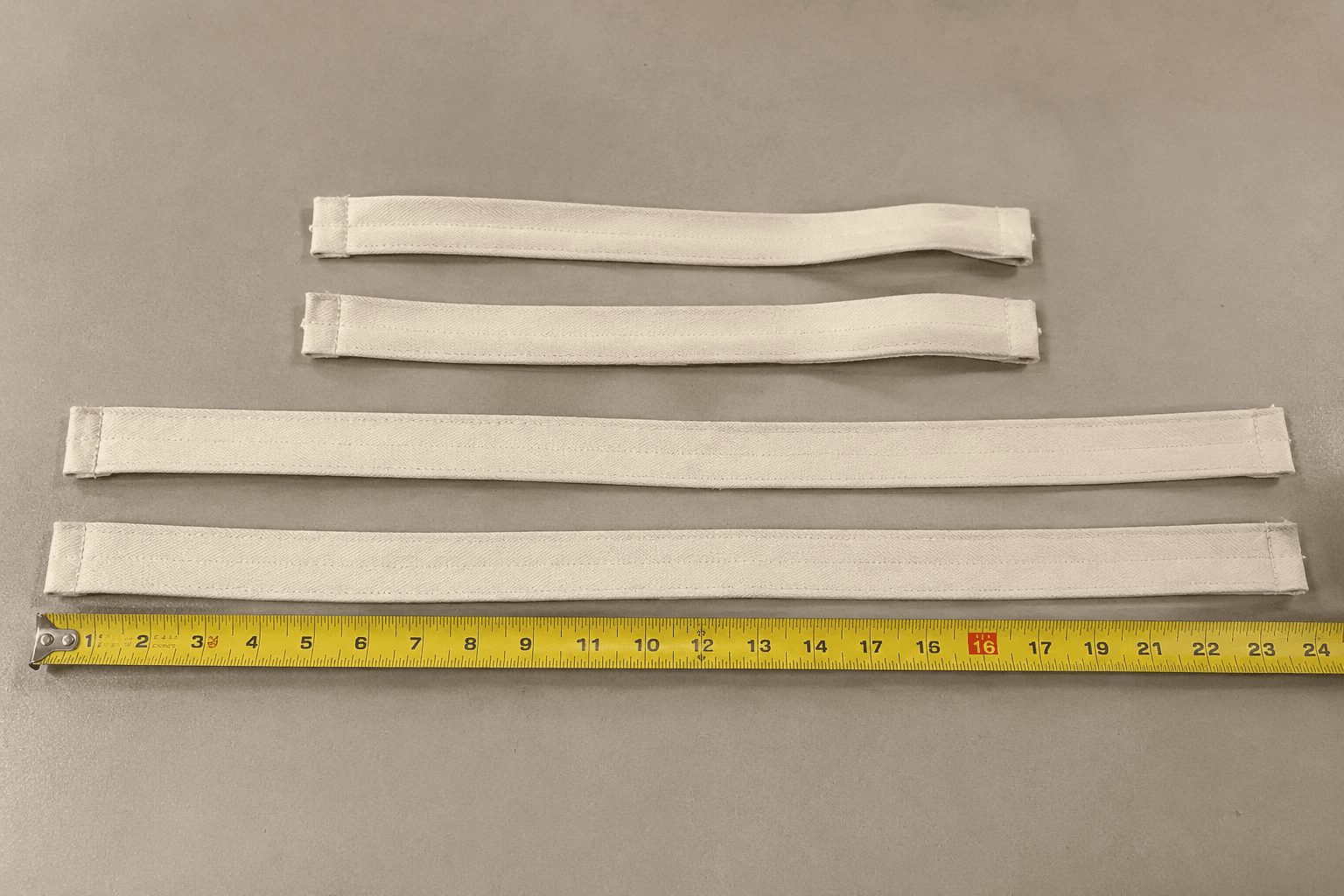
Construction details matter. Welding aprons should use flame resistant sewing thread, commonly aramid or FR-treated cotton/poly thread depending on the claim and cost target. Cotton webbing neck straps may char under sparks; leather straps, FR cotton webbing or aramid webbing are better choices. Metal buckles and rivets are durable, but they can conduct heat and scratch finished parts. Plastic hardware is generally not recommended for welding exposure unless it is outside the spark zone and clearly approved for the application.
- Typical leather thickness is 1.0-1.2 mm for medium duty and 1.2-1.5 mm for heavy duty.
- A 24 x 42 inch split leather apron usually weighs about 650-1,100 g depending on hide thickness and strap design.
- Common FOB China pricing for plain split leather welding aprons often falls around USD 4.80-9.50 per piece at 1,000-3,000 pcs, subject to leather market movement.
- Reinforced chest or lap panels can add USD 0.60-1.80 per piece and should be used only where wear mapping justifies the extra weight.
FR cotton apron choices: comfort, wash life and cost
An FR cotton apron is usually chosen when comfort, branding, lower weight and washability are important. It is not the same as ordinary cotton canvas. Flame resistant performance can come from a durable FR treatment applied to cotton, a blend with inherent FR fibers, or a certified FR fabric from a nominated mill. For apron sourcing, treated FR cotton is common because it balances cost and performance. Inherent FR fabrics are possible but usually push the apron into a higher price category.
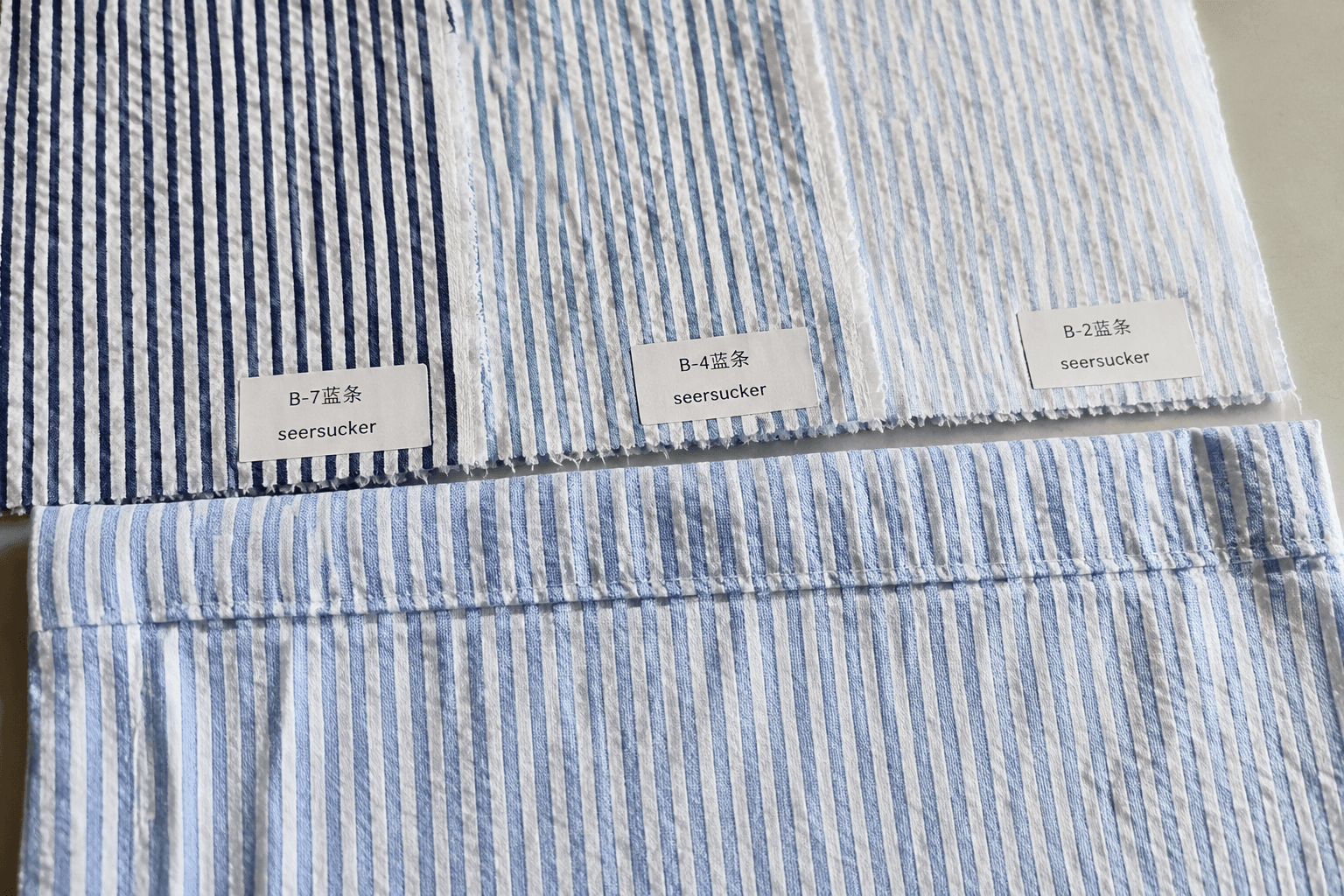
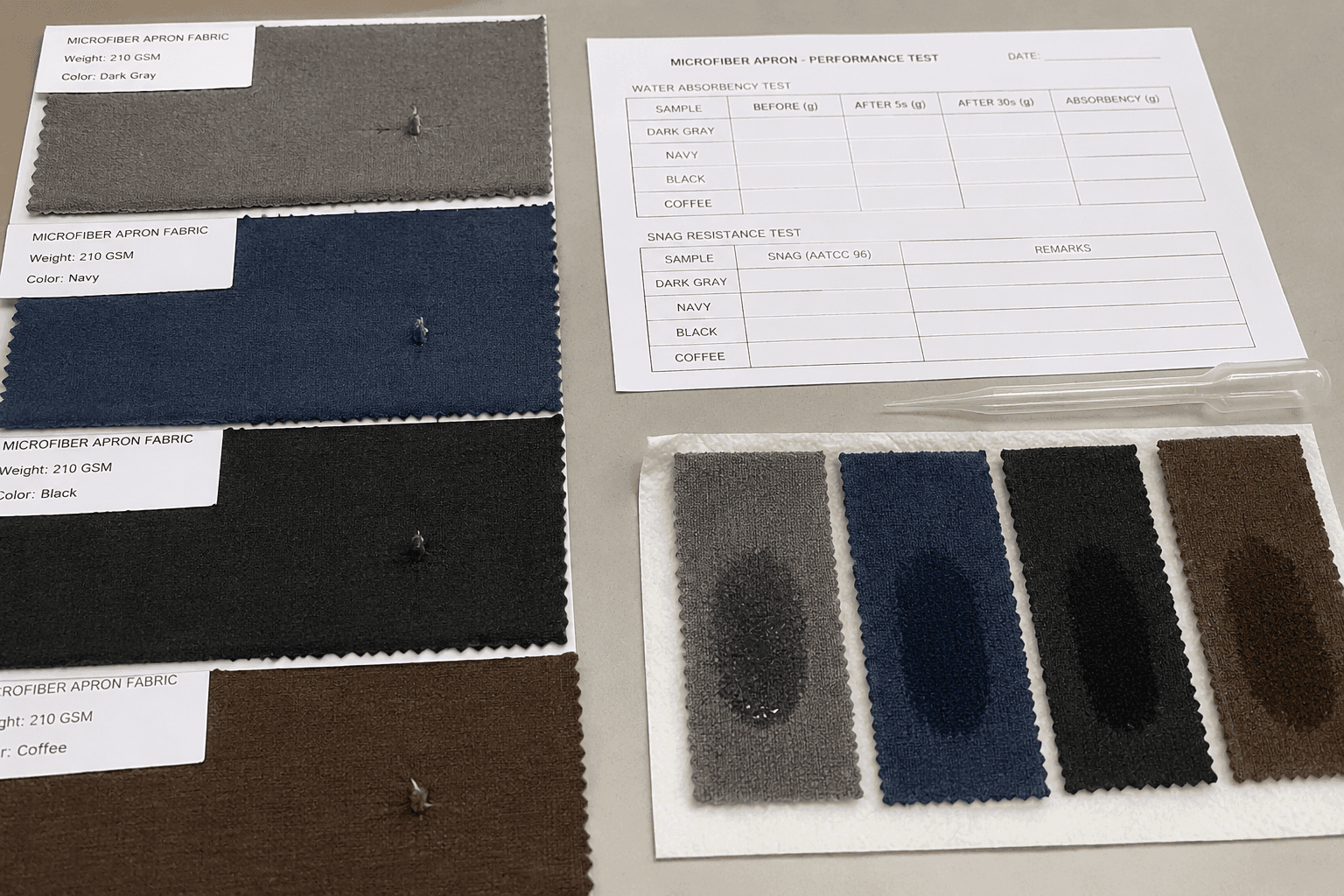
Fabric weight is the first practical decision. A 280-320 GSM FR cotton apron is flexible and suitable for light-duty maintenance, lab-adjacent metal work or low-spark environments. A 360-450 GSM canvas or twill gives better body and durability. A 480-560 GSM FR cotton canvas can serve heavier industrial use, but it becomes warmer and may shrink more if the finishing is not controlled. Buyers should avoid selecting GSM only from a catalog. Hand feel, shrinkage, tear strength and edge fraying matter as much as nominal weight.
Wash life must be stated clearly. Some FR cotton fabrics are tested for 25, 50 or 100 industrial washes, but a finished apron with straps, labels, binding and embroidery may not have the same tested status unless it is tested as a garment or assembled according to the fabric certificate rules. If the apron will be home washed, industrial laundered or wiped down only, that should be in the tech pack. Chlorine bleach, softeners and high alkaline washing can reduce FR performance for many treated fabrics.
- For light duty, specify 300-360 GSM FR cotton twill or canvas with shrinkage target within +/-3% after washing.
- For stronger apron body, specify 420-520 GSM FR cotton canvas with bar-tacked stress points.
- For repeat laundering, request test data after the required number of washes, not only unwashed fabric data.
- For logo application, FR embroidery thread or FR-compatible heat transfer must be reviewed before claiming the finished apron is flame resistant.
Standards relevant to a flame resistant apron
A flame resistant apron should be sourced against the correct standard for the sales market and end use. The most common mistake is using one test result as a broad safety claim. A vertical flame test result on fabric does not automatically mean the finished apron is certified PPE. Likewise, a leather apron that resists sparks in use may still need formal testing if the buyer sells it as compliant protective equipment in Europe or North America.
For Europe, EN ISO 11611 is the key standard for protective clothing used in welding and allied processes. It includes requirements for flame spread, molten metal droplets, seam strength and design. Class 1 is for less hazardous welding techniques and situations with lower spatter and radiant heat. Class 2 is for more hazardous welding techniques and higher exposure. EN ISO 11612 is for clothing to protect against heat and flame and may be relevant for broader industrial heat protection, but buyers should not use it as a direct replacement for welding protection without reviewing the application.
For the U.S. market, NFPA 2112 is associated with flash fire protection and is not a welding-specific apron standard. ASTM D6413 vertical flame testing is often quoted for FR fabrics, while ASTM F1506 is commonly linked to electrical arc and flame resistant textile materials. These may be relevant depending on the buyer's compliance program, but a sourcing manager should confirm whether the apron is for welding, flash fire, arc flash, or general spark protection. The label and product description must match the test basis.
- Use EN ISO 11611 when the product is positioned as a welding apron for the EU market.
- Use EN ISO 11612 only when heat and flame protection outside welding is part of the requirement.
- Use ASTM D6413 as a fabric flame test reference, not as a complete PPE certification by itself.
- Check whether testing must cover fabric only, leather only, seams, hardware, labels and the finished apron design.
- Confirm labeling language before production because compliance wording can affect hangtags, care labels and carton marks.
Pattern, fit and trim decisions that affect safety
Apron safety is not only material performance. Pattern shape, strap placement, neck load and closure method affect whether workers keep wearing the apron correctly. A narrow bib can leave the upper chest exposed. A wide apron can interfere with arm movement. Long neck straps can place the full apron weight on the neck, especially for leather styles above 800 g. For heavy leather welding apron designs, cross-back straps or waist-supported harnesses improve comfort, though they add sewing time and hardware cost.
There are three common neck and waist systems. The lowest-cost version is a fixed neck strap plus waist ties. It is simple, but sizing is limited. The next level is an adjustable neck strap with metal buckle or snaps. This improves fit but adds a potential hot-contact point. The third is a cross-back or shoulder harness system, often preferred for aprons worn over multiple hours. For FR cotton apron programs, webbing ties are economical. For leather programs, leather ties or FR webbing are more durable than standard cotton tape.
Pocket design needs caution. Many buyers request tool pockets because they look useful in retail photos. In welding, open chest pockets can collect sparks or hot debris. If pockets are required, they should be placed away from the main spark path, designed with flaps or angled openings, and tested with the actual work process. From a factory perspective, every pocket also adds stitch lines, handling time and potential compliance questions if the pocket fabric or thread differs from the main apron.
- Use aramid thread for higher-spec welding aprons where flame contact at seams is expected.
- Specify bar tacks at strap attachment points, pocket corners and waist tie joins.
- Avoid low-melting plastic buckles in exposed zones for a flame resistant apron.
- Consider cross-back straps for leather aprons above 750 g or for shifts longer than 2-3 hours.
- Keep logo patches away from the chest spark zone unless the patch material is FR-rated.
OEM sourcing numbers: MOQ, sampling, lead time and price drivers
Bulk welding apron orders from China depend heavily on material availability. For stock FR cotton colors such as navy, black, khaki or orange, a practical MOQ can start from 500-1,000 pcs per color, depending on fabric stock and trim requirements. For custom-dyed FR cotton, MOQ is usually fabric-driven, often 1,000-2,000 meters per color. That may translate into about 2,000-5,000 aprons depending on size and marker efficiency. Leather MOQ is different: color and thickness selection depend on hide lots, and the factory may quote 500 pcs for standard brown or grey split leather but require higher quantities for special finishes.
Sampling normally takes 7-10 days when material is available. If custom FR fabric or certified fabric sourcing is required, sampling can take 12-20 days. Bulk production after sample approval is commonly 25-35 days for FR cotton apron orders and 30-45 days for leather welding apron orders, depending on cutting yield, inspection requirements and packing method. Third-party lab testing adds time. Fabric testing may take 5-10 working days after the lab receives samples; full garment testing can take longer if multiple sizes or constructions are involved.
Price is driven by material more than sewing. For FR cotton, GSM, fabric certification, dyeing MOQ, shrinkage control and wash testing are the largest variables. For leather, thickness, hide grade, usable cutting yield, odor control and reinforcement are key. Trim choices can quietly change the landed cost. Aramid thread, metal adjustment hardware, leather straps, FR binding, woven labels and individual polybags all add cost. Buyers comparing quotations should align the spec sheet line by line before assuming one supplier is cheaper.
- Plain 24 x 36 inch FR cotton apron at 360-420 GSM may quote around USD 2.20-4.20 per piece FOB at 1,000-3,000 pcs, depending on certification and trim.
- Heavy 24 x 42 inch FR cotton canvas apron at 480-560 GSM may quote around USD 3.60-6.80 per piece FOB with standard webbing ties.
- Plain split leather welding apron may quote around USD 4.80-9.50 per piece FOB, with heavier leather and cross-back straps increasing cost.
- Logo embroidery commonly adds USD 0.15-0.60 per piece depending on stitch count, but FR thread may cost more and require approval.
- Individual export cartons for leather aprons can become heavy quickly; a carton of 20 pcs may reach 18-24 kg depending on apron size.
Quality control for welding apron production
Quality control should start before cutting. For FR cotton, the factory should check fabric width, GSM, color shade, visible defects, hand feel and shrinkage where required. For leather, inspection should include thickness range, softness, usable area, surface defects, moisture, odor and color matching. A buyer should not wait until final inspection to discover that leather shade variation is wider than the approved sample or that FR cotton has excessive skewing after washing.
During production, critical checkpoints are cutting accuracy, strap attachment strength, seam appearance, bar tack position, pocket placement and label correctness. For welding aprons, label claims are not a decoration issue; they are a liability issue. If the label says flame resistant, the buyer should be able to connect that claim to test reports, material certificates and the approved construction. If care instructions are wrong, the end user may wash the product in a way that reduces performance.
Final inspection should include measurements, workmanship, carton weight, packing method and metal detection where required by the buyer's compliance program. For FR cotton aprons, a simple random burn check is sometimes used internally as a screening tool, but it does not replace accredited lab testing. For leather aprons, inspectors should check that weak or thin leather is not used in high-stress areas such as neck strap joins and waist tie anchors.
- Set AQL levels before production; many B2B apron buyers use AQL 2.5 for major defects and 4.0 for minor defects.
- Measure at least apron width, total length, bib width, waist tie length, neck strap length and pocket position.
- Define leather thickness tolerance, for example 1.1-1.3 mm, rather than writing only 1.2 mm.
- Require production photos for first article approval when straps, buckles, labels or pocket positions are newly developed.
- Keep approved gold samples at both buyer and factory sides for shade, hand feel and construction comparison.
Choosing between leather and FR cotton for your welding apron program
The correct welding apron is usually selected by exposure level, comfort requirement and compliance market. Leather is the stronger choice for direct spatter, grinding abrasion and rough workshop handling. FR cotton is the stronger choice for lighter spark exposure, hot climates, lower garment weight, easy logo customization and programs where laundering is part of the operating routine. A hybrid construction can also work: FR cotton body with leather chest or lap reinforcement, or leather front panel with FR cotton straps to reduce neck weight.
For brand buyers, the decision should be made with field feedback, not only a sample room review. A leather welding apron may feel premium on a table but too heavy after four hours. A soft FR cotton apron may feel comfortable but wear through quickly if it rubs against sharp sheet metal. The best OEM approach is often to develop two approved specifications: one medium-duty FR cotton apron for general maintenance and one leather welding apron for higher exposure stations.
Before placing a bulk order, align five documents: the technical specification, approved sample, material certificates, test requirement and packaging instruction. When those are consistent, production is straightforward. When they conflict, the factory has to guess which requirement controls the order. For safety aprons, guessing is expensive. A precise welding apron specification gives the supplier a better chance to quote accurately, source the right material and deliver repeatable bulk quality.
- Choose leather when abrasion, hot spatter and rough handling are the main risks.
- Choose FR cotton when comfort, lower weight, washing and branding flexibility are the main priorities.
- Choose hybrid construction when the wearer needs reinforcement in one zone but cannot tolerate a full heavy leather apron.
- Run wearer trials with at least 10-20 users when the apron will be worn for full shifts.
- Lock the safety claim before artwork, label and packaging approval so the commercial description matches the test basis.