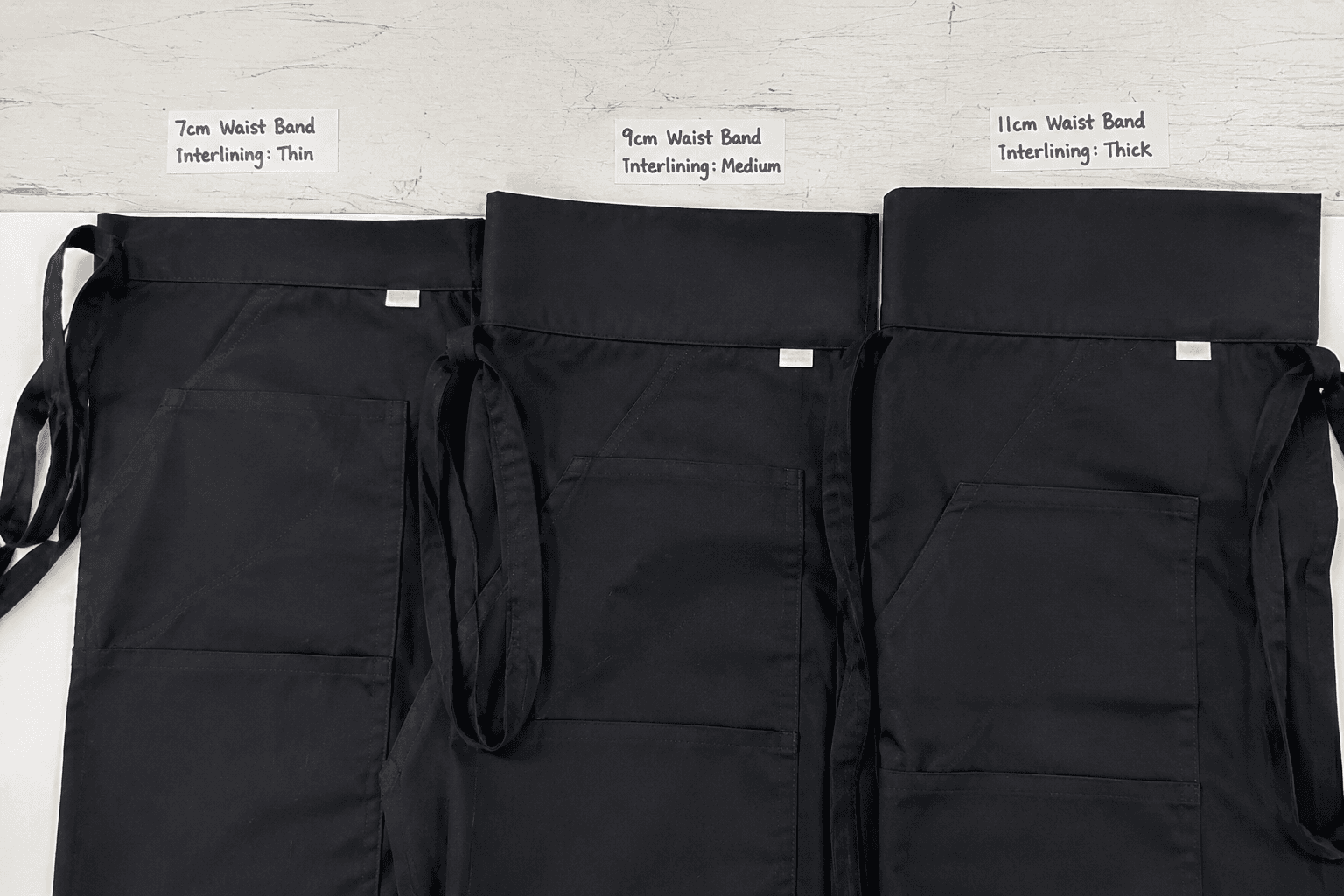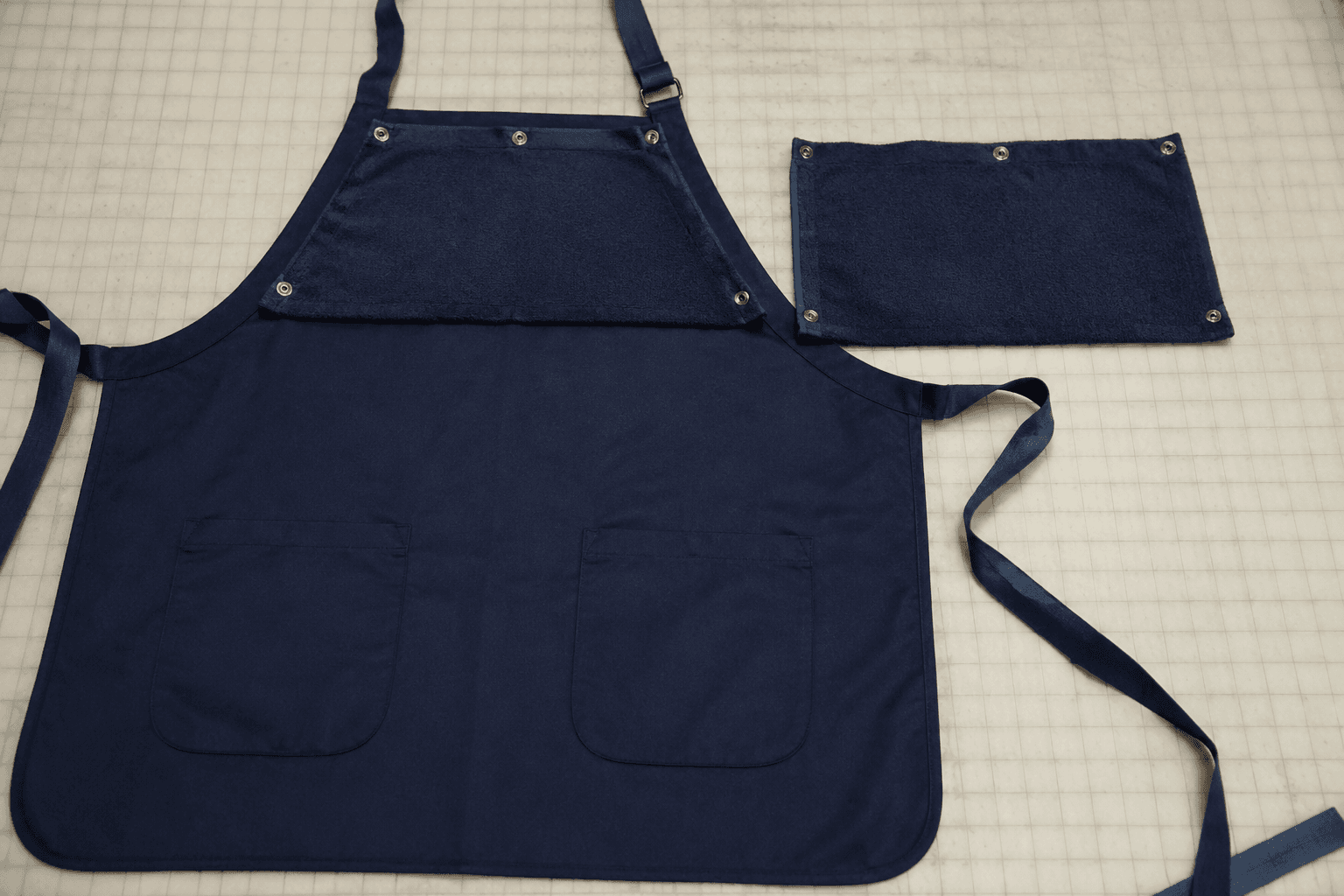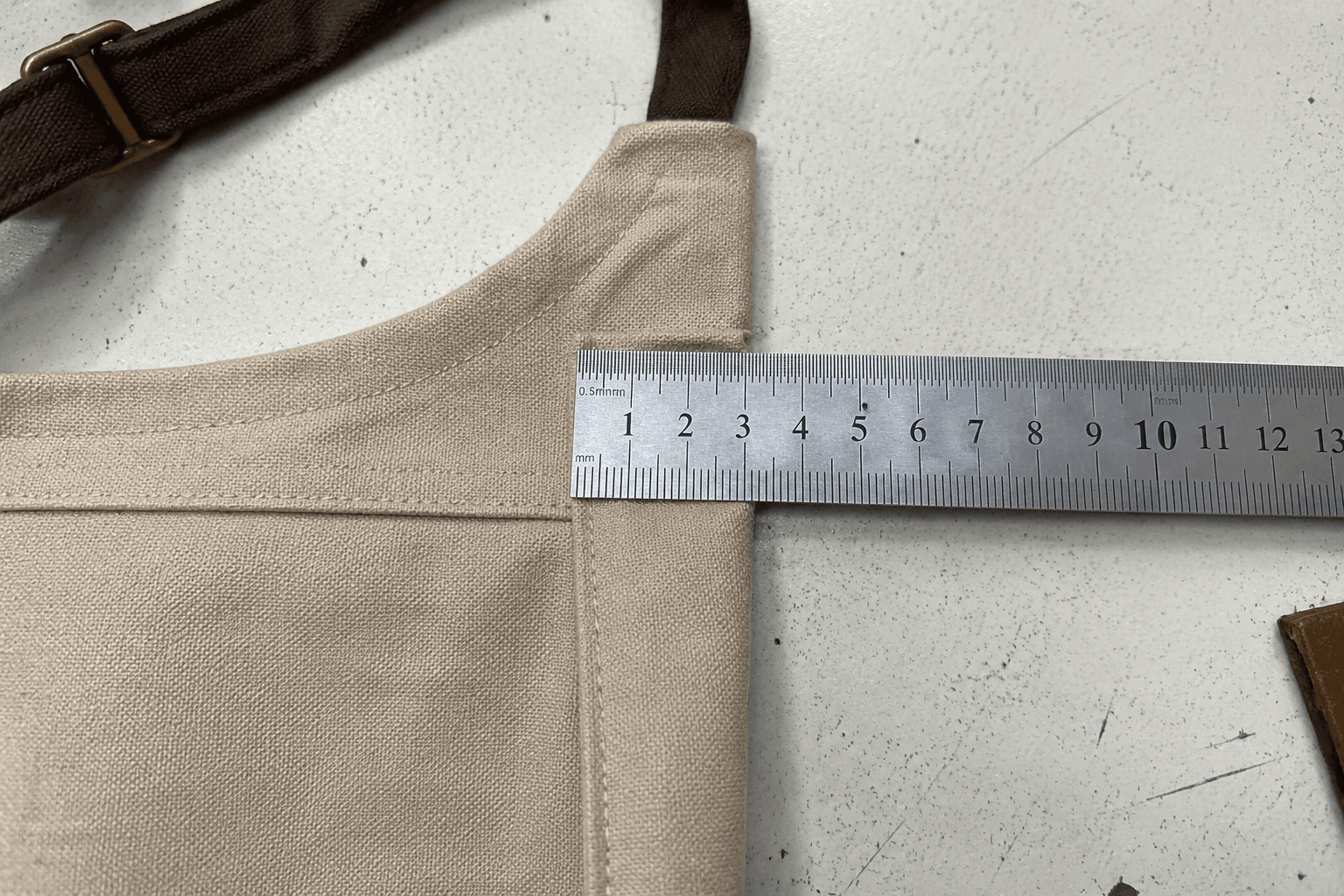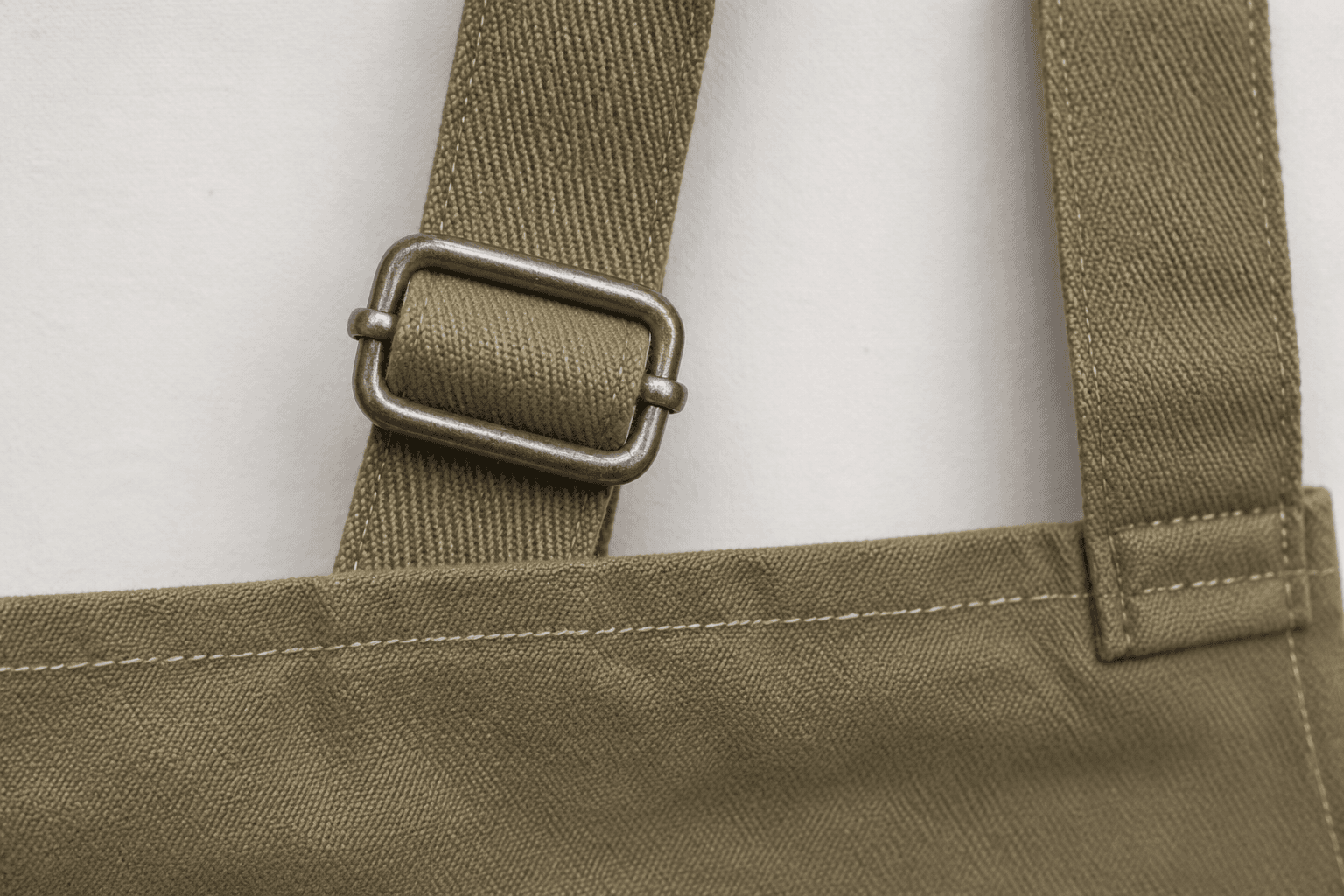
For bulk apron programs, the strap system is not a minor trim choice. An adjustable apron strap affects fit tolerance, warehouse SKU complexity, packing labor, hardware cost, and the number of customer complaints after launch. A fixed apron strap can simplify production and lower unit price, but it only works when sizing and user height range are tightly controlled.
Most sourcing teams compare price first and fit later. That is usually backwards. If the apron is for food service, hospitality, barista, retail, or gifting, the strap construction should match the use case before you lock the fabric. A 240 gsm cotton twill apron with a simple tie-back may be fine for a seasonal promotion, while a 10 oz denim apron with an apron slider buckle is more appropriate for a premium retail line that needs frequent neck adjustment.
At the factory level, we look at four variables together: wearer range, wearing hours, fabric weight, and target landed cost. The same apron can be built with a fixed apron strap, an adjustable apron strap with a slider, or a tie-back system. Each option changes cut allowance, sewing sequence, packaging, and final QC. If you source in volume from China, those differences are usually worth more than one or two cents in fabric cost.
- Adjustable apron strap systems reduce fit risk, especially for mixed-height teams and gift or retail programs.
- A fixed apron strap is usually cheaper and faster to sew, but it increases size complaints when the user base is broad.
- An apron slider buckle adds cost and assembly time, yet it is the most practical option for repeat daily wear.
- Tie-backs are the lowest hardware risk and work well on waist aprons, but neck comfort depends entirely on pattern length and knot placement.
- For most Chinese OEM orders, the hardware choice changes unit cost by about $0.15 to $0.80 per piece depending on material and finish.
- MOQ and lead time are often driven more by trim sourcing and sewing complexity than by the base fabric itself.
Adjustable apron strap vs fixed apron strap: what actually changes in bulk sourcing
The first decision is whether the apron must fit many body types or one controlled user group. A fixed apron strap has one neck length, one shoulder angle, and one sewing layout. It is faster to produce and easier to inspect because there is no moving hardware. In a basic cotton drill program, that can keep the factory price lower by roughly $0.20 to $0.50 per piece compared with a comparable adjustable version, depending on strap material and finishing.
The trade-off is fit tolerance. If the apron will be worn by staff across multiple branches, heights from 150 cm to 190 cm are common, and a fixed apron strap quickly shows its limits. Tall wearers complain about high chest placement and neck pull; shorter wearers may find the bib too low. This is why many chain buyers move to an adjustable apron strap after the first rollout, even if the initial sample looked acceptable.
A fixed apron strap is still the right solution in some cases. For a one-size promotional apron, a trade show giveaway, or a back-of-house utility item where the wearer is known in advance, the simpler structure often wins. Fewer parts mean fewer defects. If your program is under tight margin pressure and the apron is not a daily comfort item, fixed straps are often the better commercial choice.
- Choose a fixed apron strap when the wearer group is stable and price is the primary goal.
- Choose an adjustable apron strap when the apron must suit different heights, departments, or retail customers.
- Use fixed straps on simple promotional items with target FOB pricing below $2.00 to $3.00 per piece.
- Use adjustable systems when returns, replacements, or negative comfort feedback would be more expensive than the hardware.
How apron neck adjustment works in production
An apron neck adjustment usually comes in three forms: an apron slider buckle, a tie-loop construction, or a fixed sewn neck strap. Each one changes how the garment is cut and assembled. On a standard 65/35 poly-cotton twill apron around 180 gsm, the adjustable version may require an extra 3 to 6 minutes of sewing time per piece, depending on whether the hardware is pre-attached or inserted during the main sewing line.
The most common industrial solution is the apron slider buckle. It allows the wearer to change neck length without untying anything. For factory sourcing, this is the most predictable option because the adjustment range can be standardized in the spec sheet, usually 10 to 18 cm of usable movement. It is also easier to explain to end users than a knot-based system.
By contrast, tie-back aprons and tie-loop necks depend on the wearer to make the adjustment manually. This lowers hardware cost, but the fit outcome becomes inconsistent. In bulk programs, inconsistency matters. One branch may train staff to tie correctly, while another branch may not. The result is uneven presentation and more wear-related complaints.
- Slider-based apron neck adjustment is best when you need repeatable fit across stores.
- Tie-loop adjustment is best when hardware cost must be minimized and the user can be trained.
- Fixed neck straps are best when the apron size is narrowly defined and comfort expectations are low.
- For premium programs, ask for a confirmed adjustment range in centimeters, not just a general note that the strap is adjustable.
Apron slider buckle, metal hardware, and the cost of comfort
The apron slider buckle is usually a zinc alloy, iron, or acetal part, and each material behaves differently in bulk. Zinc alloy feels more premium and is common in retail aprons and chef aprons. Plastic acetal is lighter and less expensive, but it can be less convincing in a high-end program. Iron is functional, but plating consistency and rust resistance need closer control, especially for humid storage or long shipping lanes.
From a sourcing perspective, the hardware cost is not the only issue. A slider buckle adds one more incoming component, one more color/finish approval, and one more inspection point. In practice, the hardware can add $0.12 to $0.45 per piece in low to mid volumes, and sometimes more if the finish is custom or the MOQ is low. If the client wants matte black, antique brass, or brushed nickel, the surface-treatment lead time may add 7 to 15 days to the schedule.
Comfort, however, is real value. For a 9 oz canvas apron worn for 8 to 10 hours a day, staff notice strap pressure quickly. A slider lets the wearer reduce neck strain and keep the bib position stable during movement. That matters in coffee service, open kitchens, flower shops, and retail packaging where the apron is worn as part of the brand image.
- Use zinc alloy when the apron is sold as a retail or gift product and appearance matters.
- Use acetal when weight, cost, and corrosion resistance matter more than a metallic look.
- Confirm the buckle opening size against strap width before sampling; mismatches cause sewing delays.
- Expect the buckle to add inspection work, especially on plated finishes that can vary across batches.
Apron tie back systems: lowest hardware risk, highest fit dependence
An apron tie back is the simplest construction in the category. There is no buckle, no slider, and no metal component to source. That simplicity is why many factories recommend tie-backs for entry-level waist aprons, barbecue aprons, and promotional aprons where price is the main driver. In a plain 140 gsm cotton or 160 gsm poly-cotton program, a tie-back can reduce material complexity and keep the BOM clean.
The limitation is fit control. A tie-back system depends on the wearer to fasten the apron at the correct tension. If the tie length is too short, the garment feels restrictive; if it is too long, the apron hangs poorly. On repeated industrial wash cycles, the tie edges can fray if the fabric is too light or the stitch density is too low. For that reason, we usually recommend reinforced bartacks and at least 2 cm folded hems on the tie ends.
Tie-backs also affect packing. They take a little more labor to fold neatly, and if the ties are long, they can twist inside the polybag. This is not a major cost issue, but it does matter for retail presentation. For brands that care about shelf appearance, ask the factory whether ties will be folded separately or secured with a paper band before carton packing.
- Tie-backs are best for waist aprons, promo aprons, and low-cost kitchen programs.
- Reinforce the tie anchor points with bartacks if the apron is expected to survive frequent washing.
- Specify tie length in centimeters, because loose supplier assumptions often create inconsistent packaging.
- If shelf presentation matters, confirm how the ties will be folded, banded, or packed.
Fabric weight, strap choice, and the real commercial trade-off
The strap system should always be evaluated with the fabric, not in isolation. A light 140 to 160 gsm cotton apron does not behave like a 300 gsm denim apron. On lighter fabric, a heavy apron slider buckle can feel disproportionate and may distort the neck line. On heavier fabric, a fixed apron strap may not distribute load well enough for long shifts. The same is true in ounces: a 4 oz apron and a 10 oz apron need different strap logic.
For hospitality buyers, the most common constructions we see are 180 to 240 gsm cotton twill or poly-cotton twill with tie-backs or a simple slider. For premium chef lines and retail aprons, 8 to 12 oz denim or canvas is more common, and the strap hardware must look intentional. On those products, the apron neck adjustment becomes part of the perceived quality, not just a functional detail.
There is also a production balance. Heavier fabric needs stronger needle selection, wider seam allowances, and more careful pressing. Adding an adjustable apron strap to heavy fabric can increase sewing time, but it usually improves the end product enough to justify the cost. On thin fabric, the same hardware may be overbuilt, so the more rational choice is often a lighter tie-back or a narrower fixed strap.
- Match lighter fabrics with lighter hardware or tie-back systems to avoid visual imbalance.
- Match heavier fabrics with sturdier sliders or reinforced adjustable neck systems.
- Ask the factory to quote fabric, strap, and trim together; separate quotes often hide assembly cost.
- For premium denim or canvas aprons, comfort and appearance usually justify the extra hardware cost.
MOQ, lead time, and sampling when you specify an adjustable apron strap
MOQ is usually affected by trim sourcing more than by the apron body itself. A fixed apron strap in one fabric color can often be sampled quickly and mass produced with a lower starting quantity. Once you add an apron slider buckle, custom webbing, or special color plating, the MOQ often rises because the supplier must commit to trim procurement. In practical terms, low-complexity apron programs may start around 300 to 500 pieces per color, while more customized adjustable programs often sit at 1,000 to 3,000 pieces per color depending on the fabric and hardware.
Lead time follows the same logic. A straightforward fixed apron can move from approved sample to bulk shipment in about 20 to 30 days if fabric is in stock. An adjustable apron strap program with custom buckles, woven labels, and special wash testing often needs 35 to 50 days. If the buyer asks for new hardware tooling, precise color matching, or extra wash testing, add another 7 to 14 days. This is normal and should be reflected in the production calendar from the start.
Sampling is where many programs waste time. The first sample should confirm neck adjustment range, strap width, buckle placement, and how the apron sits on a standard mannequin or live model. If the approval only checks the front view, fit problems will appear later in bulk. We recommend asking for a pre-production sample after wash testing if the apron will be used in hospitality or food service, because shrinkage can change the effective neck length.
- Budget 20 to 30 days for a simple fixed strap apron when materials are available.
- Budget 35 to 50 days for an adjustable apron strap program with custom trim or hardware.
- Expect MOQ to rise when the apron slider buckle or plating finish is custom.
- Approve adjustment range, strap length, and post-wash fit before bulk release.
How to choose the right strap system for your apron program
The correct choice is usually not the most complex one. It is the one that matches your channel, price target, and wearer profile. If you are sourcing for a restaurant chain with different employee heights, an adjustable apron strap is usually worth the extra cost. If you are building a low-price promotional line, a fixed apron strap or simple tie-back will protect margin and simplify replenishment.
If the apron is part of a brand-facing uniform, comfort and appearance tend to justify a better neck solution. Staff who wear the apron for long shifts care about pressure points, and buyers who manage multi-store programs care about complaint rates. In those cases, an apron slider buckle or a controlled tie-loop adjustment is often the better long-term decision. If the apron is secondary to the garment beneath it, fixed construction may be enough.
The safest approach is to define the use case before finalizing the spec sheet. Ask whether the apron is meant for display, daily service, industrial use, or gift retail. Then decide whether fit variability is acceptable. Once that is clear, the factory can recommend the right mix of fabric weight, strap width, reinforcement, and packaging method. That is the point where cost control becomes real, because the construction matches the actual market requirement rather than a generic apron sample.
- Use an adjustable apron strap for mixed-height staff, premium retail, or long wear hours.
- Use a fixed apron strap for tight budgets, stable wearer groups, and simple promotional programs.
- Use an apron tie back when you want the lowest hardware risk and can accept manual fit variation.
- Treat apron neck adjustment as a sourcing decision, not just a style detail.