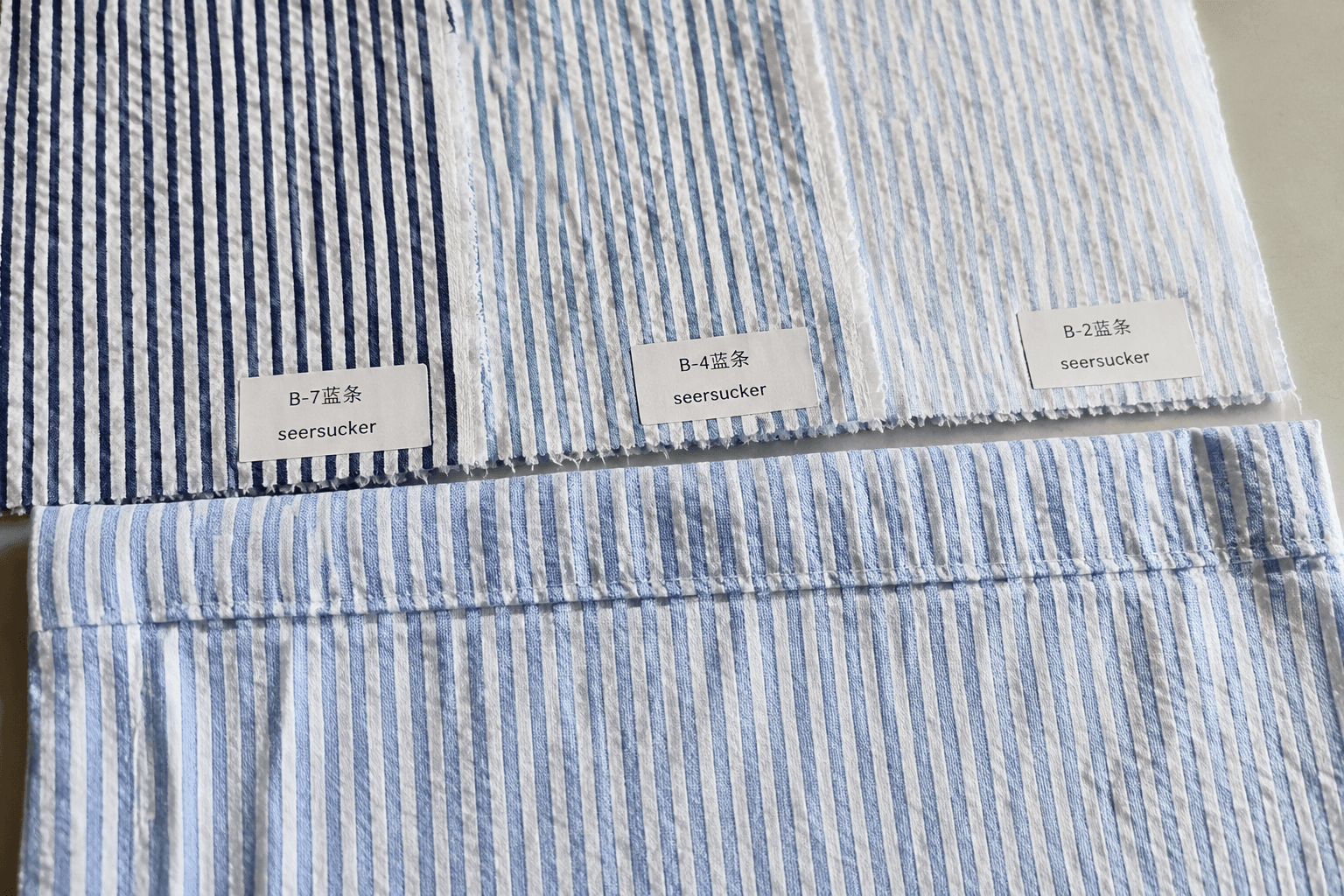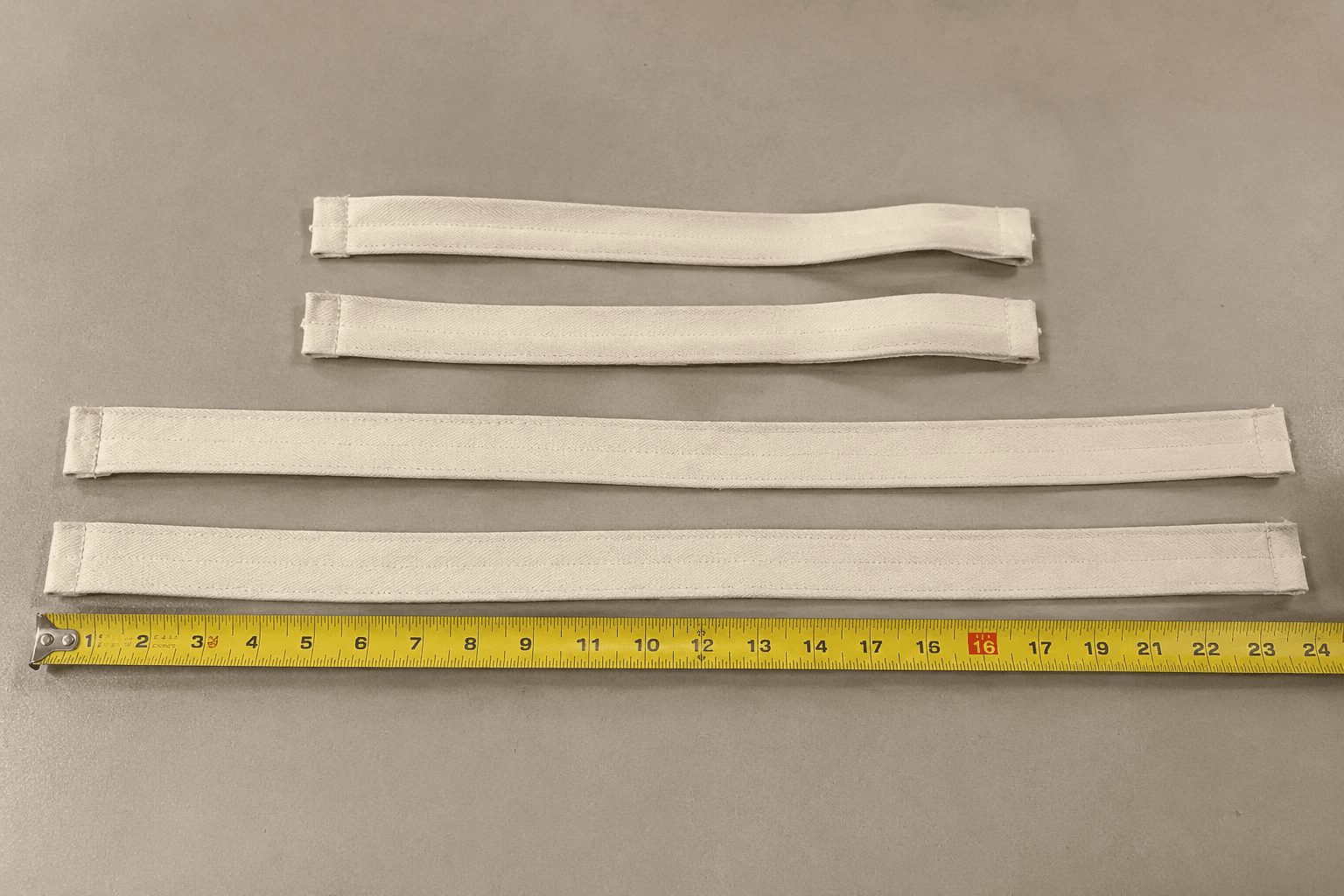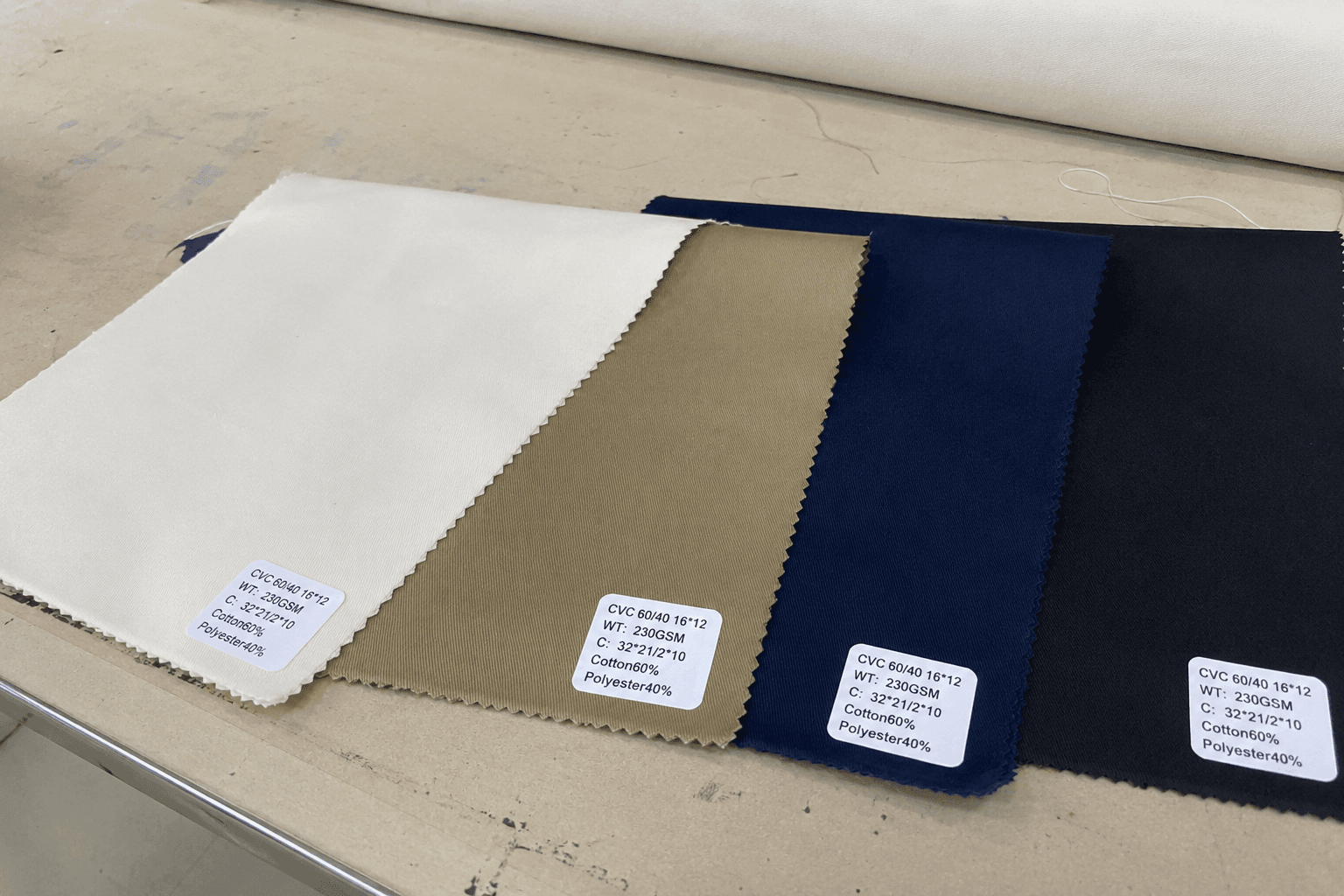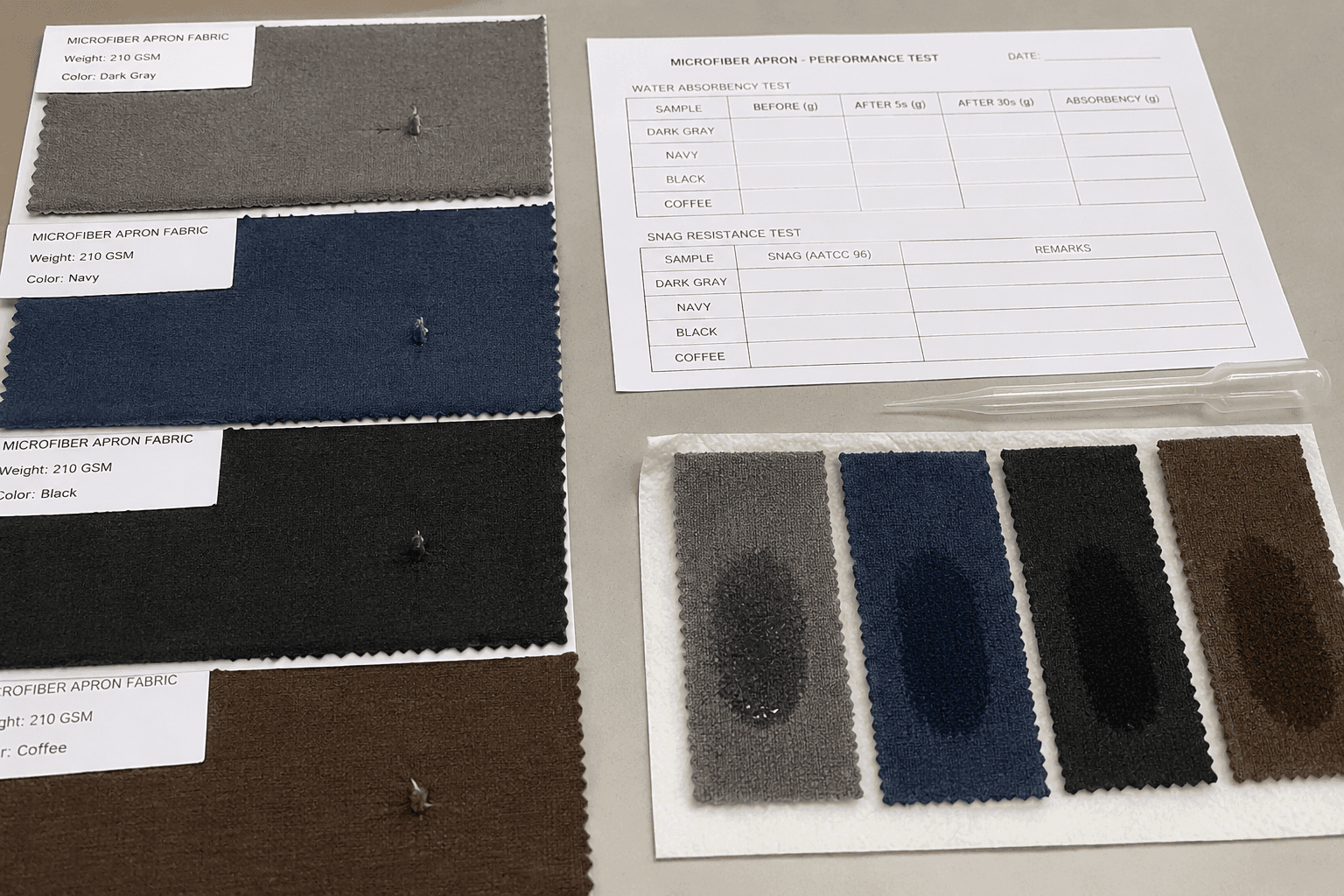
For professional cleaning teams, microfiber aprons are not a general upgrade to any apron program. They are task-specific garments for light splash control, damp-hand drying, small wipe-downs and neat guest-facing presentation. Compared with a 190 to 240 GSM poly-cotton twill apron, microfiber can feel softer, dry faster after light exposure and give staff a usable surface for minor wiping. The tradeoffs are also clear: snagging, edge curl, pocket distortion, logo cracking and uneven wash appearance if the specification is loose.
The right apron depends on the cleaning workflow. A hotel room attendant carrying sprays and linen needs a light bib apron that dries between rooms. A clinic support cleaner may prioritize low linting, stable color and repeated 60 C washing. An auto-detailing worker may accept a heavier 230 to 260 GSM apron for better pickup of moisture and polish residue. Buyers should define the task, wash temperature, replacement target and acceptable cost per wear before comparing factories.
A usable OEM tech pack should state composition, finished GSM tolerance, fabric construction, pocket layout, strap material, hardware, logo method, shrinkage limit, wash-test protocol, carton packing and inspection level. Phrases such as soft, durable and absorbent do not control production. Measurable requirements do. They determine whether microfiber aprons still look professional after 50 wash cycles or become a high-replacement item after the first contract quarter.
- Microfiber aprons for cleaning teams usually perform best at 180 to 260 GSM; below 170 GSM they can look limp, while above 280 GSM they often feel heavy when damp.
- 100% polyester microfiber is the common cost baseline; 80/20 polyester-polyamide improves pickup and hand-feel but usually raises FOB cost by 10% to 25%.
- Snagging is usually caused by trims and contact points: hook-and-loop, rough embroidery backs, exposed hardware, sharp bartacks, stiff binding and wire shelving.
- Bulk approval should include commercial laundering at the real operating condition, commonly 60 C, with high-demand programs tested at 70 to 75 C and reviewed after 30 to 50 cycles.
- For professional apron sourcing, compare $2.20 to $5.20/pc against expected wear life, repair rate, laundry performance and replacement frequency, not FOB price alone.
Where microfiber aprons fit cleaning-team workflows
Microfiber aprons fit roles where the apron does more than cover a uniform. Hotel housekeeping, spa cleaning, restroom attendance, clinic support cleaning and premium auto detailing all involve repeated small tasks: wiping a spray bottle neck, drying hands, catching light splash, holding a damp cloth briefly or maintaining a clean look in guest-facing areas. In these settings, microfiber adds value because it combines soft hand-feel, moderate absorbency and quicker recovery than heavy cotton canvas.
The fit is weaker in abrasive work. If the apron rubs against floor machines, chemical drums, unfinished walls, wire racks or rough cart edges for most of a shift, microfiber can lose surface appearance faster than dense 240 to 300 GSM twill, oxford or canvas. The first failures usually appear at pocket mouths, lower front panels, waist ties, neck straps and side seams. Buyers should review these friction points before approving a swatch.
Most successful programs use microfiber in medium-duty, presentation-sensitive roles rather than heavy industrial cleaning. For hotel and clinic contractors, the target is a professional-looking apron that tolerates commercial washing and light splash without feeling bulky. For detailing shops, the target is better wipe utility without replacing dedicated 300 to 400 GSM towels. The apron should support the task; it should not become the main cleaning cloth.
- Best-fit uses: hotel housekeeping, spa cleaning, restroom attendants, clinic support cleaning and auto detailing.
- Lower-fit uses: floor stripping, abrasive maintenance, masonry cleanup, heavy washdown and chemical-drum handling.
- Practical hybrid option: microfiber front panel with smoother polyester or twill straps, facings and pocket bags.
Microfiber aprons fabric specification: GSM, blend and face type
The word microfiber is too broad for purchasing. Apron programs typically use brushed warp-knit microfiber, woven suede-style microfiber or compact terry-like microfiber. A brushed knit gives balanced absorbency and softness. A suede-style face looks cleaner and usually snags less, but it absorbs less water. A compact terry face improves pickup but can feel bulky, hold more moisture and show loop damage around rough hardware.
For professional apron use, the safest finished weight range is 180 to 260 GSM. Below 170 GSM, bib panels can collapse, pocket corners distort and seam grin can appear after washing. Between 200 and 230 GSM, housekeeping teams usually get a good balance of comfort, drape and quick drying. Between 230 and 260 GSM, detailing teams get better wipe utility, but the buyer should check damp weight and drying time. Above 280 GSM, the apron may absorb more but often feels heavy and slow to recover between rooms or bays.
Composition controls both cost and performance. A 100% polyester microfiber is the common export baseline because it is stable, quick-drying and available in stock black, navy, charcoal and grey. An 80/20 polyester-polyamide blend usually improves pickup and hand-feel but raises cost and may require tighter fabric sourcing. At 1,000 to 3,000 pieces, a basic stock-color 100% polyester microfiber apron often falls around $2.20 to $3.40/pc. An upgraded 80/20 style with reinforced pockets, binding, adjustable straps and logo application commonly sits around $3.40 to $5.20/pc.
A swatch approval is not enough. Buyers should review a sewn sample with final pocket depth, strap width, binding, logo and bartacks. Microfiber can look acceptable as loose fabric but behave poorly when folded, stitched or laundered. The sample should be checked for panel recovery, edge curl, pocket mouth stability and surface marking after handling.
- Common target range: 180 to 260 GSM finished fabric with agreed tolerance, usually +/-5%.
- Cost baseline: 100% polyester microfiber for price-sensitive housekeeping and janitorial programs.
- Performance upgrade: 80/20 polyester-polyamide for better pickup in detailing or premium cleaning roles.
- Typical OEM MOQ: 500 to 1,000 pieces per color per style using stock fabric.
Absorbency targets without excessive damp weight
Absorbency should be specified narrowly. A cleaning apron is not a towel, and over-specifying water retention often creates a worse garment. If the front panel holds too much liquid, staff feel damp against the uniform, the apron becomes heavier during the shift and the garment may dry slowly after laundering. For most cleaning teams, the right target is controlled incidental absorbency: damp hands, light splash and occasional surface wiping.
For hotel housekeeping, 200 to 230 GSM is often the practical range. It gives enough body for a neat front panel while keeping the apron light during room turns. For clinic support cleaning, similar weights work well when the buyer also controls linting, colorfastness and wash temperature. For auto detailing, 230 to 260 GSM may be justified because the apron is exposed to more water, polish residue and vehicle-surface work, but the buyer should test whether the damp panel transfers moisture to clothing.
Pocket design affects absorbency more than many buyers expect. Deep patch pockets made from the same absorbent microfiber can trap moisture and soil. They also take longer to dry after washing. A better construction for many B2B programs is a microfiber outer panel with pocket bags in smooth polyester, mesh or a lighter woven fabric. This keeps the visible face useful while preventing the storage area from becoming damp and heavy.
Testing should be practical. Instead of asking only for a lab absorbency value, buyers should run staff trials with dry wiping, damp wiping and light splash exposure. The apron should not darken unevenly, cling to the body, drip at the hem or stay visibly wet after normal task intervals. A 10 to 20 piece pilot trial over two working weeks usually reveals more than a showroom sample.
- Housekeeping target: 200 to 230 GSM for comfort, drape and quick recovery.
- Detailing target: 230 to 260 GSM where better pickup is worth added damp weight.
- Specify pocket bags separately if moisture retention inside pockets is a concern.
- Use a 10 to 20 piece wearer trial before approving a multi-site rollout.
Snagging control on microfiber aprons: trims, logos and abrasion points
Snagging is the most common appearance complaint on microfiber aprons, especially in black, navy and charcoal. Pulled loops, shiny rub marks and surface scratches are more visible on dark colors. The cause is usually not the microfiber itself but the contact system around it: hook-and-loop patches, rough zipper teeth, exposed rivet burrs, stiff woven labels, sharp bartack ends, coarse binding and wire storage racks.
Trim selection should reduce catch points. Large hook-and-loop closures on the front body or pocket flaps are a frequent source of surface damage. Adjustable neck straps with plastic sliders are usually safer, provided the slider edges are smooth. Hidden snaps can work if the hardware is burr-free and tested after washing. Pocket corners should be rounded rather than sharply squared, and pocket tops should use reinforcement that does not create a hard ridge against the fabric face.
Logo method needs the same control. Dense embroidery can pucker soft microfiber, stiffen the front panel and create abrasion around the stitch area. For many cleaning-team aprons, a small woven label, compact chest embroidery or commercial-wash heat transfer is more reliable than a large decorative logo. If the brand mark must sit on the front panel, the supplier should validate adhesion, cracking, edge lift and color change after the agreed wash cycle count.
Buyers should ask factories to check both visible and hidden contact points. Inside seam allowances, label edges and thread ends can abrade the fabric during wear and washing. A well-made microfiber apron should feel smooth when the hand is run across pocket mouths, strap joins, hardware and binding. Any rough point in the sample will usually become a larger appearance issue in bulk production.
- Avoid exposed hook-and-loop on pocket flaps, chest panels and waist areas.
- Prefer smooth sliders, low-profile snaps and rounded hardware with no burrs.
- Use rounded pocket corners and softer binding tape to reduce catch points.
- Validate logo method after 30 to 50 commercial wash cycles, not only on a new sample.
Commercial laundering standards for microfiber aprons
Laundering must be defined before quotation because domestic washing and industrial washing produce different results. Many commercial cleaning operators wash at 60 C. Some institutional laundries use 70 to 75 C, stronger alkali detergents and tumble drying. Those conditions quickly expose weak pile stability, edge curl, thread mismatch, strap distortion and logo failure. A soft sample on a conference table is not evidence of laundry performance.
The minimum approval package should include dimensional stability, colorfastness to washing, seam strength, seam slippage, edge appearance, surface change and logo durability. For standard housekeeping and janitorial programs, 30 wash cycles is a reasonable development gate. For hotel groups, healthcare contractors and multi-site tenders, 50 wash cycles is a better benchmark because small replacement-rate differences become expensive across thousands of garments.
Shrinkage should be controlled in both directions. Many buyers set a maximum of 3% length and width change after the agreed wash protocol, but shrinkage alone is not enough. Neck straps that twist, waist ties that curl, pocket tops that ripple and binding that cups can make the apron look worn even when the main panel remains within measurement tolerance. Inspection after washing should include photographs and measurements of these areas.
Laundry chemistry also matters. Fabric softeners can reduce microfiber pickup. Chlorine-heavy processes can weaken color and damage some logo applications. If the end user already has a laundry provider, the exact wash profile should be shared with the apron supplier during development. That allows the factory to choose suitable sewing thread, strap material, label type, print chemistry and care labeling before the pre-production sample is approved.
- Standard approval: 30-cycle wash test at the buyer's operating temperature.
- High-demand approval: 50-cycle validation with review of curling, cracking, pile change and logo adhesion.
- Common shrinkage limit: within 3% in length and width after the agreed protocol.
- Typical failure points: neck straps, waist ties, pocket tops, edge binding, bartacks and printed logos.
MOQ, lead time and landed-cost planning
Clear specifications produce clearer quotations. A stock black waist apron in 100% polyester microfiber with one pocket and one heat-transfer logo is not comparable to a custom-dyed 80/20 bib apron with contrast binding, adjustable neck hardware, two utility pockets and embroidery. Buyers should freeze the main technical variables before asking factories for final pricing. Otherwise, the lowest quote may simply represent lighter fabric, weaker trim or an untested logo method.
MOQ is often controlled by fabric rather than sewing. With stock fabric, many OEM factories can start at 500 pieces per color per style, though sharper pricing usually begins around 1,000 pieces. If the buyer needs a custom Pantone dye, non-standard GSM or 80/20 blend, the mill may require 1,000 to 1,500 meters even if the garment order is smaller. This is why stock-color pilot runs are practical for new housekeeping or detailing programs.
Lead time should be separated into development, production and release. A counter sample in stock fabric can often be made in 5 to 7 days. A branded fit sample or pre-production sample usually takes 7 to 12 days. After PP approval, straightforward bulk sewing is commonly 25 to 35 days. Orders with custom dyeing, multiple logo processes or external wash testing often require 35 to 45 days. Buyers should also reserve 7 to 10 days for final inspection, carton marking review, packing correction and vessel or air booking.
Landed-cost analysis should include replacement behavior. A $2.60 apron that fails visually after 20 washes can be more expensive than a $3.40 apron that stays presentable through 50 washes. For contract cleaners, hotels and multi-site facilities, cost per wear is the useful metric: garment cost plus logo cost, inbound freight, defect allowance, laundry performance, repairs and replacement timing. That calculation is more reliable than chasing the lowest FOB price.
- Basic stock-fabric style: about $2.20 to $3.40/pc at 1,000 to 3,000 units.
- Upgraded technical style: about $3.40 to $5.20/pc at 1,000 to 3,000 units.
- Stock fabric can reduce development risk and shorten timelines by 7 to 15 days.
- Use an agreed inspection level such as AQL 2.5 major / 4.0 minor for bulk release.
Bulk approval checklist before placing the order
The best sourcing process turns subjective preferences into production controls. For microfiber aprons, buyers should lock composition, finished GSM, color reference, fabric construction, pocket layout, trim package, logo process, wash protocol, shrinkage limit, inspection level and packing method before issuing the final purchase order. If these items remain open, each supplier will quote a different apron and the price comparison will not be meaningful.
Wear testing should include the people who will use the apron. Office reviewers often focus on color, logo size and sample neatness. Housekeeping supervisors and cleaning staff notice the issues that drive replacement: whether the front panel feels hot, whether dampness transfers through the fabric, whether pockets collapse, whether ties loosen during movement, whether the neck strap rubs and whether the apron still looks professional after repeated washing. Their feedback should be collected before PP approval, not after rollout.
Repeat-order control matters. Microfiber from another mill can perform differently even at the same nominal GSM, especially in absorbency, surface marking, snag resistance and wash appearance. A stable approved fabric file, trim file and wash standard usually saves more money over a 12-month program than re-shopping every reorder for a few cents. If a substitute mill is needed, the supplier should submit a new lab dip, wash result and sewn sample for approval before production.
- Confirm composition, finished GSM tolerance and fabric construction before cost comparison.
- Approve trims and logo method specifically for snag resistance and commercial laundering.
- Require wash-test evidence, wearer-trial feedback and inspection standard confirmation before bulk release.
- Lock the approved fabric mill or equivalent performance standard for repeat orders.