Professional buyers usually consider interlock knit aprons when a uniform program needs a softer hand and easier movement across 8-12 hour shifts. Typical use cases are beauty retail, bakery display counters, café front counter, reception, host stands, and showroom teams where the apron functions as a branded uniform layer more than a protective work item. Compared with a woven 8-10 oz poly-cotton twill bib apron, interlock knit aprons sit closer to the body, flex more at the chest and waist, and avoid the stiff break-in period that often drives complaints during the first 10-15 wears.
That comfort advantage does not make knit the right choice by default. The sourcing question is whether the apron can hold its shape through cutting, sewing, daily wear, and repeat laundering. Buyers evaluating interlock knit aprons should lock the fabric window first, then review shrinkage after 3 wash cycles at 40°C, pilling grade, spirality, neckline stability, strap construction, pocket load tolerance, and reinforcement details before negotiating final FOB price or delivery.
In practice, knit performs best as a light-duty apron for customer-facing teams with low carrying demands. If the brief includes tablets, bar tools, wet towels, grooming equipment, or industrial laundry, the lower structural stability of knit creates a predictable replacement-risk problem. The category works when it is sourced as a purpose-built apron program, not when a woven work-apron specification is copied into knit.
- Interlock knit aprons suit customer-facing, light-load uniform programs where shift comfort and polished presentation matter more than utility strength.
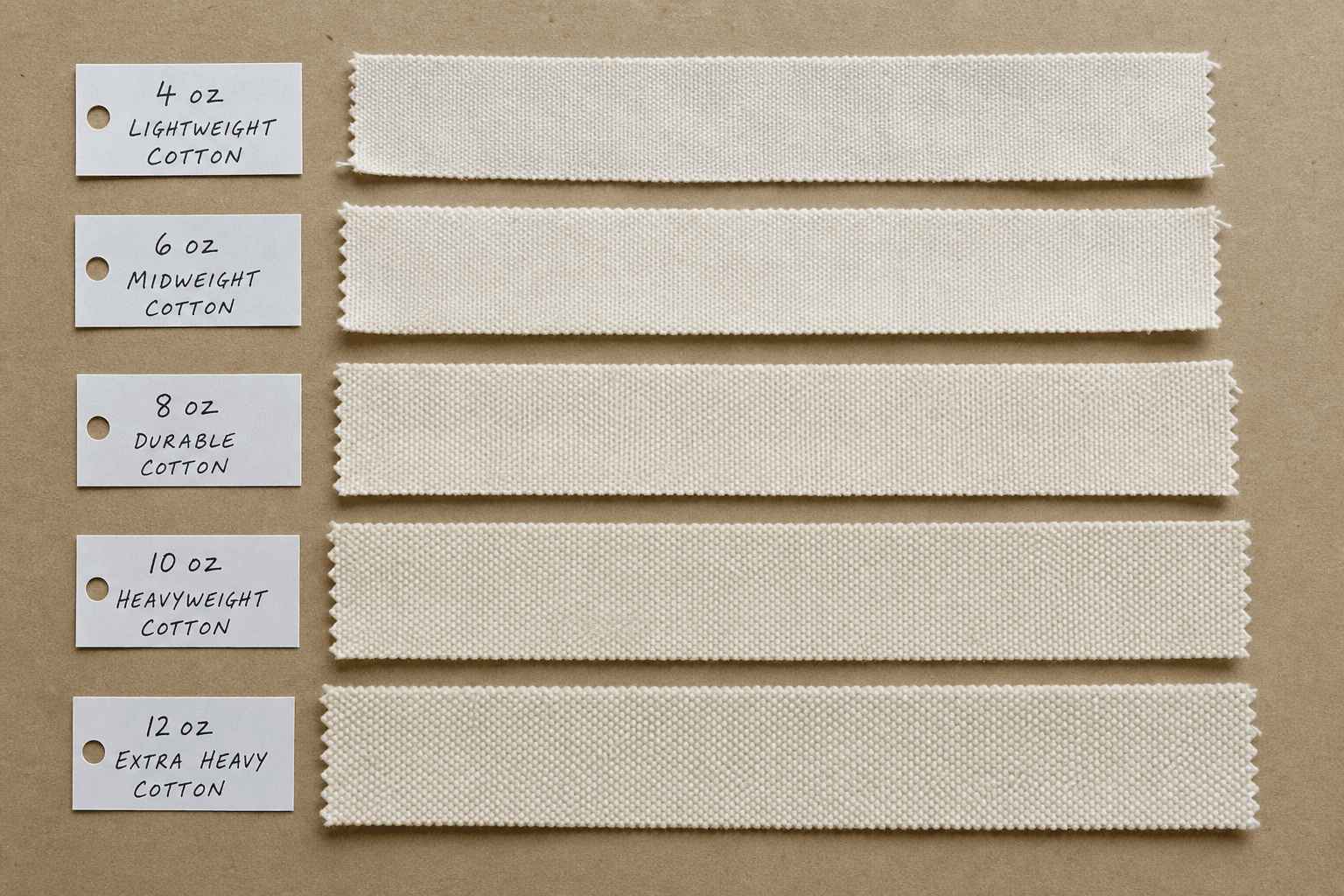
- A practical bulk fabric window is 240-320 GSM, equal to about 7.1-9.4 oz/yd²; below that, the apron loses body, and above that it becomes warmer, slower to dry, and less cost-efficient.
- Professional buyers should specify reinforcement at the top edge, neckline, pocket openings, and strap joins; otherwise edge wave, pocket sag, and neckline growth appear quickly after wear and washing.
- Typical MOQ is 300-500 pcs for stock-color trials and 600-1,200 pcs per color for custom OEM orders with labels, printing, or branded packaging.
- Standard production lead time is usually 35-55 days after PP approval, while custom knitting or dyeing can extend delivery to 50-65 days.
- Indicative China FOB pricing is often US$3.40-US$4.90/pc for a basic style and US$5.10-US$7.20/pc for a reinforced, branded custom-color program.
- Bulk inspection should follow a defined plan such as AQL 2.5 major / 4.0 minor, with a wash-tested approval sample signed off before PO release.
Why buyers choose interlock knit aprons for light-duty uniform programs
The case for interlock knit aprons is operational, not decorative. In multi-store retail and service chains, staff are more likely to wear an apron correctly for a full shift when the fabric bends easily, feels smoother at the neck, and does not resist movement during cashier work, greeting, packing, or repeated reaching. That matters when the apron is worn 5-6 days per week and represents the brand at close range.
This fabric platform fits a narrow but valid apron brief: a uniform apron that feels closer to apparel than equipment. At cosmetics counters, bakery display stations, premium grocery service desks, reception teams, and host stands, the apron is usually a presentation layer first and a light protective layer second. In those settings, knit can deliver softer drape and higher wearer acceptance than rigid canvas or heavy woven twill.
The limit is equally clear. A soft showroom sample can still fail in live use if the apron relies on fabric rigidity to hold square edges, support oversized patch pockets, or maintain a deep neckline. Buyers should assess the category against actual conditions: average shift length, true pocket contents, laundering frequency, and whether the apron still looks clean and balanced after 20-30 wash-and-wear cycles.
- Best-fit channels are beauty retail, bakery front counter, reception, showroom teams, host stations, and gift retail.
- Weak-fit channels are back-of-house prep, bartender utility service, heavy café production, warehouse picking, and chemical salon service.
- A useful buying filter is comfort first, brand appearance second, load-bearing third; if load-bearing moves higher, woven is usually the safer apron base.
Interlock knit aprons fabric specs that stay stable in bulk production
Fabric control is the first pass-fail decision. For most OEM apron programs, a workable range is 240-280 GSM for lighter front-of-house styles and 280-320 GSM when the buyer needs a cleaner bib line and better pocket support. Below about 220 GSM, the apron usually lacks enough body for stable edges and consistent pocket attachment. Above 320 GSM, fabric cost rises, drying time slows, and the apron can feel too warm under indoor lighting and long shifts.
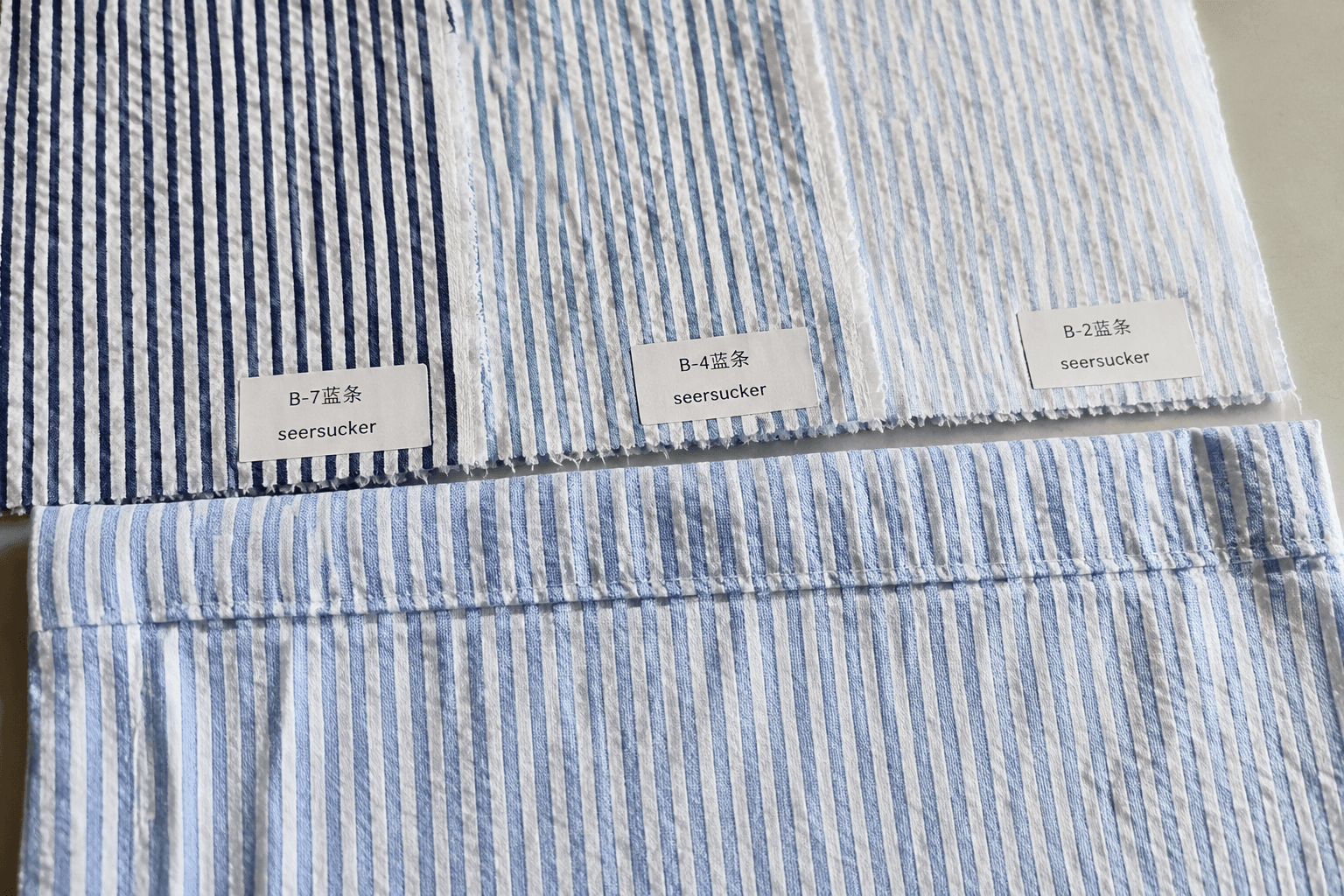
Composition matters as much as weight. A 65/35 polyester-cotton interlock usually offers better dimensional stability, lower shrinkage, and stronger shade retention than 100% cotton. A 60/40 cotton-poly blend can give a softer hand, but it needs tighter shrinkage review. If elastane is added at 3%-5%, recovery testing becomes mandatory because stretch without recovery quickly becomes pocket drag, neckline growth, and misshapen side edges.
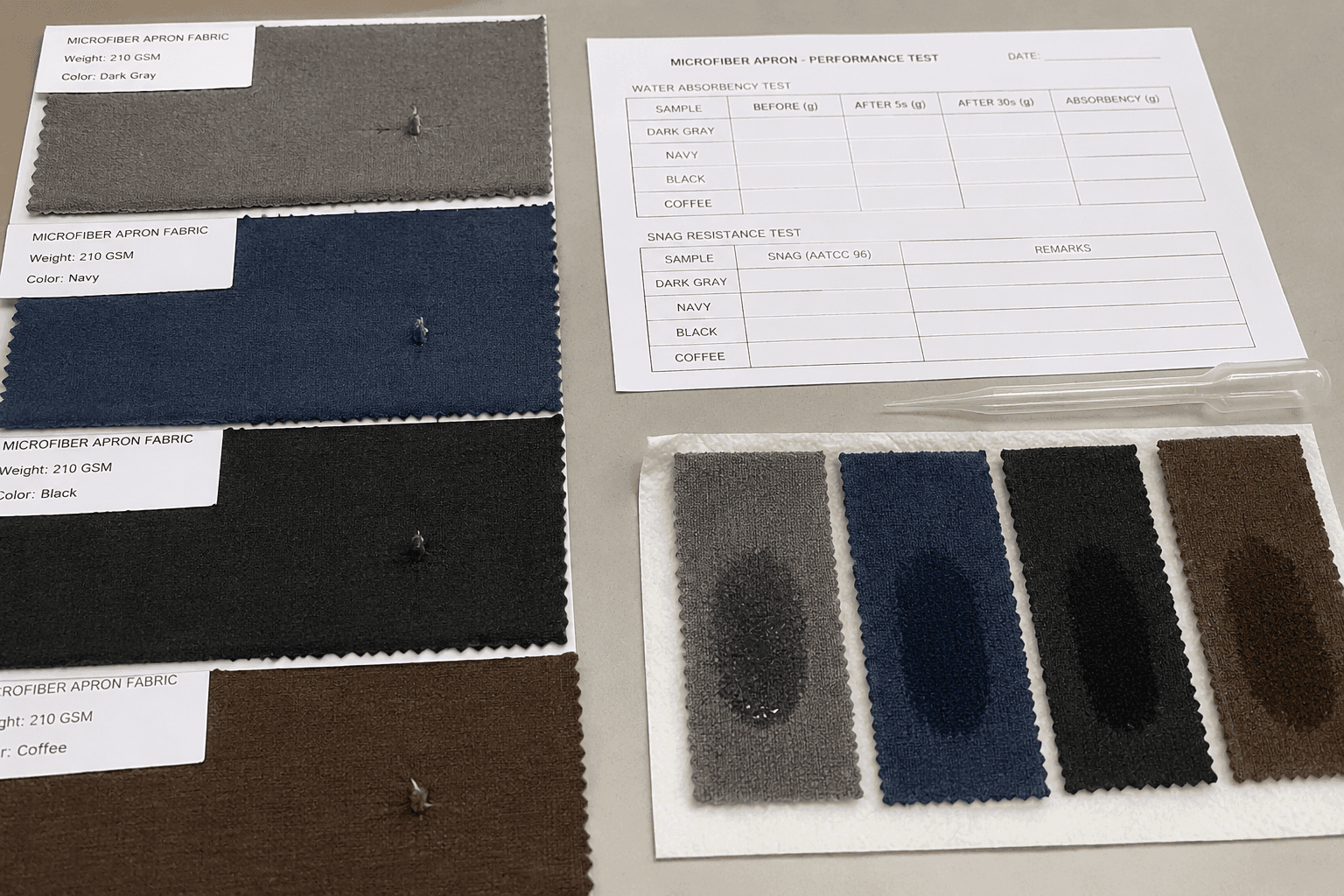
Professional buying should go beyond GSM approval. For interlock knit aprons, the mill or factory should confirm finished width, stretch percentage, recovery, spirality, pilling grade, and colorfastness before PP approval. A practical target is shrinkage within ±5% after 3 home-laundry cycles at 40°C; stronger programs hold within ±3%-4%. For customer-facing uniforms, pilling should reach at least grade 3.5-4, and dark shades such as black, navy, burgundy, or bottle green should be checked for wet crocking to reduce transfer complaints.
- Recommended fabric window: 240-300 GSM for softer styles and 280-320 GSM for better front structure.
- Preferred blends: 65/35 poly-cotton for stability and 60/40 cotton-poly for softer hand with controlled shrinkage.
- Required lab checks: shrinkage, pilling, spirality, dry and wet crocking, stretch percentage, and recovery.
- Useful wash target: ±3% to ±5% dimensional change after 3 cycles at agreed care conditions.
Where structure fails first in interlock knit aprons
The most common sourcing mistake is converting a woven apron pattern directly into knit. A woven bib apron uses fabric rigidity to hold a rectangular silhouette, carry patch pockets, and keep side edges straight. Interlock behaves differently. It stretches under localized load, reacts more sharply to sewing tension, and tolerates repeated point stress less effectively. In production, the first risk zones are usually the top edge, neckline curve, pocket corners, and strap attachment points.
Pocket performance exposes weak development fast. A chest pocket can look fine on a fit sample, then spread after 2-4 weeks once it carries pens, order slips, a scanner, or a phone. Large waist pockets create more distortion. Once the load reaches roughly 300-500 g per compartment, the front panel can pull down and lose shape. At that point, the comfort advantage starts to conflict with the commercial brief.
Edge growth is another frequent failure. If the neckline is cut low for a modern look but finished without enough stabilization, repeated dressing and removal can cause wave, asymmetry, or chest collapse. Side seams may also torque when spirality is not controlled at fabric stage. For B2B buyers, these are not minor cosmetics. They affect uniform consistency across branches and increase rejection risk during inline and final inspection.
- Highest-risk zones are neckline curves, top corners, pocket openings, bartack points, strap joins, and side slits.
- Large unsupported patch pockets on a knit apron body are high-risk construction unless divided or backed.
- If the wearer needs devices, towels, or tools above 300 g per pocket, woven twill or canvas is usually the better apron base.
- Bulk QC should focus on shape symmetry, edge flatness, seam puckering, and post-wash measurement change, not only broken stitches.
Construction methods that make interlock knit aprons commercially viable
Stable knit apron development depends on selective reinforcement, not on forcing knit to behave like canvas. In most OEM programs, factories stabilize only the stress zones: the top edge, neckline, pocket openings, strap connection points, and sometimes the apron front behind a wide pocket. Common methods include woven fusible backing, hidden stay tape, internal twill reinforcement, and controlled binding. The goal is to keep the hand soft while stopping progressive growth after wear and wash.
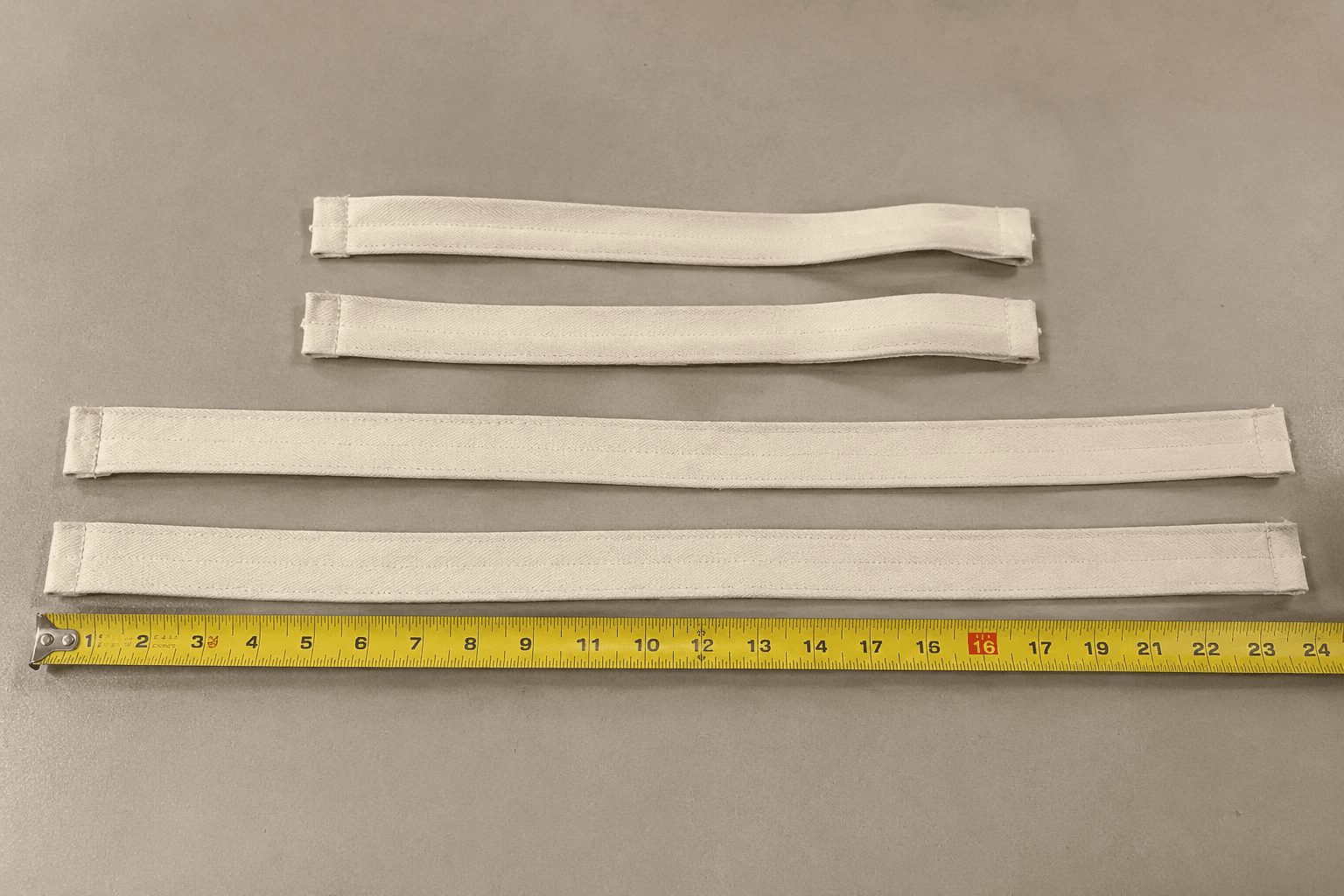
Construction choice directly affects cost and reject rate. Coverstitch works for some hems, but it does not automatically control apron edges under load. For many commercial styles, a folded facing or bound edge retains a flatter line. Bartacks help at pocket corners and tie joins, but a bartack alone is not enough when the base knit stretches easily; there usually needs to be a reinforcement layer behind it. That is why many reliable interlock knit aprons use woven herringbone or twill tape for neck and waist straps even when the apron body is fully knit.
Sample approval should compare at least two construction routes when the volume justifies development cost: one softer option and one reinforced option. A wear test across 7-10 days followed by 3 wash cycles usually makes the stronger option obvious. The correct sample is not the one that feels softest on day one. It is the version that still hangs correctly, keeps pocket shape, and avoids neckline distortion at the end of the trial.
- Use woven stay tape at the neckline and top edge to control growth.
- Back bartacks, snap points, and heavy stitch zones with hidden reinforcement instead of relying on knit strength alone.
- Split one large waist pocket into 2-3 compartments to reduce drag and improve shape retention.
- Prefer woven neck and waist straps for daily tying cycles and better long-term stability.
MOQ, lead time, FOB cost, and QC targets for interlock knit aprons
Costing knit aprons requires more discipline than many buyers expect. A casual fabric hand does not mean a cheaper landed apron. Compared with a stock woven twill apron, an interlock program may require custom knitting, dyeing, pre-shrinking, reinforcement materials, and slower sewing-line handling to prevent edge distortion. Those controls affect both FOB price and factory capacity planning.
For a basic bib apron in stock-supported interlock, a realistic China FOB range is usually US$3.40-US$4.90/pc at volumes of 1,000-3,000 pcs, depending on print, embroidery, and packing method. A more developed style with divided pockets, woven straps, custom PMS dyeing, reinforcement, and branded packaging commonly lands at US$5.10-US$7.20/pc. Pilot runs below 500 pcs usually carry a surcharge because knit cutting, setup, and QC time scale less efficiently than commodity woven apron production.
MOQ follows fabric availability and trim complexity. If the factory can use a stock body color, trial volume may start at 300-500 pcs. For custom-dyed OEM orders with labels, hangtags, woven straps, and retail polybags, MOQ is more often 600-1,200 pcs per color. Sampling usually takes 7-12 days for the first prototype and another 5-10 days for revisions. Bulk production is commonly 35-55 days after PP approval, extending to 50-65 days when yarn booking, knitting, or dyeing capacity is tight.
QC terms should be fixed before PO placement. For most interlock knit aprons, buyers can work from AQL 2.5 major / 4.0 minor with measurement checks before and after wash, shade review under standard lighting, and inspection of neckline symmetry, edge flatness, pocket alignment, strap attachment, and reinforcement placement. On knit programs, these checks matter more than on simple woven aprons because the common failure mode is gradual distortion rather than immediate seam breakage.
- Indicative MOQ: 300-500 pcs in stock color and 600-1,200 pcs per color for custom development.
- Indicative timeline: 7-12 days first sample, 5-10 days revision, 35-55 days bulk after PP approval.
- Indicative FOB: US$3.40-US$4.90/pc for basic styles and US$5.10-US$7.20/pc for reinforced custom programs.
- Suggested inspection basis: AQL 2.5 major / 4.0 minor plus wash-tested approval sample sign-off.
When interlock knit aprons are the right sourcing choice and when woven is safer
The strongest business case for interlock knit aprons is customer-facing, low-load uniform use where the apron supports brand presentation and all-day comfort. Beauty advisors, bakery display staff, retail associates, reception teams, and showroom staff usually carry only small items and work in dry indoor conditions. In those environments, a softer apron can improve wear compliance and appearance without generating major durability claims, provided the construction has been stabilized correctly.
The category weakens when the apron must perform like utility gear. Repeated wet contact, heavy towel use, bar tools, grooming equipment, POS hardware, or back-of-house carrying demands all stress the exact zones where knit is less stable. Even if the first sample appears acceptable, long-term consistency becomes harder to maintain across multiple locations and repeated wash cycles. That increases the risk of claims, early replacement, and mismatched presentation between branches.
If the buyer wants a softer hand but still needs structure, a softer woven apron is often the better answer. Brushed twill, peached poly-cotton, or lighter canvas in the 7.5-9 oz range can deliver a less rigid feel while keeping stronger pocket support and cleaner edges. Making that comparison early prevents wasted sampling time on a fabric platform that does not match the end use.
- Strong fit: beauty advisors, reception staff, bakery display teams, showroom teams, host stations, and premium retail associates.
- Weak fit: bar utility, hot kitchen prep, heavy café production, cleaners, warehouse staff, and chemical salon service.
- Ideal pocket profile: pens, cards, tissues, small order slips, or devices under about 200 g per pocket.
- If the brief requires large utility pockets, metal hardware, rugged drape, or heavy towel use, switch to woven.
PO approval checklist for interlock knit aprons
Buyers should manage this category as a tested uniform program, not as a simple fabric substitution. Request one appearance sample for styling review and one wear-test sample built to production construction. The wear-test sample should be washed at least 3 times and checked for top-edge stability, chest-width change, pocket growth, seam torque, and strap distortion. A presentation sample that has never been washed says very little about actual bulk performance.
The approval process should match the sales channel. For retail and reception use, the priorities are shift comfort, logo presentation, wash stability, and low visible pilling after repeated wear. If staff will carry handheld devices or bend frequently, require pocket-load checks and strap-join stress review. In many cases, the difference between a stable and unstable apron program becomes obvious once the sample is loaded honestly and worn through one full 8-hour shift.
The final decision is usually straightforward. If the apron functions mainly as a soft branded layer with limited carrying demand, knit can be commercially sound. If the apron must deliver structure, utility, and long service under stress, woven remains the safer industrial option. Buyers get the best result when they use interlock knit aprons only for the jobs they genuinely suit.
- Approve fabric against GSM, shrinkage, pilling, crocking, spirality, and recovery before PP sign-off.
- Confirm hidden reinforcement at top edge, neckline, pocket openings, and strap joins.
- Require a real wear test with actual pocket load, tying cycles, and 3-wash review.
- Set post-wash measurement tolerances for length, width, bib position, and pocket placement.
- Release the PO only after the approved sample, QC plan, AQL, and packaging spec are aligned in writing.