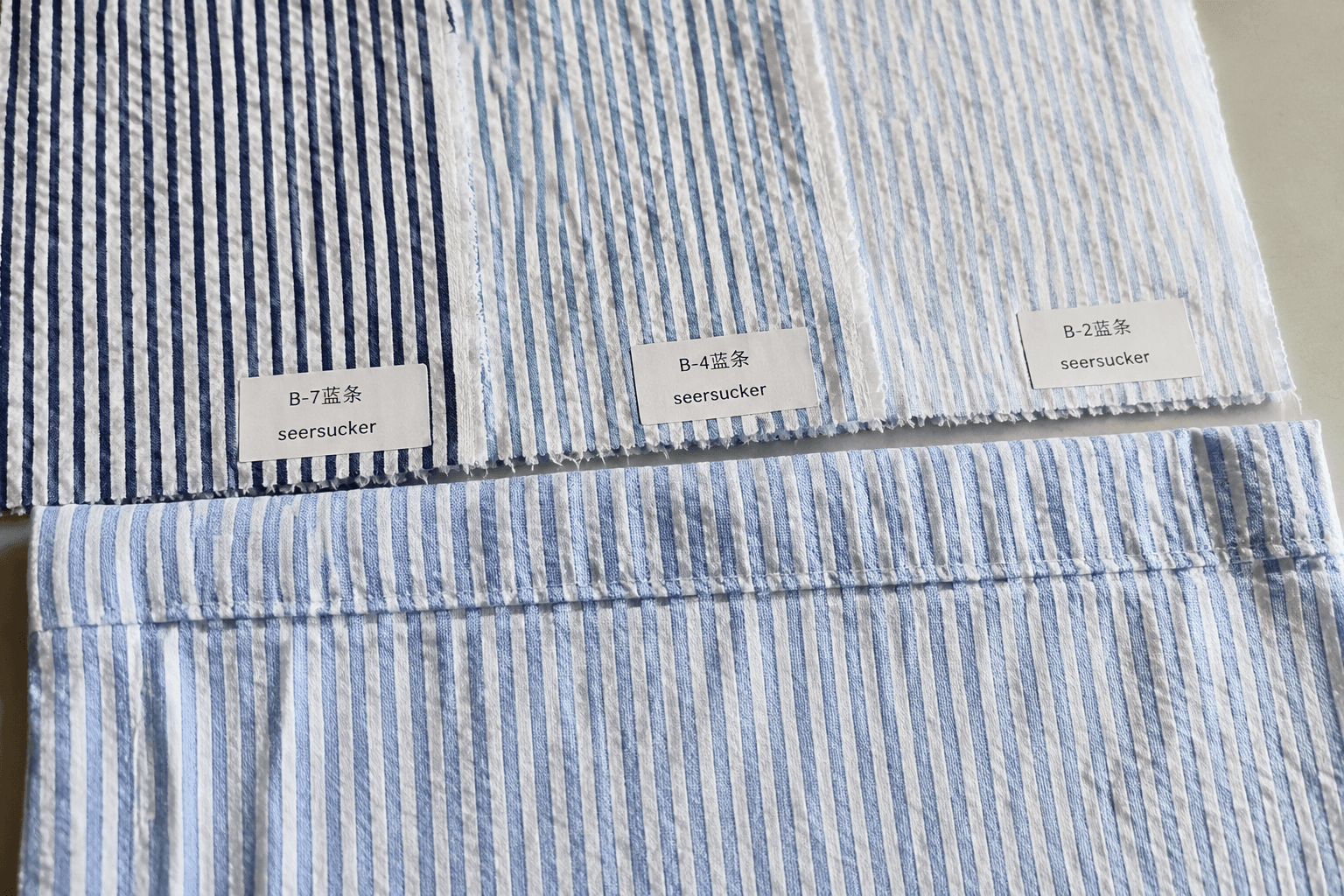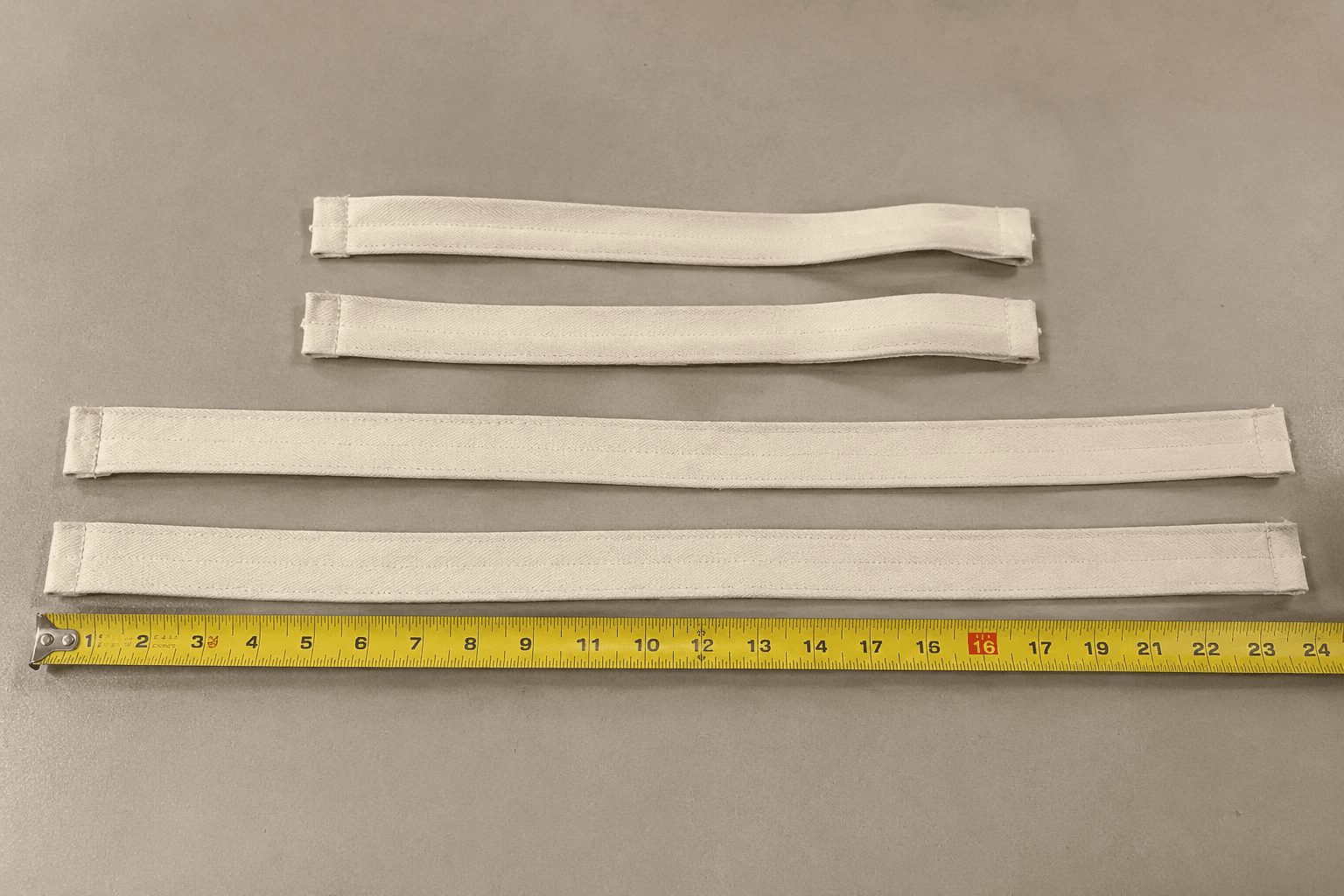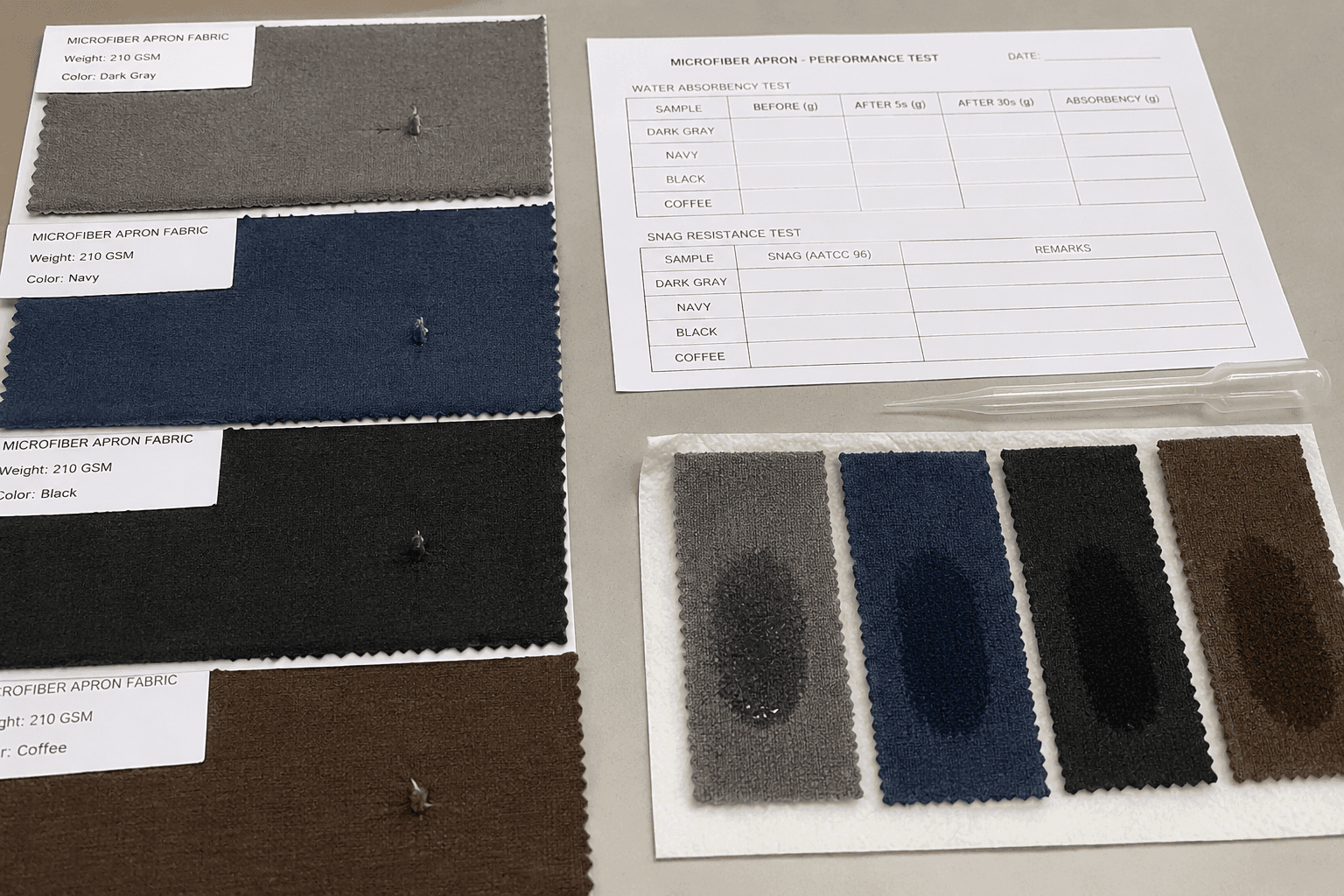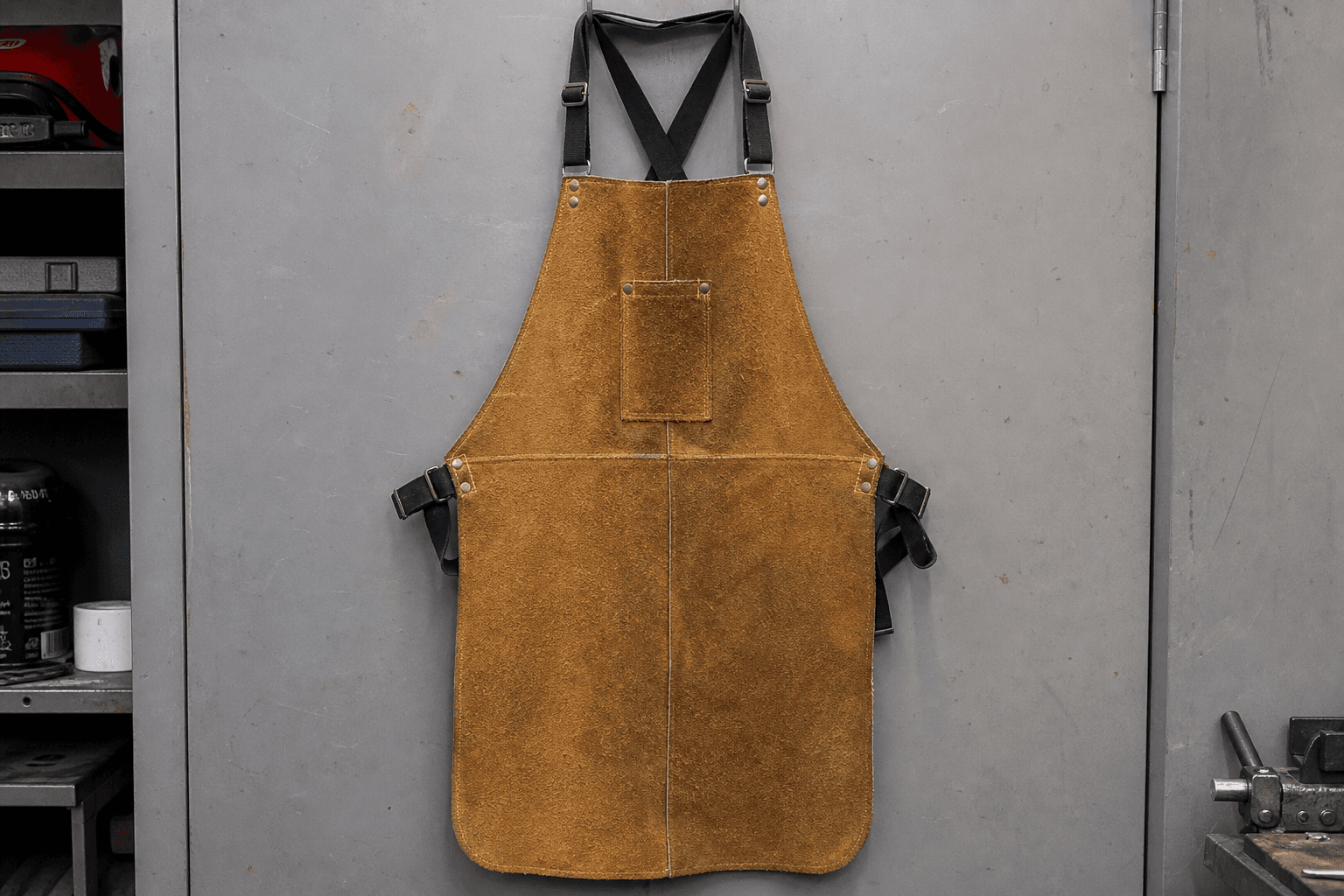
For professional buyers sourcing washable waterproof aprons, material selection is not a cosmetic choice; it determines claim rate, reorder consistency, and whether the apron still performs after 20, 30, or 50 washes. The three most common platforms are PU-coated fabric, TPU-laminated fabric, and PVC-based construction. Each can block splash on day one, but B2B apron programs succeed or fail on more specific points: seam leakage around needle holes, fold-line cracking after carton compression, lamination stability in laundering, odor after unpacking, and whether the factory can reproduce the same approved material six months later.
A useful waterproof apron material comparison therefore has to evaluate the finished apron, not just a fabric swatch or a low first quote. Buyers should compare finished GSM and oz, polymer thickness in millimeters, base fabric composition, seam method, wash target, chemical exposure, MOQ by color, and the true calendar for coating, lamination, testing, and approval. For OEM orders from 1,000 to 20,000 pieces, those details affect landed cost more than a nominal $0.20 fabric saving.
In apron manufacturing, the wrong material often passes sample approval and then fails in use. Typical problems are delamination near the neck seam, PVC hardening in cold storage, PU tackiness after humid storage, edge curl at the side hem, or missing REACH and phthalate documentation when the buyer requests shipment release. A disciplined sourcing process compares the complete apron build, including ties, pockets, seam reinforcement, wash standard, packaging, and inspection criteria, before bulk material is booked.
- PU-coated apron fabric is usually the most economical sewn option for light-to-medium duty washable aprons, commonly 180 to 300 GSM, with FOB pricing around $2.40 to $4.80 per piece at 3,000 to 5,000 pieces.
- TPU-laminated aprons usually offer the best balance of softness, drape, and repeat-wash durability for premium washable programs, but they often cost 15% to 35% more than comparable PU constructions.
- PVC aprons remain competitive for heavy splash and wipe-clean work, especially at 10 oz to 16 oz, but stiffness, odor, cold-crack performance, and formulation compliance need tighter control.
- Finished apron failures are more often caused by seam leakage, fold-line cracking, delamination, edge curl, or tie pull-out than by base fabric tensile failure.
- Material preparation often takes longer than sewing. A simple apron may sew in 5 to 8 days, but total lead time can still reach 35 to 50 days once custom coating, lamination, lab testing, approvals, and packing are included.
- For bulk shipments, set the inspection plan before production starts, such as AQL 2.5 for major defects and AQL 4.0 for minor defects, with written leakage, wash, odor, and appearance criteria on the approved construction sheet.
Waterproof apron material comparison: what buyers must lock before requesting OEM quotes
A usable apron quote starts with end use, not logo size or color card selection. Buyers should define whether the apron is for light splash at a café counter, repeated front-panel wetting in food prep, or full wash-down work in seafood, butchery, or sanitation. They should also define the cleaning method: wipe-down only, home-style laundry at 40°C, or commercial laundry at 60°C with alkaline detergent. Without those inputs, suppliers will quote different material families and the price comparison becomes meaningless.
For aprons, the material must survive more than a basic hydrostatic or spray test. The body panel is folded for packing, creased during wear, pulled by waist ties, stressed at bartacks, and compressed inside export cartons for 20 to 45 days in transit. That is why a serious waterproof apron material comparison should use full build descriptions such as 300D polyester with 0.08 mm PU back coating, finished 230 GSM, 150D polyester knit with 0.05 mm TPU film, finished 210 GSM, or PVC on polyester scrim, finished 12 oz. Approving only a generic term like waterproof polyester apron leaves too much room for drift between sample and bulk.
Construction choices also change performance. A sewn bib apron with folded side hems and self-fabric ties behaves differently from a welded PVC apron with webbing straps. Chest pockets, contrast binding, towel loops, and metal neck adjusters all affect wash behavior, seam stress, and costing. Professional sourcing teams should ask factories to quote the complete apron construction, not just the base material category.
- Confirm finished weight as a delivered apron fabric specification, such as 190 GSM, 230 GSM, 280 GSM, 10 oz, 12 oz, or 14 oz.
- Specify the barrier method clearly: PU back coating, TPU film lamination, unsupported PVC, or PVC on scrim reinforcement.
- Set the wash target before sampling, for example 20 cycles at 40°C, 30 cycles at 60°C, or wipe-clean only.
- Define seam construction early: sewn, sewn plus seam tape, high-frequency welded, or mixed-process.
- State the inspection plan in advance, commonly AQL 2.5 major and AQL 4.0 minor, with waterproof and appearance checks added.
PU-coated apron programs: lowest sewn cost for 20 to 30 wash targets
PU-coated apron fabric is usually built on woven polyester, polyester-cotton, or nylon, with polyurethane applied on the back side. In OEM apron programs, common finished weights are 180 to 240 GSM for food-service, hospitality, and grooming aprons, while 240 to 300 GSM is more common for utility and light industrial styles. Typical bases are 300D or 420D polyester, with coating thickness around 0.05 mm to 0.10 mm. For stock black, navy, white, or dark green, mill MOQ is often 500 to 800 meters per color; for custom shades, embossed finishes, or upgraded chemistry, buyers should expect 1,500 to 3,000 meters per color.
Commercially, PU remains attractive because it keeps a textile look, is relatively easy to sew, and usually feels softer than entry-level PVC. For a standard adult bib apron with one patch pocket, self ties, and an 85 to 95 cm body length, fabric usage is often 0.75 to 1.00 meter depending on width and marker efficiency. In current OEM sourcing, that usually places a simple PU-coated apron at FOB $2.40 to $4.80 per piece for 3,000 to 5,000 pieces. The lower end generally assumes stock color, simple polybag packing, and no metal hardware; printed branding, recycled packaging, or buckle upgrades typically add $0.15 to $0.60 per piece.
The weakness of PU is usually durability over time rather than immediate water resistance. Lower-grade systems may hydrolyze in humid storage, become tacky after 60 to 90 days in poor warehousing conditions, or show micro-cracking at fold lines after repeated washing and tumble drying. Buyers sometimes try to force a light 180 GSM construction into a 50-wash duty cycle and then treat the result as a sewing defect. In reality, the coating grade is wrong for the brief. For sewn PU aprons, buyers should check stitch density, bartack placement, tie attachment strength, and whether high-exposure seams need tape or another design change.
- Best fit: café, bakery, food prep, grooming, branded retail uniform, and light utility apron programs.
- Typical wash target: 20 to 30 cycles at 40°C, or lower when hot drying is used.
- Typical FOB range: $2.40 to $4.80 per piece at 3,000 to 5,000 pieces for an adult bib apron.
- Typical lead time: 20 to 30 days with stock-supported colors, or 30 to 40 days for custom coating runs.
- Main risks: hydrolysis, fold-line cracking, edge curl, and reduced barrier performance after repeated hot laundering.
TPU-laminated apron options in a waterproof apron material comparison: softer hand, better repeat laundering
TPU-laminated apron construction usually combines a woven or knit polyester backing with a thermoplastic polyurethane film. In apron sourcing, typical specifications include 150D to 300D polyester face fabrics, TPU film thickness of 0.03 mm to 0.08 mm, and finished weights around 190 to 280 GSM for flexible wearable styles. Heavier utility versions can exceed 300 GSM, but most professional buyers choose TPU for softness, quieter wear, and improved wash retention rather than for maximum panel mass.
For premium washable apron programs, TPU often gives the best overall balance. A well-controlled laminated apron usually drapes better than heavy PVC, remains more flexible in low-temperature environments, and keeps appearance more consistently than entry-grade PU after 30 to 50 wash cycles. In hospitality back-of-house, food processing support, healthcare-adjacent service, and premium private-label uniforms, those benefits matter because the apron is worn for long shifts and visual presentation is still important. Buyers paying for TPU are usually trying to reduce replacements, not simply to upgrade feel.
The trade-off is process complexity. TPU film costs more than standard PU coating, and lamination quality can vary if the supplier does not control peel strength, heat setting, and width stability. Buyers should ask whether the factory is quoting stock laminated fabric or scheduling a fresh lamination run. That answer affects both lead time and shade consistency. In OEM costing, TPU-laminated aprons are commonly $0.50 to $1.20 per piece above comparable PU versions, with total lead time often reaching 35 to 45 days when fresh lamination, testing, and pre-production approval are included.
- Choose TPU when the target is 30 to 50 wash cycles, softer drape, quieter movement, and better low-temperature flexibility.
- Ask for peel-strength data, fold-test results, and post-wash appearance records on the finished apron, not only on flat material.
- Expect material MOQ around 800 to 1,500 meters per color; custom film, embossing, or special shades can push MOQ above 2,000 meters.
- Budget a premium of roughly 15% to 35% over comparable PU constructions, depending on film thickness and trim package.
PVC apron sourcing for 8 oz to 16 oz splash-duty programs
PVC remains a practical apron material where front-panel splash resistance matters more than softness or long laundry life. In apron manufacturing, PVC appears as unsupported sheet, PVC-coated polyester, or PVC on scrim reinforcement, with common finished weights from 8 oz to 18 oz. Entry dishwashing or sanitation aprons often sit at 8 oz to 10 oz, while butchery, seafood, and wash-down applications commonly use 12 oz to 16 oz. For simple adult bib aprons produced at volume, FOB pricing can still fall around $1.80 to $3.20 per piece, which explains why PVC remains active in price-sensitive tenders.
PVC’s commercial strength is straightforward barrier performance at relatively low cost. It is suitable for wipe-clean routines, frequent hose-down exposure, and jobs where the apron is not expected to survive repeated high-temperature laundering. Reinforced PVC constructions also give users a strong sense of coverage in wet tasks. Depending on thickness and design, factories may produce these aprons as sewn, welded, or mixed-process constructions. That process choice affects seam comfort, leakage risk, and unit cost, so it should be confirmed before sample approval.
The limits are equally clear. PVC is usually stiffer than TPU, often has a stronger opening odor, and requires tighter compliance control where phthalate restrictions apply. In chilled rooms or after repeated folding, low-grade compounds can whiten, harden, or crack. Carton compression may also leave visible crease marks on lighter gauges. For washable programs, PVC should only be specified when the actual cleaning regime supports it; otherwise a lower opening quote may be offset by user rejection, cold-crack failure, or compliance delays.
- Best fit: dishwashing, seafood processing, butchery, janitorial work, sanitation, and wash-down stations.
- Common weight band: 8 oz to 18 oz, with 10 oz to 16 oz most common for professional utility use.
- Typical concerns: stiffness, odor, cold-crack risk, phthalate compliance, and carton fold marking.
- Typical lead time: 15 to 25 days for stock colors, or 30 to 45 days for custom color, embossing, or formulation confirmation.
- Best buying practice: confirm whether seams will be sewn, welded, or mixed, because leakage control differs by process.
How wash cycles, chemicals, and seam design change apron material selection
In practice, the right apron material is the one that meets the workplace requirement with the lowest total program risk. PU-coated fabric usually suits buyers who need a textile appearance, moderate washability, and controlled unit cost. TPU-laminated fabric usually suits buyers who need better drape and more reliable retention through repeat laundering. PVC usually suits heavy splash, wipe-clean, or rinse-down work where comfort is secondary. These positions are only useful when linked to a clear wash target, chemical exposure profile, and seam design.
Chemical exposure matters because fats, food acids, alkaline detergents, quaternary sanitizers, and diluted sodium hypochlorite do not affect apron materials equally. A brief that asks only for a chemical-resistant waterproof apron is too broad to guide sourcing. A better apron brief states whether exposure is splash, wipe, pooling, or constant front-panel contact; whether cleaning uses neutral detergent, alkaline cleaner, or diluted bleach; and whether the apron is worn in ambient kitchens or chilled processing areas at 0°C to 8°C. Those details influence polymer choice, fold performance, and whether sewn seams are acceptable.
Total cost must include what happens after delivery. A TPU apron may cost $0.80 more per piece than a PU version but last 15 to 20 more wash cycles in a demanding program. A PVC apron may save $0.50 per piece but trigger odor complaints or fail in cold storage. A light PU apron may look competitive on the first quote but require an upgraded coating grade once the buyer writes in a 60°C laundering target. In professional sourcing, FOB price is only one line of the cost equation; service life, claim risk, compliance workload, and reorder repeatability usually matter more.
- Indicative wash target: PU for lower-to-mid wash counts, TPU for higher wash counts, PVC for wipe-clean or light-laundry expectations.
- Indicative cost order: PVC lowest, PU mid-range, TPU highest, although seam sealing and compliance testing can shift the final ranking.
- Indicative process route: PU and TPU are mainly sewn; PVC may be sewn, welded, or mixed depending on gauge and leakage risk.
- Best validation method: trial the finished apron in the actual workplace for 5 to 10 days before bulk approval.
Bulk apron buying controls: specification sheets, AQL, and pre-production wear testing
Factories develop more accurate apron proposals when the brief is written around performance targets instead of a generic material name. A request that says only black waterproof apron with logo encourages suppliers to quote whatever stock option is easiest to sell, whether that is a light PU coating, a stiff PVC sheet, or an overbuilt laminate that misses the target FOB. A stronger brief defines end use, daily wear time, cleaning method, wash temperature, compliance requirements, target FOB, packaging format, and whether the apron must fold compactly or hang flat. With that information, the supplier can prepare a first-round waterproof apron material comparison that is commercially useful.
The construction sheet is the buyer’s main control document. It should record face fabric, base denier or composition, coating or film type, polymer thickness, finished GSM or oz, neck strap and tie material, pocket dimensions, seam method, logo process, carton ratio, and packaging standard. If the apron carries a wash claim, the pass criteria should be written precisely, such as no visible coating crack, no delamination, no seam opening over 3 mm, no tie pull-out, and acceptable appearance after 30 cycles at 40°C. Without that level of detail, repeat orders can drift even when the first sample looked acceptable.
Inspection and wear testing should be built into the sourcing plan before bulk material is booked. For commercial shipments, many buyers use AQL 2.5 for major defects and AQL 4.0 for minor defects, with added checks for seam leakage, dimensions, attachment strength, odor, and packing count. Before approving a 5,000-piece order, it is prudent to place one or two finished aprons into the real workplace for 5 to 10 days. That simple step often exposes neck discomfort, stiffness, poor drape, wash-finish problems, or tie failure that a flat swatch and one-day fit sample will not reveal.
- Provide a target FOB band, such as $2.80 to $3.60 or $4.50 to $5.50, so the supplier matches the correct material family early.
- Approve a sealed construction sheet before bulk, including GSM tolerance, polymer type, film or coating thickness, seam method, and packaging standard.
- Write wash criteria into the PO or specification, including cycle count, temperature, detergent type, and failure definition.
- Use pre-production wear testing on finished aprons rather than swatches, because seams, folds, and ties usually fail first.
- Confirm inspection rules in advance, including AQL levels and any special waterproof, odor, appearance, or cold-flex checks.