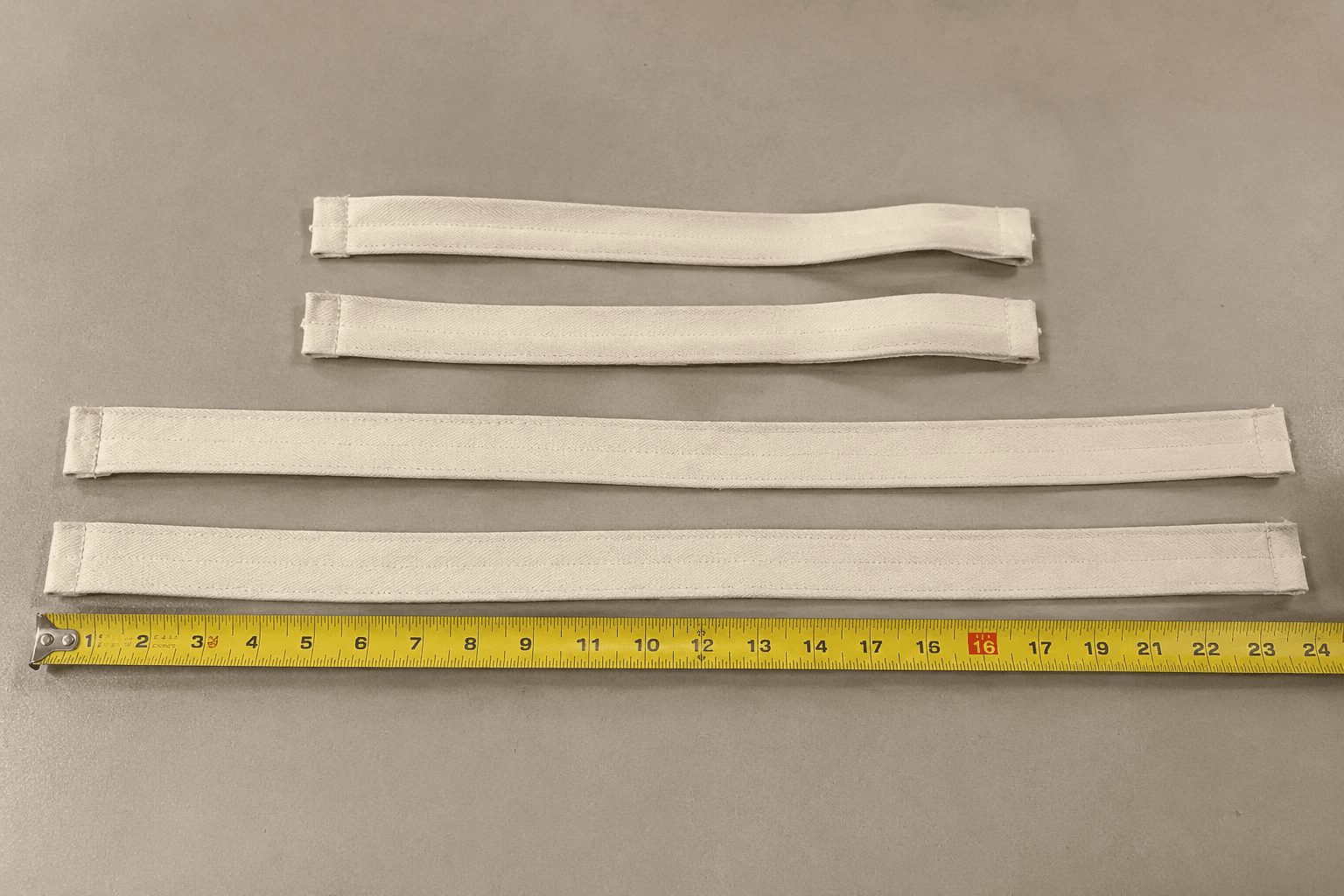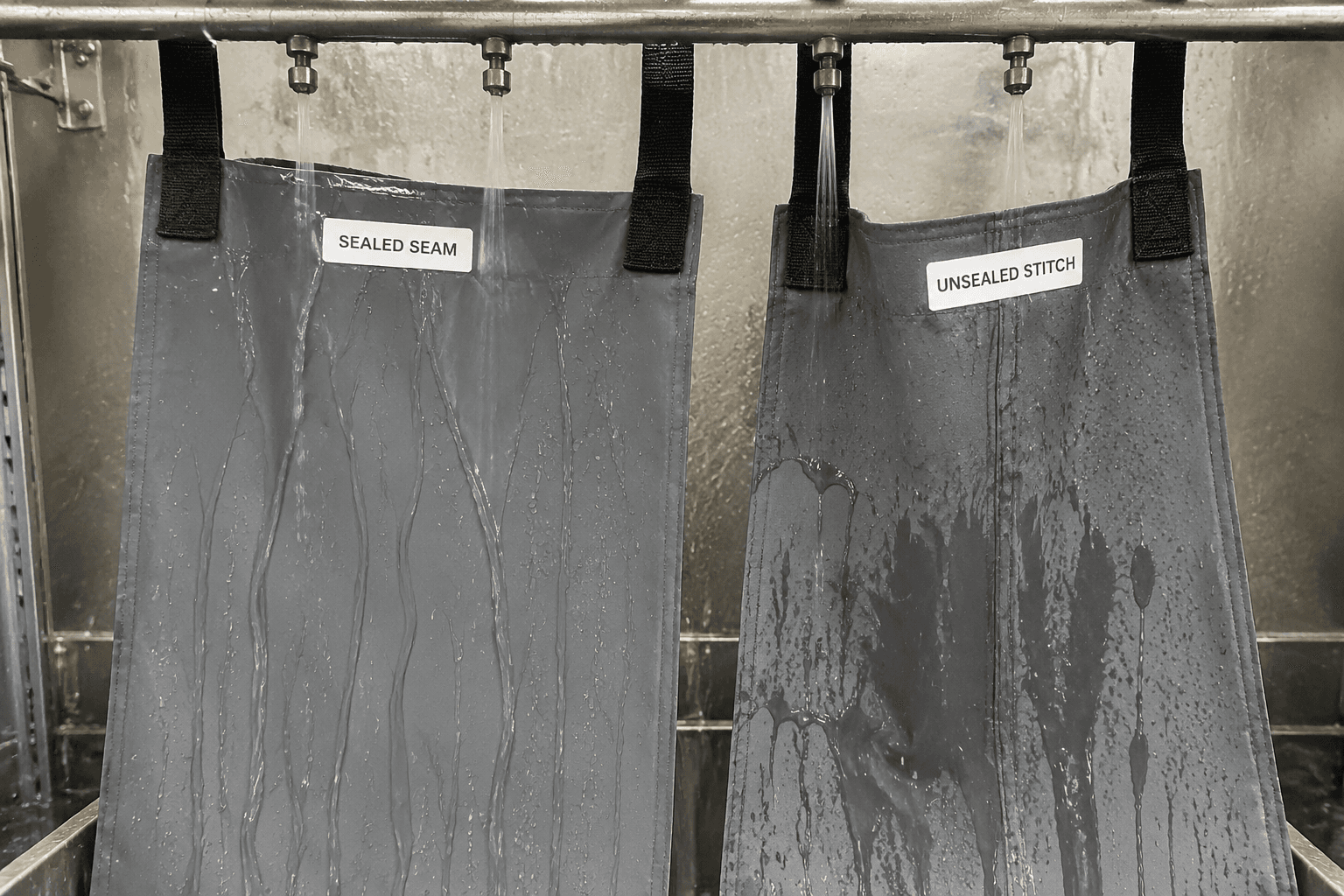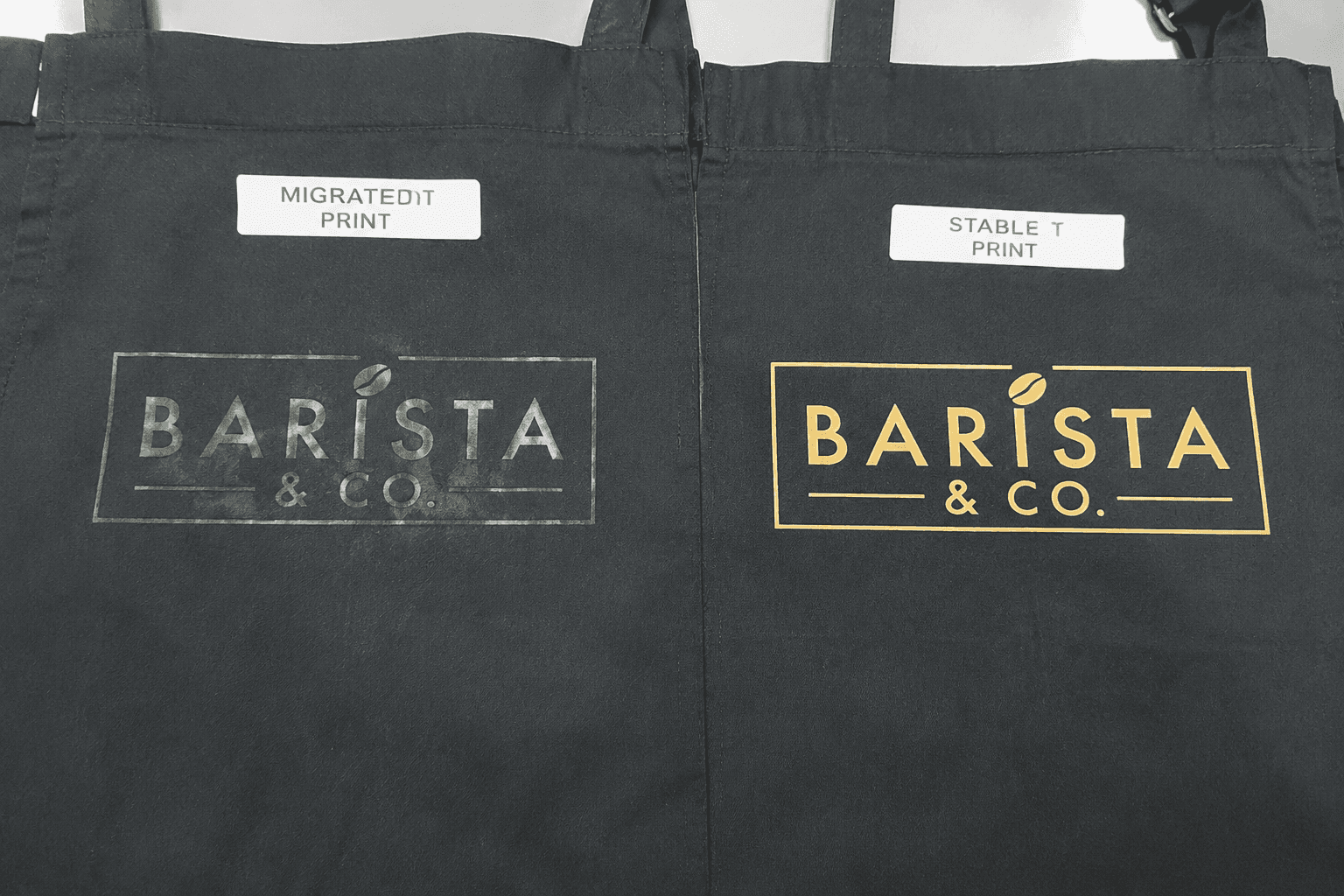
In custom apron sourcing, apron binding color migration shows up most often when black, navy, burgundy, or bottle-green binding is sewn onto white, ecru, oat, stone, pale-grey, or light-blue apron shells. The problem is common on bib aprons, waist aprons, cross-back aprons, and utility aprons that use contrast edge binding, pocket binding, neck tape, or armhole piping. Staining usually appears after 1 to 3 domestic washes at 40°C, after 1 to 2 industrial-style washes at 60°C, after steam pressing at 150-160°C, or after 7 to 15 days in damp summer transit.
For professional buyers, this is not a cosmetic footnote. On apron orders of 3,000 to 25,000 pieces, one failed dark-binding lot can delay shipment by 4 to 10 days while the factory rebooks trim, sews fresh test panels, repeats wash testing, and sorts or reworks finished stock. If the style can be repaired, unpicking and rebinding usually adds $0.55-$1.35 per piece on a standard bib apron. If staining is set into a light cotton shell, the commercial loss can exceed the original cut-make-trim value of the apron.
The root cause is usually a sourcing chain failure rather than one isolated sewing error: a dark trim shade with high dye load, incomplete washing-off after dyeing, a light absorbent shell, and an approval process based on loose swatches instead of sewn apron panels. Buyers reduce claims when the PO and tech pack define trim composition, dye class, test method, staining grade, AQL level, approved supplier, MOQ, and trim lead time before cutting starts.
- Dark binding on light apron fabric is a predictable risk combination, especially black, navy, burgundy, and dark green on white, natural, ecru, stone, or pale-grey shells.
- For repeat-wash aprons, reactive-dyed cotton binding with full washing-off or proven uniform-grade polyester binding is usually safer than low-price stock tape from a general trim market.
- A stitched combo panel made from actual bulk shell fabric and actual bulk binding is more reliable than separate swatches because fold pressure, stitch density, and retained moisture change transfer behavior.
- For most light-body aprons, a workable approval target is staining grade 4 minimum after the agreed wash method, with AQL 2.5 for major appearance defects at final inspection.
- Spending $100-$250 on pre-bulk trim testing is usually cheaper than a 7-day delay, a $0.55-$1.35 rework cost per apron, or a claim against the shipment.
1. Where apron binding color migration starts on light-color apron programs
The failure pattern is straightforward: a light apron shell is paired with dark binding, herringbone tape, twill tape, canvas binding, or dyed webbing, and unfixed or unstable dye moves from the trim into the shell during wash, pressing, or damp storage. On finished aprons, the transfer usually appears as grey-blue shadowing, red-violet halos, or dirty edge staining at bib perimeters, armholes, pocket mouths, side seams, and waist-tie joins.
The highest-risk shell fabrics are absorbent cotton constructions in pale shades. In apron production, that usually means 180-240 GSM cotton twill, 200-235 GSM poly-cotton twill with a brushed face, 220-310 GSM cotton canvas, and 8 oz to 10 oz cotton duck in white, natural, ecru, oat, sand, stone, or pale grey. When these shells are combined with black or navy cotton binding, even minor migration is visible after one wash cycle.
Apron binding color migration is often missed during development because separate swatches do not reproduce the conditions of a finished apron. Once the binding is folded over a raw edge, sewn at 8-10 stitches per inch, compressed by thread tension, and exposed to moisture, dye transfer can increase sharply. A desk approval of shell and trim side by side is not a valid predictor for bulk performance.
- Highest-risk trim shades: black, navy, dark burgundy, bottle green, deep charcoal.
- Highest-risk shell shades: optical white, natural, ecru, beige, stone, pale grey, light blue.
- Highest-risk contact zones: bib edge, armhole curve, pocket opening, side seam, towel loop join, waistband corner.
- Highest-risk end uses: chef aprons, café aprons, bakery aprons, service aprons, utility aprons washed weekly.
2. Fiber, dye route, and finish choices that lower apron binding color migration
The first real control point is trim specification, not sewing. Many buyers approve apron binding by width, shade, and price per meter, yet the dye route is usually what determines whether the trim will stain a light shell. For cotton apron binding, reactive dyeing with proper fixation, hot soaping, and thorough washing-off is normally the safest route for repeat laundering. By contrast, low-cost direct-dyed cotton tape can look acceptable at sample stage and still release loose dye in the first wash.
For polyester or poly-cotton trims, the concern shifts to disperse-dye stability, heat setting, and source consistency. A 210 GSM 65/35 poly-cotton twill apron may perform well with a tested polyester binding developed for uniform programs, but a decorative stock tape from a trim wholesaler may fail after steam finishing or hot-container exposure. Buyers usually get more stable bulk results when both shell fabric and dark trim are booked through controlled mills rather than combining an approved shell with an unverified market binding.
Finish chemistry also matters. Silicone softeners, water-repellent top finishes, heavy post-dye softening, and enzyme treatments can change how much dye sits on the trim surface and how quickly moisture moves into the shell. On aprons using 8 oz cotton canvas, 10 oz cotton canvas, or 240 GSM brushed twill, trim should be approved only after the supplier confirms the final finish recipe and the actual bulk lot is available for testing.
- Safer cotton trim: reactive-dyed binding with documented wash-off and internal wash-fastness records.
- Safer synthetic trim: heat-set polyester binding already qualified for uniform laundering.
- Common apron shell weights: 180-240 GSM twill, 220-310 GSM canvas, 8 oz duck, 10 oz duck.
- Typical custom binding MOQ: 1,500-3,000 meters per shade for 25 mm, 30 mm, or 38 mm widths.
- Typical trim cost delta: qualified custom binding adds about $0.01-$0.04 per apron versus untested stock tape.
3. Write wash-test standards for apron binding color migration into the PO
Many bulk disputes start with vague language such as no bleeding or good fastness. That wording is not usable for apron sourcing because it gives the trim mill, apron factory, and QA team too much room to assume different standards. A workable PO needs the exact wash method, sewn construction, number of cycles, pass grade, and approval timing.
For most apron programs, the correct pre-production test is a stitched combo panel made from actual bulk shell fabric and actual bulk binding from the intended dye lot. The panel should match the real construction: the same fold width, the same SPI, the same seam type, and the same contact area planned for the finished apron. If the style will be garment washed or heavily steam pressed after sewing, the panel must follow that route as well.
A practical standard for light-body aprons is staining grade 4 minimum after the agreed method. For café and service aprons, buyers commonly specify 40°C domestic wash for 3 cycles. For kitchen and bakery aprons with heavier care, 60°C for 3 cycles is more realistic. Premium programs may require staining grade 4-5 and color change grade 4, but that must be aligned with trim selection, target FOB, and trim lead time. If the buyer wants black cotton binding on optical-white cotton canvas, the factory needs time to source the correct trim lot rather than substitute a similar-looking stock tape.
- Define wash temperature: 40°C for standard hospitality use or 60°C for heavier kitchen use.
- Define cycle count: typically 3 cycles for pre-bulk approval on repeat-wash apron programs.
- Define test sample: sewn combo panel using actual bulk shell and actual binding lot.
- Define pass level: staining grade 4 minimum; premium programs may require 4-5.
- Define timing: approve before bulk cutting and recheck before sewing output reaches 20%.
4. Factory controls after trim approval: lot segregation, sewing discipline, and finishing
Even an approved binding becomes risky if lot control breaks down on the sewing floor. Dark binding should be checked by lot on receipt, segregated physically, and released only after quick internal dry-rub and damp-transfer checks. Two navy binding lots can match visually under factory lighting yet perform differently in wash testing, which makes late-stage root-cause tracing slow and expensive.
Humidity and rushed finishing are common triggers on apron orders. Binding that arrives insufficiently dried after dyeing, or rolls stored near steam presses, can release dye under pressure before the aprons ever reach lab testing. This is especially common in summer production or when finished aprons are stacked warm, polybagged early, and sealed into export cartons the same day. Good control means conditioning dark trims in dry storage for at least 24 hours, keeping rolls off the floor, and letting pressed goods cool fully before packing.
Construction details also change risk. A 38 mm folded binding traps more moisture than a 25 mm tape. Tight curves on bib corners, armholes, and rounded pocket openings increase compression and contact time. If the styling allows it, moving from enclosed dark binding to top-applied tape, dark straps, contrast bartacks, or a bound pocket flap can preserve the contrast look while reducing direct dark-to-light contact.
- Segregate binding by dye lot and record lot usage by sewing line and date.
- Run quick white-cloth damp-transfer checks before line release.
- Do not sew with trims that are freshly dyed, warm, or damp.
- Hold pressed aprons 12-24 hours before polybagging if finishing humidity is high.
- Review whether 25 mm, 30 mm, or 38 mm binding is technically necessary.
5. MOQ, lead time, cost exposure, and AQL when apron binding color migration is found late
The cheapest place to stop the problem is before bulk trim booking or, at the latest, before cutting. Once 5,000 aprons are partly sewn with a failing dark binding, the financial exposure rises quickly. If the issue is caught at PPS stage, the correction may be limited to 4-7 extra days for trim replacement and retesting, plus lab fees of about $100-$250 per submission. If it is caught after sewing, unpicking, replacement trim, resewing, repressing, inspection, and repacking can add $0.55-$1.35 per apron on a standard bib style and $0.90-$1.70 on a cross-back or multi-pocket utility apron.
MOQ pressure drives many bad decisions. A buyer may need only 1,500 aprons, while the correct custom-dyed binding requires 2,000-3,000 meters per shade with a trim lead time of 12-18 days. To avoid trim leftovers or to save a few cents, the factory or trader may propose stock tape from a general trim market. That shortcut often erases any early saving once wash failures, rework, and booking delays begin. In apron sourcing, overbuying the right trim lot is usually cheaper than underbuying and accepting an unknown substitute.
Inspection rules should reflect the actual commercial risk. For export aprons, many buyers use AQL 2.5 for major defects at final random inspection. On white, natural, or ecru apron programs, visible dark-trim staining is often treated commercially as a zero-tolerance appearance defect because it cannot be hidden at uniform issue or retail delivery. That standard should be defined before production starts, not argued after cartons are packed.
- Typical custom dark-binding MOQ: 2,000-3,000 meters per shade.
- Typical trim lead time: 12-18 days for custom-dyed binding; 5-7 days for stock tape.
- Typical lab retest fee: $100-$250 per submission depending on method and market.
- Typical repair cost after sewing: $0.55-$1.35 per apron; higher on complex styles.
- Common final inspection rule: AQL 2.5 for major appearance defects; staining on light shells may be treated as zero tolerance.
6. Buyer checklist for repeat orders with dark binding on light aprons
The most effective prevention tool is a short checklist used before PO issue and again before bulk cutting. It forces sourcing, merchandising, development, and QA to confirm the same assumptions on shell risk, trim choice, wash method, and delivery timing. On repeat apron programs, claims often happen not because the factory has never seen the problem, but because nobody reconfirms the trim-to-shell combination when the order is rebooked.
Start with end use. A promotional waist apron expected to survive a few home washes does not need the same trim standard as a café bib apron washed weekly or a kitchen apron exposed to grease, steam, and repeated 60°C laundering. Then lock shell composition, weight, shade, trim fiber, binding width, dye route, wash method, and whether garment wash, enzyme wash, or steam-heavy finishing will be applied. These are the variables that determine whether a contrast edge is commercially safe at the target FOB.
The same checklist should control the supply chain. If the approved sample used one source of navy binding and bulk switches to another, the approval is no longer valid. Keeping supplier name, MOQ, lead time, lot traceability, sewn-panel requirement, and pass grade inside the PO and tech pack reduces last-minute trim substitution and makes reorder performance more stable.
- Confirm shell composition, shell shade, and fabric weight before approving dark binding.
- Confirm trim fiber, width, dye route, supplier, and approved dye lot.
- Confirm wash method, cycle count, and minimum staining grade in the PO.
- Confirm whether enzyme wash, garment wash, or steam-heavy finishing applies.
- Confirm MOQ and trim lead time early enough to avoid stock substitution.
- Confirm PPS includes a sewn combo panel showing the actual trim contact area.
7. When redesign is safer than forcing a high-risk contrast binding
Some apron concepts are technically possible but commercially weak. White cotton bib aprons with black cotton binding, natural canvas aprons with dark-red pocket binding, and pale-grey aprons with navy armhole binding can be produced, but they require tighter trim control, more testing, and less tolerance for sourcing shortcuts. If the target FOB is aggressive and the end use includes repeated 60°C washing, the risk profile may not justify the visual effect.
A better redesign does not mean losing contrast. Buyers can move the dark color from the edge binding to neck straps, waist ties, bartacks, embroidery, woven labels, patch pockets, or hardware details. They can also switch from heavily dyed cotton binding to a proven polyester-based or yarn-dyed trim with better wash stability. On many apron programs, a small design adjustment delivers better bulk reliability than trying to force a high-risk trim-body combination through production.
For professional B2B buyers, controlling apron binding color migration is a sourcing and engineering discipline rather than a last-minute lab exercise. The earlier dark-trim versus light-shell risk is measured in cost, MOQ, lead time, and test grades, the easier it is to protect margin, shipment dates, and claim performance on bulk apron orders.
- Redesign is often justified when the shell is white, natural, ecru, or pale stone and the trim is black, navy, or burgundy.
- Redesign is strongly advised for aprons expected to withstand repeated 60°C washing.
- Safer contrast options include straps, waist ties, bartacks, embroidery, labels, patch pockets, and hardware accents.
- A small development compromise usually costs less than a late shipment, rework line, or customer claim.