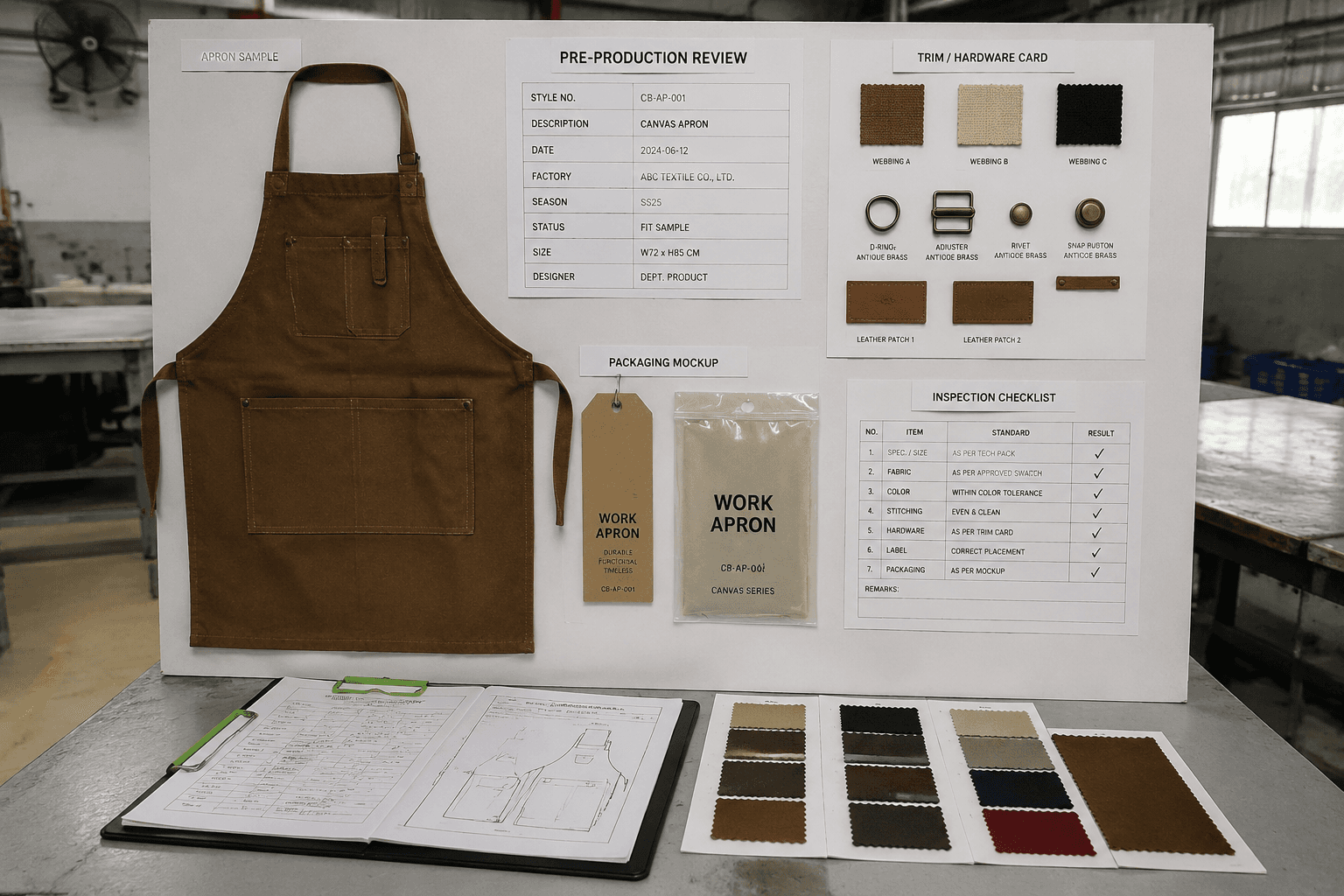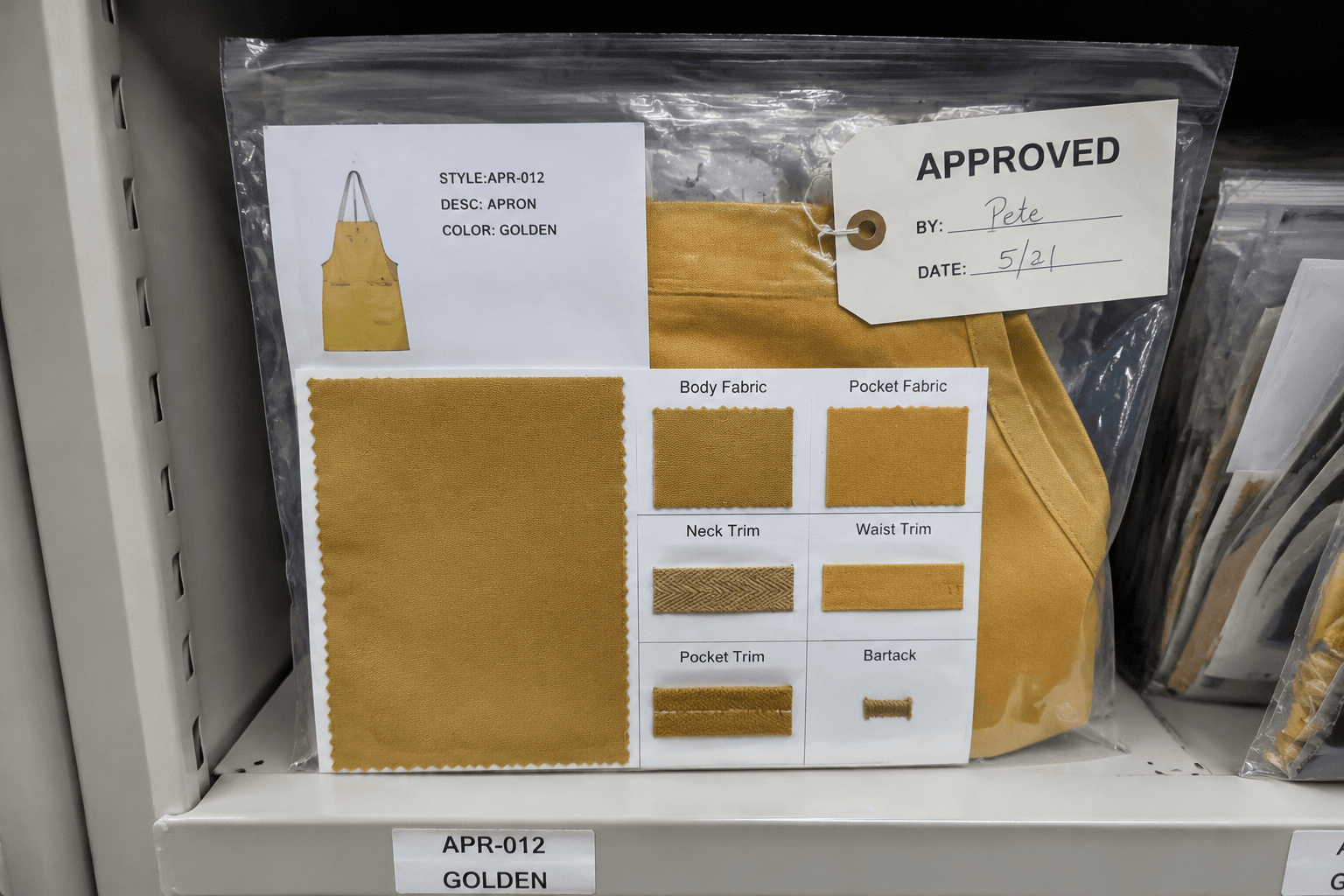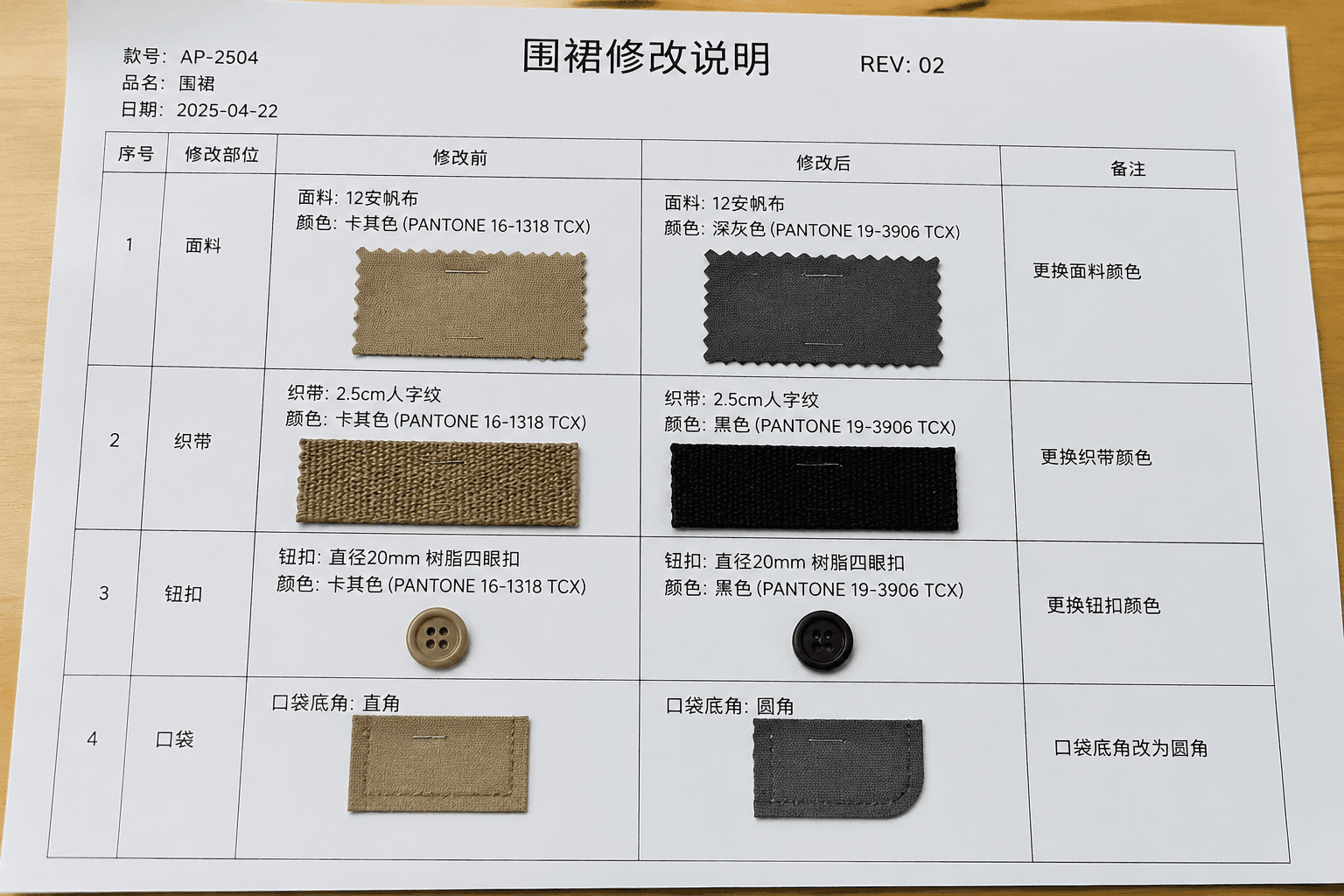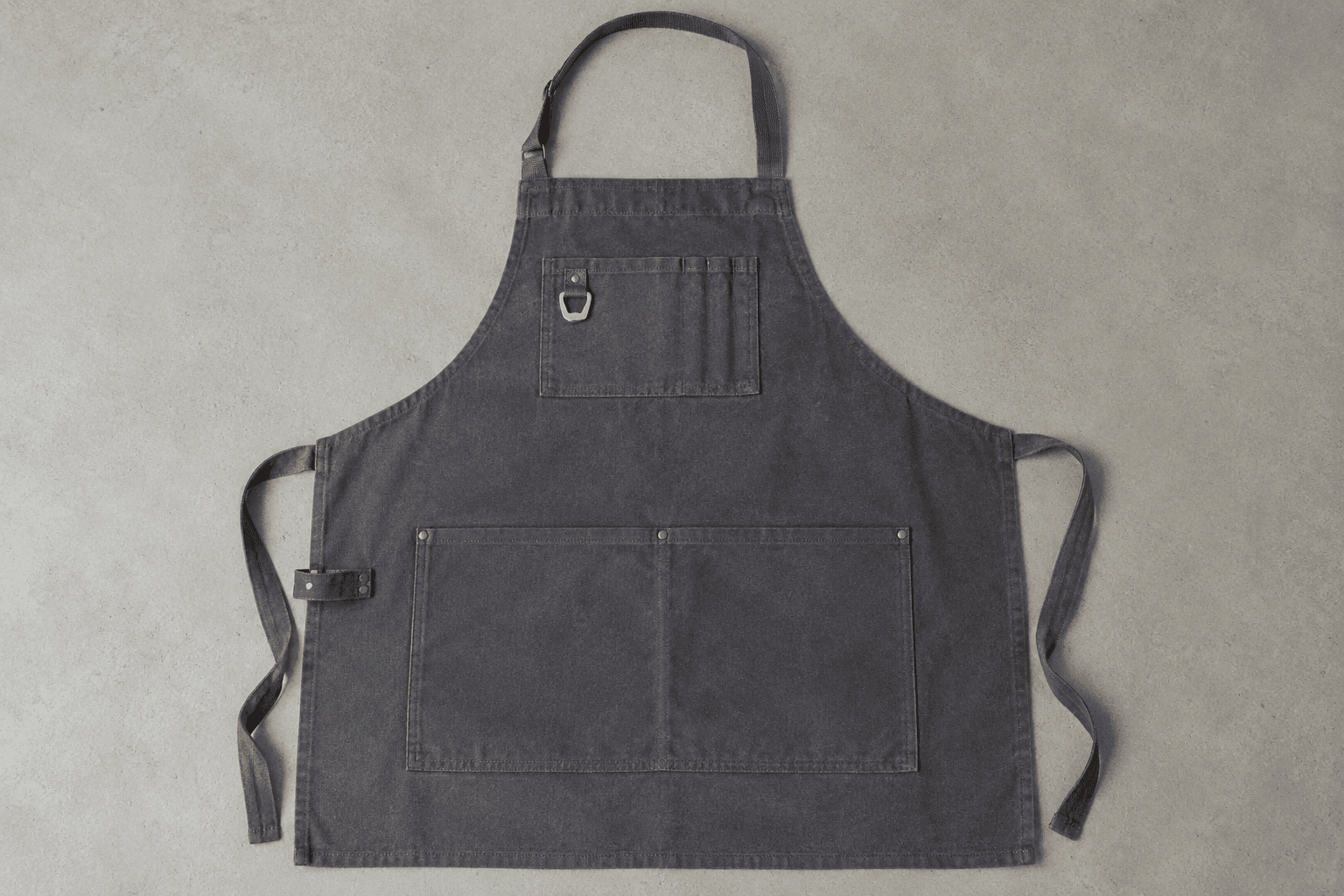
For bulk apron programs, seam choice is a sourcing variable with direct impact on FOB, laundering performance and claim rate. Apron seam construction affects seam strength, edge security, operator minutes, fabric yield and rework risk. When two factories quote the same 210 to 240 GSM poly-cotton twill bib apron at different prices, the seam package, stitch density and reinforcement plan are often part of the gap.
Development teams should review seam construction together with fabric weight, pocket load, strap anchor method, branding application, wash requirement and target selling channel. A 7 oz, 65/35 poly-cotton server apron for daily restaurant rotation needs a different seam map from a 10 oz to 12 oz cotton canvas bib apron sold into retail, workshop or premium café channels. The right package is the one that matches wear cycle, laundry method, acceptable defect rate and margin target.
This guide compares flat-felled, bound and overlocked seams for custom apron sourcing from China OEM factories. The focus is practical purchasing: where each seam works best, what it usually adds in SMV, trim cost and lead time, which defects appear first in bulk production, and how buyers can specify apron seam construction clearly enough to keep PPS approval, inline output and final inspection aligned.
- Flat-felled seams are usually the strongest choice for heavy-use aprons and repeated washing, but they commonly add 0.8 to 1.6 SMV and about $0.08 to $0.22 per piece versus a basic overlocked package.
- Bound seams give the cleanest visible inside finish on unlined aprons and help control fray on lighter fabrics, but they add tape cost, extra handling and tighter QC at curves, corners and multilayer joins.
- Overlocked seams remain the most economical option for price-sensitive apron programs, but performance depends on SPI, thread quality and reinforcement at pockets, ties and strap anchors.
- Fabric weight matters. A seam package that runs cleanly on 180 to 240 GSM twill can create roping, bulk or skipped stitches on 300 GSM canvas.
- Buyers should specify seam type by panel location, not only by apron style name, because side seams, bib joins, waistbands, patch pockets and tie insertions often need different constructions.
Why apron seam construction changes FOB, wash life and claim rate
Seams carry most working stress in an apron. Side seams absorb twisting and bending, bib panels take repeated pull from neck straps and chest pockets, waist ties transfer load into bartacks, and patch pockets distort when loaded with pens, thermometers, order pads or small tools. An apron can pass visual inspection with weak seam engineering and still fail after 15 to 30 industrial wash cycles or three to six weeks of daily service use.
For B2B sourcing, seam choice changes four measurable outputs: SMV, trim consumption, internal appearance and replacement risk. On a standard adult bib apron in 235 to 245 GSM poly-cotton twill, switching long side seams from overlock-plus-lockstitch to flat-felled usually adds 0.8 to 1.2 SMV. In East China, at 5,000 to 10,000 pieces, that typically shifts FOB by $0.05 to $0.14 per piece. On 10 oz canvas aprons with divided pockets, the increase can reach $0.18 to $0.22 because intersections are slower and rework risk rises.
Claim exposure changes by channel. Restaurant groups usually focus on replacement cost, shade consistency and seam survival through repeated laundering. Retail and branded merchandise buyers pay more attention to internal neatness, seam straightness and premium hand feel because the apron is sold as a consumer product. In both channels, apron seam construction should be frozen before PPS approval. If the tech pack stays vague, the line will usually default to the fastest stable method that can pass appearance checks, not the most durable one.
- A $0.07 seam upgrade on 12,000 aprons adds $840 to order value, so it should either reduce claims or support a higher resale price.
- First failures usually show at pocket corners, side openings, bib-to-waist joins and tie insertions rather than on long straight seams.
- For commercial laundry programs, weak seam engineering often appears first as seam grin, broken topstitching or thread shedding before full seam opening.
Flat-felled apron seam construction for heavy-use bib and canvas aprons
Flat-felled apron seam construction encloses raw edges and secures the seam allowance with an extra row of stitching. In apron production, it is one of the strongest options for straight structural joins. It suits 220 to 320 GSM twill, canvas and denim-look fabrics, especially 8 oz to 12 oz cotton canvas bib aprons used in grill, butcher, workshop, florist and premium café programs.
Its commercial value is wash stability. Because the seam allowance is enclosed and fixed, fray risk drops, seam edges stay flatter and distortion after repeated laundering is lower than with a basic overlocked join. This matters on dark navy and black aprons, garment-washed finishes and retail-facing lines where internal seam shadow can print through the face fabric. Flat-felled seams also support the more structured workwear appearance many buyers want for rugged apron programs.
The drawback is sewing time and bulk. Flat-felled seams are slower, depend more on folder setup and are harder to keep consistent at thick intersections. On canvas above 300 GSM, a side seam crossing a waistband or pocket stack can create four to six effective layers, raising the risk of needle heating, skipped stitches or wandering topstitch margins if the line is not balanced well. For that reason, most factories reserve flat-felled seams for long load-bearing joins instead of applying them to every internal seam.
Order size affects feasibility. On runs of 1,500 pieces per color and above, factories can justify dedicated folders and a more stable operator layout. On fragmented orders of 300 to 500 pieces across several colors, a premium flat-felled package is still possible, but cost per unit rises because setup loss and lower line efficiency are spread over fewer aprons.
- Best locations: side seams, center-front body joins, long bib panel joins and selected strap assemblies.
- Typical cost impact: $0.08 to $0.22 per apron above basic overlocked construction on similar fabric and trim.
- Typical lead-time effect: 2 to 4 extra sewing days on a 5,000-piece order when several major seams are flat-felled.
- Main QC focus: topstitch margin consistency, seam puckering after pressing and skipped stitches at multilayer intersections.
Bound apron seam construction for visible inside finish and fray-prone fabrics
Bound seams cover the raw edge with binding tape or self-fabric strips. In aprons, this construction is used when the inside finish is visible to the end user or when the base fabric frays too easily for a clean premium result with overlocking alone. It is common on unlined bib aprons, visible inner bib edges, curved upper panels, pocket tops and neckline-style curves on fashion-led apron designs.
For B2B buyers, bound seams make the most sense in retail, gift and branded merchandise programs where the customer inspects the inside of the apron. They also help on lighter fabrics such as 150 to 210 GSM cotton, cotton-linen and yarn-dyed constructions that shed fibers or look too industrial when finished only with overlock thread. When executed well, bound seams improve internal appearance and reduce complaints about loose yarns or exposed edges after first wash.
Material choice changes both cost and risk. Pre-made poly or cotton binding tape gives better width control and steadier sewing speed, but it adds trim cost and can create shade-match issues. Self-binding from body fabric gives a cleaner match, yet it consumes more fabric, stretches more on bias sections and may shrink differently from the base cloth after washing. On thick 280 to 320 GSM canvas, bound intersections often become rigid and bulky, especially where a pocket, side seam and waistband meet.
For most professional apron programs, bound seams work best as a selective upgrade rather than a full interior package. A mixed construction usually gives a better cost-performance result: bound visible internal edges, flat-felled long structural seams and overlocked hidden low-stress joins. That approach improves presentation without pushing FOB beyond the target range of the style.
- Common binding cut width: 24 to 32 mm before folding, depending on fabric thickness and finished edge requirement.
- Typical trim and labor impact: $0.04 to $0.12 per piece on standard aprons, or $0.15 to $0.28 if custom-dyed binding is required.
- Typical lead-time effect: 1 to 3 extra days if binding shade needs lab-dip approval to match body fabric.
- Main defect points: twisting at curves, uneven wrap width, exposed raw edge at corners and excessive thickness at seam intersections.
Overlocked apron seam construction for volume orders and tighter FOB targets
Overlocked seams are the standard efficiency choice in bulk apron production. The machine trims and wraps the seam edge in one operation, keeping labor low and throughput high. For 180 to 240 GSM poly-cotton twill waist aprons and entry-level bib aprons, overlocked construction usually delivers the best price-to-performance ratio when the target market is hospitality chains, event merchandise or fast-turn replenishment programs.
The key sourcing point is that overlock alone is not enough for stress-bearing areas. A reliable apron package combines lockstitch assembly, overlock edge finishing, topstitch control where needed, bartacks at tie insertions and backstitch security at pocket ends. When factories chase price too aggressively, they may reduce SPI from 10 to 7, substitute lighter thread or omit reinforcements. That is when buyers start seeing seam opening, curling edges, broken pocket corners or loose thread tails after laundering. The issue is usually incomplete seam engineering, not the overlocked method itself.
Commercially, overlocked construction works from low MOQ upward. Factories can quote it efficiently at 500 pieces per color and scale it to 20,000 pieces with minimal setup complexity. It also adapts well across common restaurant fabrics, including 65/35 and 80/20 poly-cotton twills around 7 oz to 8.5 oz. The limitation is perception and abrasion resistance. On consumer-facing aprons with exposed inner seams, overlocking can look basic, and on open-weave linen or abrasive 12 oz canvas it may not provide enough edge security without extra finishing.
For inspection, buyers should not accept a generic note such as 'all seams overlocked neatly.' The specification should call out stitch type, SPI, thread ticket size and reinforcement placement. Without those details, two suppliers can both claim overlocked construction while delivering very different durability and wash performance.
- Typical cost advantage versus flat-felled construction: about $0.05 to $0.18 per piece on comparable apron styles.
- Practical MOQ range: 500 pieces per color upward for standard fabrics and stock thread shades.
- Recommended baseline controls: 8 to 10 SPI on main joins, clean thread-tail trimming and bartacks at all tie stress points.
- Best fit: server aprons, promotional waist aprons and replenishment orders where speed matters more than premium inside finish.
Matching apron seam construction to fabric weight, end use and target price
Seam selection should start with fabric behavior and service conditions, not aesthetics alone. For restaurant service aprons in 190 to 235 GSM 65/35 poly-cotton twill, overlocked seams with selective topstitching usually deliver the best commercial result. The cloth is stable, laundering is frequent and the buyer is usually paying for function, not a premium internal finish. In this case, budget is often better spent on stronger bartacks, stain-release finishing and shade consistency than on upgrading every seam.
For 260 to 340 GSM cotton canvas aprons, especially bib styles with large utility pockets or cross-back straps, flat-felled seams usually make more sense on the main body joins. The heavier fabric benefits from enclosed seam allowances and better shape retention. If the style also includes rivets, leather-look patches or multiple pocket divisions, the seam map should prevent excessive layer build-up at overlap points. A mixed package is usually the most stable option: flat-felled side seams, overlocked pocket interiors and bound visible inner bib edges where needed.
Linen blends, slub cottons and garment-washed fabrics need extra caution because they fray more, shift more during sewing and show tension marks more clearly after wash testing. On these fabrics, bound finishing can justify its extra cost on visible internal edges, while hidden seams can remain overlocked if reinforced properly. Buyers who insist on one seam type across every panel often create avoidable cost, slower output and higher defect risk.
Price target should guide the final decision. A basic FOB target of $1.80 to $3.00 per apron leaves limited room for complex seam packages once fabric, trims, printing or embroidery and export packing are included. At $3.20 to $5.50 FOB, mixed seam construction becomes realistic. Above $5.50 FOB, premium interior finishing can be justified if the apron is sold through retail, gifting or higher-margin branded channels where construction detail supports sell-through.
- 190 to 235 GSM twill: usually best with overlocked seams plus reinforcement at ties and pockets.
- 220 to 320 GSM canvas or denim-look fabric: usually better with flat-felled main joins.
- 150 to 210 GSM cotton-linen or yarn-dyed fabric: often benefits from bound visible inner edges.
- FOB under $2.50: prioritize bartacks, stitch density and pocket reinforcement before premium seam appearance upgrades.
Tech pack and QC requirements for apron seam construction
Most apron seam disputes start with incomplete specifications. Terms such as 'strong stitching,' 'clean finish' or 'export quality' are too vague for OEM production. A usable tech pack should define seam type by location, stitch density, thread specification, seam allowance, reinforcement method and wash expectation. That is how buyers keep development sample, PPS approval and bulk output aligned across different sewing lines or backup factories.
A practical apron tech pack should state whether side seams are flat-felled, whether pocket bags are overlocked, whether visible inside edges are bound and where topstitching is mandatory. It should define thread as 100% polyester core-spun 20s/2 or equivalent for main joins, specify 8 to 10 SPI on structural seams and note bartack length or box-X dimensions at strap anchors. If a softer hand is required, it should also state whether seam allowances are pressed to one side or opened where construction allows.
QC standards should be equally measurable. During inline inspection, check seam puckering, seam slippage, skipped stitches, exposed raw edges and loose thread tails. For final inspection, many buyers use AQL 2.5 for major defects and AQL 4.0 for minor defects on apron orders, while premium retail programs may tighten this to AQL 1.5 major and AQL 2.5 minor. Wash testing should define cycle count and temperature, such as five home-laundry cycles at 40°C for retail aprons or 20 commercial-laundry equivalent cycles for hospitality programs when the fabric and finish are intended for that use.
The most effective support document is a seam map photo sheet attached to PPS approval. One page of clear seam-location photos reduces interpretation risk more than broad wording in a comment log. This is especially useful when repeating an apron order at a second factory or moving from sample-room construction to a higher-speed production line.
- Specify seam by location: side seam, center seam, pocket join, hem, waistband join and tie insertion.
- Define measurable standards: SPI, thread count, seam allowance width and bartack dimensions.
- Set inspection criteria: seam puckering, exposed edge, broken stitch, skipped stitch and raw-edge exposure.
- Freeze AQL and wash requirements before bulk; a common baseline is AQL 2.5 major and AQL 4.0 minor.
MOQ, lead time and costing strategy for selective seam upgrades
From a factory costing perspective, the best apron program is not the one with the most expensive seam package. It is the one that places seam upgrades where they cut claims or support a higher resale price. Many buyers over-specify low-risk internal seams and under-specify tie insertions, pocket corners and bib stress points. That is the wrong trade-off. Reinforcement in the right locations usually improves field performance more than premium finishing everywhere.
MOQ affects what is efficient on the line. Below 1,000 pieces per color, too many seam variations increase folder changes, operator training time and error risk. At 3,000 pieces per color and above, factories can justify dedicated folders, better line balancing and tighter process control, making upgraded apron seam construction more commercially viable. If an order includes several colors, multiple logo placements and more than one pocket layout, seam complexity can add two to five days to pre-production before bulk sewing even starts.
Lead-time planning should reflect that reality. A standard bulk apron order in stock twill may run 30 to 45 days after deposit and approvals, but a style with custom-dyed binding, multiple seam methods and heavier washed fabric can move toward 45 to 60 days. Buyers needing urgent replenishment usually get the most stable outcome with overlocked core construction plus upgraded bartacks and selective topstitching, not with a full premium interior package.
A practical sourcing method is to ask the factory to quote seam options separately during development. When flat-felled side seams add $0.11, bound visible edges add $0.06 and extra bartacks add $0.02, the buyer can choose based on margin and failure risk instead of arguing over one bundled FOB number. That makes seam engineering a controlled sourcing decision rather than a hidden factory assumption.
- Below 1,000 pieces per color: limit seam variation unless the apron is a premium retail item.
- At 3,000 pieces per color or more: selective seam upgrades are easier to standardize and control.
- Standard bulk lead time: 30 to 45 days for simple twill aprons; 45 to 60 days for heavier fabrics or mixed seam packages.
- Best costing practice: ask suppliers to break out seam upgrade costs by option rather than bury them in one total FOB.