Finding a custom apron supplier in China is not difficult. Finding one that can hold fabric shade, stitching quality, packaging accuracy and delivery discipline across repeated bulk orders is the harder part. For professional buyers, the question is not only whether a supplier can quote a low FOB price. The real question is whether that supplier can translate a tech pack into stable production at 1,000, 10,000 or 50,000 pieces without surprises.
Aprons look simple on paper, but they combine many small decisions: fabric GSM, yarn construction, shrinkage tolerance, pocket position, strap strength, logo method, colorfastness, metal hardware, wash performance, carton loading and compliance documents. A reliable apron supplier china sourcing team should be able to discuss these details in factory language, not only in sales language.
This guide explains how to vet apron factory partners before placing a bulk order. It is written from the supplier side, with practical checkpoints that sourcing managers, product developers and brand buyers can use when comparing factories in Zhejiang, Jiangsu, Guangdong and other China textile hubs.
- Verify that the supplier controls apron production, not only trading communication and sample forwarding.
- Check fabric capability by GSM, composition, shrinkage and colorfastness, because most apron quality claims start with fabric control.
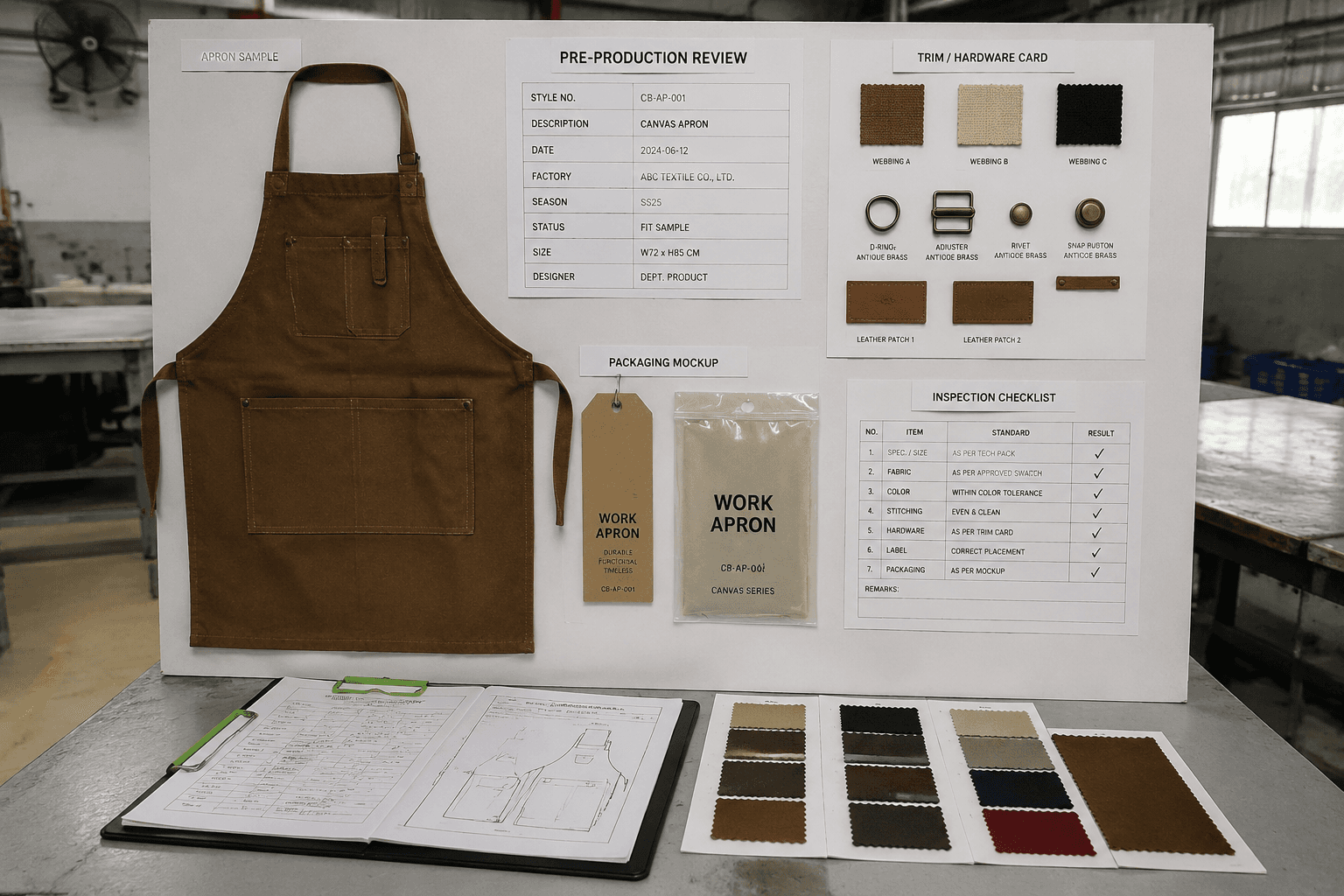
- Use paid pre-production samples to test pattern, stitching, logo placement, washing and packing before bulk cutting.
- Compare quotations by specification, not only by unit price, because fabric weight, pocket structure and packaging can change cost by USD 0.20-1.50 per piece.
- Confirm capacity, inspection flow and lead-time buffers before peak season or promotional delivery windows.
- Ask for order-specific verification documents, including fabric test reports, production photos, packing list logic and AQL inspection records.
Start with the real business model behind an apron supplier china search
When buyers search for an apron supplier china market results usually include factories, trading companies, export agents and small workshops using similar product photos. The first vetting step is to understand the supplier's actual business model. A direct apron factory normally owns or controls cutting tables, sewing lines, inspection tables and packing space. A trading company may still be useful for complex sourcing, but the buyer should know who is making the goods and who is responsible when a production issue occurs.
For custom aprons, direct control matters because many defects are process-related. Common examples include uneven neck strap length, pocket opening distortion, inconsistent bartack density, logo placement drifting by 10-20 mm, biased hems on curved bib shapes, and shade variation between panels. These problems are easier to correct when the supplier has internal production management and line leaders who understand the approved sample.
A serious supplier should be able to explain its monthly capacity by apron type, not only by total garment pieces. A simple waist apron with one front pocket may run at 25,000-40,000 pcs per month in a medium workshop. A heavy canvas bib apron with leather-look PU straps, metal eyelets, rivets and embroidery may reduce practical capacity to 8,000-15,000 pcs per month. Capacity claims should always be matched to your construction.
- Ask whether cutting, sewing, trimming, final inspection and packing are done in-house or subcontracted.
- Request photos or a short video of current apron production, including cutting table, sewing line, QC table and packing area.
- Check whether the contact person can answer technical questions on fabric GSM, seam allowance, bartack length and logo tolerance.
- Confirm whether the business license scope includes apparel, textile products or garment manufacturing.
- For larger programs above 20,000 pcs, ask how many sewing lines can be allocated to your apron style during the confirmed delivery window.
Vet apron factory capability by fabric, not only by finished photos
Apron buyers often compare suppliers by product images, but fabric is where cost and performance are decided. A 180 GSM polyester-cotton twill, a 240 GSM cotton canvas and a 320 GSM dyed canvas may all look acceptable in a small online photo, yet they behave very differently in washing, pressing, stitching and long-term use. A reliable apron supplier should be comfortable discussing fabric options in measurable terms.
For restaurant and promotional aprons, common fabrics include 160-200 GSM polyester-cotton twill, 200-260 GSM cotton twill, 240-320 GSM cotton canvas, 7-12 oz denim, 180-240 GSM polyester oxford and 200-300 GSM recycled polyester blends. The correct selection depends on the buyer's market: hospitality uniforms usually need good wash durability and colorfastness, retail merchandise may prioritize handfeel and appearance, while industrial or workshop aprons may require heavier fabric and reinforced stress points.
Fabric sourcing also affects MOQ. Stock colors in T/C twill may be available from 300-500 pcs per color if the factory has regular fabric access. Custom dyed cotton canvas may require 500-1,000 meters per color, often translating into 1,000-2,000 aprons depending on width and pattern consumption. Yarn-dyed stripes, special denim washes, waxed canvas or certified recycled fabric can push MOQ higher and add 7-20 days before cutting.
- For light promotional aprons, check whether 160-180 GSM is acceptable or too thin for your brand positioning.
- For cafe and restaurant bib aprons, 220-280 GSM twill or canvas is a common balance of durability, cost and comfort.
- For workwear-style aprons, 300-360 GSM canvas or 10-12 oz denim may be suitable, but shipping weight and sewing difficulty increase.
- For black, navy, burgundy and dark green aprons, request colorfastness to washing and rubbing tests because shade bleeding is a common complaint.
- For cotton-rich fabrics, confirm expected shrinkage after washing; many buyers set a bulk tolerance of within 3-5% depending on fabric and wash condition.
Use samples to test whether the supplier can follow a technical pack
Sampling is not a decoration step. It is the first controlled test of whether the supplier can read specifications, identify unclear points and convert a design into production instructions. For custom aprons, a useful sample request should include size chart, fabric, color reference, pocket layout, strap width, hardware material, stitching color, logo method, label position, packaging method and acceptable tolerance.
A typical custom apron sample lead time is 5-10 working days when fabric is available. If custom dyed fabric, special webbing, branded buckles or leather patches are required, sampling may take 12-25 days. Paid samples are usually more reliable than free samples because the supplier can allocate pattern making, material sourcing and sewing time properly. For simple aprons, sample cost may be USD 30-80 per style. For complex styles with embroidery, screen print setup, leather patches or metal accessories, USD 80-200 is common.
When reviewing a sample, buyers should not only look at general appearance. Measure the neck strap, waist ties, pocket width, pocket depth, bib height, hem width and logo position. Wash the sample if the final product will be used in hospitality or food service. A sample that looks clean before washing may reveal puckering, twisting, shrinkage, color bleeding or label curling after one or three wash cycles.
- Check whether the supplier asks clarification questions before sampling; silence can indicate they are guessing.
- Measure the sample against the tech pack and record any variance over 5 mm on key positions.
- Test pocket usability by inserting common items such as order pads, pens, towels or POS devices if relevant.
- Inspect stress points including pocket corners, waist tie joins, neck strap attachment and hardware holes.
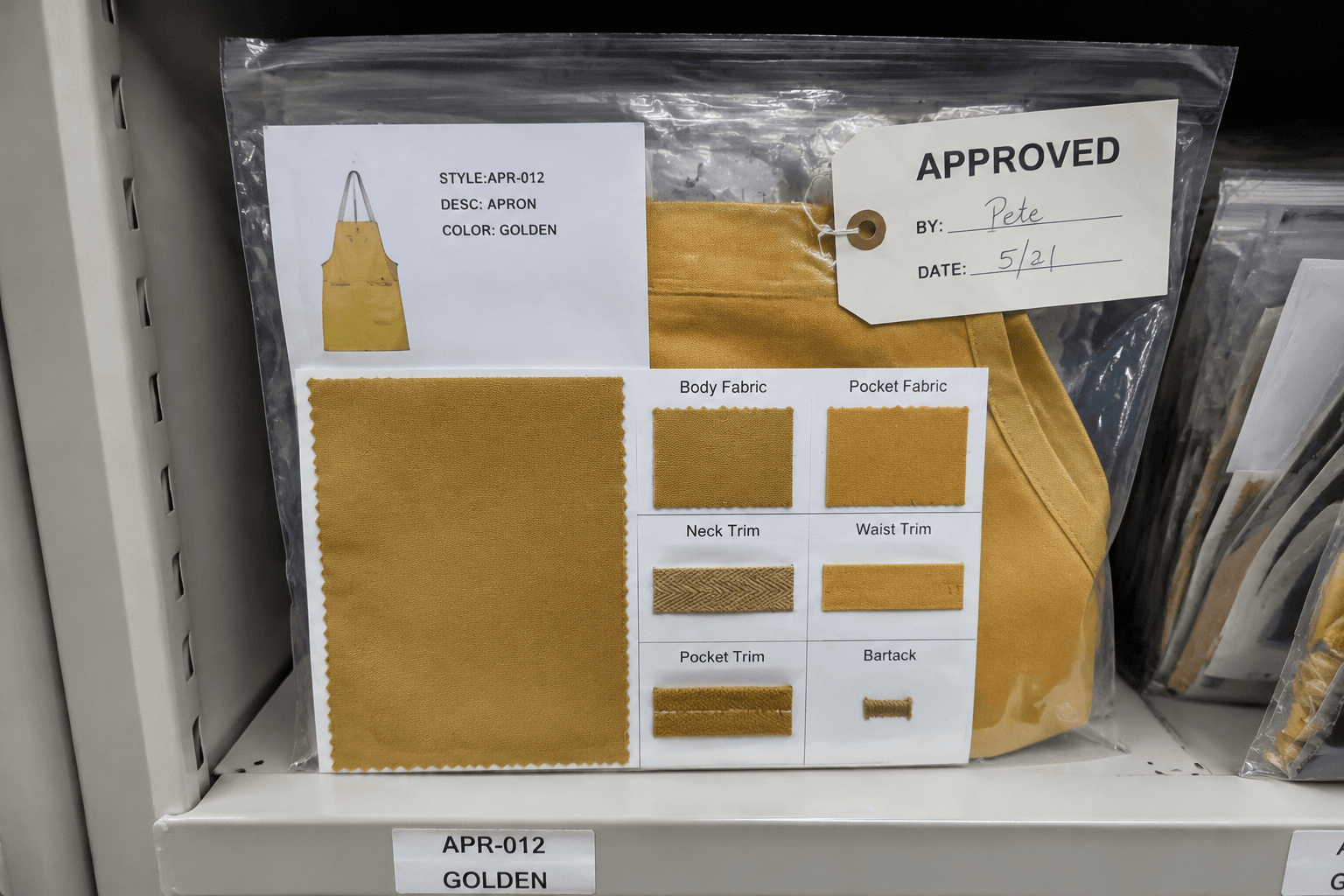
- Keep one approved sample at the buyer side and require the factory to keep a sealed duplicate for bulk reference.
Compare quotations like a buyer, not like a price collector
Apron quotations can vary widely because the visible product may hide different assumptions. A basic waist apron in 180 GSM T/C fabric with one screen print may quote around USD 1.20-2.20 FOB depending on quantity and packaging. A 240 GSM cotton twill bib apron with adjustable neck strap, two pockets and woven label may range from USD 2.50-4.20. A 320 GSM canvas apron with embroidery, metal hardware, reinforced seams and individual retail packing may reach USD 5.00-9.00 or more.
The lowest price is often based on lighter fabric, simplified sewing, cheaper accessories, lower inspection time or looser packing. This does not always mean the supplier is dishonest. Sometimes the buyer's request is incomplete, so each supplier quotes a different version of the product. The solution is to build a quotation comparison sheet with the same assumptions for every apron factory.
Professional suppliers should be willing to break down the main cost drivers without exposing every internal margin. Fabric often accounts for 35-55% of apron cost, depending on GSM and yield. Sewing labor may account for 20-35%, especially for multi-pocket or hardware-heavy designs. Logo application can add USD 0.05-0.20 for simple screen printing, USD 0.20-0.80 for embroidery depending on stitch count, and USD 0.15-0.60 for heat transfer depending on size and quality.
- Confirm whether the quoted fabric is stock fabric, custom dyed fabric or substitute fabric.
- Ask for GSM, composition, fabric width and estimated consumption per piece.
- Separate logo setup charge, sample charge, mold charge, carton charge and testing charge from unit price.
- Check whether the price is EXW, FOB Ningbo, FOB Shanghai, FOB Shenzhen or another trade term.
- Ask how price changes at 500 pcs, 1,000 pcs, 3,000 pcs, 5,000 pcs and 10,000 pcs per style or color.
- Confirm whether individual polybags, hangtags, barcode stickers, carton marks and palletizing are included.
Make apron factory verification specific to production control
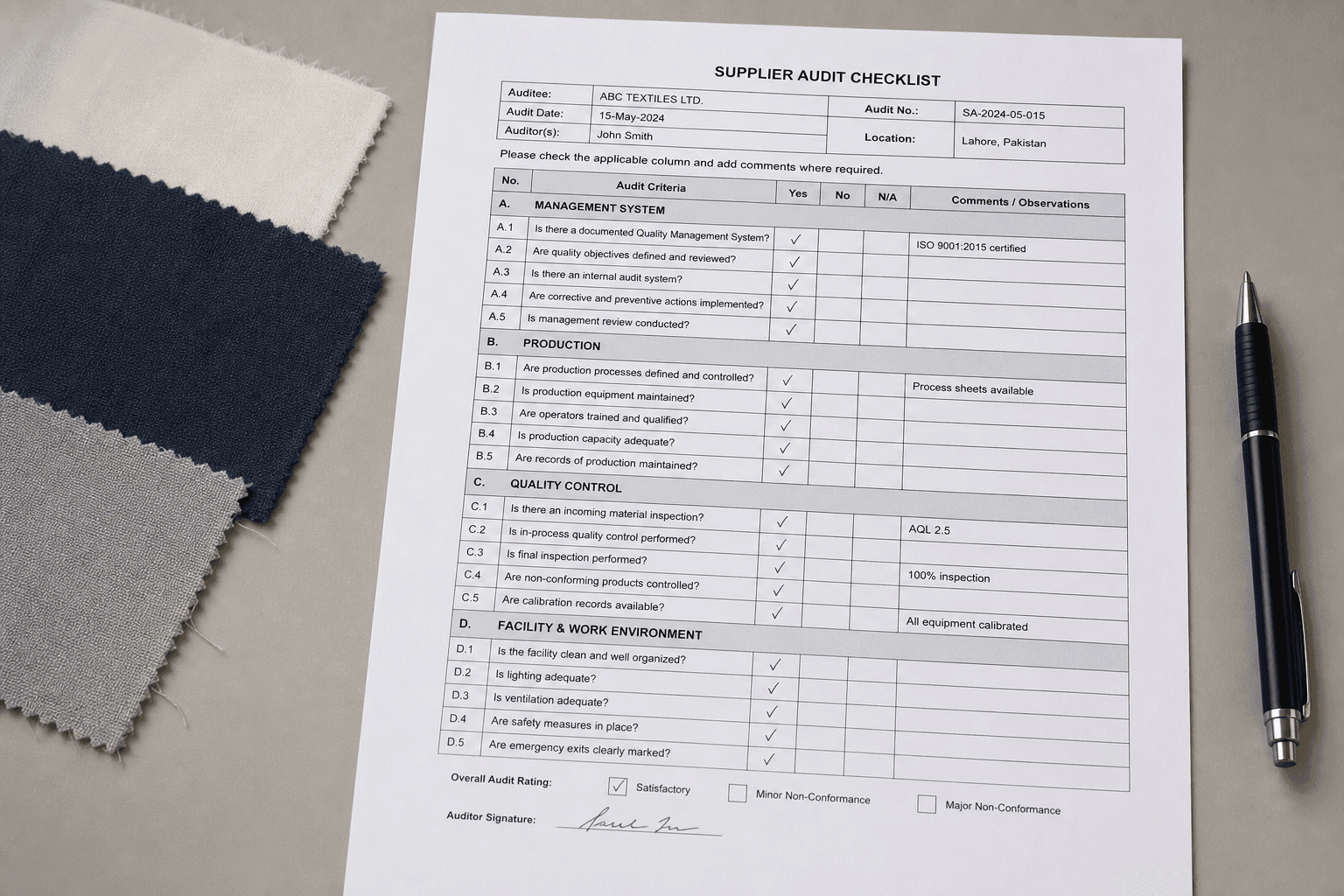
Apron factory verification should go beyond checking a website, catalog or export history. A buyer needs evidence that the supplier can manage a repeatable process. The useful evidence is practical: cutting records, fabric inspection reports, inline QC records, measurement reports, needle control policy, packing instructions and final inspection documents. These items show whether the factory has production habits that reduce risk.
For a first order, buyers can request a virtual audit or third-party factory audit. A lightweight remote check may be enough for a 500-1,000 pc trial order. For annual programs above 50,000 pcs, an on-site audit is more reasonable. In China, a basic third-party factory audit often costs several hundred USD, while detailed social compliance audits can cost more and require factory preparation. Not every apron order needs a full compliance audit, but every order needs some form of supplier verification.
The best verification questions are tied to the product you are buying. For example, if the apron uses black cotton canvas, ask how fabric shade lots are separated and recorded. If the apron has antique brass eyelets, ask how pull strength and rust risk are checked. If the apron has embroidery on a pocket, ask whether embroidery is completed before pocket attachment and how placement is controlled. This is how a buyer can vet apron factory capability in a way that actually predicts bulk order performance.
- Request a copy of the business license and compare the company name with the bank account and export documents.
- Ask for recent production photos of similar apron styles, preferably with date context or order-stage context.
- Review whether the supplier has a documented QC flow: fabric inspection, cutting inspection, inline inspection, final inspection and packing inspection.
- Confirm whether metal detection is available if the apron is for food service, supermarket, hotel or children-related retail channels.
- Ask whether subcontractors are used for embroidery, printing, washing, dyeing or special packaging, and how those subcontractors are controlled.
Evaluate communication speed and problem-solving before the deposit
Communication is part of supplier capability. A supplier who replies quickly but avoids technical detail may create risk later. A supplier who takes slightly longer but returns with measurements, material alternatives and realistic timing may be more valuable. For custom aprons, buyers should observe how the supplier handles incomplete information, conflicting requirements and cost pressure before placing the deposit.
A reliable apron supplier should be able to explain trade-offs clearly. For example, if the buyer wants a 300 GSM cotton canvas apron at the cost of a 180 GSM T/C apron, the supplier should say the target is unrealistic and offer alternatives such as 240 GSM cotton twill, reduced pocket complexity or larger order quantity. If the buyer wants delivery in 15 days for a custom dyed 5,000 pc order, the supplier should explain that fabric dyeing alone may take 7-12 days after lab dip approval.
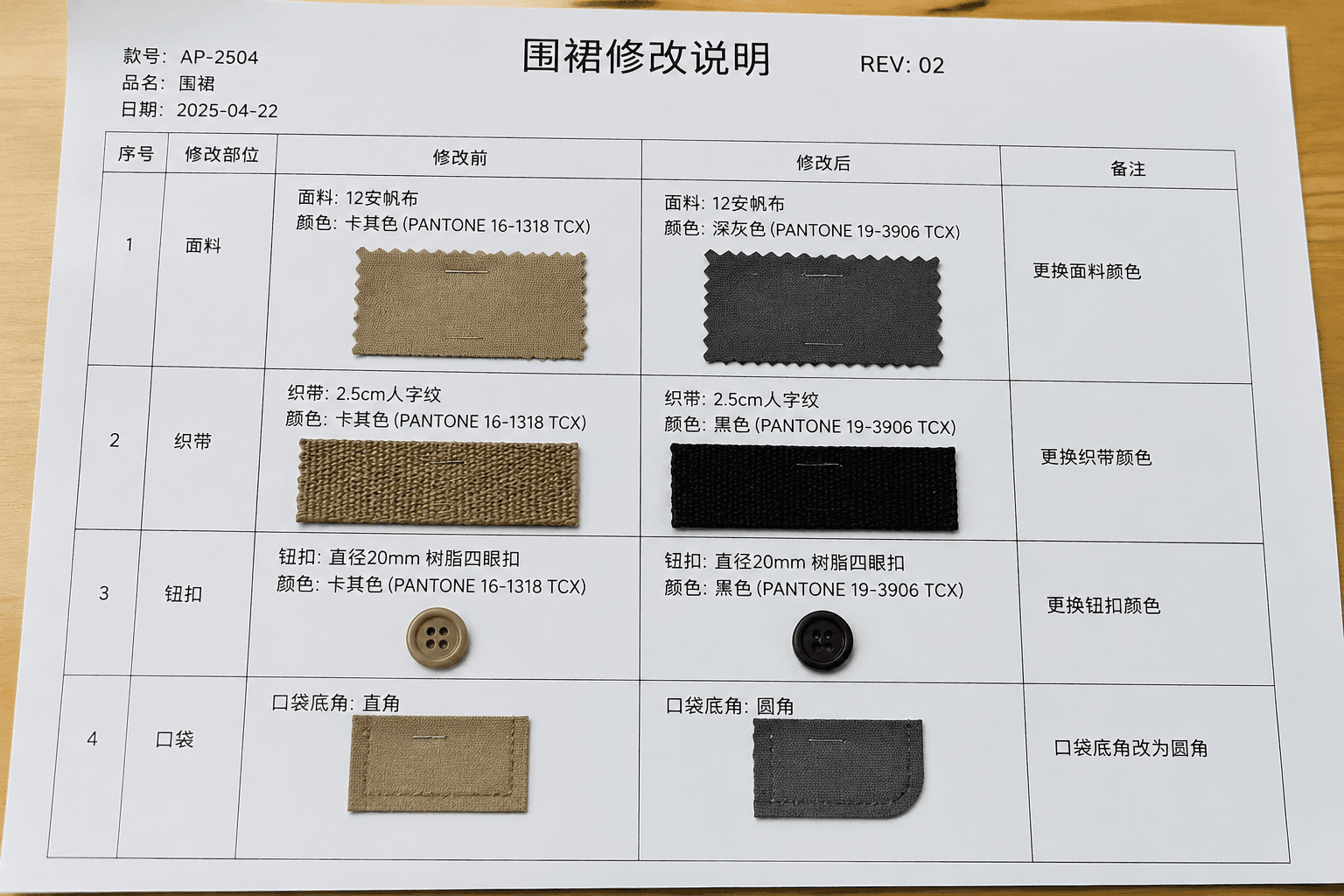
Strong suppliers also document decisions. After a sample call or email discussion, they should confirm revised measurements, fabric selection, logo size, label artwork, packing method and target ship date. For overseas orders, this written record prevents small misunderstandings from becoming expensive bulk mistakes.
- Send the same technical question to shortlisted suppliers and compare the precision of their answers.
- Ask what could go wrong with your apron specification and see whether the supplier gives practical risks.
- Check whether revised quotes clearly show version number, date, quantity, fabric, logo method and validity period.
- Observe whether the supplier pushes immediate deposit before resolving fabric, sample and delivery questions.
- Confirm the main contact for sampling, bulk production, QC, documents and after-sales claims.
Check lead time, MOQ and capacity against your launch calendar
Lead time is not one number. For custom aprons, it includes artwork confirmation, fabric sourcing, lab dip approval, sample making, sample shipping, buyer comments, bulk fabric purchase, cutting, sewing, logo application, finishing, inspection, packing and export booking. A supplier may say 30 days, but that usually means 30 days after sample approval, deposit receipt and all materials confirmed.
For common stock fabric aprons, a practical timeline is 5-10 days for sample, 3-7 days for sample shipping by courier, 2-5 days for buyer review, and 20-35 days for bulk production after approval. For custom dyed fabric or certified materials, add 10-20 days. For peak seasons before major retail holidays, add another 7-14 days because sewing line allocation, printing capacity and vessel space become tighter.
MOQ should be judged by material and production efficiency. A factory may accept 300 pcs for a simple stock fabric apron, but custom color fabric, woven labels, special webbing or retail packaging can increase the economic MOQ. If a buyer needs 200 pcs across five colors, a trading company may handle it, but the unit price will be higher and shade consistency may be weaker. For brand programs, 1,000-3,000 pcs per style or color often gives a better balance of price, control and supplier attention.
- For 300-500 pcs stock fabric orders, expect higher unit price but faster launch testing.
- For 1,000-3,000 pcs custom aprons, expect more stable pricing and better access to material options.
- For 5,000-20,000 pcs programs, confirm line capacity, fabric booking schedule and inspection dates before deposit.
- For urgent promotional orders, simplify fabric, logo method and packaging to protect delivery.
- For sea shipments, add realistic transit time: roughly 18-35 days to many major ports depending on destination and routing.
Build a repeat-order system with a reliable apron supplier
The first order verifies whether the supplier can deliver. The second and third orders show whether the supplier can repeat quality. For professional sourcing teams, the goal is not to inspect every piece forever. The goal is to build a controlled system with approved materials, stable patterns, defined tolerances and clear escalation steps when something changes.
A good repeat-order file should include approved sample photos, pattern code, fabric code, Pantone or lab dip record, GSM tolerance, shrinkage standard, thread color, logo artwork file, embroidery stitch count or print size, label file, carton dimensions, packing method and AQL standard. For aprons, measurement tolerance is often set around +/- 1 cm for body dimensions and +/- 0.5 cm for pocket and logo positions, though premium retail programs may require tighter control.
Claims should also be discussed before they happen. No factory can promise zero defects on sewn textile goods, but a reliable apron supplier will define how defects are classified, how photos are reviewed, and what remedy applies. For example, critical defects may require replacement or credit, major defects may follow AQL result and negotiated allowance, and minor defects may be monitored for improvement. Clear rules keep the relationship practical and reduce friction when order volume grows.
For buyers trying to find apron manufacturer partners in China, the strongest supplier is usually not the one with the largest catalog or the cheapest first quote. It is the one that can keep the same apron quality across multiple POs, explain cost changes honestly, warn about production risks early and maintain records from sample to shipment. That is the standard that separates a casual vendor from a reliable apron supplier.
- Keep a sealed pre-production sample for every repeated style and color.
- Request bulk fabric swatches before cutting when shade consistency is important.
- Use AQL inspection standards such as general inspection level II with agreed defect classifications.
- Track defect patterns by order, including loose threads, seam slippage, shade variation, logo position and packing errors.
- Review supplier performance by on-time delivery, claim rate, communication quality and ability to support new development.