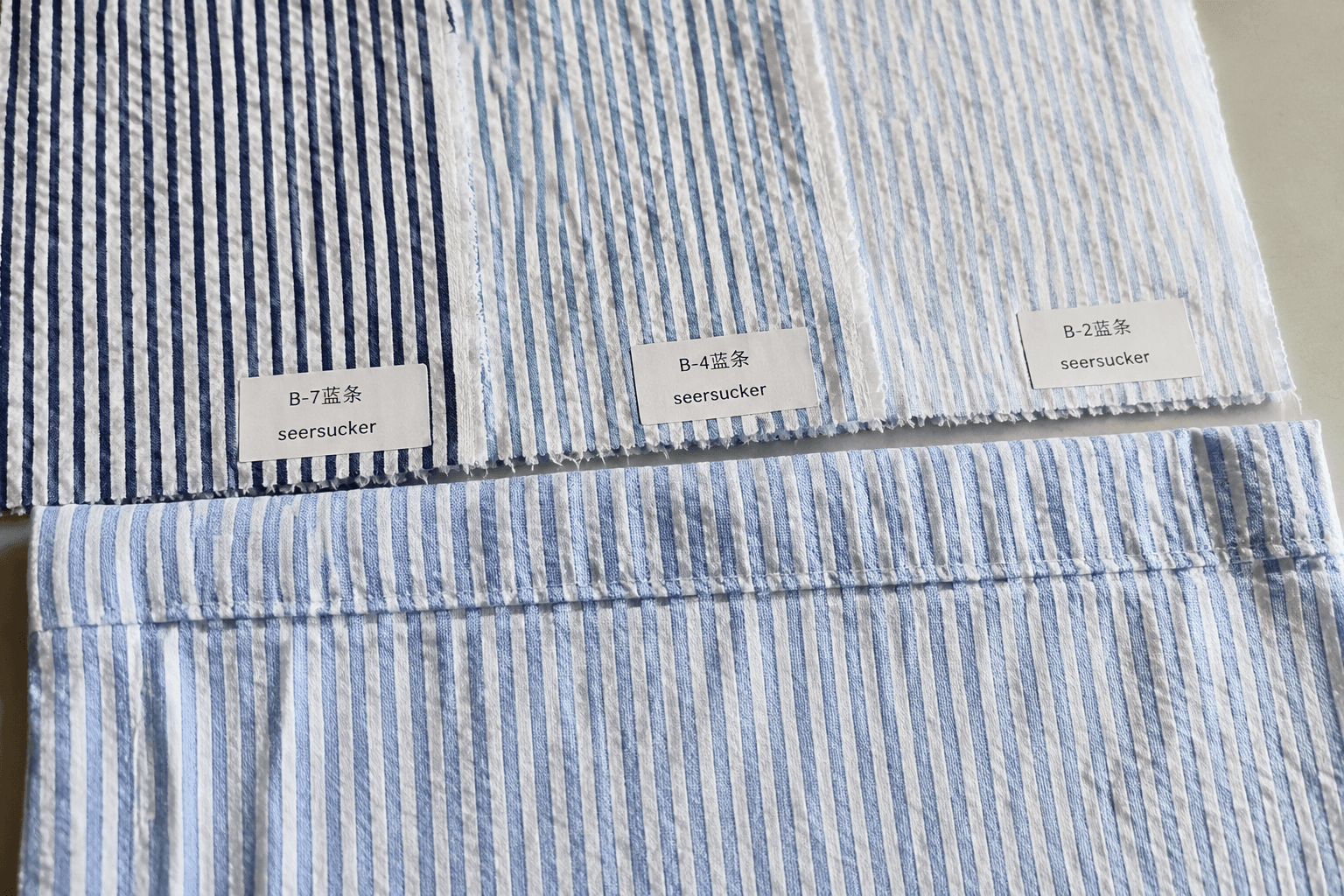
Seersucker aprons for warm service environments: airflow, texture and wash appearance
Seersucker aprons work best when buyers specify the fabric weight, blend, shrink control, and wash standard with enough detail to support warm-service use, not just a seasonal look. For B2B apron sourcing, the practical question is whether the texture improves airflow and appearance without creating opacity, durability, or replenishment problems.
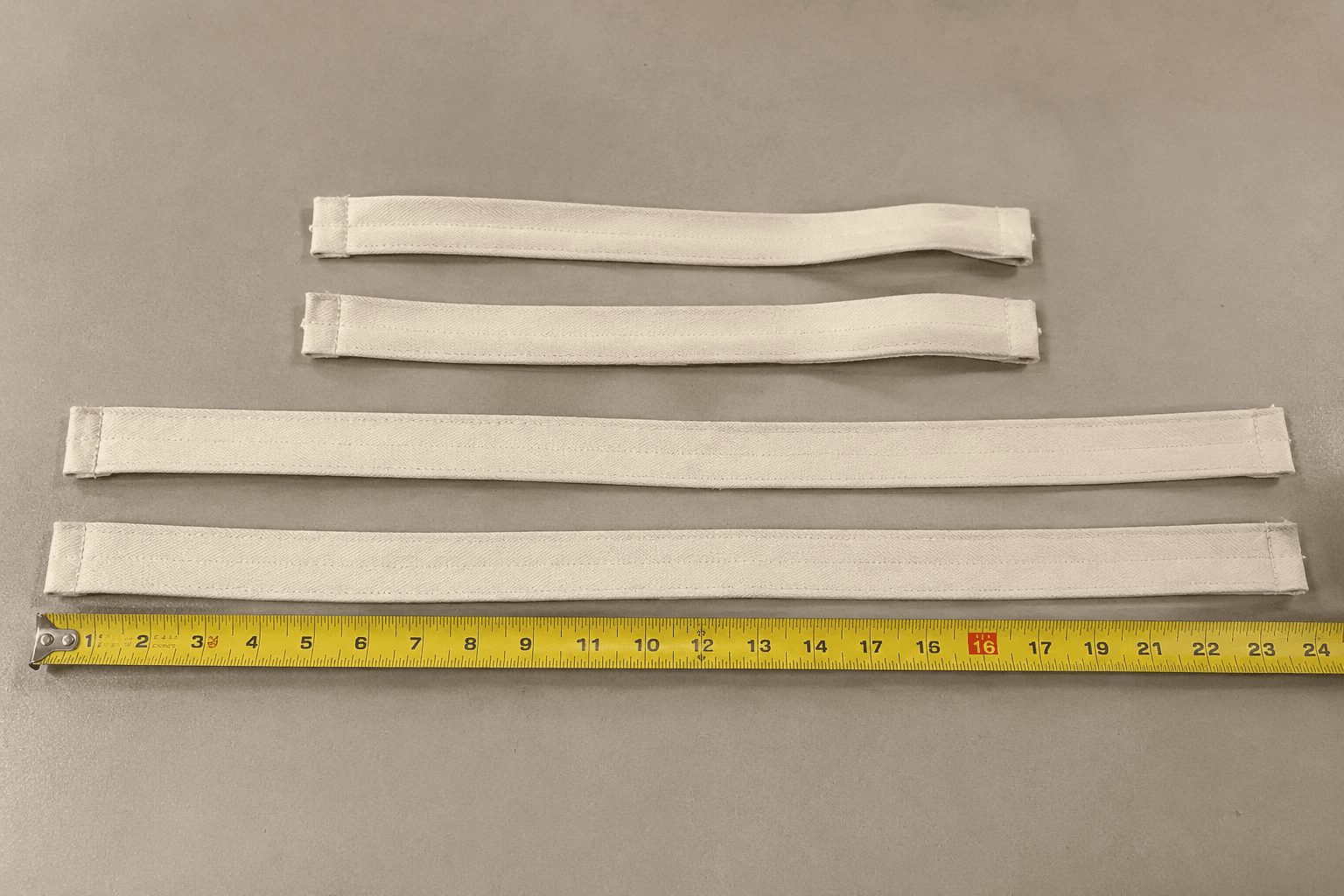
Acid-wash and overdyed aprons: controlling vintage effects in bulk production
For B2B buyers, <strong>acid wash aprons</strong> are difficult because the vintage effect must stay repeatable across 500, 5,000, or 30,000 pieces. The real controls are shade range, abrasion placement, shrinkage, crocking, trim staining, rework allowance, and AQL inspection cost, not whether one sample looks aged enough.
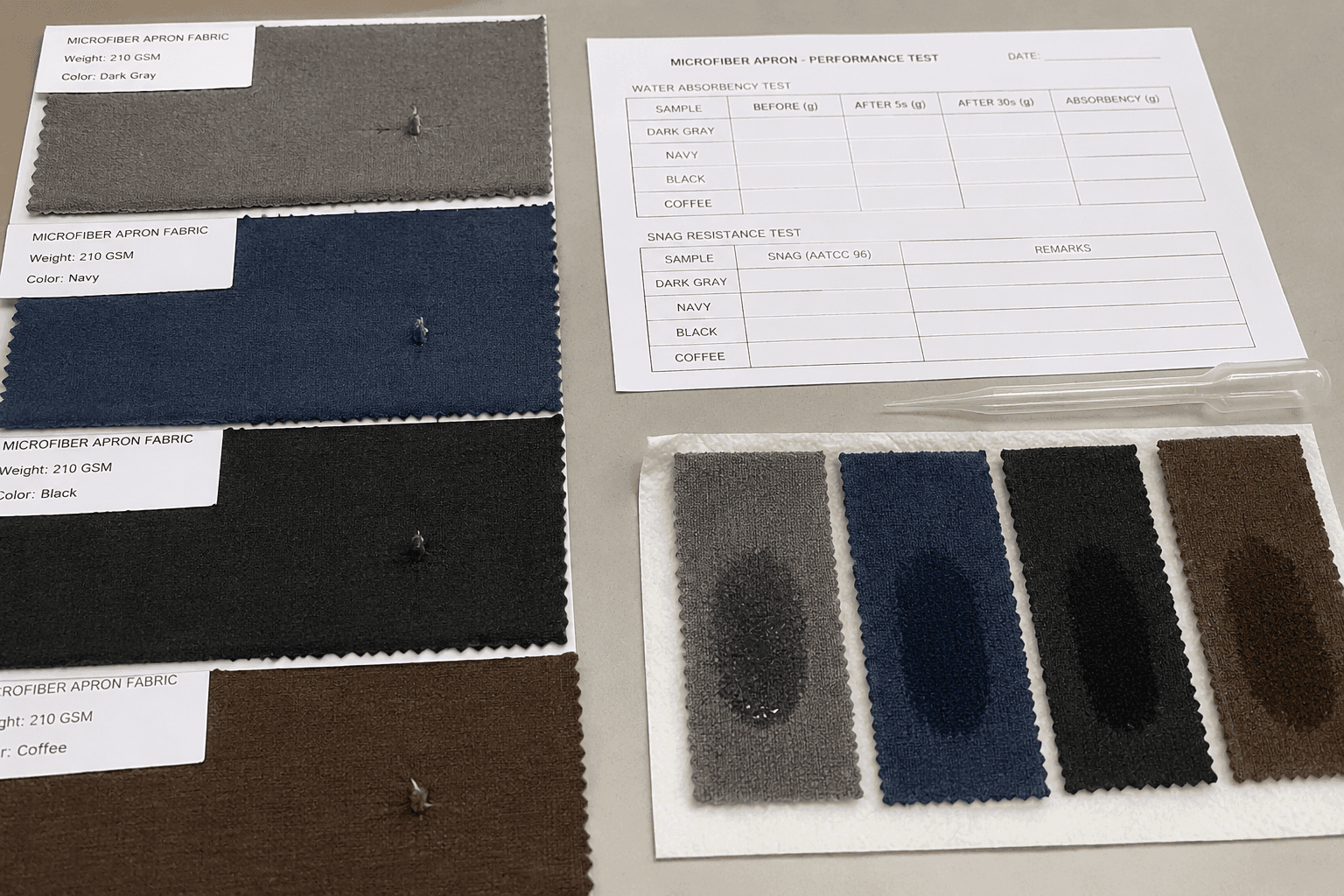
Microfiber aprons for cleaning teams: absorbency, snagging and laundering concerns
<strong>Microfiber aprons</strong> can be a practical uniform item for hotel housekeeping, janitorial, spa, clinic-support and auto-detailing teams when the buyer controls fabric weight, trim risk and laundry validation. A workable B2B specification is specific: 180 to 260 GSM finished microfiber, 100% polyester or 80/20 polyester-polyamide, snag-safe trims, 30 to 50 commercial wash cycles, MOQ of 500 to 1,000 pieces per color, 25 to 45 days bulk lead time, and final inspection to AQL 2.5 major / 4.0 minor.
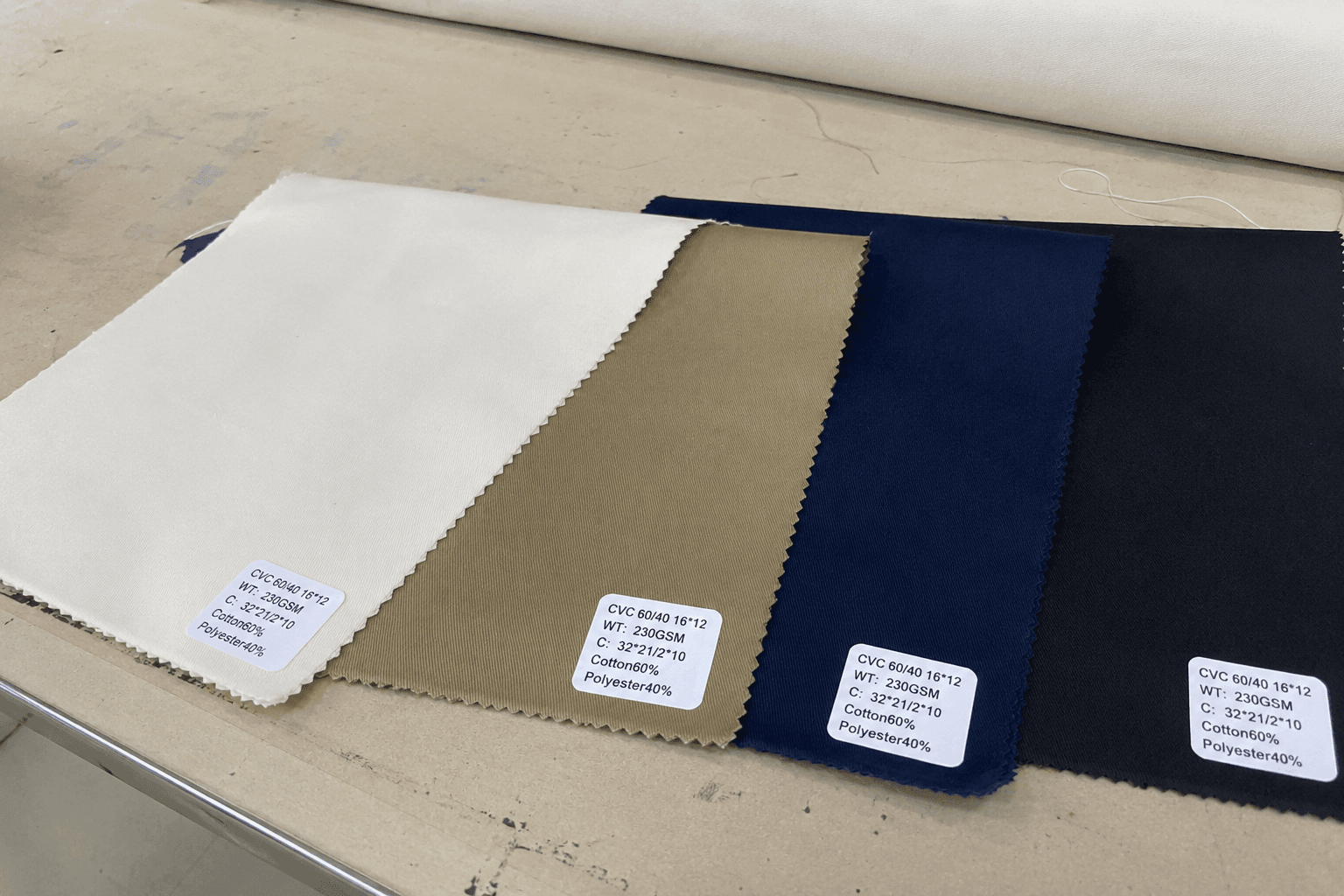
CVC apron fabrics: choosing cotton-rich blends for wash durability and handfeel
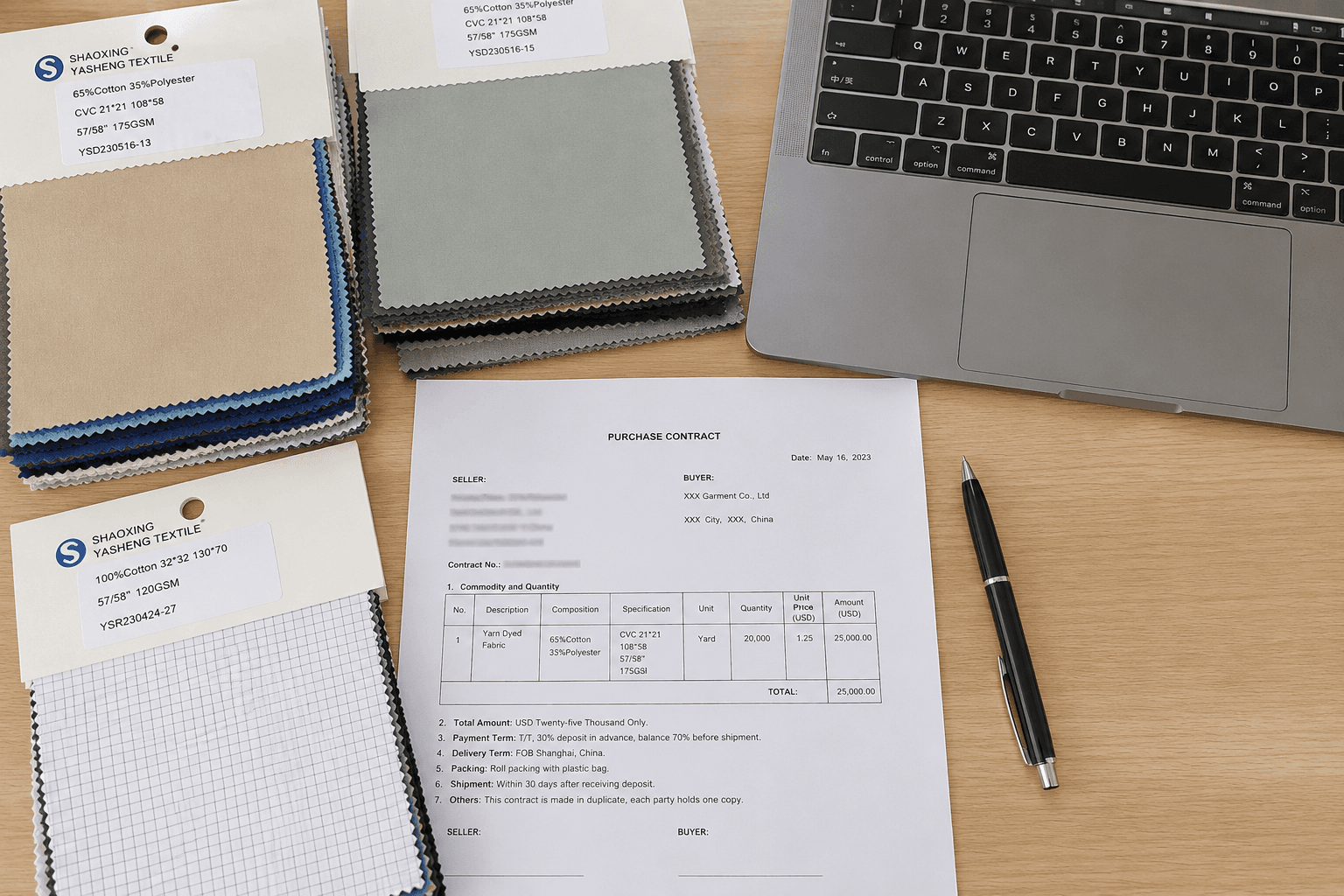
For professional apron buyers, <strong>cvc apron fabric</strong> is a cotton-majority cotton/polyester blend used when an apron needs cotton-like handfeel, faster drying, and better size control than 100% cotton. This guide explains practical ratios, 180-280 GSM weight ranges, twill options, wash-test targets, AQL levels, MOQ, lead time, and realistic FOB pricing for repeatable custom apron programs.
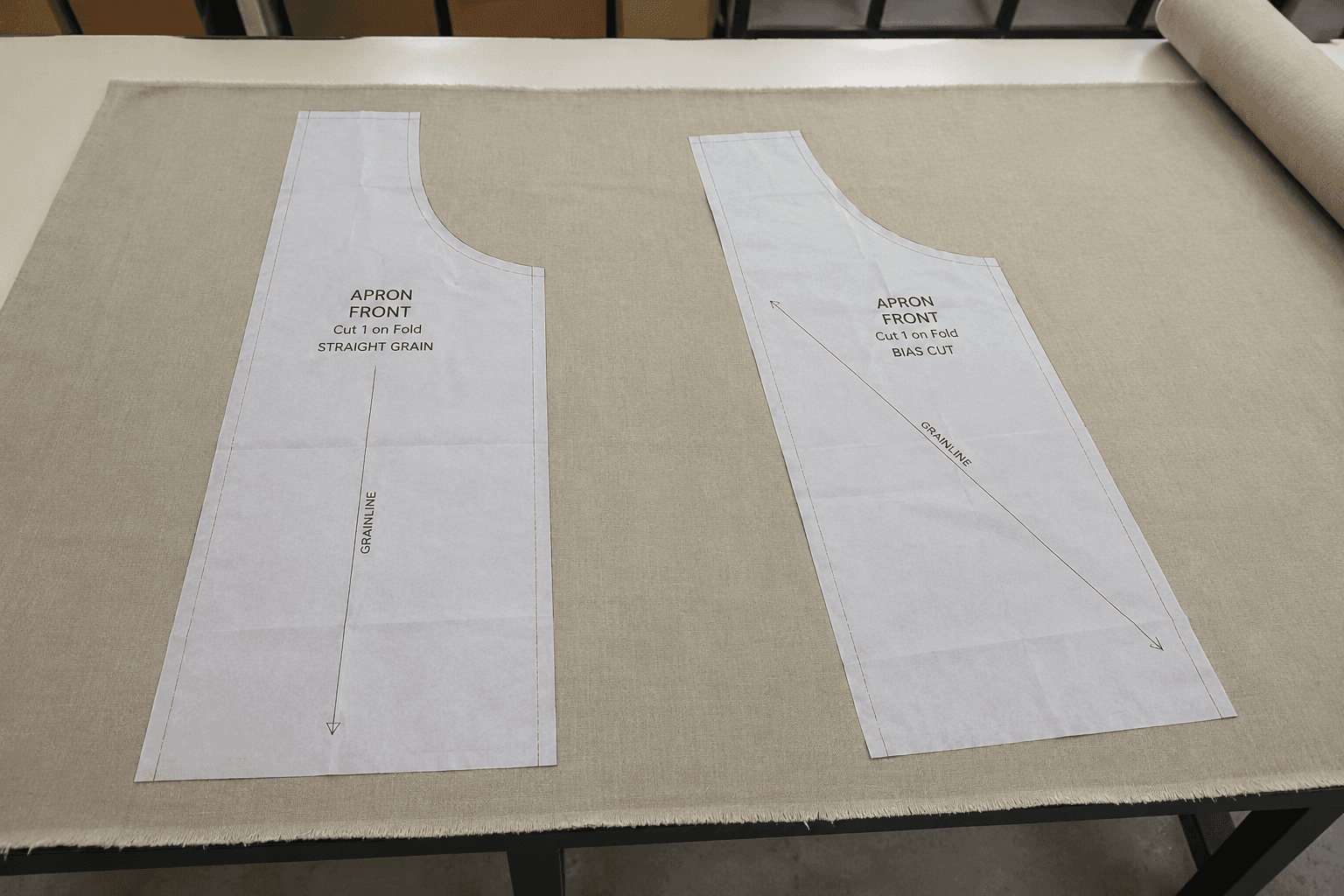
Bias-cut details on aprons: when diagonal fabric placement improves drape or wastes cloth
A <em>bias cut apron</em> can improve a shaped bib, soften long ties, and help a front-of-house uniform follow the body more naturally. The benefit is specific, not universal. In bulk apron sourcing, diagonal placement typically adds 8% to 18% shell fabric consumption, $0.35 to $1.20 FOB per piece, and 3 to 7 calendar days, so buyers should reserve bias cutting for components where drape, shoulder comfort, or knot quality is visible after wash and wear testing.
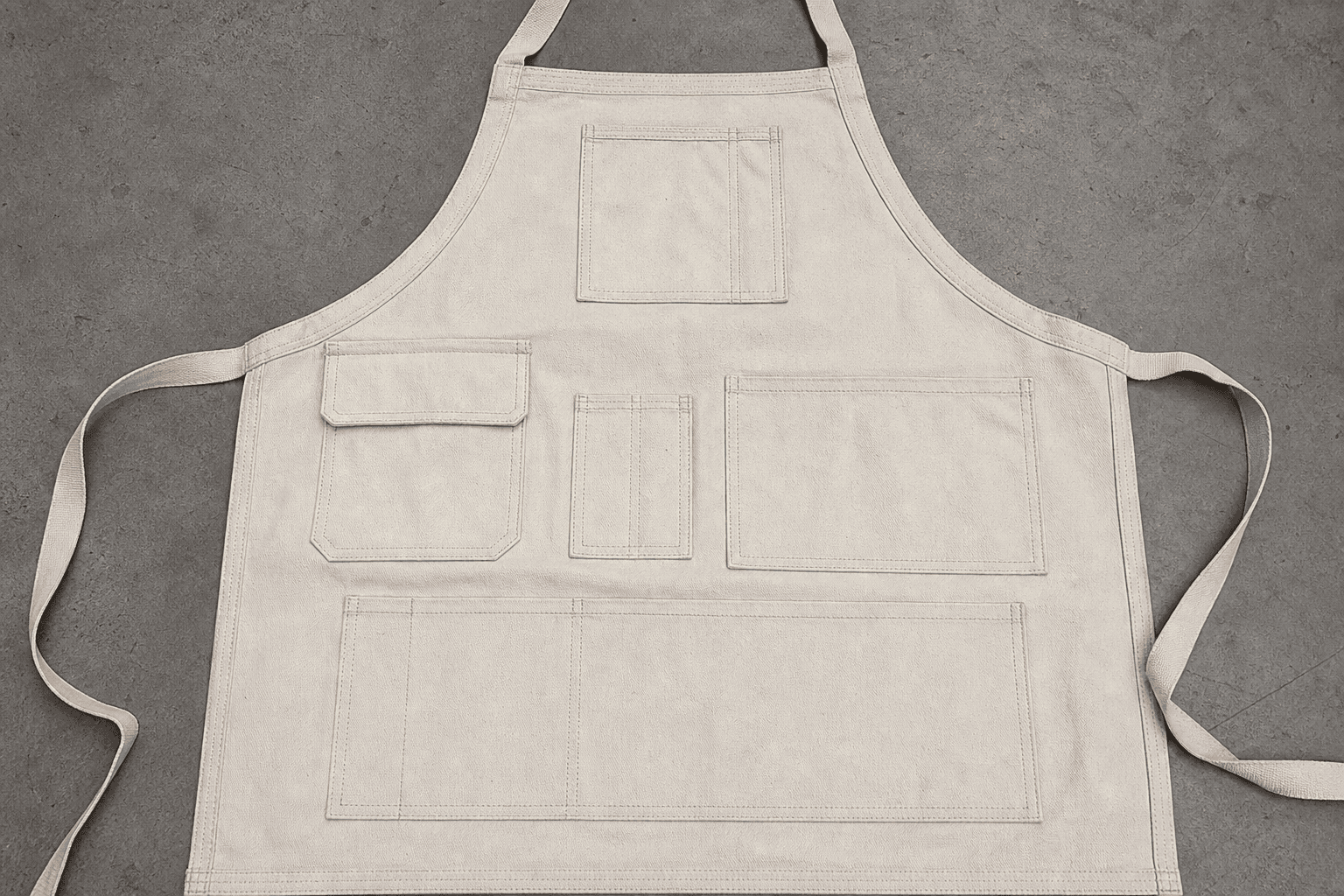
Yarn count for apron fabrics: how 10s, 16s and 21s affect handfeel, strength and cost
<strong>Apron fabric yarn count</strong> should be fixed before sampling, not after price collection. In professional apron sourcing, 10s, 16s and 21s change handfeel, seam bulk, pocket support, wash behavior, MOQ, lead time and FOB by measurable amounts. When buyers define count, weave and GSM at RFQ stage, quotations become comparable and factory substitutions become easier to prevent.
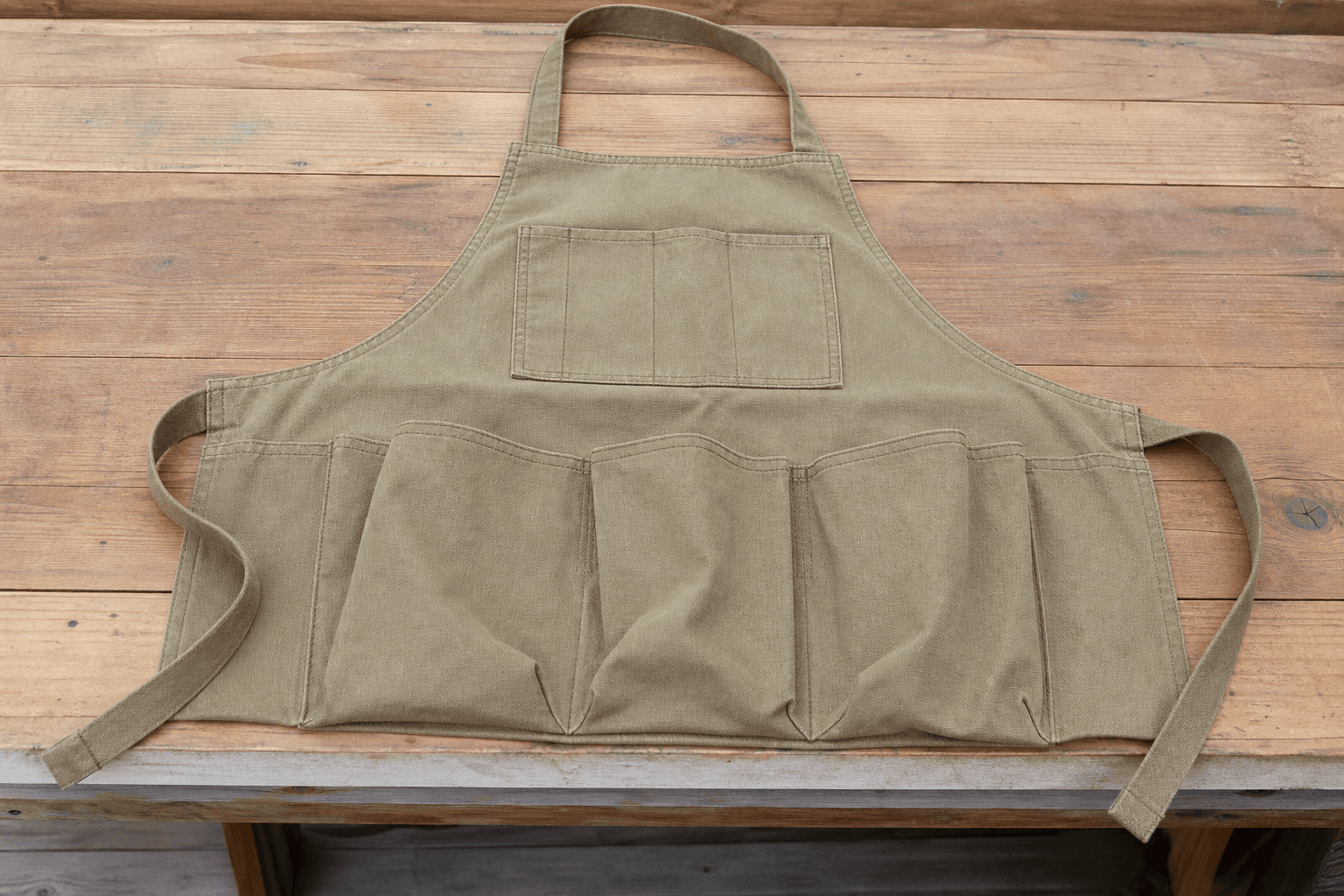
Warp and weft density in apron cloth: why pick count changes coverage, stiffness and yield
<strong>Apron fabric warp weft density</strong> is the construction detail that most often explains why two apron fabrics with the same 240-250 GSM or 8.0-8.8 oz/sq yd label perform differently in bulk. For professional apron buyers, ends and picks per inch directly influence opacity, panel stiffness, embroidery definition, usable width, cutting yield, wash stability, lead time and final $/pc, often more than fiber blend alone.
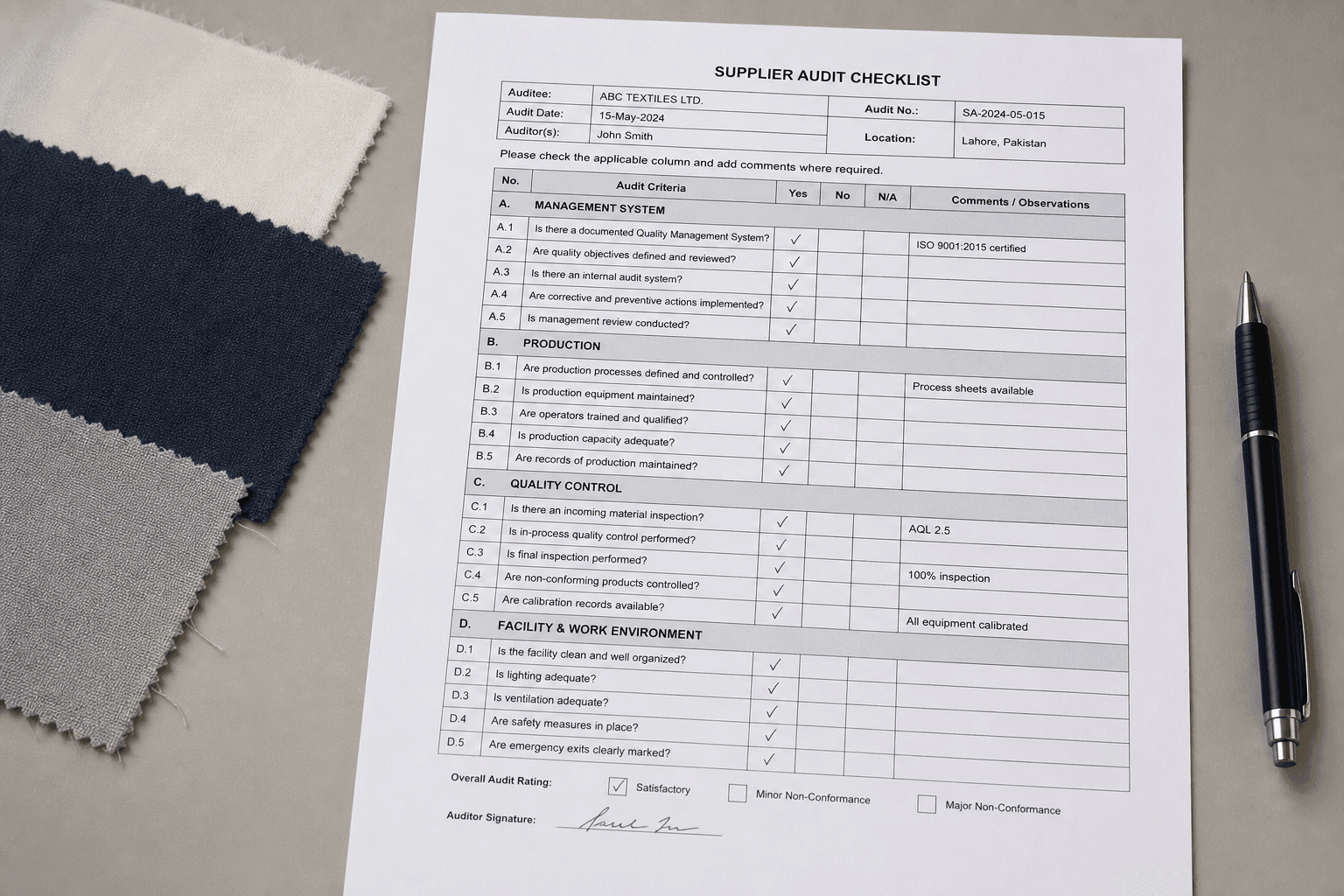
Undyed and natural-color apron fabrics: shade variation, seed specks and buyer approval standards
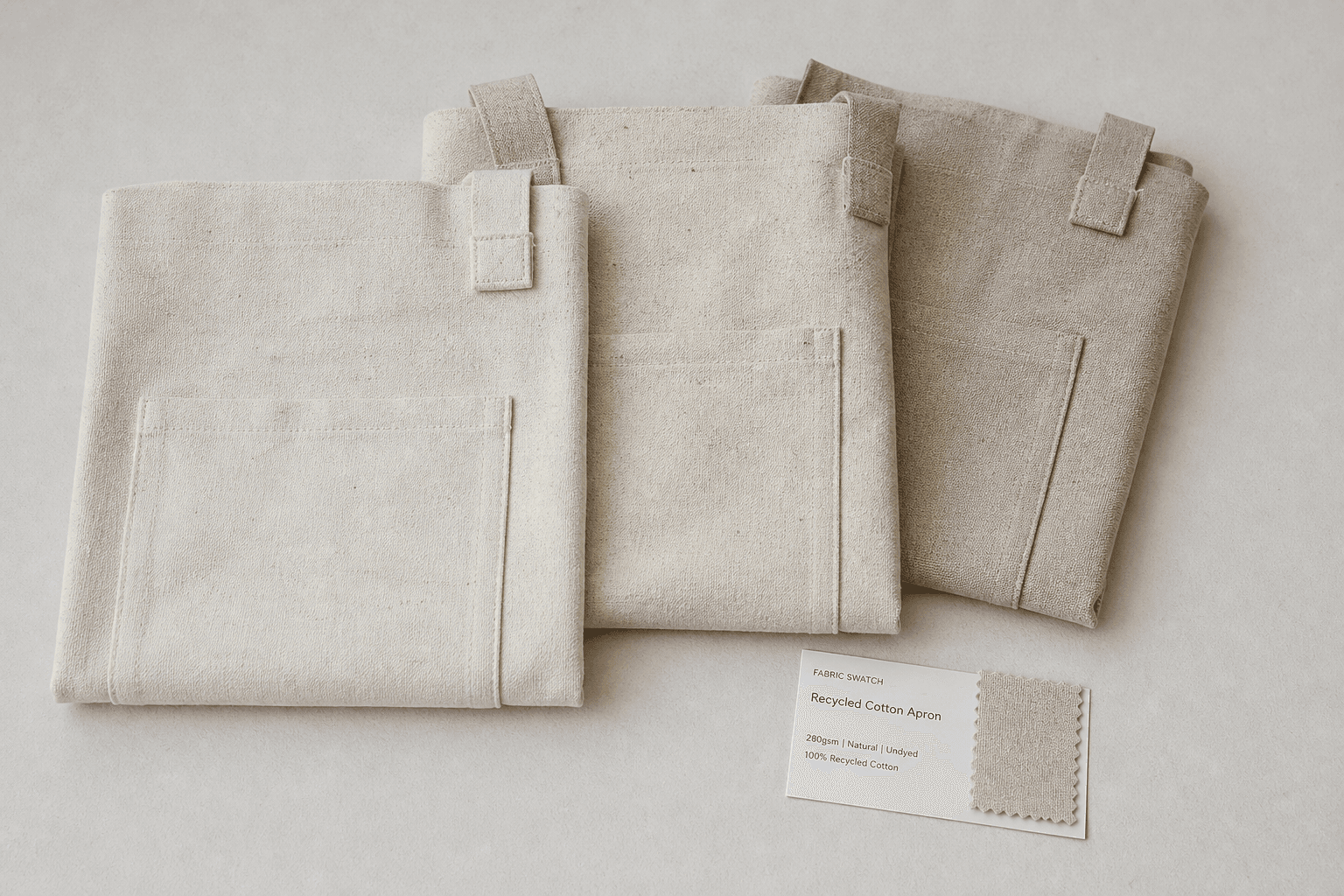
<strong>Natural color apron fabric</strong> can lower wet-processing cost and deliver a credible ecru or oatmeal look, but it is commercially stable only when apron buyers lock down measurable shade bands, seed-speck limits, panel-matching rules, AQL levels and lot-handling steps before bulk cutting.
Preshrunk apron fabrics: sanforized, compacted and tenter-finished options for stable bulk production
<strong>Preshrunk apron fabric</strong> is a production control for OEM apron orders, not a soft marketing claim. This guide compares sanforized, compacted and tenter-finished apron fabrics with working benchmarks for residual shrinkage, GSM, oz, MOQ, lead time, AQL and per-piece cost so B2B buyers can lock stable bulk production before cutting starts.
Melange and heather apron fabrics: fiber blending, shade consistency and logo readability
<strong>Heather apron fabric</strong> can help a private-label apron line stand out, but it also introduces measurable sourcing risk in shade continuity, logo clarity and repeat-order control. For B2B apron buyers, the decision should be based on specifics: <strong>230-300 GSM</strong> fabric weight, <strong>500-3000 pcs</strong> MOQ, <strong>30-65 days</strong> ex-factory lead time, a typical <strong>US$0.20-0.90/pc</strong> fabric premium and a defined inspection standard such as <strong>AQL 2.5 major / 4.0 minor</strong>.
Lightweight apron fabrics under 200 GSM: where lower weight helps and where durability drops too fast
<strong>Lightweight apron fabric</strong> lowers heat buildup, neck load, carton weight, and FOB cost only when the apron pattern matches the duty cycle. For professional apron buyers, the most reliable under-200 GSM bands are usually <strong>170-190 GSM</strong> for daily hospitality wear, <strong>155-175 GSM</strong> for light retail and salon use, and <strong>135-150 GSM</strong> only for promotions or short-life programs. Below those ranges, pocket sag, seam distortion, show-through, and accelerated replacement rates often erase the initial saving within one reorder cycle.

Heavyweight apron fabrics above 350 GSM: rigidity, needle requirements and freight cost implications
<em>Heavyweight apron fabric</em> above 350 GSM changes apron sourcing economics immediately, not just product appearance. For professional buyers, it affects panel rigidity, seam-stack thickness, needle size, sewing minutes, finished piece weight, carton yield, MOQ and freight cost per unit. In most custom apron programs, 360 to 420 GSM is the commercially workable range; above that, every extra 20 to 30 GSM needs a clear use case because comfort loss, defect risk and logistics cost usually rise faster than service-life gains.
Grease-resistant apron fabrics: comparing fluorine-free finishes, tight weaves and coated surfaces
Choosing <strong>grease resistant apron fabric</strong> for a bulk apron program is a specification exercise, not a marketing exercise. For professional buyers, the real comparison is between fluorine-free finished woven fabrics, dense twills and canvases that slow oil penetration, and coated surfaces that create a stronger barrier but alter breathability, seam design, decoration options, MOQ, lead time, and FOB cost.
Tencel-cotton apron fabrics: moisture handling, drape and seam slippage risk
<em>tencel cotton apron fabric</em> gives premium bib, waist and cross-back aprons a softer drape, quicker moisture spread and a cleaner dyed surface than standard cotton twill, but B2B buyers should only release bulk after locking fabric weight at <strong>190-230 GSM</strong>, seam-slippage controls, wash route, MOQ, inspection level and a realistic <strong>45-65 day</strong> lead time.
Oxford fabric aprons: basket weave appearance, water resistance options and logo limitations
<strong>Oxford fabric aprons</strong> give B2B buyers a defined basket-weave surface, quicker drying than cotton-rich aprons, and scalable splash protection when the fabric is specified correctly. For sourcing, the decision points are concrete: denier, finished GSM, coating type, logo method, MOQ, FOB range, wash expectation, and AQL standard—not the word “oxford” by itself.
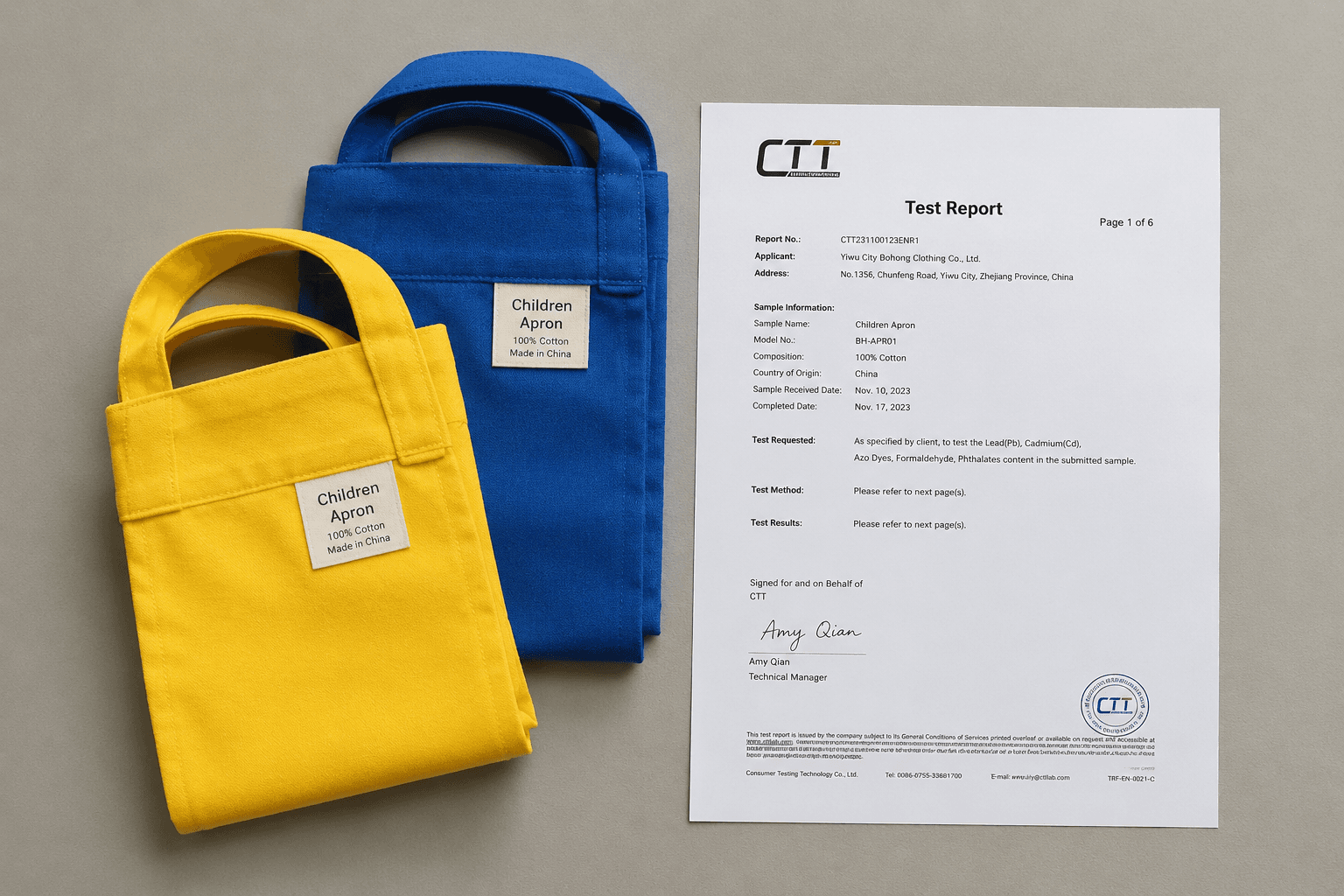
Open-end vs ring-spun cotton for aprons: handfeel, strength and print surface
A practical sourcing guide to <em>open end vs ring spun cotton aprons</em>, covering how yarn choice changes apron handfeel, seam performance, print sharpness, shrinkage, MOQ, lead time and realistic FOB cost in bulk OEM production.
Interlock knit aprons: when stretch comfort works and where structure becomes a problem
<em>Interlock knit aprons</em> work for professional uniform programs only when the specification stays tight: typically <strong>240-320 GSM</strong>, pocket loads kept below <strong>200-300 g</strong>, shrinkage held to <strong>±3% to ±5%</strong> after <strong>3 washes at 40°C</strong>, reinforced neckline and pocket stress points, and bulk planning aligned on <strong>MOQ, 35-65 day lead time, FOB cost, and AQL 2.5/4.0</strong>.
Compact-spun apron fabrics: when lower hairiness improves embroidery and wash appearance
<em>Compact spun apron fabric</em> gives B2B apron buyers a cleaner surface with fewer protruding fibers, which improves embroidery edge sharpness, reduces print haloing, and keeps dark bib and waist aprons looking cleaner after repeated laundering. It delivers the best return in <strong>220 to 320 GSM</strong> apron fabrics where logo visibility, reorder consistency, and wash appearance matter more than saving <strong>$0.10 to $0.30</strong> per piece.
Canvas lamination for aprons: adding waterproof film without making the garment too rigid
<strong>Laminated canvas aprons</strong> add wipe-clean, splash-resistant performance for foodservice, floristry, grooming, and prep environments, but the commercial challenge is balancing 285 to 340 GSM canvas, 0.05 to 0.08 mm film, seam bulk, and QC controls so the apron stays flexible through full 8- to 10-hour shifts instead of turning rigid at the bib, pocket, and hem.
Bull denim aprons: heavier twill structure, stiffness break-in and garment-wash response
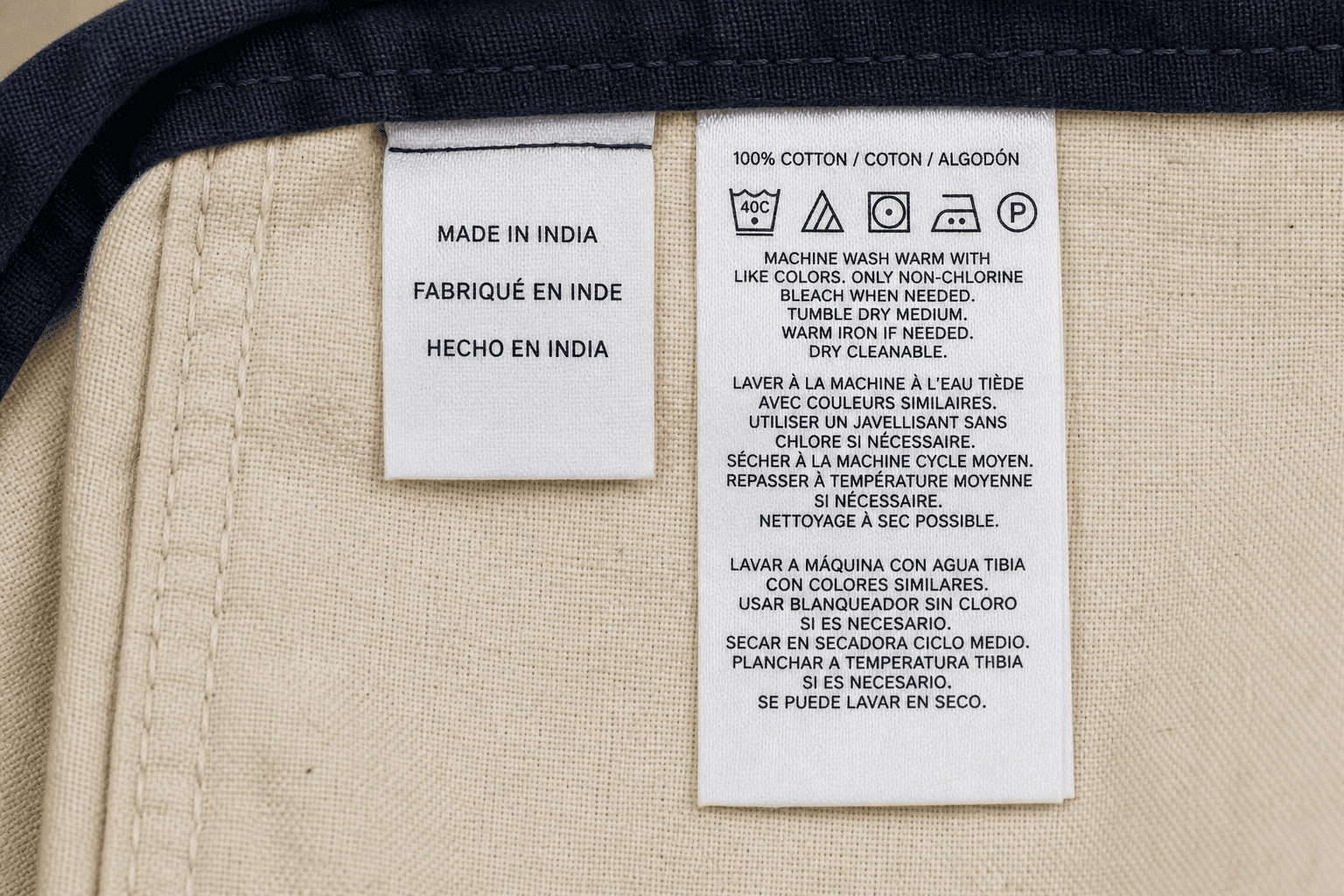
<strong>Bull denim aprons</strong> use a dense <strong>3/1 twill</strong> at roughly <strong>350-420 GSM</strong> (<strong>10.3-12.4 oz</strong>), so apron buyers need to lock fabric weight, break-in feel, wash shrinkage, MOQ, AQL and FOB cost before bulk approval.
Aramid-blend heat-resistant aprons: where lightweight protection justifies the premium
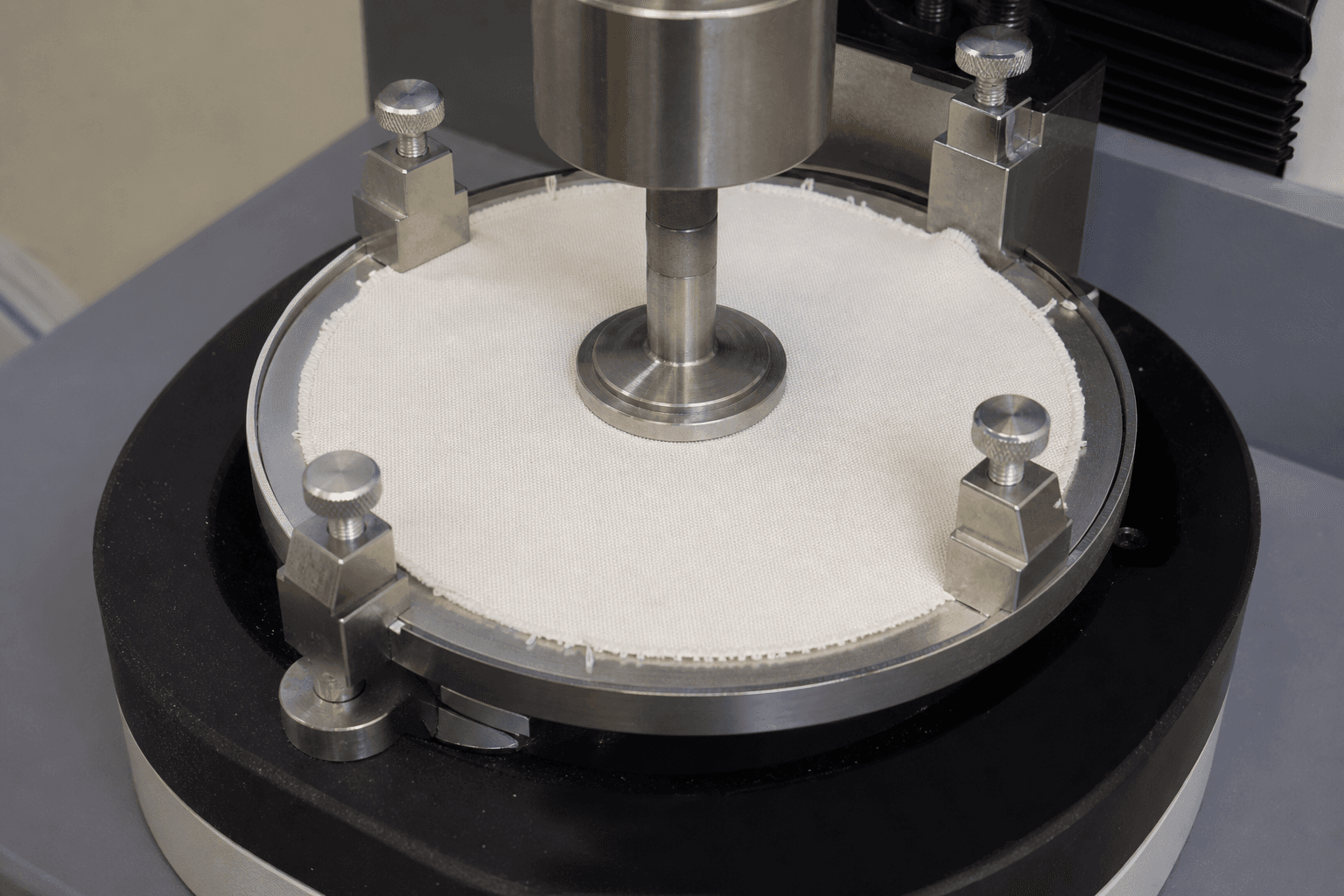
<em>Aramid blend heat resistant aprons</em> justify a higher FOB price when buyers need front-body heat protection in a lighter shell of <strong>240-320 GSM</strong>, a finished bib weight near <strong>520-760 g</strong>, and a field life of roughly <strong>90-150 working days</strong> instead of the <strong>25-60 days</strong> many cotton or FR-cotton aprons deliver in hot-zone use.
Apron fabric width utilization: how loom width affects marker efficiency and unit cost
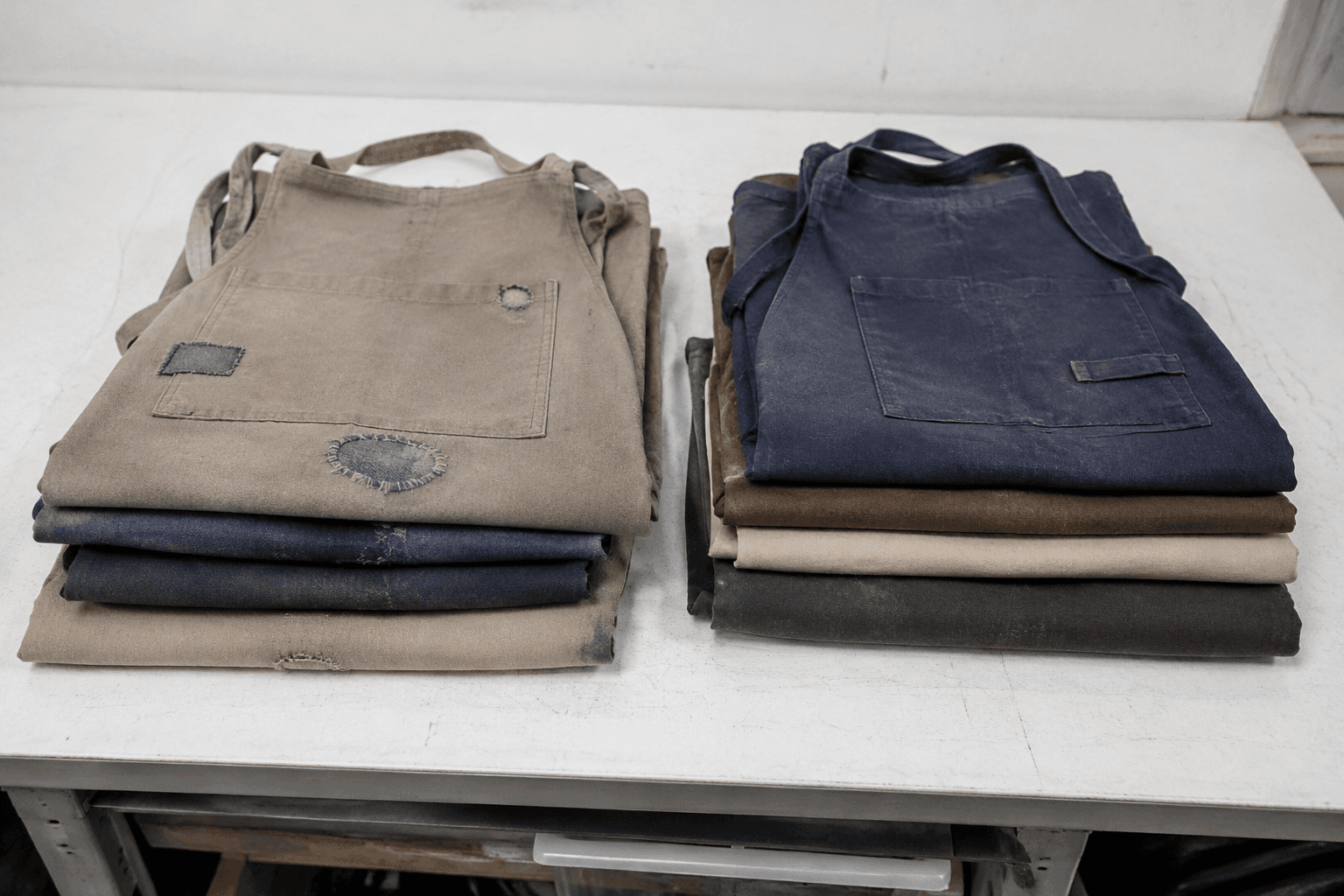
<strong>Apron fabric width utilization</strong> is one of the few levers that can lower apron FOB without changing hand feel, GSM, or sewing detail. In bulk apron sourcing, shifting from 44/45 inch nominal width to 57/58 inch usable programs can cut consumption by 0.06 to 0.24 meters per piece, reduce fabric cost by US$0.09 to US$0.88 per apron, and avoid 7 to 14 days of re-costing and re-booking when the first bulk marker exposes poor yield.
Yarn-dyed stripe aprons: woven vs printed pattern, shade continuity and reorder control
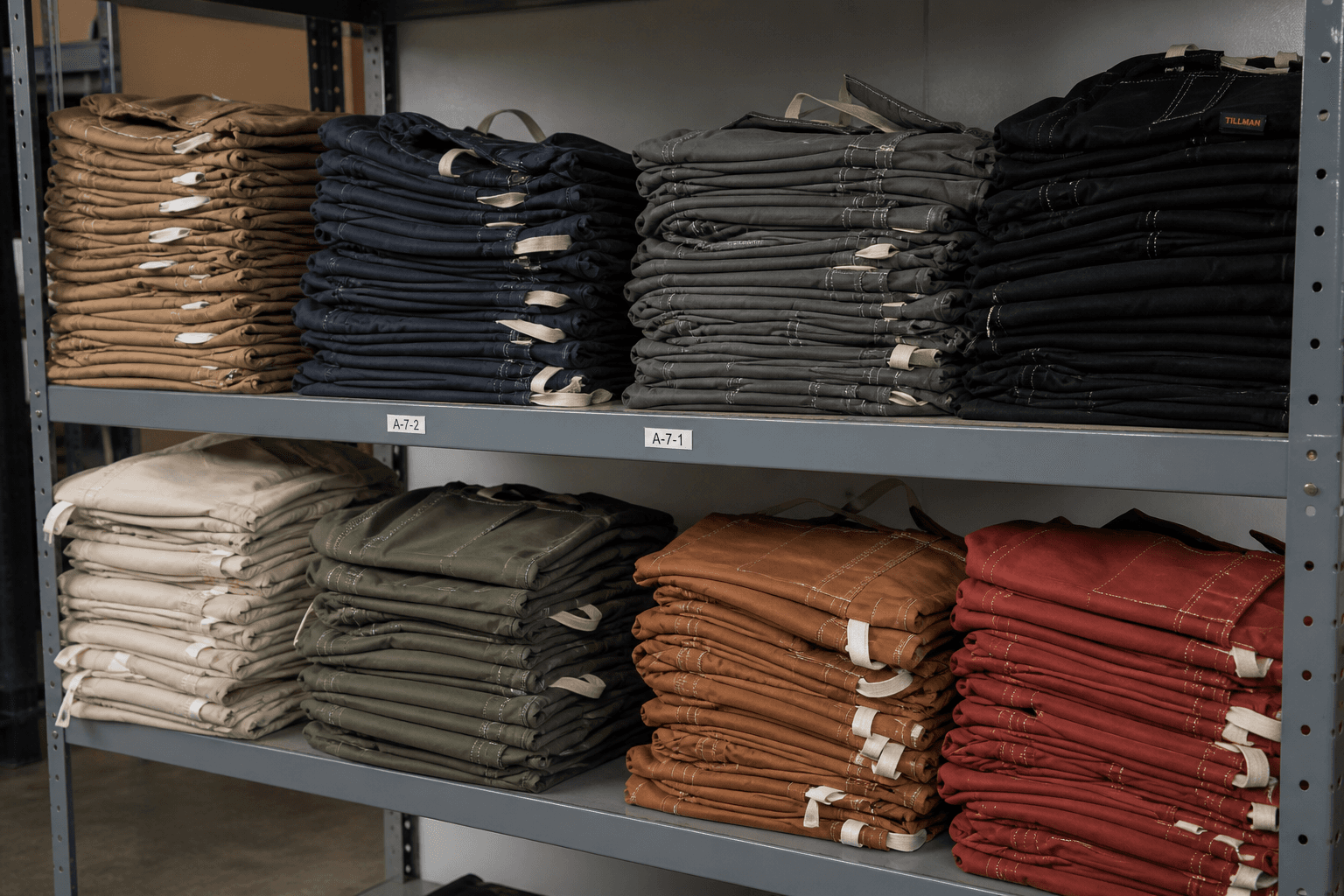
<em>Yarn dyed stripe aprons</em> cost more to launch than printed-stripe options, but for professional B2B buyers they usually deliver cleaner stripe edges, tighter pocket and bib alignment, lower reorder risk, and more stable shade continuity when fabric GSM, stripe repeat, shrinkage, AQL, and replenishment timing are fixed before bulk.
Stone wash, enzyme wash and garment softening on aprons: handfeel gains versus shade risk
<strong>Washed apron finishing</strong> changes more than handfeel on a sewn apron. It affects shade, shrinkage, trim appearance, AQL exposure, MOQ efficiency and repeat-order control. For B2B buyers sourcing bib, waist and cross-back aprons, the right process depends on fabric weight, fiber blend, dark-color tolerance, target cost per piece and whether the program prioritizes a vintage look or stable replenishment shade.
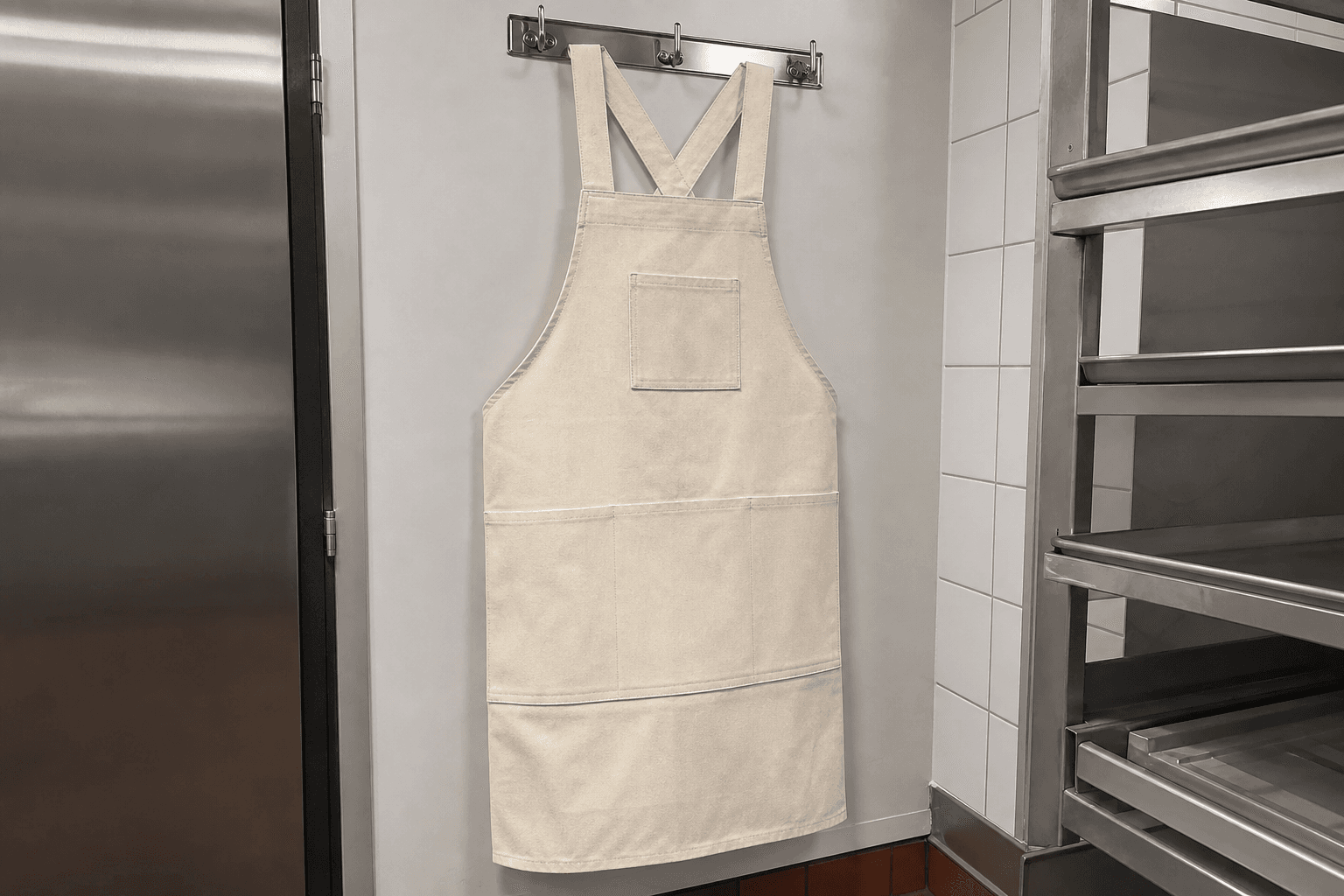
Reactive dyeing vs vat dyeing for black aprons: fade resistance, cost and wash performance
For bulk apron programs, the <strong>black apron dyeing method</strong> affects more than shade depth. It changes wash retention, wet crocking, mill MOQ, replenishment flexibility, lead time and landed cost. For <strong>100% cotton aprons in 210-320 GSM</strong> (<strong>6.2-9.4 oz/yd²</strong>), reactive black is usually the faster, lower-MOQ option, while vat black typically holds a denser appearance after <strong>30-50 wash cycles</strong> and repeated <strong>60°C</strong> laundering, usually at a premium of <strong>US$0.18-US$0.45 per apron</strong> and <strong>3-7 extra fabric days</strong>.
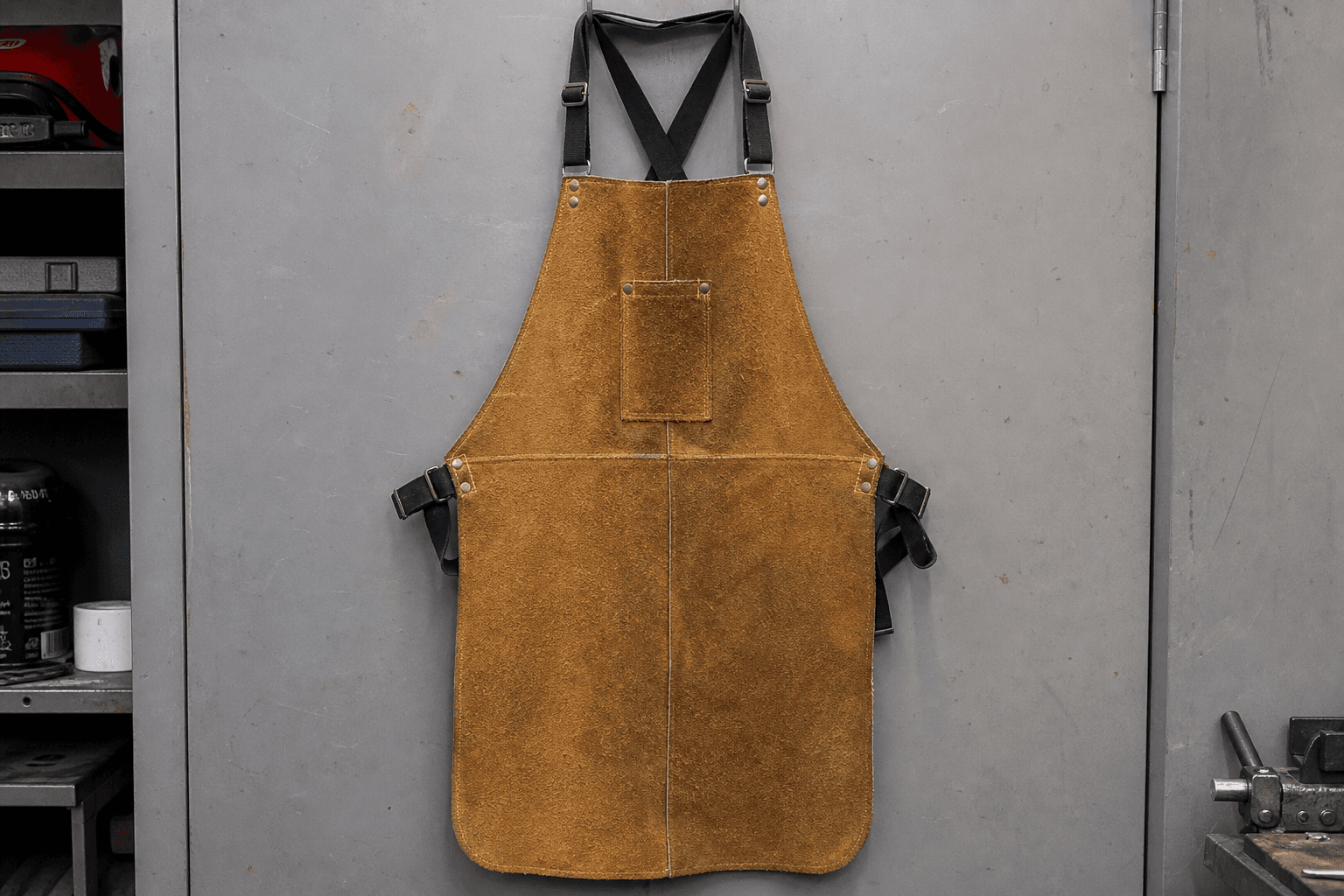
PU-coated, TPU-laminated and PVC aprons: material selection for washable waterproof programs
This <strong>waterproof apron material comparison</strong> shows how PU-coated, TPU-laminated, and PVC apron constructions perform in real OEM buying conditions, with practical benchmarks for finished GSM, oz weight, film thickness, MOQ, wash-cycle targets, AQL limits, production days, and FOB cost per piece.
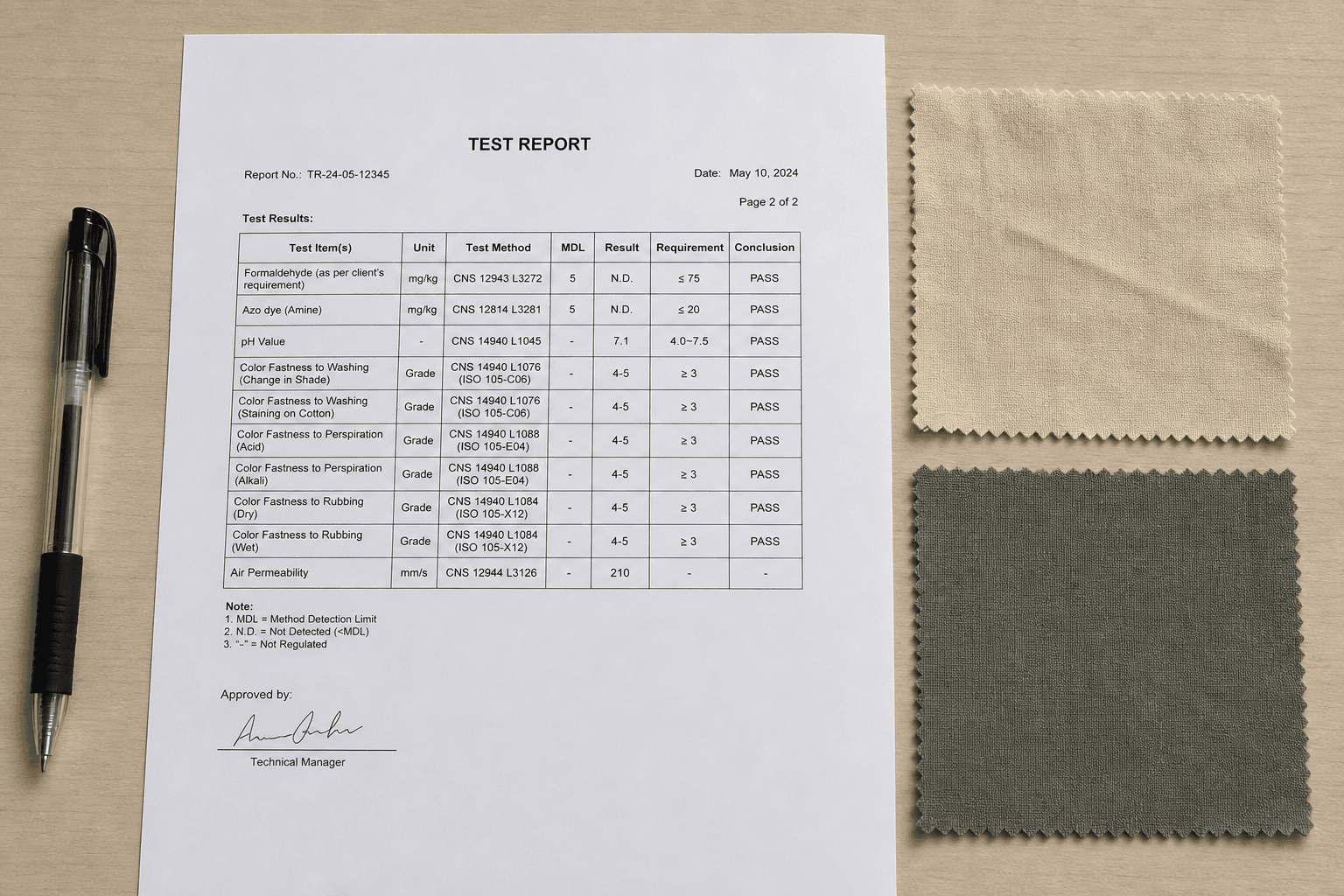
Mercerized cotton aprons: when smoother surface and richer dye uptake justify the premium
A <strong>mercerized cotton apron</strong> usually adds <strong>$0.18-$0.55 per piece</strong> versus comparable standard cotton aprons, and the premium is easiest to defend when buyers need <strong>deeper reactive-dyed blacks and navies, cleaner logo edges, and a smoother front panel</strong> across repeat orders of <strong>800-5,000 pcs per color</strong>.

Lyocell-blend aprons: drape, wet strength and cost versus cotton
<em>Lyocell blend aprons</em> can deliver a softer drape, smoother face and more premium front-of-house presentation than standard cotton twill or canvas, but the buying case only works when fabric ratio, finished GSM, wash method, MOQ, AQL, lead time and ex-factory piece cost are fixed before bulk booking.
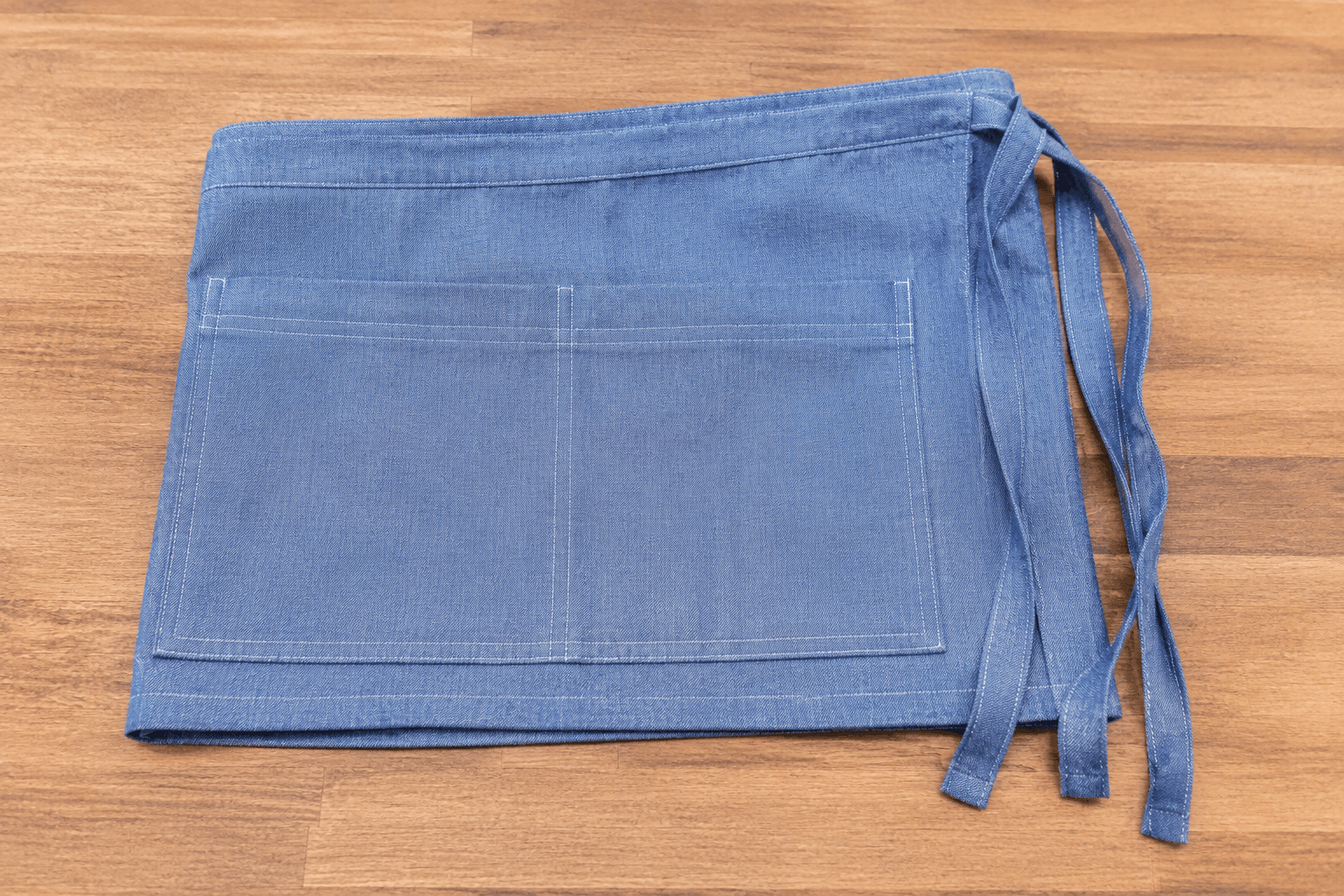
Herringbone drill aprons: texture, drape and wear resistance
A <strong>herringbone drill apron</strong> gives professional buyers a clear middle-ground fabric option between 180-210 GSM plain twill and 340-400 GSM canvas. In apron OEM programs, the most commercially stable range is usually 250-280 GSM (about 7.4-8.3 oz), where the chevron texture remains visible, the apron drapes cleanly on-body, and pocket seams can be reinforced without making neck-hung styles feel overbuilt. For most bulk orders, buyers should lock fabric composition, GSM tolerance, shrinkage target, rubbing fastness, bartack points, and inspection to <em>AQL 2.5 major / 4.0 minor</em>, with realistic lead times of 35-45 days for stock-color programs and 50-75 days for custom dye, wash, or branded trim developments.
Brushed canvas aprons: peached finish, softness retention and surface wear
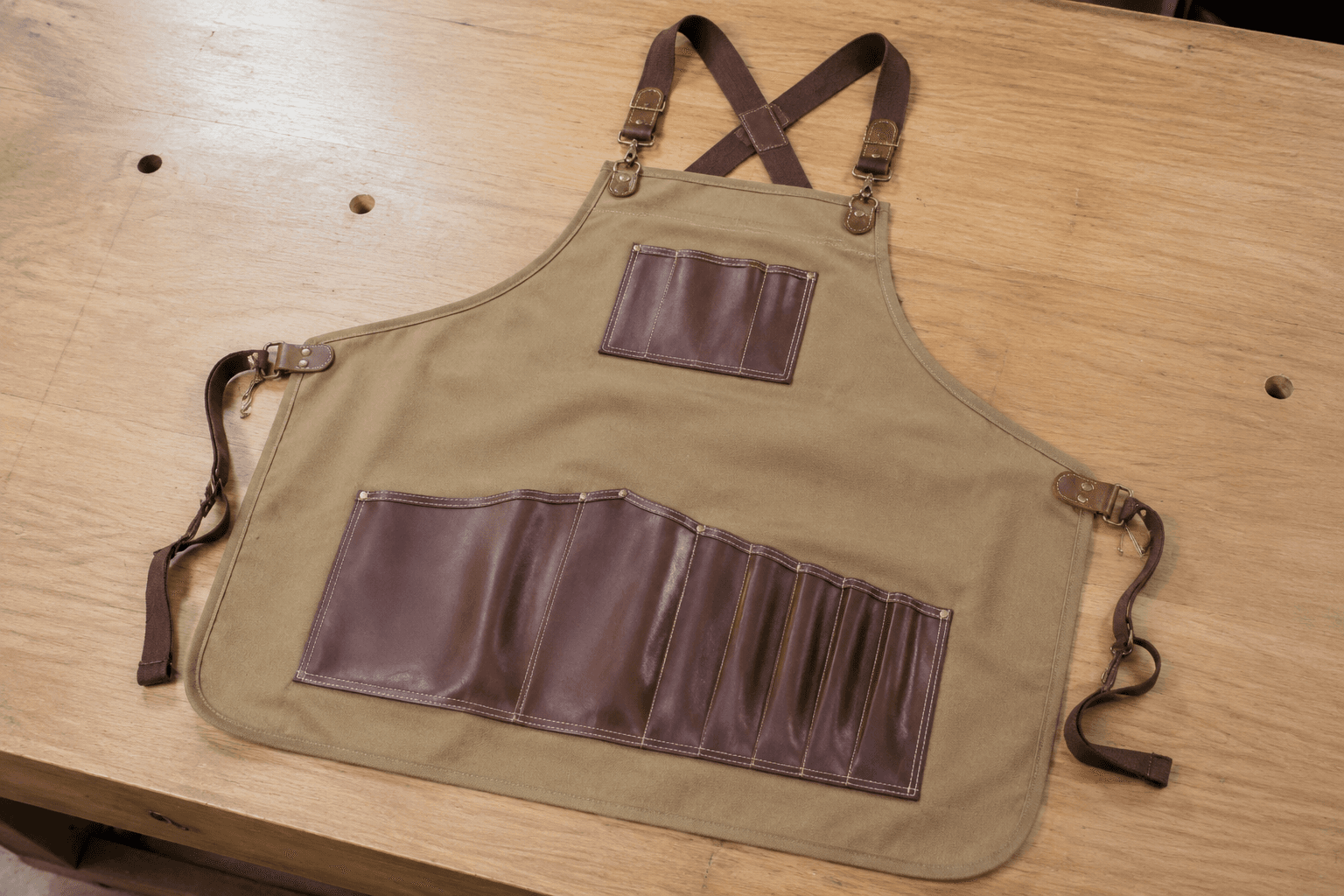
<strong>Brushed canvas aprons</strong> give buyers a softer hand than flat-face canvas, but bulk performance depends on measurable controls: 270-310 GSM finished weight, brushing intensity, wash chemistry, trim friction, fold packing, and appearance standards after 5, 10 and 20 wash cycles.
Apron top-edge stability: facing, turn-back and stay tape methods to stop neckline collapse
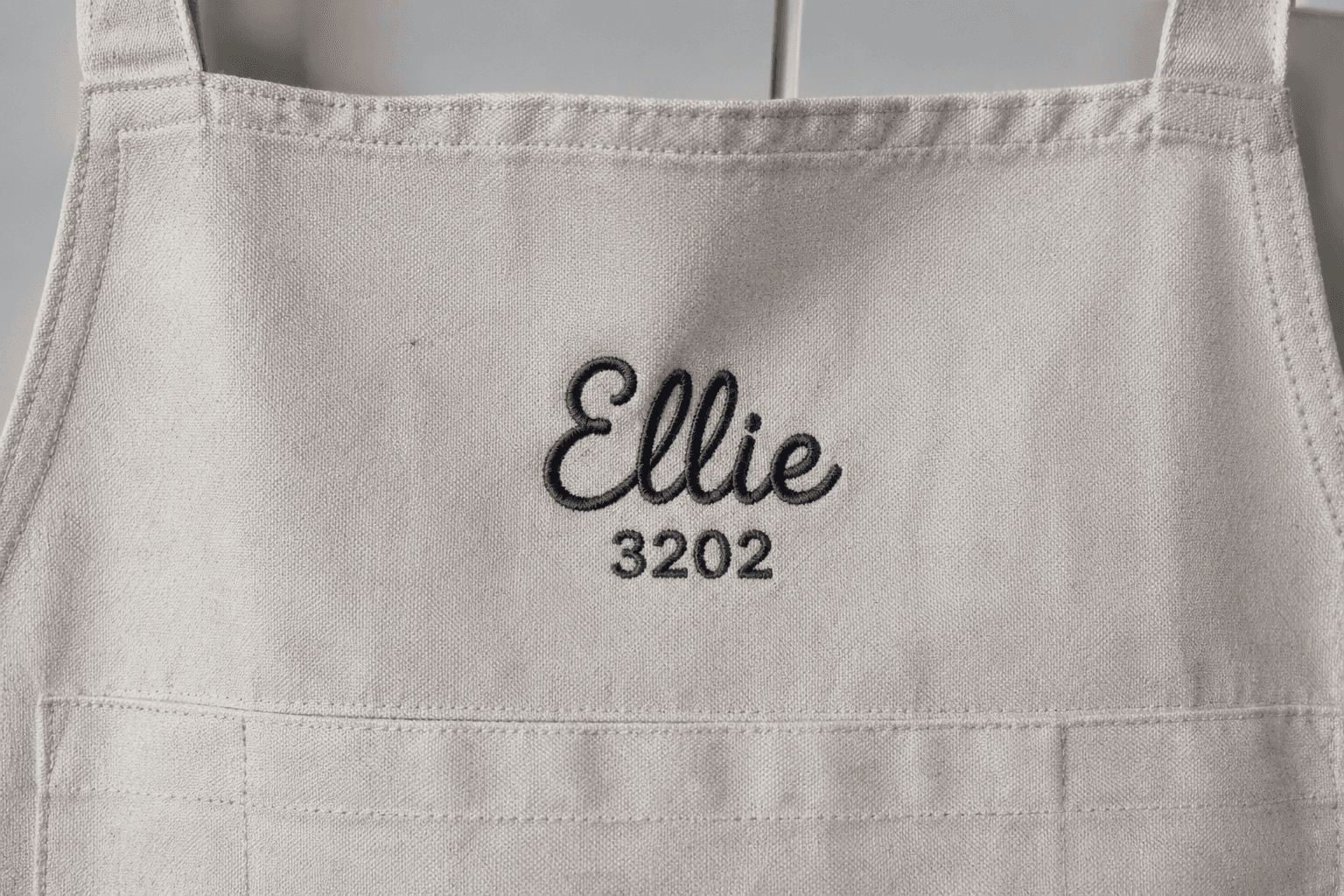
<em>Apron top edge construction</em> is a make-or-break sourcing decision for bib aprons because the neckline is the first area to show roll-out, corner flare or post-wash distortion. For B2B buyers, the most reliable way to stop neckline collapse is to match facing, turn-back and stay tape methods to fabric weight, bib shape, strap load, wash count, MOQ, AQL standard and ex-factory cost target.
Apron thread specification guide: cotton, polyester core-spun and ticket size selection
This <strong>apron sewing thread specification</strong> guide gives B2B buyers a practical standard for matching cotton or polyester core-spun thread to 170-350 GSM apron fabrics, selecting ticket size by seam load, and controlling wash durability, MOQ, lead time, AQL, and unit cost before bulk production.
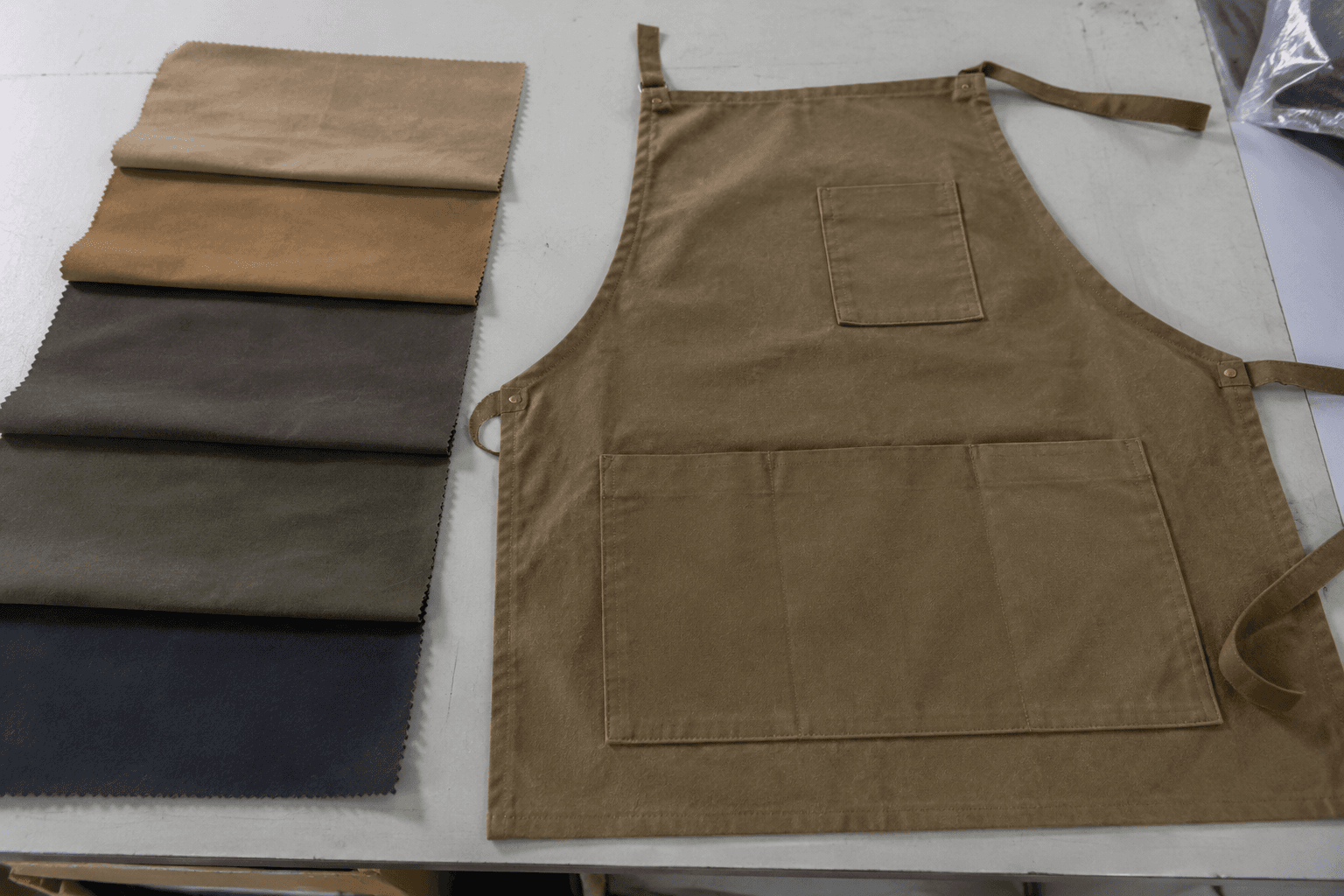
Moleskin aprons for premium retail and workshop programs
A <strong>moleskin apron</strong> gives premium retail and workshop programs a softer hand than standard 10 to 12 oz canvas, while still meeting the structure, branding clarity, MOQ discipline, and repeat-order control that professional B2B apron buyers require.
Jacquard-woven aprons: when a custom weave beats print
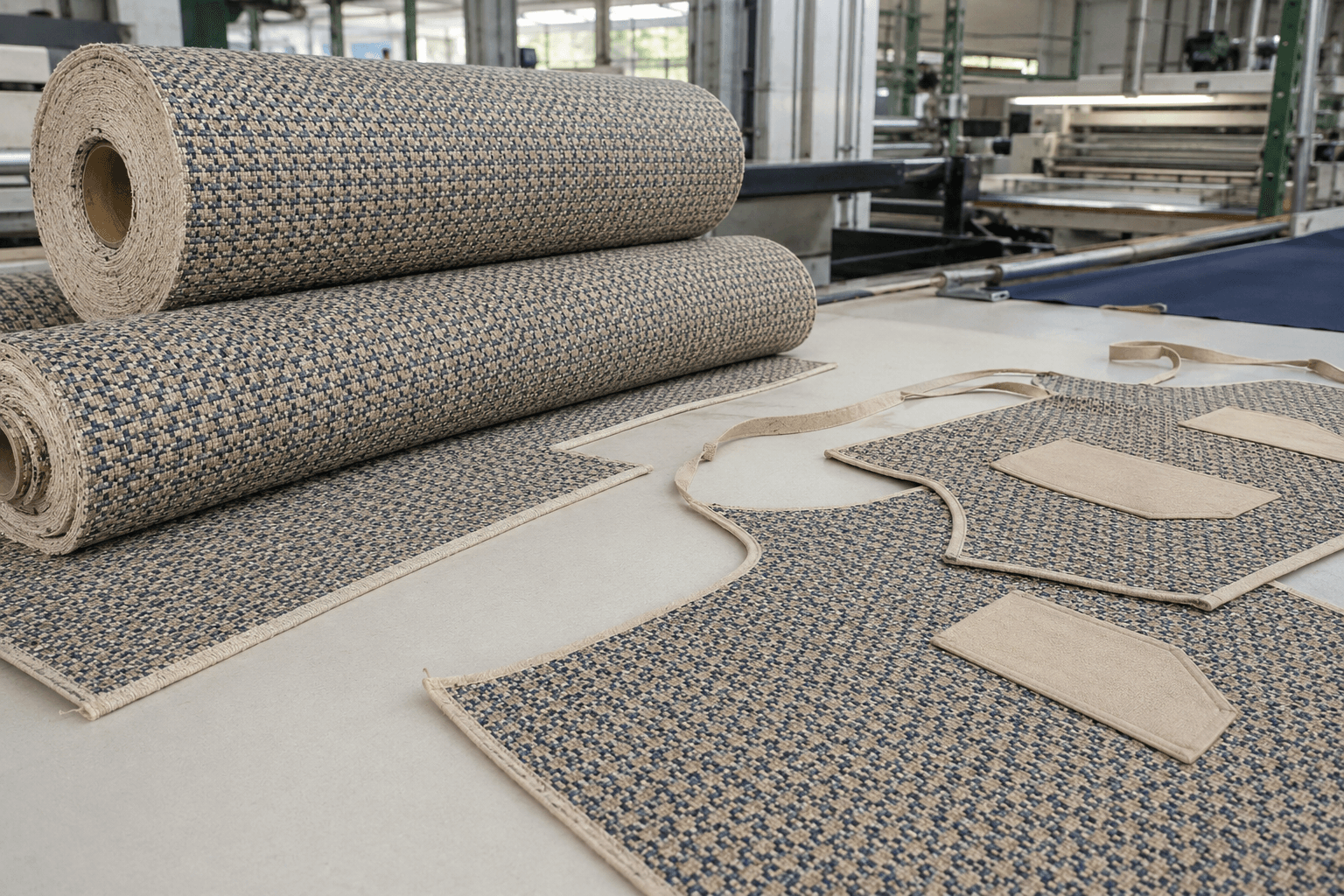
Jacquard apron fabric gives custom aprons a woven-in identity that print cannot match, especially for premium programs, repeat orders, and brand-sensitive bulk sourcing.
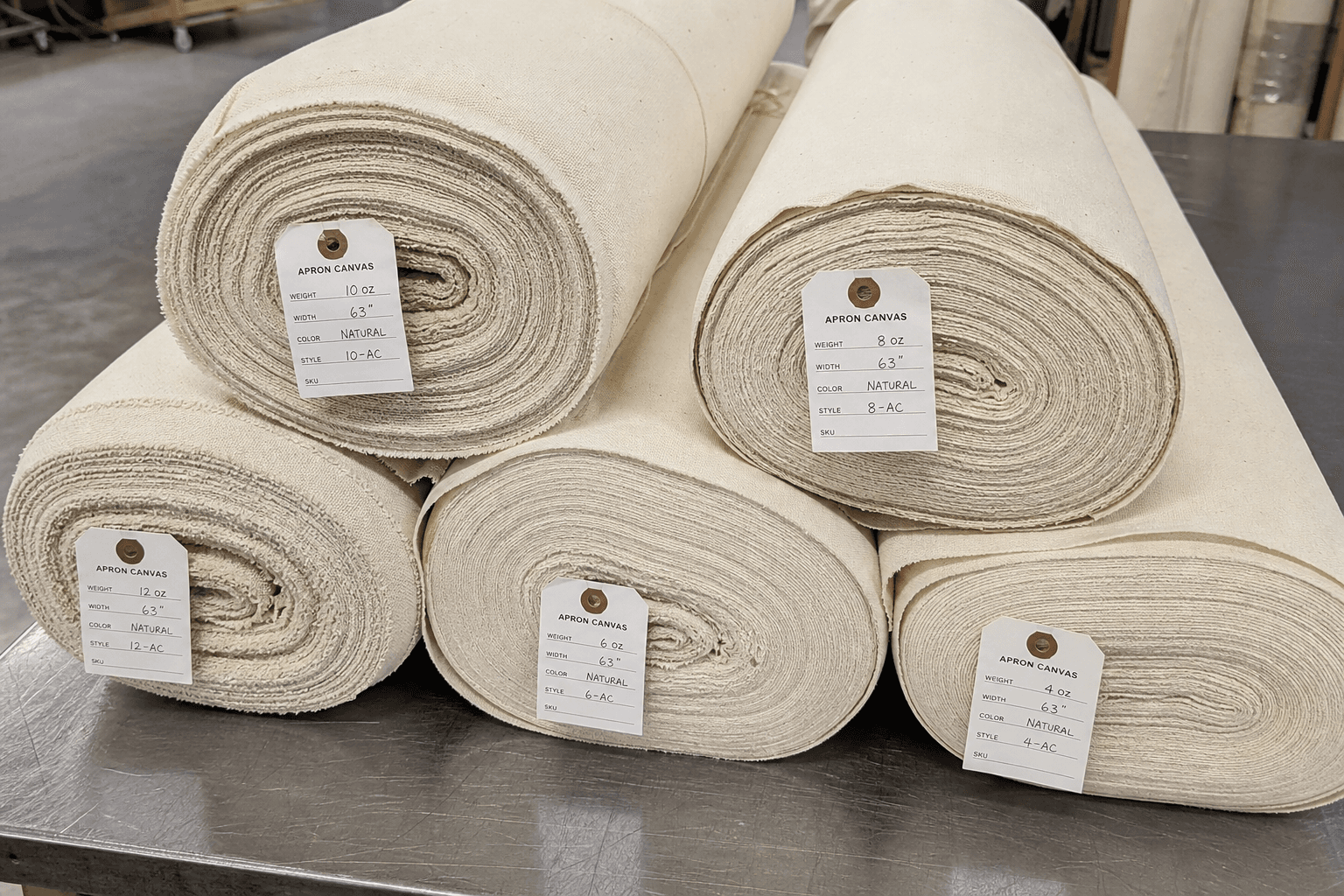
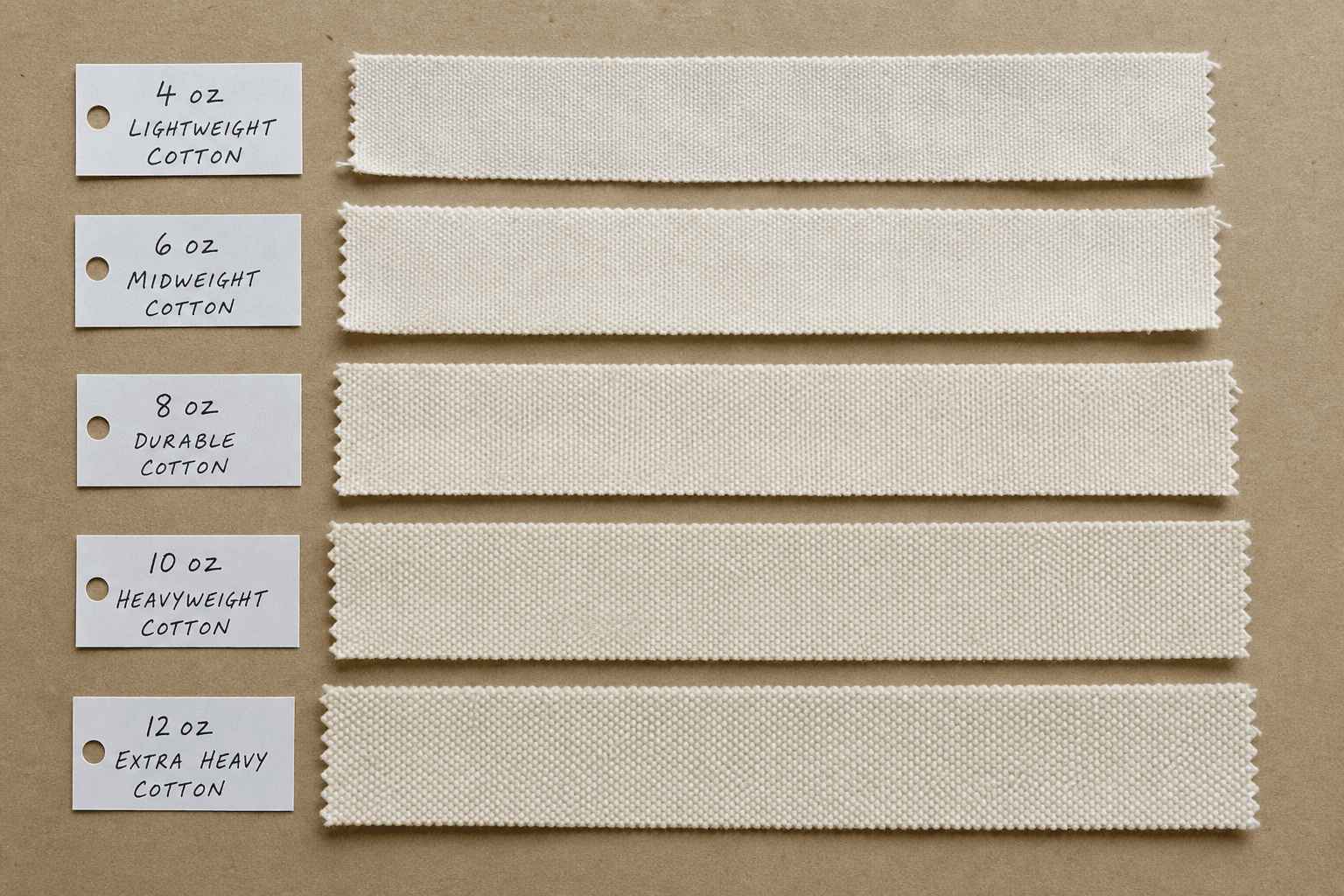
Apron canvas weight guide: oz vs GSM and how to choose
A practical apron canvas weight guide for bulk buyers comparing oz, GSM, cotton duck weight, costing, durability, and production risk.
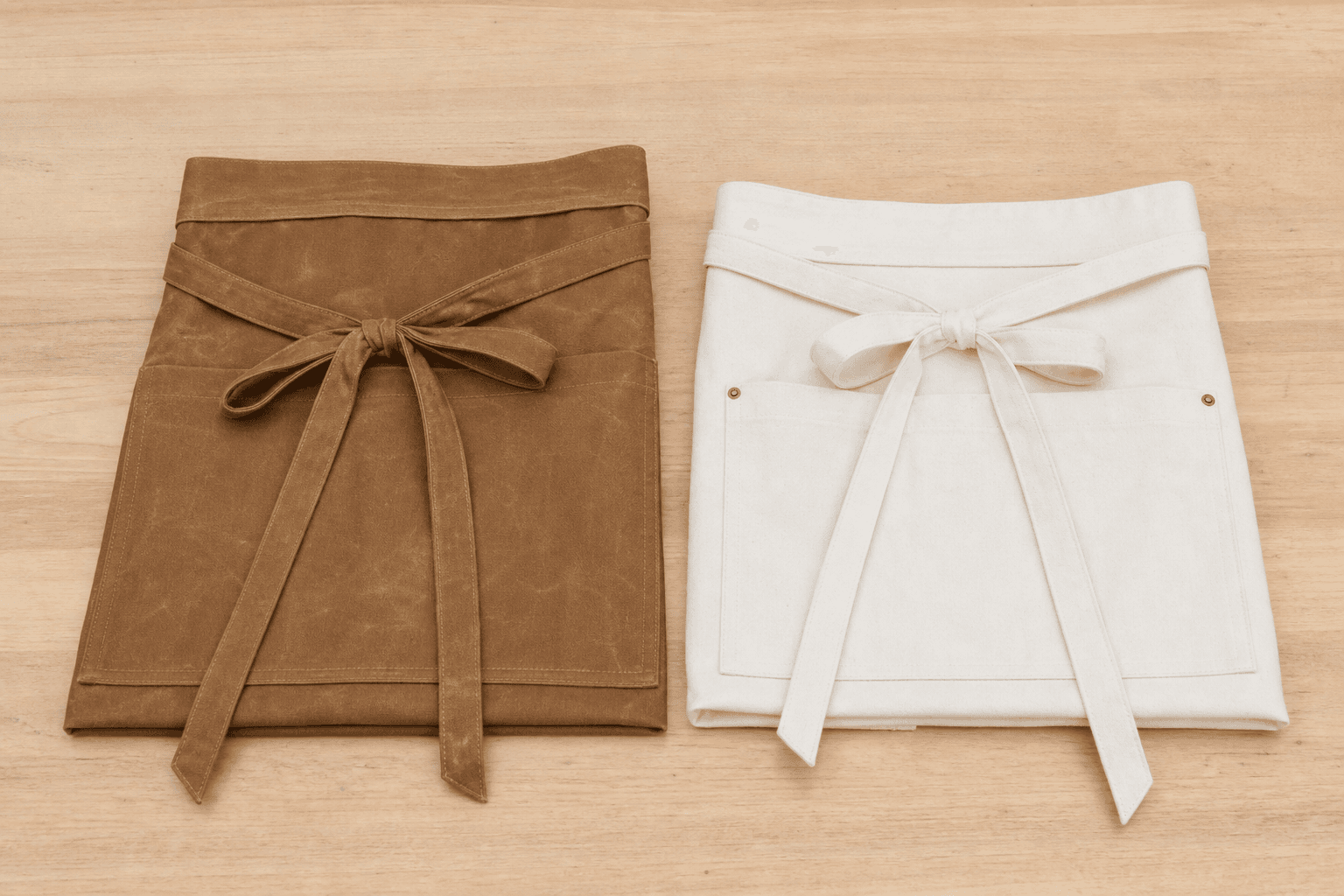
Waxed canvas vs cotton canvas aprons: durability, cost and care
A waxed canvas apron offers higher water resistance and a premium handfeel, while cotton canvas remains easier to wash, lower cost and more scalable.
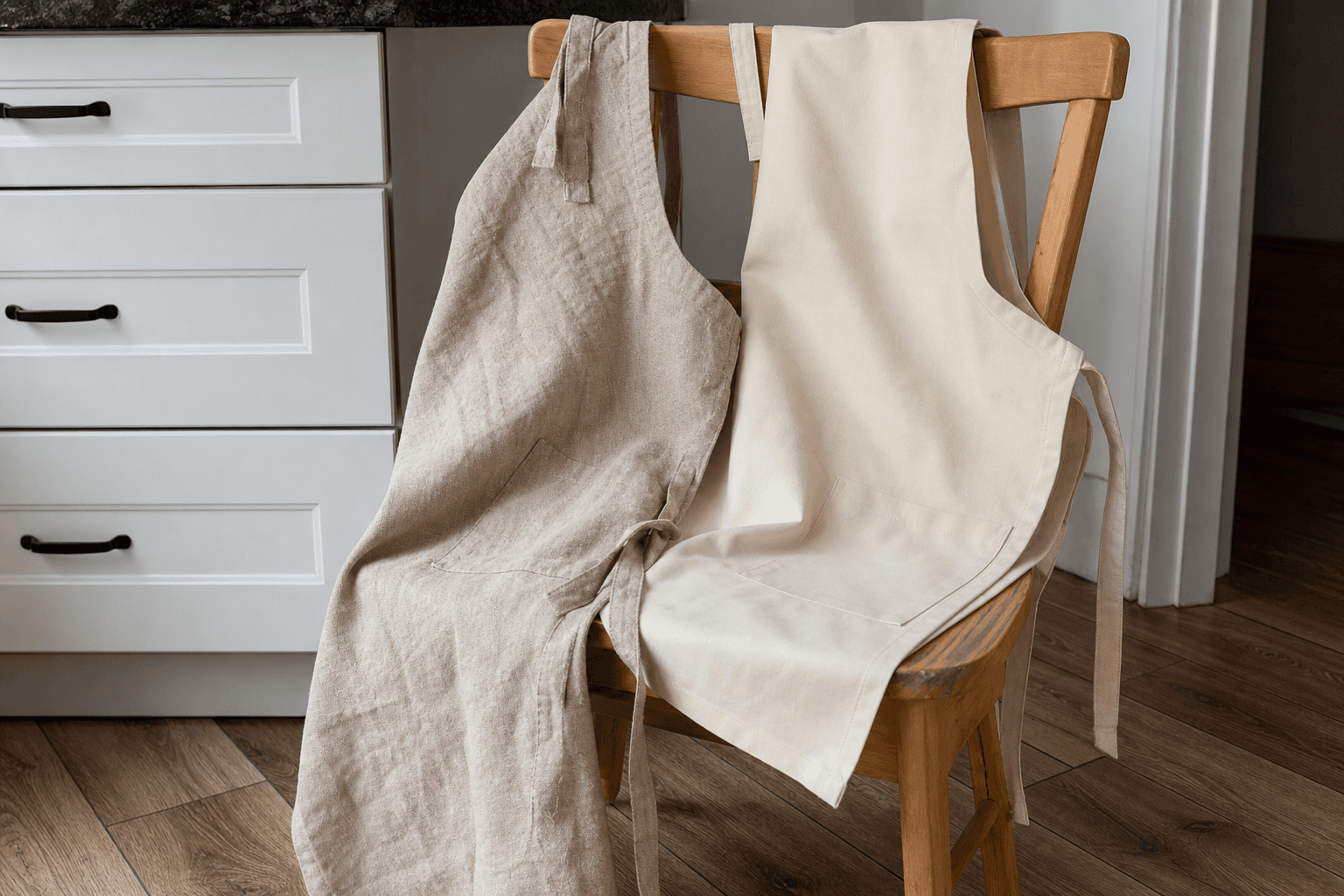
Linen vs cotton aprons for retail: drape, shrinkage and price
A practical linen vs cotton apron sourcing guide covering drape, shrinkage, wash effects, MOQ, lead time and landed price for retail apron programs.
Sourcing denim aprons: selvedge, weight and indigo fastness
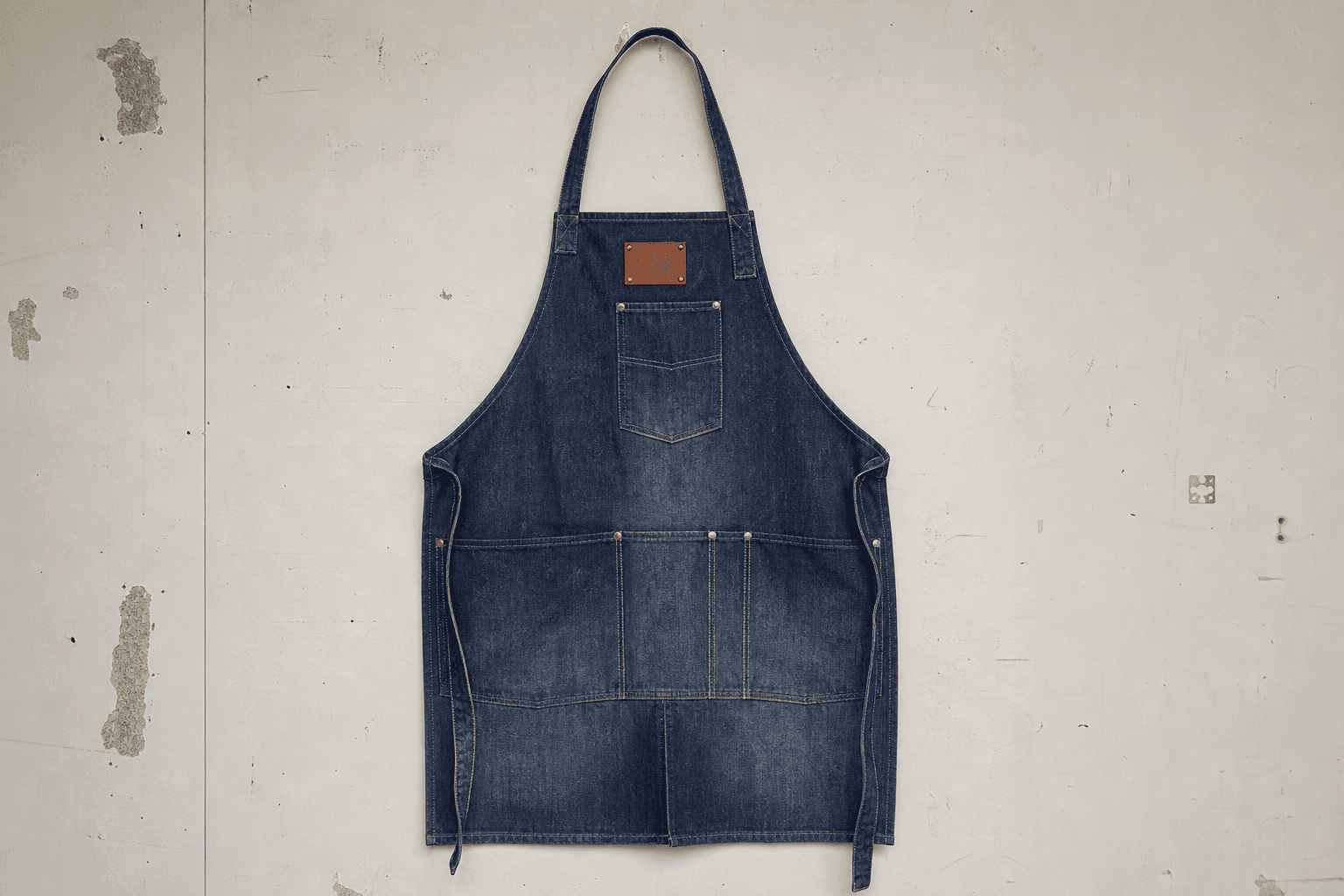
A practical sourcing guide for denim apron buyers comparing selvedge, fabric weight, indigo fastness, shrinkage control and bulk production costs.
GRS recycled cotton aprons: what the certificate actually proves
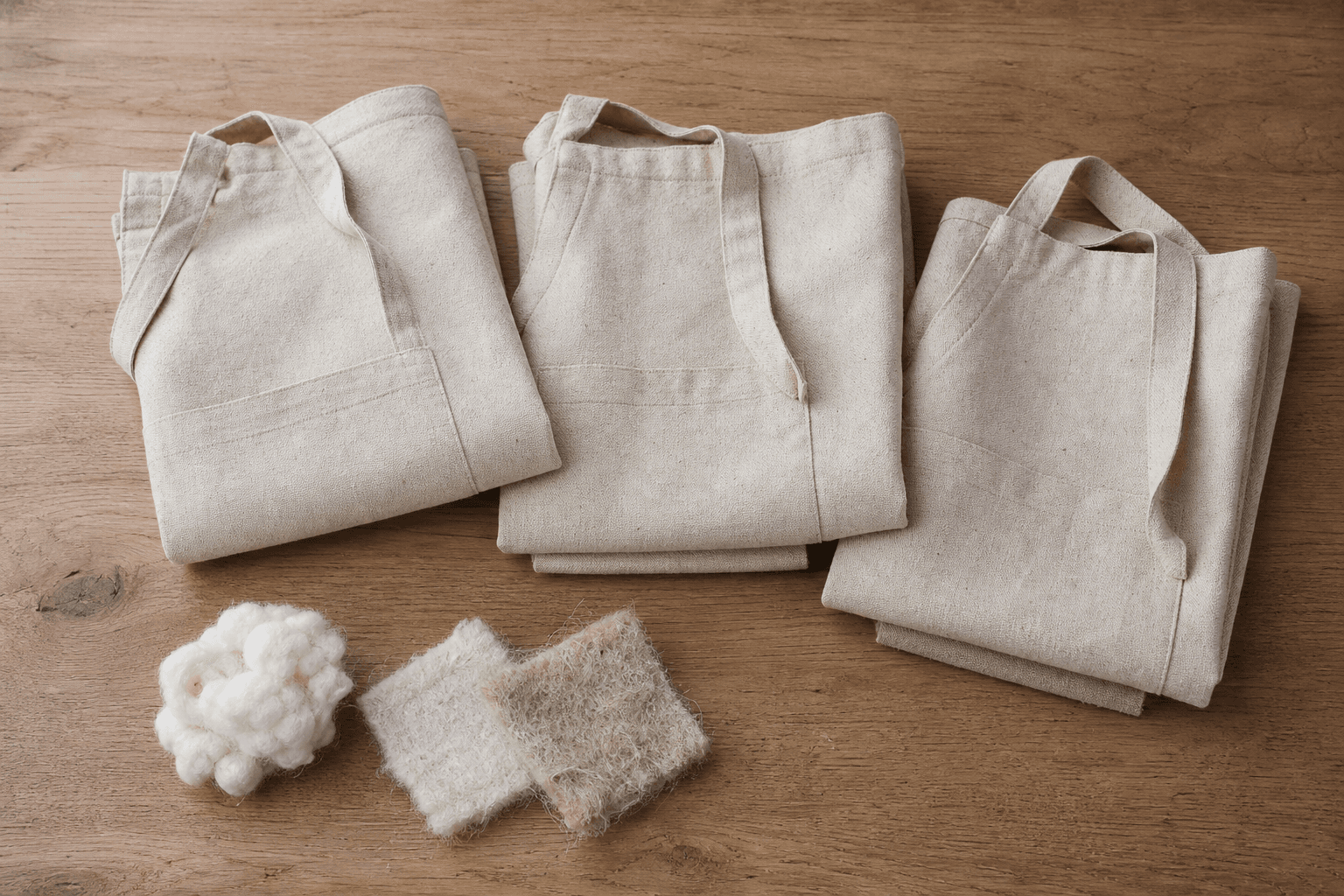
A recycled cotton apron can be GRS certified only when recycled input, chain of custody, chemical controls and social criteria are verified through the supply chain.
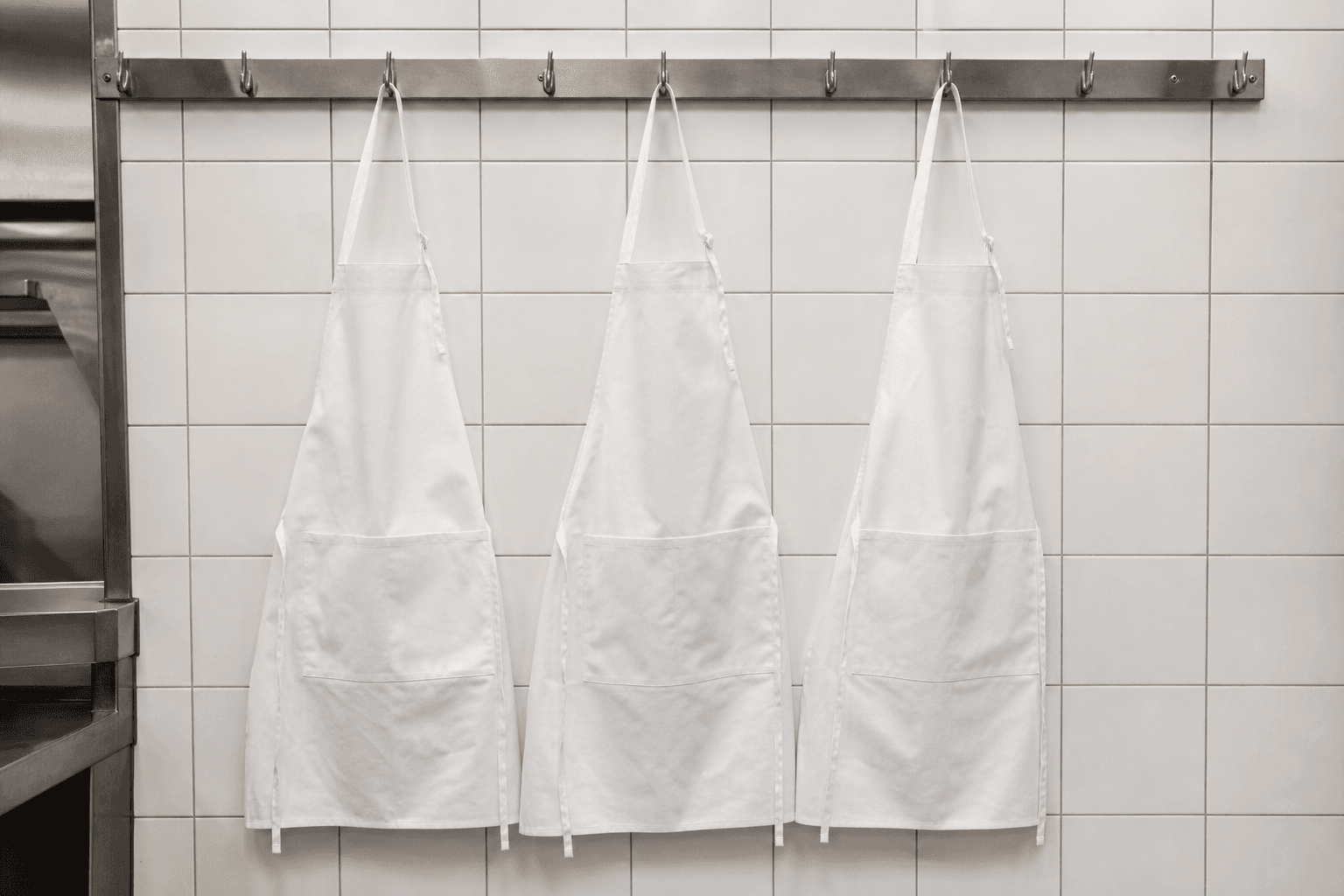
Cotton-poly blend chef aprons: stain release and industrial wash
A cotton poly chef apron balances hand feel, stain release, color stability and industrial wash life when fabric weight and finish are specified correctly.
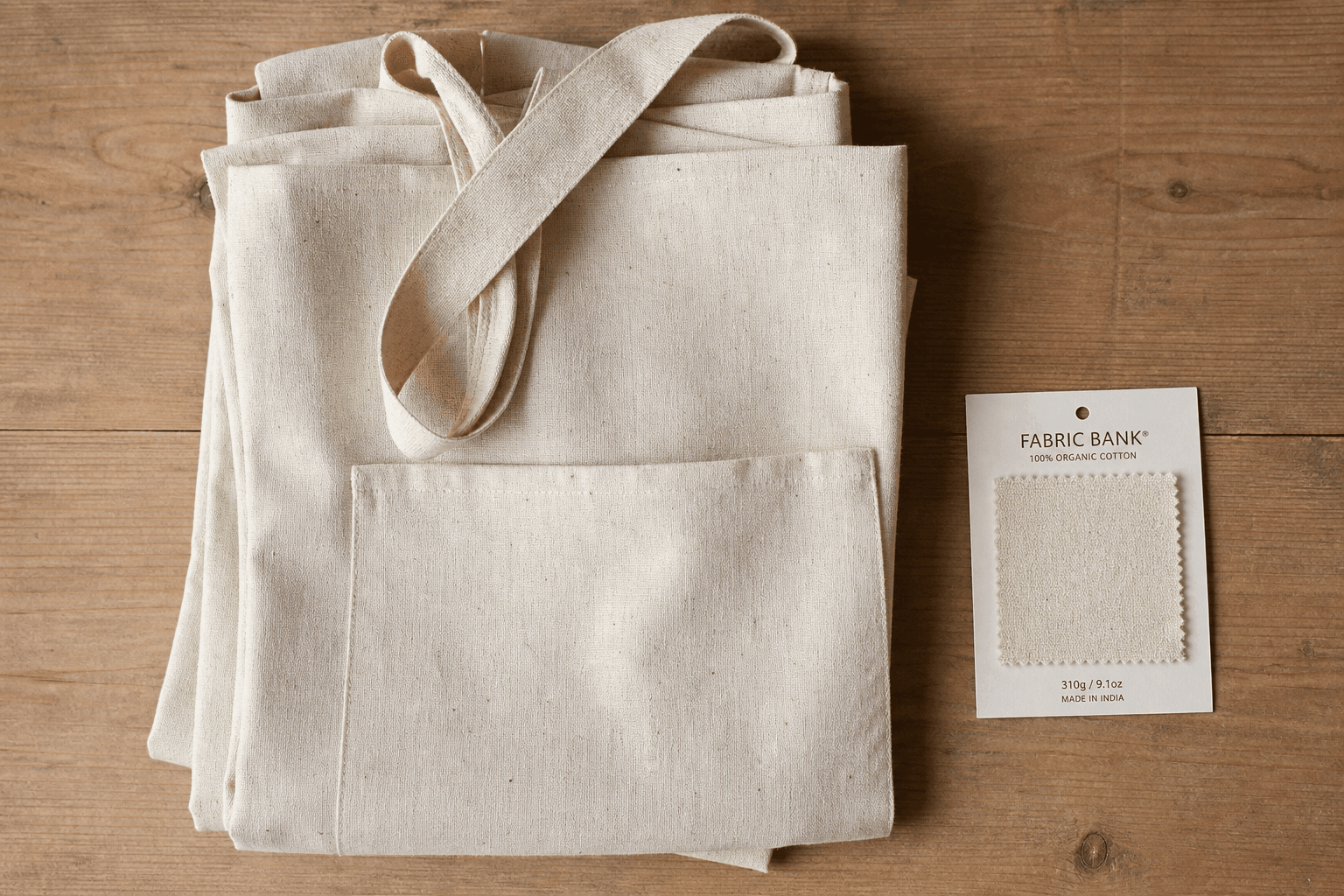
Organic cotton aprons: GOTS certification, sourcing and cost
An organic cotton apron can support premium positioning, but buyers need to verify certification scope, fabric weight, dyeing route, MOQ and cost before bulk ordering.
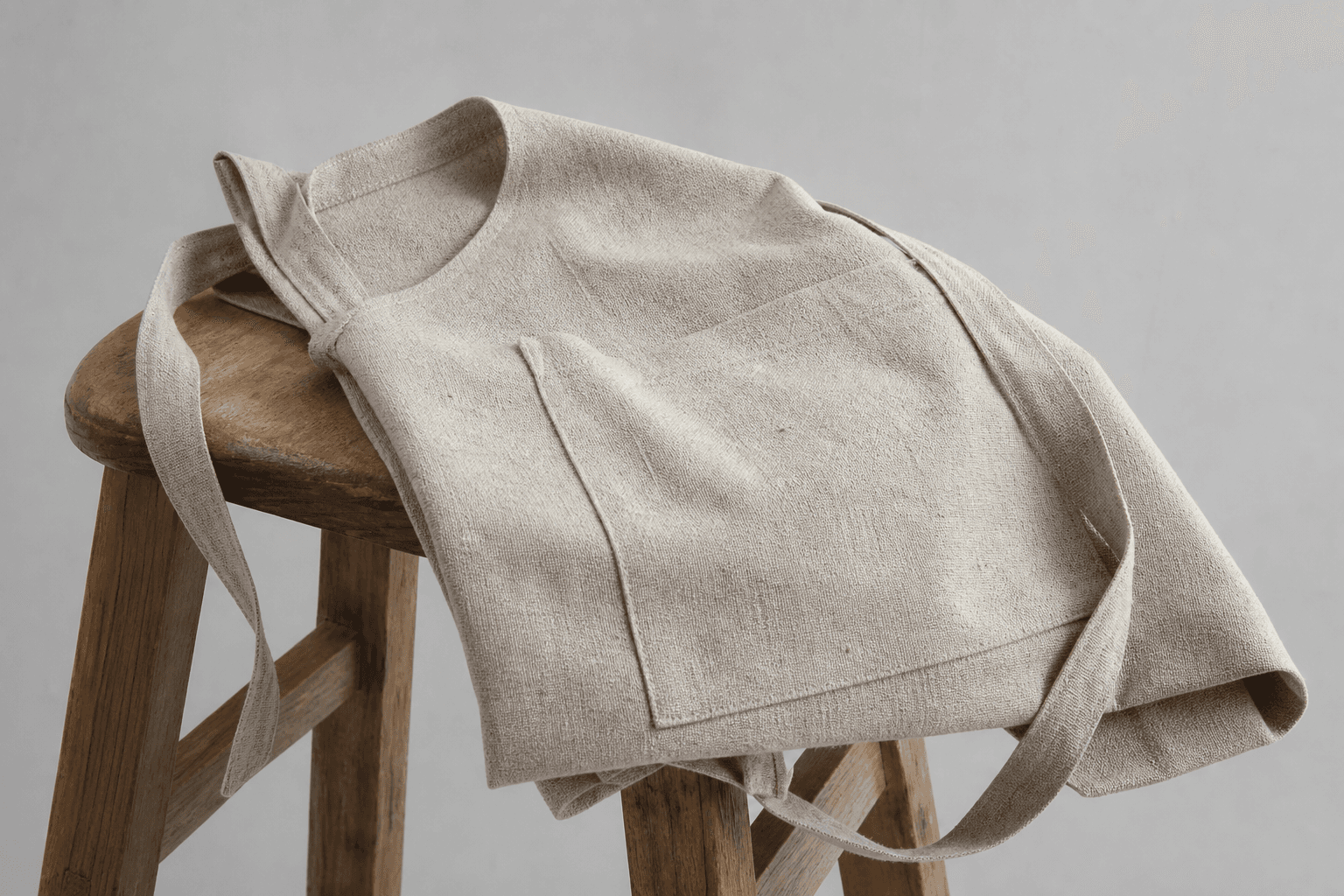
Hemp and hemp-blend aprons: durability and sustainability
A hemp apron can offer strong abrasion resistance and lower-impact fiber content, but buyers should specify blend ratio, GSM, dye process and shrinkage controls early.
Flame-resistant welding aprons: leather, FR cotton and standards
A practical welding apron sourcing guide comparing leather, FR cotton and common safety standards for bulk OEM buyers.
Apron fabric weight chart: matching GSM and oz to use case
This apron fabric weight chart helps buyers match GSM and oz weight to kitchen, café, workshop, denim, and promotional apron use cases.
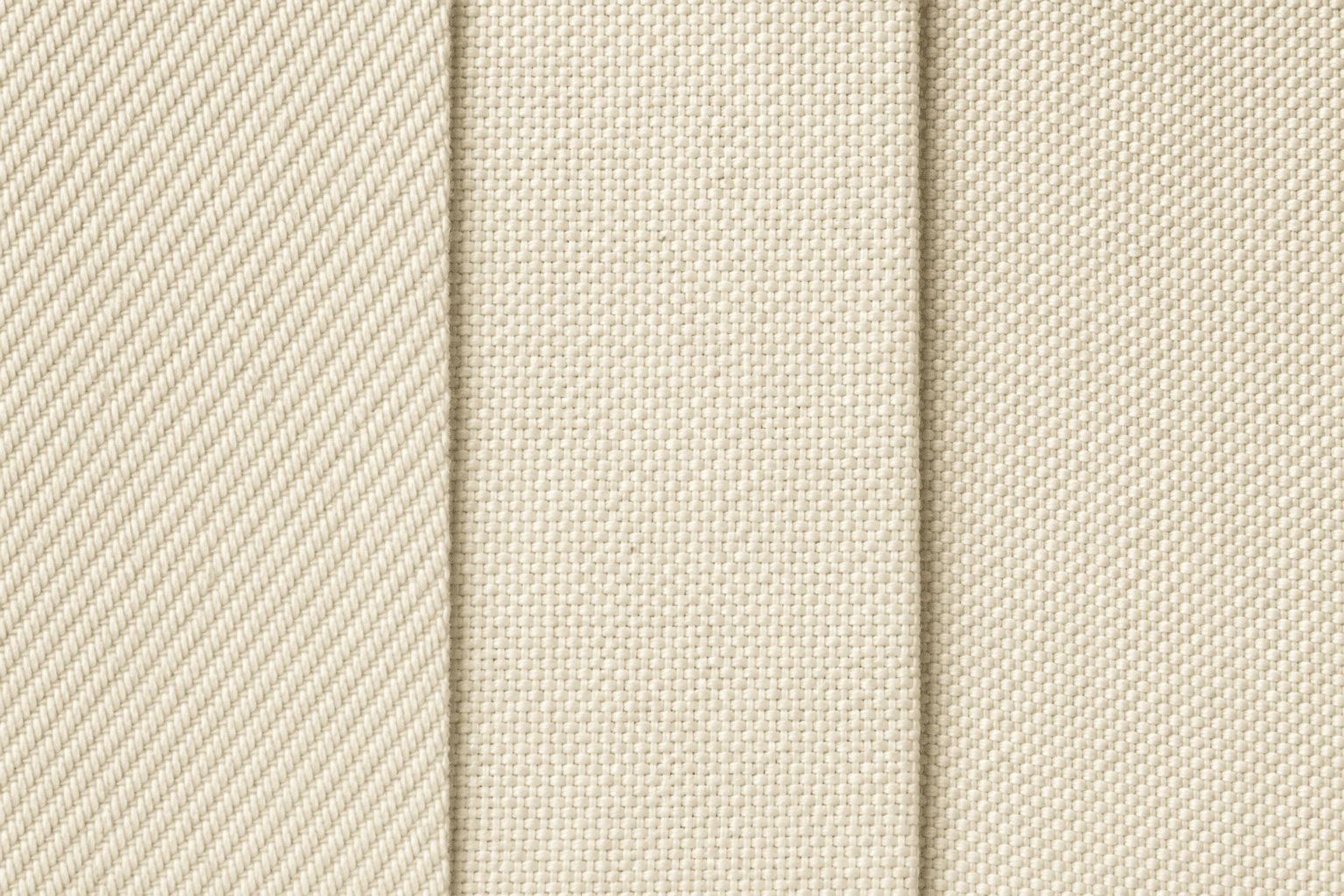
Twill vs canvas vs duck: choosing an apron weave
A practical twill vs canvas apron comparison for bulk buyers choosing between cotton twill, plain canvas and duck canvas for custom apron programs.
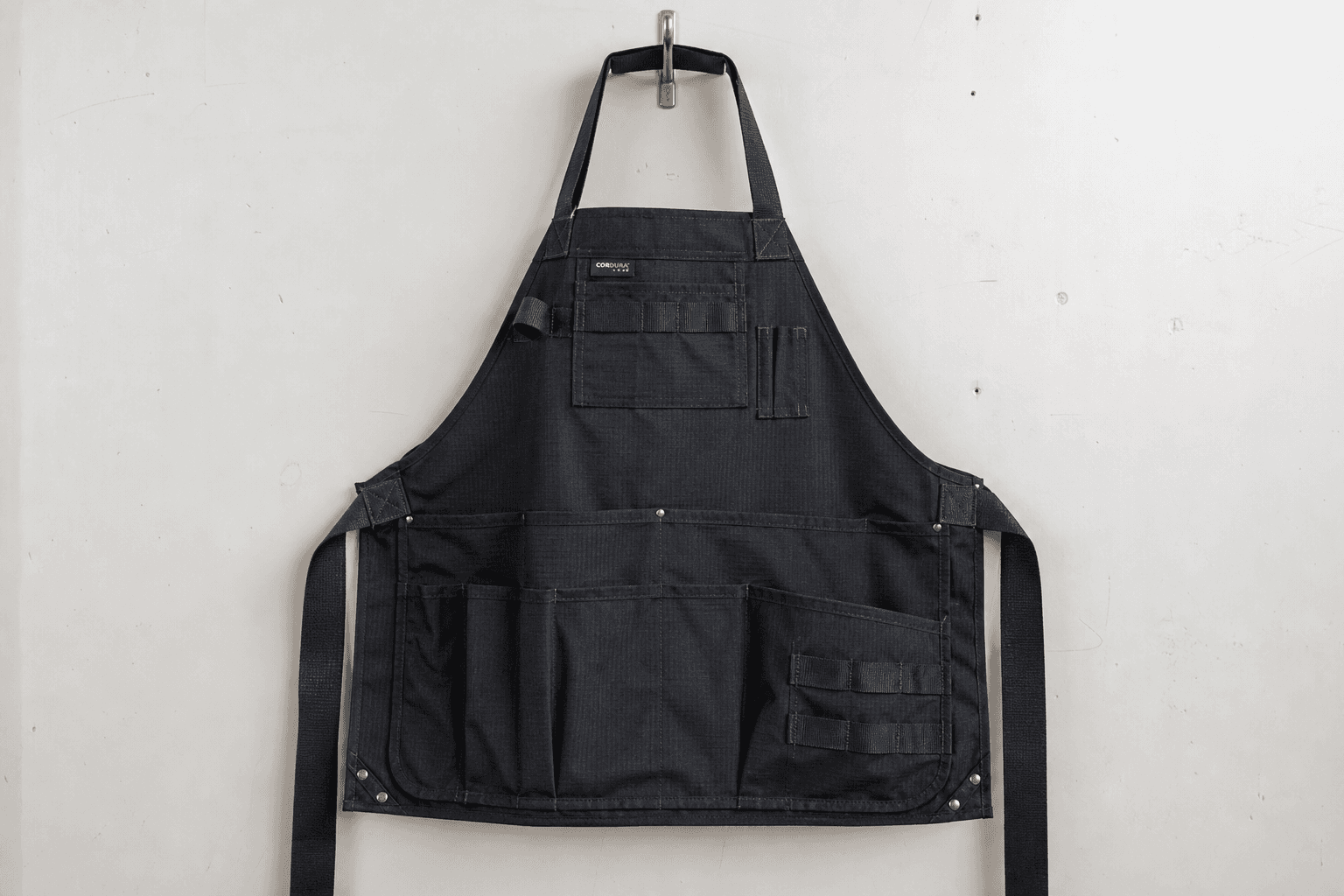
Cordura and ripstop aprons for heavy industrial use
A cordura apron is suitable when abrasion, snagging and repeated laundering matter more than soft drape or low unit cost.
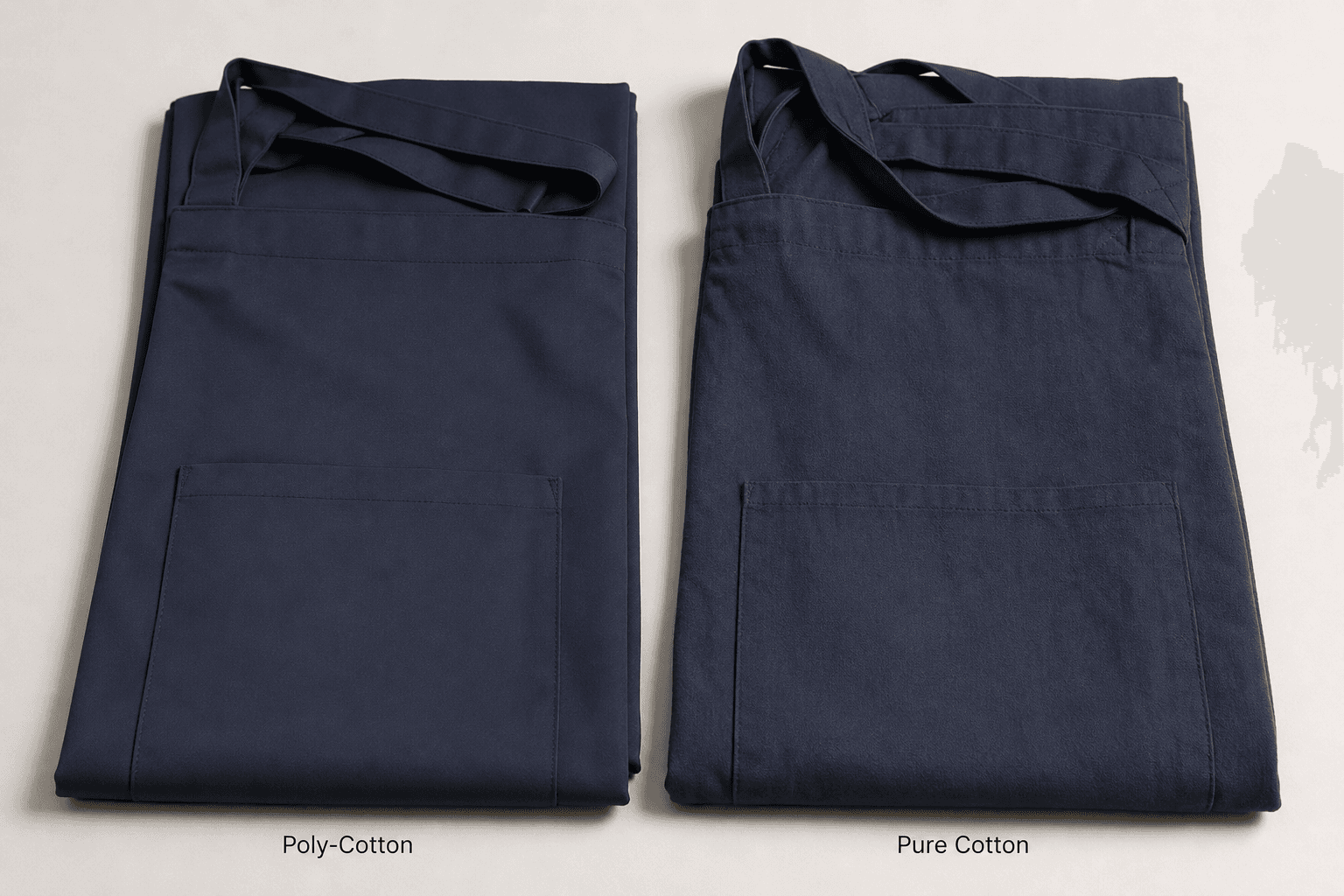
Poly-cotton vs pure cotton aprons: cost, comfort and care
A practical poly cotton vs cotton apron comparison for bulk buyers, covering fabric cost, comfort, shrinkage, wrinkling, washing and sourcing decisions.

Apron color fastness: stopping fade, crocking and bleeding
Apron color fastness depends on fabric, dye route, washing process and QC testing, especially when dark custom aprons must avoid fade, crocking and bleeding.
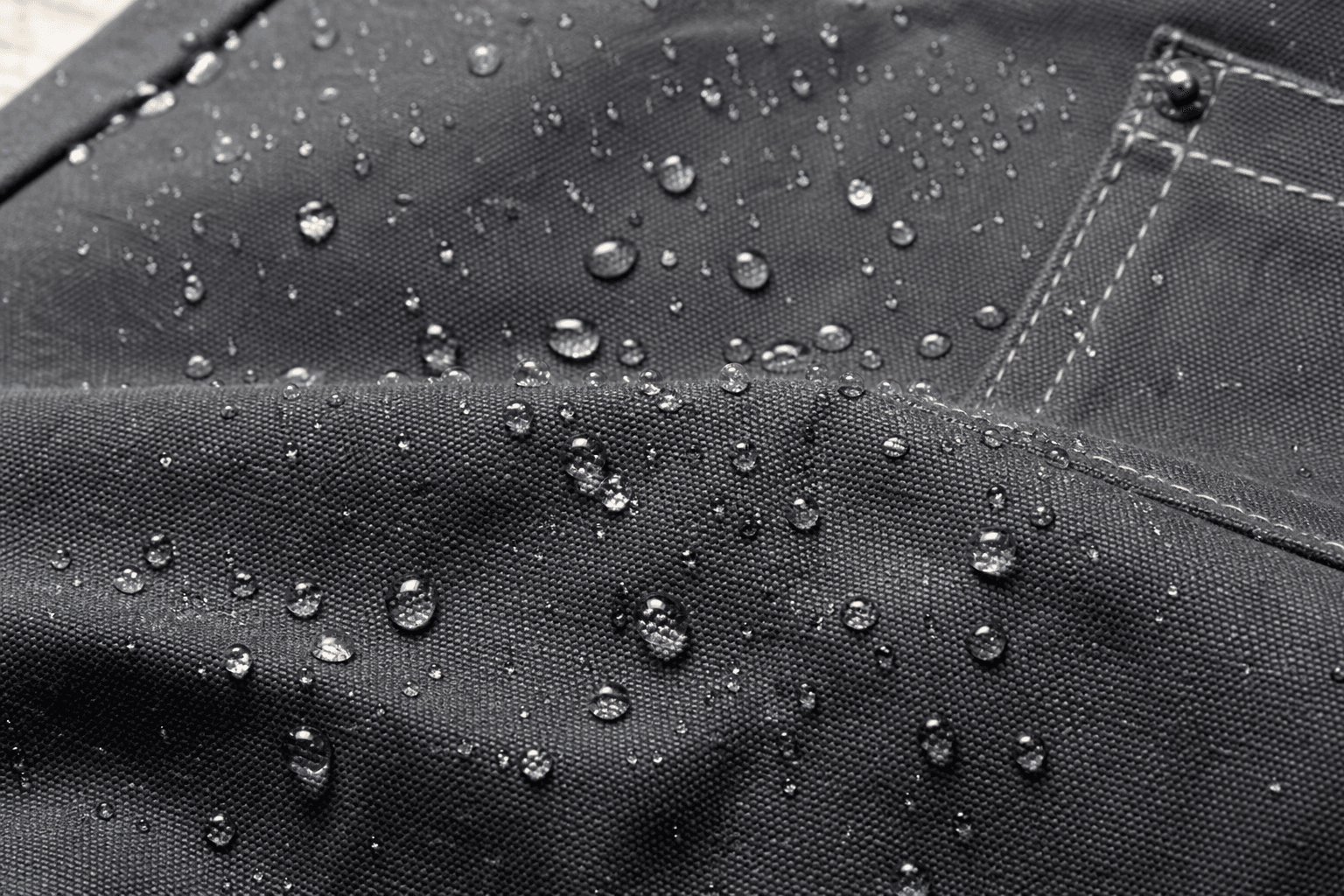
Water-repellent and DWR finishes for aprons
A water repellent apron depends on fabric, finish chemistry, coating choice and wash target, not just a single DWR label.
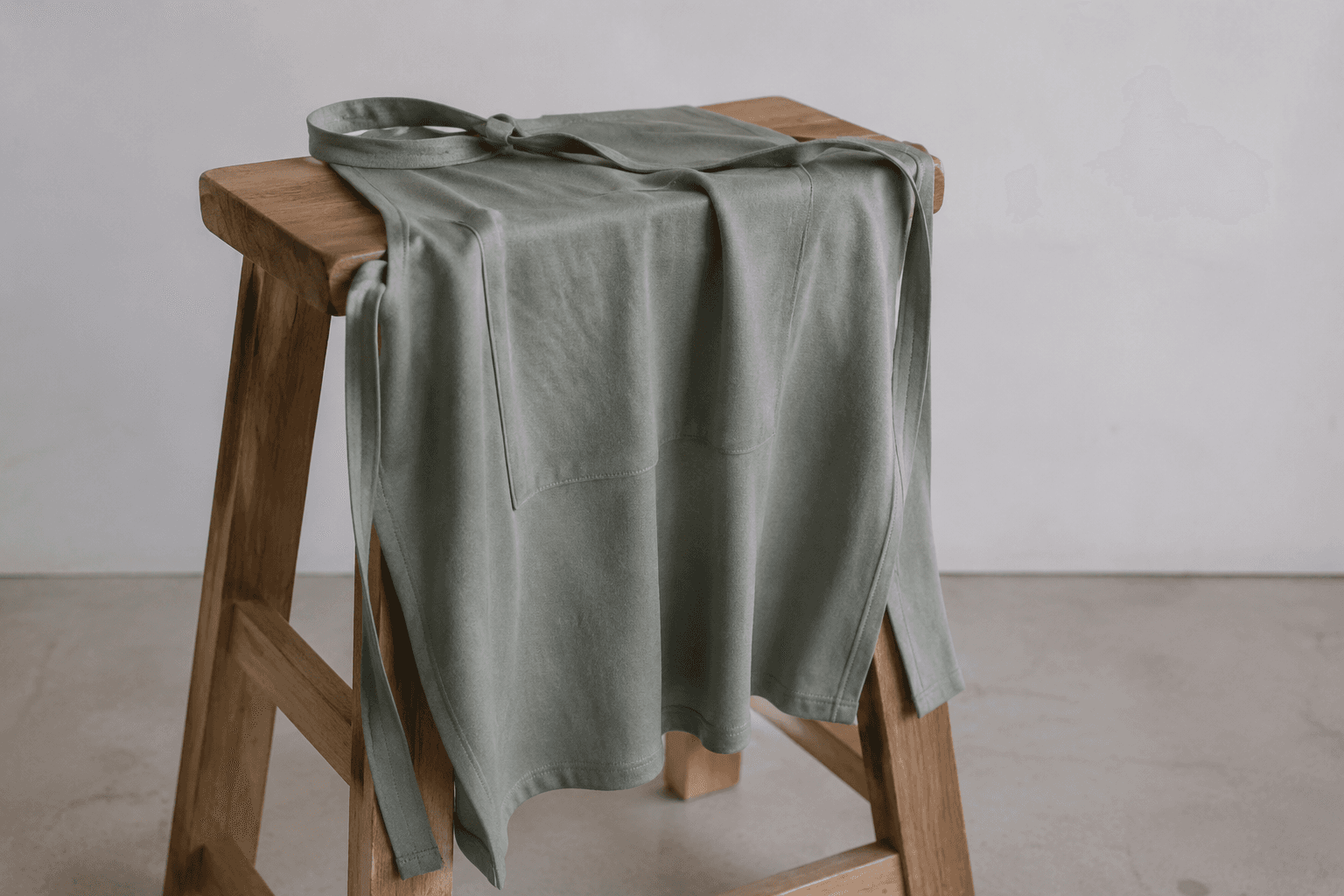
Bamboo and modal-blend aprons: softness, drape and durability
Bamboo apron fabric delivers a softer hand and cleaner drape, but blend ratio, GSM and finishing control whether the apron survives bulk wash cycles and retail use.
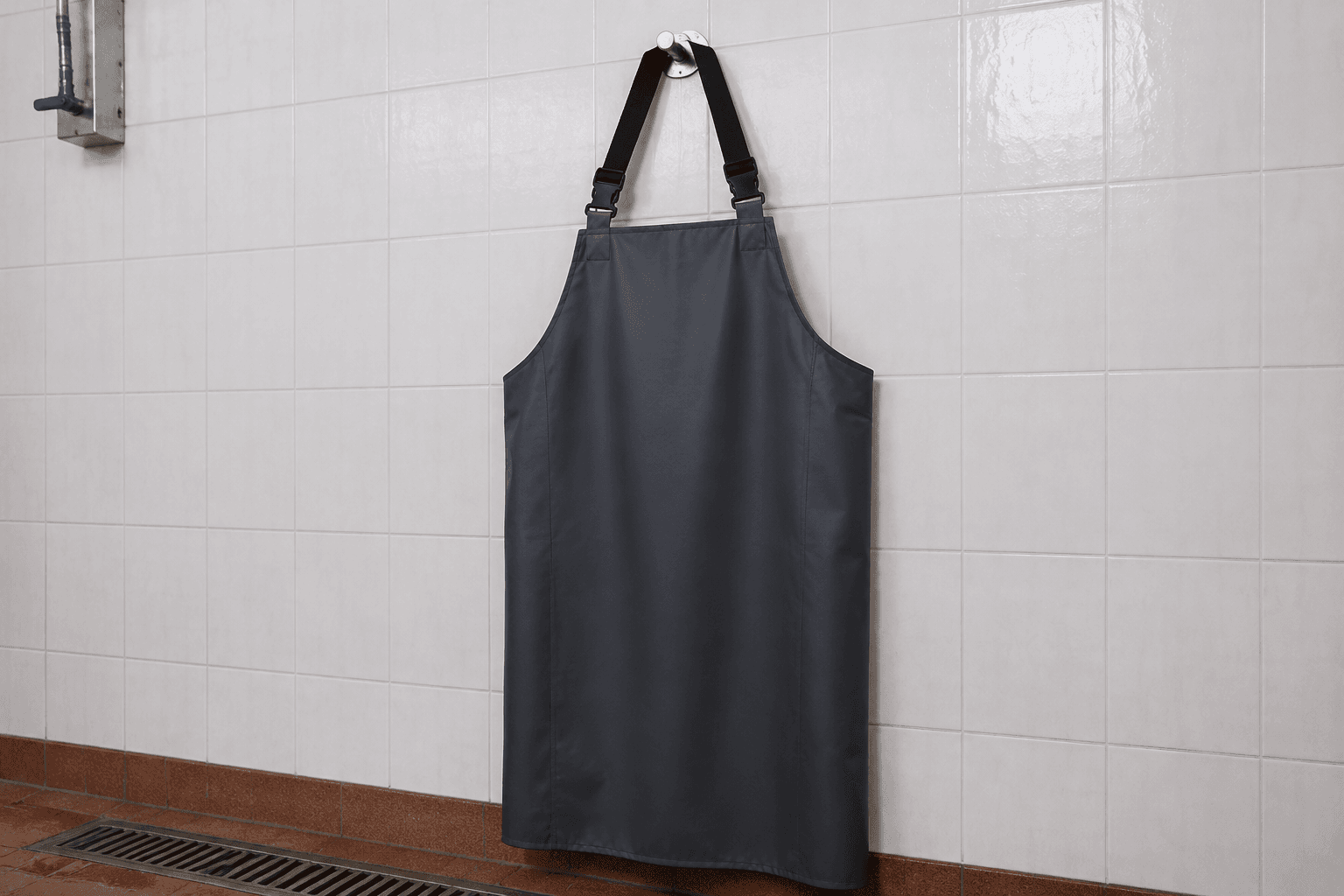
Neoprene and coated aprons for wet and chemical work
Coated apron fabric is the practical choice for wet and splash-heavy work, while neoprene apron builds better comfort and flexibility for longer shifts.
Chambray apron fabric guide: lightweight denim looks without the weight
A chambray apron gives the denim look buyers want with less weight, softer handfeel, and tighter cost control for bulk programs.
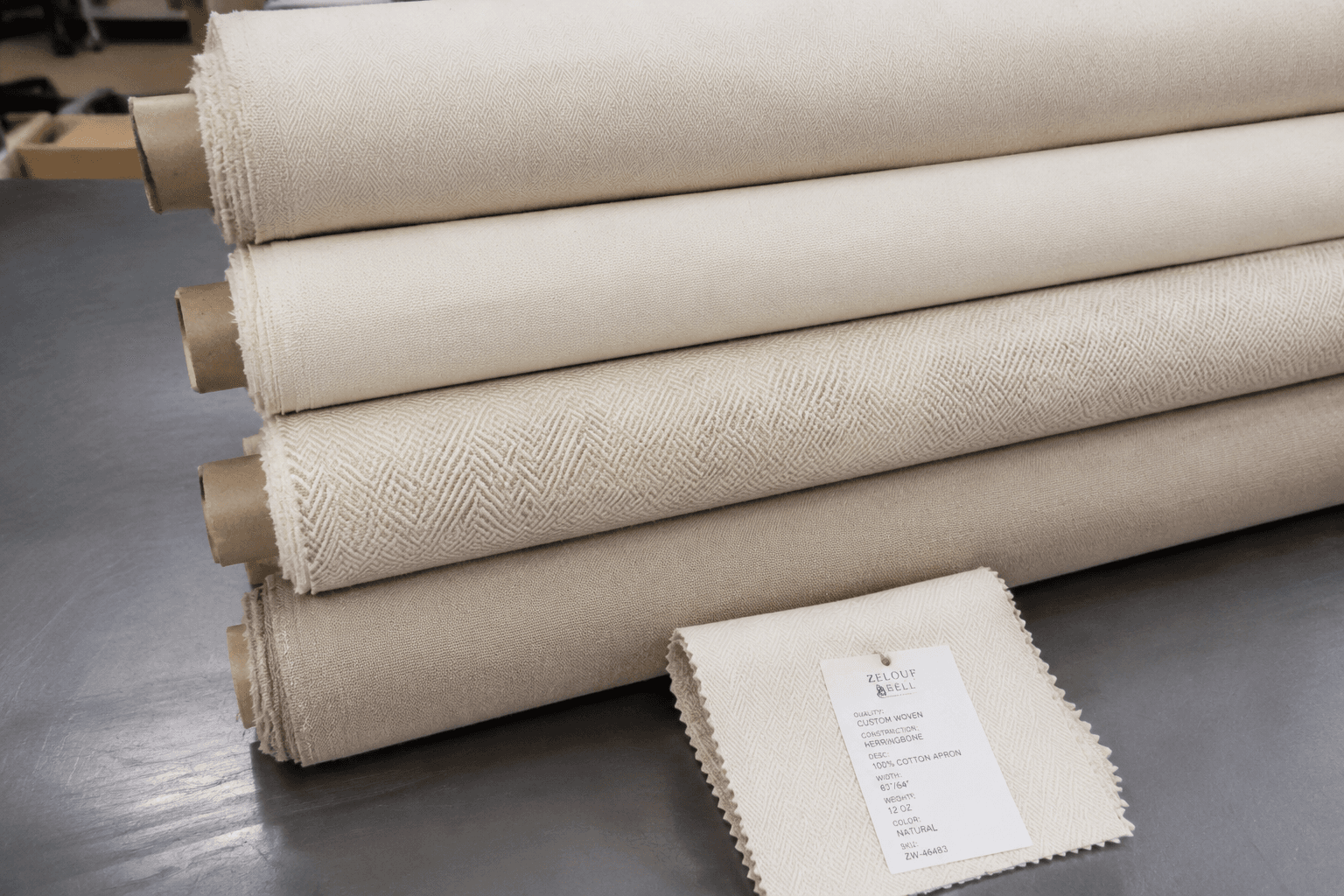
Stocked vs custom-woven apron fabric: MOQ, lead time and cost
Choosing between stocked apron fabric and custom woven apron fabric changes MOQ, lead time, and unit cost more than most buyers expect.
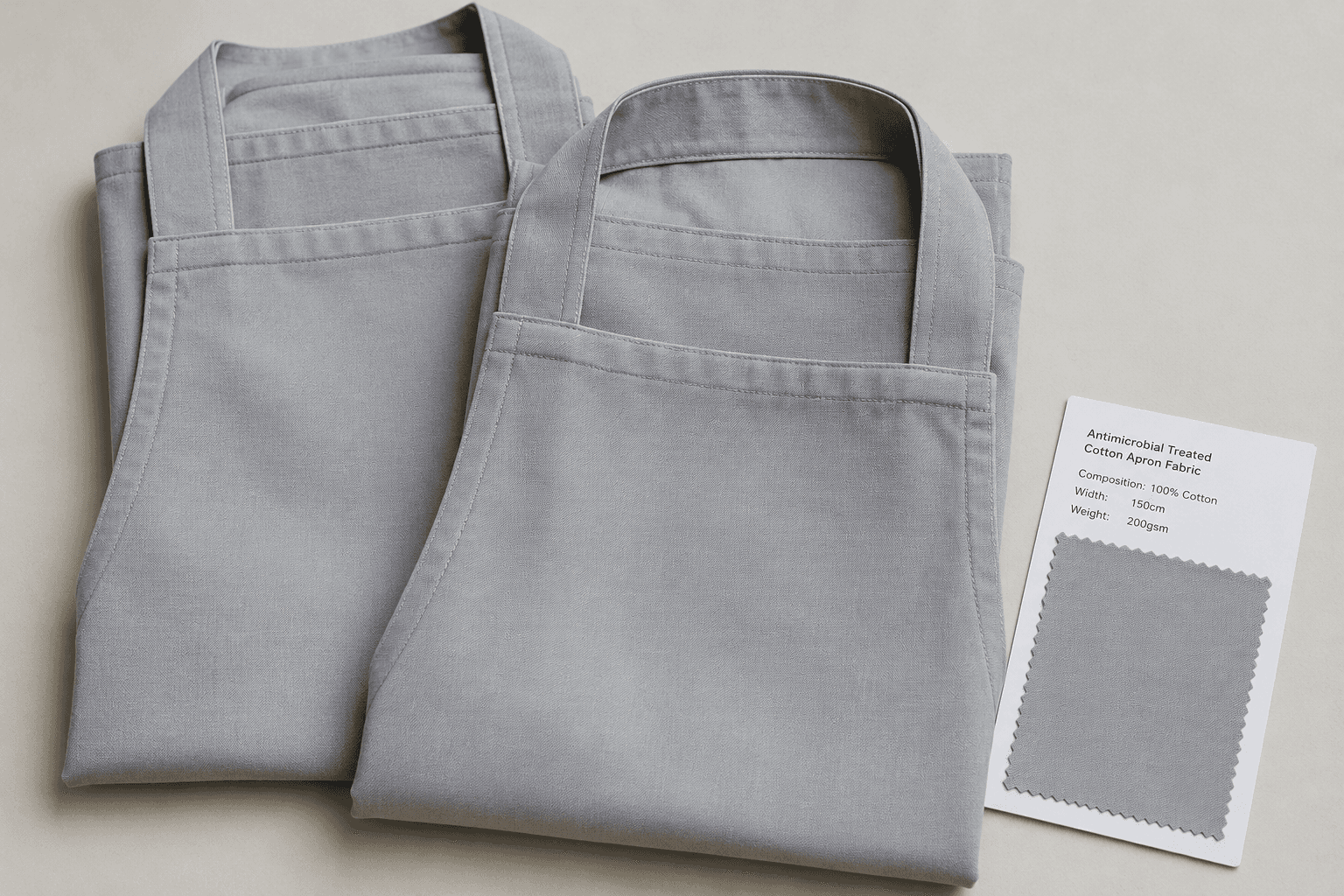
Antimicrobial apron fabrics: finishes, claims and where they help
Antimicrobial apron fabric can reduce odor and support hygiene positioning, but buyers need to verify finish type, wash durability, claim wording and cost impact.
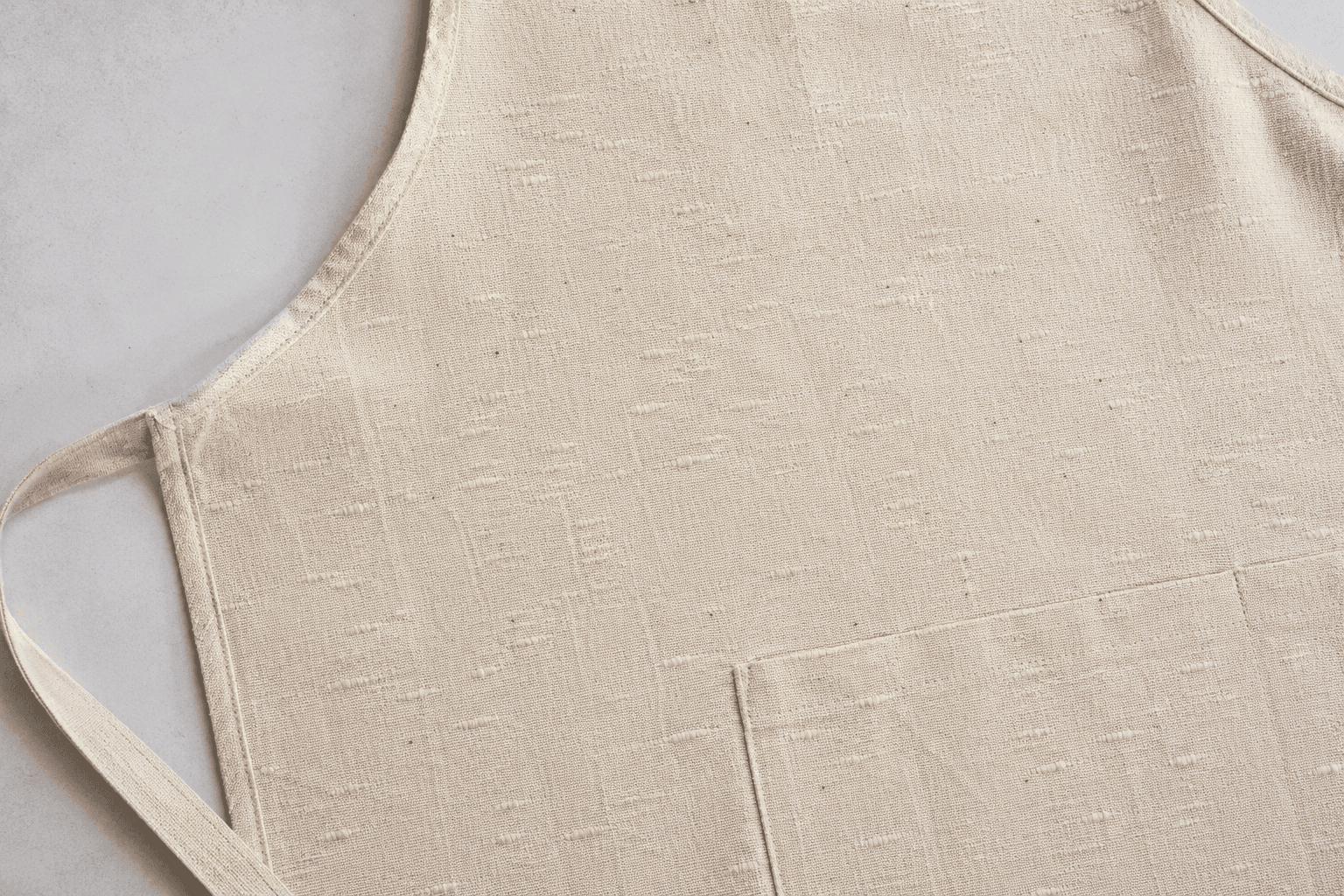
Slub and textured cotton aprons: character without sacrificing durability
A slub cotton apron can give hospitality and lifestyle programs visible texture, provided GSM, yarn quality, shrinkage control and reinforcement details are specified correctly.
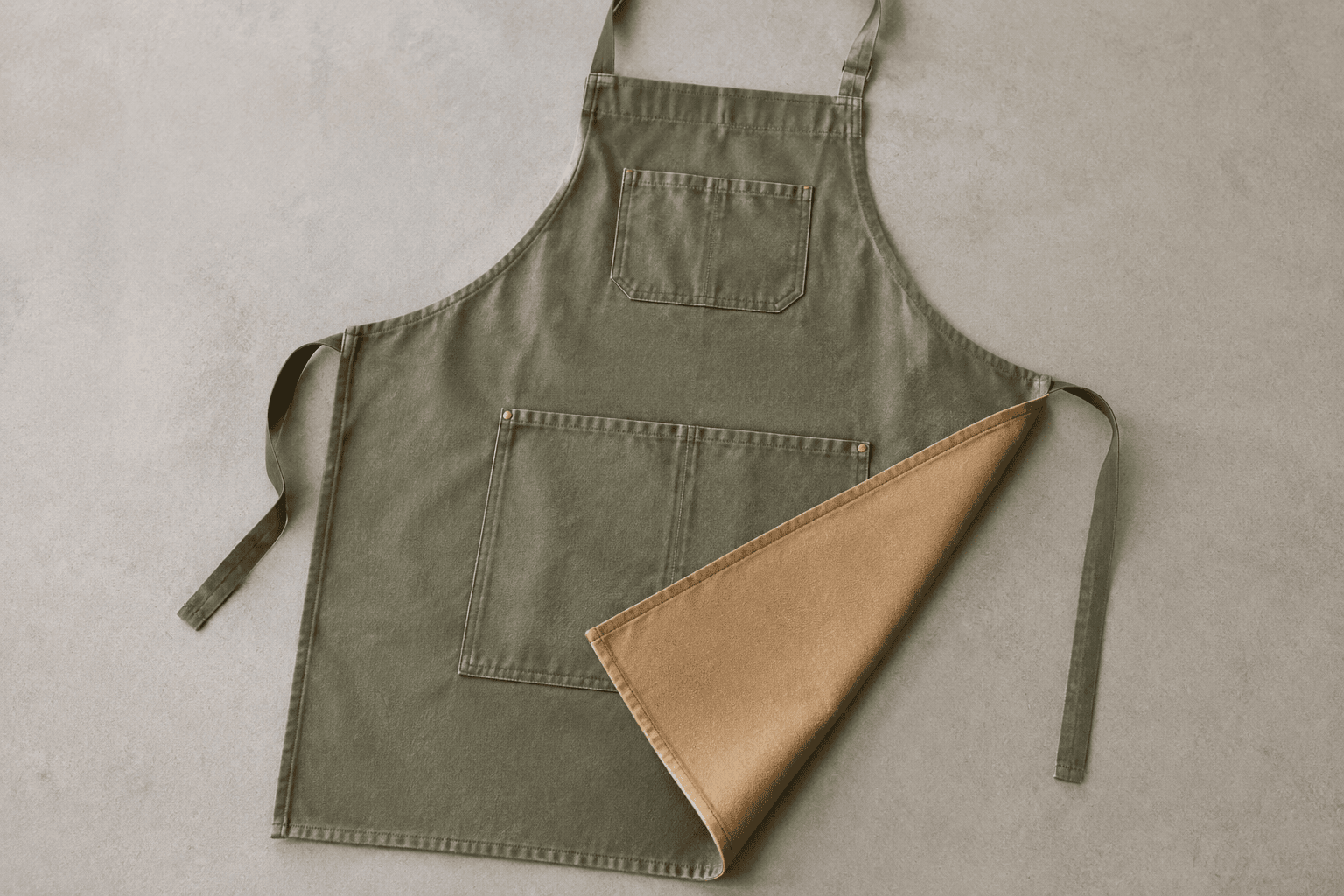
Apron lining and interlining: when an extra layer is worth it
Apron lining is useful when durability, insulation, stain control or structure matters, but it adds cost, weight and production complexity.
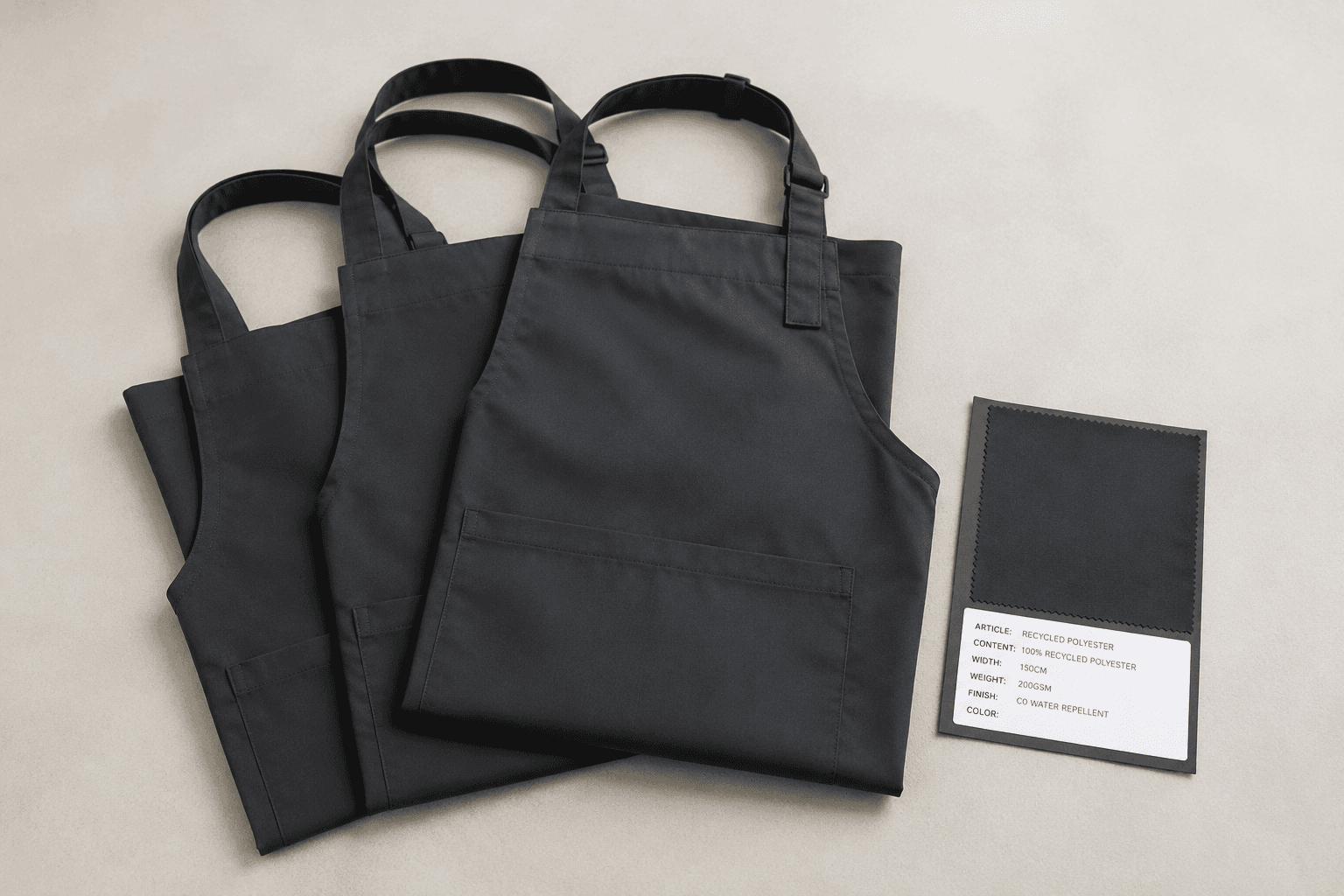
rPET recycled-polyester aprons: performance and the recycled claim
A recycled polyester apron can be a strong eco performance apron if the fabric, dyeing, and claim chain are specified correctly. The recycled label is only useful when the buyer can verify yarn content, certification, and real wash durability.