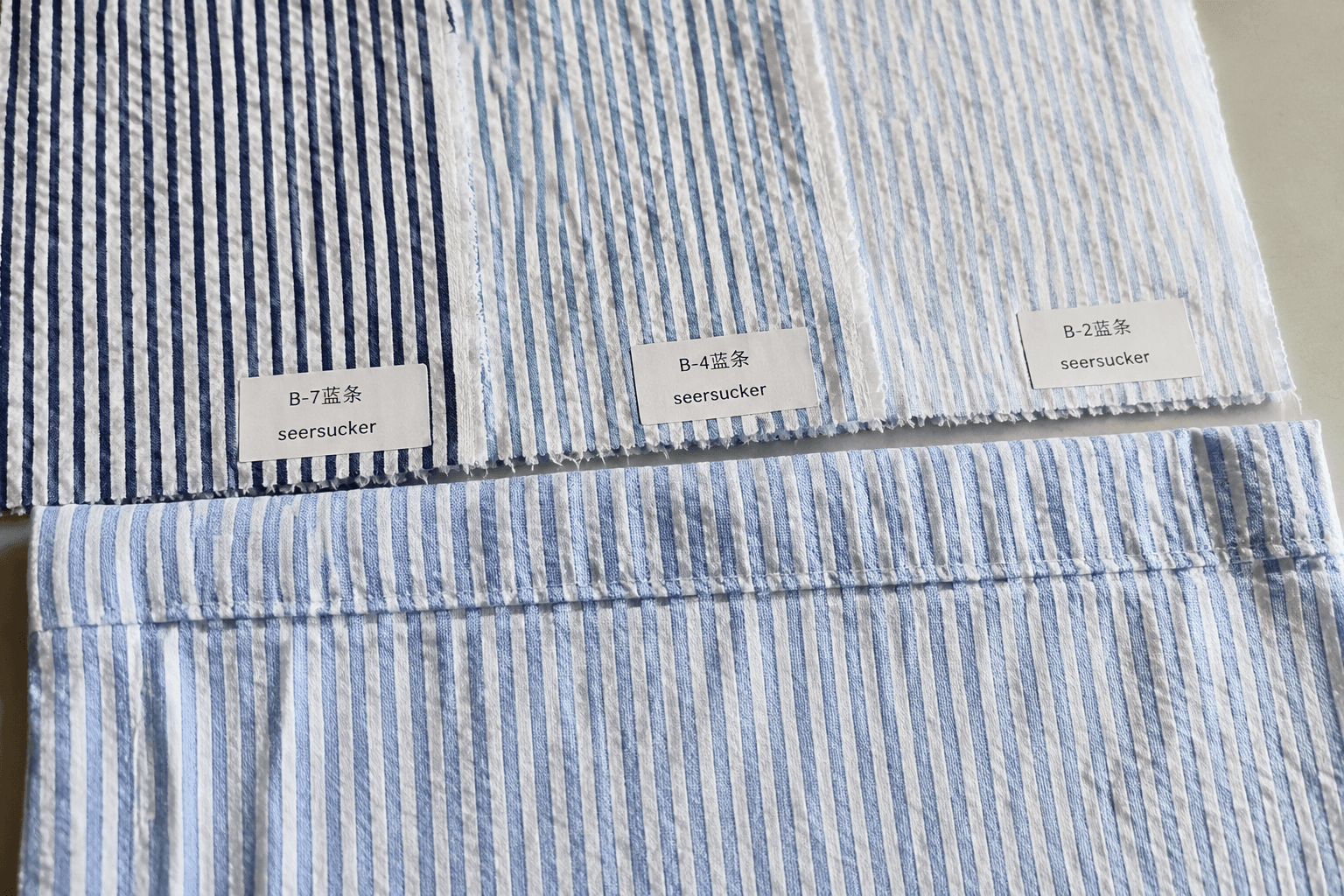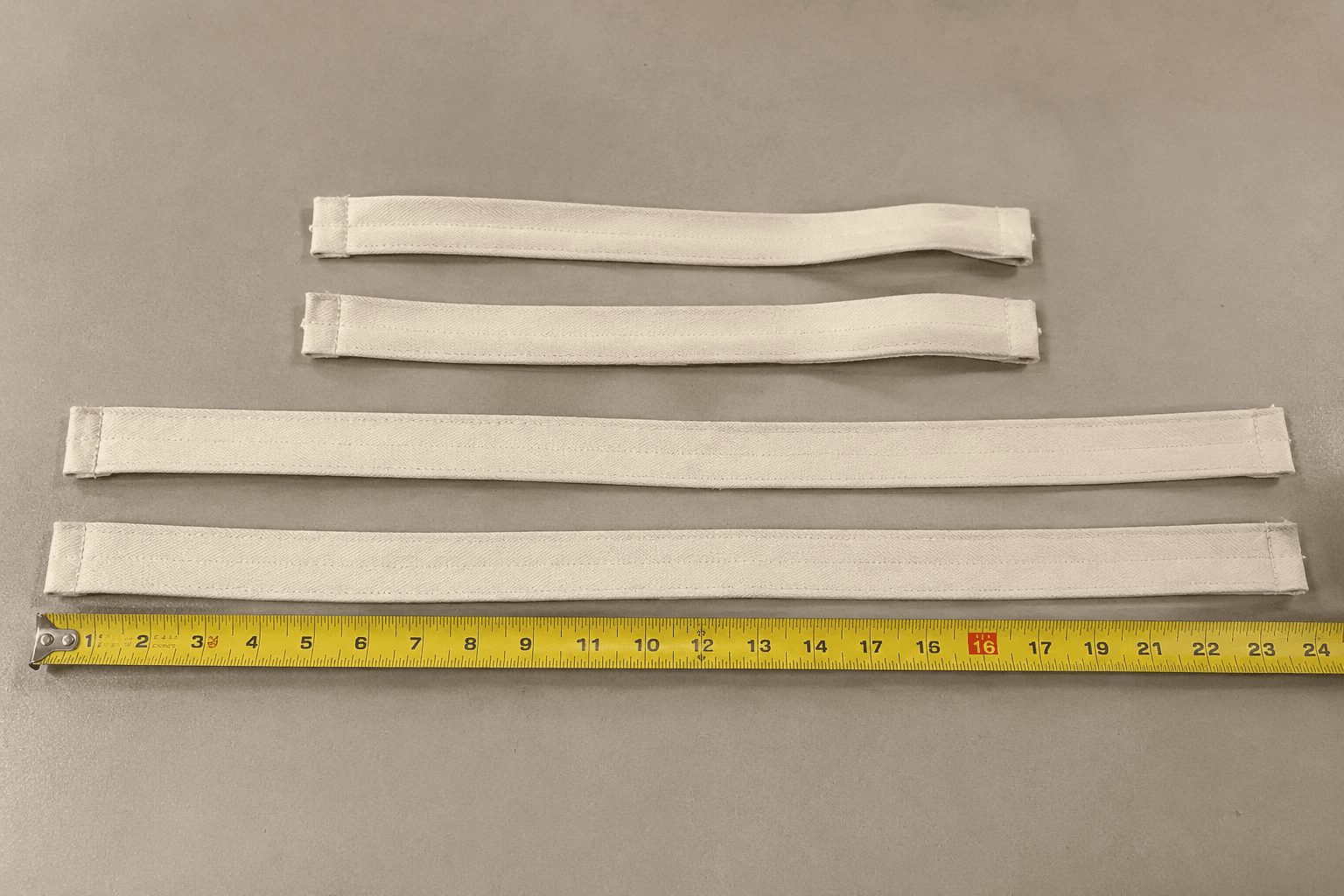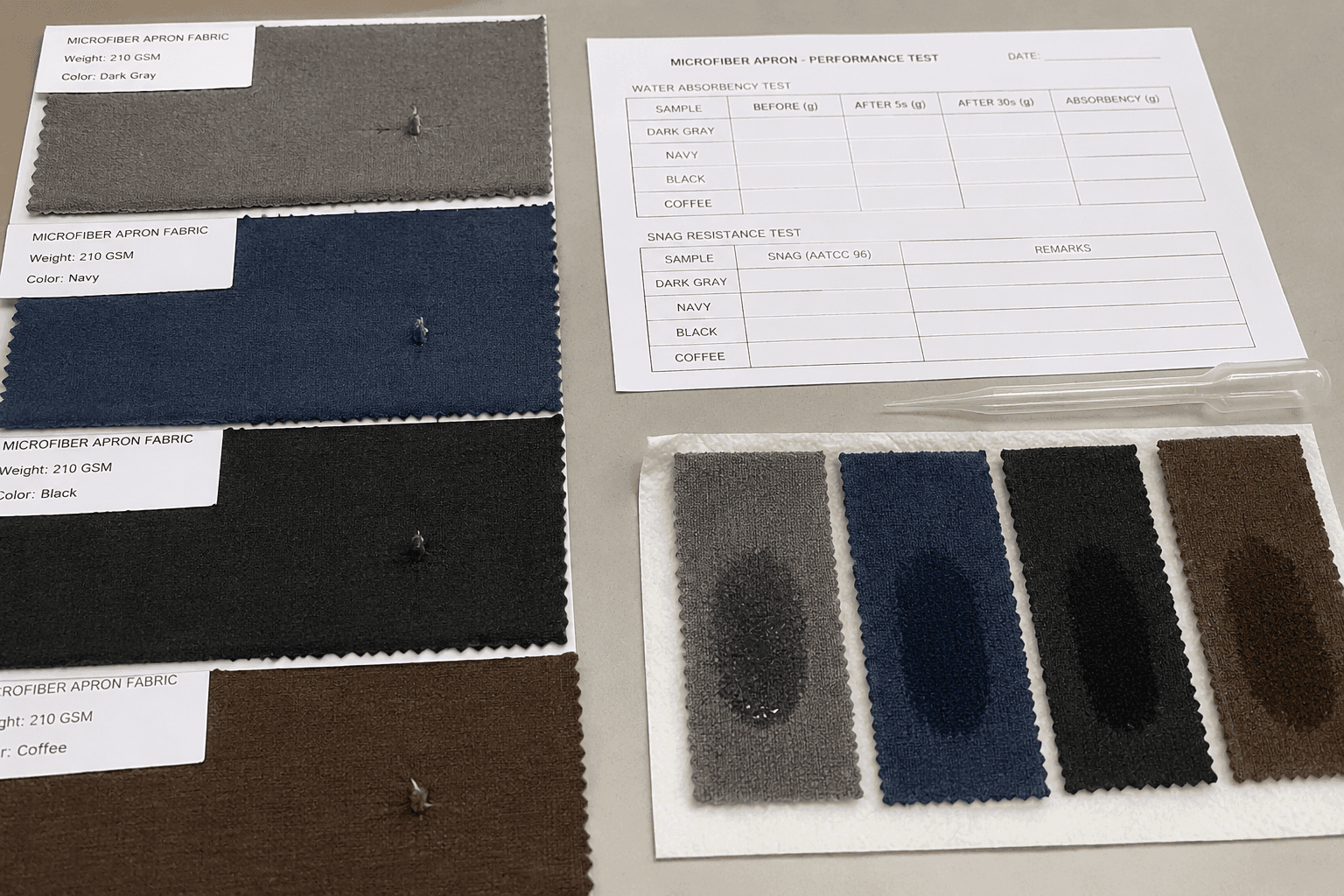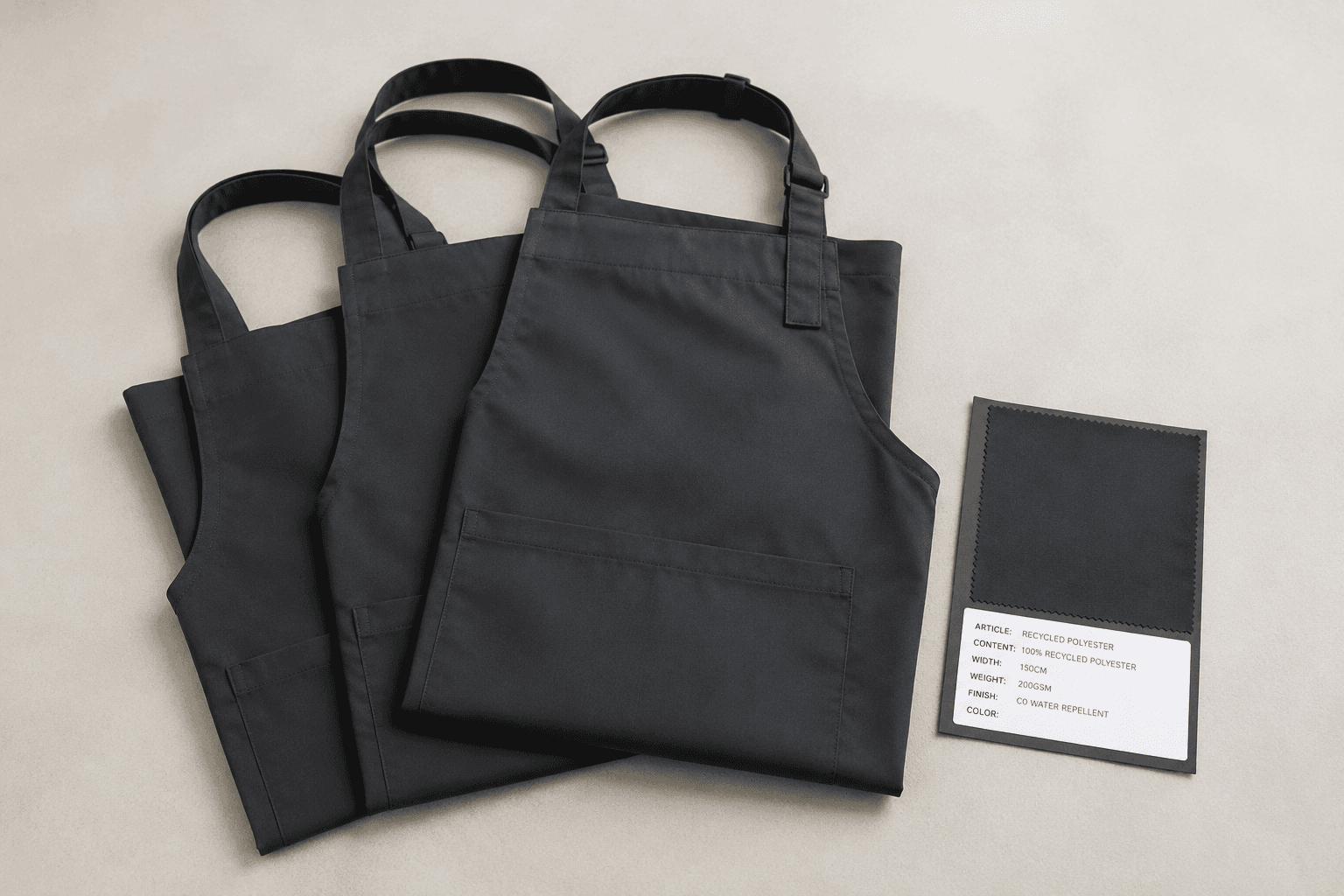
For bulk buyers, a recycled polyester apron is not a branding exercise. It is a sourcing decision with measurable trade-offs in hand feel, abrasion resistance, color consistency, and claim documentation. If the apron is for hospitality, food service, retail staff, or promotional use, the fabric specification matters more than the headline term rPET.
In factory terms, the most common construction is recycled bottle fabric apron material made from post-consumer PET flakes, re-processed into staple fiber or filament yarn, then woven or knitted into apron cloth. The claim can be accurate, but only if the fabric supplier, sewing factory, and documentation are aligned. Without that alignment, the product may still look good, yet the recycled claim can become weak or unverifiable in a buyer audit.
The practical question is not whether recycled polyester exists. It is whether it can meet the end use at the right cost. For a sustainable synthetic apron, the buyer usually needs a balance of 150 to 240 GSM, stable color fastness, low shrinkage, and a price that still works at 3,000 to 20,000 pcs. That is where the real sourcing discussion begins.
- rPET is a material claim, not a performance guarantee, so fabric weight, weave, coating, and finishing still determine how the apron behaves in use.
- A recycled polyester apron usually costs more than virgin PET, but the premium is often modest when volumes are above 5,000 pcs and colors are standard.
- GRS or RCS documents matter only when the chain of custody is complete, including yarn, fabric, trim, and the final transaction certificate.
- Most buyers should specify GSM, yarn count, and finish before they discuss artwork, because those variables drive drape, opacity, and wash life.
- The recycled claim can be lost in trims and labels if the supplier mixes uncertified thread, webbing, or packaging into the order.
- Sampling should include wash and abrasion checks, because an eco performance apron that pills, fades, or loses coating will fail in the field regardless of the recycled story.
What a recycled polyester apron means in factory terms
In the factory, an rPET apron begins with recycled PET feedstock, usually sourced from post-consumer bottles or industrial PET waste. The bottles are sorted, washed, flaked, melted, and spun into yarn. For apron programs, the two common options are spun yarn that gives a softer, more textile-like hand, and filament yarn that gives a cleaner surface and often better strength. A buyer may hear both called a recycled polyester apron, but they behave differently on the sewing line and in use.
For bulk apron orders, the most common cloth weights are 180 GSM, 200 GSM, 240 GSM, and 300 GSM depending on the style. A cafe waist apron may sit at 180 to 220 GSM. A bib apron for kitchen or hardware use often needs 240 to 300 GSM if the buyer wants more body and better opacity. In practical terms, 180 GSM is lighter and cheaper, while 240 GSM usually gives a more professional look and better spill resistance when the weave is tight.
A recycled bottle fabric apron can also be blended. Typical ratios are 100% rPET, 80/20 rPET-cotton, or 65/35 rPET-cotton. Full polyester gives better color consistency and easier stain release, while cotton blends improve hand feel and reduce the plastic look. The right answer depends on the end market. For a retail private-label program, some buyers want visible texture and a softer drape. For industrial or service uniforms, they often want clean washability and dimensional stability.
- 100% rPET is usually the simplest route for certification and color control.
- rPET-cotton blends are better when the buyer wants a less synthetic hand feel.
- Filament yarn fabrics usually look smoother, while spun yarn fabrics feel more textile-like.
- Heavier GSM improves structure but raises fabric cost and sewing difficulty.
Recycled polyester apron performance: where it works and where it does not
A recycled polyester apron is usually strong enough for service wear, light kitchen use, retail staff, salons, coffee shops, and event programs. Polyester has a practical advantage in these categories because it dries faster than cotton, holds shape better after repeated laundering, and resists wrinkling during daily use. If the apron is worn for long shifts and washed several times per week, these traits matter more than a purely natural-fiber story.
The weak points are also predictable. Polyester can build static in dry climates, and very light weaves can show shine after repeated abrasion. If the fabric is too thin, stains may visually map through from the back side. If the dyeing process is poor, dark shades can show tone variation across panels, which is a common issue in black, navy, charcoal, and forest green. In a recycled polyester apron, buyers should not assume that the recycled yarn itself solves these issues. It does not.
For kitchen and hospitality use, we usually advise buyers to test the apron in the actual use environment before approving bulk production. A 240 GSM twill may feel ideal in a showroom, but a 180 GSM plain weave can be enough for a lightweight front-of-house program. On the other hand, a bar apron with frequent rubbing at the waist may need thicker fabric, reinforced pocket seams, and bartack placement that survives 50 to 80 wash cycles.
- Best-fit applications include cafes, restaurants, retail, salons, flower shops, and event staffing.
- Not ideal for include heavy grease environments unless the buyer accepts stain management and frequent laundering.
- Static and shine become more noticeable in dry climates and on low-GSM fabrics.
- Durability depends on construction, not just the recycled content percentage.
Specifying an eco performance apron without overbuying fabric
The most expensive mistake in apron sourcing is specifying by concept instead of by measurable requirement. A sustainable synthetic apron should be defined by fabric weight, weave, yarn type, colorfastness target, shrinkage tolerance, and hardware. If those items are not fixed early, factories will quote different structures and the comparison becomes meaningless. A buyer may think two offers are close because both say rPET, while one is 180 GSM with basic reactive dyeing and the other is 240 GSM with more stable finishing and better trim control.
For most commercial programs, a good starting spec is 200 to 240 GSM, azo-free dyeing, color fastness to washing at level 3 to 4, and shrinkage under 3% after standard wash testing. If the apron has a screen print or heat transfer, the base cloth should be selected for smoothness and print anchoring. If the garment needs embroidery, the cloth should have enough body to avoid puckering around dense stitch areas.
The trim package matters as much as the body fabric. Recycled claim buyers sometimes focus only on the apron cloth and forget thread, binding tape, straps, buckles, and packaging. From a practical standpoint, a fully recycled polyester apron can still lose part of its claim if the webbing is virgin polyester or the hangtag system is not aligned with certification. If the program is consumer-facing, that detail can become visible in a supplier audit or a customer request for proof.
- 200 to 240 GSM is the most common range for a balanced commercial apron.
- Color fastness level 3 to 4 is usually acceptable for service uniforms; higher targets raise cost.
- Shrinkage under 3% is a practical target for stable apron fit.
- Matching trim and labels is necessary if the recycled claim will appear on product copy or packaging.
What buyers should verify in the recycled claim
The recycled claim is where sourcing discipline matters most. A recycled polyester apron can be built from certified yarn, but the buyer needs proof that the yarn, fabric mill, and final sewing facility are inside the same controlled chain. In practice, that means checking whether the supplier can provide GRS or RCS documents, a valid transaction certificate, and lot-level traceability. If the factory says the fabric is recycled but cannot tie the paper trail to the purchase order, the claim is too weak for serious retail or corporate programs.
There is also a difference between recycled content and recycled certification. A supplier may produce an rPET apron without formal certification, especially for promotional or internal-use orders. That can be acceptable if the buyer only wants the material and not a verified sustainability claim. But if the apron will be sold through a brand, marketplace, or retailer with compliance review, uncertified claims create risk. The correct question is not simply, 'Is it recycled?' The correct question is, 'Can you prove the recycled percentage and the chain of custody for this production lot?'
Buyers should also confirm whether the claim applies to the full garment or just the fabric. A 100% recycled polyester apron body is not the same as a 100% recycled product if the thread, binding, neck strap hardware, label stock, or packaging are outside the scope. This is not a theoretical point. It affects how the item can be marketed, how it passes customer compliance review, and how much supporting documentation the factory must prepare.
- Ask for the exact recycled percentage, not just the word rPET.
- Request transaction certificates if the product will be sold with a formal recycled claim.
- Check trims and packaging so the claim is not undermined by non-compliant components.
- Separate certified orders from non-certified orders in the production schedule to avoid mix-ups.
Cost, MOQ, and lead time for recycled polyester aprons
Cost depends on fabric weight, construction, color, and certification scope. For a basic 180 to 200 GSM rPET waist apron in a standard size, a large-volume OEM order may land around $1.20 to $2.20 per piece FOB China depending on stitching complexity, strap type, and print method. A bib apron with pockets, cross-back straps, or heavier 240 to 300 GSM cloth can move into the $2.20 to $4.80 range, and higher if the order includes custom woven labels, special coatings, or multi-color artwork. These are working ranges, not promises, but they are realistic enough to plan a sourcing budget.
MOQ varies by fabric and print method. If the mill stocks the required rPET yarn or greige fabric, some factories can start at 1,000 to 3,000 pcs per color. For custom woven fabric or a bespoke shade, 3,000 to 5,000 pcs is more common. If the buyer wants a full certification package, an MOQ of 3,000 pcs is often the minimum practical level because the compliance paperwork, fabric reservation, and production loss are harder to absorb on a small run.
Lead time usually runs 25 to 40 days after sample approval for standard recycled polyester apron orders. If the fabric must be custom woven or custom dyed, 40 to 60 days is more realistic. Add another 7 to 15 days if the order needs lab testing, third-party certification paperwork, or export carton customization. For seasonal retail launches, buyers should not plan on a two-week turnaround unless the supplier already has the same cloth in stock and the artwork is simple.
- Basic waist apron pricing often sits around $1.20 to $2.20 per piece FOB for standard programs.
- Bib apron pricing commonly moves to $2.20 to $4.80 per piece when pockets and stronger hardware are added.
- MOQ of 1,000 to 3,000 pcs is possible on stock fabric, while custom fabric usually needs 3,000 to 5,000 pcs.
- Lead time of 25 to 40 days is normal after sample approval for standard production.
How to brief a supplier for a recycled polyester apron program
A clean brief reduces quotes, delays, and claim problems. Start with the end use: front-of-house, kitchen support, retail staff, promotional giveaway, or premium retail. Then define the base fabric by GSM, weave, and recycled percentage. If the product needs to feel premium, say so directly and specify whether soft hand, structured drape, or easy-care finish matters most. Suppliers can work with that. They cannot optimize an unclear brief.
The sample process should test both appearance and function. A good sample review includes garment fit, strap comfort, pocket depth, logo placement, wash behavior, and crease recovery. If possible, wash the sample three to five times before final approval. For a recycled polyester apron that will be machine-washed often, this catches issues with stitch puckering, print cracking, or seam distortion before they enter mass production. It is cheaper to reject a sample than 5,000 finished units.
The most reliable buyers also ask the factory to confirm production control points in writing. That usually includes incoming fabric inspection, color shade approval, sewing line inline checks, metal detection if relevant, final AQL standard, and carton packing method. These controls are not special requests. They are standard tools to keep a sustainable synthetic apron program from drifting after the first approved sample.
- State the end use first so the supplier can balance hand feel, durability, and price correctly.
- Approve washed samples before bulk production if the apron will face repeated laundering.
- Specify control points in writing to avoid variation between sample and bulk output.
- Confirm logo method early because embroidery, printing, and woven labels affect fabric selection.