Many apron developments still fail for one avoidable reason: fabric is approved against a generic care claim instead of the buyer's real commercial laundry apron wash formula. In hospitality, foodservice, bakery, butcher, housekeeping, and industrial uniform programs, apron life is often decided by the laundry route before the first production order is even cut. A 240 GSM 65/35 polycotton twill that looks stable after 10 mild washes can still lose 2.5% to 4.0% in length, fade to grey scale grade 3 on black, or show strap-seam abrasion by wash 25 when the live process runs at pH 11.5 to 12.0, 65 to 75 degrees C, with chlorine and extraction above 850 rpm.
For apron buyers, that means bulk approval cannot stop at handfeel, lab dips, and one domestic-wash result. The supplier needs operating wash data before sign-off: machine type, detergent system, alkali range, bleach chemistry, wash and rinse temperatures, extraction speed, finishing method, target wash count, and whether the apron uses stain-release, water-repellent, PU-coated, or PVC-backed surfaces. Without those inputs, testing only measures partial risk and usually misses the failure mode that matters in service.
The correct sourcing flow is simple: collect the wash formula first, convert it into an apron-specific test protocol, then approve fabric, sewing thread, bartacks, labels, and hardware against that protocol. On repeat B2B programs, that usually removes 1 to 2 resampling rounds, shortens claim handling, and prevents false savings where a fabric that is $0.22 per pc cheaper fails 20 to 30 washes earlier.
- Apron fabric approval should match the buyer's actual laundry plant data, not a generic industrial-care assumption.
- The main risk drivers are chemistry, heat, mechanical action, and total cycle count; any one of them can change shrinkage, shade retention, seam life, and coating performance.
- Apron fabrics do not behave the same under one wash route; 100% cotton canvas, 65/35 polycotton twill, and coated waterproof fabrics carry different failure patterns.
- Early wash-formula collection lets the factory set the right GSM, blend, finish, thread ticket, bartack construction, and trim selection before bulk.
- Garment-level testing matters for aprons because strap joins, pocket corners, bartacks, adjusters, labels, and coated edges often fail before the base fabric does.
- A written approval file with the commercial laundry apron wash formula, cycle target, and acceptance limits gives better control over claims, replenishment, and supplier comparison.
Why the commercial laundry apron wash formula belongs in fabric approval
Aprons are a narrow product category, but their laundry exposure differs sharply by end use. A cafe bib apron may need dark-shade retention and acceptable appearance after 75 washes. A butcher apron may need a 300 GSM body, reinforced strap anchors, and stable performance under high-alkali degreasing. A housekeeping waist apron may prioritize fast drying, low wrinkling, and under 2% shrinkage so pocket height stays consistent. They are all aprons, but the approval standard should follow the wash route, not a generic fabric description.
Many buyers start with a brief such as 65/35 polycotton twill, 240 GSM, black or 100% cotton canvas, 10 oz. That is necessary, but incomplete. A factory can estimate baseline performance from blend and weight, yet it cannot predict service life with confidence until it sees the real wash formula. A 235 to 245 GSM polycotton twill may stay within 2% dimensional change after 50 cycles under oxygen bleach and moderate tumble finishing, but the same apron can show bronzing, seam fuzzing, and neck-strap wear by cycle 30 under chlorine, pH above 11.5, and high extraction.
Treating the wash formula as an approval document changes the sourcing decision early enough to matter. Once the buyer shares it during development, the factory can adjust dye class, sanforization target, sewing thread, stitch density, bartack length, label construction, and trim selection to suit the actual laundry system. That turns approval from a visual exercise into a measurable risk review tied to cost, MOQ, and target life.
- Typical MOQ for a custom apron style is 600 to 1,500 pcs per color, so one weak approval decision affects a material order value.
- One failed wash trial usually adds 7 to 10 days for retesting and 12 to 18 days if a second fabric or finish route must be sampled.
- The cost difference between two workable apron fabric routes is often only $0.18 to $0.42 per pc, while field replacement exposure is much higher.
Data buyers should collect before commercial laundry apron wash formula testing
Useful wash data must be specific enough for the factory to reproduce the risk. The phrase industrial wash is too broad to engineer against. Buyers should identify whether aprons run through a washer-extractor, tunnel washer, open-pocket system, or outsourced rental laundry stream. Mechanical action matters because apron stress is concentrated at neck seams, waistband joins, side seams, pocket corners, tie ends, and hardware contact points. A chemically moderate route with aggressive extraction can damage construction faster than a harsher formula with lower friction.
Chemistry must also be separated by apron category. A white bakery apron, a black server apron, and a PU-coated butcher apron should not be approved against one assumed formula. Buyers should collect detergent type, working alkali, chlorine ppm or peroxide dose, neutralizer or sour, softener use, and final drying or tunnel-finishing temperature. If the buyer does not operate the laundry directly, the right source is usually the laundry provider's formula sheet plus garment classification notes.
A practical rule applies across sectors: if a variable can change shrinkage, colorfastness, handfeel, coating adhesion, seam retention, or trim corrosion, it belongs in the pre-approval package. With that data, the supplier can build a realistic apron test plan instead of guessing from the care label.
- Apron category and use: bib, waist, cross-back, butcher, bakery, housekeeping, dishwasher, or waterproof utility.
- Fabric specification: blend, GSM or oz, weave, dye method, finish, coating, and any prior enzyme or garment wash treatment.
- Chemistry data: detergent type, pH or alkali level, chlorine ppm or oxygen bleach dose, souring chemistry, and softener use.
- Process data: wash temperature by stage, cycle minutes, liquor ratio, extraction speed, and tumble or tunnel-finishing settings.
- Service-life target: replacement point such as 50, 75, 100, or 150 washes.
- Known field failures: fading, excessive shrinkage, strap twist, topstitch breakage, pocket tearing, rust, coating peel, or edge curl.
How apron fabrics behave under a commercial laundry apron wash formula
Different apron fabrics fail in different ways under commercial laundering, so buyers should not treat blend and weight as interchangeable. A 100% cotton twill or canvas in the 240 to 320 GSM range, roughly 7 to 9.5 oz, gives a natural hand and good heat tolerance, but it is more vulnerable to shrinkage and gradual strength loss under repeated high-alkali washing. On dark shades such as black, burgundy, and bottle green, cotton-rich styles can also show stronger wash-down or bronzing if the dye route is not selected for industrial conditions.
A 65/35 polyester-cotton twill at 210 to 250 GSM is usually the most balanced route for hospitality and foodservice apron programs. Polyester improves dimensional stability, drying efficiency, and shape retention, while cotton keeps the hand acceptable for daily wear. Even so, buyers should still review pilling, seam slippage, and shade change after the real cycle target. Lower-grade polycotton can look acceptable at cycle 10, then flatten, shine, or fuzz by cycle 60 when yarn quality and finishing are weak.
Cotton-rich blends such as 80/20 or 70/30 are often chosen when the buyer wants a fuller hand or more premium natural appearance, but they need tighter approval on shrinkage, seam strength, and dark-shade retention. Under severe laundry conditions, these blends often behave closer to cotton than buyers expect.
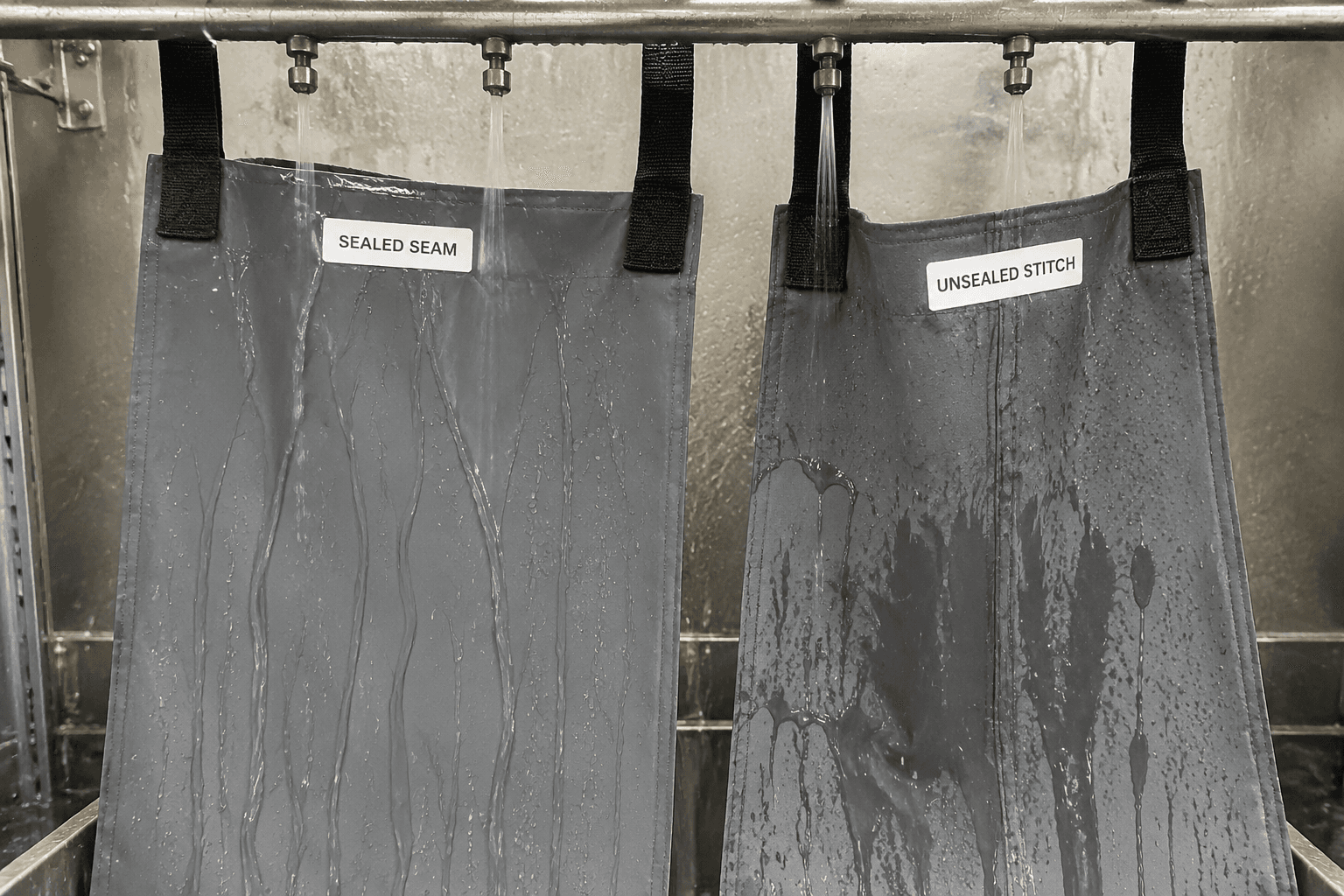
Coated and specialty apron fabrics need the strictest caution. PU-coated polyester, PVC-backed constructions, fluorine-free water repellency, and stain-release finishes all have chemistry limits. Chlorine, strong alkali, and drying heat can reduce adhesion, create surface tack, dull the face, or trigger delamination. In those cases, the correct sourcing decision may be to separate the wash route rather than force a specialty apron through the standard uniform formula.
- 100% cotton twill or canvas, 240 to 320 GSM: fuller hand and natural look, but often needs a shrinkage allowance of 3% to 5% under severe routes.
- 65/35 polycotton twill, 210 to 250 GSM: common for hospitality aprons because it usually holds size better and dries faster.
- 70/30 or 80/20 cotton-rich blends, 230 to 280 GSM: useful for premium programs, but dark shades and seam retention should be checked at 50 to 75 cycles.
- Coated waterproof fabrics, 180 to 300 GSM base plus coating: check cracking, adhesion loss, surface tack, and edge curl after bleach exposure and heated drying.
How to convert the commercial laundry apron wash formula into an approval protocol
Once the buyer provides the wash formula, the factory should convert it into a written protocol covering both base fabric and finished aprons. Fabric-only testing is useful for screening, but it does not capture neck-strap distortion, thread degradation, pocket-edge abrasion, label peel, rivet corrosion, or buckle failure. For aprons, garment-level testing matters because the highest-stress points are small, visible, and repeated every shift.
The protocol should define numeric pass limits before testing starts. Typical checkpoints include dimensional change in length and width, shade change by grey scale, staining to adjacent fabrics, seam strength retention, pilling, skew, coating integrity, and visible surface change. A buyer may accept up to 3% shrinkage after 25 cycles on a 10 oz cotton butcher apron, but require under 2% after 50 cycles on a 235 GSM polycotton server apron. Without written limits, approval becomes subjective and later claim review becomes harder to settle.
Cycle staging matters as much as the final pass line. A style that survives 5 or 10 cycles can still fail later through bartack cracking, edge curl, strap twist, black-shade bronzing, or label detachment. For that reason, the protocol should either run to the buyer's expected service life or use an agreed accelerated method with a documented conversion. For new apron programs, a practical garment test lot is usually 12 to 24 pcs per style so the laundry can inspect more than one failure point during the run.
- Screening stage: 5 to 10 cycles to identify obvious bleeding, shrinkage, coating incompatibility, or trim reaction.
- Midpoint stage: 25 to 50 cycles to review dimensional stability, seam retention, shade change, and surface wear.
- Final approval stage: 50 to 100 cycles for most hospitality apron programs, or 100 to 150 cycles where rental contracts require longer life.
- Common acceptance lines: shrinkage within 2% to 3%, shade change grade 4 minimum where specified, and no seam failure at strap joins or pocket corners.
- Inspection points should include bartacks, topstitch, side seams, labels, adjusters, rivets, snaps, and coated-panel edges.
Cost, MOQ, lead time, and inspection impact of apron wash approval
Adding laundry validation to apron sourcing extends development, but it usually reduces total program cost. If the buyer provides the wash formula before sampling, the factory can narrow the right fabric route early and avoid unnecessary sample loops. For a standard custom bib apron in stock-supported or mill-dyed 65/35 twill, proto sampling often takes 5 to 7 days, fit revision another 4 to 6 days, and bulk production around 25 to 35 days after final approval and deposit. Laundry validation usually adds 7 to 18 days, depending on cycle count, lab capacity, and whether a second fabric route must be checked.
That extra time is usually economical. A basic custom polycotton apron often lands at $2.40 to $4.80 per pc FOB at volumes of 1,000 to 3,000 pcs, depending on GSM, print, embroidery, pocket count, and hardware. A heavier cotton canvas or cross-back apron with specialty trim can run $4.90 to $9.60 per pc FOB. Saving $0.20 to $0.35 per pc by using a weaker fabric or lower thread ticket rarely makes sense when the apron drops out of service 20 to 30 washes early.
MOQ can also change when laundry requirements are strict. Bleach-resistant blacks, higher sanforization, specialty sewing thread, custom coatings, or upgraded trims may push mill minimums above the buyer's normal opening order. Good factories should flag that before bulk so the buyer can decide whether to consolidate colors, merge similar styles, or split the apron program by laundry category.
Inspection standards should be aligned before production starts. For finished aprons, many buyers work around AQL 2.5 major / 4.0 minor, with tighter controls on visible shade variation, strap-length tolerance, pocket alignment, and metal contamination where foodservice use is involved. If the program includes coated waterproof aprons or white bakery aprons, buyers often add extra checks for coating marks, needle holes, and wash-visible soil pickup.
- Typical development path: 7 to 13 days for initial sample work, 7 to 18 days for wash validation, and 25 to 40 days for bulk production.
- Standard custom apron MOQ is often 500 to 1,000 pcs per style per color; specialty dyed or coated fabrics can raise the effective MOQ to 1,500 to 3,000 pcs.
- Common finished-apron tolerances are +/-1 cm on body width, +/-1.5 cm on body length, and +/-1 cm on pocket placement, but buyers should confirm by style.
- A practical inline and final inspection benchmark is AQL 2.5 major / 4.0 minor, unless the buyer's contract requires tighter limits.
Common apron sourcing mistakes when buyers skip wash-formula review
The first mistake is approving aprons by first appearance alone. A softer finish may improve the initial sample, but it can wash off quickly or interfere with stain release and colorfastness. For professional apron programs, the real question is not how the sample feels on day one, but how it performs after 50, 75, or 100 commercial washes.
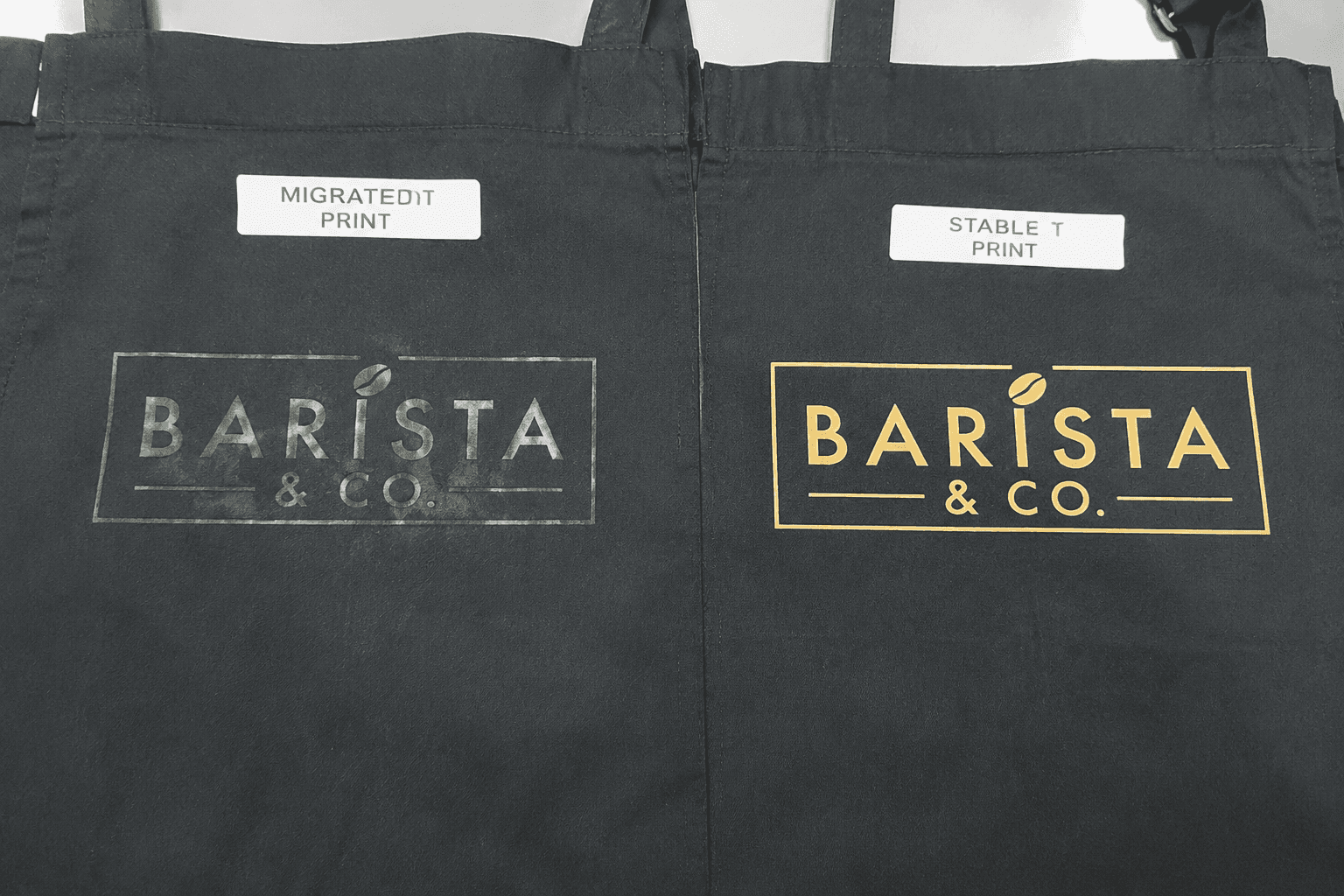
The second mistake is treating all black aprons as equivalent. Black is one of the highest-volume B2B apron colors and one of the most disputed after industrial laundering. Dye route, chlorine exposure, and drying temperature all affect whether black stays deep, turns rusty, or develops shine marks. A black cotton canvas apron and a black polycotton twill apron should not be approved against the same assumptions.
The third mistake is checking fabric but ignoring construction. Aprons often fail first at pocket corners, bartacks, neck joins, waist ties, adjusters, or labels. If the sewing thread ticket is too fine, the bartack is too short, or plated hardware is used where stainless steel or resin should be specified, the garment can fail even when the base fabric passes wash testing.
The fourth mistake is using a domestic-wash standard for a professional laundry program. Approval at 40 degrees C home wash has little predictive value if the real route runs 60 to 75 degrees C with alkali, bleach, and high extraction. That gap is a common reason buyers see acceptable pre-production samples but early field complaints after rollout.
- Approving against home wash 40 degrees C while the real process runs 60 to 75 degrees C with bleach and alkali.
- Testing only fabric swatches instead of finished aprons with pockets, straps, and hardware.
- Using one standard for dark hospitality aprons, white utility aprons, and coated waterproof aprons.
- Skipping late-cycle inspection where seam damage, bronzing, and trim failure usually appear.
- Assuming a previous supplier's apron fabric will behave the same after the laundry operator, chemistry, or drying method changes.
Buyer checklist before apron bulk sign-off
A clear data pack at the start helps the factory move faster and make defensible recommendations. In practice, the most useful format is a one-page laundry summary from the operator paired with the buyer's apron specification, target service life, and acceptance limits. That removes long email loops where critical conditions only surface after the first failed trial.
For custom apron sourcing, this checklist should sit beside the tech pack, sample approval record, and purchase order. That creates traceability from development into bulk. If a claim appears later, the buyer, laundry, and factory can compare the approved commercial laundry apron wash formula with the live field process and identify whether the problem came from fabric choice, construction, or off-spec washing.
A supplier does not need every theoretical variable to start development, but it does need enough data to simulate realistic risk. If the wash route is still being reviewed, that should be stated clearly so the factory can recommend a more conservative apron construction until the final conditions are fixed.
- Item 1: wearer role and end-use sector, such as barista, chef, butcher, baker, housekeeper, or factory worker.
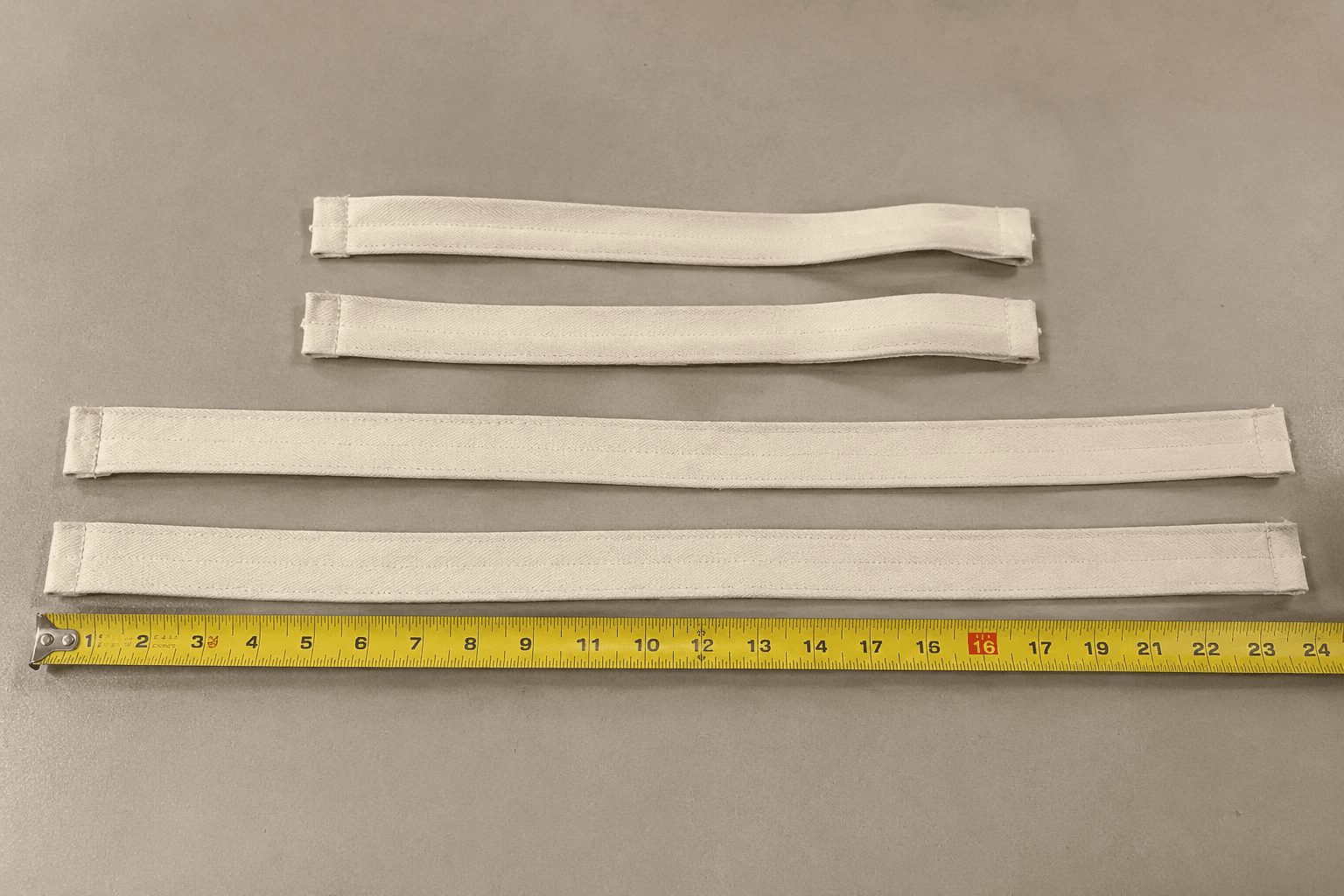
- Item 2: apron style, finished dimensions, pocket load, strap type, adjuster type, and any metal or plastic trims.
- Item 3: fabric target including blend, GSM or oz, color, finish, coating, and whether stain release or water repellency is required.
- Item 4: full commercial laundry apron wash formula with chemistry, temperatures, cycle time, extraction, and drying or tunnel-finishing method.
- Item 5: acceptance limits for shrinkage, color change, seam integrity, coating condition, and target wash life.
- Item 6: forecast quantity, MOQ tolerance, target FOB range, inspection standard such as AQL 2.5 major / 4.0 minor, and required ex-factory date.