There is no single HS code for every apron. Reusable woven cotton or polyester aprons are commonly reviewed as made-up textile articles, while PU/PVC-coated and disposable PE aprons can fall under different headings. The importer or broker must confirm the final US HTS or EU TARIC code using fiber composition, fabric construction, coating, end use, and country of origin before duty is calculated.
From the factory side in Zhejiang, we see the same pattern often: buyers ask for FOB Ningbo or FOB Shanghai pricing by fabric, trim and packing, but the final purchase decision depends on duty, freight, brokerage, and compliance cost. An apron priced at USD 2.15/pc FOB may land cheaper than a USD 1.95/pc offer if the second item uses a higher-duty material blend, poor documentation, or a code that triggers more questions at customs.
This article explains how apron hs code decisions usually work for textile aprons, coated aprons, disposable aprons and promotional aprons shipped to the United States and European Union. It is written from the view of an OEM apron manufacturer, not as legal advice. The importer, customs broker or trade counsel should make the final classification, but the supplier must provide the technical information needed to classify correctly.
- Most reusable textile aprons are not classified only by the word apron; fiber content, construction and intended use usually decide the code.
- US and EU tariff outcomes can differ, even when the same apron leaves the same China factory under the same FOB price.
- Fabric composition must be consistent across quotation sheet, care label, commercial invoice, packing list and test report.
- Coating and lamination can change classification, especially for PVC, PU, TPU and rubberized protective aprons.
- DDP prices should be checked carefully because the duty assumption may be hidden inside the supplier or forwarder quotation.
- Early HS review is most useful before bulk cutting, when fabric, coating, pocket design and labeling can still be adjusted.
Why the apron hs code matters before you confirm a bulk order
The apron hs code is the customs classification used to identify the product when it enters the destination market. For apron sourcing, it is linked to import duty, trade measures, documentation, quota history in some markets, customs questions, and sometimes product compliance checks. It is not simply a number printed by the factory on an invoice. In most transactions, the importer of record is legally responsible for using the correct code, even if the supplier proposes one.
Aprons create classification questions because they sit between several categories. A bib apron for restaurant staff may be treated as a made-up textile article. A chef apron may be close to workwear. A rubberized dishwashing apron may be considered protective material or a plastic-coated textile item. A disposable PE apron for food processing may move under plastic apparel or protective garment categories. A denim cross-back apron with metal rivets and leather patch is still mainly textile, but the exact fiber content and article type matter.
For buyers comparing factories, HS classification should be checked at the same time as fabric weight, colorfastness, seam strength and packaging. If two suppliers quote the same 240 GSM cotton twill apron, but one declares 100% cotton and another declares 65/35 poly-cotton to chase a duty advantage, the lower landed cost may not survive customs review. The practical question is not only what code gives the lowest duty, but what code can be supported by the physical apron and documents.
- A classification review should be done before purchase order confirmation, not after goods are packed.
- The buyer should provide the broker with photos, fabric composition, GSM, coating details, apron use, and care label wording.
- The supplier should avoid reusing old HS codes from unrelated apron styles without checking material and construction.
- The commercial invoice description should be specific enough for customs to understand the article, such as "100% cotton woven bib apron, 240 GSM, with neck strap and waist ties."
Common apron HS code paths for textile, coated and disposable aprons
There is no single universal code that covers every apron. Many reusable woven or knitted fabric aprons are reviewed under made-up textile article headings or apparel-related headings depending on national interpretation. In practice, a plain cotton kitchen apron, a polyester promotional apron, a canvas barista apron and a chef waist apron may not all receive the same final 8-digit or 10-digit code. The international 6-digit HS level gives the family, while the US HTS and EU TARIC add more digits and local duty logic.
For textile aprons, customs normally looks at fiber content first: cotton, synthetic fiber, man-made blend, or other fiber. Construction also matters: woven twill, canvas, denim, knitted fabric, nonwoven, or coated base cloth. An apron made from 100% cotton 10 oz canvas may produce a different duty result from a 100% polyester 180 GSM apron used for supermarket promotion. A 65/35 polyester-cotton twill apron must be supported by fabric test data if the exact blend is declared.
For coated aprons, the question becomes whether the textile fabric remains the main identity of the product or whether plastic, rubber or protective coating drives classification. A PU-coated 230 GSM polyester apron for dishwashing may be treated differently from an uncoated restaurant service apron. A heavy PVC apron, 0.35 mm thickness, used in fish processing or chemical splash protection, should be reviewed with extra care because customs may ask about coating visibility, weight share, end use and protective performance.
- Reusable cotton or poly-cotton bib aprons are usually reviewed as textile articles, with fiber composition central to duty.
- Chef waist aprons and bistro aprons may follow textile apparel or made-up article logic depending on market practice.
- PVC, PU, TPU or rubber-coated aprons require coating percentage, base fabric details and use description.
- Disposable PE or CPE aprons for food service are normally not treated like woven textile aprons.
- Nonwoven PP aprons should be described as nonwoven if that is the actual material, not as polyester fabric.
Apron import duty for US buyers importing from China
For buyers who import aprons US shipments from China, the duty picture has two layers. First is the normal duty rate under the Harmonized Tariff Schedule of the United States. Second may be additional China-related duties, including Section 301 duties where applicable. The total apron import duty can therefore be materially higher than the base column rate. The exact outcome depends on the final HTS code, the product description, and any active exclusions or updates at time of entry.
In real quotation work, we advise US buyers not to ask only for FOB or DDP. FOB Ningbo at USD 2.35/pc for a 280 GSM cotton canvas apron tells only part of the cost. A buyer should model duty on the entered value, add customs brokerage, MPF, HMF if ocean freight, inland trucking, and inspection allowance. For a 20,000 pc order, a 5% classification difference on a USD 46,000 customs value is USD 2,300 before any additional tariff layer. That can erase the saving from changing factories.
US customs entries also require consistency between product, invoice and label. If the invoice says "polyester apron" but the sewn label says "100% cotton," the problem is not only duty. It suggests weak factory control and may trigger questions about fiber labeling, FTC textile rules and valuation. For custom apron programs, the buyer should lock the material line in the tech pack: for example, "100% cotton twill, 240 GSM, reactive dyed, no coating" or "65% polyester 35% cotton twill, 220 GSM, yarn dyed stripe."
- Ask your broker to confirm the 10-digit US HTS code before issuing the purchase order.
- Check whether additional China tariffs apply to the selected code at the planned entry date.
- Use one product description across PO, proforma invoice, commercial invoice, packing list and broker instruction sheet.
- Separate different apron types on the invoice when one shipment includes cotton aprons, PVC aprons and disposable PE aprons.
- Keep fabric composition test reports for bulk fabric lots when the duty result depends on fiber blend.
Apron tariff considerations for EU buyers
For EU buyers, the classification process uses the Combined Nomenclature and TARIC system. The international HS concept is the same, but the final code, duty rate and import controls can differ from the US result. A German, French, Dutch or Spanish importer buying the same Zhejiang-made apron should not assume the US HTS code can be copied directly into an EU customs declaration. The broker needs the EU code and the applicable duty rate at the time of import.
The apron tariff for the EU is affected by material composition, construction and product type. Cotton, synthetic fiber and coated textile aprons may sit in different lines. Some buyers focus heavily on VAT, because VAT is often the larger cash-flow item, but duty classification still matters. A 12,000 pc horeca apron order at EUR 2.10 customs value has a customs value of EUR 25,200 before freight allocation. A few percentage points of duty difference may be important when the item is a repeat program shipped every quarter.
EU documentation also needs language and labeling discipline. Care label, fiber composition, country of origin and importer details must be aligned with the buyer's market requirement. If the apron is sold as recycled polyester, the customs code may not change only because of recycled content, but the claim should be supported by GRS or other chain-of-custody documents if the buyer uses it commercially. If the apron is marketed for food service or PPE-like splash protection, additional regulatory checks may enter the discussion.
- Do not copy a US HTS number into an EU import file; ask for an EU CN or TARIC classification.
- Confirm whether the declared fabric is cotton, synthetic, mixed fiber, nonwoven or coated textile.
- Match the care label language and fiber declaration to the buyer's selling country.
- For recycled apron programs, keep certification, transaction certificate and fabric invoice records together.
- For protective-use aprons, confirm whether PPE rules or chemical safety claims affect the import file.
Information your China apron factory should provide for apron customs clearance
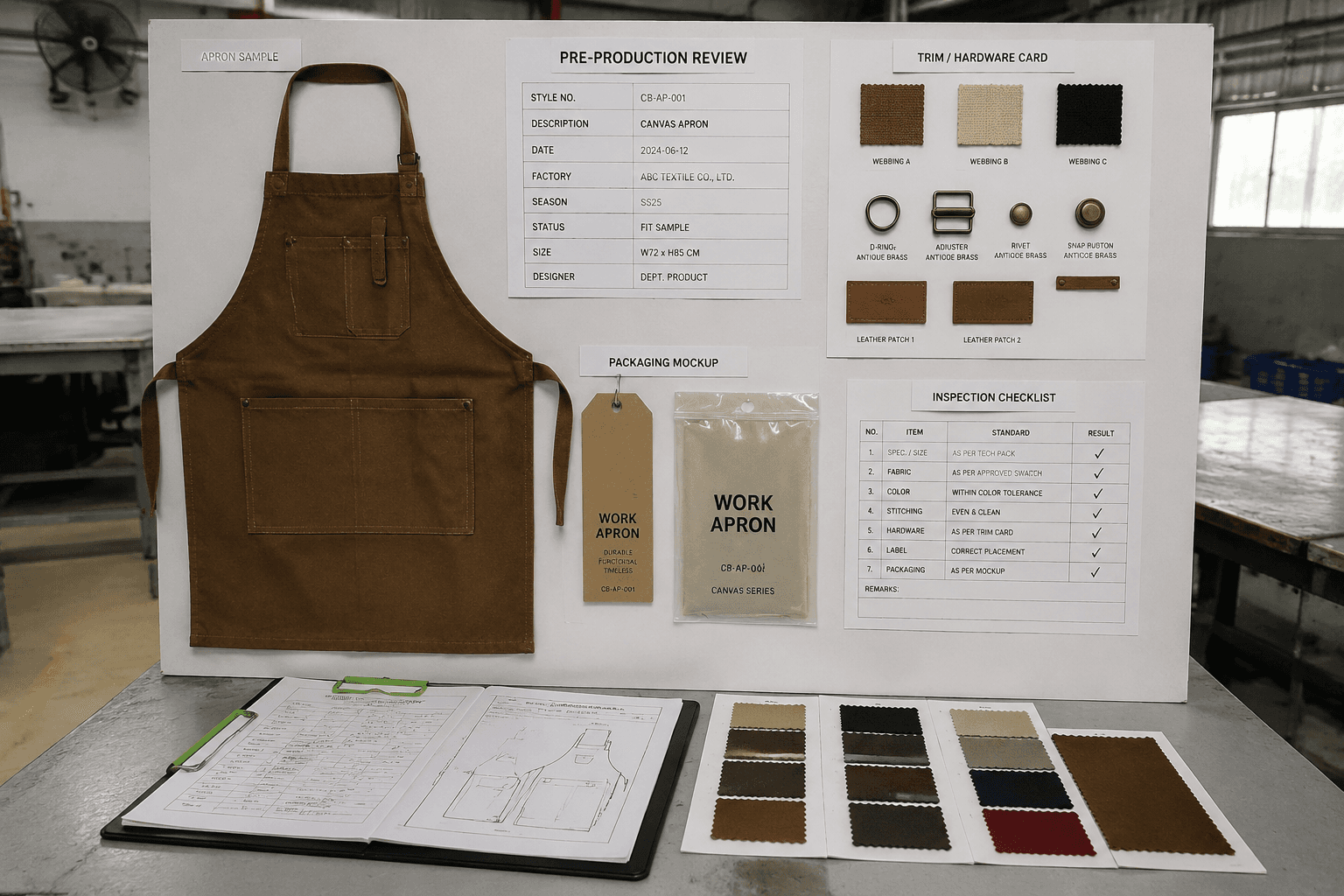
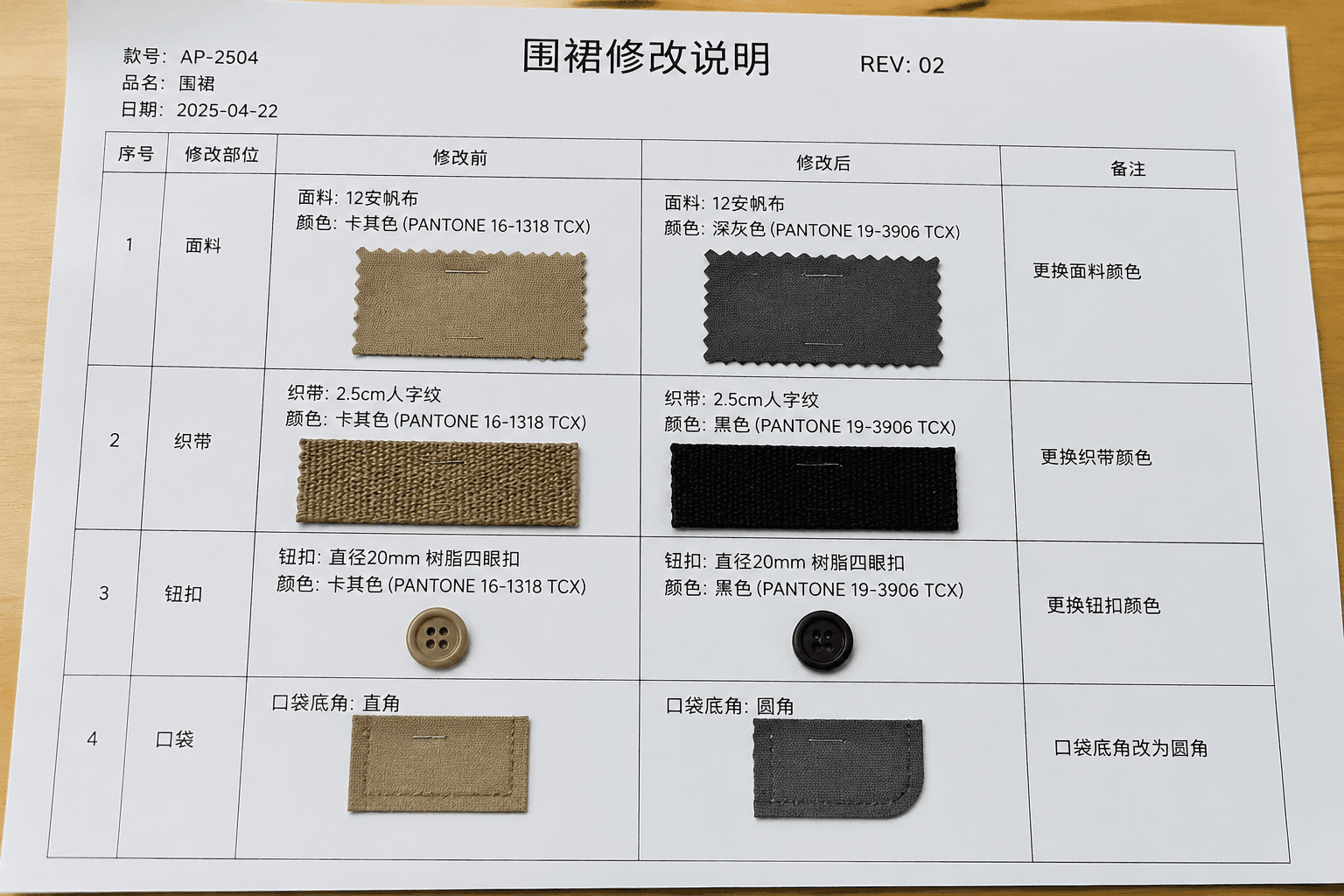
Good apron customs work starts at product development. A responsible factory should not decide the importer's legal classification, but it should provide complete technical facts. At minimum, the supplier should issue a clear quotation sheet, fabric specification, artwork proof, size chart, packing method, and commercial invoice description. If the apron uses coating, lamination, flame-retardant treatment, water-repellent finish or antimicrobial finish, those details should be listed before the broker classifies the item.
For standard woven aprons, the most useful factory data includes fabric name, fiber content, GSM or oz/sq yd, weave, dyeing method, coating status, dimensions, pocket and strap materials, and intended use. A 7 oz cotton twill waist apron and a 12 oz cotton canvas tool apron are both aprons, but they may not be described the same way. A tool apron with multiple reinforced pockets, metal hammer loop and PU patch may need a fuller description than a plain cafe apron.
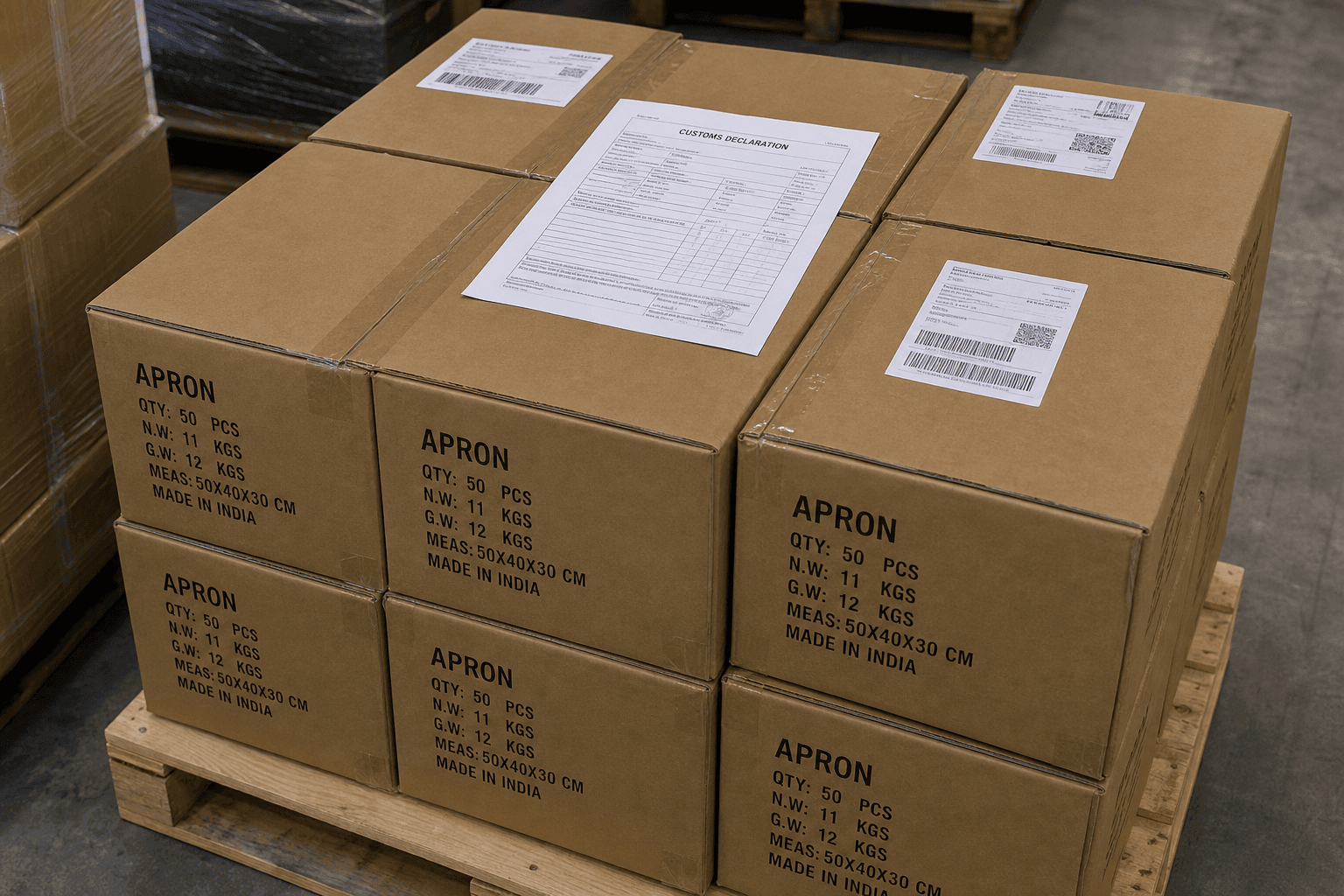
Packing information is also relevant. Customs value is based on the transaction value and must be supported by invoice. A normal bulk order might use 1 pc/polybag, 100 pcs/carton, carton size 52 x 36 x 28 cm, gross weight 18 kg, net weight 17 kg. If aprons are shipped with extra towel, cap, recipe card, retail hanger or gift box, the broker should know because sets and composite goods can change classification or valuation treatment.
- Fabric composition by percentage, such as 100% cotton or 65% polyester 35% cotton.
- Fabric weight, such as 180 GSM, 240 GSM, 280 GSM, 10 oz canvas or 12 oz denim.
- Construction details, including woven, knitted, nonwoven, coated, laminated or disposable film.
- Coating material and thickness, such as PU coating, PVC film 0.30 mm, TPU laminated layer or rubberized surface.
- Apron style, including bib apron, waist apron, cross-back apron, chef apron, tool apron or disposable apron.
- Packaging details, including inner pack, carton quantity, carton dimensions, gross weight and net weight.
How material choices affect landed cost, MOQ and lead time
Duty is only one part of sourcing cost, but it should be considered together with material selection. A 100% cotton 240 GSM twill apron may have a different duty profile from a 100% polyester 190 GSM twill apron, while also having different shrinkage, colorfastness, hand feel and washing performance. If the buyer selects cotton only for brand positioning, the higher fabric cost and possible duty impact may be acceptable. If the apron is for a short-term promotion, polyester or poly-cotton may deliver lower unit cost and faster replenishment.
Typical China factory MOQs vary by fabric and dyeing method. For stock fabric aprons, MOQ may be 500 to 1,000 pcs per color with lead time around 20 to 30 days after sample approval. For custom dyed cotton twill or canvas, MOQ often starts at 1,500 to 3,000 pcs per color, with 35 to 50 days lead time. For custom yarn-dyed stripe or denim wash effects, MOQ may be 2,000 to 5,000 pcs because fabric mills require batch production. For PVC or TPU coated apron fabric, MOQ depends on coating line minimums and may be 1,000 to 3,000 meters.
As a factory, we prefer to review landed-cost risk during quotation. For example, if a US buyer needs 30,000 black bib aprons for a restaurant chain and the target is USD 2.00/pc FOB, we can quote 210 GSM poly-cotton twill, 240 GSM cotton twill and 260 GSM recycled polyester separately. The buyer's broker can then estimate apron import duty for each option. This avoids choosing a fabric that looks cheap at FOB level but is weaker after duty, wash testing and replacement rate are considered.
- Stock poly-cotton apron programs can often ship in 20 to 30 days after approval when fabric is available.
- Custom dyed cotton apron programs usually need 35 to 50 days because lab dip, dyeing and shrinkage checks take time.
- Heavy canvas aprons above 10 oz cost more in fabric, freight weight and sometimes sewing labor due to needle and bartack requirements.
- Coated waterproof aprons may reduce washing issues but can increase classification complexity and carton weight.
- Low-MOQ promotional aprons may save development time, but the buyer should still confirm classification before repeat orders.
Practical controls to reduce apron customs risk
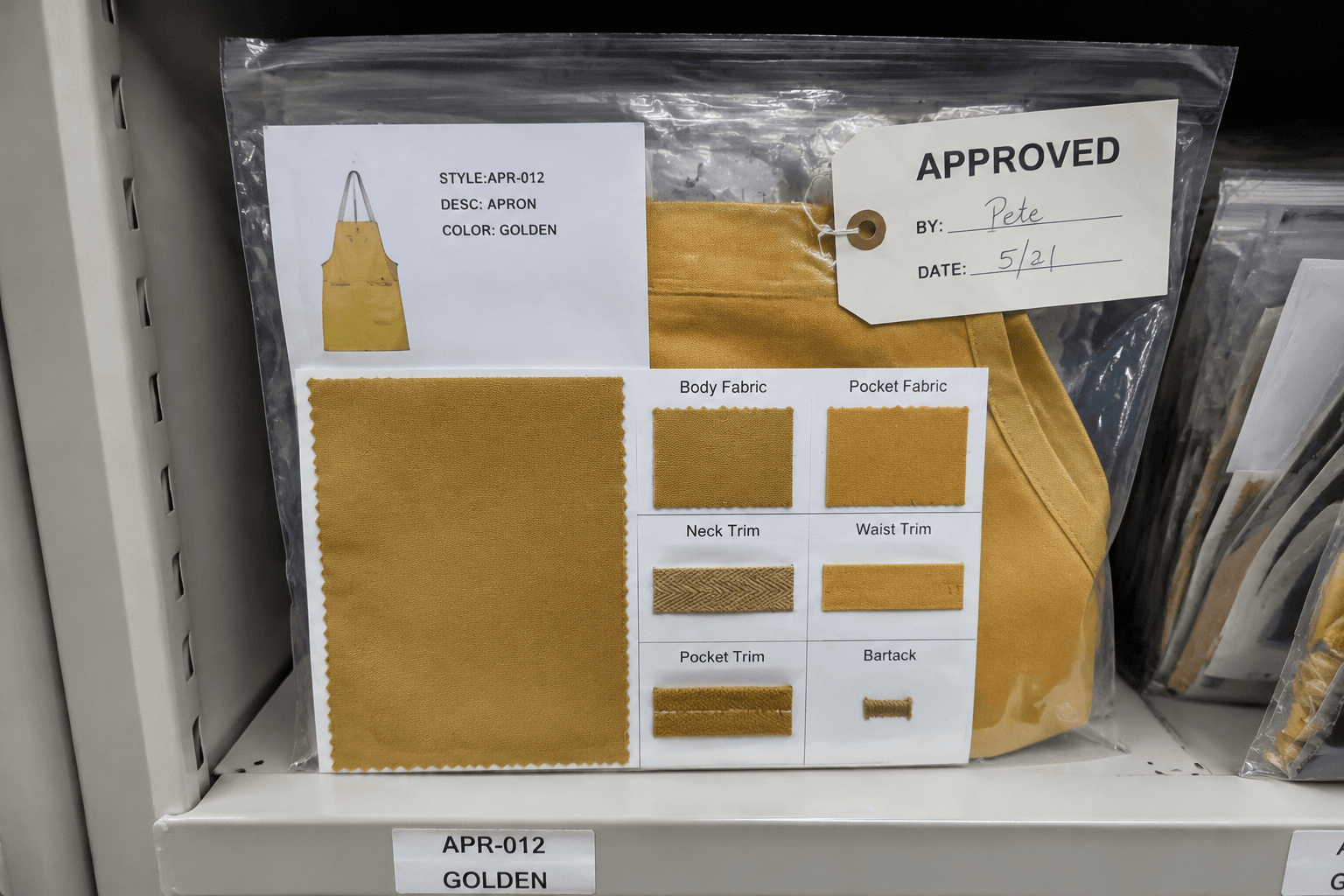
The most effective control is a simple classification file created before production. It does not need to be complicated. For each apron SKU, keep the final artwork, approved sample photos, fabric spec, test report if available, care label proof, commercial invoice description and broker-confirmed code. When the same apron is reordered six months later, this file prevents a merchandiser or forwarder from changing the description casually.
Second, separate SKUs clearly. A shipment containing 8,000 cotton bib aprons, 2,000 PVC dishwashing aprons and 15,000 disposable PE aprons should not be declared under one general line such as "aprons." The commercial invoice should split style, material, quantity, unit price and total value. This helps the broker classify accurately and reduces the chance that customs applies the wrong duty to the entire shipment.
Third, be careful with DDP and all-inclusive offers. DDP can be useful for small trial orders or urgent e-commerce replenishment, but for professional bulk sourcing it may hide the duty basis, tariff assumption and importer responsibility. If the supplier's forwarder uses a broad declaration to keep cost low, the buyer may have no clean import history for future retail or chain-store audits. For repeat apron programs above 3,000 pcs, FOB or FCA with the buyer's nominated broker usually gives better control.
- Create one classification file per apron SKU before mass production starts.
- Ask the broker to review new materials, coatings or disposable constructions instead of assuming old codes still apply.
- Use separate invoice lines for different materials and apron types.
- Avoid vague descriptions such as "kitchen goods," "uniform accessories" or "promotional items" when the shipment is aprons.
- Keep all supplier documents for at least the retention period required in the importer's market.
- Review duty assumptions again when changing from cotton to polyester, woven to nonwoven, or uncoated to coated fabric.
What to ask your supplier before finalizing the apron hs code
Before final confirmation, the buyer should ask the factory targeted questions. The aim is not to make the factory act as customs counsel, but to make sure the broker has reliable product facts. If the supplier cannot confirm fiber content, GSM, coating details or packing, the classification may be built on weak information. That weakness becomes visible when customs examines the cargo or when a retailer asks for import documentation during onboarding.
A mature apron supplier will answer with numbers. Instead of saying "thick cotton," the factory should say "100% cotton canvas, 320 GSM, dyed black, enzyme washed, uncoated." Instead of saying "waterproof apron," the factory should say "100% polyester base fabric, 210 GSM before coating, PU coated on back side, finished weight 260 GSM." These details help the customs broker decide whether the proposed apron hs code is reasonable.
Finally, build a small timing buffer into the order calendar. HS review, broker questions and document correction can take 2 to 5 working days for a simple textile apron and longer for coated, disposable or protective-use aprons. If the order is 50,000 pcs for a restaurant rollout, spending these days before bulk cutting is much cheaper than correcting documents after vessel departure. Clean classification is part of professional apron sourcing, in the same category as color standard approval, seam testing and carton drop testing.
- What is the exact fiber composition by percentage, and can the mill or lab support it?
- Is the apron woven, knitted, nonwoven, film-based, coated or laminated?
- What is the fabric weight before and after coating, if coating exists?
- Does the apron include leather, metal, rubber, plastic parts or bundled accessories?
- Will each SKU have its own invoice line with quantity, unit price and material description?
- Has the factory shipped the same construction to the same market, and what documents were used?