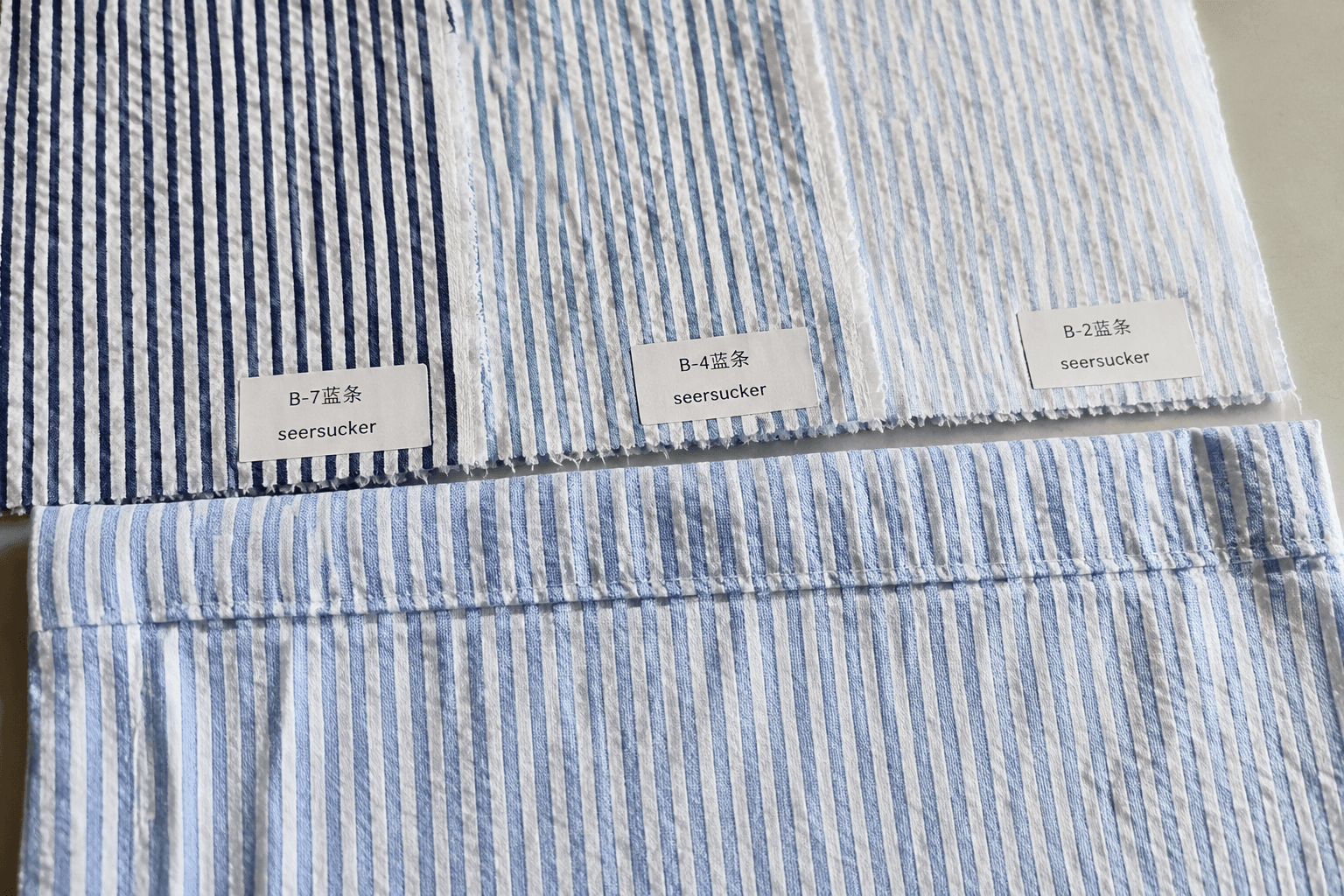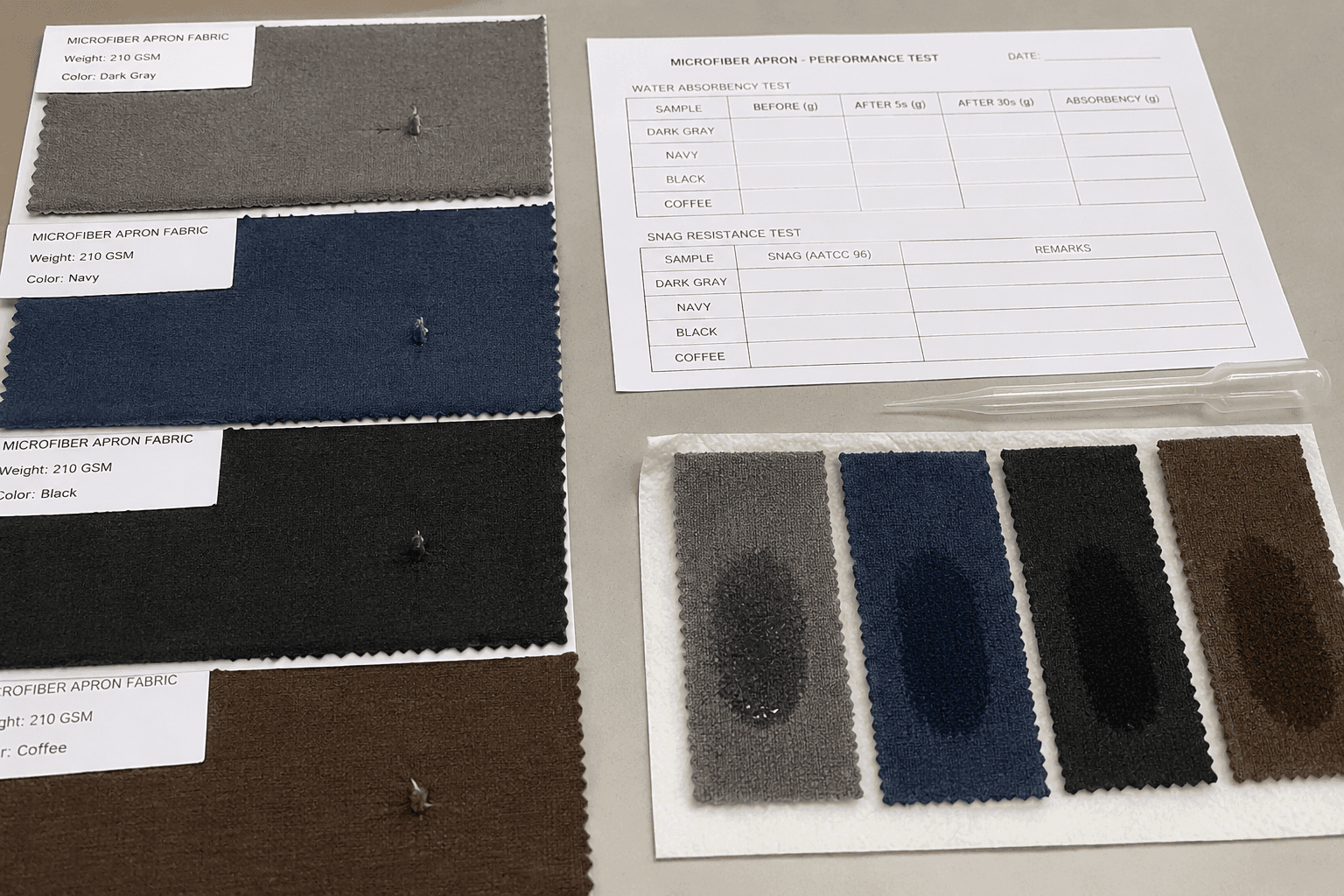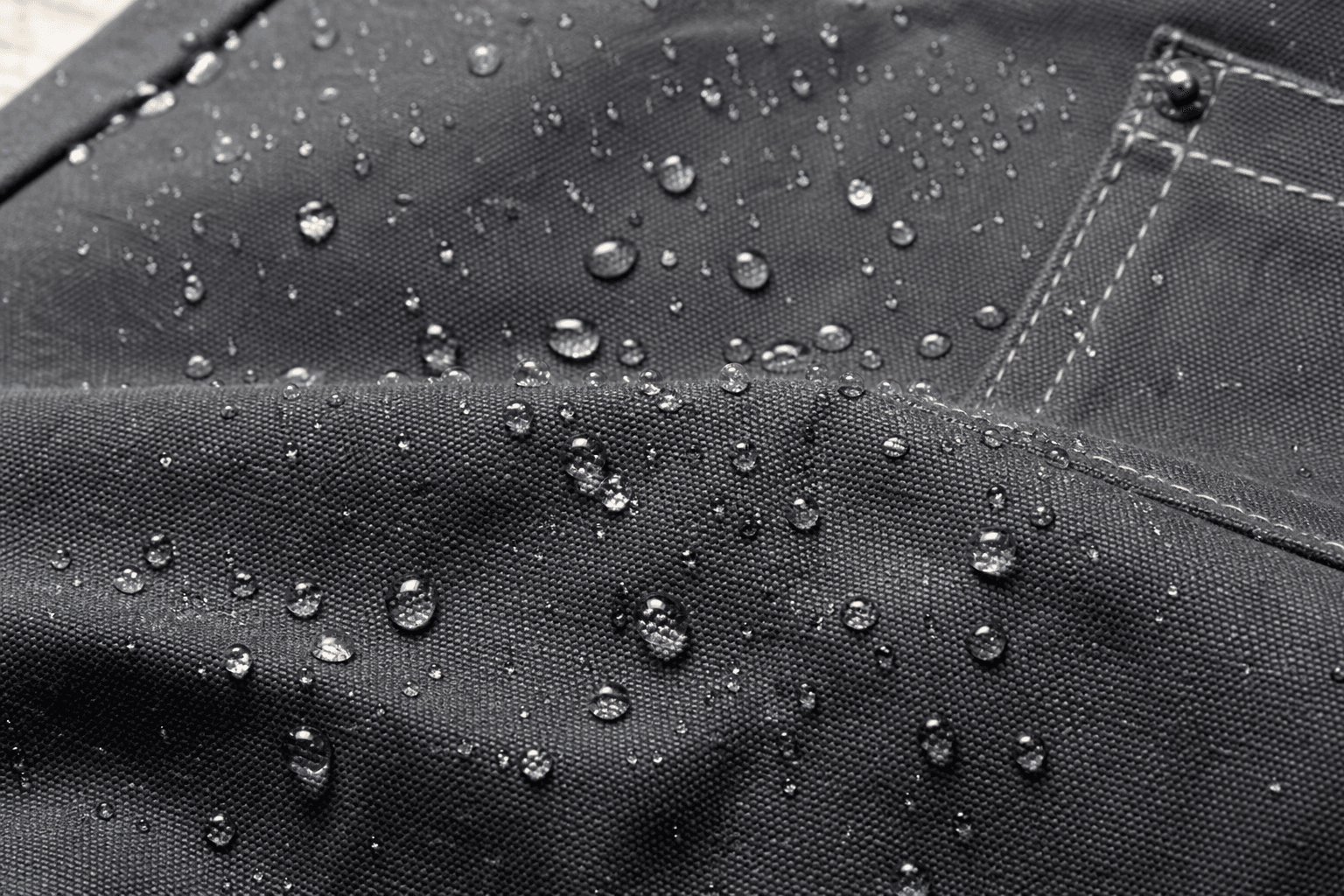
For bulk apron programs, water repellency is usually requested in simple words: keep splashes off, resist kitchen stains, make the apron easier to wipe, or upgrade a standard cotton apron into a higher-value item. In factory development, those requirements translate into different constructions. A water repellent apron, a coated apron, and a fully waterproof apron are not the same product, and they do not carry the same hand feel, cost, wash durability or compliance profile.
Most sourcing problems start when the buyer approves a nice-looking sample without defining the performance target. A 230 GSM cotton canvas with a light C0 DWR may bead water well before washing, but after 10 home washes it may behave like normal cotton. A 300D polyester oxford with PU coating may block water much better, but it will feel more synthetic and can trap heat during long shifts. A chef, barista, florist, cleaner and butcher do not need the same specification.
This article explains how we evaluate water repellent apron projects at the factory level: fabric selection, DWR chemistry, coating routes, test methods, MOQ, lead time, costing and the practical compromises that buyers should lock before ordering production from China.
- DWR improves surface beading, while PU/PVC/TPU coating provides stronger water barrier but changes weight, drape and breathability.
- Cotton and TC fabrics can be water repellent, but polyester and nylon usually give more stable repellency after bulk finishing.
- Wash durability must be specified, because a finish that passes spray rating before wash may fail after 5-20 wash cycles.
- Apron use case controls the correct finish, since cafe splash protection, dishwashing, fish processing and salon use require different constructions.
- Cost impact is normally measurable, with basic C0 DWR adding about USD 0.08-0.25 per piece and heavier coatings adding about USD 0.25-0.80 per piece depending on coverage.
- Testing and bulk shade control matter, because finishing can shift color, stiffen fabric and reduce print adhesion if handled late.
What a water repellent apron can and cannot do
In apron sourcing, the term water repellent apron usually means the fabric surface resists wetting for a limited period. Water droplets bead and roll off instead of soaking in immediately. This is useful for coffee splashes, light kitchen spray, flower shop mist, salon liquids and general front-of-house use. It is not the same as a waterproof rainwear fabric or a rubberized dishwashing bib.
A water repellent finish works mainly at the surface. It lowers surface energy so liquid has less tendency to spread across the yarns. The fabric still has pores, seams, needle holes, tie attachments, pockets and embroidery stitches. Under pressure, rubbing or long exposure, water can enter through those points. If a buyer expects the wearer to stand at a sink for 4-6 hours with continuous water contact, a normal DWR apron finish will be under-specified.
For OEM development, we usually divide apron water protection into three levels. Level one is splash repellent: cotton canvas, TC twill or polyester with DWR, suitable for cafe, bakery, bar and retail use. Level two is water resistant: polyester oxford, taslan or twill with DWR plus light backing, suitable for salon, cleaning and heavier food service. Level three is waterproof or near-waterproof: PU, TPU or PVC coated apron fabric, usually chosen for dishwashing, fish, meat, dairy, pet grooming and industrial cleaning.
- Use water repellent when the apron must shed light splashes but still look and feel like textile.
- Use water resistant when the fabric must delay penetration during repeated wet handling.
- Use waterproof apron only when barrier performance is more important than breathability and natural hand feel.
- Use coated apron language when the buyer expects a visible or measurable film layer on the fabric.
Main fabric bases for water resistant apron fabric
The same finish behaves differently on different fabric bases. A 10 oz cotton canvas absorbs more finish, has a matte natural appearance and works well for fashion-oriented cafe or retail aprons. However, cotton fibers swell when wet, dry slowly and lose beading faster after laundering. If the target is only 3-5 washes, cotton DWR can be acceptable. If the target is 20 home washes with visible beading, cotton needs careful resin selection and will cost more.
TC fabric, usually 65/35 polyester-cotton or 80/20 polyester-cotton, is a practical middle option. Common apron weights are 190-240 GSM for service aprons and 250-280 GSM for bib aprons. TC accepts piece dyeing, embroidery and screen printing better than many coated synthetic fabrics. The polyester component helps repellency hold more consistently than pure cotton, while the cotton component keeps a familiar textile hand.
Polyester is the easiest base for stable water repellency in many bulk apron orders. 150D, 300D and 600D oxford fabrics can receive DWR, PU backing or PVC coating. A 300D polyester oxford at around 180-220 GSM with light PU coating is common for cleaning, salon and catering aprons. A 600D oxford may reach 260-330 GSM and feels stronger, but it is too stiff for many waist aprons and front-of-house styles. Nylon taslan is softer and premium, but the fabric cost is usually higher and shade matching can require more control.
- Cotton canvas at 8-12 oz is suitable for branded hospitality aprons where texture and appearance matter.
- TC twill at 200-280 GSM is a balanced option for service aprons needing modest repellency and good printability.
- Polyester oxford at 150D-600D is better when water resistance, durability and lower unit cost are the main priorities.
- Nylon taslan or nylon twill is useful for softer premium aprons, but MOQ and dye lot control should be checked early.
DWR apron finish options: C6, C0 and silicone routes
A dwr apron finish is normally applied by padding, drying and curing. In China production, the finish is often added at the fabric mill before cutting. For smaller orders, some suppliers may use available finished fabric from stock, but this limits color, GSM and test control. For custom apron programs, it is better to approve the greige or dyed fabric and finish route before salesman samples are made.
Historically, C8 fluorocarbon finishes gave strong oil and water repellency, but they are no longer acceptable for many markets because of PFAS restrictions. C6 fluorocarbon was then widely used and still appears in some supply chains, but many EU and North American buyers now request C0 non-fluorinated DWR. C0 can provide good water beading, but oil repellency is weaker and wash durability can be lower. For aprons exposed to sauce, grease and coffee, this distinction matters.
Silicone, wax and paraffin-based routes can also create water shedding on cotton and canvas. They often give a softer, more natural hand, but may affect printing, bonding and color fastness. For a heavy fashion apron, this may be acceptable. For a uniform program requiring logo transfer printing, we normally test decoration after finishing, not before. A finish that looks good on blank cloth can cause peeling, halo marks or reduced adhesion during heat press.
- C6 DWR can give stronger water and some oil repellency, but buyers must confirm current market compliance requirements.
- C0 DWR is now the preferred request for many brand buyers, especially for EU, US and retail-facing programs.
- Silicone or wax-style finishes can suit cotton canvas aprons where soft hand feel is more important than wash rating.
- Post-finish decoration testing is required for screen print, heat transfer, embroidery backing and leather patch attachment.
When to choose a coated apron instead of DWR
A coated apron is the correct direction when water exposure is constant or when the buyer needs a measurable hydrostatic pressure result. Coating adds a film or backing to the fabric. PU coating is common for lighter and more flexible aprons. PVC coating is heavier, more economical in some categories and widely used for industrial or fishery aprons, but it has stronger odor risk and a less textile-like feel. TPU coating is cleaner and more flexible, with better low-temperature performance, but cost is higher.
For ordinary hospitality, a PU-coated polyester can be too warm if used for a full-length bib apron in a hot kitchen. For dishwashing or meat processing, that warmth may be acceptable because barrier performance is the priority. This is why sample approval should include wearing trials, not only water drop videos. A fabric that blocks water well on a table may feel uncomfortable after a 6-hour shift.
Coating weight changes the final apron cost and construction. A light PU coating may add 10-20 GSM. A stronger coating may add 30-80 GSM. PVC-coated fabrics can reach 350-600 GSM depending on thickness. Sewing coated fabric also needs suitable needle size, tension and reinforcement. If the fabric is too stiff, pocket corners and neck strap attachments become stress points. For heavy-duty waterproof apron production, we often recommend fewer seam lines, larger stitch length and stronger bar tacks.
- Select PU coating for moderate water barrier with better flexibility and lower bulk than PVC.
- Select PVC coating for heavy-duty waterproof apron use where hand feel is less important and cost pressure is high.
- Select TPU coating when the buyer needs a cleaner premium barrier material and can accept higher fabric cost.
- Avoid complex pocket structures on stiff coated apron fabric unless the design has been production-tested.
Testing a water repellent apron before bulk production
Water performance must be written into the purchase specification. If the buyer only says waterproof, the factory cannot know whether to test spray rating, hydrostatic pressure, water penetration after wash, or only visual beading. For DWR aprons, a spray test is common. AATCC 22 or ISO 4920 can show whether water beads and rolls off the fabric surface. A new DWR fabric may reach grade 80-100 before wash. After 5, 10 or 20 washes, the grade may drop, especially on cotton.
For coated fabrics, hydrostatic pressure is more relevant. A light PU-coated polyester may test around 800-1500 mmH2O, while stronger coated fabrics can exceed 3000 mmH2O. These numbers depend on coating thickness, fabric density and test method. For an apron, the buyer should remember that seams and stitching are not automatically waterproof. Unless seam sealing is specified, water can pass through needle holes even if the fabric panel itself performs well.
Color fastness and crocking should also be checked because water repellent finishes can change the dyeing result. Dark navy, black, olive, burgundy and brown aprons are common for hospitality, and these colors can show rubbing or finish marks more clearly. For export orders, we commonly suggest testing color fastness to washing, rubbing and perspiration together with the water test, especially when the apron will be worn over white shirts.
- For DWR, define spray rating before wash and after a fixed wash count, such as 5, 10 or 20 cycles.
- For coated fabric, define hydrostatic pressure target, coating type and whether seams require sealing.
- For dark aprons, include dry and wet rubbing tests because finish residue and dye transfer create buyer complaints.
- For food service aprons, confirm whether the finish must meet LFGB, FDA food-contact expectations or brand RSL limits.
- For retail programs, request bulk fabric testing from the approved production lot, not only from the salesman sample yardage.
Cost, MOQ and lead time for water repellent apron programs
Cost depends on fabric base, finish chemistry, order quantity, color count and testing. For a basic bib apron, adding C0 DWR to a standard TC or polyester fabric may increase cost by about USD 0.08-0.25 per piece at 3000-5000 pcs, assuming normal fabric width and no special testing package. On heavier cotton canvas, the cost can be higher because the fabric absorbs more chemical and finishing control is slower. A coated backing may add about USD 0.25-0.80 per piece, depending on coating weight and apron size.
MOQ is usually driven by the fabric mill, not the sewing line. For custom-dyed DWR fabric, practical MOQ is often 800-1500 meters per color. This may produce roughly 1200-3000 bib aprons depending on pattern efficiency. For stock polyester oxford with existing PU coating, MOQ can be lower, sometimes 500-1000 pcs per color. For custom PVC or TPU coated materials, MOQ can rise to 2000-3000 meters because coating lines prefer larger runs.
Lead time also changes. A simple stock fabric apron may need 20-30 days after sample approval. Custom dyeing plus DWR finishing usually needs 35-50 days, including lab dip, bulk dyeing, finishing, fabric test and sewing. Coated fabric development can require 45-60 days if the buyer needs a custom color, special hand feel or lab test report. During peak months before Christmas or large uniform rollouts, finishing mills may add 7-10 days. Buyers should not treat the finish as a last-minute add-on after the fit sample is approved.
- Basic C0 DWR on existing fabric often adds about USD 0.08-0.25 per apron at mid-volume order quantities.
- Light PU backing often adds about USD 0.25-0.45 per apron, while heavier coatings can add USD 0.50-0.80 or more.
- Custom DWR fabric commonly starts around 800-1500 meters per color, depending on mill and fabric construction.
- Normal custom DWR apron lead time is about 35-50 days after approvals; coated custom fabric can require 45-60 days.
- Third-party testing may add USD 120-450 per report depending on test scope and laboratory.
Design and production details that affect apron water performance
Water performance is not only fabric. Apron construction affects real use. A large front pocket creates stitch holes and pocket openings where liquid can collect. Cross-back straps add more reinforcement points. Metal eyelets can create leakage points on coated fabric unless backed correctly. For a light water resistant apron fabric, these details may be acceptable. For a true waterproof apron, the design should reduce unnecessary seams on the front body.
Thread choice is another practical issue. Polyester thread is standard and stable for most apron production. Cotton thread can absorb water and is less suitable for water repellent or coated aprons. On PVC and TPU aprons, stitching tension must be controlled to avoid tearing along the needle line. For heavy coated fabric, edge binding may be better than a folded hem, but binding also adds stitching. Ultrasonic welding or heat sealing is possible for some synthetic materials, but it requires compatible fabric and is not economical for every order.
Branding needs early testing. Embroidery on a DWR cotton apron may look premium, but every needle hole reduces local water resistance. Screen printing can work on many DWR fabrics, but ink adhesion must be tested after curing and after washing. Heat transfer on coated polyester may be possible, but temperature and pressure can mark the coating. For a 5000 pcs order, one failed logo method can delay the shipment more than the sewing itself.
- Reduce front seam lines when the buyer needs stronger water protection.
- Use polyester thread for most water repellent and coated apron constructions.
- Test embroidery, screen print and heat transfer on finished fabric, not only on untreated fabric.
- Check pocket placement carefully because pockets can collect water and stress the coating at corners.
- Confirm ironing instructions because DWR and coated fabrics may be damaged by high heat.
How buyers should write a clear water repellent apron specification
A good specification prevents argument after bulk delivery. Instead of writing only waterproof apron, buyers should state the use case, fabric type, target weight, finish, wash expectation and test standard. For example: 65/35 TC twill, 240 GSM, C0 DWR, AATCC 22 grade 90 before wash and grade 70 after 10 home washes. That tells the factory what to source and what risk to price. Another example: 300D polyester oxford, PU-coated back, hydrostatic pressure minimum 1500 mmH2O, no seam sealing, suitable for salon splash use.
Buyers should also separate appearance approval from performance approval. A black cotton canvas apron may be approved for shade and hand feel, while the water repellent result still needs wash testing. Bulk production should not start until both are closed. If the program has multiple colors, at least one dark and one light color should be tested because finishing behavior can vary by dye shade.
From the supplier side, the best development sequence is clear: confirm use case, select fabric base, make lab dip or stock shade, apply finish, test water performance, test decoration, make pre-production sample, then cut bulk. This sequence may look slower at the beginning, but it avoids the common mistake of approving a beautiful apron sample that cannot meet the real working condition. For professional sourcing, the right question is not whether a water repellent apron is possible. It is which level of repellency is needed, how long it must last, and what trade-off the wearer can accept.
- State whether the apron is for cafe, dishwashing, salon, butcher, florist, cleaning or industrial use.
- Define fabric composition, GSM or oz weight, color, finish type and coating type if applicable.
- Write the test method and required result before wash and after the agreed wash count.
- Confirm whether the buyer accepts lower breathability, stiffer hand feel or reduced decoration options.
- Approve production fabric and logo application together before bulk cutting starts.