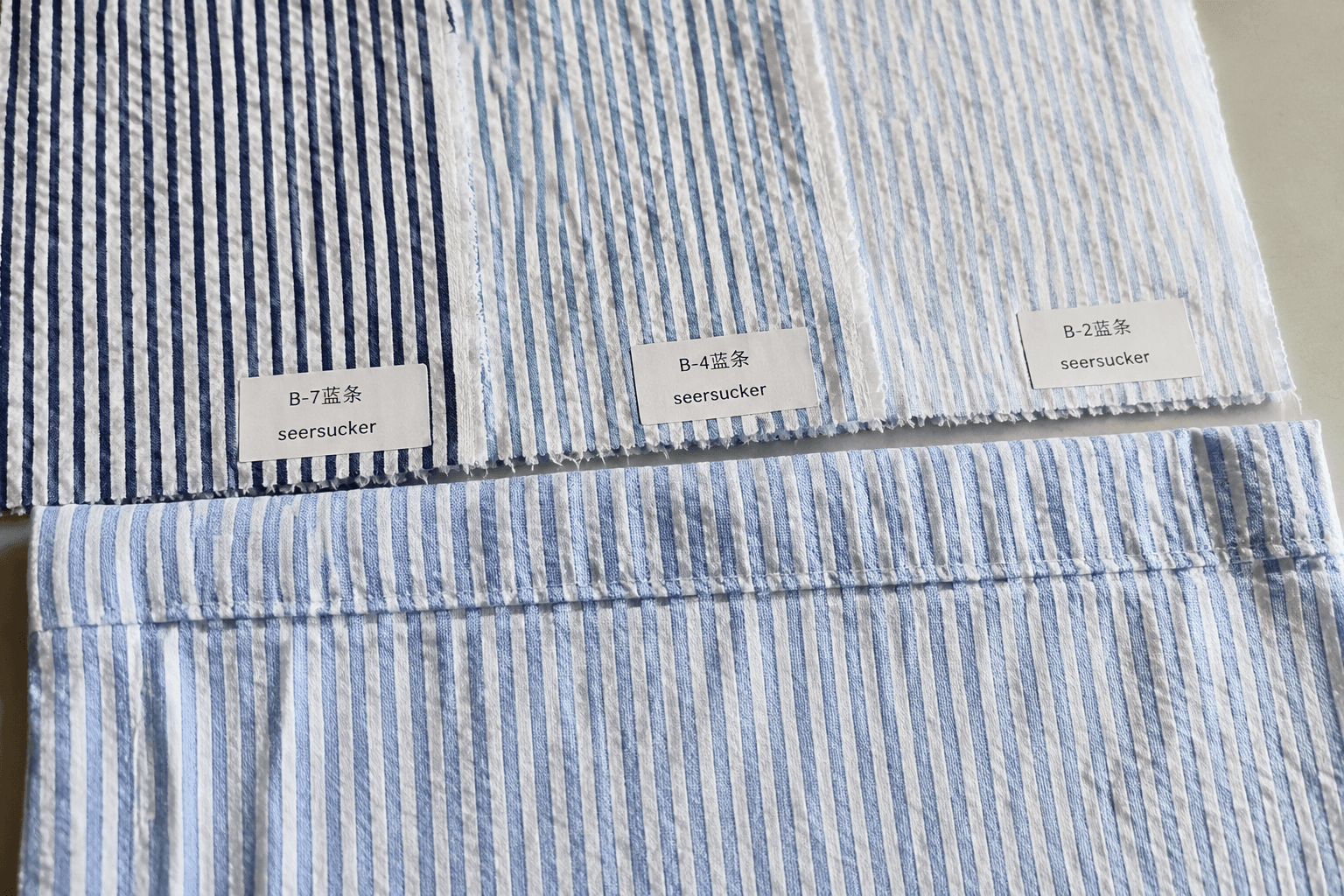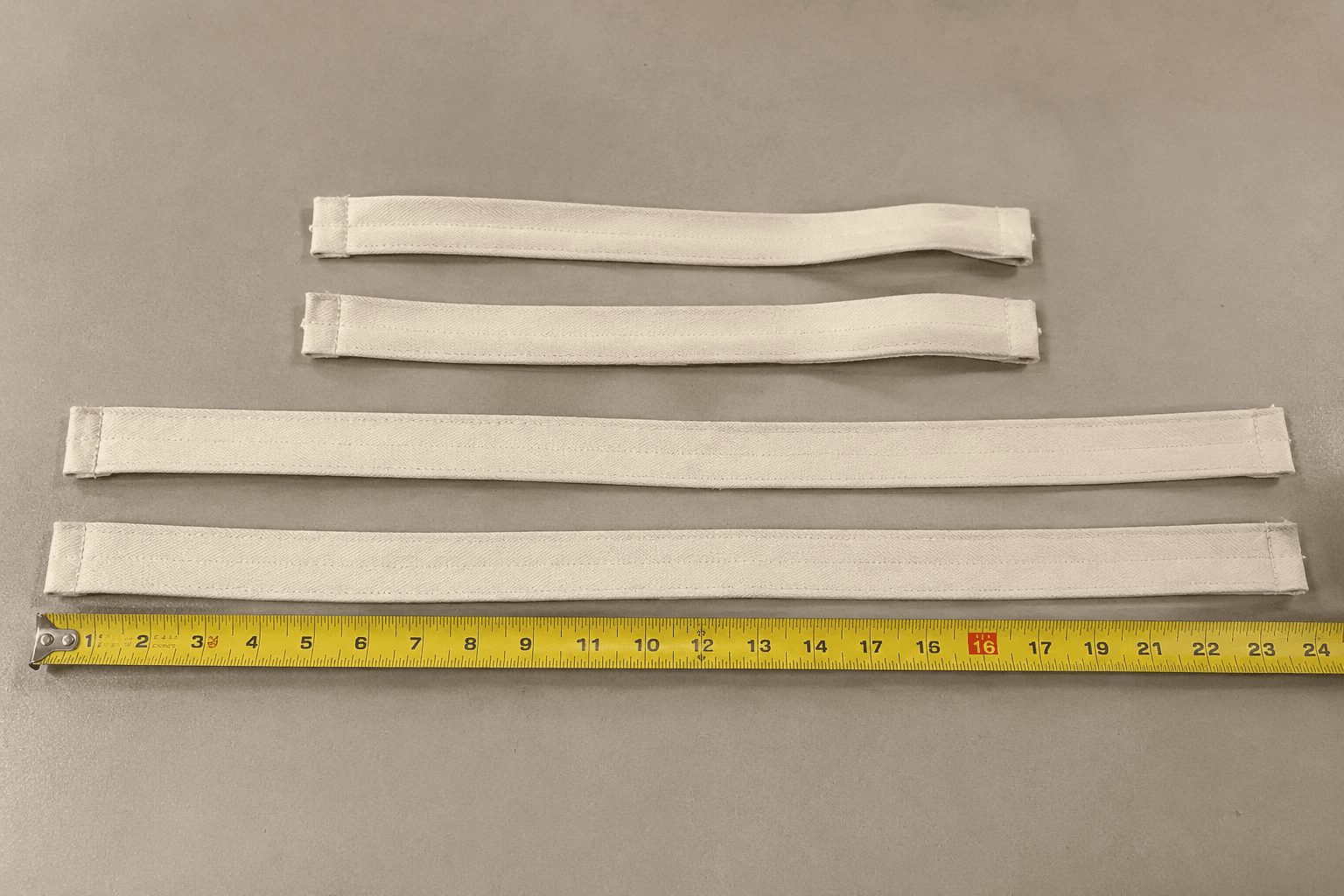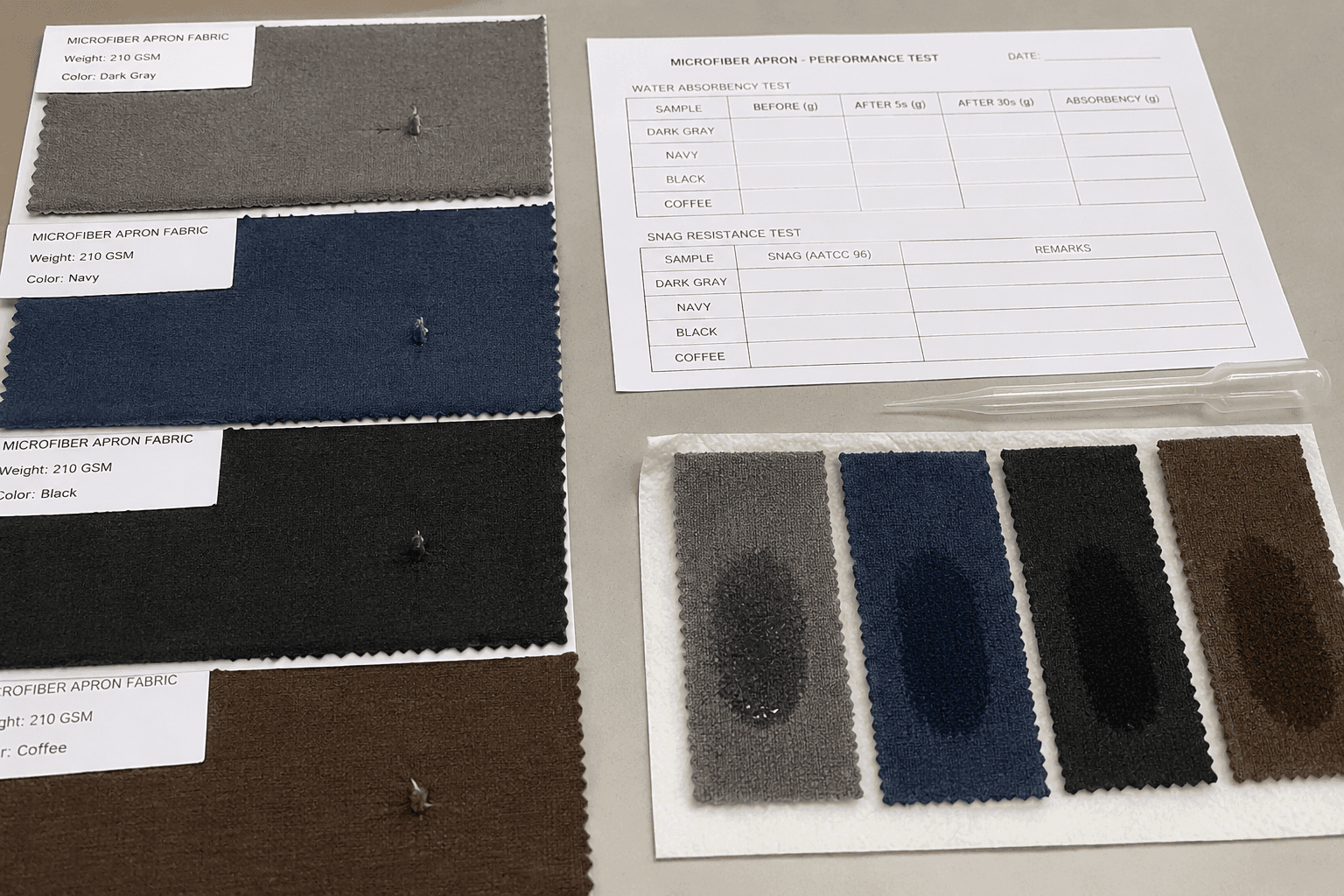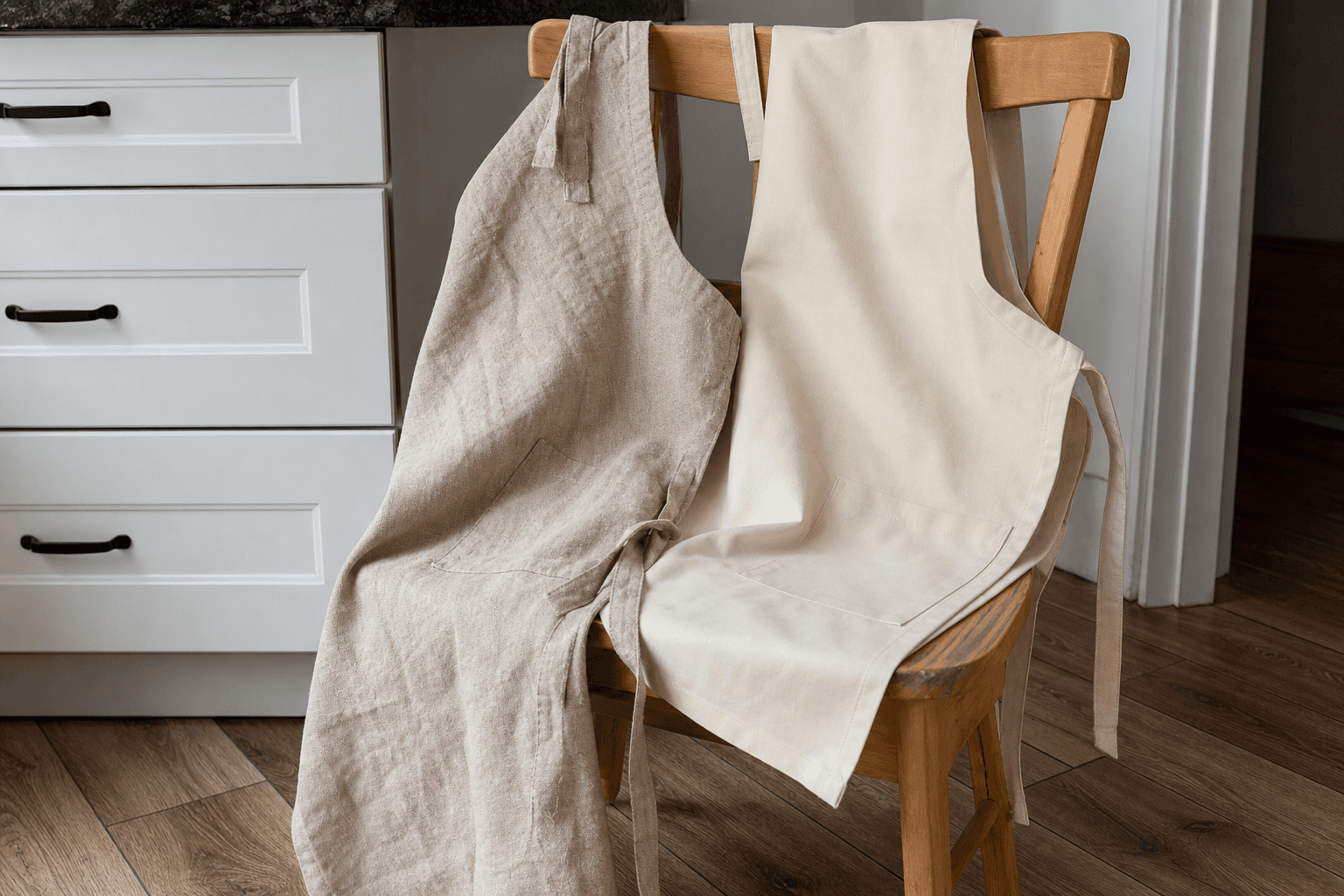
For retail apron programs, the fabric decision is rarely only about appearance. A linen vs cotton apron comparison affects cutting yield, shrinkage allowance, garment measurements after washing, packaging presentation, price band and replenishment stability. Buyers who sell a home kitchen apron at retail need fabric that photographs well, feels credible in hand and stays within the claimed size tolerance after consumer washing.
From a factory point of view, linen and cotton behave differently from yarn purchase to final pressing. Linen gives a dry handfeel, natural slub and relaxed drape that suits premium kitchen, bakery and lifestyle ranges. Cotton gives wider mill availability, easier color matching, lower minimums and more predictable sewing output. Both can be made into strong retail apron fabric, but the costing and risk controls are not the same.
This article explains the trade-offs we normally review with sourcing managers before sampling: practical GSM ranges, shrinkage targets, stone wash loss, thread and pocket construction, MOQ, lead time and realistic FOB price differences for bulk China production.
- Linen usually costs 35-90% more than cotton at comparable apron size and construction, mainly due to yarn price, fabric width, wash loss and MOQ.
- Cotton is more predictable for repeat retail colors, especially when the range includes black, navy, khaki, red or seasonal custom shades.
- A stone washed linen apron must be developed around post-wash measurements, because shrinkage and garment relaxation are part of the final look.
- For a home kitchen apron, 220-260 GSM linen and 240-300 GSM cotton are the most common retail weight zones, depending on pocket load and season.
- Apron shrinkage claims should be tested on the finished garment, not only on fabric swatches, because straps, pockets and hems react differently after washing.
Linen vs cotton apron sourcing: the real decision points
When a buyer asks whether to choose linen or cotton, the first question should be the retail position, not the fiber preference. A linen apron communicates a more natural, premium and relaxed kitchen image. It often suits small-batch food brands, homeware retailers, gift sets, garden-to-table concepts and lifestyle stores where texture is part of the selling point. A cotton apron is more flexible for everyday price points, uniforms, promotional retail packs and large color ranges where consistency matters more than a naturally uneven surface.
In production, linen is less forgiving. It creases more during spreading, shifts more easily during cutting and may show yarn slubs that are acceptable in a natural product but unacceptable if the buyer expects a flat uniform surface. Cotton, especially canvas, twill and plain weave, spreads cleaner and is easier to control in high-volume lines. For a 5,000-20,000 piece apron order, that difference affects inspection time and rework rate.
The fabric decision should be locked before size grading and artwork placement. A 75 x 85 cm bib apron in cotton twill may finish close to pattern after sanforized fabric washing, while the same size in washed linen may need extra body length and width added before cutting. If the same retail apron pattern is used for both fibers without adjustment, the linen style can finish shorter, softer and more relaxed than the cotton style.
- Choose linen when the selling point is texture, natural drape and premium home kitchen presentation.
- Choose cotton when the selling point is consistent color, tighter size control and more competitive retail pricing.
- Avoid using one unadjusted apron pattern across linen and cotton if both styles require the same finished measurements.
- Confirm whether visible slub, crease marks and shade variation are acceptable before approving a linen fabric.
Drape and handfeel in retail apron fabric
Drape is one of the clearest differences between linen and cotton aprons. Linen fibers are stiffer individually, but a medium-weight washed linen fabric falls with a dry, relaxed break after laundering. It does not cling to the body and it gives a slightly rumpled look that many homeware brands prefer. Cotton twill or canvas has a cleaner, more uniform hang. It can look structured on a hanger and more stable in flat-pack photos, which is useful for retail packaging and e-commerce images.
For aprons, GSM alone does not describe drape. A 240 GSM linen plain weave can feel lighter and more open than a 240 GSM cotton twill because linen yarn count, weave density and finishing are different. A 280 GSM cotton canvas can stand away from the body, which is good for workshop or barbecue aprons but may feel too stiff for a home kitchen apron. For soft retail cooking aprons, buyers often approve cotton in 240-280 GSM and linen in 220-260 GSM.
Pocket design also changes the perceived drape. A large double front pocket on linen may sag slightly after washing if the fabric is too open or the pocket mouth is not reinforced. Cotton handles patch pockets more predictably. For a linen apron, we usually recommend bartacks at pocket corners, a slightly deeper top hem and pocket edges cut with stable grain direction. These small construction choices protect the relaxed look without making the garment feel overbuilt.
- Use 220-260 GSM linen for a soft premium kitchen apron with visible texture and relaxed drape.
- Use 240-300 GSM cotton twill or canvas for a cleaner retail apron fabric with stronger structure.
- Use 300-360 GSM cotton canvas only when the product brief calls for heavy-duty or workshop styling.
- Reinforce linen pocket mouths with bartacks or denser top stitching to reduce distortion after wash.
Shrinkage control: fabric test, garment wash and tolerance
Shrinkage is the main technical risk in linen apron development. Linen can shrink 4-8% in length and 3-6% in width if the fabric is not pre-shrunk or garment washed. Cotton can also shrink, but sanforized cotton twill normally stays around 2-4% if the mill finishing is controlled. For retail aprons, we advise buyers to define acceptable finished garment tolerance after one domestic wash, for example plus or minus 1.5 cm on body width and plus or minus 2.0 cm on body length.
Testing only the fabric is not enough. A bib apron includes neck straps, waist ties, pocket panels, folded hems and sometimes embroidery or print. Each part may react differently after washing. A strap cut from linen may twist more than a cotton strap if it is narrow and not properly pressed. A large printed cotton pocket may pucker if the print paste and fabric shrink at different rates. Finished garment wash testing gives a more realistic view than a 30 x 30 cm fabric swatch test.
For bulk orders, the factory should make a size set or pilot lot before main cutting when the fabric is new. We normally cut 20-50 pieces from bulk fabric, wash or finish them under the planned process, measure before and after, then adjust the paper pattern. This adds 2-4 days but prevents larger losses later. On linen styles, this step is especially important because different lots of flax yarn and finishing can change the shrinkage curve.
- Set shrinkage targets before sampling, such as linen under 5% after pre-wash and cotton under 3% after sanforized finishing.
- Measure body length, body width, pocket width, neck strap length and waist tie length after laundering.
- Approve finished measurements after wash if the apron will be sold as pre-washed or stone washed.
- Build 2-4 extra development days into the schedule for bulk fabric shrinkage confirmation.
Stone washed linen apron development
A stone washed linen apron is popular in retail because it feels broken-in from the first touch. The process softens the fabric, opens the surface and reduces the crisp creases associated with raw linen. However, garment washing adds cost, time and measurement risk. A stone wash can reduce finished dimensions, lighten shade and weaken poorly specified sewing threads. The apron must be designed as a washed product from the beginning, not converted after price approval.
The wash recipe depends on the fabric weight and target handfeel. For a 240 GSM linen apron, a soft enzyme or stone wash may take 40-70 minutes per batch, followed by extraction, tumble drying and pressing. Batch loading must be controlled because overloading creates uneven abrasion and underloading increases fabric beating. Dark colors such as black, charcoal, olive and navy need extra attention because wash marks are more visible. Natural, oatmeal, flax and undyed shades are more forgiving.
Stone washing also changes costing. The buyer is not only paying for the wash charge, which may be around US$0.35-0.90 per piece depending on weight and local capacity. There is also fabric loss, higher inspection time, possible shade sorting and more careful packing. If an apron has leather patches, metal hardware or printed labels, these trims must be wash-tested. A leather patch that looks excellent on a dry sample may bleed or harden after garment wash.
- Plan 7-10 extra production days for stone washed linen compared with a non-washed cotton apron.
- Use polyester core-spun thread or tested cotton-wrapped thread if the wash process is abrasive.
- Avoid untested leather, paper labels and low-fastness printed trims on garment-washed linen styles.
- Approve bulk shade from washed garments, not from unwashed fabric cards.
Price comparison for linen vs cotton apron programs
Price depends on apron size, fabric consumption, pocket count, strap type, finishing and packing, but buyers still need working ranges during sourcing. For a standard adult bib apron around 70-75 cm wide and 80-85 cm long, using plain packing, one front pocket and self-fabric ties, a cotton twill apron in 260 GSM may FOB China around US$2.20-3.60 per piece at 3,000-5,000 pieces per color. The same construction in 240 GSM linen may land around US$3.80-6.50 per piece, depending on linen origin, dyeing, wash and fabric width.
The gap becomes larger when the linen is stone washed, yarn-dyed or certified. Washed linen has higher processing cost and more wastage. Certified European flax or traceable linen may require higher fabric MOQ and longer greige booking time. Cotton has more options: conventional cotton, recycled cotton blends, BCI cotton, organic cotton and cotton-poly blends. A cotton-poly blend can reduce price and shrinkage, but it changes the retail story and handfeel.
Fabric width is often overlooked. If cotton twill comes in 57/58 inch width and linen comes in 53/54 inch width, the marker yield can differ. On a full apron with long self-fabric waist ties, even a few centimeters of fabric width can affect consumption. For large programs, the factory should quote based on actual marker consumption after pattern approval, not only by estimated GSM.
- Budget US$2.20-3.60 FOB for many 260 GSM cotton retail aprons at 3,000-5,000 pieces per color.
- Budget US$3.80-6.50 FOB for many 220-260 GSM linen aprons with similar construction.
- Add roughly US$0.35-0.90 per piece for garment washing, depending on apron weight and wash standard.
- Expect higher waste allowance on linen, especially for visible slub sorting, shade control and post-wash measurement correction.
MOQ, lead time and color control
MOQ is usually easier with cotton. Stock cotton twill and canvas colors may be available from local fabric markets or partner mills, allowing apron MOQs around 500-1,000 pieces per color if the construction is simple. For custom-dyed cotton, a realistic mill MOQ is often 800-1,500 meters per color, which can produce roughly 1,200-2,500 aprons depending on size and fabric width. Linen fabric MOQ is often higher or less flexible, especially for custom colors, yarn-dyed stripes or certified material.
For lead time, plain cotton aprons using available fabric can sometimes ship in 25-35 days after sample approval and deposit. Custom-dyed cotton is more commonly 40-55 days. Linen aprons usually need 45-70 days, and stone washed linen apron programs can reach 60-85 days if the fabric must be woven, dyed, washed and sorted before final inspection. These timelines assume normal factory capacity and no special packaging delay.
Color control also differs. Cotton accepts reactive dyeing consistently, and lab dips usually translate well to bulk if the mill is stable. Linen has more natural shade influence from the flax base, and slub can catch dye unevenly. This is part of the natural character, but it must be communicated in the retail QC standard. If a buyer needs six apron colors to match ceramic, cookware or packaging ranges very tightly, cotton is often the safer choice.
- Use stock cotton when the program needs low MOQ, fast sampling and replenishment under 45 days.
- Use custom linen when the retail price can support higher MOQ, longer lead time and natural shade variation.
- Allow 3-5 days for lab dips and 7-10 days for strike-off fabric when custom color accuracy is important.
- Define acceptable shade variation with a grey scale rating or approved bulk range before cutting.
Choosing the right apron for retail channels
Different retail channels justify different fabric choices. A grocery private label home kitchen apron usually needs sharp price, stable sizing and simple care labeling, so cotton is often the practical base. A boutique homeware store may accept a higher price for linen because the handfeel and texture support a more giftable product. A garden center may choose washed cotton canvas for durability, while a bakery lifestyle brand may choose linen for a softer visual identity.
The packaging method should follow the fabric. Cotton aprons can be folded tightly with belly bands, header cards or kraft boxes because they recover with fewer permanent crease concerns. Linen looks better with looser folding, banding or hanger presentation, especially if the product is sold as stone washed. If linen is compressed too hard in export cartons for 30-45 days, it may arrive with crease lines that require steaming before display.
Care label claims must also be realistic. If the buyer wants machine washable at 40 C, tumble dry low and shrinkage under 3%, cotton is easier. If the buyer wants a linen apron with a relaxed washed finish, the care label may need to state warm wash, line dry or tumble low, warm iron if desired and natural creasing expected. Claims should match actual garment testing because retail returns often come from mismatch between consumer expectation and fiber behavior.
- Select cotton for supermarket, promotional, uniform-adjacent and value-driven retail apron ranges.
- Select linen for premium kitchen, gift, boutique homeware and natural lifestyle apron ranges.
- Use looser folding or hanger display for linen when retail presentation is important.
- Base care instructions on finished garment wash tests, not only on standard fiber assumptions.
Practical conclusion on linen vs cotton apron selection
The best linen vs cotton apron decision is not a universal fiber ranking. It is a sourcing decision based on target retail price, expected handfeel, shrinkage tolerance, color range, reorder timing and packaging format. Linen gives texture, relaxed drape and a premium home kitchen apron story, but it needs stricter development around shrinkage, wash process, shade variation and trim testing. Cotton gives more predictable production, lower cost and better color repeatability, but it may not deliver the same natural surface and soft broken-in look unless additional washing or finishing is used.
For a new retail program, a practical approach is to sample one linen apron and one cotton apron in the same silhouette, then compare them after one domestic wash, after hanging for display and after being folded in final packaging for several days. Measure the body, straps and pockets, check shade and crease recovery, and review the FOB price against the planned retail margin. This simple test gives the buyer a clearer answer than fabric swatches alone.
For bulk China production, the factory should confirm fabric source, GSM, width, pre-shrink method, wash recipe, finished measurement tolerance, MOQ and lead time before final costing. Once these items are fixed, both linen and cotton can make successful retail apron fabric. The key is to buy each fiber for what it does well, and to price the hidden processing steps before the purchase order is issued.