Sustainable apron sourcing is no longer a simple fabric substitution. For a buyer ordering 1,000 to 50,000 pieces from China, the practical questions are about fiber origin, mill documentation, dyeing method, shrinkage control, packaging, audit scope, and whether the supplier can repeat the same standard across reorders.
In apron manufacturing, sustainability must still work on the sewing line and in the customer workplace. A 10 oz organic cotton canvas may look strong on paper but shrink too much if not pre-shrunk. A recycled polyester strap may reduce virgin material use but fail if the webbing supplier cannot provide transaction certificates. The best result comes from matching responsible materials with realistic apron construction, testing, and lead-time planning.
This guide explains how a responsible apron manufacturer in Zhejiang evaluates eco materials, trims, dyeing, certifications, cost drivers, and production controls for bulk apron orders. The numbers below reflect common factory ranges, not fixed quotations, because actual cost depends on fabric market pricing, apron size, pocket design, color count, label requirements, and order quantity.
- Material selection should start with apron use, because cafe, salon, chef, workwear, and promotional aprons need different GSM, shrinkage, and abrasion performance.
- Certified organic cotton and recycled polyester require document control, not only fabric labels or verbal supplier claims.
- Low-impact dyeing affects MOQ and lead time, especially when custom Pantone colors require lab dips, bulk approval, and wastewater compliance records.
- Sustainable packaging can reduce plastic use, but carton strength, barcode handling, and warehouse requirements still decide the final packing method.
- A green apron supplier should provide repeatable production controls, including fabric inspection, shrinkage tests, needle control, inline QC, and final AQL inspection.
What sustainable apron sourcing means in factory terms
For apron buyers, sustainable apron sourcing should be defined as a controlled purchasing and production process, not a single eco claim printed on a hangtag. In a factory quotation, the main controllable areas are fiber content, fabric weight, dyeing process, trim selection, packaging, production waste, labor compliance, and documentation. Each area affects cost and lead time differently.
A standard cotton twill apron may use 180 to 240 GSM fabric for promotional use, 250 to 320 GSM for retail kitchen aprons, and 320 to 400 GSM canvas for hospitality or light workwear. When a buyer changes from conventional cotton to organic cotton, the same GSM does not always behave the same way. Organic yarn availability, weave density, finishing, and pre-shrink treatment must be checked before bulk cutting. If the buyer only asks for an organic cotton apron without confirming shrinkage and colorfastness, the finished garment may look responsible but perform poorly after washing.
The factory-side definition is simple: a sustainable apron must be traceable enough to support the buyer's claim, durable enough to reduce early replacement, and producible at the required volume without uncontrolled substitutions. For repeat orders, this means approved fabric codes, retained shade standards, sewing specifications, and documented inspection records.
- Fiber content should be confirmed by fabric composition report or supplier declaration, with testing added for higher-risk programs.
- GSM tolerance is usually controlled within plus or minus 5 percent for stable mills, but custom weaves may need wider tolerance at sampling stage.
- Shrinkage targets for cotton aprons are commonly within 3 percent to 5 percent after washing, depending on finish and buyer standard.
- Colorfastness should be checked for washing, rubbing, and perspiration when aprons are used in restaurants, salons, bars, or workshops.
Choosing fabrics for sustainable apron sourcing
Fabric choice is the largest driver of both sustainability claims and finished apron cost. For most custom apron programs, the realistic options are organic cotton, recycled cotton blends, recycled polyester, cotton-linen blends, hemp-cotton blends, and conventional cotton with improved dyeing or packaging. There is no single best fabric. A cafe chain ordering 8,000 bib aprons for daily washing may need a different solution from a gift brand ordering 1,500 retail aprons with a soft hand feel.
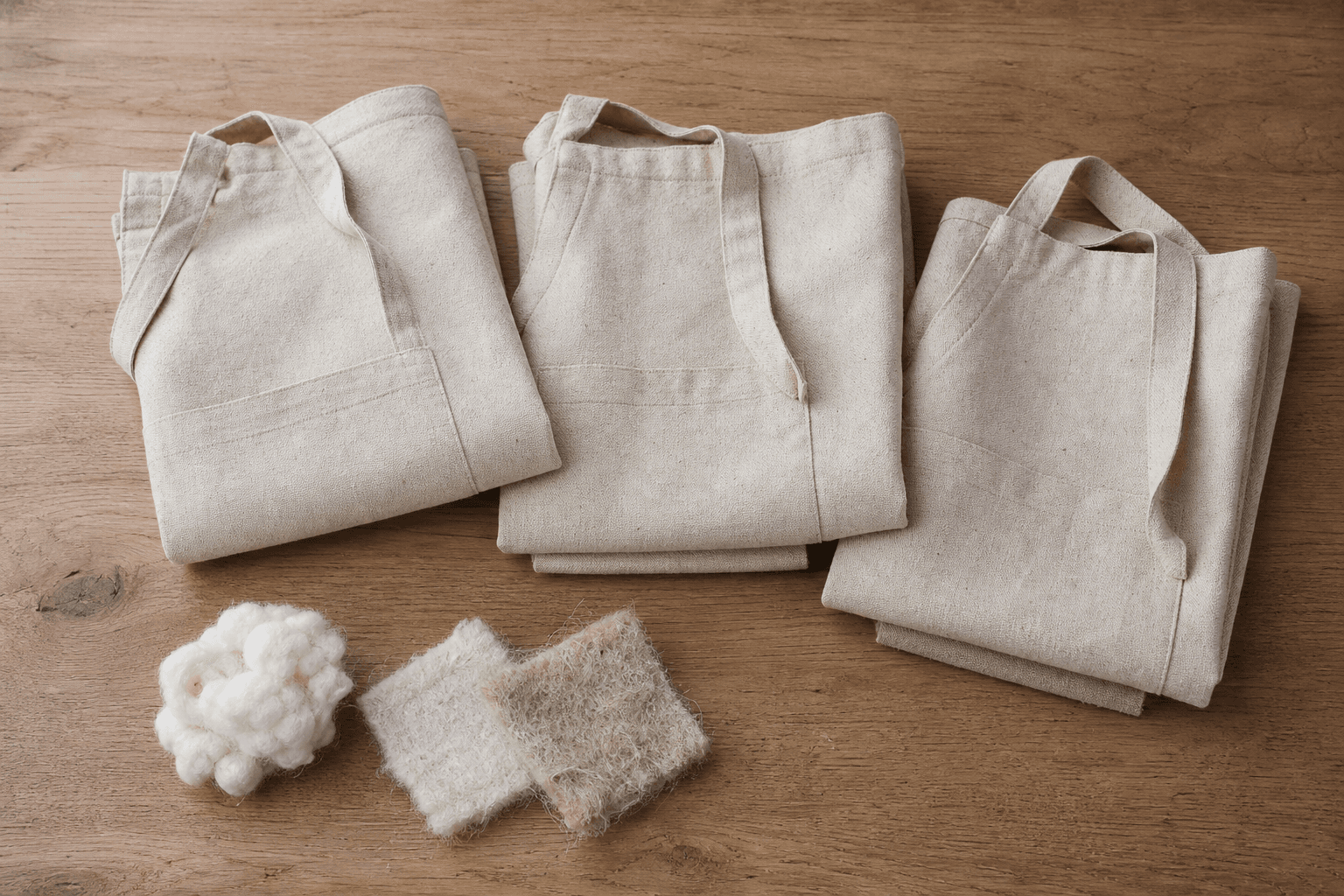
An organic cotton apron is often the first request from European and North American buyers. In China production, organic cotton canvas or twill is usually workable at 240 to 360 GSM, with higher GSM possible if the mill has yarn supply. For custom dyed organic cotton, a practical MOQ is often 800 to 1,500 meters per color, which may translate to about 1,000 to 2,500 aprons depending on size and cutting efficiency. Natural or undyed organic cotton can sometimes be sourced at lower MOQs if greige or stock fabric is available.
Recycled polyester is useful for straps, waist ties, waterproof backing, or lightweight promotional aprons. It improves durability and dries quickly, but buyers should ask whether recycled content is post-consumer or post-industrial, and whether the mill can provide GRS transaction documents. Recycled cotton can reduce virgin fiber use, but it often has shorter fiber length and may need blending with conventional or organic cotton to maintain strength. For heavy-duty aprons, a 70 percent cotton and 30 percent recycled cotton blend may be more stable than 100 percent recycled cotton.
- Organic cotton twill, 240-300 GSM, is suitable for retail kitchen aprons, cafe uniforms, and promotional programs with a soft hand feel.
- Organic cotton canvas, 320-400 GSM, is suitable for barista, workshop, barber, and premium hospitality aprons where structure matters.
- Recycled polyester, 150-220 GSM, is suitable for lightweight, quick-dry, or water-resistant aprons, especially when frequent laundering is required.
- Cotton-linen blends, 220-280 GSM, create a natural texture but wrinkle more easily and need careful shrinkage testing.
- Hemp-cotton blends, 250-350 GSM, can be strong and distinctive, but color consistency and hand feel need approval before bulk.
Certification, traceability, and buyer claims
Certification is where many eco apron sourcing projects become delayed. A fabric can be described as organic, recycled, or eco-friendly in conversation, but a brand buyer may need formal evidence for retail, e-commerce, or internal ESG reporting. The factory must know from the beginning whether the order needs certified material only, certified finished goods, or simply preferred material with supporting mill documents.
For organic cotton, buyers commonly ask for GOTS, OCS, or similar chain-of-custody support. For recycled content, GRS or RCS may be requested. These standards are not interchangeable. A responsible apron manufacturer should explain whether its own facility is certified, whether only the fabric mill is certified, and whether transaction certificates can be issued for the finished goods. If the buyer needs the final apron sold with a certified claim, the chain must cover each relevant step, including fabric, dyeing, printing, embroidery, and garment manufacturing where required.
Documentation also affects lead time. If the fabric mill has certified stock, sampling can start within 3 to 7 days. If yarn must be ordered and woven, fabric lead time may be 20 to 35 days before garment production. Transaction certificate preparation can add several days after shipment documentation is complete. Buyers should confirm these requirements before approving the quotation, because adding certification after bulk production may be impossible.
- Ask what is certified: fiber, fabric, dyeing mill, garment factory, or finished apron transaction.
- Check the certificate holder: the supplier name on the certificate should match the mill or factory involved in the order.
- Confirm logo and claim rules: certification marks usually require approval and cannot be used freely on labels or packaging.
- Plan document timing: transaction certificates are usually issued after production and shipment details are available.
Dyeing, printing, and washing choices for a sustainable apron
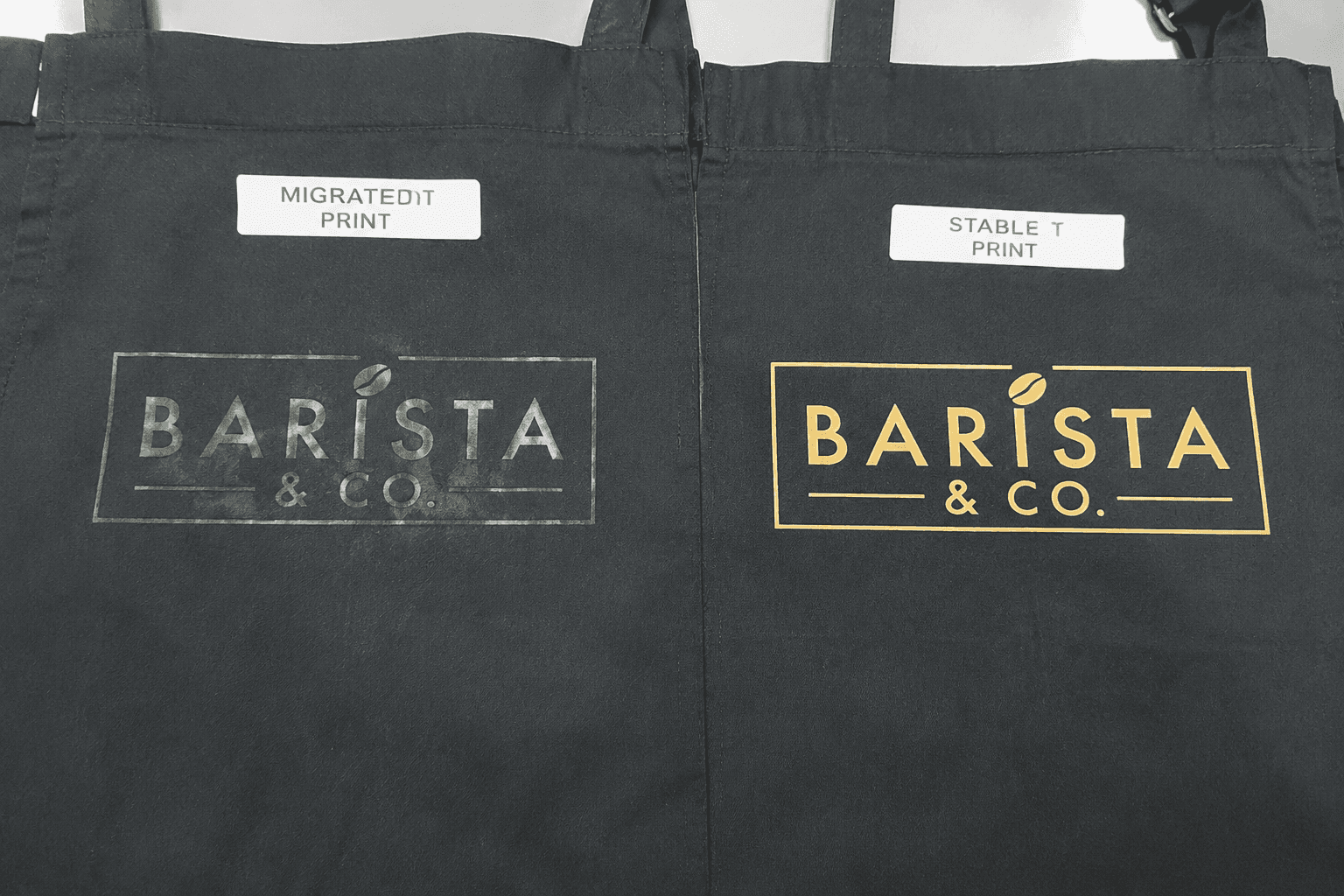
Color is a major environmental and quality variable in apron production. Dark black, navy, forest green, burgundy, and charcoal are common apron colors, but they require more dye and tighter control for rubbing fastness. For restaurant and cafe aprons, poor dry or wet rubbing fastness can transfer color onto white shirts, towels, counters, or seating. A sustainable apron should not create claims on paper while failing in daily use.
For custom colors, the normal process is lab dip approval in 5 to 7 days, bulk fabric dyeing in 10 to 18 days, and shade approval before cutting. Reactive dyeing for cotton is common. Some mills can offer lower-liquor-ratio dyeing, better wastewater treatment records, or OEKO-TEX compliant chemical management. For recycled polyester, disperse dyeing is used, and sublimation printing may be suitable for full-color promotional aprons. For cotton aprons, screen printing, pigment printing, embroidery, and woven labels are more common decoration methods.
Garment washing can improve hand feel and reduce shrinkage, but it adds water, energy, cost, and time. Enzyme washing or soft washing may add approximately $0.15 to $0.45 per apron depending on size, fabric weight, and batch volume. Pre-shrunk fabric can sometimes achieve the same stability with less processing at garment stage. For buyers building a green apron supplier base, the better question is not whether washing is sustainable, but whether it is necessary for the required fit, hand feel, and post-wash measurement tolerance.
- Natural undyed cotton reduces dyeing impact but may show cotton seed specks, shade variation, and batch differences.
- Dark custom colors need rubbing fastness testing, especially for bib aprons worn over light uniforms.
- Pigment prints can give a vintage look but may crack or fade depending on artwork size and wash cycle.
- Embroidery is durable for logos but adds thread, backing, machine time, and sometimes puckering risk on lighter fabrics.
Construction details that affect durability and waste
Durability is a sustainability issue because an apron that fails after 10 washes creates replacement cost, waste, and customer complaints. Apron buyers often focus on fabric composition, but seam construction, reinforcement, pocket placement, strap strength, and hardware choice decide how long the product survives in real use. In factory production, small changes can improve life span without a large price increase.
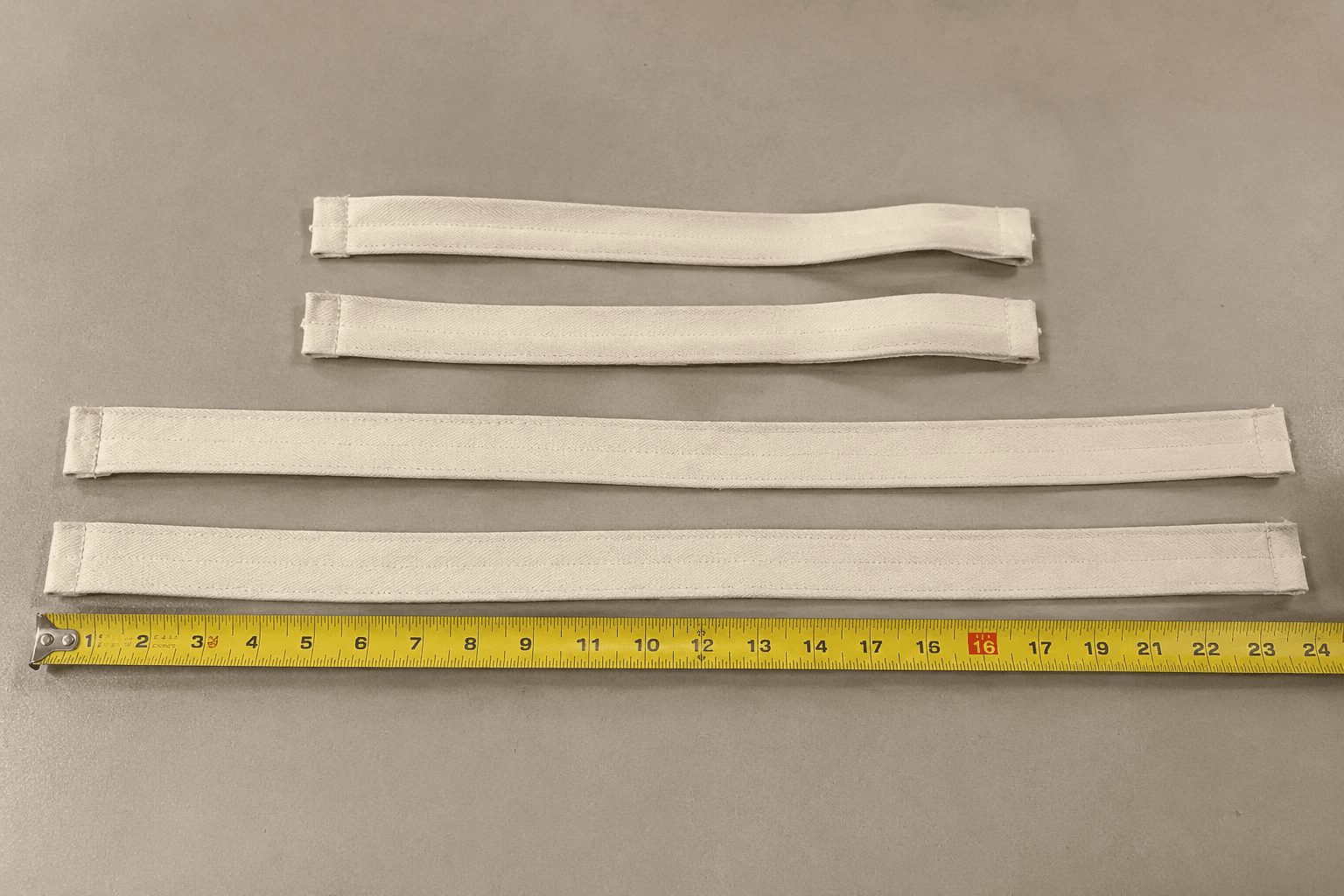
For bib aprons, stress points are usually at neck strap joins, waist tie joins, upper pocket corners, and lower pocket corners. Bartender and barista aprons with cross-back straps need stronger bartacks because the strap system carries more load than a simple neck loop. For workwear-style aprons, metal eyelets, rivets, buckles, and leather patches may improve appearance, but they complicate recycling and can trigger nickel or restricted substance requirements. If the buyer's main goal is lower environmental impact, fabric straps and reinforced stitching may be a cleaner solution than decorative metal trims.
Cutting efficiency also matters. A standard adult bib apron around 70 x 85 cm can cut efficiently from 150 cm wide fabric, but large wrap aprons, curved hems, and many pocket pieces increase fabric waste. Waste from cutting can sometimes be collected for recycling, but mixed colors, coated fabrics, and small irregular scraps have limited value. The most reliable waste reduction method is still good pattern engineering before bulk production.
- Bartacks at pocket corners reduce tearing for service aprons that carry pens, order pads, bottle openers, or tools.
- Double-fold hems improve edge durability but add sewing time and slightly increase thread use.
- Adjustable neck straps improve fit across staff sizes, but buckles, snaps, and eyelets should be checked for compliance.
- Cross-back straps reduce neck pressure but increase component count and sewing complexity.
- Modular pockets can reduce SKU variation when different departments need similar apron bodies with different pocket layouts.
MOQ, cost, and lead time realities in eco apron sourcing
Sustainable materials are often available, but they are not always available at small MOQs, especially in custom colors. A buyer requesting 300 pieces per color in GOTS organic cotton canvas with custom dyeing may receive a high price because the fabric mill MOQ is much larger than the garment order. In that case, stock organic fabric, natural color, or a consolidated color plan may be more practical.
For factory planning, a typical custom apron sample lead time is 5 to 10 days if fabric and trims are available. Lab dips add 5 to 7 days. Custom woven fabric may add 20 to 35 days. Bulk sewing for 2,000 to 10,000 aprons usually takes 15 to 30 days after all materials arrive and pre-production sample is approved. For certified organic or recycled programs, the full lead time from purchase order to ex-factory shipment is commonly 40 to 70 days, depending on fabric sourcing and document requirements.
Cost varies widely, but buyers need working ranges for planning. A conventional 240 GSM cotton bib apron may be around $2.20 to $4.20 per piece FOB China at mid-volume, depending on design. A 280 GSM organic cotton apron may be around $3.20 to $6.20. A 340 GSM organic cotton canvas apron with large pockets, cross-back straps, metal hardware, and embroidery may be around $6.50 to $11.50. Recycled polyester promotional aprons can be lower, often $1.20 to $3.00, but certified recycled documentation and custom printing can raise the price.
- 500-1,000 pieces may work for stock fabric aprons, simple logo decoration, and limited color options.
- 1,000-3,000 pieces is more realistic for custom dyed cotton or organic cotton apron programs.
- 3,000-10,000 pieces gives better cutting efficiency, trim purchasing, and sewing-line stability.
- 10,000 pieces and above can justify dedicated fabric weaving, custom packaging, and tighter cost engineering.
- 40-70 days is a practical planning window for many certified sustainable apron sourcing projects from China.
How to evaluate a responsible apron manufacturer
A responsible apron manufacturer should be able to discuss material risk, not only quote the lowest price. During supplier evaluation, buyers should ask for recent apron production photos, fabric inspection records, sample comments, audit certificates, and examples of document packages for organic or recycled orders. The supplier does not need to own every upstream process, but it must control its approved mills, dyeing partners, printing units, embroidery workshops, and packing line.
Factory quality control should include incoming fabric inspection, GSM check, shade band review, shrinkage testing, pre-production sample approval, inline inspection, needle control, measurement checks, and final AQL inspection. For aprons, measurement tolerance is usually plus or minus 1 cm on small parts and plus or minus 1.5 to 2 cm on body length and width, depending on product type. Pocket position, strap length, logo placement, and label orientation should be included in the inspection checklist because these errors are common in bulk apron production.
Social compliance also belongs in sustainable apron sourcing. Many buyers require BSCI, Sedex, WRAP, ISO, or customer-specific audits. These do not automatically prove product sustainability, but they show that the factory has systems for working hours, payroll records, health and safety, subcontracting control, and corrective action. For a brand buyer, the strongest supplier is usually one that combines product knowledge with transparent limits: what it can certify, what it can only document, and where extra cost or time is needed.
- Request a material map showing fabric mill, dyeing mill, trim suppliers, printing or embroidery supplier, and garment factory.
- Ask for a pre-production sample made with bulk fabric, bulk trims, approved logo method, and final packaging where possible.
- Confirm subcontracting rules before order placement, especially for embroidery, washing, printing, and special hardware.
- Review inspection standards for shade, measurements, sewing defects, stains, broken stitches, loose threads, and packing accuracy.
A practical sourcing checklist before placing the order
The best time to control risk is before the purchase order. Once fabric has been dyed, labels produced, and cartons printed, changes become expensive. For sustainable apron sourcing, the buyer's tech pack should specify fabric composition, GSM, weave, color standard, certification requirement, decoration method, measurement chart, pocket details, trim materials, packaging, carton marks, test requirements, and inspection level.
Buyers should also separate mandatory requirements from preferred options. For example, certified organic cotton may be mandatory, while recycled paper hangtags may be preferred. A plastic-free individual pack may be preferred, but the warehouse may still require barcode visibility and moisture protection. This distinction helps the factory offer alternatives instead of delaying the project while chasing an unrealistic combination.
For ongoing programs, the most effective approach is to approve a sustainable apron platform: one or two core fabrics, several approved colors, standard strap constructions, standard pocket modules, and approved packaging. This allows the buyer to launch new designs faster while keeping documentation, testing, and cost under control. A stable platform also helps the factory reserve fabric, train sewing operators, and reduce defects across repeat orders.
- Confirm the claim: organic, recycled, low-impact dyeing, reduced plastic packaging, audited factory, or a combination.
- Confirm the evidence: certificate, transaction certificate, fabric test report, audit report, supplier declaration, or buyer inspection.
- Confirm the performance: wash shrinkage, colorfastness, seam strength, pocket strength, abrasion, and measurement tolerance.
- Confirm the commercial terms: MOQ, sample cost, bulk price, lead time, payment terms, inspection process, and shipment method.
- Confirm reorder control: retained fabric standard, approved shade card, pattern file, label file, and packing specification.