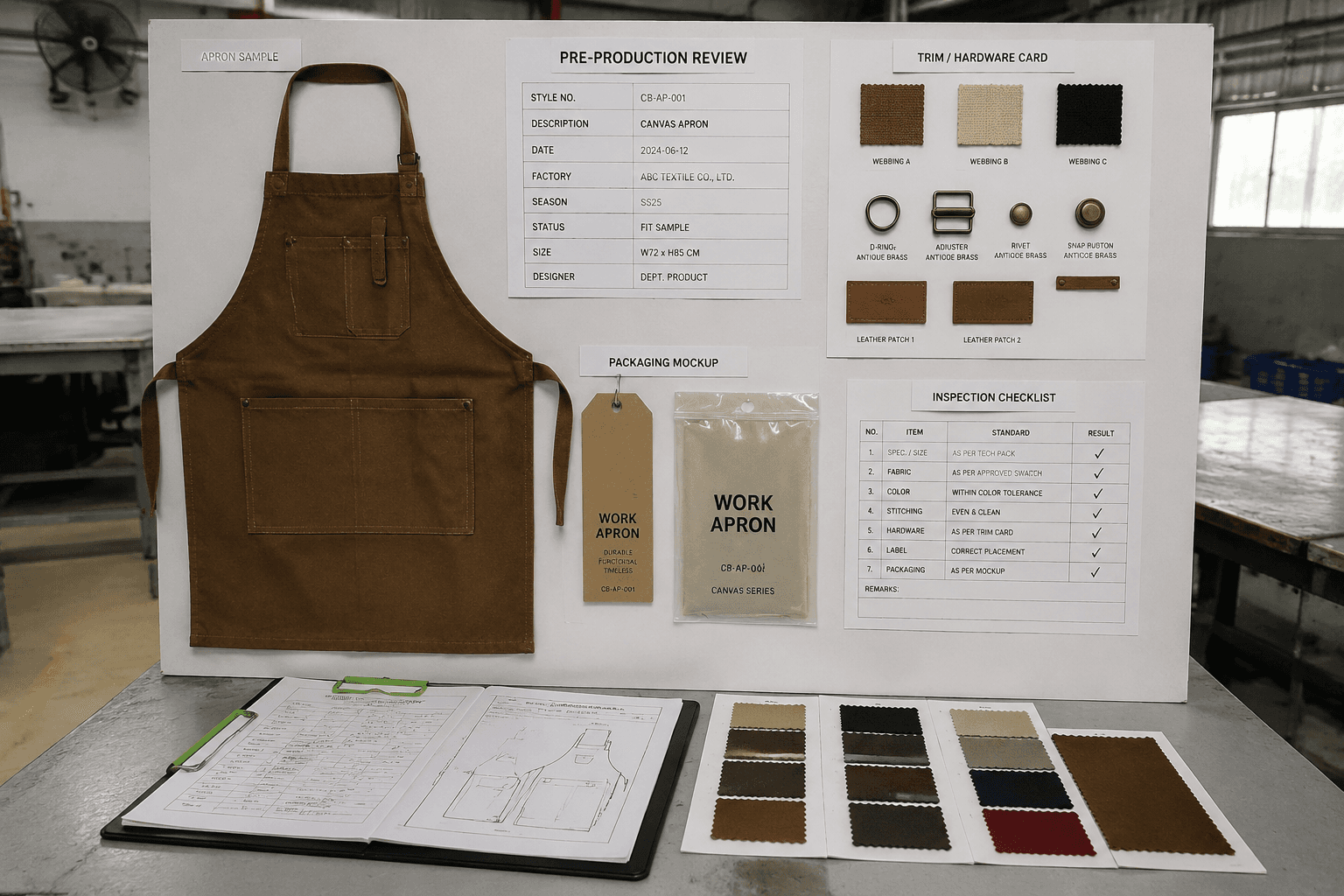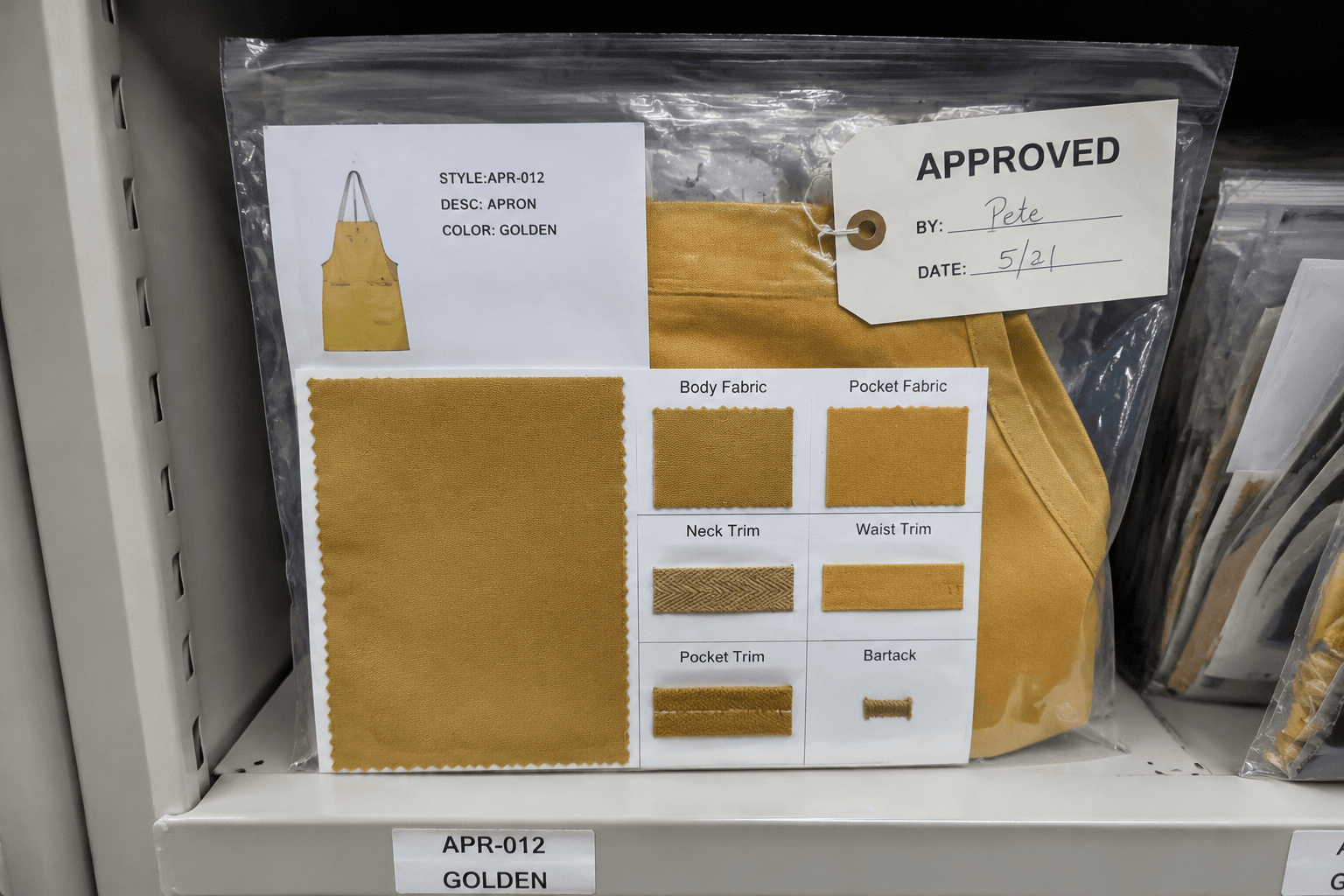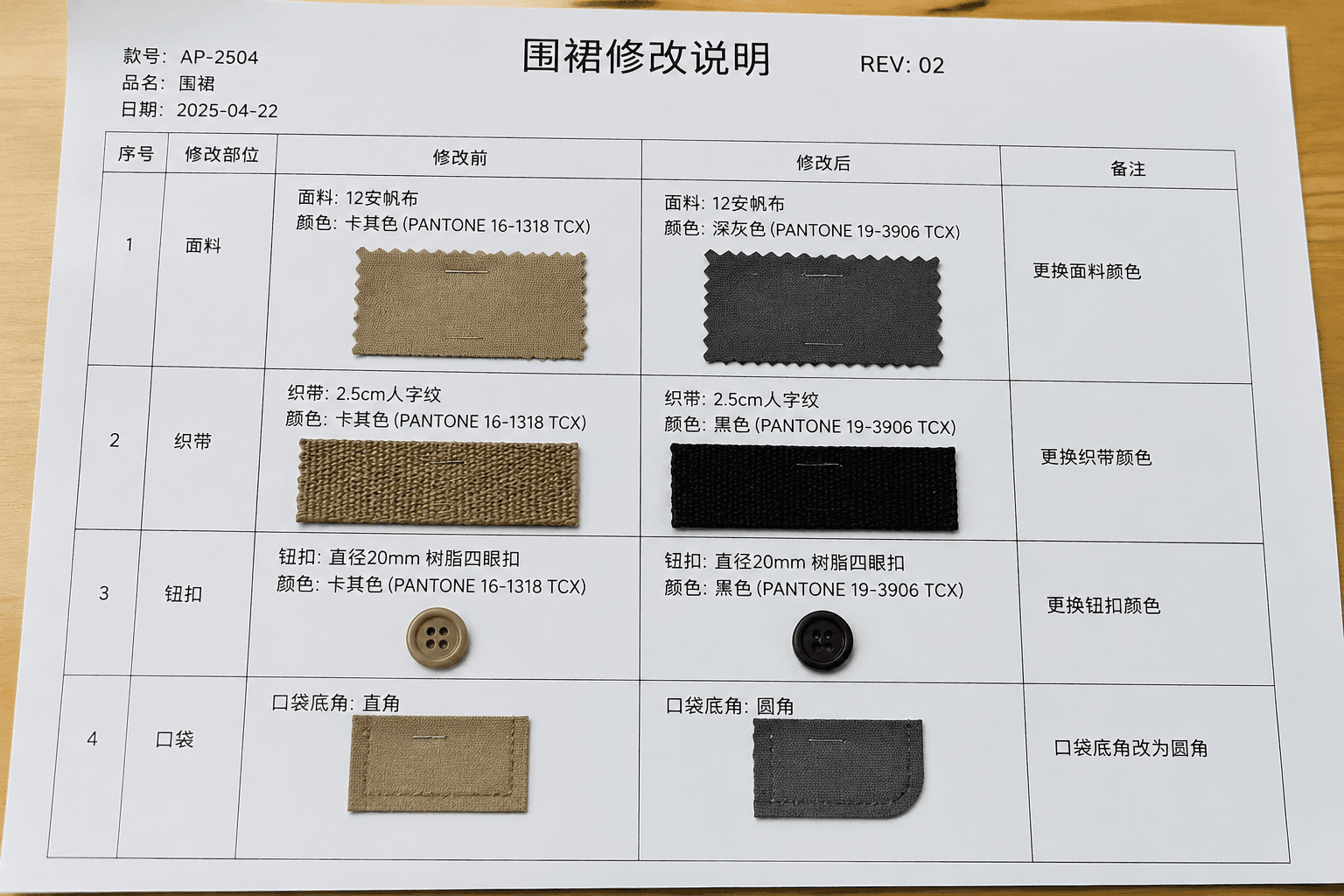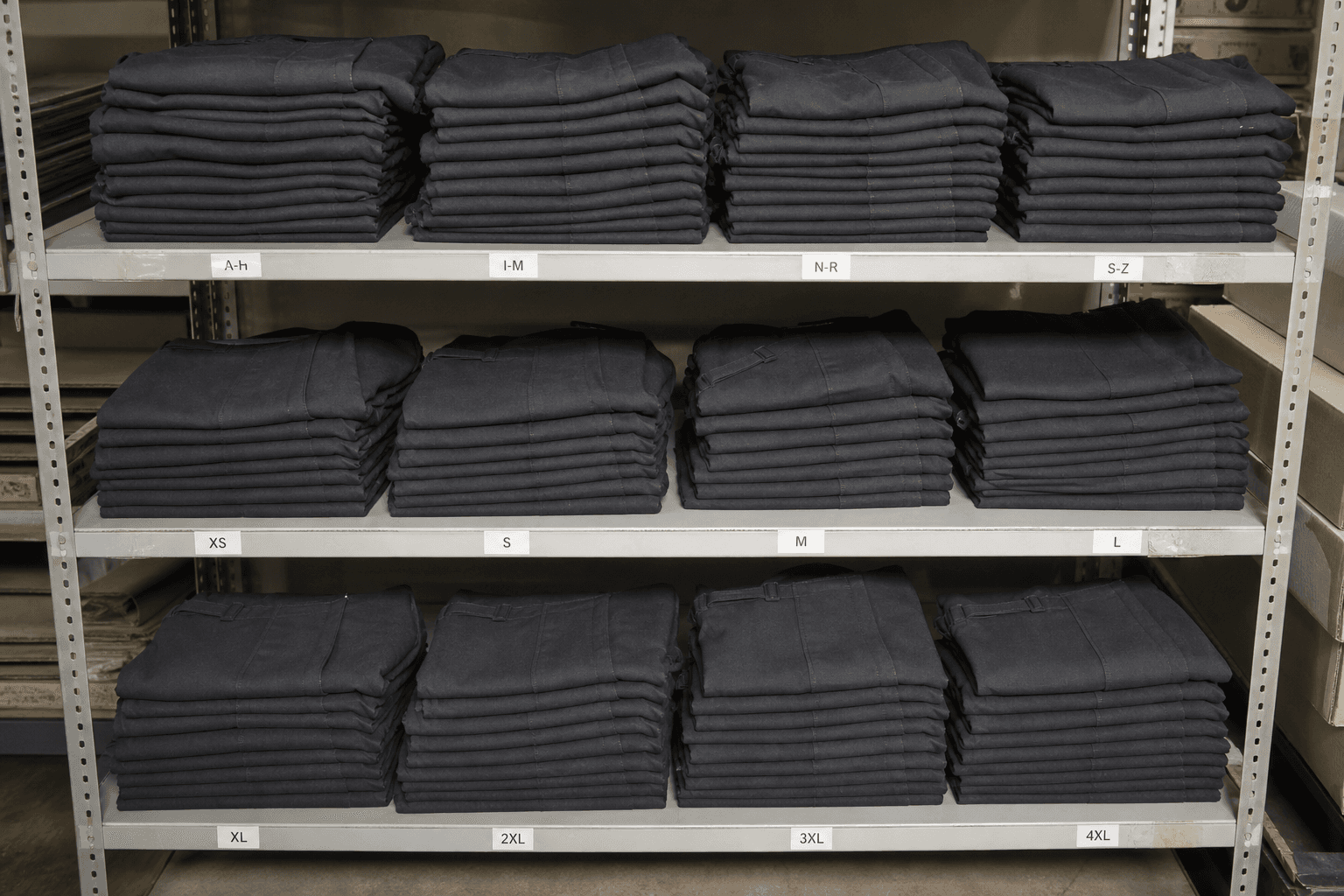
For a sourcing manager, an apron reorder is rarely just a second purchase. It is a chance to convert the work already paid for in the first production run into lower unit cost, shorter lead time and fewer approval steps. The difference is strongest when the original order included stable fabric, documented trims, approved size grading, retained artwork files and a clear packing standard.
At factory level, a repeat apron order removes many unknowns. We already know the shrinkage behavior of the 240 GSM twill, the needle setting for the pocket bartacks, the actual consumption of 25 mm waist tape, the screen size for the chest logo and the carton loading result. Those details directly affect cutting loss, sewing speed, inline QC time and the number of days before bulk production can start.
However, a repeat order is only faster and cheaper when the buyer and supplier keep the specification stable. If fabric weight, strap construction, embroidery placement or packaging changes, the order may become a partial new development. The practical question is not whether a repeat order is cheaper by default, but which parts of the previous production can be reused without creating quality risk.
- A stable apron reorder can usually save 5-12 days versus a first production run.
- The largest cost reductions come from reused artwork, confirmed fabric shrinkage, established cutting markers and fewer sample rounds.
- Lower reorder cost is realistic only when fabric, color, trim, logo method and packing remain close to the original approval.
- A repeat apron order still needs fabric lot checking because dye shade, GSM and shrinkage can change between batches.
- For apron restock planning, buyers should reserve fabric or place forecasts before peak seasons to avoid mill delays.
- The best apron production repeat files include approved samples, measurement tolerances, logo files, wash test data and carton specifications.
Why an apron reorder is different from a first bulk order
A first custom apron order carries development work that is easy to underestimate. The factory must confirm fabric type, yarn count or weave, dyeing route, shrinkage, strap length, pocket construction, label placement, logo technique, needle choice, pressing method and packing. Even for a simple bib apron, the first order may need 7-10 days for sampling, 2-4 days for sample comments, 3-5 days for revised samples and additional time for artwork approval. Before bulk cutting, the factory also prepares markers, sewing operation breakdowns and QC checkpoints.
In an apron production repeat, many of these steps can be shortened because the approved standard already exists. If the buyer reorders the same 280 GSM cotton canvas bib apron with the same 70 x 86 cm body size, same 30 x 20 cm double pocket, same brass eyelet, same 38 mm neck strap and same 1-color chest print, the factory can move faster. The sample room does not need to rebuild the pattern, the printing department can reuse the screen data, and the sewing line can follow the previous operation sheet.
This does not mean the second order should skip control. A repeat order still needs a new pre-production confirmation if the fabric lot, thread color, logo color or packaging batch changes. But the checking is based on a known target instead of a new interpretation. That is the main reason a repeat apron order often feels more predictable for both sides.
- First order development commonly takes 12-20 days before bulk production can start.
- A stable repeat order can reduce pre-production time to 5-8 days when materials are available.
- Reused patterns and markers reduce cutting room setup and lower the chance of measurement drift.
- Approved logo files reduce artwork disputes, especially for embroidery and screen printing.
Where lower reorder cost actually comes from
Buyers often ask for a lower reorder cost because the product is already developed. That request is reasonable, but the cost reduction has specific sources. The factory saves sample labor, pattern adjustment time, printing screen setup, embroidery digitizing, line trial time and part of the administrative communication. For simple aprons, these savings may represent USD 0.05-0.20 per piece on a 3,000-5,000 piece order. For complex aprons with leather patches, metal trims, contrast stitching and multi-position embroidery, the saving can be higher, but only if all components are unchanged.
Fabric is usually the largest part of apron cost, often 35-55% of FOB price depending on GSM, fiber content and finishing. A repeat order does not automatically make fabric cheaper unless the factory can buy a larger quantity, use leftover stock, combine dyeing with another order or avoid a small-lot surcharge. For example, a 250 GSM TC twill apron may use 0.55-0.70 meters of fabric depending on width and body size. If the mill MOQ is 800 kg per color and the reorder is only 1,000 pieces, the fabric price may not improve.
Labor cost can improve when the sewing line has experience with the style. Operators remember the sequence, the folder settings are known and the line supervisor can balance operations faster. In our factory experience, sewing efficiency on a repeat apron order may improve 5-15% compared with the first run. That saving is most visible on waist aprons with multiple pockets, cross-back aprons with adjustable hardware, and tool aprons with reinforced panels.
- Typical one-time charges removed or reduced include pattern setup, embroidery digitizing, screen setup and sample courier cost.
- A practical lower reorder cost range is often USD 0.05-0.30 per piece, depending on order size and construction.
- Fabric cost falls only when the reorder quantity supports better mill pricing or uses confirmed remaining stock.
- Labor savings are stronger for aprons with pocket divisions, bartacks, rivets, binding or adjustable straps.
How an apron reorder shortens lead time
Lead time is reduced because the approval path becomes narrower. For a new order, the critical path normally includes sample making, sample approval, fabric lab dips, bulk fabric production, trim sourcing, logo proofing, pre-production sample, cutting, sewing, inspection and packing. For a repeat apron order, the factory can often start fabric and trim purchasing immediately after PO confirmation because the bill of materials is already fixed.
A realistic timeline depends on fabric availability. If the same fabric is in stock, a 2,000-3,000 piece apron restock may ship in 18-25 days after deposit and artwork confirmation. If fabric must be dyed, the timeline is usually 30-40 days. If the apron uses yarn-dyed stripe fabric, waxed canvas, GRS recycled polyester or special water-repellent finishing, the reorder may still require 40-55 days because mill scheduling controls the calendar more than sewing.
The fastest reorders are not always the simplest designs. They are the designs with the most stable records. A 320 GSM canvas chef apron with cross-back straps can be faster than a basic promotional apron if the canvas is reserved, the hardware is in stock and the brand already approved the logo placement. A low-cost 180 GSM nonwoven apron can be delayed if the buyer changes color, changes carton markings or requests a new retail polybag.
- Stock fabric repeat order: commonly 18-25 days for 1,000-5,000 pieces.
- Piece-dyed fabric repeat order: commonly 30-40 days depending on mill queue and color approval.
- Special finish or certified fabric repeat order: commonly 40-55 days when certificates and finishing tests are required.
- Logo-only confirmation can often be completed in 1-2 days if artwork and Pantone references are unchanged.
Specifications that must stay controlled in an apron production repeat
The most common reorder problems come from small specification changes that are not treated as changes. An apron buyer may say, "same as last order," but then request a slightly heavier fabric, a softer hand feel, a longer neck strap or a new pocket depth. Each change affects cost, production method or QC criteria. A heavier fabric may need different needle size and slower sewing speed. A longer strap increases webbing consumption. A pocket depth change may require a new cutting marker.
For repeat apron orders, the factory should issue a short confirmation sheet before purchasing material. This sheet should show fabric composition, GSM, color standard, body measurement, pocket size, strap width, logo size, logo position, label content, packing method, carton quantity and inspection AQL. The buyer should compare it with the previous approved sample or sealed sample. This step is only 1-2 pages, but it prevents many avoidable disputes.
Color control deserves special attention. Even when the Pantone number is unchanged, cotton canvas, polyester-cotton twill and denim can show different shade behavior between dye lots. For apron restock programs, we usually recommend keeping a fabric cutting from the last bulk shipment and approving the new lot against it under D65 light. For dark colors such as black, navy, charcoal and bottle green, shade tolerance should be agreed before dyeing.
- Fabric should be confirmed by composition, weave, GSM, finish, color reference and shrinkage target.
- Measurements should include body width, body length, strap length, strap width, pocket dimensions and tolerance.
- Logo confirmation should include size, position from top edge, color, technique and approved file name.
- Packing should state fold method, polybag type, pieces per carton, carton size and gross weight limit.
- QC should define AQL level, critical defects, measurement tolerance and acceptable shade range.
MOQ, fabric reservation and apron restock planning
MOQ is often easier on a repeat order, but it is not only a factory decision. For basic cotton or TC twill colors, a factory may accept 500-1,000 pieces per color if fabric is available locally. For custom dyed canvas, yarn-dyed stripe, denim or recycled polyester with certification, the mill MOQ may be the real limit. A fabric MOQ of 500-800 kg can translate into 2,000-5,000 aprons depending on fabric width, GSM and cutting consumption.
For ongoing apron restock, buyers should separate sales forecast from purchase order quantity. If a brand needs 2,000 pieces now and expects another 3,000 pieces within 90 days, the factory may be able to reserve greige fabric, dye the full color lot or purchase trims in one batch. This can improve shade consistency and reduce reorder risk. It can also reduce the chance that a buckle, eyelet, tape color or label material changes between orders.
The trade-off is inventory responsibility. If the factory purchases fabric or trims ahead of the confirmed PO, the buyer may need to pay a material deposit or sign a consumption agreement. For stable programs, this is often worth discussing. For uncertain sales, it may be better to accept a longer reorder lead time instead of creating leftover branded materials.
- Low-risk repeat MOQ for stock fabric aprons is often 500-1,000 pieces per color.
- Custom dyed fabric may require 2,000-5,000 pieces to absorb the mill MOQ efficiently.
- Reserved fabric can reduce lead time by 7-15 days on the next apron reorder.
- Shared trim purchasing can stabilize color and reduce unit cost for straps, labels and hardware.
- Material deposits are reasonable when fabric is custom dyed, branded or difficult to reuse.
Quality risks that remain in a repeat apron order
Repeat production lowers risk, but it does not remove it. Fabric can shrink differently, especially cotton canvas, denim and linen-cotton blends. A previous 3% shrinkage result does not guarantee the next lot will match unless the same mill, finishing route and testing method are used. For washable kitchen aprons, we normally check dimensional change after washing before bulk cutting or at least before full shipment approval.
Logo execution is another area where repeat orders need discipline. Embroidery tension may vary on 240 GSM twill versus 320 GSM canvas. Screen print ink may behave differently if the fabric finish changes. Heat transfer labels may peel if the pressing temperature is not adjusted for polyester-cotton blends. A repeat apron order should include a fresh production strike-off or first-piece approval, even when the artwork is unchanged.
Packing also creates hidden risk. If the buyer changes carton quantity from 50 pieces to 100 pieces to save freight, the apron may crease more heavily or exceed manual handling weight limits. If the fold method changes, a chest logo can sit on a hard crease line. If a retail barcode sticker changes position, the warehouse receiving process may reject cartons even though the apron itself is correct.
- New fabric lots should be checked for GSM, shade, hand feel and shrinkage before bulk cutting.
- First-piece logo approval should be repeated for embroidery, screen print, heat transfer and woven patches.
- Thread color and bartack density should be checked because small contrast changes are visible on aprons.
- Carton weight should usually stay below 18-20 kg for practical handling and lower damage risk.
How to prepare a clean apron reorder file
The best way to make an apron reorder efficient is to keep a complete production record after the first shipment. The file should not rely on memory or email history. It should include the final approved spec sheet, signed sample photos, fabric test data, trim references, artwork files, carton marks and inspection report. When the next PO arrives, the factory can compare the order against this record and identify only the points that need reconfirmation.
A good reorder file also helps when staff changes on either side. Sourcing teams, merchandisers and factory follow-up staff may not be the same six months later. If the approved apron was a 260 GSM black cotton twill waist apron with 3-pocket front, 90 cm waist ties, 1 cm hem, 8 stitches per inch and 1-color white screen print, those details should be written and photographed. Clear records reduce the chance that a repeat apron order slowly becomes a different product.
For buyers managing multiple apron programs, we recommend assigning a style code and version number. For example, AP-BIB-240TC-V2 is more reliable than "black cafe apron." If the buyer changes pocket size or strap construction, the version should change. This keeps purchasing, quality and accounting aligned when comparing price, claims and future apron restock requests.
- Keep the approved sample, final spec sheet, production photos and last inspection report together.
- Store editable artwork files, embroidery DST files, Pantone references and logo placement measurements.
- Record fabric supplier, GSM, composition, shrinkage result, color lot and finishing requirement.
- Use version numbers when changing strap length, pocket layout, fabric weight, logo technique or packing.
- Attach carton specifications, shipping marks and barcode files to avoid warehouse receiving issues.
Commercial terms for a repeat apron order
Commercial terms can also improve on a repeat order, but they should match the actual risk. If all materials are standard and the buyer has stable payment history, the factory may reduce the deposit requirement or accept a shorter balance payment window. If the reorder uses custom dyed fabric, branded labels or special hardware, the supplier still carries material risk and will normally require a deposit before purchasing.
Price validity should be handled carefully. Cotton, polyester yarn, dyeing charges, carton cost and inland freight can change between orders. A repeat price from six months ago may not be valid if cotton increased 8%, exchange rate moved, or the carton supplier raised pricing. On the other hand, if material prices are stable and the order quantity increases from 1,000 to 5,000 pieces, the buyer should expect a more competitive unit price.
For long-term apron restock programs, the most practical agreement is not a fixed price forever. It is a transparent price structure: fabric cost, trim cost, logo cost, sewing cost, packing cost and overhead. When the buyer understands which part changed, price discussions become faster and less emotional. This is especially useful for brands ordering the same apron across several colors, sizes or regional packing standards.
- Repeat order deposits may improve when materials are standard and buyer payment history is strong.
- Custom fabric, branded trims and private-label packaging usually still require material security.
- Price should be rechecked if cotton, polyester, dyeing, exchange rate or carton cost has moved significantly.
- Larger reorder quantities can reduce unit cost by spreading setup, QC and administration over more pieces.
- A cost breakdown helps both sides negotiate apron reorder pricing with fewer delays.