Dropshipping is not only a retail tactic. For apron buyers, it is also a sourcing model that changes how inventory, decoration, packing and shipment are controlled between the brand and the factory. When a China factory handles single-order dispatch, the buyer avoids holding finished stock, but the factory must manage smaller pick-pack tasks, stricter SKU data, variable labels and more frequent courier handovers.
For dropship aprons, the main question is not whether a factory can ship one piece at a time. Many can. The practical question is whether the product, artwork, MOQ, packing standard, data flow and lead time can be made stable enough for ecommerce orders. A kitchen apron with one-color logo printing is simple. A waxed canvas barista apron with leather straps, metal rivets, name personalization and gift packing is a different fulfillment job.
This article explains how apron dropshipping works from a supplier-side view: which apron types fit the model, where the cost sits, how production is organized, and what a sourcing manager should confirm before asking a factory to fulfill directly to end customers.
- Dropship aprons are most stable when the base apron is standardized and only print, label or packing changes per order.
- Factory fulfillment apron cost is higher per piece than carton bulk shipment because picking, inspection, packing and courier handling are done one order at a time.
- Print on demand apron programs need artwork rules, including print area, color limits, file naming, placement tolerance and curing time.
- MOQ is usually split between base inventory and decoration, with blank apron stock often requiring 300-1,000 pcs per color or fabric.
- Lead time depends on order rhythm, not only production capacity; same-day dispatch is uncommon for cut-and-sew custom aprons.
- Apron ecommerce sourcing works best when buyers accept fewer fabrics, fewer trims and tighter SKU architecture.
What dropship aprons mean in factory terms
In a normal bulk apron order, the factory produces 500, 2,000 or 10,000 pcs, packs them into export cartons, and ships by sea, air or courier to the buyer's warehouse. The work is linear: material purchase, cutting, sewing, inspection, carton packing and export shipment. With dropship aprons, the factory may still produce the apron base in batches, but final order handling happens one piece, two pieces or a small bundle at a time.
This means the factory takes on part of the ecommerce warehouse role. It receives the buyer's order file, matches SKU and artwork, prints or selects the correct apron, checks the piece, packs it according to brand rules, applies the courier label and dispatches to the final customer. The buyer sells through Shopify, Amazon, Etsy, a brand site or B2B portal, but the factory performs fulfillment after the sale.
From the factory side, this model is practical only when the workflow is standardized. A sewing line is built for batch efficiency, not random one-piece manufacturing. Therefore most apron dropshipping programs use a hybrid structure: blank or semi-finished aprons are produced in advance, then printing, labeling, packing and dispatch are triggered by daily order files.
- A pure dropshipping model means the factory holds finished or blank apron inventory and ships individual orders after the buyer sells.
- A print on demand apron model means the factory keeps blank aprons and decorates each piece after receiving the final artwork or name.
- A factory fulfillment apron model may include pre-produced custom stock owned by the buyer but stored at the factory.
- A bulk-plus-dropship model ships most units to the buyer's warehouse while reserving 50-300 pcs per SKU for direct replacement or ecommerce orders.
Which apron products fit apron dropshipping
Not every apron is suitable for dropshipping. The best products are stable, repeatable and easy to inspect. A 180-240 GSM polyester-cotton kitchen apron, a 10 oz cotton canvas bib apron or a simple waist apron with two pockets can be stocked as blanks and decorated later. The pattern is fixed, the trims are simple, and the packing size is predictable.
More complex styles can still work, but they need tighter planning. A 12 oz denim apron with cross-back straps, brass eyelets and removable leather trim may require bulk sewing first because the trim installation slows the line. A waxed canvas apron may need separate packaging to avoid oil transfer or surface marks. A waterproof TPU apron may have creasing risk in small courier bags. These are manageable issues, but they must be costed before launch.
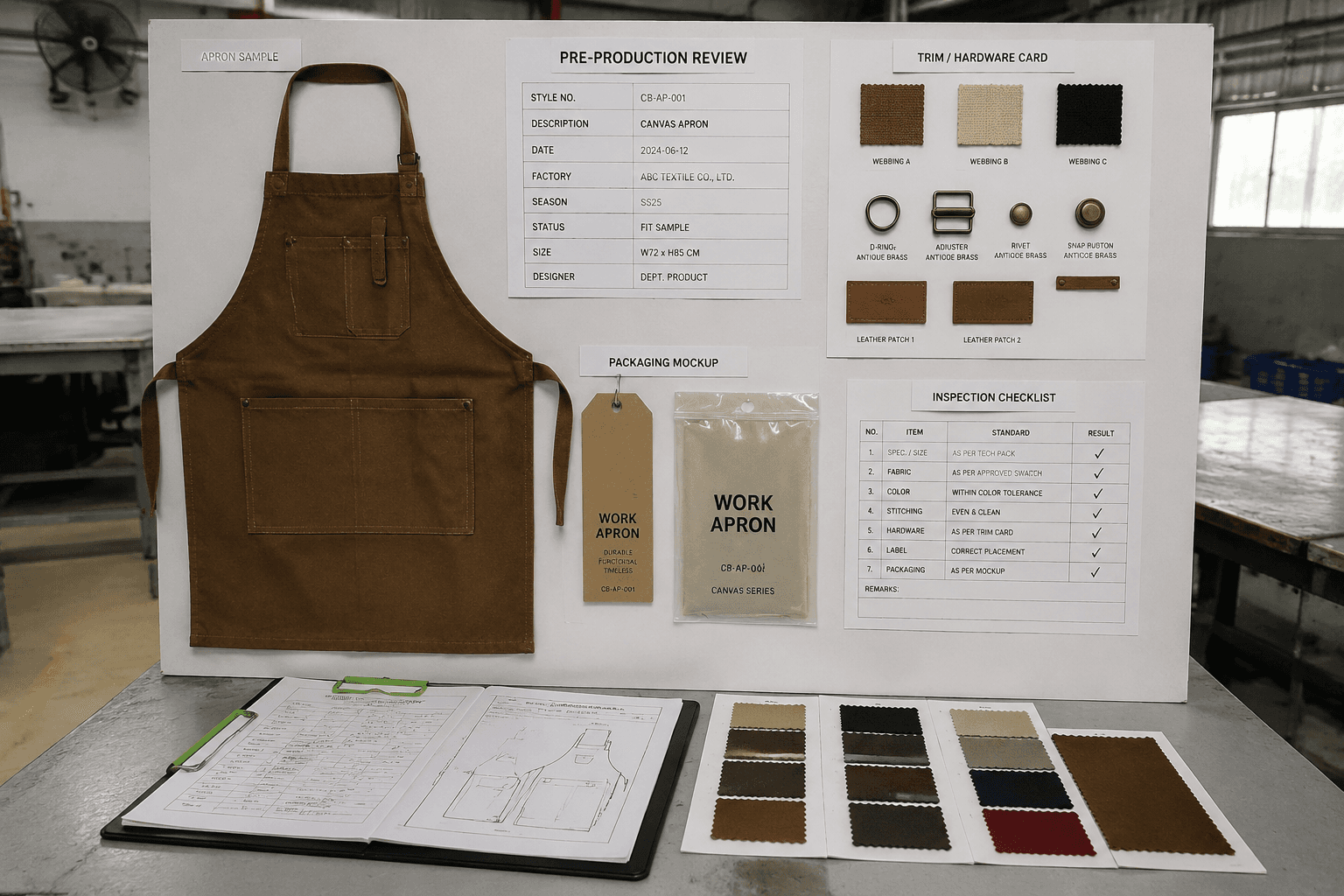
For apron ecommerce sourcing, the buyer should separate the apron program into core and optional elements. Core elements are fabric, color, size, pocket layout and strap system. Optional elements are logo print, embroidery, neck label, hangtag, barcode sticker, kraft sleeve or gift box. Dropshipping becomes easier when the core is fixed and only optional elements vary by order.
- Good fits include 7-8 oz cotton twill chef aprons, 10 oz canvas cafe aprons, polyester promotional aprons and simple waist aprons.
- Moderate fits include denim aprons, waterproof aprons, kids aprons and cross-back aprons when the blank stock is prepared in batches.
- Difficult fits include heavy waxed canvas aprons, leather-trim aprons, multi-size uniform sets and fully personalized cut-and-sew aprons.
- High-risk fits include aprons with fragile packaging, many detachable accessories, unusual courier dimensions or strict color matching across multiple fabric lots.
How dropship aprons are produced: stock first, customize later
Most factory-run dropship aprons begin with base stock. The factory cuts and sews blank aprons in a controlled batch, usually 300-1,000 pcs per fabric color for a small program and 2,000-5,000 pcs per color for a stable ecommerce SKU. The blank apron may already include pockets, straps, care label and size label. It may not include the customer's logo, name print, final hangtag or retail packaging.
After the buyer's daily order file arrives, the factory performs the variable step. For a simple logo apron, this may be heat transfer or screen print. For a name-personalized apron, it may be DTG, DTF transfer, sublimation on polyester, or embroidery. The best method depends on fabric composition, wash target, order quantity and artwork complexity.
A common setup is one daily order cut-off, for example 10:00 China time. Orders received before the cut-off are printed within 1-2 working days if blanks are available. QC and packing take another 0.5-1 day. Courier pickup may happen the same evening or next day. For realistic planning, many factories quote 3-5 working days from clean order data to dispatch for print on demand apron orders.
- Screen print is efficient for repeated artwork, usually from 100 pcs per design, with strong cost control but less flexibility for one-piece orders.
- DTF transfer works for multi-color artwork and low MOQ, with typical decoration cost around $0.45-$1.20 per standard chest print depending on film area.
- Embroidery gives a premium look on canvas or twill aprons, but one-piece name embroidery can add $1.20-$3.50 per apron and increases handling time.
- Sublimation works only on suitable polyester or coated fabric and is useful for all-over graphic aprons, but it is not suitable for cotton canvas.
- Heat transfer is practical for small batches, but buyers should confirm wash testing at 40 degrees C for 20-30 cycles if the apron is sold for workwear use.
MOQ, inventory ownership and cost structure for dropship aprons
A common misunderstanding is that dropshipping means zero MOQ at the factory. For finished apparel and textile products, the real MOQ moves upstream. Fabric dyeing, cutting markers, sewing line setup, trim purchase and label printing still need minimum quantities. A factory may ship one apron per order, but it rarely produces one apron from raw fabric per order at a commercial price.
For standard blank aprons, a factory may allow a program starting from 300 pcs per color if the fabric is in stock. For custom dyed fabric, MOQ may be 500-1,000 meters per color, which can translate to 1,500-4,000 aprons depending on width and pattern efficiency. Custom woven labels may start at 1,000-3,000 pcs. Printed hangtags often start at 500-1,000 pcs. Individual polybags with warning text may be stocked from 1,000 pcs upward.
Cost also changes. A bulk FOB price for a 10 oz cotton canvas bib apron might be $3.20-$4.80 per pc at 1,000 pcs, depending on pocket design, fabric weight and trim. Under a factory fulfillment apron model, the same base apron may add pick-pack labor of $0.30-$0.80, print or embroidery cost of $0.45-$3.50, inner packing of $0.10-$0.60, barcode or address label handling of $0.05-$0.15, and courier charge based on destination and weight. For a 250-380 g apron shipped to the US or EU by postal packet or ecommerce line, freight may range from about $3.50-$8.50 per pc depending on service level and fuel adjustments.
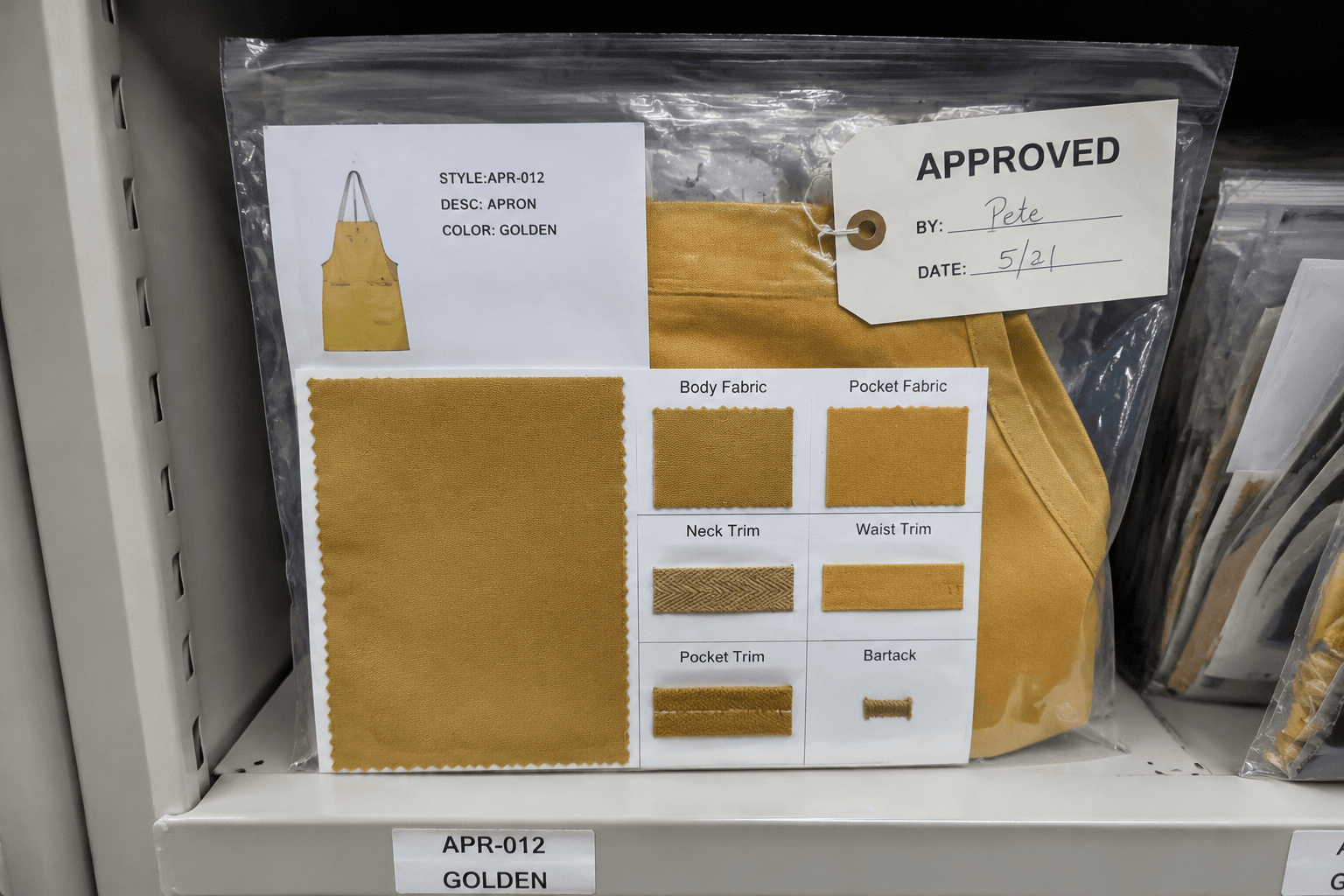
Buyers should decide who owns the blank inventory. If the factory owns it, the factory will limit styles and colors and build margin into the unit price. If the buyer owns it, the buyer may pay deposit or full cost for the stock, while the factory charges storage and fulfillment fees. Storage is usually negotiable for the first 30-90 days, but slow-moving inventory becomes a real cost because it occupies factory space and working capital.
- Low-entry program: 300-500 blank aprons per fabric color, 1-2 print positions, neutral packing, daily or twice-weekly dispatch.
- Standard ecommerce program: 1,000-3,000 blank aprons per core color, branded label, barcode, defined carton replenishment and direct-to-consumer shipment.
- Mature program: 5,000+ pcs annual volume per style, forecast by month, reserved production windows and negotiated fulfillment fee table.
- Typical added fulfillment cost: $0.40-$1.20 per order before decoration and freight, depending on inspection, folding, packing and label requirements.
Data flow and order handling in factory fulfillment apron programs
Dropshipping fails more often from poor order data than from sewing problems. The factory needs clean SKU, artwork, size, color, recipient address, phone number, shipping method and packing instruction. If a buyer sends manual spreadsheets with inconsistent naming, the factory must stop and confirm details, which adds delay and increases mistake risk.
For small programs, a daily CSV file can work. The file should use fixed columns and controlled values, such as APR-CANVAS-BLK-OS for a black one-size canvas apron. Artwork files should follow a naming rule that matches the order line, not a vague customer upload name. For larger programs, an API or ERP connection is better, but many apron factories still operate with CSV import plus human checking because customized textile orders need visual confirmation.
A practical dispatch workflow includes order import, stock check, print file check, production ticket, decoration, QC, packing, label printing, courier scan and tracking upload. Each step should leave a record. For example, the factory can photograph first-article print approval for new designs, but it should not photograph every single apron unless the buyer pays for that inspection level. A balanced QC system is more scalable.
- Required order fields include order ID, SKU, fabric color, size, artwork code, print position, recipient name, full address, phone, country and shipping service.
- Artwork controls should define file format, color mode, minimum resolution, maximum print area and placement tolerance in centimeters.
- Address validation should happen before the file reaches the factory, especially for postal codes, province names and phone number formats.
- Tracking numbers should be uploaded within 24 hours after courier scan, not when the shipping label is printed.
Quality control for print on demand apron orders
Quality control for bulk aprons is usually based on AQL sampling before carton shipment. For dropship aprons, the factory cannot rely only on final carton inspection because each order goes directly to an end customer. The QC plan needs simple, repeatable checkpoints at the piece level without making the process too slow.
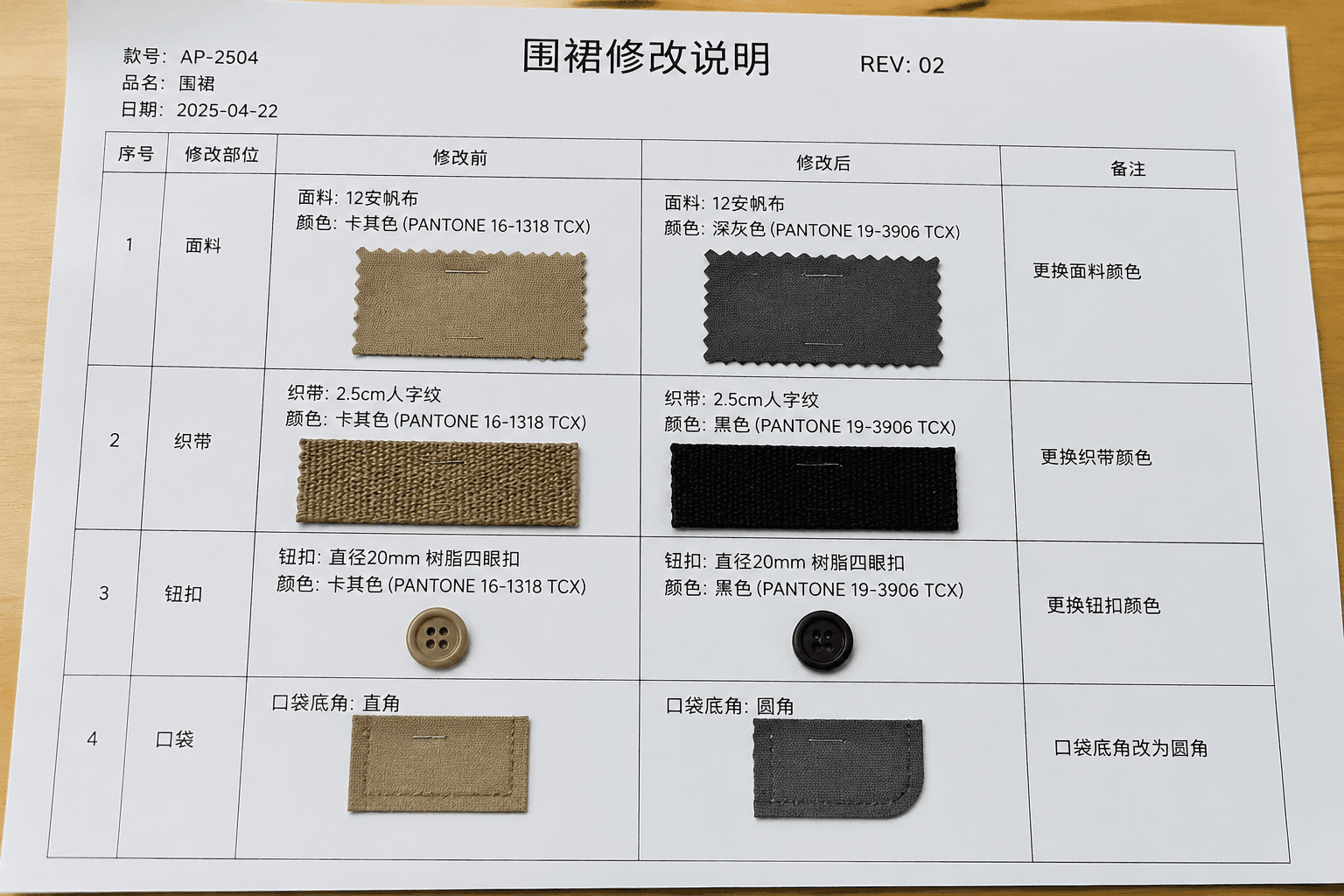
For the apron base, factory QC should confirm fabric defects, seam strength, pocket placement, strap length, label correctness and measurement tolerance. Common tolerances are +/-1 cm for pocket placement, +/-1.5 cm for body width and +/-2 cm for overall length on cotton aprons, unless the buyer specifies tighter workwear requirements. For heavy canvas, shrinkage should be tested before production, because a 10 oz or 12 oz cotton fabric can shrink 3-6 percent if not properly pre-shrunk or wash-tested.
For decoration, the key checks are artwork match, print position, color consistency, adhesion, curing and contamination. A chest logo placed 1 cm off center may be acceptable for a promotional apron but not for a premium cafe uniform. Embroidery should be checked for loose threads, backing irritation and puckering. DTF and heat transfer prints should be checked after pressing and cooling, because early peeling may not show immediately if the film or temperature is wrong.
Packing QC is also important. An apron can leave the sewing line correctly and still create a customer complaint if it is folded with the logo creased, packed in a weak mailer, missing a barcode or sent with another buyer's insert. Direct fulfillment removes the buyer's warehouse inspection buffer, so the factory must treat packing as part of product quality.
Lead times, shipping options and landed cost reality
Lead time for dropship aprons has two parts: preparation lead time and order lead time. Preparation lead time covers fabric purchase, cutting, sewing, label production and blank stock setup. This can be 15-25 days for standard fabric in stock, 30-45 days for custom dyed fabric, and 45-60 days if special trims, testing or packaging are required. Order lead time starts after the ecommerce order is received and blank stock is ready.
For ready blank aprons with heat transfer or DTF print, many factories can dispatch in 3-5 working days. For embroidery, 4-7 working days is more realistic, especially when thread color and name personalization vary. For fully custom cut-and-sew aprons, dropshipping one piece at a time is usually not efficient; the buyer should instead produce bulk stock and use the factory only for storage and dispatch.
Shipping cost depends on destination, declared value, weight and service. A simple cotton apron with inner bag may weigh 280-420 g. A heavy waxed canvas apron with hardware and kraft box may exceed 700 g. The freight difference is material. For US delivery, ecommerce packet lines may take 7-15 working days after dispatch in normal periods, while express courier may take 3-7 working days but cost much more. For EU and UK shipments, VAT, IOSS, customs description and HS code discipline matter. Aprons are commonly declared under textile apparel categories, but the exact HS code depends on material and construction; the buyer should confirm with its customs broker.
Buyers should calculate landed cost by order, not only apron unit cost. A $4.20 apron with $1.00 print, $0.50 fulfillment, $0.20 packing and $5.80 freight is already $11.70 before platform fees, returns, payment cost and customer service. If the retail price is $19.99, margin may be thin. If the same apron ships in bulk by sea to a domestic warehouse, the landed unit cost may be much lower, but the buyer carries inventory risk. That is the central trade-off in apron dropshipping.
- Ready blank stock plus standard print: usually 3-5 working days to dispatch after clean order data.
- Ready blank stock plus embroidery: usually 4-7 working days to dispatch depending on design and queue.
- New blank apron production from available fabric: usually 15-25 days before dropship fulfillment can start.
- Custom fabric or custom dyed color: usually 30-45 days before stock is ready, sometimes longer during peak season.
- Peak season buffer: add 5-10 days around major Chinese holidays, November ecommerce volume and pre-Chinese New Year production.
When dropship aprons are the right sourcing model
Dropshipping is useful when the buyer is testing a new apron line, selling personalized gifts, running many small designs, or entering a market without a local warehouse. It can also support replacement orders, influencer campaigns, corporate gifting portals and long-tail ecommerce SKUs. The model is less suitable when the buyer already has stable monthly volume, strict delivery promises or a low retail price that cannot absorb single-order freight.
For professional buyers, the best approach is often staged. Start with 2-4 apron bodies, 3-6 colors and a clear print method. Test 300-500 pcs of blank stock per core color. Measure order error rate, dispatch time, return reasons and actual freight cost for 60-90 days. Then decide whether to expand colors, add embroidery, introduce kids sizes or move bestsellers into bulk warehouse stock.
A factory can support apron dropshipping well when the buyer treats it as an operating system, not as a casual side service. Confirm MOQ, blank stock ownership, decoration method, QC standard, packing rule, data template, courier options, tracking timing and slow-stock policy before the first order. With those controls in place, dropship aprons can be a practical extension of custom apron sourcing from China. Without them, the model usually becomes expensive, slow and difficult to manage.
- Use dropshipping for market testing, personalization, low-volume designs and international ecommerce launches.
- Use bulk shipment for stable bestsellers, tight delivery promises, retail chain programs and price-sensitive promotional aprons.
- Use a hybrid model when some SKUs sell every week and other designs sell only occasionally.
- Review the program every 60-90 days using real dispatch time, defect rate, freight cost, return rate and stock aging data.