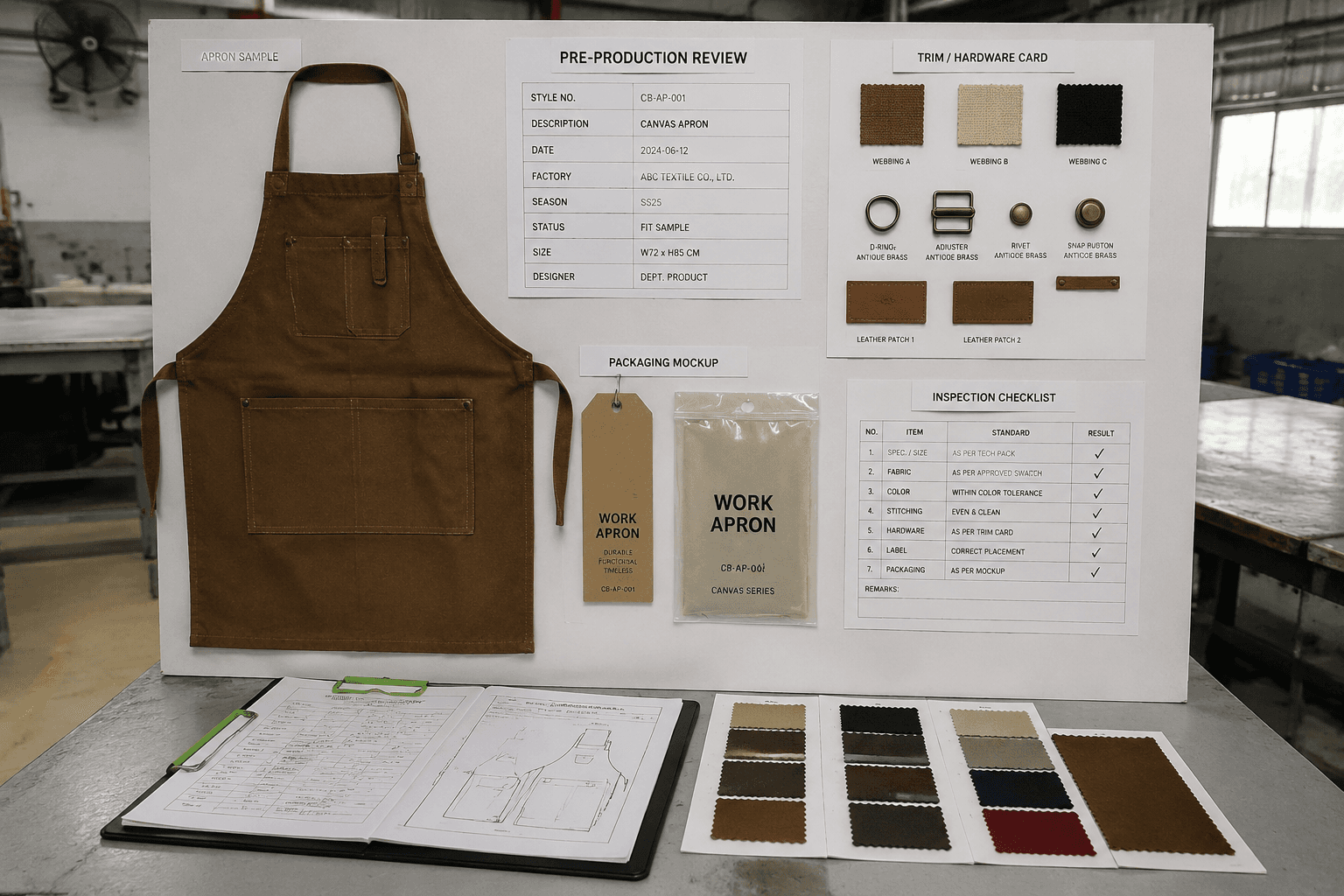
Apron pre-production risk review: finding fabric, trim and packaging problems before bulk
A disciplined apron pre production risk review catches fabric drift, trim substitution, sizing errors, label mistakes, and carton problems before bulk cutting starts, reducing rework, late freight, and margin loss on custom apron orders.
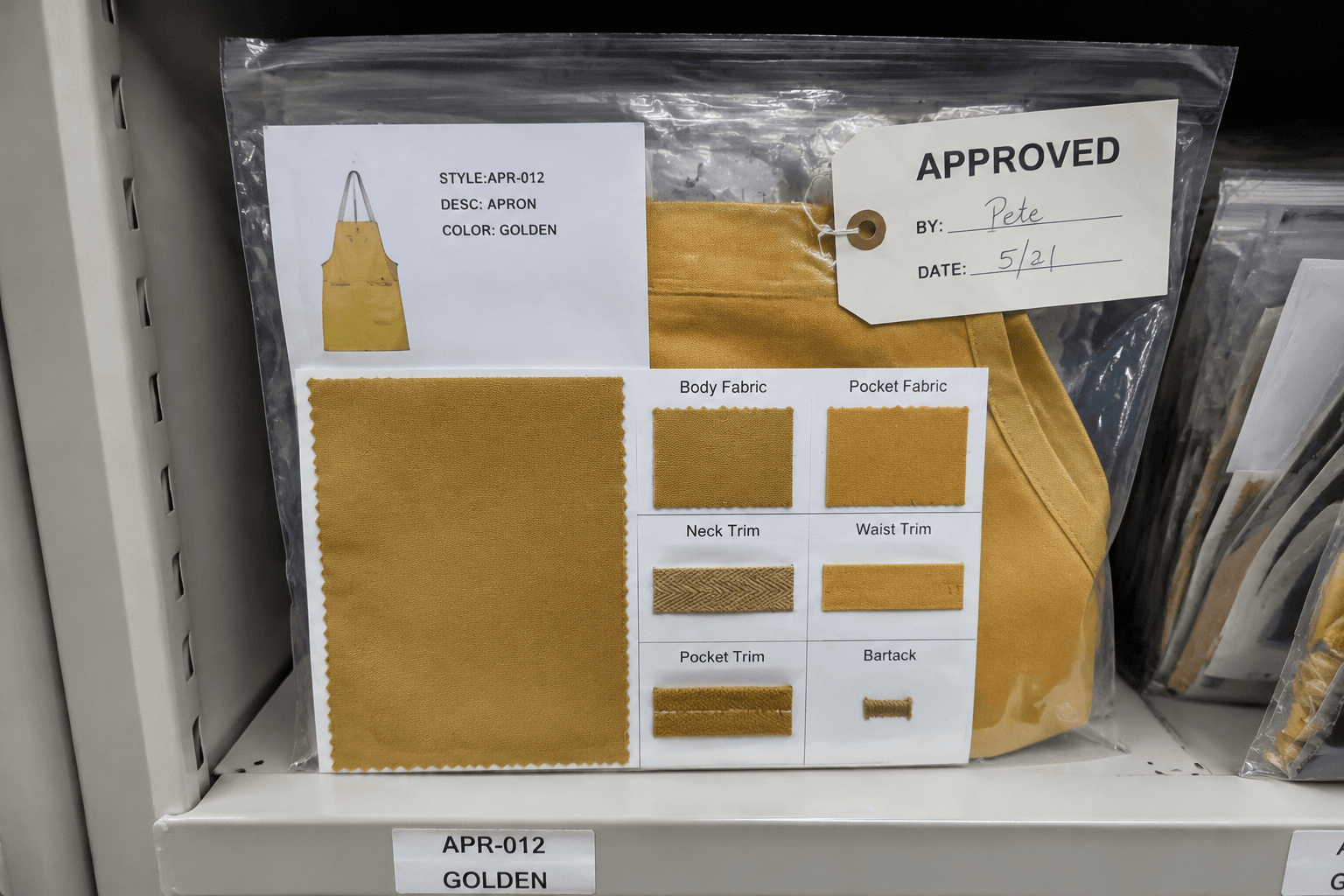
How to archive apron golden samples for repeat orders without spec drift
An <strong>apron golden sample</strong> protects repeat orders only when it is archived as a controlled production standard, not as a showroom piece. For B2B apron buyers, the archive should lock the approved BOM, fabric weight, trim sources, finished measurements, workmanship rules, packing method, AQL level and approval history so a reorder placed 90 to 365 days later stays aligned on fit, handfeel, logo placement, inspection criteria and landed cost.
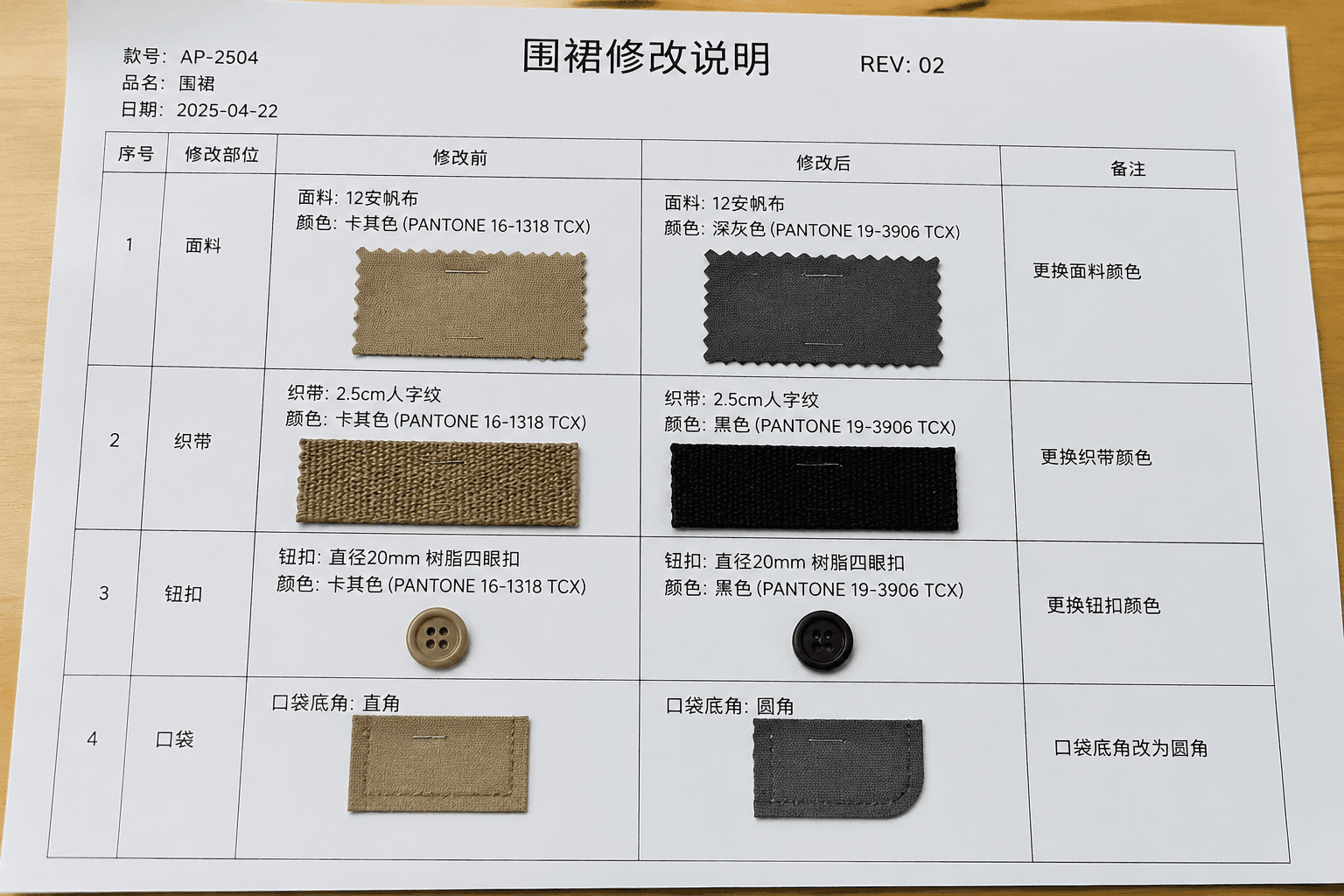
Apron specification change control: how to update fabric, trim or fit after first bulk order
Apron specification change control gives B2B buyers a practical way to revise fabric, trim, fit, labeling or packing after a first bulk apron order. It prevents mixed versions, wrong inspection references, hidden MOQ or lead-time exposure, and cost disputes over GSM, shrinkage, trim sourcing, AQL standards and unit price before the next PO is cut.
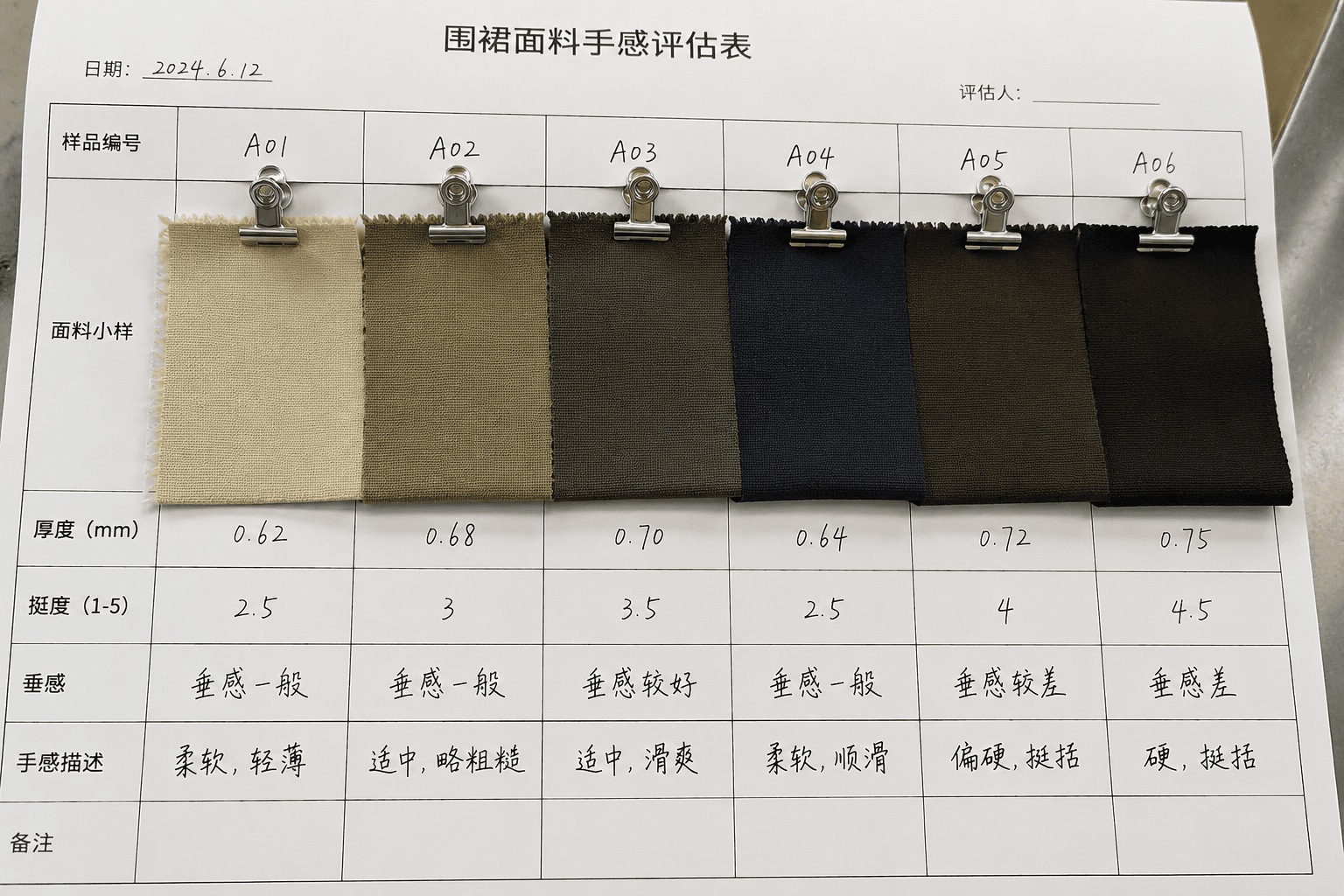
Apron fabric handfeel approval: how buyers can standardize softness, stiffness and drape
Apron fabric handfeel approval converts “soft,” “stiff” and “good drape” into signed production standards before bulk fabric is dyed, finished or cut. For OEM apron buyers, the approval file should include sealed swatches, one finished apron sample, GSM or oz tolerance, wash status, decoration test results, AQL levels and a written hold rule for any roll that feels rougher, boardier or limper than the approved control.
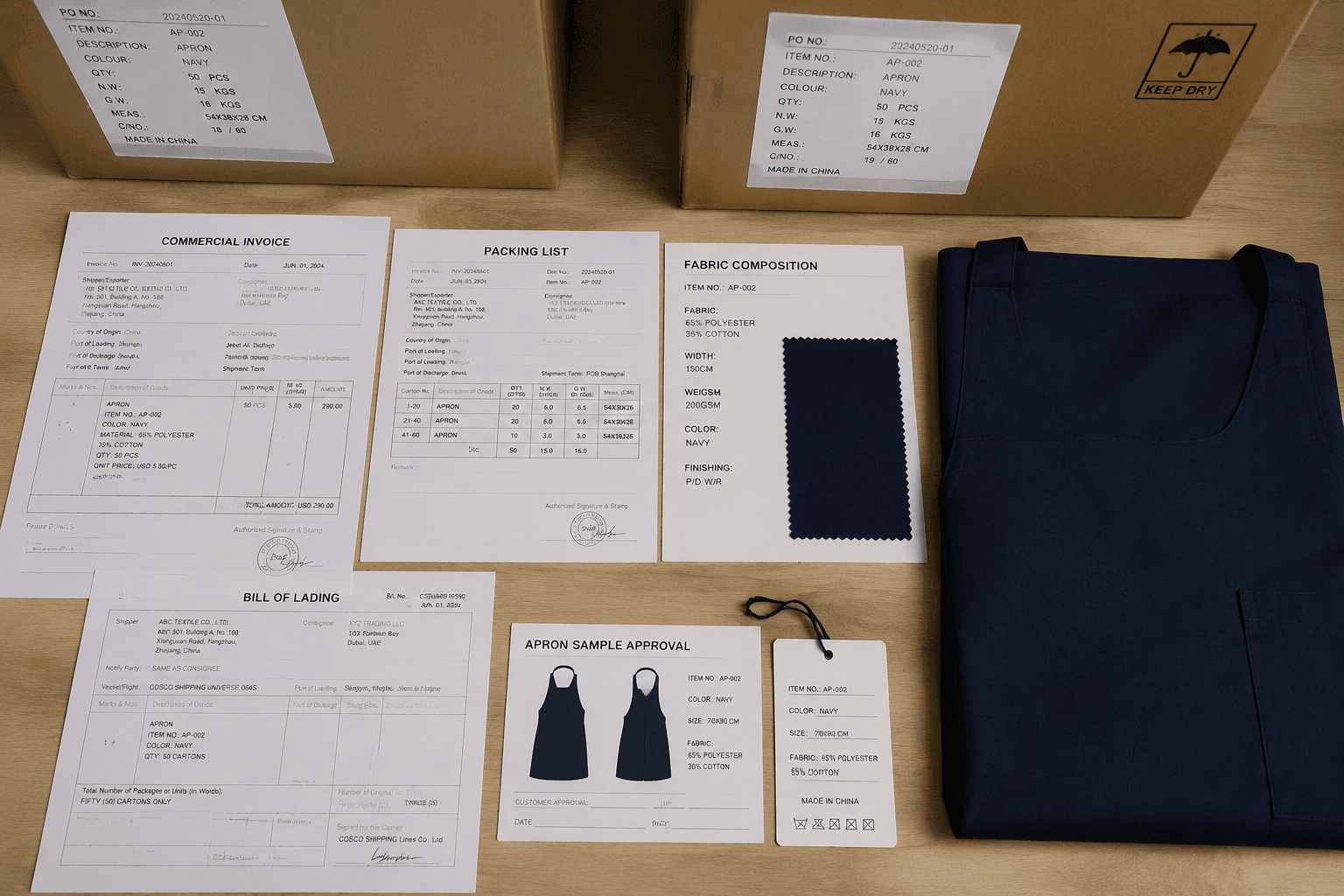
Apron customs documentation: packing lists, commercial invoices and material descriptions that avoid delays
Accurate <strong>apron customs documentation</strong> prevents avoidable customs holds, broker amendment fees, storage charges and delivery misses on bulk apron shipments. For B2B buyers sourcing 3,000 to 20,000 pieces, the commercial invoice, packing list and material description should match the packed goods by apron type, shell composition, GSM or oz weight, trim, carton count, net and gross weight, Incoterm and declared value.
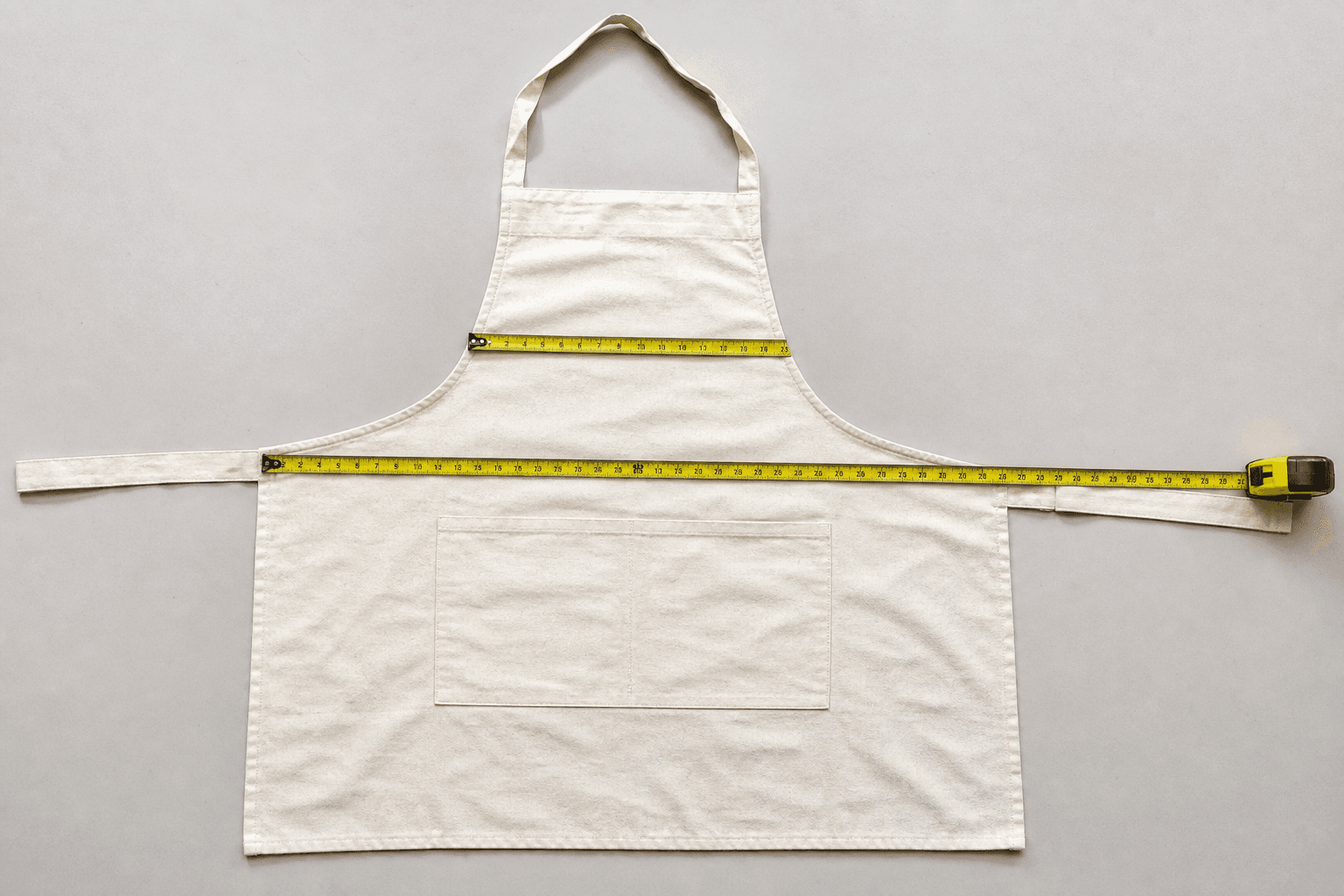
When to standardize apron hardware across styles to simplify replenishment and reduce dead trim
<strong>Standardized apron hardware</strong> gives professional apron buyers a practical way to cut dead trim, reduce per-SKU hardware MOQs, and pull repeat-order lead time down by <strong>5-10 days</strong> when multiple apron styles share the same strap widths, finishes, rivet sizes, and metal trim specifications.

When apron buyers should nominate their own fabric mill and when factory sourcing is safer
A <em>nominated fabric mill for aprons</em> is worth the extra control only when apron buyers need repeatable shade, handfeel and certification performance across large, recurring programs. In most other apron orders, factory sourcing is safer because it reduces color-MOQ exposure, keeps total fabric lead time closer to 24 to 35 days instead of 32 to 48 days, and leaves one supplier responsible if bulk fabric causes apron defects after cutting.
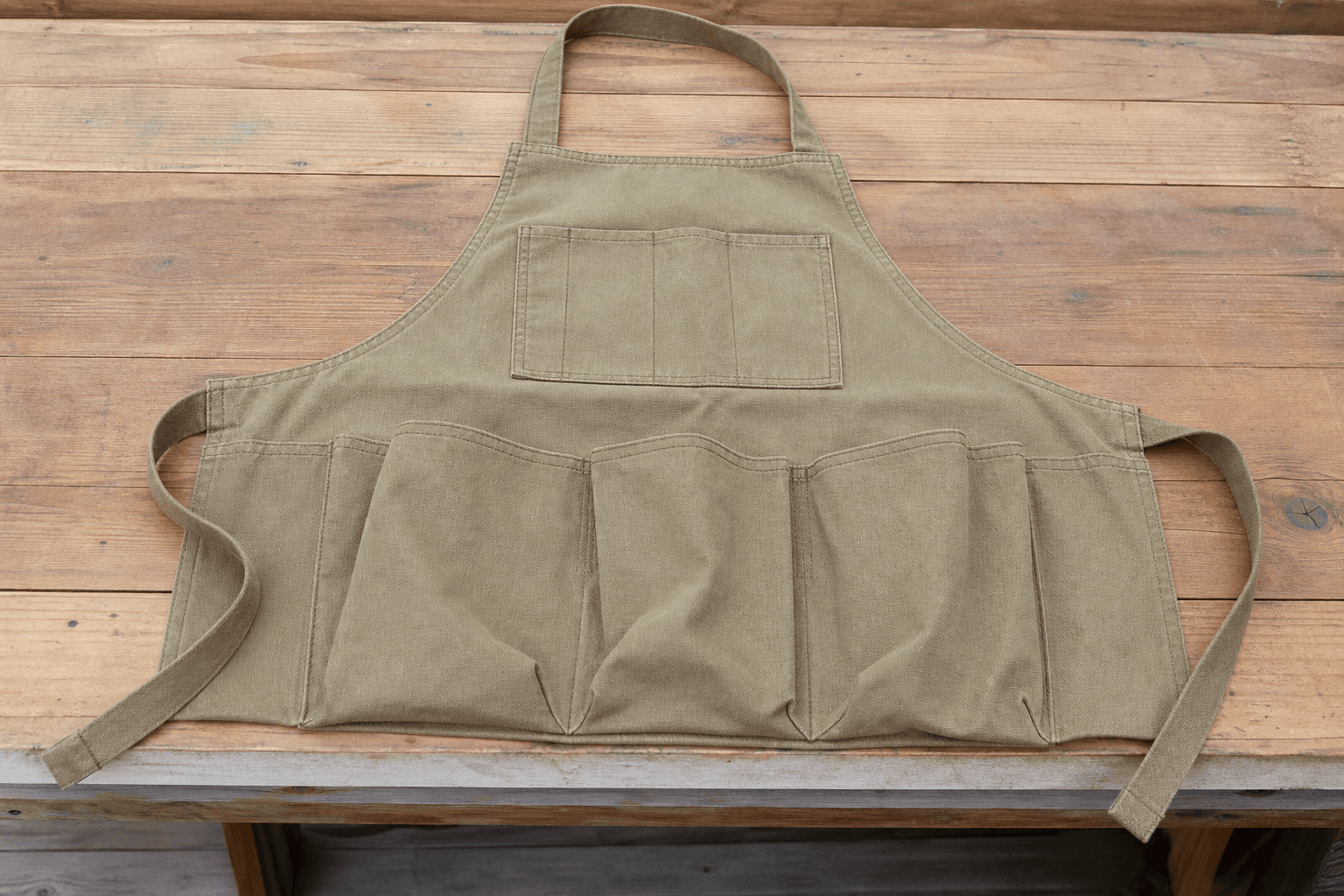
Retail shelf-ready apron programs: planning barcode stickers, fold standards and carton assortment early
<strong>Retail ready apron packaging planning</strong> should be locked before bulk cutting, not left to finishing. In apron programs shipping to retail chains, barcode symbology, sticker size, fold dimensions, strap control, insert position, carton assortment, and master carton count directly affect labor minutes, scan pass rates, carton cube, and ship date reliability. When buyers approve these points early, they avoid relabeling costs of $0.06 to $0.38 per apron, 3 to 8 working days of repacking delay, and DC chargebacks tied to scan failure, wrong ratios, or inconsistent shelf presentation.
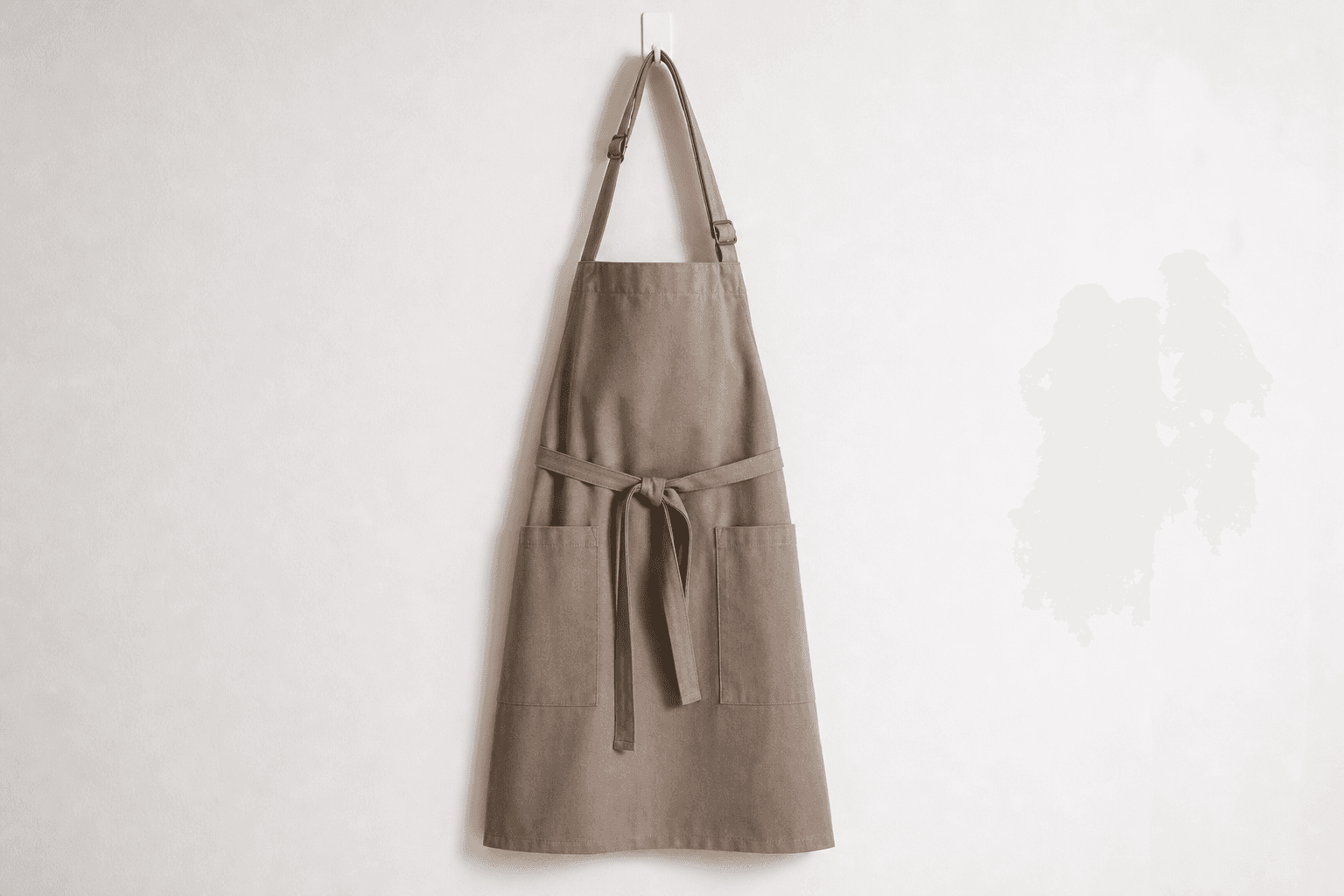
MOQ by fabric source in apron production: stock cloth, mill-dyed goods and custom weaving compared
Professional buyers cannot judge an apron order by sewing MOQ alone. This guide explains <strong>apron fabric moq by source</strong> with realistic meter minimums, bib and waist apron yield, lead times, AQL checkpoints, and shell-fabric cost ranges across stock cloth, mill-dyed goods, and custom weaving.
Low-MOQ custom aprons with stock greige fabric: dye later or hold raw cloth for faster replenishment
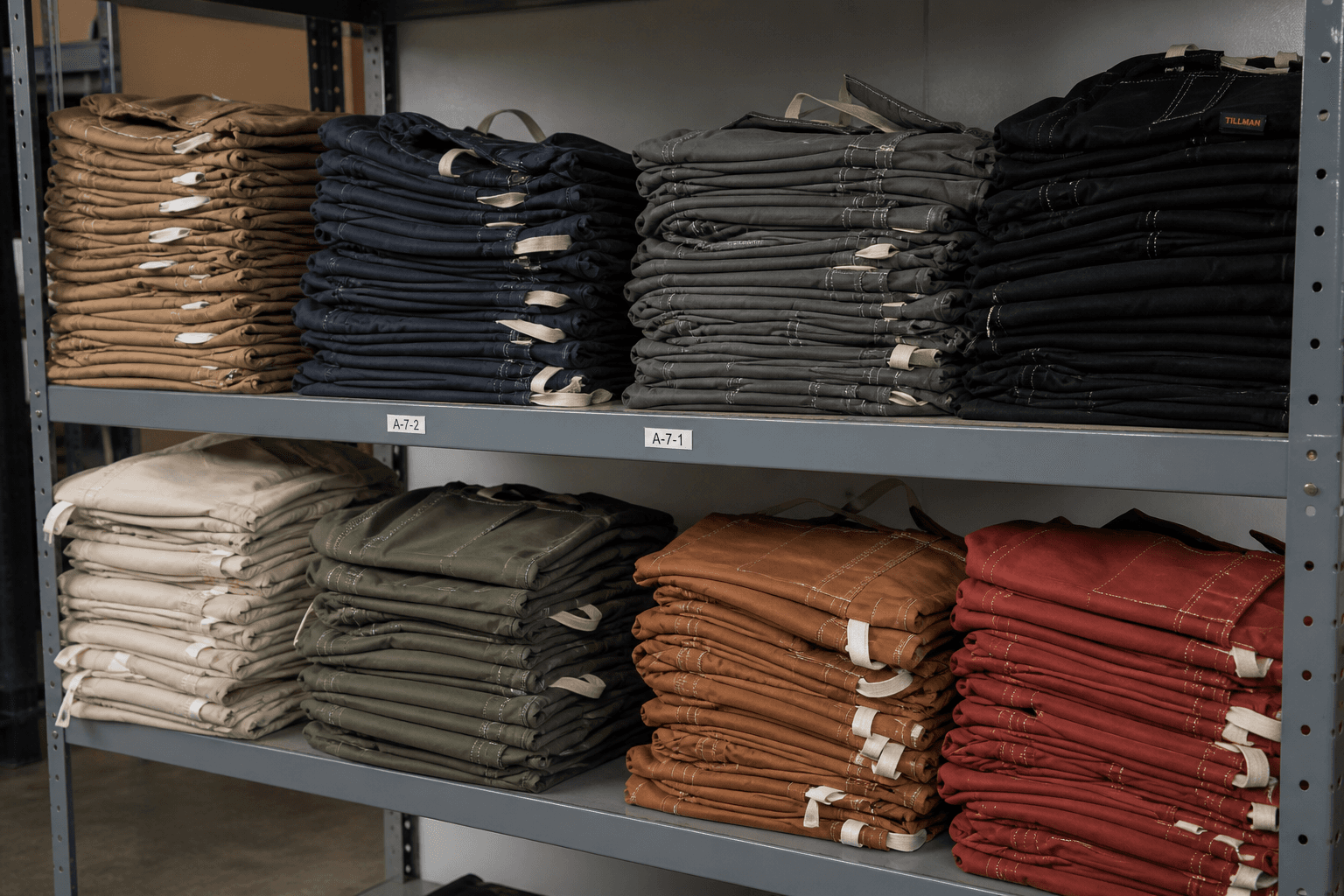
A <strong>low moq apron with greige fabric</strong> program lets apron buyers start at 300 to 600 pcs per color, reserve 2,500 to 4,000 meters of undyed twill or canvas, and replenish proven shades in 18 to 26 days once fabric, trims, labeling, and carton specs are frozen.

How trim nominations slow apron orders: coordinating buckles, webbing, labels and packaging vendors
<strong>Apron trim nomination delays</strong> usually begin 10 to 20 days before sewing starts, not at the sewing table. When buyer-nominated buckles, webbing, labels, or packaging are approved late, arrive short, or fail incoming inspection, a bulk apron order can lose 7 to 21 calendar days, miss vessel cutoff, and add $0.09 to $0.42 per piece in airfreight, repacking, storage, or line-change cost.
How many colorways can one apron PO support before pricing and lead time break down
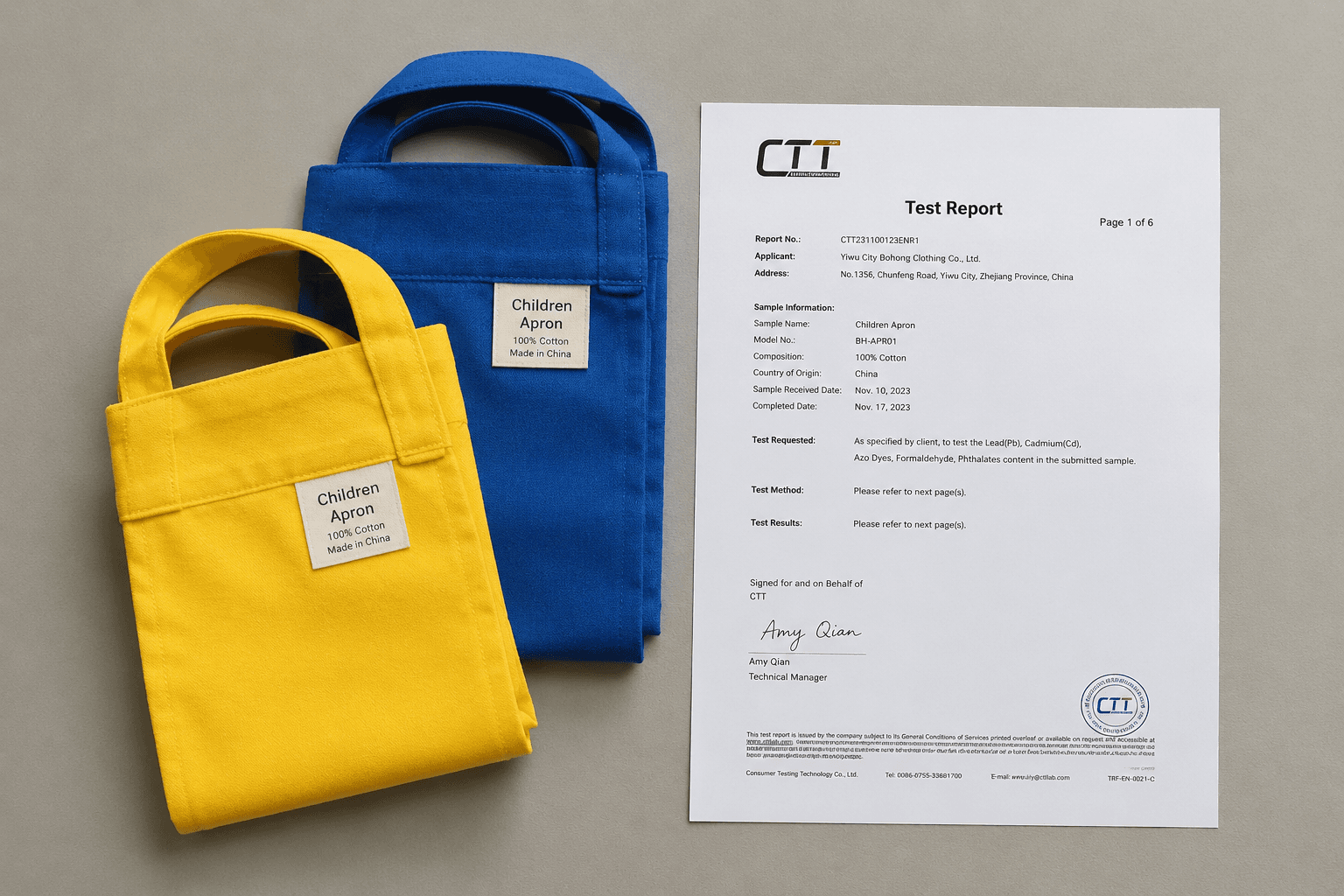
A <em>multiple colorways apron order</em> stays commercially sound only while each shade still clears workable fabric, trim, and packing thresholds. For most B2B apron programs, one PO remains efficient at <strong>3 to 5 colorways</strong>, <strong>2,400 to 6,000 pcs total</strong>, and <strong>300 to 600 pcs per color</strong>. Below that level, FOB commonly rises <strong>$0.12 to $0.48 per piece</strong>, lead time stretches <strong>5 to 18 days</strong>, and the order starts behaving like several small apron lots instead of one bulk run.

Custom apron costing by operation: which sewing steps actually add labor minutes
This guide explains <strong>apron sewing cost breakdown</strong> with factory-level minute ranges, labor-rate math, MOQ effects, AQL assumptions, and lead-time checkpoints so B2B buyers can see which apron operations actually add cost in bulk production.
Apron CAD patterns and digital approvals: reducing sample rounds for overseas buyers
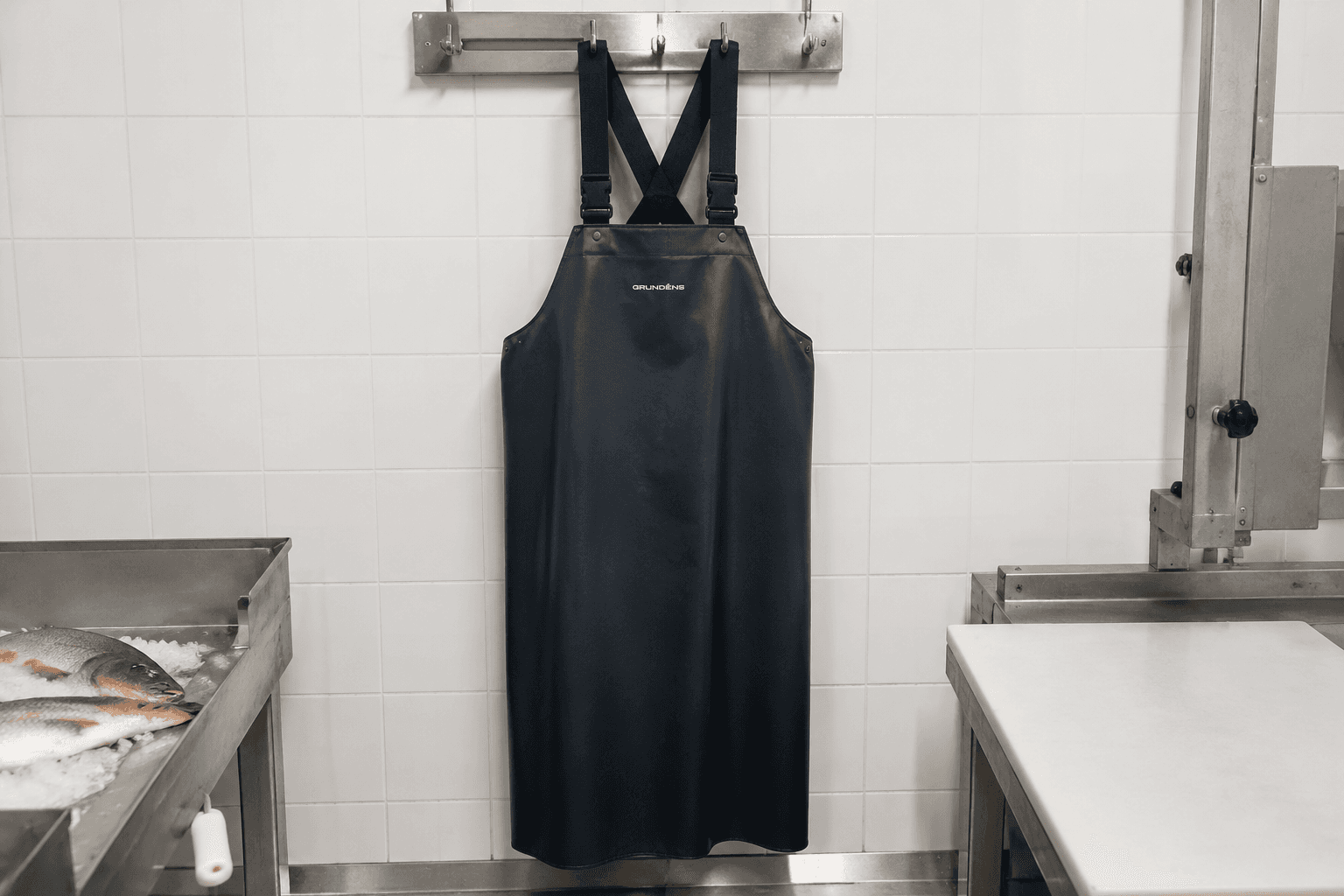
A disciplined <strong>apron cad pattern approval</strong> process helps overseas buyers cut 1 to 2 avoidable sample rounds, lock measurements and branding before fabric is cut, and move custom apron programs into bulk production with fewer delays, lower sample spend, and clearer accountability between buyer and factory.
Appron reorder shade control: keeping black, navy and natural programs consistent across seasons
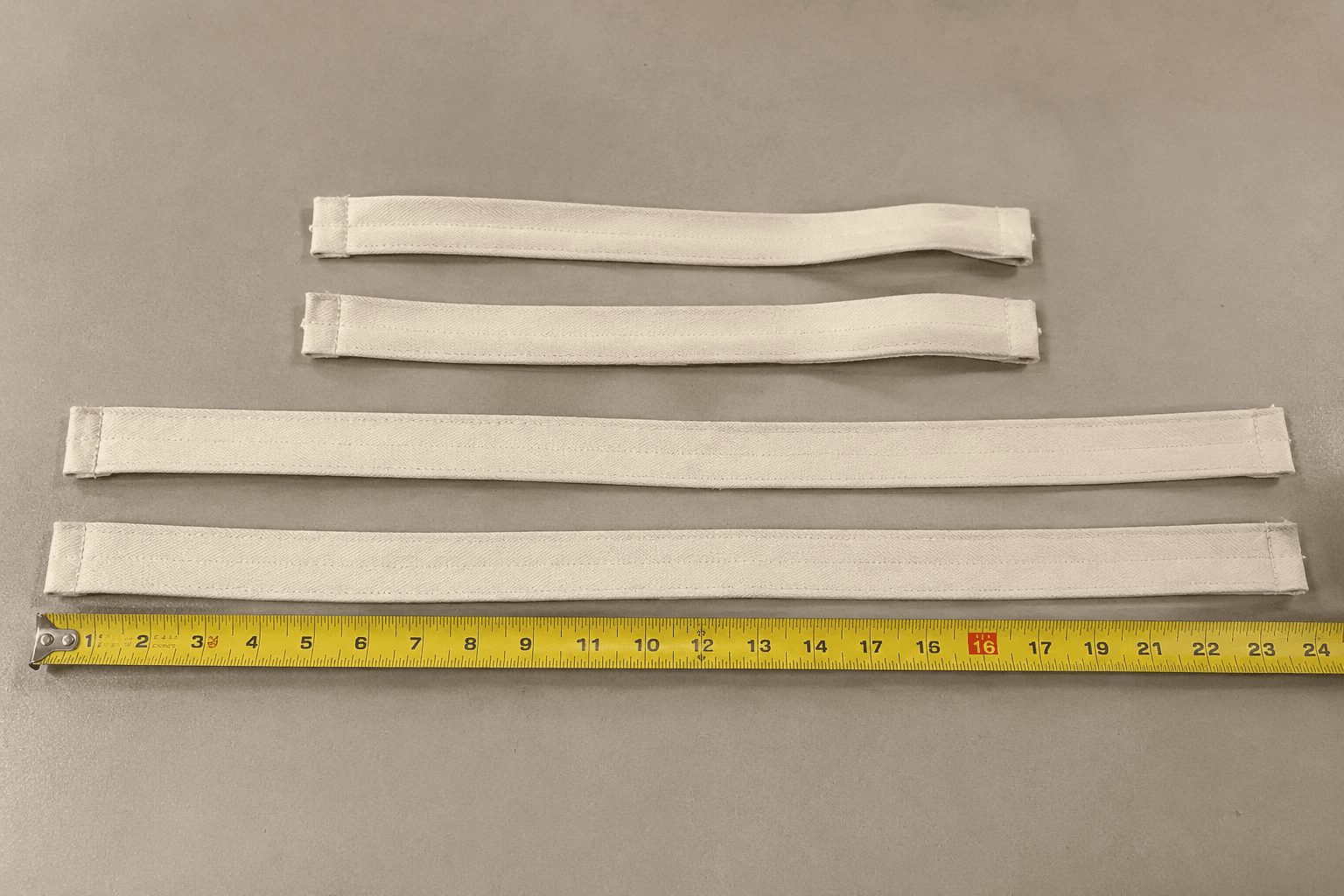
<strong>Apron reorder shade consistency</strong> improves when buyers freeze the exact apron fabric base, dye route, finish, and trim set used on the first bulk order. For black, navy, and natural apron programs, the most dependable results come from retained bulk fabric standards, dyed-fabric MOQs of <strong>300 to 500 meters</strong> per color, reorder planning <strong>60 to 90 days</strong> ahead, and approval on the <strong>finished apron</strong> under defined lighting rather than on a paper color chip alone.
When to request pilot-run apron production before committing to a national rollout
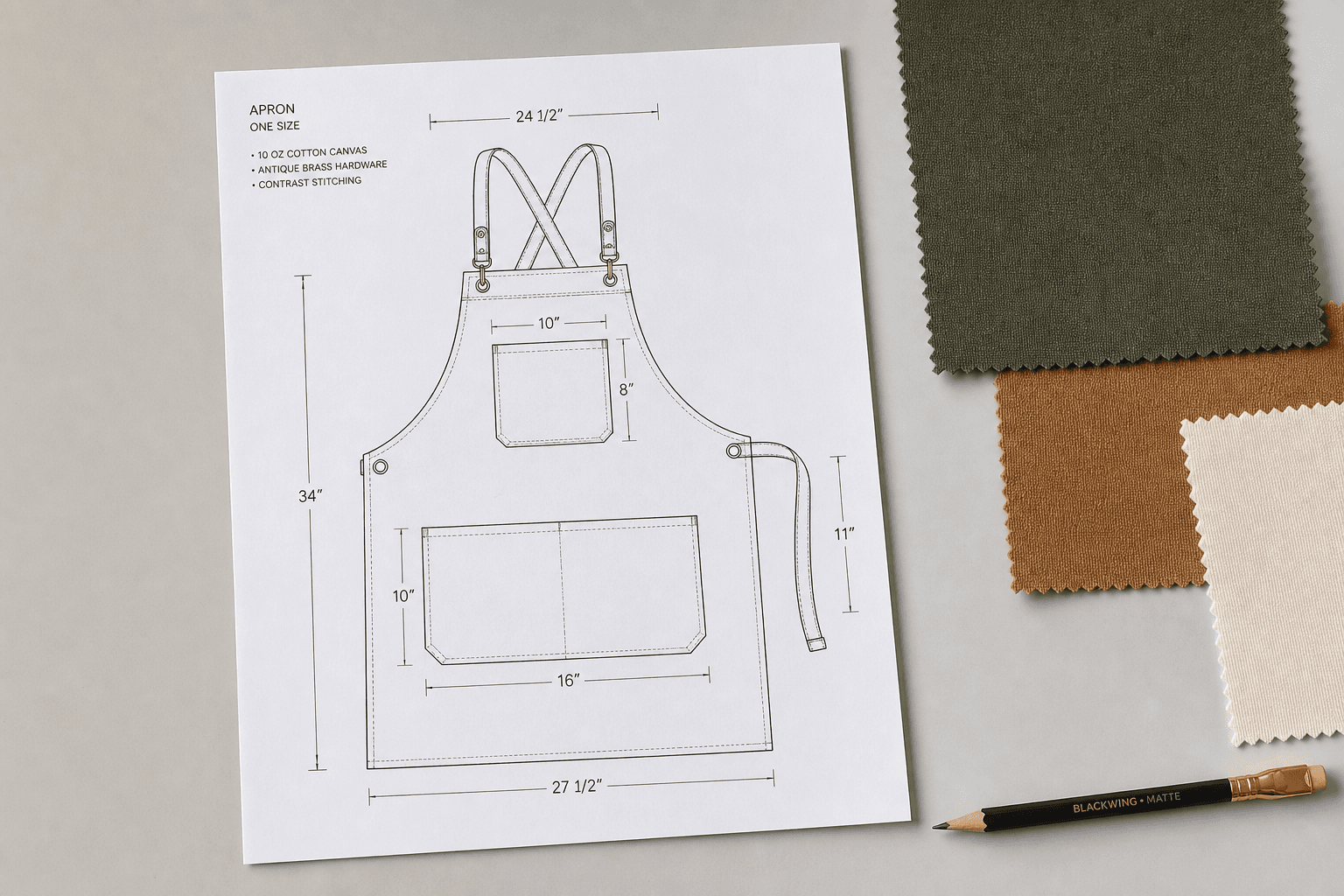
<strong>Pilot run apron production</strong> is the lowest-risk way for B2B buyers to confirm apron fit, fabric behavior, decoration quality, and packed presentation before a national rollout. For custom aprons sourced from China, a 100- to 300-piece pilot built from the same 210-240 GSM twill or canvas, trim set, and packing standard as bulk can expose shrinkage, measurement drift, logo distortion, carton errors, and AQL failures before a 5,000- to 20,000-piece commitment.
Should-cost analysis for custom aprons: using fabric, labor and trim breakdowns in negotiations
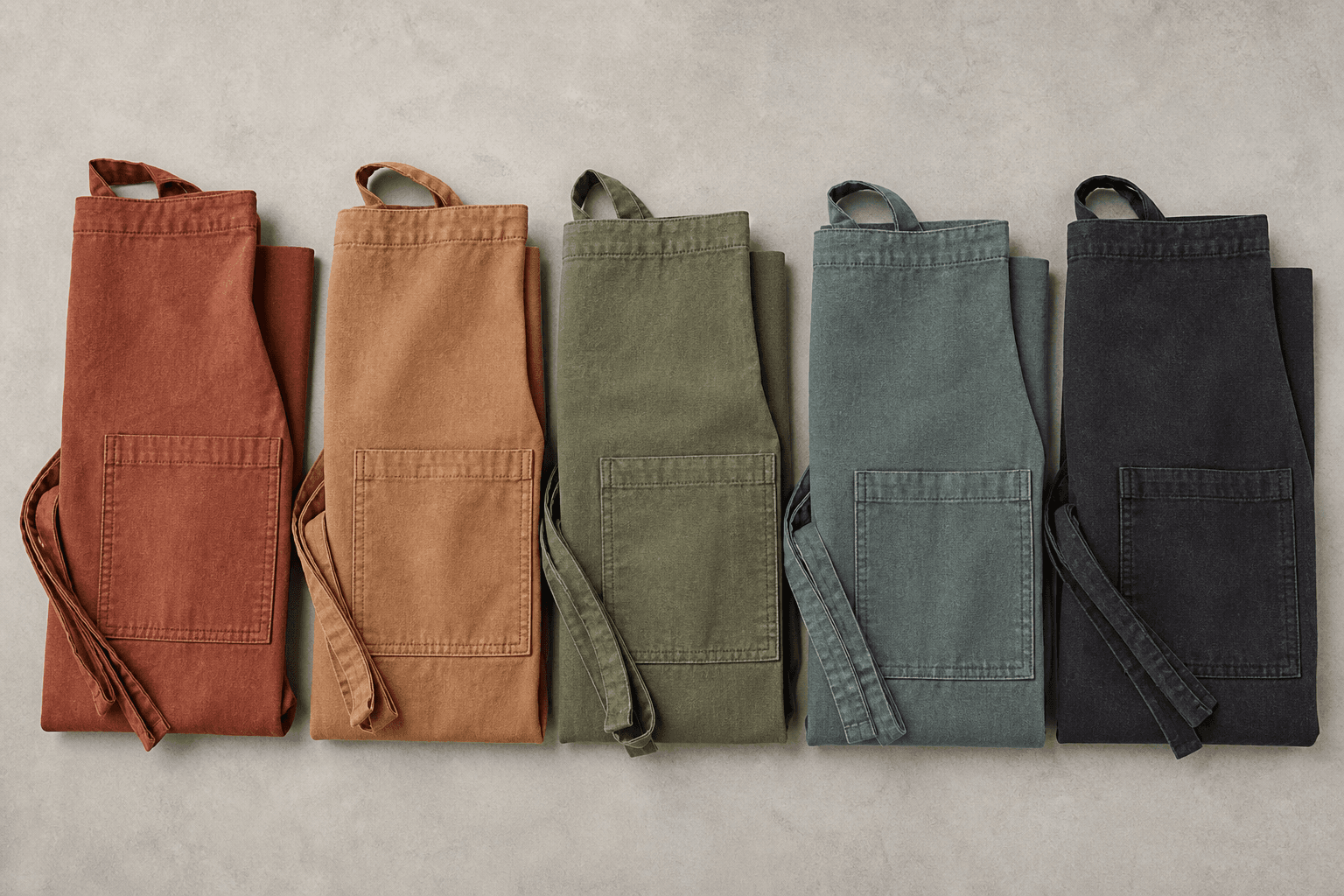
<strong>Should cost analysis custom aprons</strong> gives B2B buyers a line-by-line way to test apron quotes before negotiation by checking finished fabric GSM, usable width, marker yield, sewing minutes, trim consumption, MOQ, AQL level, packaging detail and confirmed lead time in days.
Master carton drop testing for aprons: when retail and e-commerce buyers should require it
<strong>Apron carton drop testing</strong> gives B2B buyers a measurable way to prevent apron transit damage, retailer chargebacks, and fulfillment rejects by setting carton board grade, pack count, gross-weight limits, and pass criteria before bulk packing starts.

How apron factories manage substitute trims when nominated components miss delivery
<strong>Apron trim substitution</strong> is a controlled sourcing response when nominated buckles, snaps, sliders, rivets, eyelets, or D-rings miss their ex-factory date. For professional B2B buyers, the objective is precise: keep a 2,000- to 20,000-piece apron order moving without changing fit, wash durability, corrosion resistance, carton breakdown, inspection criteria, or unit economics beyond an agreed $0.03 to $0.18 per piece tolerance.
Factory line balancing for apron orders: why simple styles can still miss ship dates
<strong>Apron line balancing</strong> determines whether a straightforward apron order ships in 28 days or slips to 33 to 38 days. Even a basic bib, waist or cross-back apron can miss ex-factory when one slow pocket, strap, bartack or finishing step sets the pace for the entire order.
Factory inline inspection for aprons: what to catch at cutting, sewing and packing stages
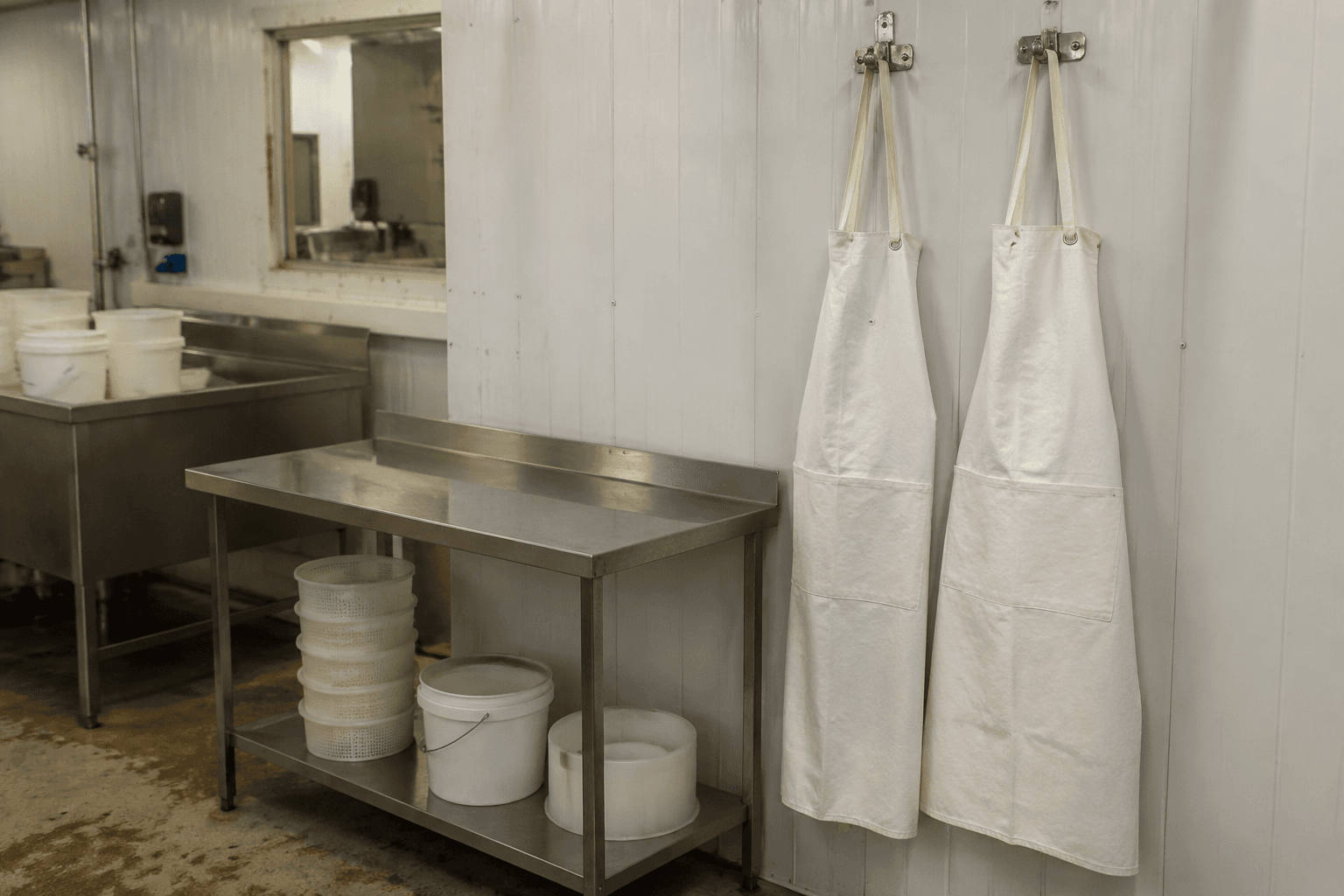
<strong>Inline inspection for apron production</strong> keeps apron defects inexpensive to fix by catching them at the operation where they start: body panels cut beyond tolerance, pockets sewn off reference, adjustable straps built to the wrong usable length, and mixed-SKU cartons at pack-out. For professional B2B buyers sourcing custom bib aprons, waist aprons, and utility aprons, this stage-by-stage control protects realistic FOB prices of <strong>$2.20 to $7.40 per piece</strong>, supports production windows of about <strong>20 to 45 days</strong>, and lowers the risk of failing final <strong>AQL 2.5 major / 4.0 minor</strong> inspection.
Dual sourcing apron programs without spec drift: color, fit and trim controls that matter
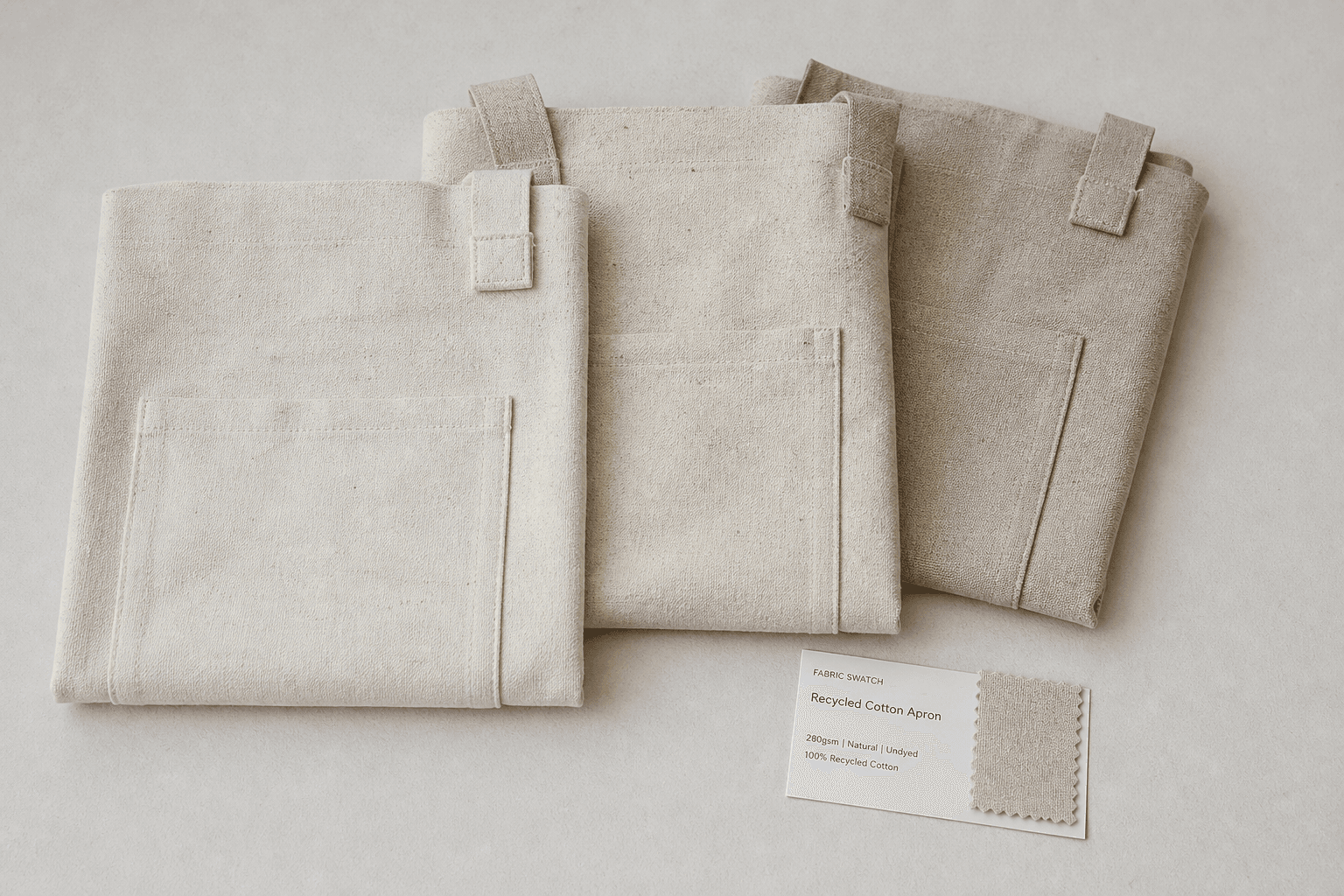
<em>Dual sourcing apron programs</em> work only when both factories execute one closed apron standard with no room for interpretation. For professional B2B buyers, the controls that stop spec drift are specific and measurable: sealed 270 GSM enzyme-washed cotton canvas or 245 GSM poly-cotton twill by color, finished tolerances of ±0.5 cm on visible points and ±1.0 cm on functional points, nominated 25 mm hardware and webbing, aligned AQL 2.5 major / 4.0 minor inspection, and a secondary line proven through a 300-800 piece waist apron pilot or 1,000-1,500 piece bib apron pilot 60-90 days before peak demand.
Bulk fabric booking for apron programs: when to secure mill capacity before final PO
<strong>Bulk fabric booking for aprons</strong> protects delivery dates when weaving, dyeing, washing, or finishing lead times are longer than cut-and-sew capacity. For professional B2B buyers, the decision to reserve mill capacity before the final PO should be based on measurable inputs: fabric construction, 210-300 GSM or 8-12 oz weight, color count, mill MOQ in meters, target ex-factory date, and the financial exposure if the order shifts.
Booking pre-shipment inspections for apron orders: timing windows that avoid carton reopen costs
<em>Pre shipment inspection apron timing</em> determines whether a buyer inspects the true export lot or pays to reopen cartons after sealing. For bulk apron orders, the lowest-risk window is when <strong>85% to 100%</strong> of units are export-packed, every major SKU is available for sampling, and the inspection still leaves <strong>2 to 5 working days</strong> before truck loading, CFS receiving, or vessel cut-off.
Blanket POs for apron replenishment: locking price and capacity while releasing by schedule
A <strong>blanket po for apron replenishment</strong> gives B2B buyers a controlled way to hold apron pricing, reserve sewing capacity, and release quantities against a schedule without rewriting commercial terms on every repeat order. It works when the PO fixes the approved apron BOM, measurable fabric weight such as 240 GSM or 8 oz, MOQ by color, inspection at AQL 2.5 major and 4.0 minor, release notice of 21-45 days, and clear price-review triggers tied to raw-material movement.
Balancing MOQ across multiple apron lengths: standardizing fabric and trim to keep pricing workable
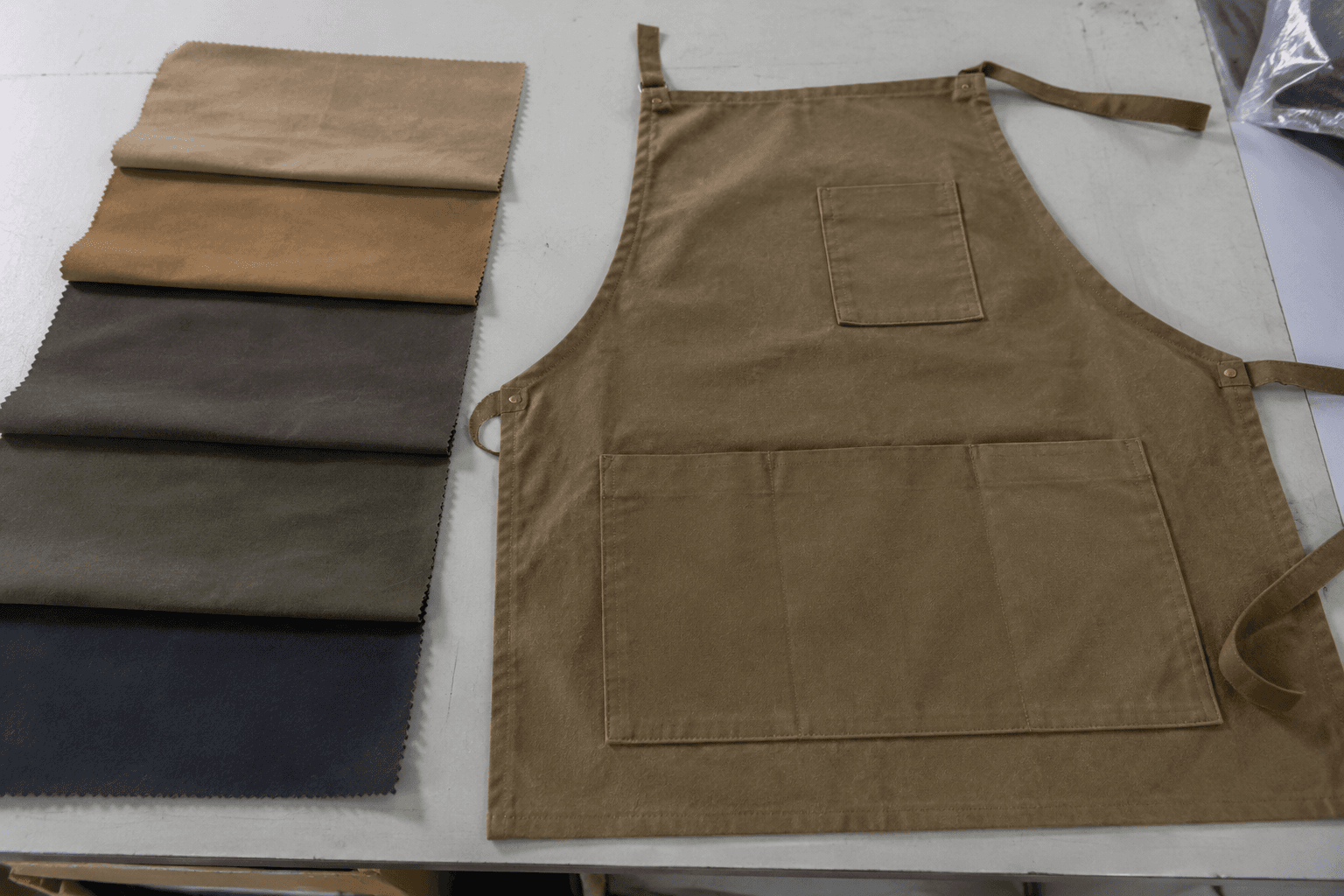
Managing <em>apron moq multiple lengths</em> stays commercially workable when buyers lock one fabric platform, one trim package, and one sewing route before they start debating length splits. In apron sourcing, a 10 cm body-length change often adds only $0.10 to $0.28 per piece in fabric, while the real cost pressure comes from marker loss, line changeovers, mixed packing, and low per-length volume. The practical objective is to keep each length inside one production family so the order prices like a consolidated apron program, not three separate custom styles.
Apron consumption sheets: how factories calculate fabric, trim and wastage before quoting
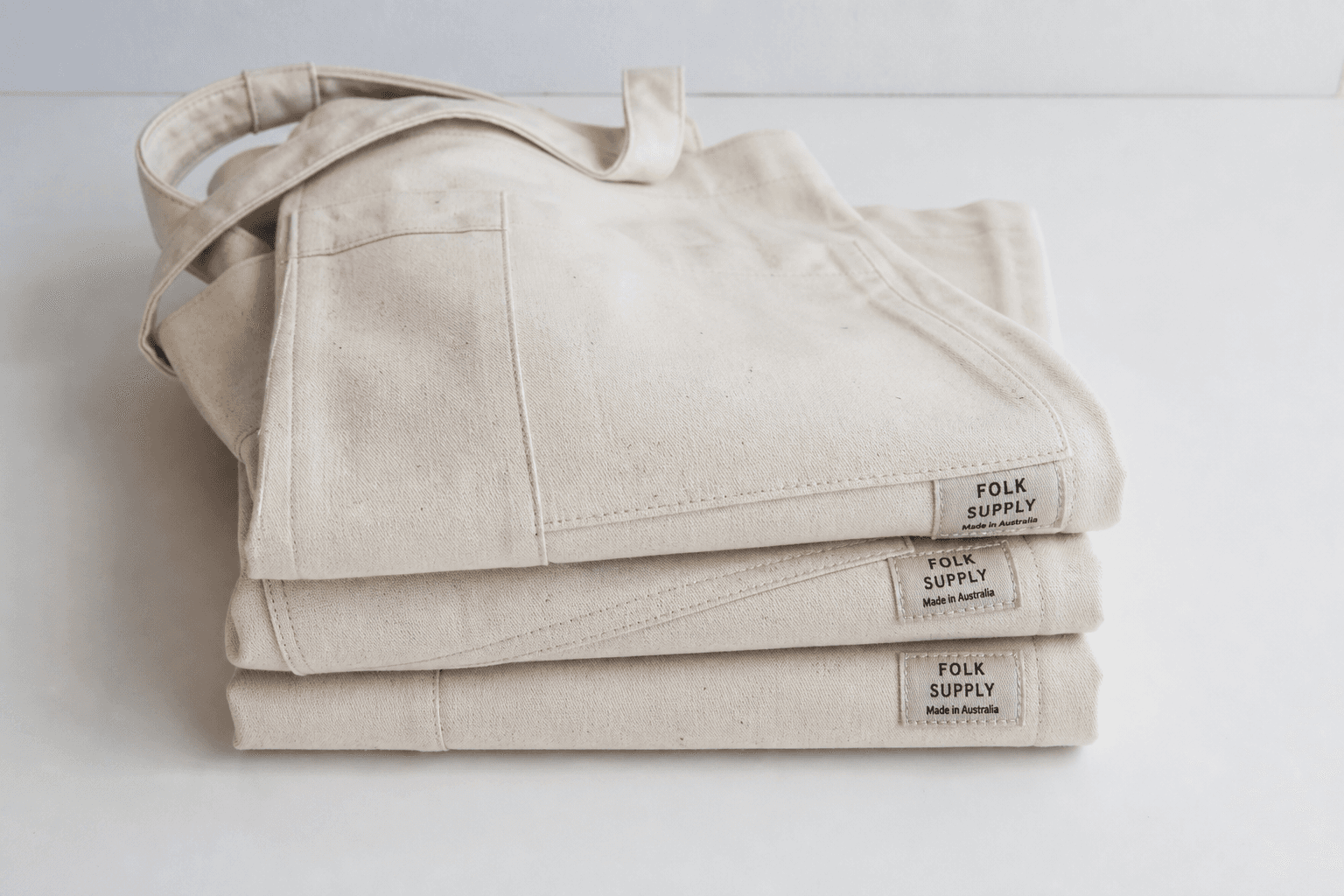
An <em>apron consumption sheet</em> is the factory costing worksheet that converts an apron spec into measurable fabric, trim, packaging and wastage before a bulk quote is issued. For B2B buyers, it is the fastest way to test whether a price is built on real inputs such as 240 GSM or 10 oz canvas, 145 to 150 cm fabric width, trim MOQs, <strong>AQL 2.5 major / 4.0 minor</strong>, and 35 to 60 day lead times rather than guesswork.

Mixed-SKU apron orders: combining colors, sizes and logo versions without MOQ surprises
<strong>Mixed sku apron orders</strong> work only when the split by color, size and logo version matches real apron production thresholds at the mill, trim supplier, decoration station and sewing line. This guide explains how B2B buyers can combine 240-300 GSM twill, 8-10 oz canvas and denim aprons under one PO while staying inside workable per-color MOQ, decoration setup limits, <strong>AQL 2.5 major / 4.0 minor</strong> inspection standards and realistic <strong>25-45 day</strong> lead times.

How to manage split shipments for apron orders without shade and trim mismatches
<em>Split shipment apron orders</em> work when the factory reserves all fabric and trims at PO start, locks one bulk shade standard, cuts both deliveries under one plan, and inspects each shipment against the same sealed references. For B2B apron buyers, the safest method is to split the ship date only: book 100% of shell fabric, webbing, labels, hardware, and packaging up front, assign carton ranges before sewing, and hold both departures to the same AQL, storage, and re-inspection rules.
How to approve apron PPS samples: checkpoints before bulk cutting starts
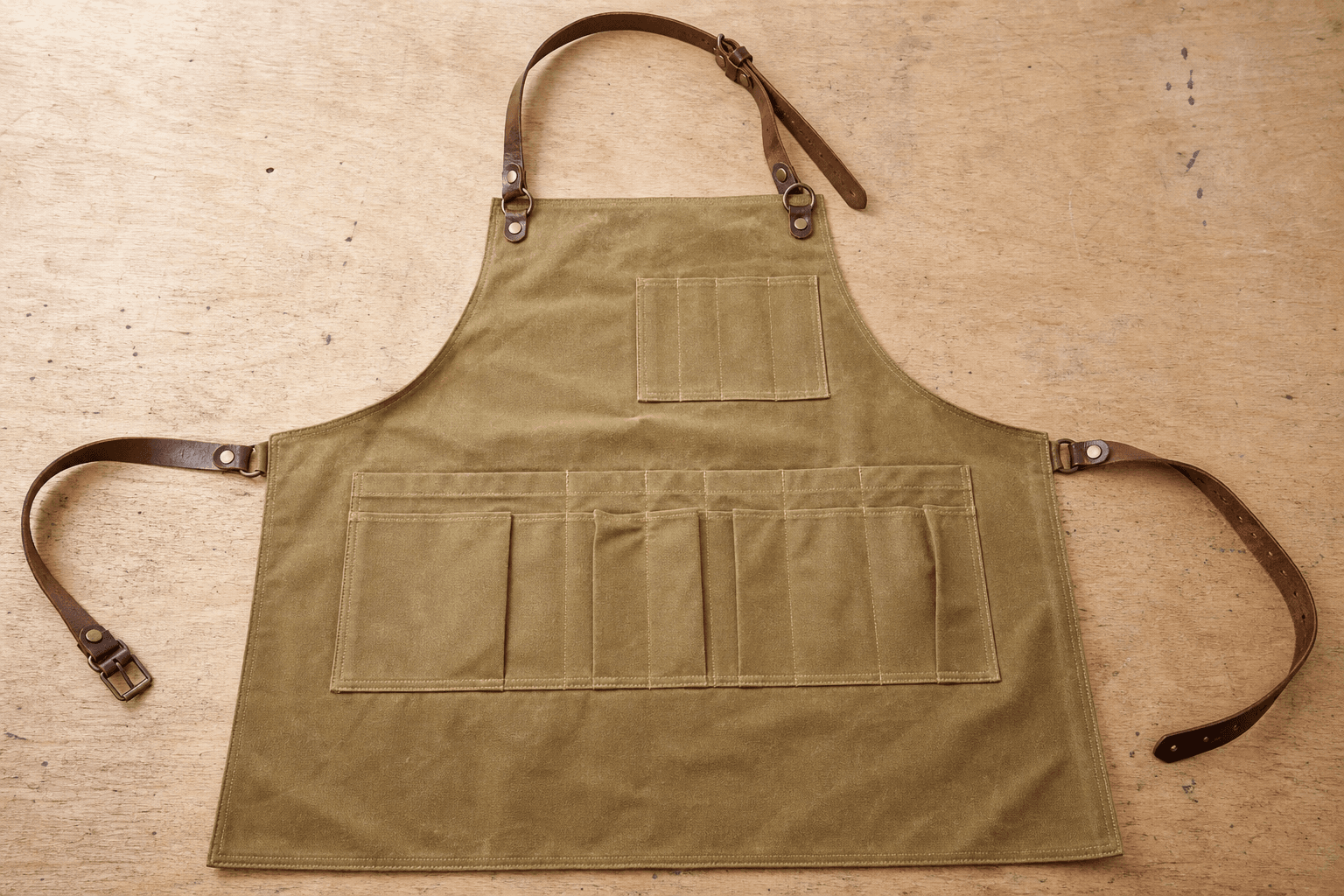
<strong>Apron pps sample approval</strong> is the final control point before a factory spreads bulk fabric and cuts apron panels. For B2B buyers, this signoff must freeze measurable standards: fabric composition and weight, finished measurements, pocket layout, strap construction, branding position, labels, pack-out, tolerances, inspection criteria, and any written exceptions that still prevent cutting release.
How apron mills set fabric dyeing minimums: stock shades, custom colors and surcharges
<strong>Apron fabric dyeing minimums</strong> determine whether a professional apron order can run on stock-dyed twill or canvas, or must book a custom dye lot with meter-based MOQ, shade approval cycles, and small-run surcharges. For B2B buyers sourcing bib aprons, waist aprons, cross-back aprons, and hospitality uniform programs, the wrong color decision can add 7-18 days, trigger $120-$350 color fees, and raise FOB by $0.20-$0.80 per piece.
Greige fabric reservation for repeat apron programs: faster replenishment without dead stock
<strong>Greige fabric reservation for aprons</strong> gives repeat buyers a practical way to cut replenishment lead time by 10 to 18 days without paying to hold large finished-apron inventory. For stable bib, waist, bistro, and cross-back programs, the method works when the factory reserves unfinished base cloth against an agreed construction, usable yield, release MOQ, holding period, dead-stock settlement rule, and inspection standard such as <em>AQL 2.5 major / 4.0 minor</em>.
Crossback apron pattern engineering: balancing neck relief, coverage and size consistency
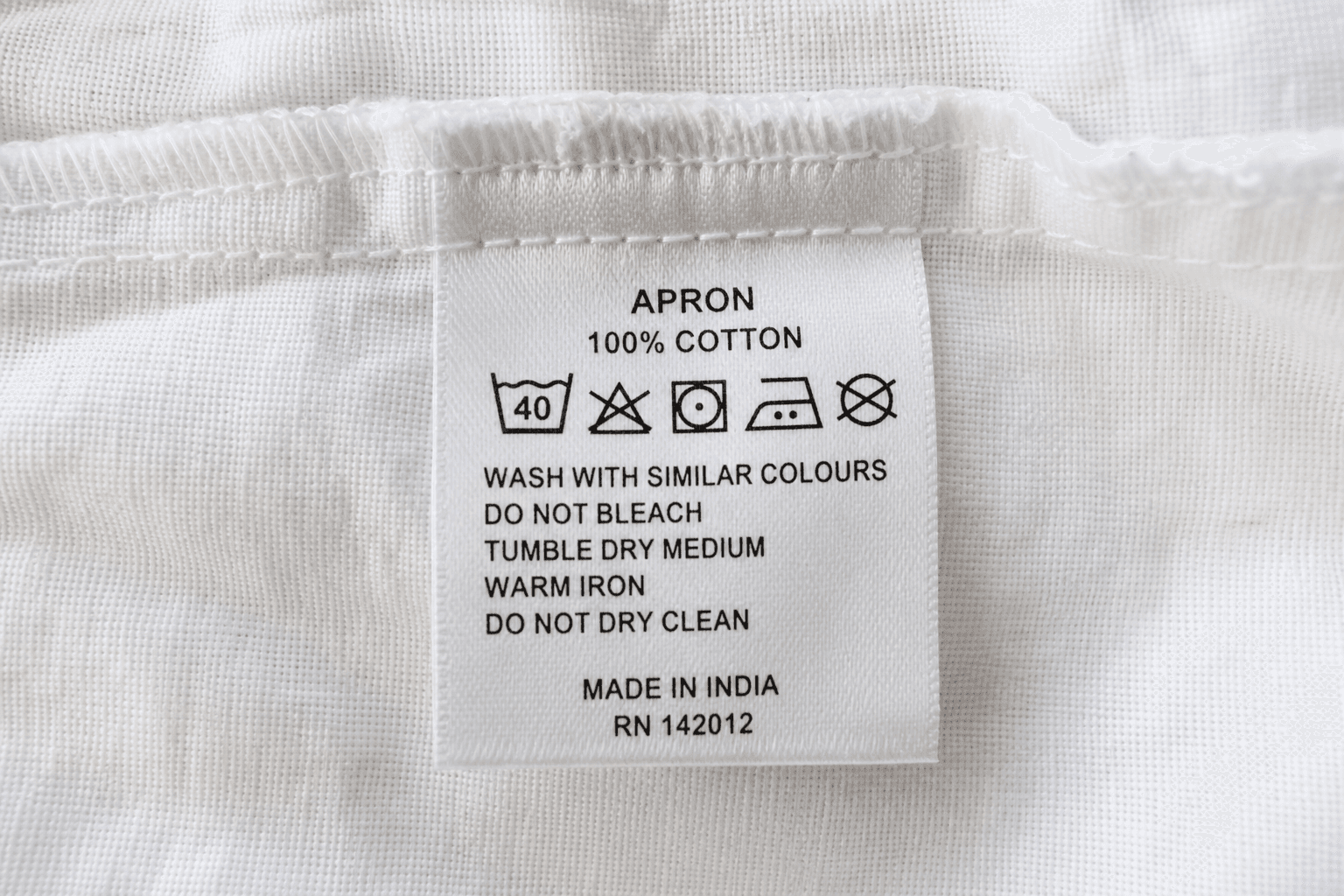
<strong>Crossback apron pattern engineering</strong> determines whether a bulk apron program delivers measurable neck relief without sacrificing bib coverage, side protection, wash stability or size consistency. For professional B2B buyers, the critical controls are strap exit coordinates, crossing height, underarm curve depth, grading logic, reinforcement methods, shrinkage allowance and QC checkpoints fixed before PPS approval.
Apron width, overlap and side coverage: spec decisions that affect inclusivity and movement
<strong>Apron coverage specifications</strong> determine whether a production apron actually shields the waist, high hip, and upper thigh across the intended wearer range without restricting stride or creating side gaps in motion. For B2B buyers, width, hem sweep, wrap reach, tie length, fabric drape, tolerances, and inspection points should be locked as one sourcing specification before PP approval.
Apron seam construction guide: flat-felled, bound and overlocked seams
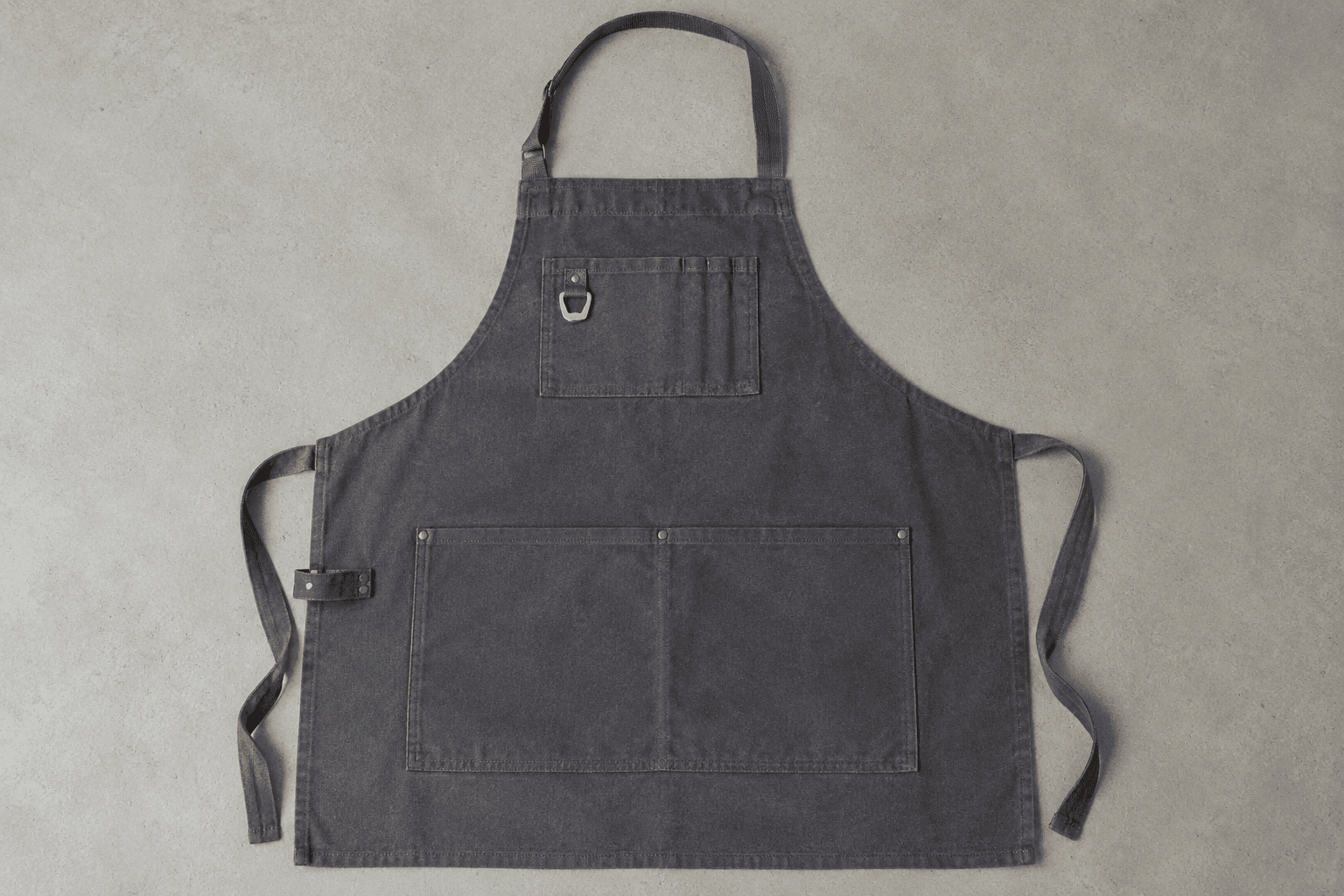
A practical <strong>apron seam construction</strong> guide for B2B buyers comparing flat-felled, bound and overlocked seams by durability, fabric suitability, SMV, defect risk, MOQ impact, AQL control and realistic FOB cost on bulk apron orders.
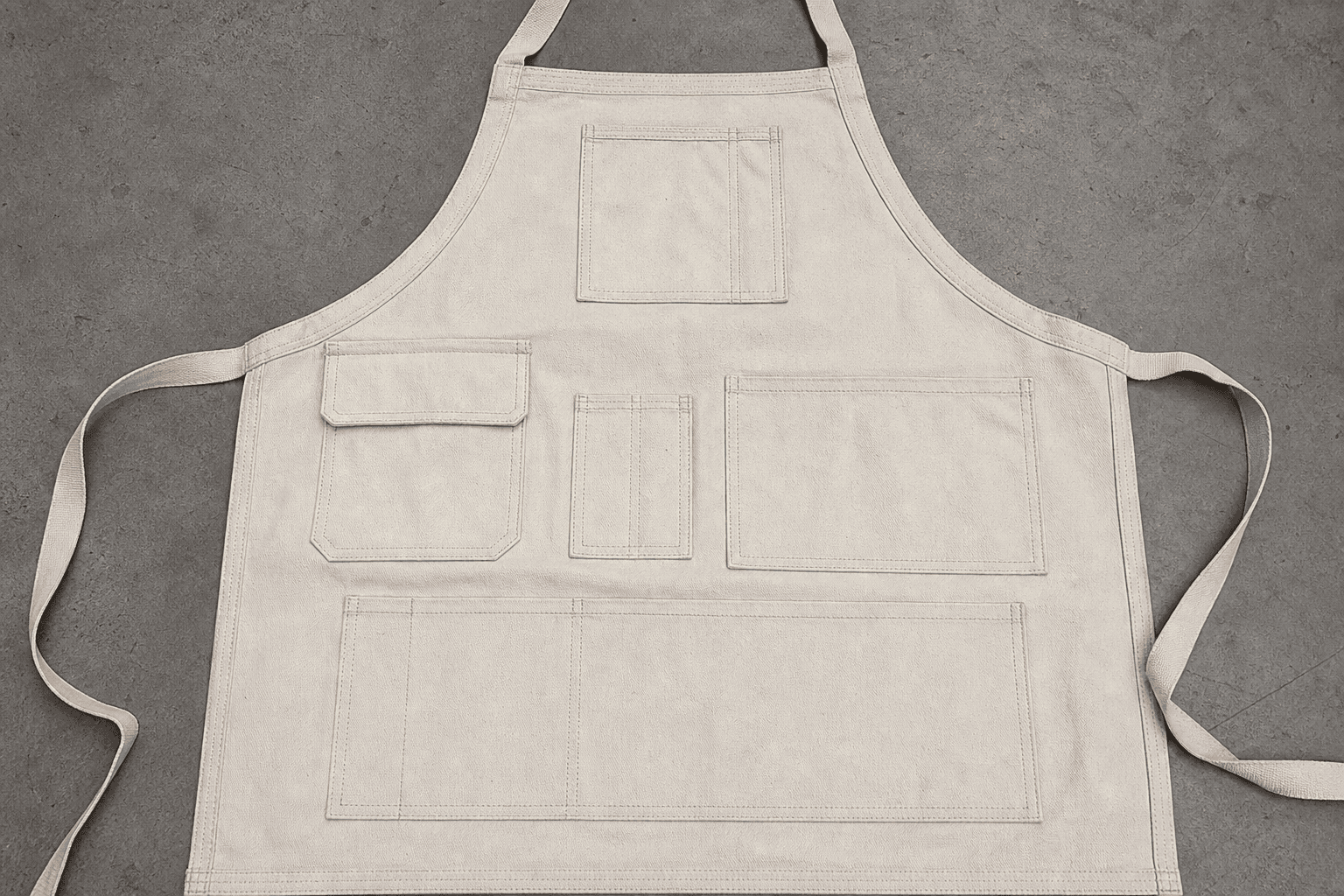
Apron fabric roll inspection: shade bands, defects and cut allocation
<strong>Apron roll inspection</strong> decides whether bulk apron fabric can be cut without mixed shades, visible defects or avoidable yield loss. For professional sourcing teams, disciplined <strong>apron roll inspection</strong> means checking shade bands, 4-point results, usable width, actual roll length, bow and skew, then assigning each approved roll to a controlled cut allocation before spreading starts.
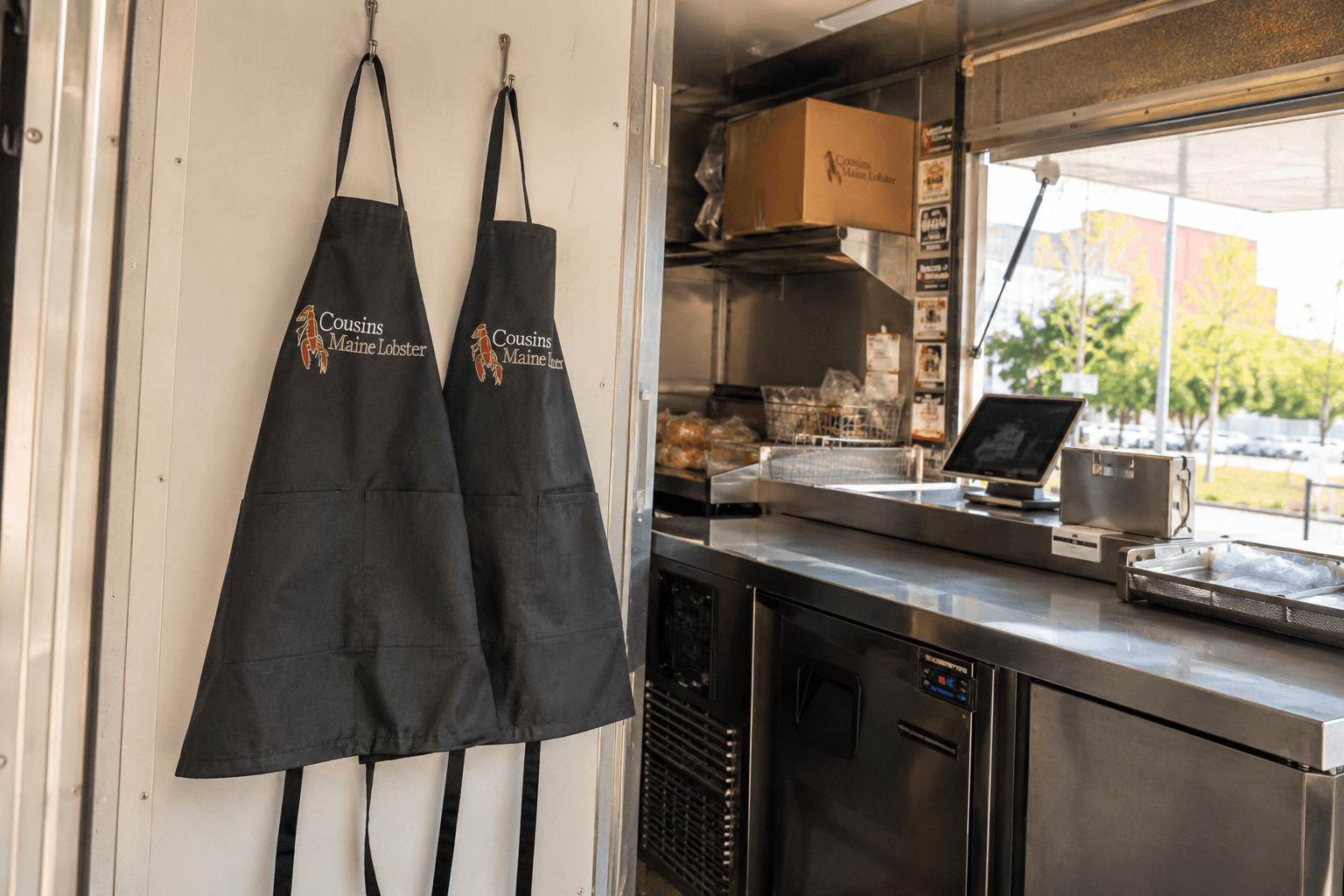
Apron carton packing math: units per carton, cube optimization and freight damage control
Accurate <strong>apron carton packing</strong> cuts landed cost, protects trims and decoration, and speeds warehouse receiving. This guide gives B2B apron buyers usable targets for units per carton, carton cube, board grade, gross weight, AQL, and transit-day risk so packing can be fixed before bulk shipment.
Apron MOQ explained: why factories quote 150 to 300 pieces
Apron MOQ usually sits at 150 to 300 pieces because fabric cutting, trim sourcing, printing setup, sewing line allocation, and packing labor all have fixed costs.
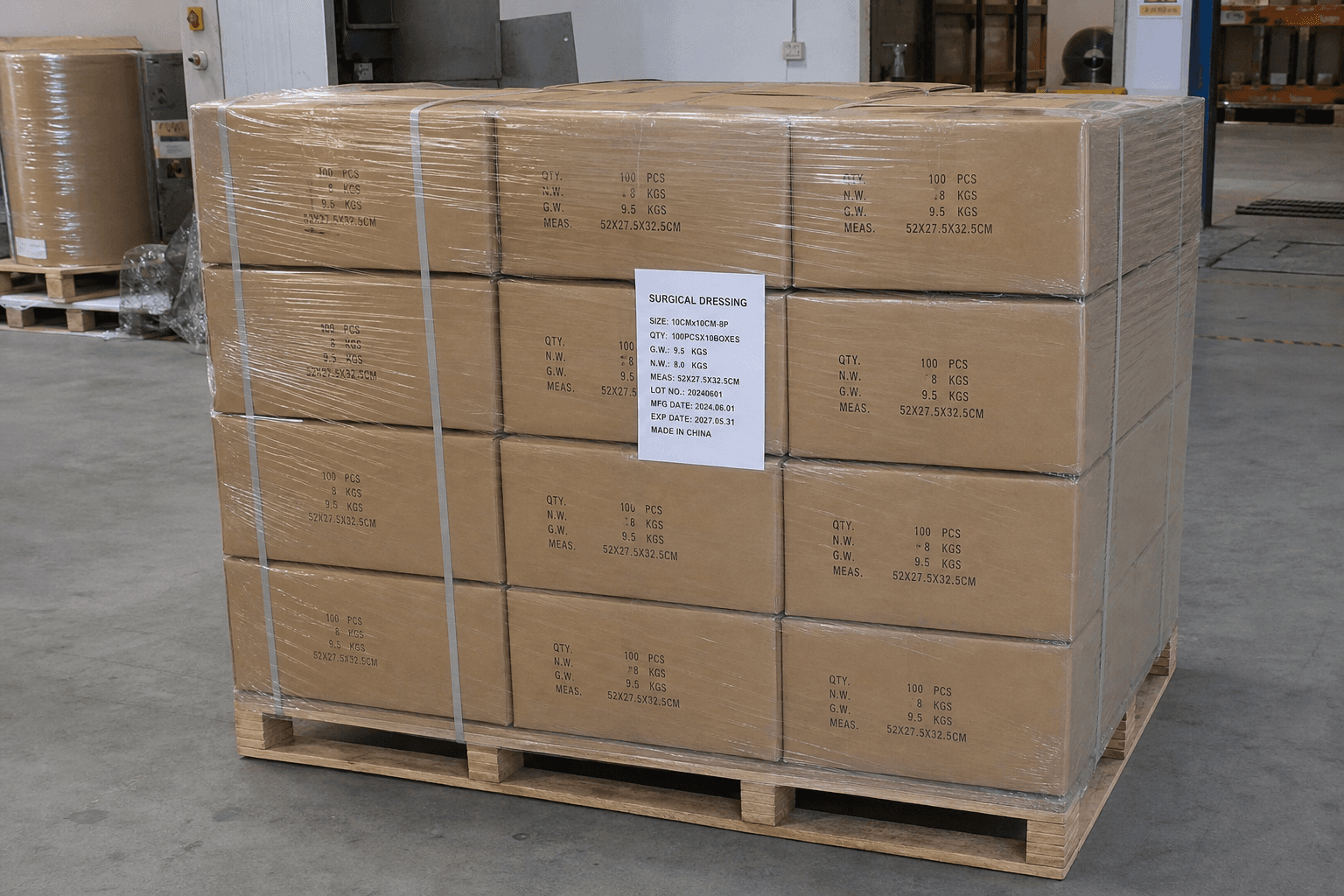
FOB, CIF or DDP for apron orders: a landed-cost comparison
A practical apron incoterms comparison showing how FOB, CIF and DDP change cost control, risk and landed pricing for bulk custom apron orders.
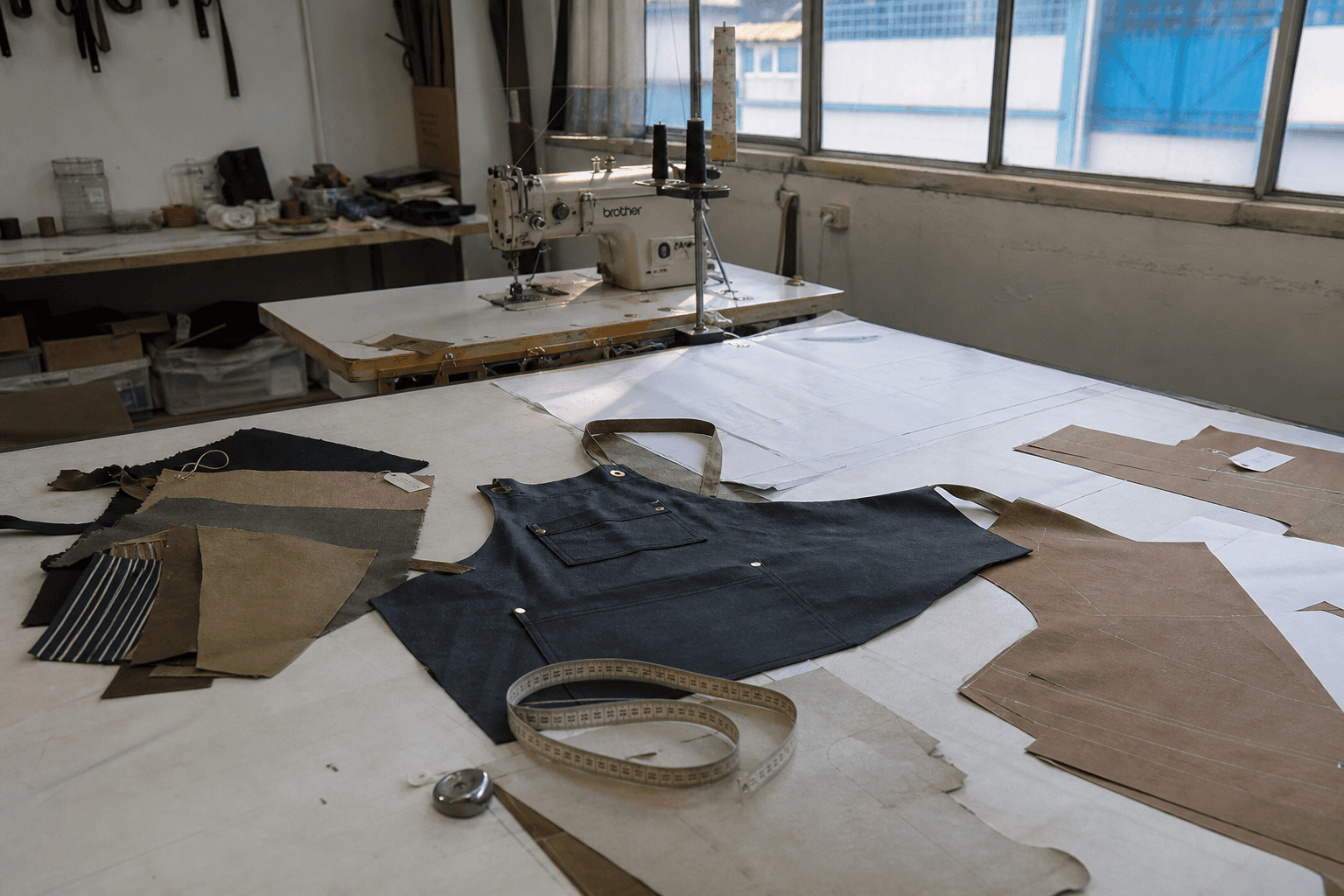
The apron sampling process: from tech pack to pre-production sample
A practical guide to the apron sampling process, covering tech packs, fabric trials, fit checks, costing, revisions, and pre-production sample approval.
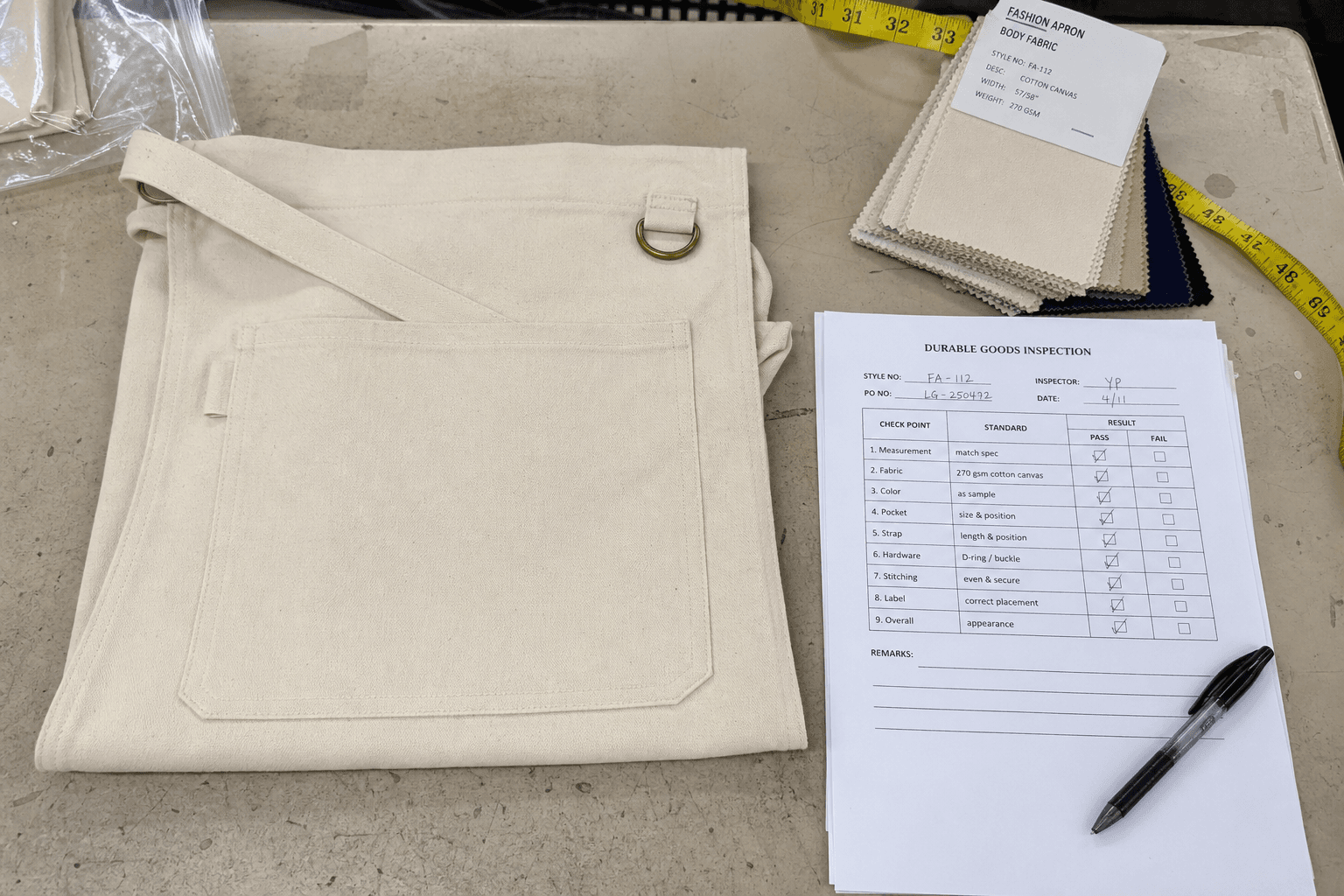
Apron QC and AQL inspection: what to check before you pay
Apron quality control should confirm fabric, workmanship, sizing, packaging and AQL results before balance payment or shipment release.
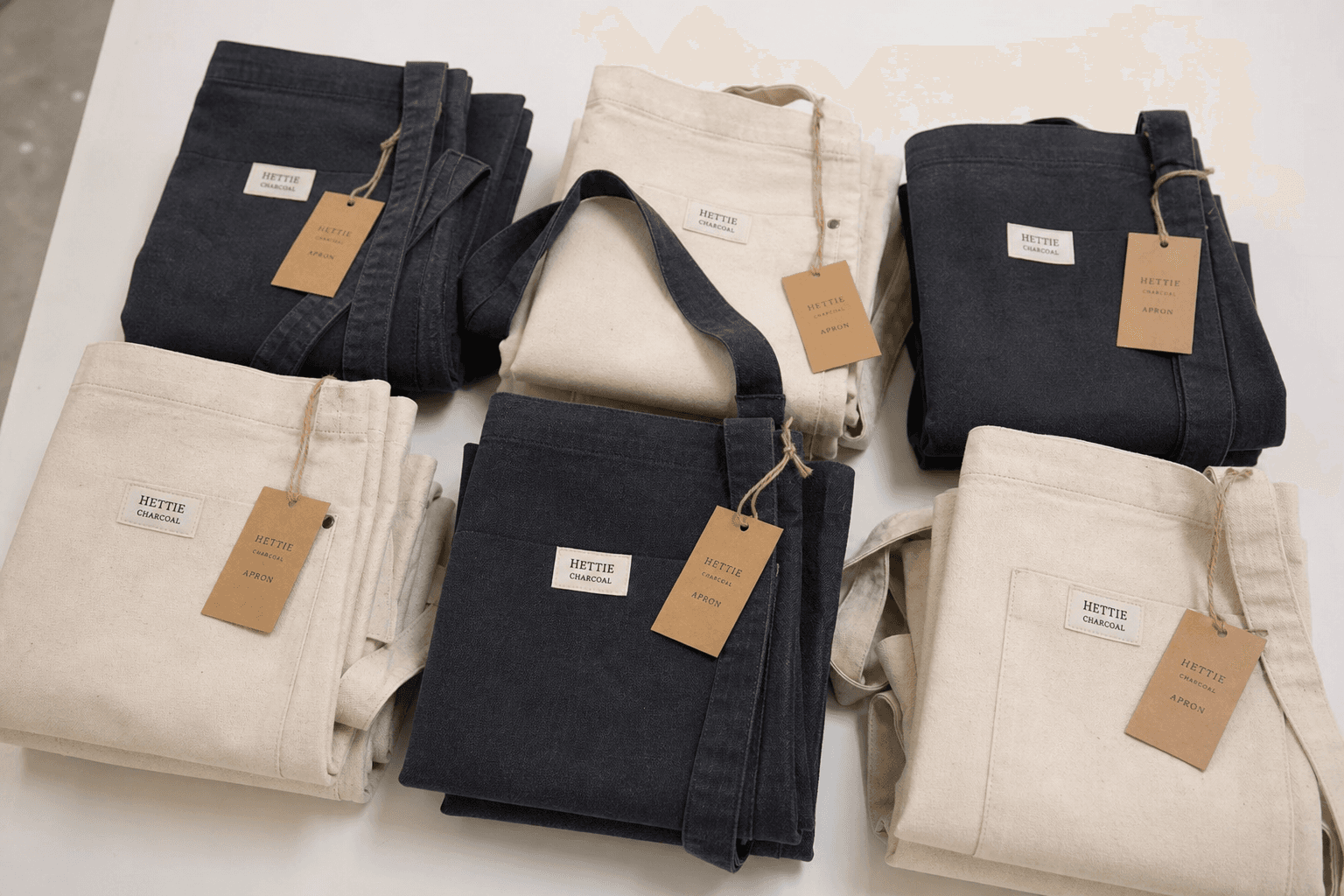
Private-label apron manufacturing: a step-by-step buyer guide
A practical sourcing guide for working with a private label apron manufacturer, covering fabrics, sampling, branding, MOQ, QC, packing, and delivery planning.
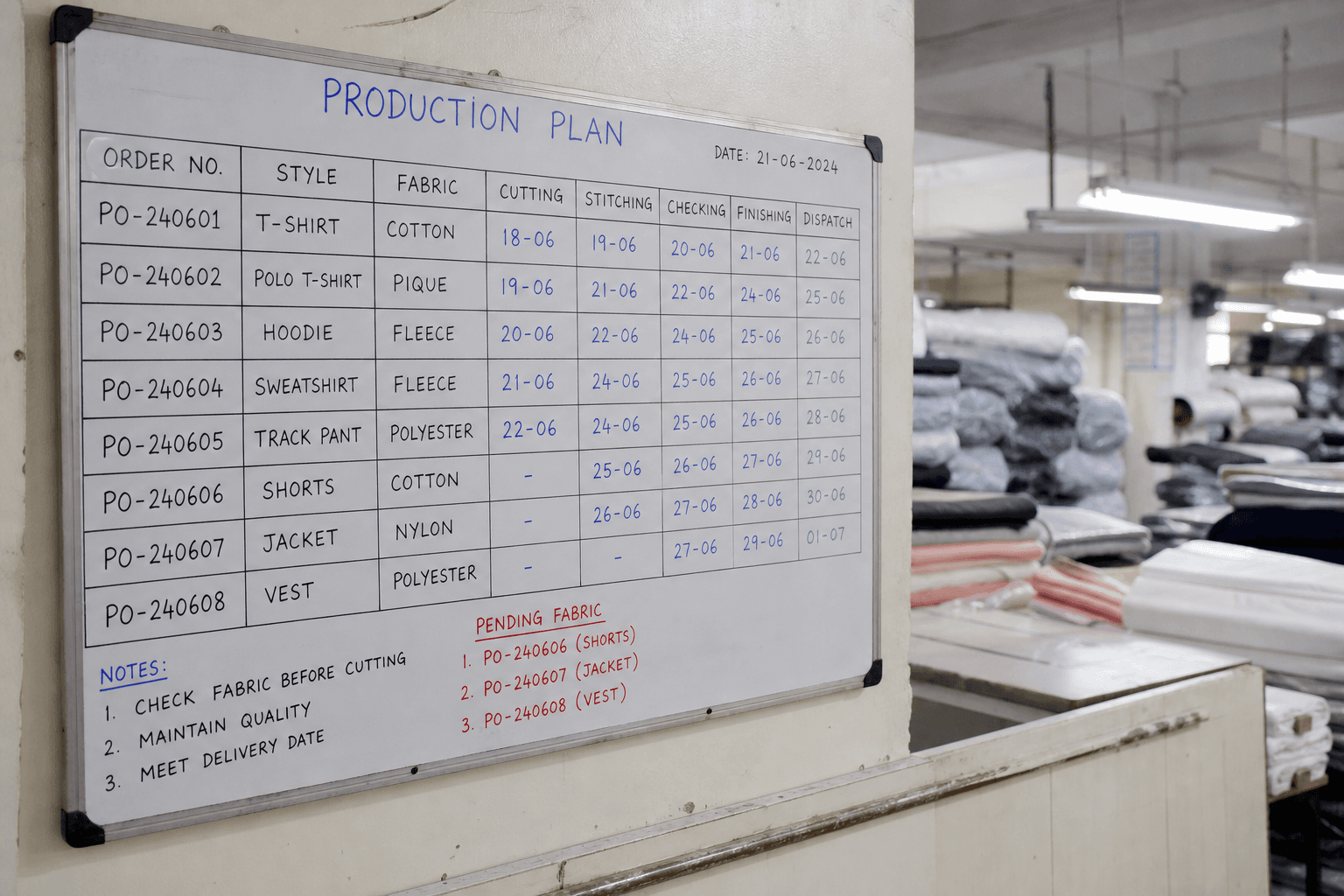
Apron lead times explained: where the 35 to 45 days actually go
Apron lead time is usually 35 to 45 days because fabric, trims, printing, sewing, inspection, and vessel booking each consume fixed calendar time.
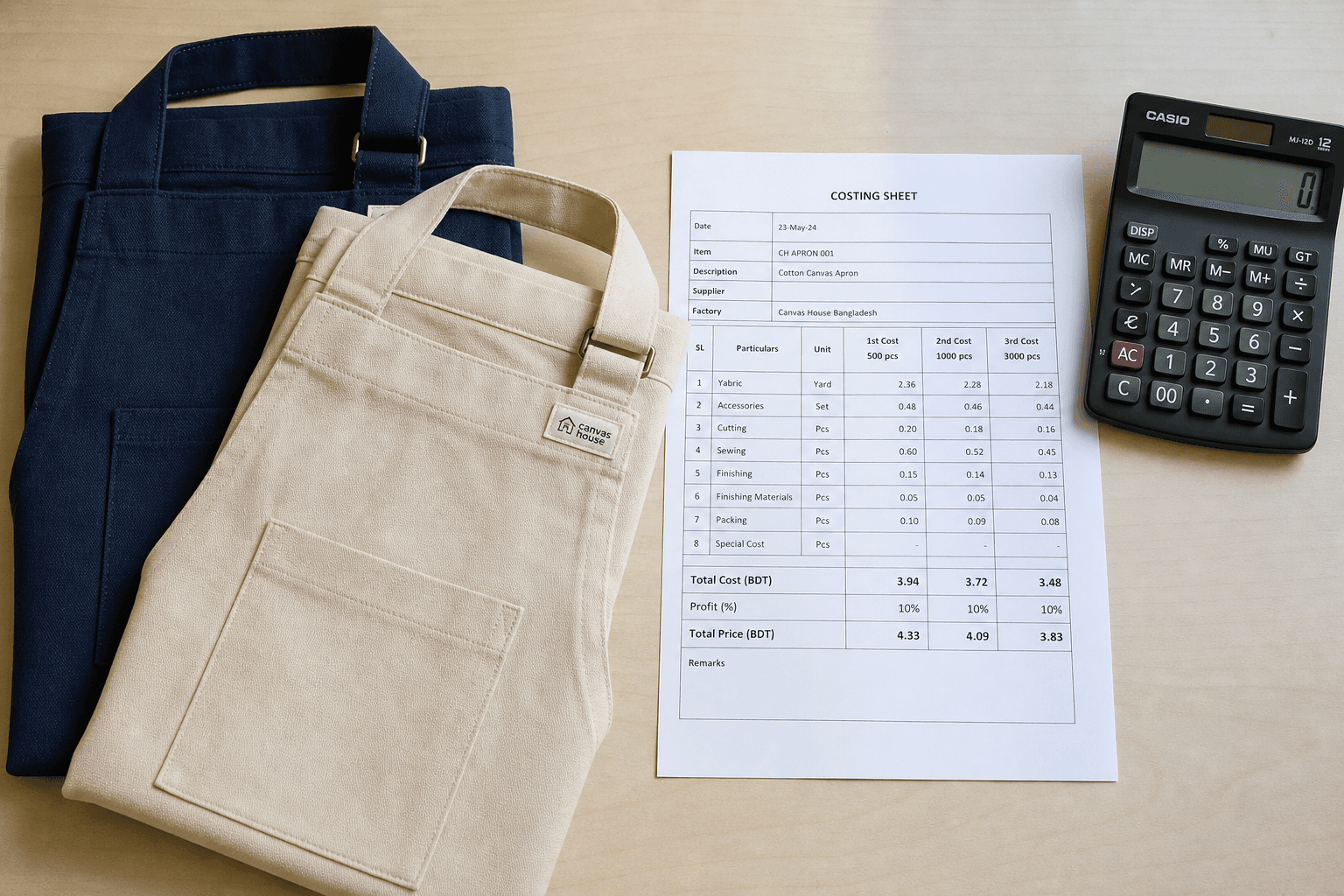
Seven ways to reduce your apron unit cost without cutting quality
Practical factory-side methods to reduce apron cost while protecting fabric performance, stitching durability, color consistency and shipment reliability.
How to build an apron tech pack that gets accurate quotes
A complete apron tech pack gives the factory enough measured, material and packing detail to quote accurately before sampling starts.
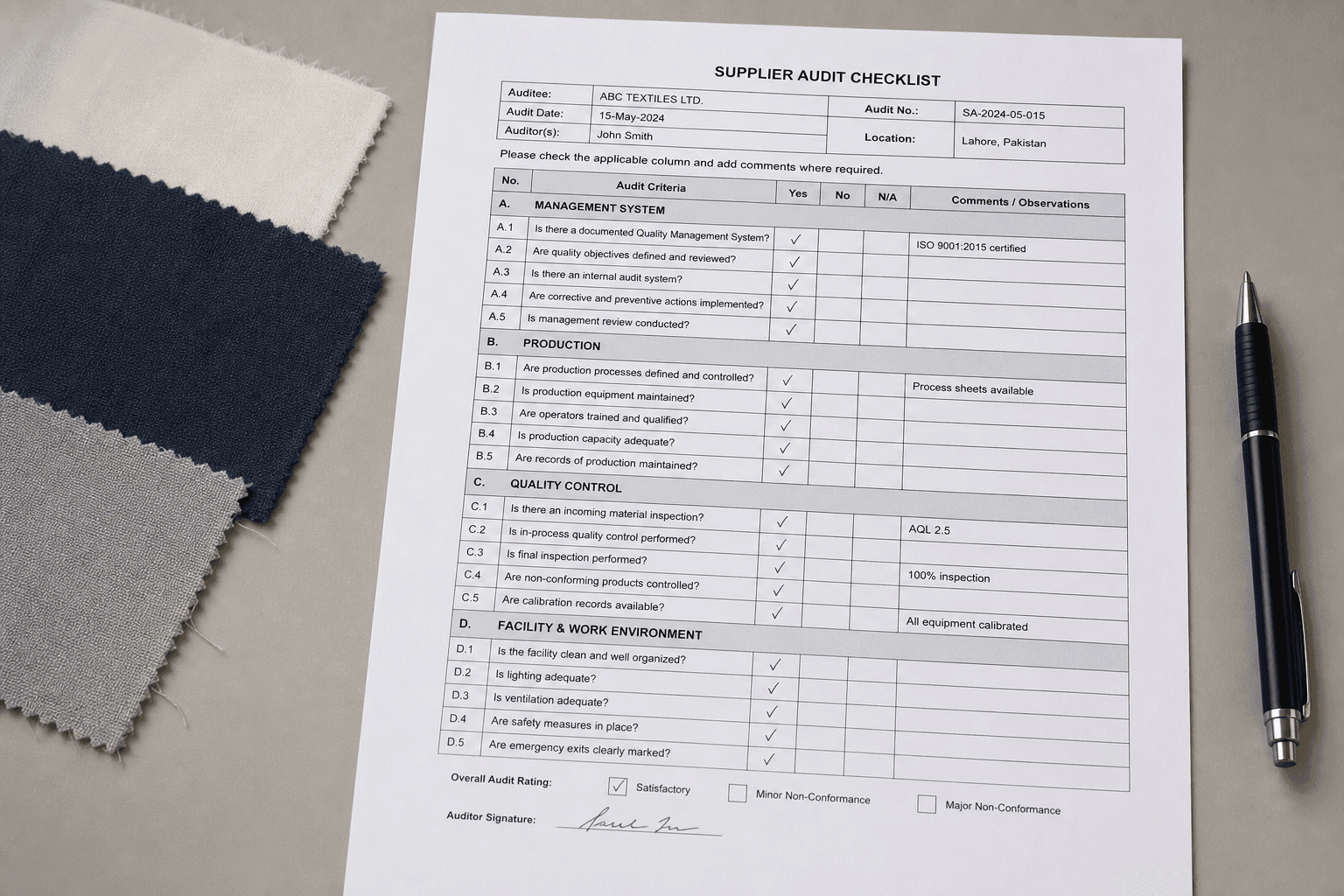
How to vet a custom apron supplier in China
A practical checklist for qualifying an apron supplier china buyers can trust, covering factory verification, fabric control, sampling discipline, pricing, capacity and shipment risk.
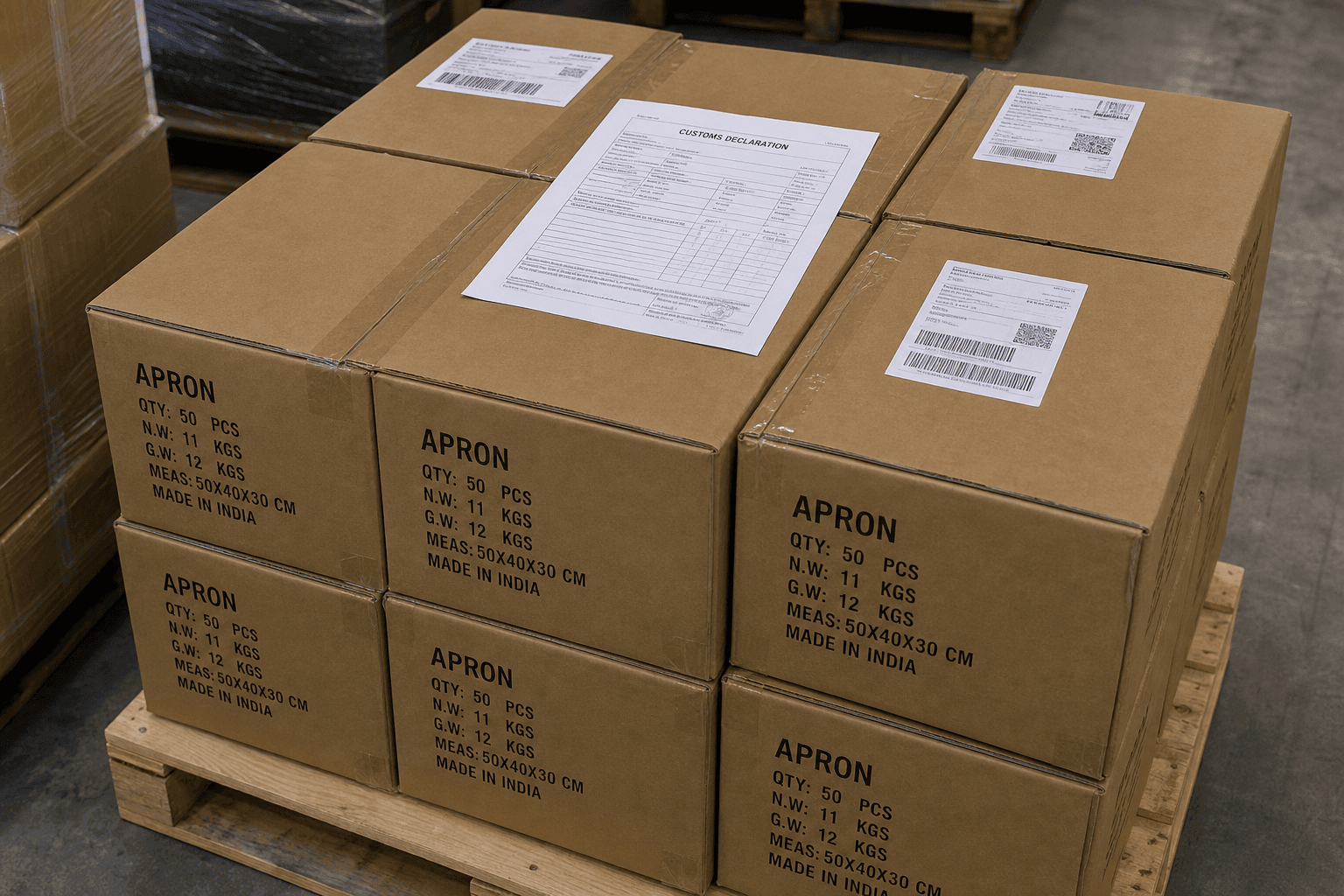
Apron HS Codes & Import Duty: US and EU Guide
Classify textile, coated and disposable aprons for US HTS and EU TARIC filings. Check fiber, coating, end use and origin before calculating import duty.
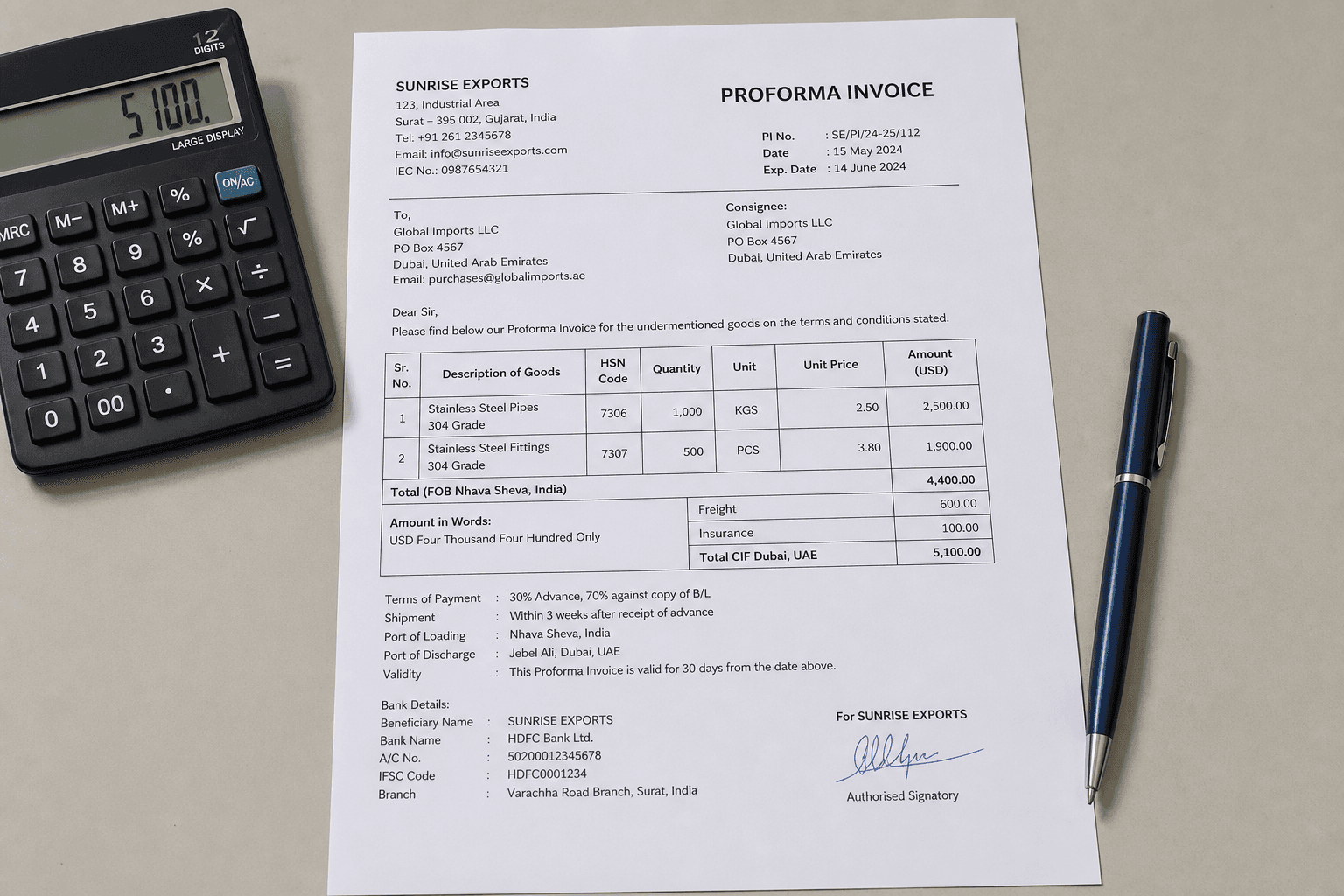
Apron order payment terms: TT, L/C and deposit structures
A practical guide to apron payment terms, covering TT, L/C, deposits, balances, risk points and cost impact for bulk custom apron orders from China.
Sea vs air freight for apron orders: cost and timing
Apron freight choices change landed cost, delivery risk, and production planning. This guide compares sea and air freight for bulk custom apron orders from China.
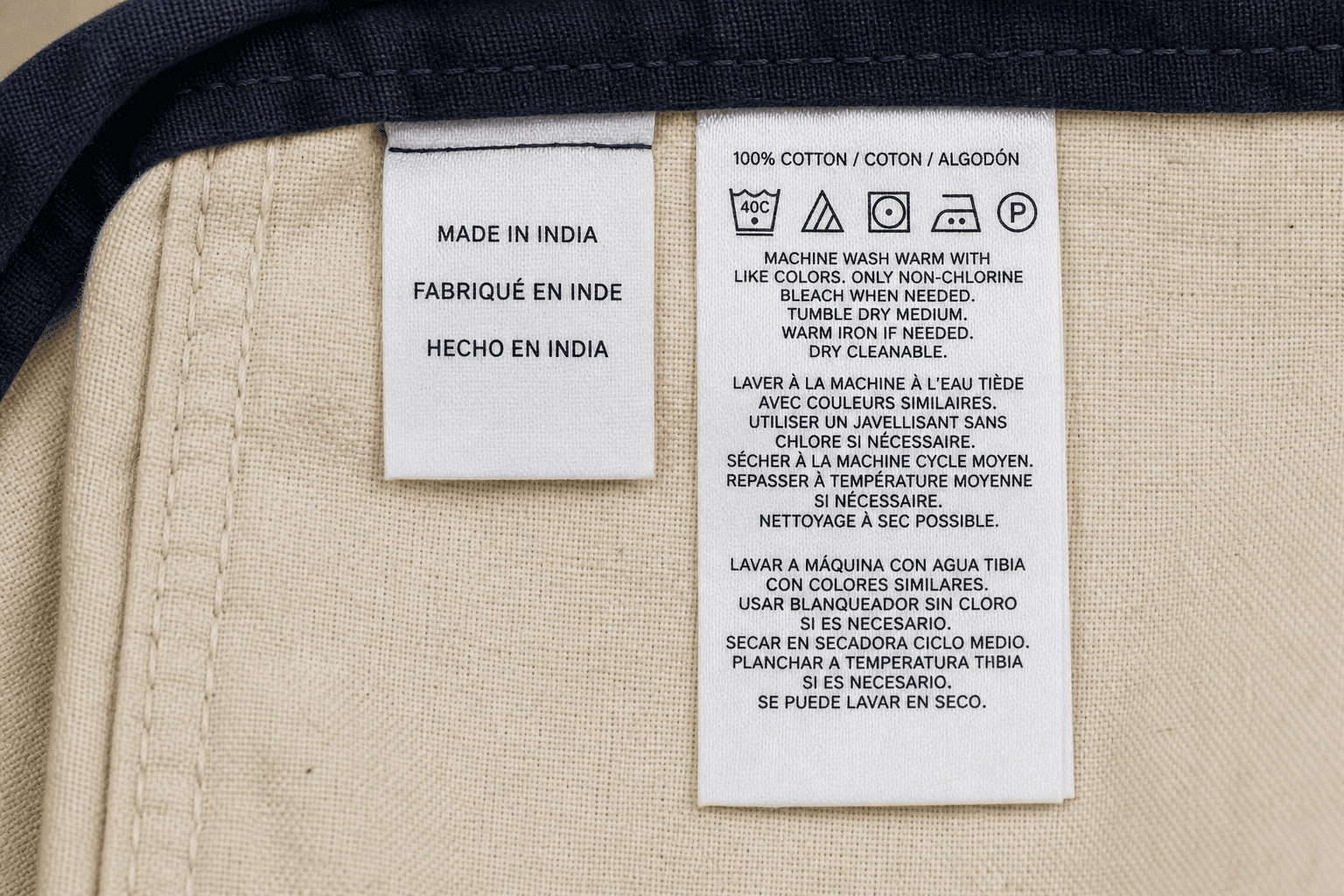
Country-of-origin and label compliance for imported aprons
An apron country of origin label must match the real manufacturing process, import documents, and care label content before bulk shipment leaves China.
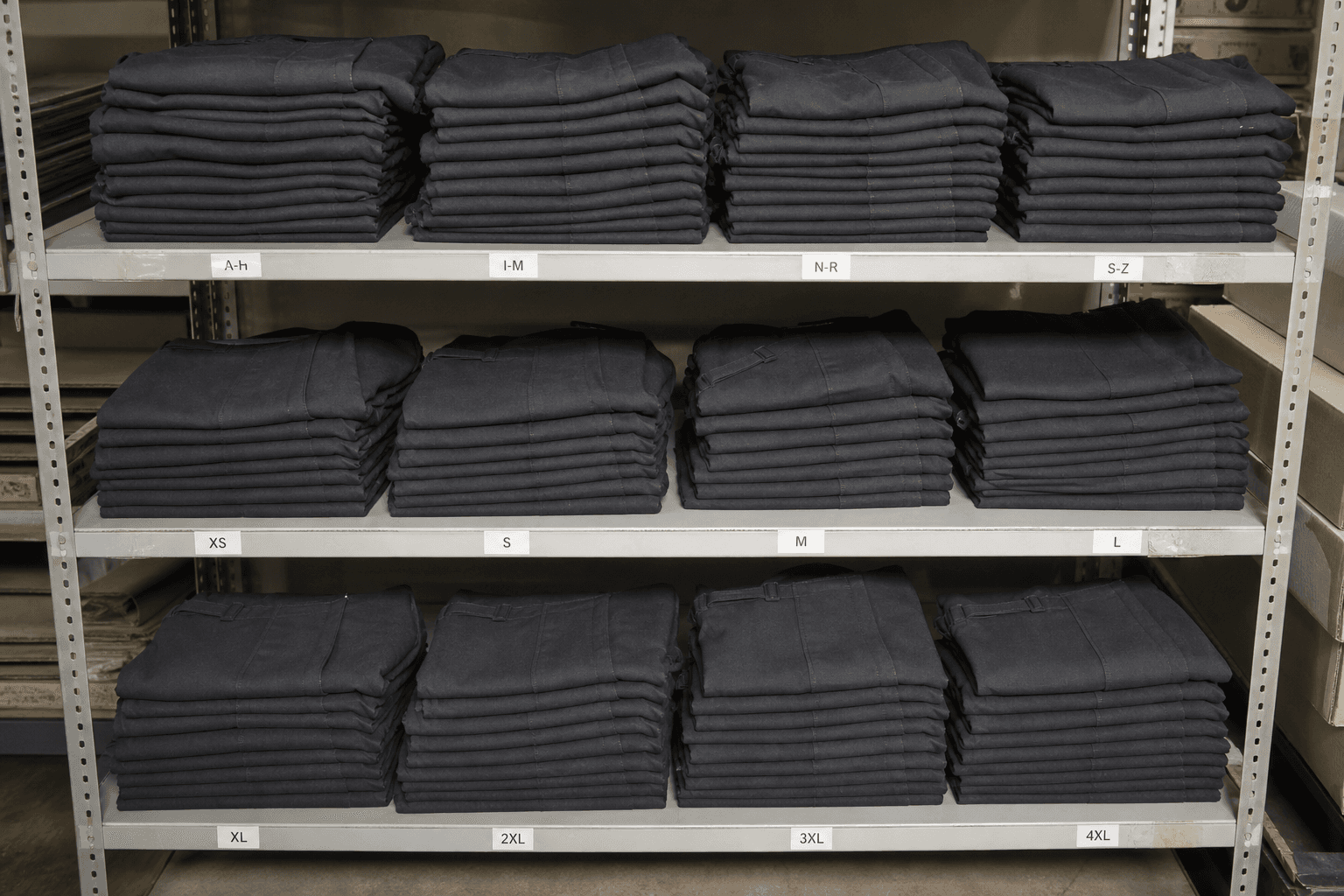
Reordering aprons: how repeat orders cut cost and lead time
An apron reorder can reduce sampling, setup, material waste and inspection time when the original specifications are controlled correctly.
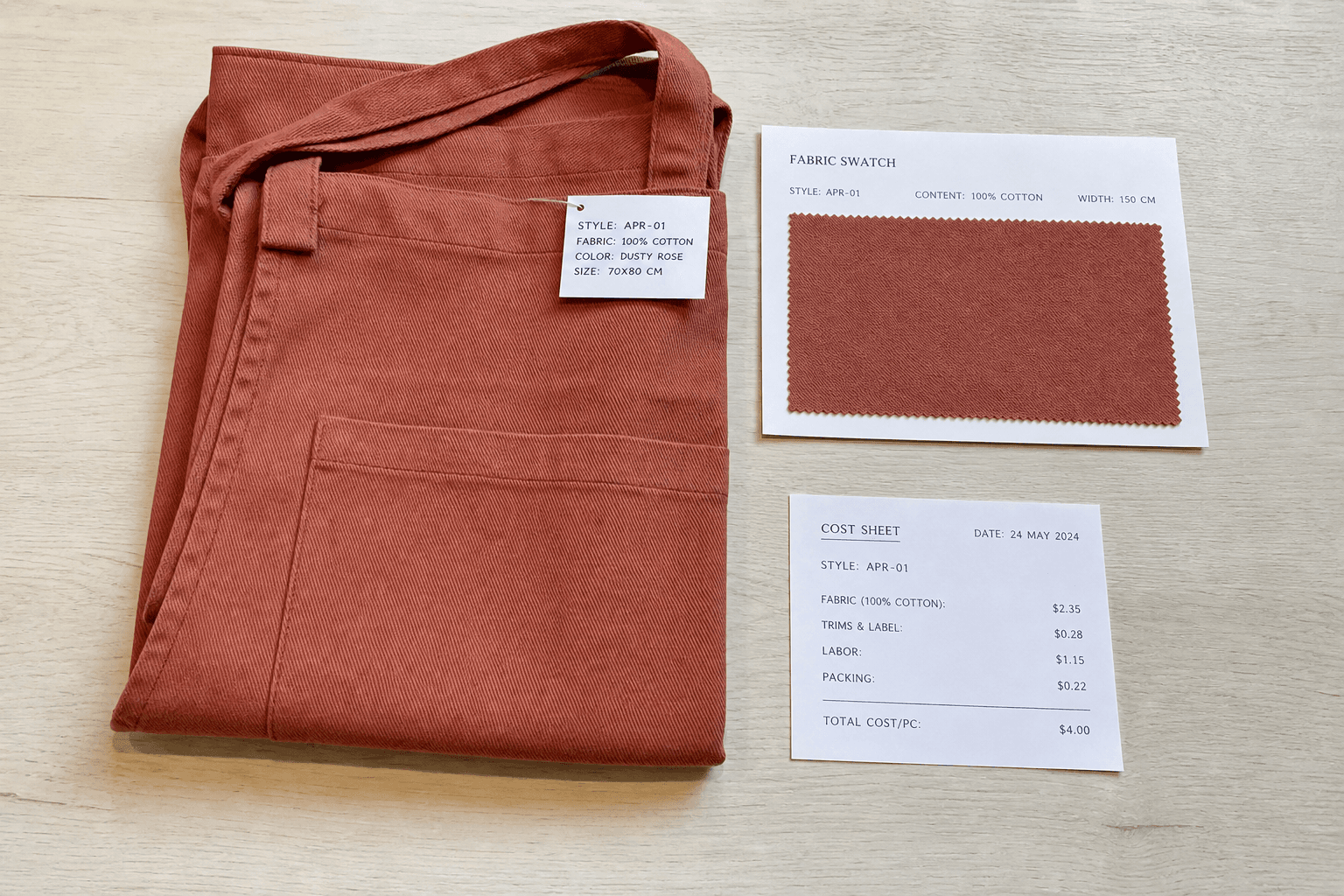
Apron sample costs explained: what you pay before bulk
Apron sample cost depends on fabric, trims, logo process and revision count, usually ranging from US$35 to US$180 before bulk production.
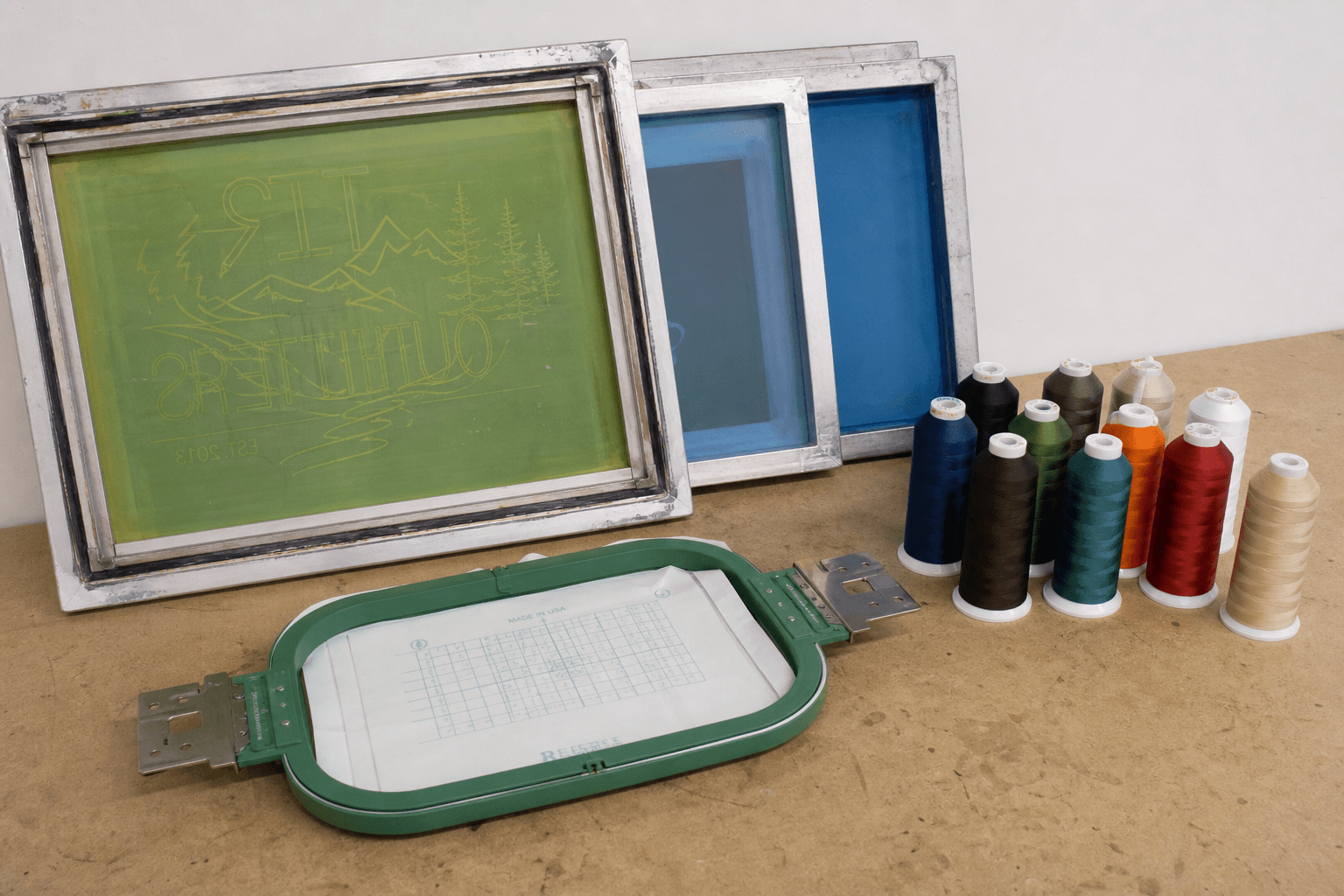
Apron setup and tooling costs: one-time vs per-unit
Apron setup cost is a mix of one-time preparation fees and per-unit charges that depend on decoration method, pattern work, fabric choice and order quantity.

Building an apron production calendar for seasonal launches
A practical apron production calendar helps buyers lock fabric, sampling, bulk sewing, inspection, and shipment dates before seasonal capacity becomes tight.

Communicating with your apron factory: avoiding costly misreads
Apron factory communication improves when buyers define fabric, sizing, construction, packing and approval rules before sampling, instead of correcting assumptions after production starts.
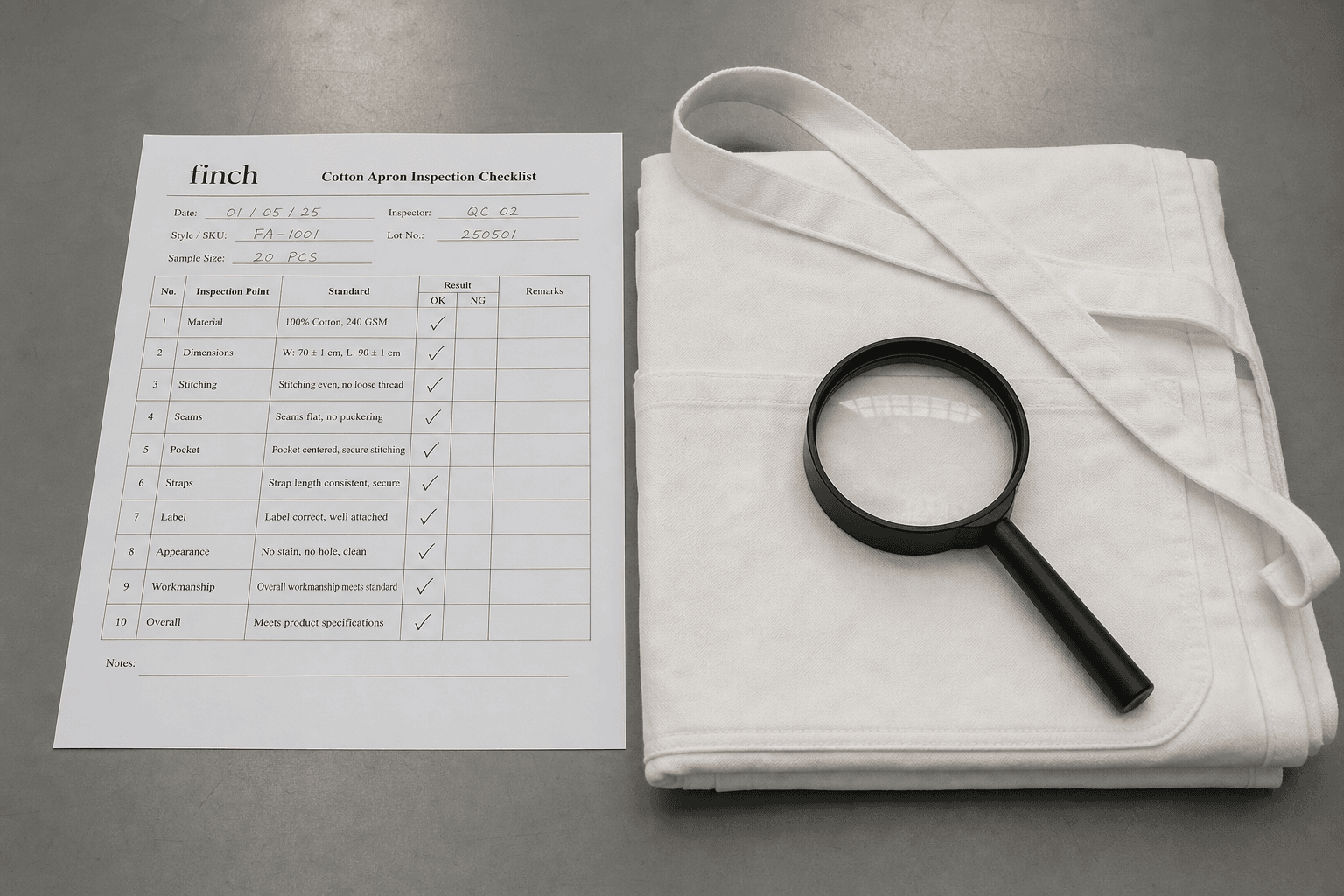
Common apron defects and how to write tolerances
Apron defects are manageable when buyers define measurable tolerances for fabric, stitching, sizing, trims, packing and inspection before bulk production.
Apron MOQ for startups: launching with limited capital
A practical guide to apron moq startup decisions, covering fabric, decoration, costing, sampling, and launch quantities for brands with limited first-order capital.
Apron sourcing agent vs direct factory: cost, control and risk
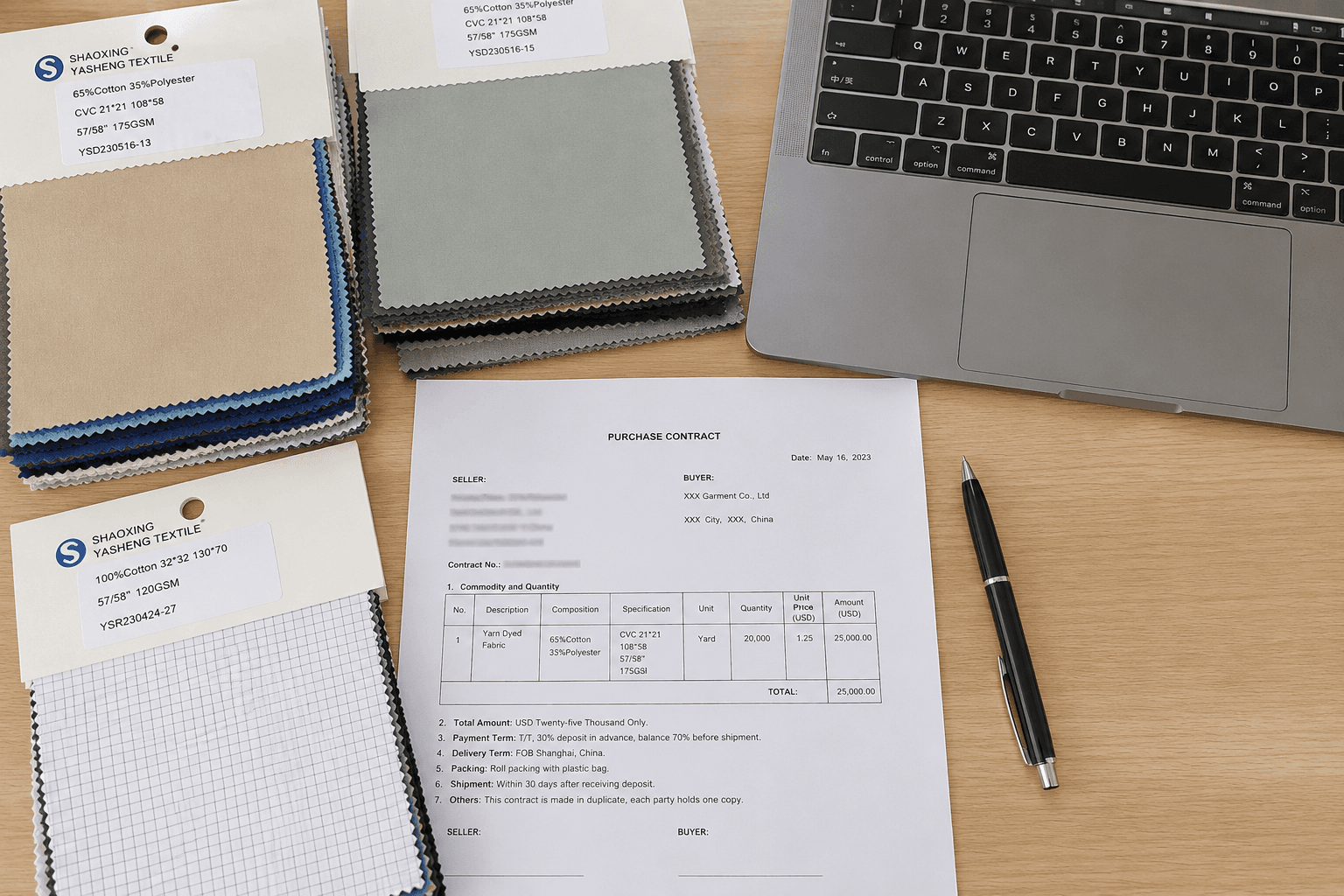
An apron sourcing agent can simplify early-stage buying, but a direct factory apron order usually gives better cost control, clearer specs, and lower long-run risk.
Negotiating apron prices: a buyer's leverage playbook
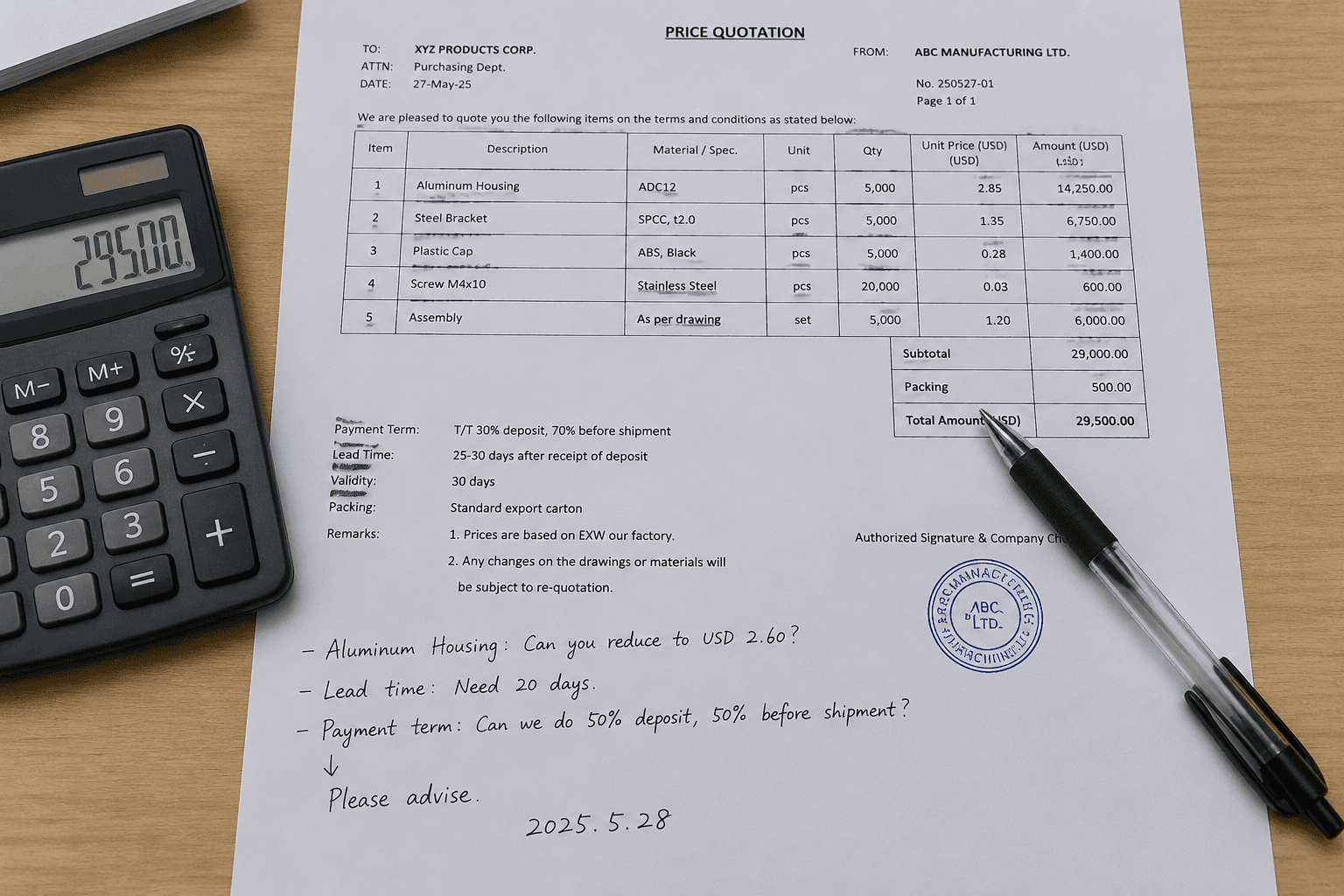
To negotiate apron price effectively, buyers need leverage from fabric choices, order structure, packaging discipline, and production timing rather than pressure alone.
The apron purchase order checklist: terms you must lock before deposit
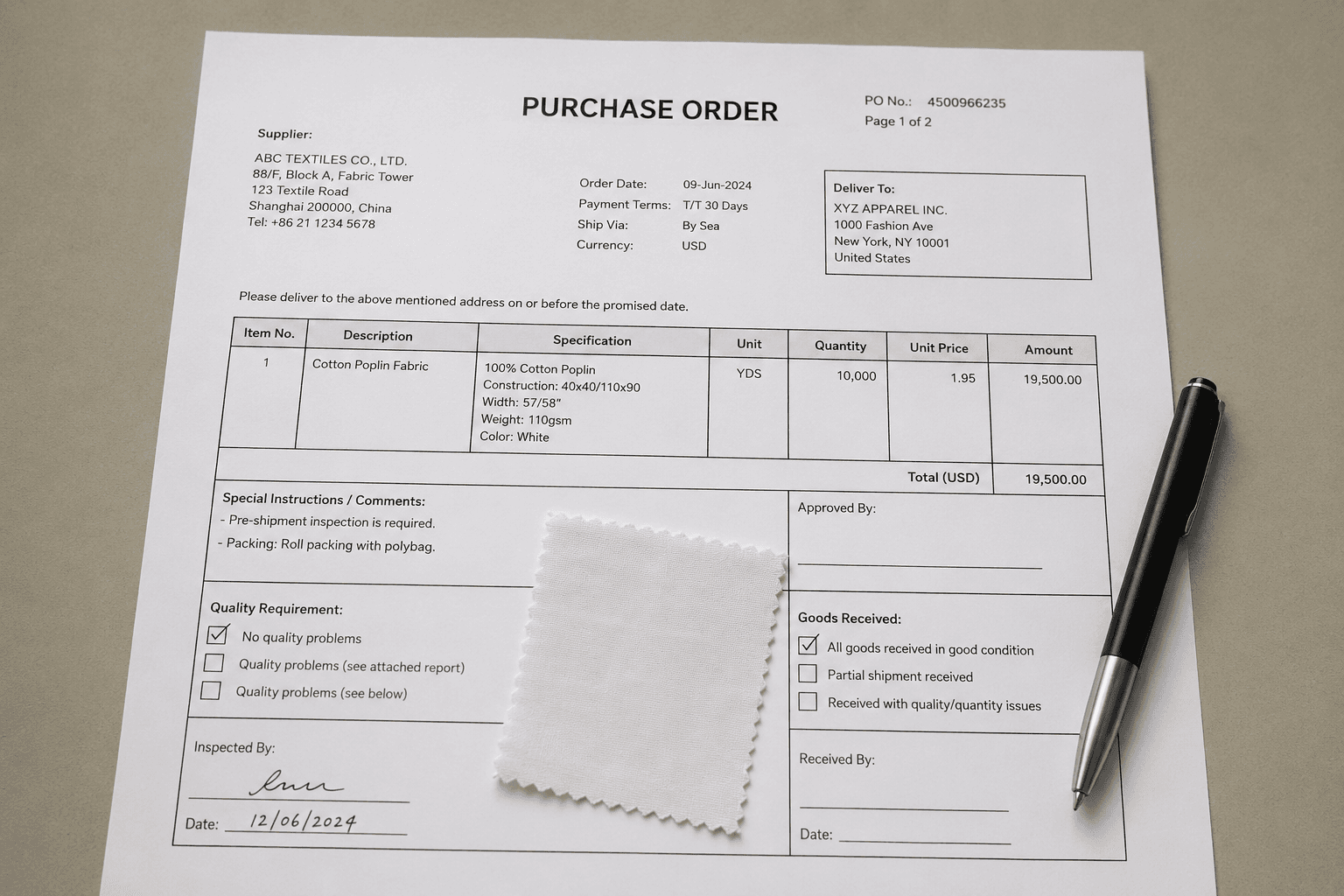
A practical apron purchase order checklist for locking fabric, sizing, trims, packing, payment, inspection, and shipment terms before deposit.
Managing apron inventory and safety stock for uniform programs
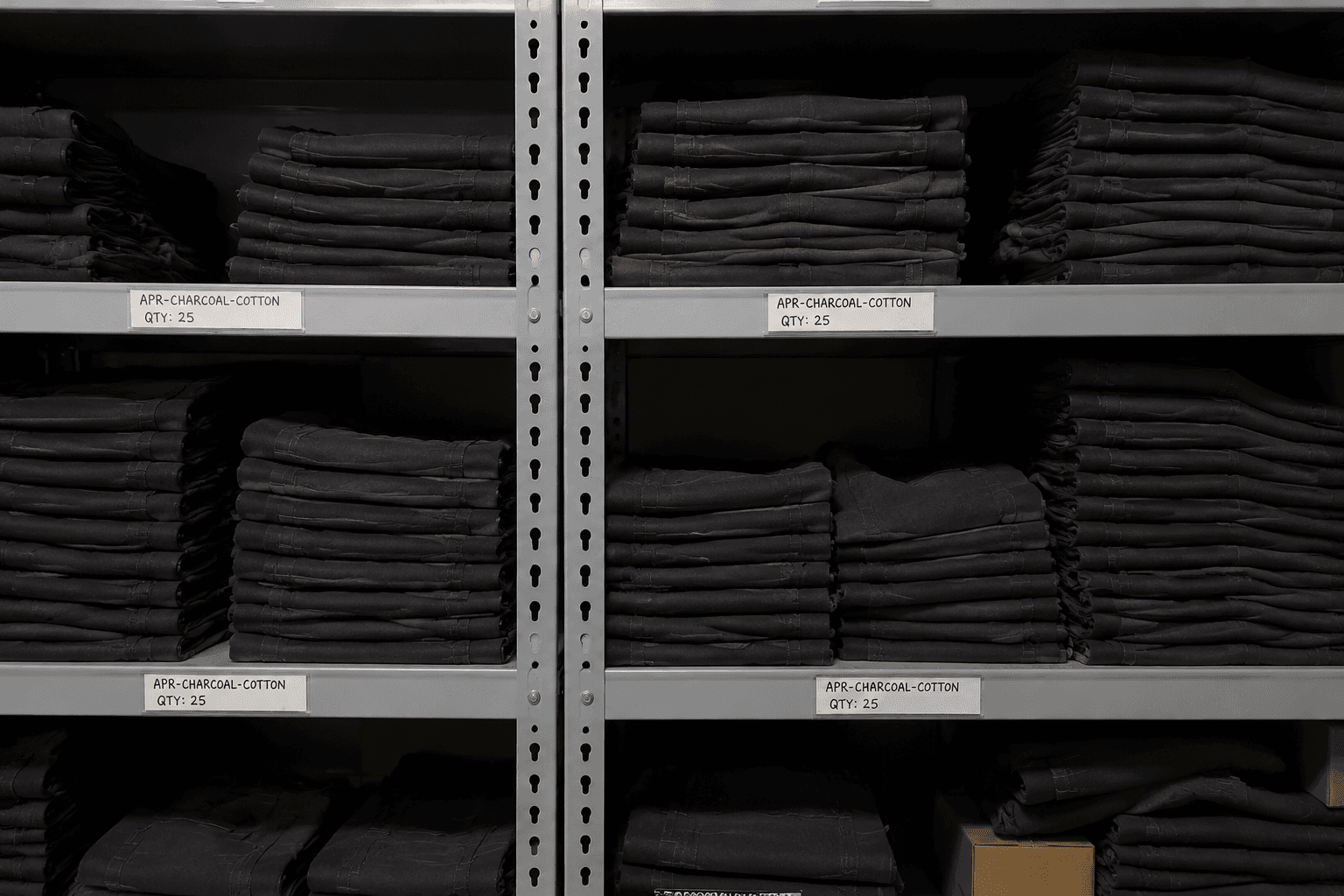
Apron inventory management works best when buyers connect usage data, factory lead times, SKU risk, and apron safety stock before shortages reach stores or sites.
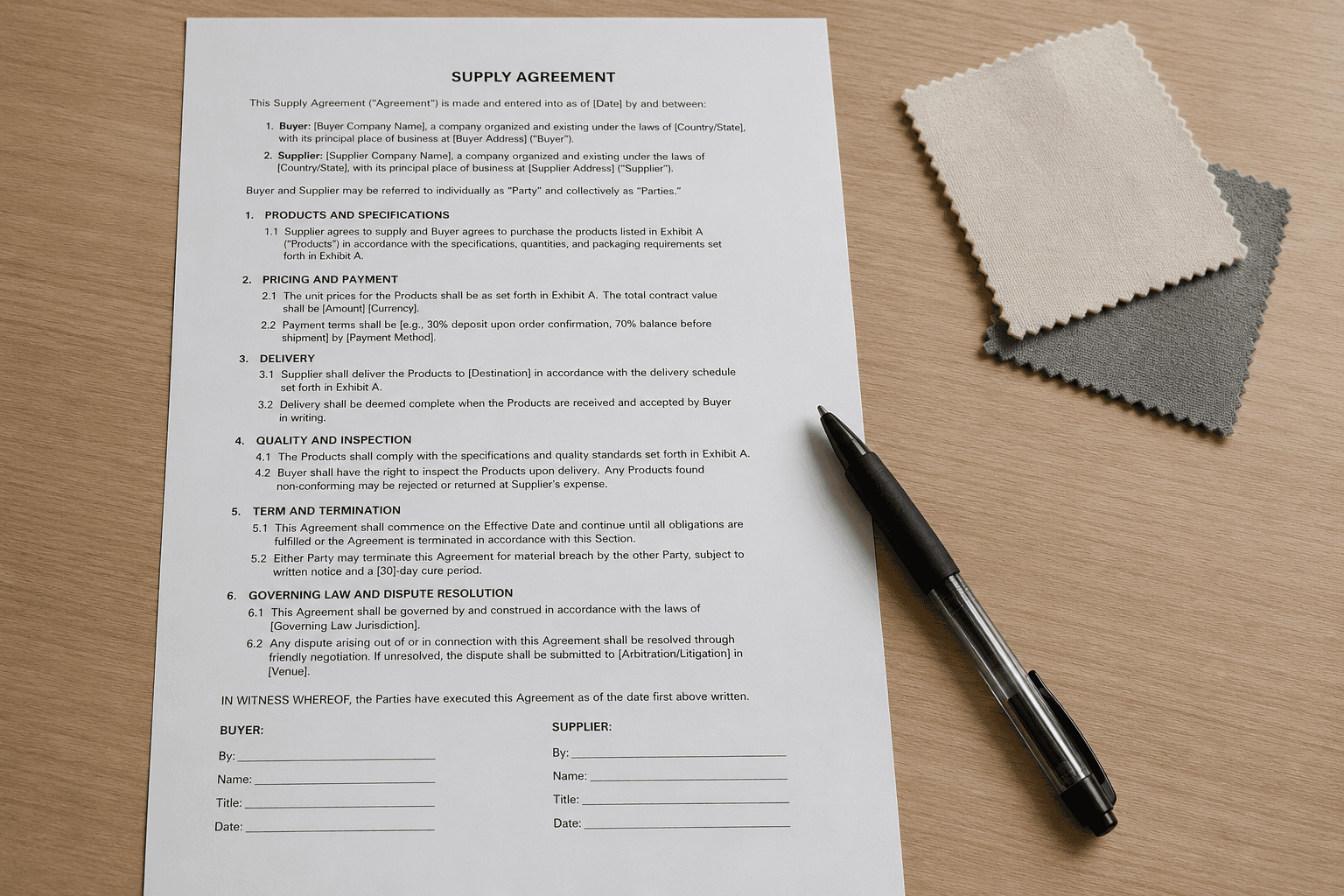
Apron supplier contracts and NDAs: protecting designs and pricing
An apron supplier contract should fix specs, pricing, sampling, and IP ownership before production starts. For bulk apron buyers, the real risk is not the first PO, but weak controls on design protection apron and factory contract terms.
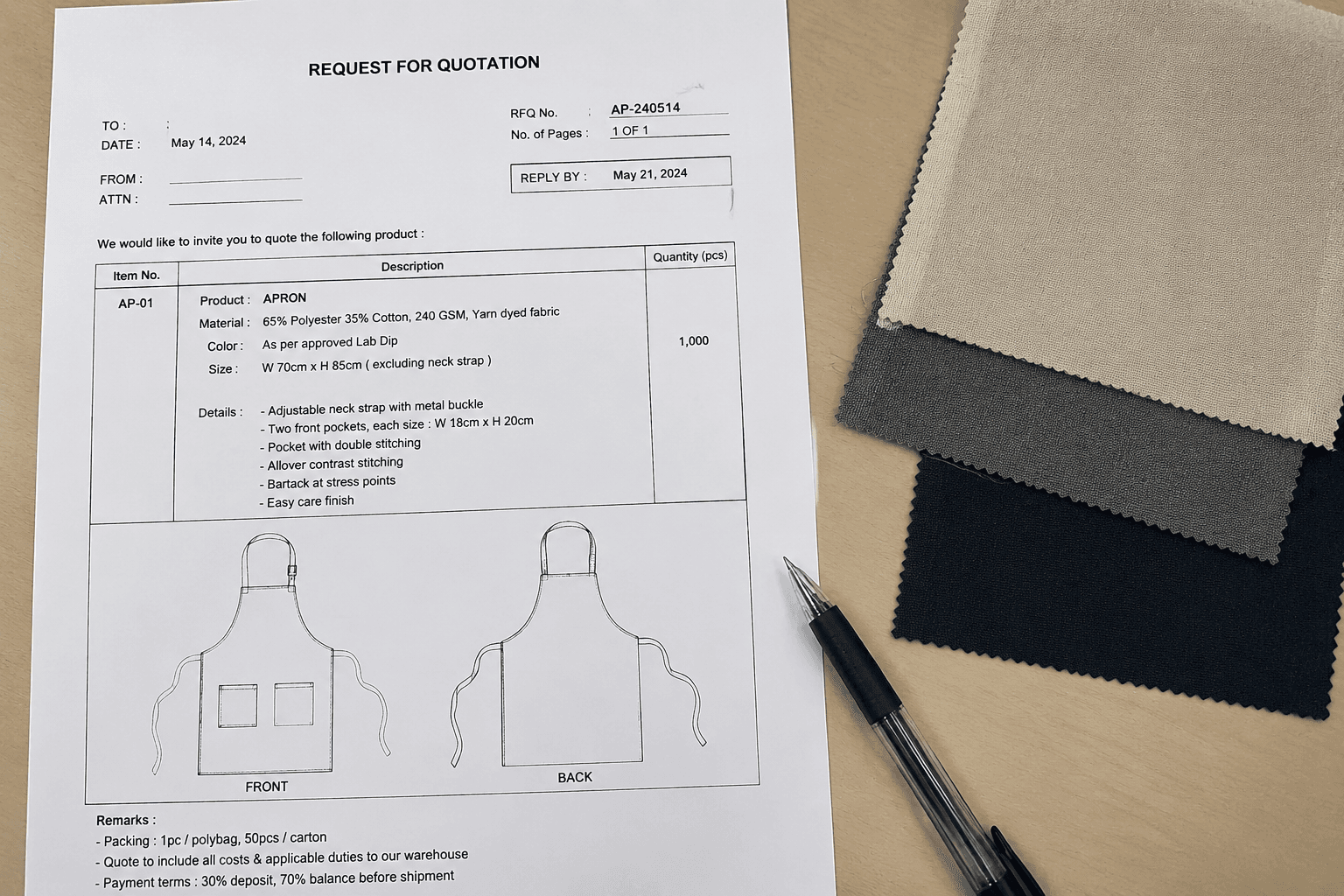
Writing an apron RFQ that gets fast, comparable quotes
A precise apron RFQ helps factories quote faster, compare costs fairly, and avoid production delays caused by missing fabric, trim, packaging, and compliance details.

Dropshipping aprons from a China factory: how the model works
Dropship aprons can work for ecommerce brands when SKU discipline, print method, packing rules and factory fulfillment apron costs are defined before launch.
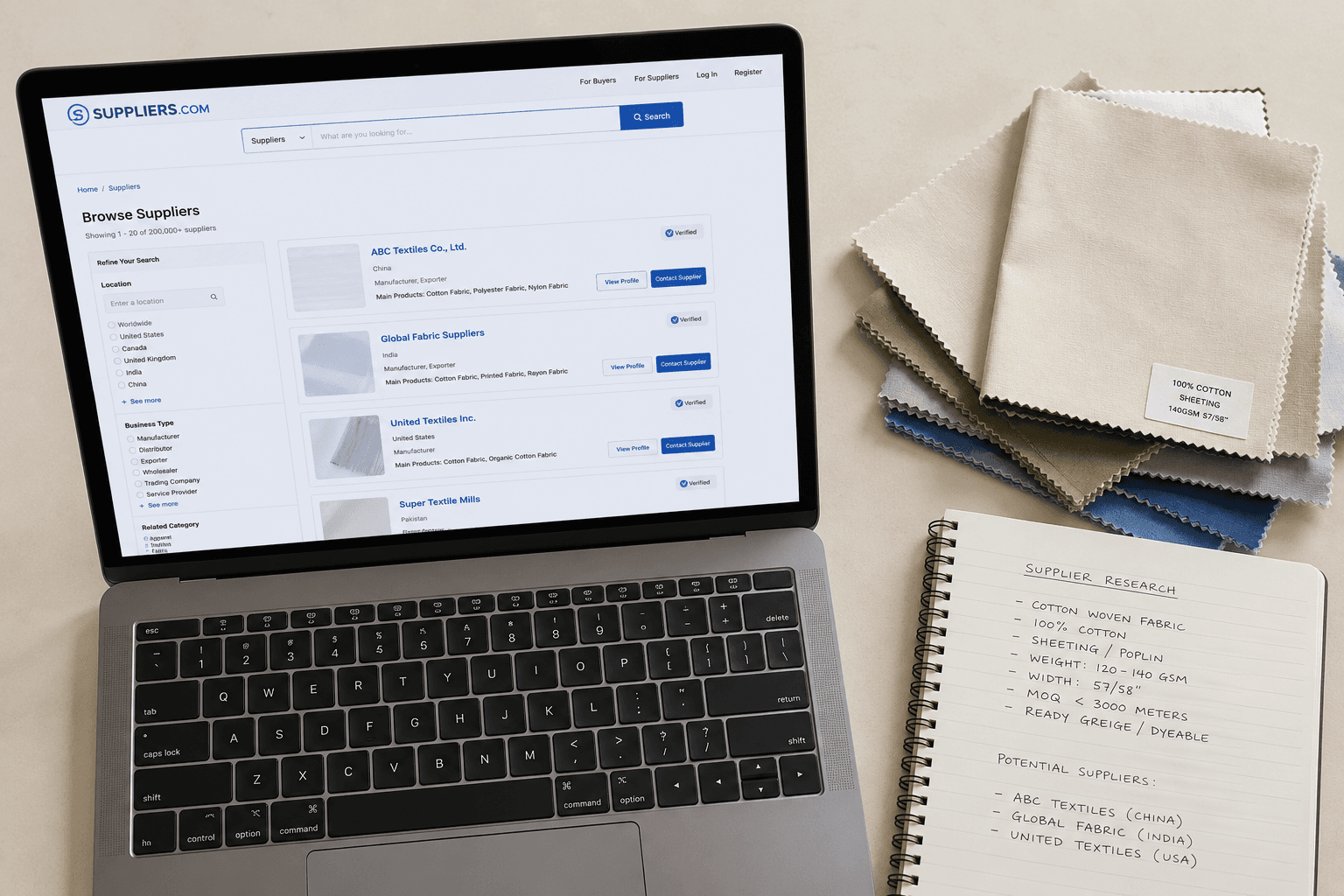
Alibaba listings vs a verified apron factory: how to tell the difference
An alibaba apron supplier can be useful for lead generation, but a verified apron factory is judged by process, capacity, and traceable production records. The difference shows up in pricing, sample control, and delivery reliability.