For bulk apron buyers, color is not only a design decision. A black denim bib apron that turns grey after five washes, a red waist apron that stains white chef coats, or a dark navy canvas apron that rubs onto a light shirt can create claims even when stitching, sizing and packing are correct. In factory terms, apron color fastness is the combined result of fiber selection, dye chemistry, fabric weight, finishing, wash recipe, print method and inspection discipline.
Aprons are exposed to harder use than many garments. Kitchen aprons meet oil, detergent, steam and chlorine-based cleaning agents. Barista and workshop aprons often rub against counters, straps, tools and denim. Hospitality aprons may be washed 30-80 times in industrial laundries. For this reason, a buyer should not treat color approval as one lab dip and one pre-production sample. The purchase order should define expected wash fastness, dry and wet crocking, color shading tolerance and whether garment wash, enzyme wash or reactive dyed fabric is required.
As a Zhejiang apron factory, we see most color complaints coming from avoidable specification gaps. The buyer requested “black canvas apron,” the fabric mill supplied a low-cost sulfur black, the apron looked correct at shipment, and the problem appeared only after wet rubbing or alkaline washing. A practical sourcing brief can prevent this. It should connect target retail positioning, fabric GSM, dye method, test standard and acceptable result before bulk fabric is ordered.
- Dark cotton aprons need stricter crocking control than polyester or yarn-dyed stripe aprons, especially for black, navy, burgundy and forest green.
- Wash fastness apron targets should be written into the PO, normally ISO 105-C06 or AATCC 61 with rating expectations by shade and end use.
- Garment-washed aprons reduce initial dye bleeding risk, but they add cost, shrinkage variation and 3-7 days to production.
- Wet crocking is usually the weak point for heavy cotton canvas, denim and pigment dyed aprons.
- Print and embroidery colors need separate fastness checks because logo ink or thread can behave differently from the apron body fabric.
- Bulk approval should include shade banding, not only one perfect sample, because cotton lots and washing lots can vary within commercial tolerance.
What apron color fastness means in factory production
In apron sourcing, apron color fastness means the ability of the fabric, trims and decoration to keep color during rubbing, washing, sweating, light exposure and contact with other materials. The buyer normally sees the problem as fading, staining or shade change. The factory breaks it into testable items: wash fastness, dry crocking, wet crocking, perspiration fastness, light fastness and sometimes chlorine or non-chlorine bleach resistance.
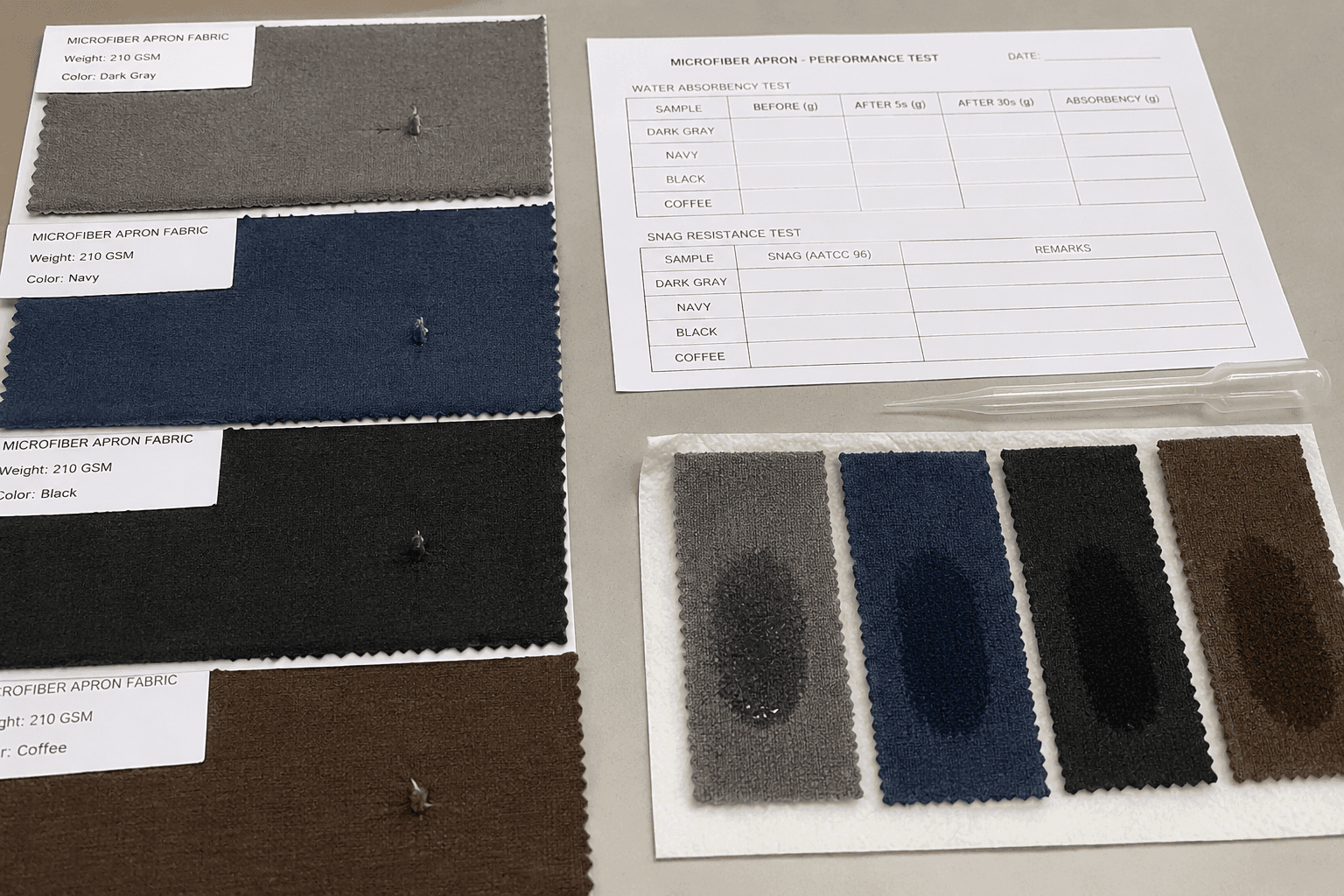
The most common commercial tests are ISO 105 and AATCC methods. For export aprons, we often see ISO 105-C06 for domestic or commercial wash simulation, ISO 105-X12 or AATCC 8 for crocking, and ISO 105-E04 for perspiration. A practical apron order does not need every test for every SKU. A 180 GSM polyester promotional waist apron may only need basic wash and crocking checks. A 350 GSM black cotton canvas work apron for a premium brand should have a stricter package because high friction and repeated washing are expected.
Ratings are usually from Grade 1 to Grade 5, where 5 is best. For many apron programs, buyers accept Grade 4 for color change and staining on medium shades, Grade 3-4 for dark shades, and sometimes Grade 3 for wet crocking on very deep cotton colors. The important point is to agree on the rating before production. If a buyer expects Grade 4 wet crocking on sulfur black heavy canvas, the factory must know early because the dye route, washing and cost will change.
- For light and medium polyester aprons, wash fastness Grade 4 is usually achievable without special treatment.
- For dark cotton canvas aprons, wet crocking may realistically sit at Grade 3-4 unless extra soaping or washing is specified.
- For pigment dyed aprons, a washed-down look is part of the product, so shade loss must be controlled but cannot be treated like reactive dyed fabric.
- For denim aprons, indigo fading is expected, so the buyer should define the target worn effect and staining limit.
Main causes of fading, crocking and dye bleeding on aprons
Fade, crocking and bleeding look similar to the end user, but they come from different causes. Fade is color loss or shade change after washing, light exposure or abrasion. Crocking is color transfer by rubbing, either dry or wet. Dye bleeding apron claims usually mean unfixed dye has migrated into wash water and stained other garments, trims, labels or packaging. Each failure points to a different correction.
Cotton aprons are more sensitive than polyester because cotton absorbs dye and moisture differently. A 280-320 GSM cotton twill apron dyed black with reactive dye can perform well if the fabric mill controls fixation, soaping and neutralization. The same weight in low-cost sulfur dye may meet the target shade but show weaker wet crocking. Polyester aprons, especially 150-220 GSM plain weave or twill, normally have better color retention because disperse dyes bond well under high temperature, but poor heat setting can still cause shade migration during sublimation or pressing.
Construction also matters. Cross-back straps rub repeatedly against the shoulder and upper bib. Metal buckles can abrade dyed fabric. Pocket corners and waist tie contact points receive concentrated friction. A test swatch may pass, but a finished apron can still show local color wear after use. For dark aprons, we recommend testing the bulk fabric and also rubbing high-friction zones on a finished sample.
- Fading usually comes from low dye fixation, aggressive wash conditions, enzyme treatment, sunlight exposure or unsuitable dye class.
- Dry crocking usually comes from loose surface dye, heavy brushing, pigment coating or insufficient post-dye washing.
- Wet crocking is made worse by moisture, alkaline detergent, high cotton absorbency and dark shade depth.
- Bleeding often comes from poor soaping after dyeing, unstable contrast trims, low-quality embroidery thread or printed labels touching damp fabric.
- Shade variation can come from different fabric lots, different washing machine loads or mixed roll usage during cutting.
Apron color fastness by fabric: cotton, polyester, denim and blends
Fabric choice sets the ceiling for apron fade resistance. Cotton canvas, cotton twill and denim are popular for premium cafe, barber, florist and workshop aprons because they feel substantial and age naturally. Typical weights range from 240 GSM for lighter hospitality bib aprons to 400 GSM for heavy workwear aprons. These fabrics accept rich colors, but darker shades need better dyeing and after-wash control. A buyer asking for 360 GSM black cotton canvas at a very low target price should expect trade-offs unless the specification includes the right test level.
Polyester and poly-cotton aprons are more stable for repeated laundering. A 195 GSM 65/35 poly-cotton twill bib apron can hold black, charcoal and navy better than pure cotton under many hotel laundry conditions. Polyester also dries faster and shrinks less. The trade-off is hand feel and brand positioning. Many premium retail programs prefer the matte texture of cotton even if it needs more careful fastness control.
Denim aprons are a separate category. Indigo is designed to fade by abrasion and wash. This is not a defect if the product brief calls for a vintage look. However, dye transfer onto light garments is still a risk, especially in the first 3-5 washes. For indigo denim aprons, buyers should confirm whether they want raw denim, one-wash denim, enzyme wash, stone wash or heavily washed fabric. Raw denim gives deep color and lower processing cost, but higher initial crocking and bleeding risk. One-wash or enzyme wash improves hand feel and reduces loose dye, but increases unit cost by roughly USD 0.20-0.60 per piece depending on weight, MOQ and wash effect.
- Cotton canvas at 280-400 GSM gives a premium apron hand feel but needs stronger wet crocking control in black, navy and red.
- Cotton twill at 210-280 GSM is easier to sew and wash than heavy canvas, with moderate fastness risk on dark shades.
- Poly-cotton twill at 180-240 GSM is a practical choice for uniforms where wash durability and price are more important than natural texture.
- Polyester Oxford or plain weave at 150-220 GSM is suitable for promotional aprons, but it may look less premium for retail or chef programs.
- Denim at 8-12 oz should be treated as a fading product unless the buyer specifies heavy pre-wash and stricter crocking targets.
How dye route affects apron color fastness and cost
Dye route is one of the largest hidden variables in apron sourcing. Two aprons can both be described as 300 GSM black cotton canvas, but one may be reactive dyed, one sulfur dyed and one pigment dyed. The first cost, shade depth, wash behavior and crocking risk will differ. Buyers should ask the supplier to state the dye method, especially for dark cotton and denim programs above 1,000 pieces.
Reactive dye is common for cotton aprons requiring solid, clean shades and better wash fastness. It usually costs more than basic or low-grade sulfur dye but gives better color clarity and performance when the mill controls fixation and soaping. Sulfur dye is widely used for black and deep casualwear shades. It can be economical and attractive, but wet rubbing and shade oxidation must be managed. Pigment dye sits on the fiber surface more than reactive dye. It gives a washed, casual effect, but crocking and shade loss are part of the expected character unless extra binder and washing steps are used.
For polyester aprons, disperse dyeing at high temperature is standard. If the apron includes sublimation printing, the base fabric must be white or very light polyester, usually above 180 GSM for better opacity. Sublimated color can be strong, but the print may shift if heat press parameters are not controlled. For cotton aprons with screen print logos, the body dye and print ink must both be tested because a fast body fabric does not guarantee a fast logo.
- Reactive dyed cotton is a strong option for solid-color retail aprons where the target is Grade 4 wash fastness and cleaner shade.
- Sulfur dyed black cotton can reduce cost by about USD 0.10-0.35 per piece on medium programs, but it needs careful wet crocking review.
- Pigment dyed aprons are suitable for vintage brand aesthetics, not for buyers expecting no visible fading after repeated wash.
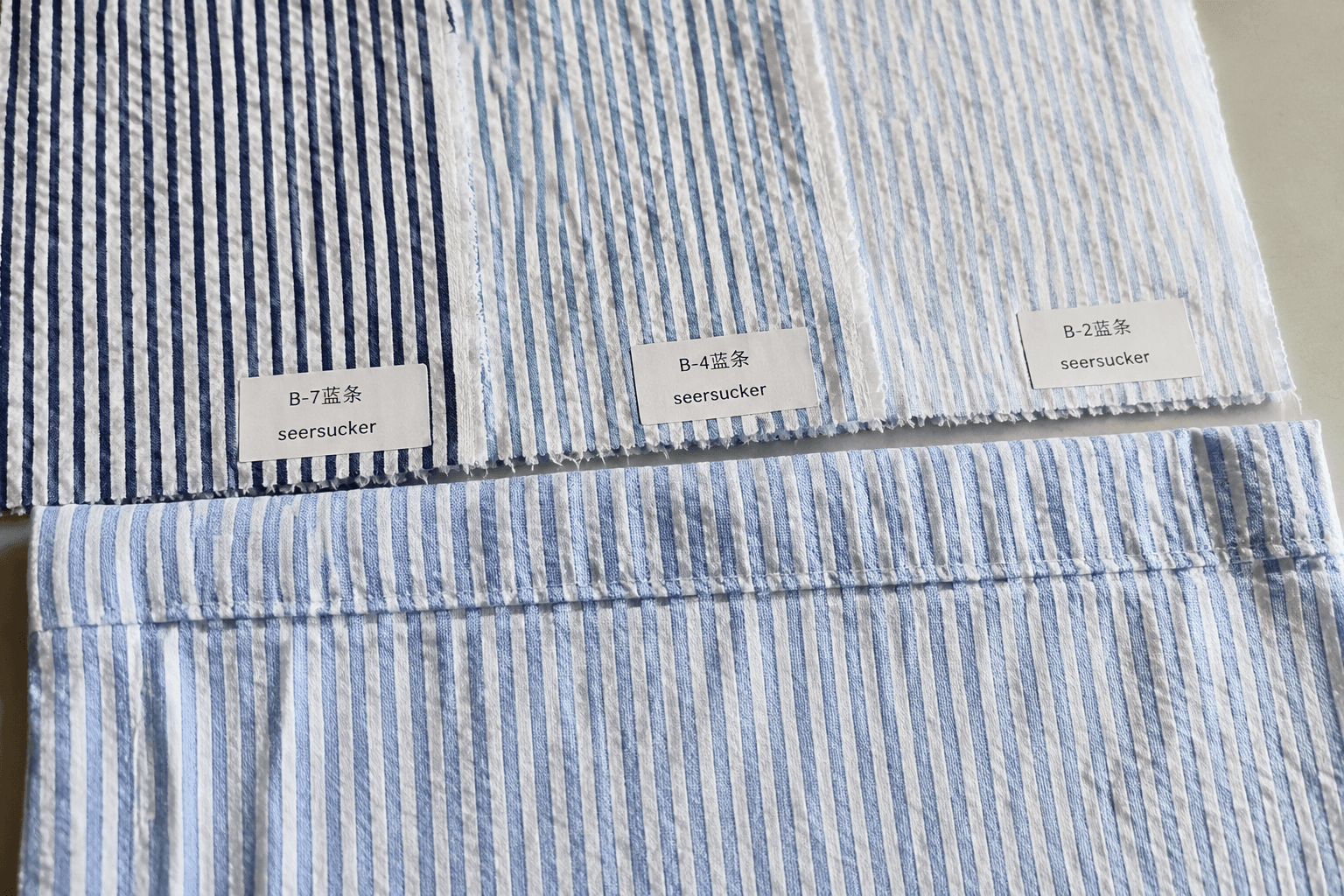
- Yarn-dyed stripe or check aprons usually have stable patterns, but dark yarns still need crocking checks before bulk approval.
- Disperse dyed polyester is generally strong for wash fastness, but shade consistency depends on temperature, time and heat setting.
Crocking test apron specifications buyers should request
A crocking test apron requirement should be written in measurable terms. Saying “no color transfer” is not useful for production because almost every dark cotton fabric will show some transfer under severe wet rubbing. A better purchase order states the test method, dry and wet rating, shade category and sample stage. For example: “AATCC 8 dry crocking Grade 4 minimum, wet crocking Grade 3-4 minimum for dark cotton canvas; test bulk fabric before cutting and finished apron before shipment.”
Dry crocking is usually easier to pass. Wet crocking is the more realistic risk for aprons because kitchens, bars and workshops are humid environments. Waist ties may be handled with wet hands. Bibs may rub against damp shirts. Cross-back straps may pick up sweat. If the apron is intended for food service uniforms, wet crocking should not be skipped, even when the buyer is under time pressure.
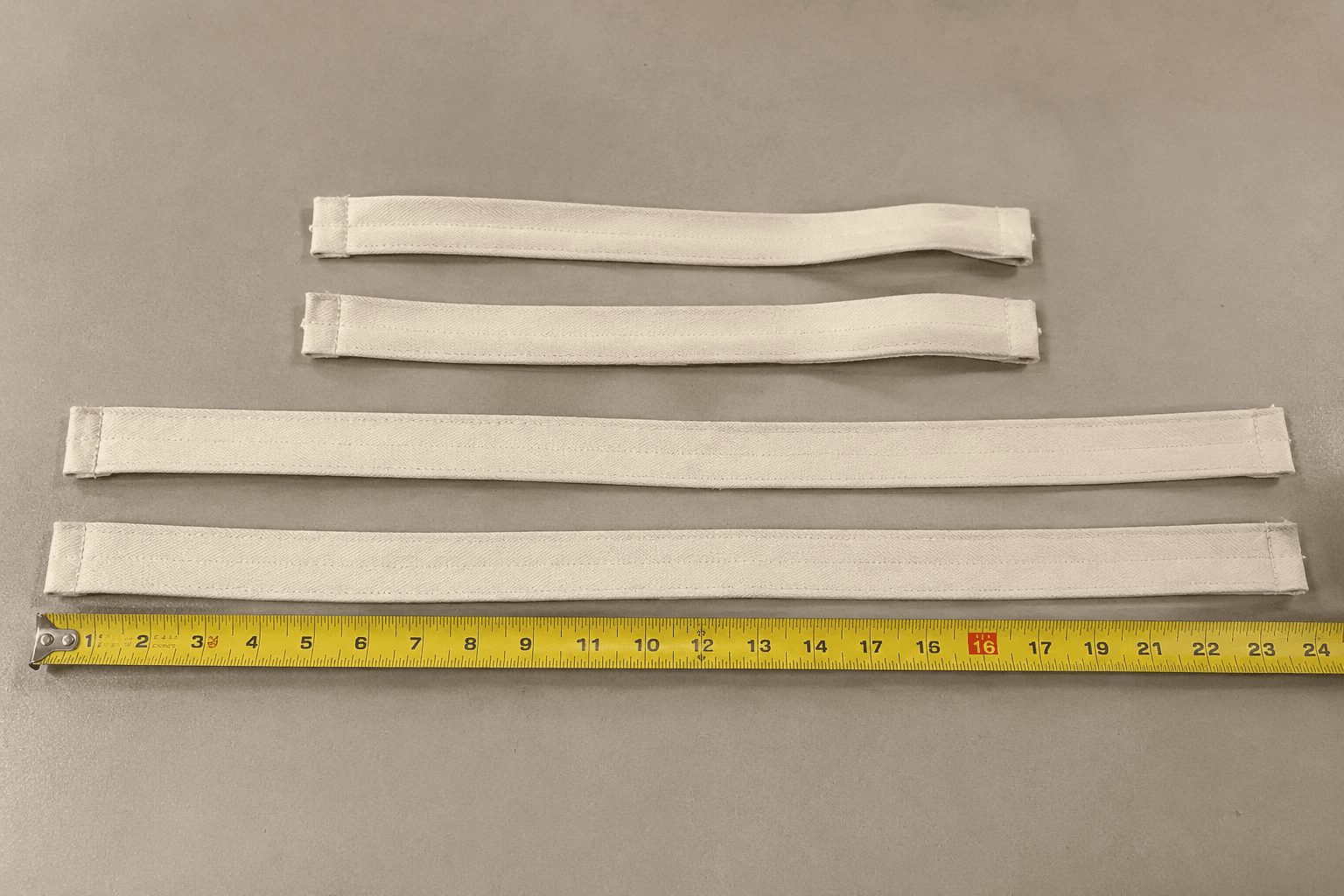
For programs with light contrast stitching, white labels, cream straps or natural cotton webbing, test the full material combination. A black apron body may pass on its own, but dye can stain a beige neck strap during washing or storage if residual moisture remains after finishing. We advise buyers to approve one finished sample washed and rubbed after all trims are attached, not only a fabric swatch.
- For black cotton canvas aprons, request dry crocking Grade 4 and wet crocking Grade 3-4 as a realistic commercial target.
- For navy, burgundy and dark green cotton aprons, treat wet crocking as a key approval point, not a minor lab item.
- For polyester uniform aprons, Grade 4 dry and wet crocking is usually achievable with normal dyeing control.
- For washed denim aprons, agree on an acceptable staining grade because indigo transfer cannot be judged like polyester.
- For contrast-trim aprons, test color transfer from body fabric to straps, labels, pocket binding and embroidery thread.
Wash fastness apron testing for commercial laundering
A wash fastness apron requirement should match the actual use environment. Home washing at 30 degrees C is very different from hotel laundry at 60 degrees C with alkaline detergent and tumble drying. A cafe brand selling retail aprons may need a 30-40 degrees C home wash claim. A restaurant uniform distributor may need 60 degrees C wash resistance and stronger dimensional stability. If the end user may use chlorine bleach, the buyer should say so early because many cotton colors will not survive chlorine exposure.
In our factory workflow, a normal custom apron sample may be washed 1-3 times before approval if color risk is low. For high-risk dark cotton, denim or contrast-color programs, we recommend 5 wash cycles before final confirmation. For industrial uniform programs, the buyer may request 10-20 cycles through a third-party lab or nominated laundry. This adds time, but it is cheaper than a post-delivery claim on 10,000 pieces.
Garment washing can improve the first-use experience. It removes loose dye, softens the fabric and stabilizes shrinkage. For a 320 GSM cotton canvas bib apron, garment washing may add USD 0.25-0.70 per piece depending on color, wash type, water treatment requirements and order quantity. It may also add 3-7 production days after sewing. The factory must allow for shrinkage before cutting; otherwise, the finished apron may come out 1-3 cm short in length or waist tie tolerance.
- For retail cotton aprons, specify 30 or 40 degrees C wash testing and expected color change after 3-5 cycles.
- For restaurant uniform aprons, specify 60 degrees C testing if commercial laundering is expected.
- For denim aprons, confirm whether the buyer accepts progressive fading after wash because that is normal for indigo.
- For black or red aprons, test washing with multifiber fabric to check staining on cotton, nylon and polyester strips.
- For garment-washed aprons, approve final measurements after wash, not only before-wash cutting dimensions.
How to control dye bleeding apron risk before shipment
Dye bleeding apron problems are usually preventable if the order has the right checkpoints. The first checkpoint is lab dip or fabric strike-off. This confirms the color direction, but it does not fully prove bulk performance. The second checkpoint is bulk fabric inspection after dyeing and finishing. The third is a pre-production sample made from bulk fabric, including real straps, thread, labels, hardware and decoration. The final checkpoint is finished goods inspection with rubbing and wash spot checks.
For dark cotton aprons, we normally cut a bulk fabric sample from each dye lot and compare it against the approved standard under D65 light. Commercial tolerance is often around Delta E 1.0-1.5 for solid uniform programs and may be wider for washed casual aprons. Shade bands should be kept so the buyer can understand the actual production range. If several fabric rolls are used, cutting should avoid mixing visibly different lots within one apron or one carton.
Packaging can create its own bleeding issues. If aprons are packed before fully dry after steam pressing or garment washing, residual moisture can move dye into labels, hangtags or tissue paper. For dark washed aprons, we prefer sufficient drying time, moisture checks and breathable holding before final polybag packing. In humid months in Zhejiang, this is especially important; rushing packing by one day can increase staining risk.
- Approve lab dips for shade, but use bulk fabric testing for actual fastness confirmation.
- Require pre-production samples from bulk fabric when the order is above 1,000 pieces or uses dark cotton.
- Check body fabric, straps, binding, sewing thread, embroidery thread, printed labels and logo ink as one complete apron system.
- Keep shade bands from bulk fabric lots so inspection teams know what is acceptable before packing.
- Avoid packing garment-washed dark aprons until moisture has stabilized, especially during humid production periods.
Building apron color fastness into the purchase order
The best way to manage apron color fastness is to convert expectations into order language before pricing is finalized. A supplier can quote a lower price by using a cheaper dye route, skipping garment wash, accepting lower wet crocking or reducing lab testing. That may be acceptable for a short-run event apron, but it is dangerous for a uniform or retail program where color performance affects repeat orders. Buyers should compare quotations against the same fabric weight, dye method, test standard and inspection level.
MOQ also matters. Custom dyeing usually starts around 300-500 kg per color at many fabric mills, which may translate to roughly 1,000-3,000 aprons depending on GSM, apron size and cutting efficiency. Below that level, buyers may need to use available stock fabric colors. Stock colors can shorten lead time to 15-25 days after sample approval, but the factory has less control over dye history. Custom dyed fabric may need 35-50 days total lead time, including lab dip, fabric dyeing, testing, cutting, sewing, washing if needed, inspection and packing.
A clear PO should identify the commercial target: promotional, retail, hospitality uniform, industrial laundry or premium workwear. It should then list fabric composition, GSM or oz, color standard, dye route if required, acceptable shade tolerance, wash test, crocking test, decoration fastness and whether third-party testing is mandatory. This does not make the apron more complicated; it makes the buyer and factory price the same product.
- Use Pantone TCX, TPX, CSI or a physical fabric swatch as the color standard, not only a screen image.
- State composition and weight, such as 100% cotton canvas 320 GSM or 65/35 poly-cotton twill 210 GSM.
- Define test methods, such as ISO 105-C06 for wash fastness and ISO 105-X12 or AATCC 8 for crocking.
- Set realistic ratings by shade, especially for wet crocking on dark cotton and denim aprons.
- Confirm whether garment wash, enzyme wash, one-wash denim or no-wash finishing is required.
- Allow lead time for testing and correction; a failed wet crocking result may require re-soaping, washing or changing fabric lot.