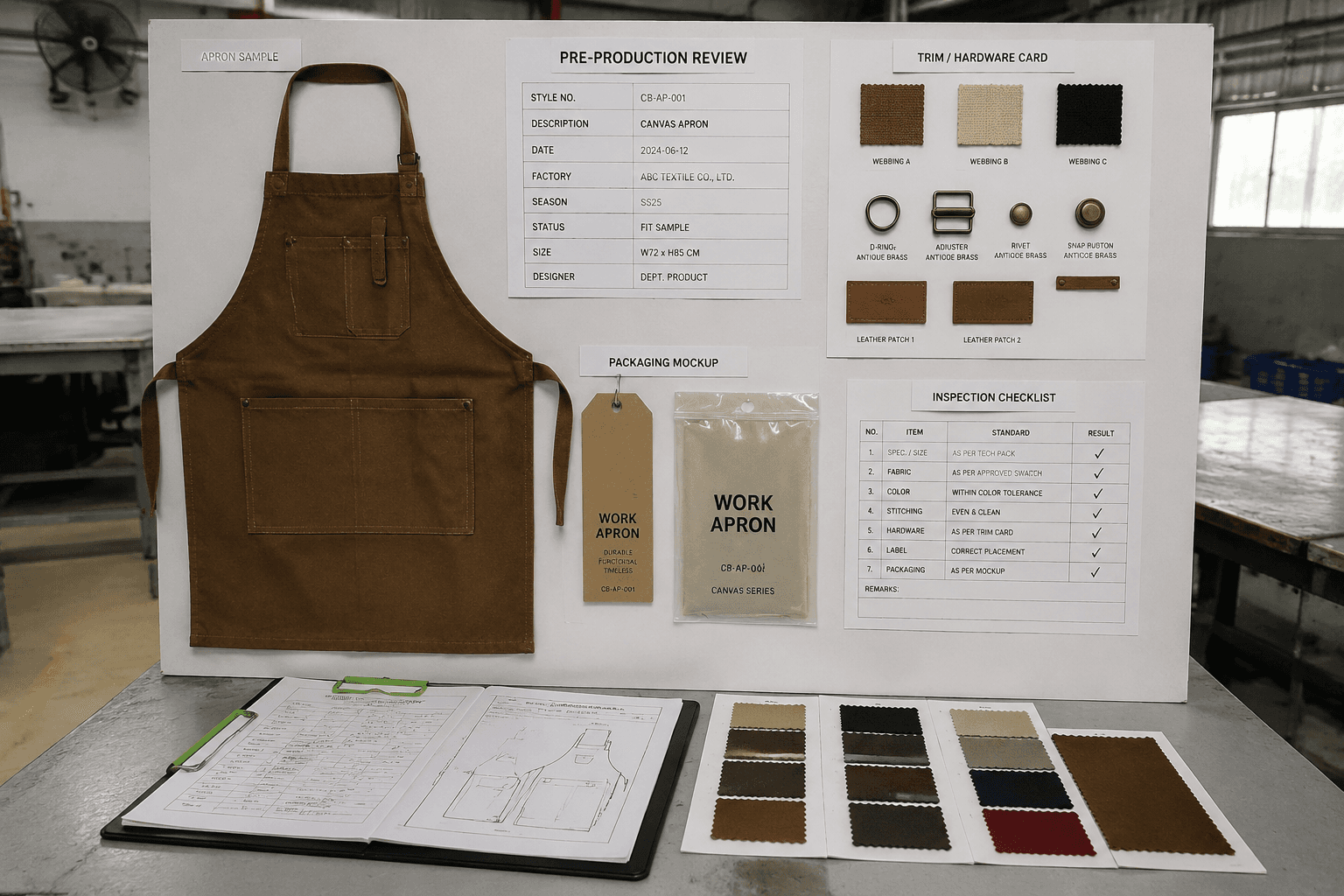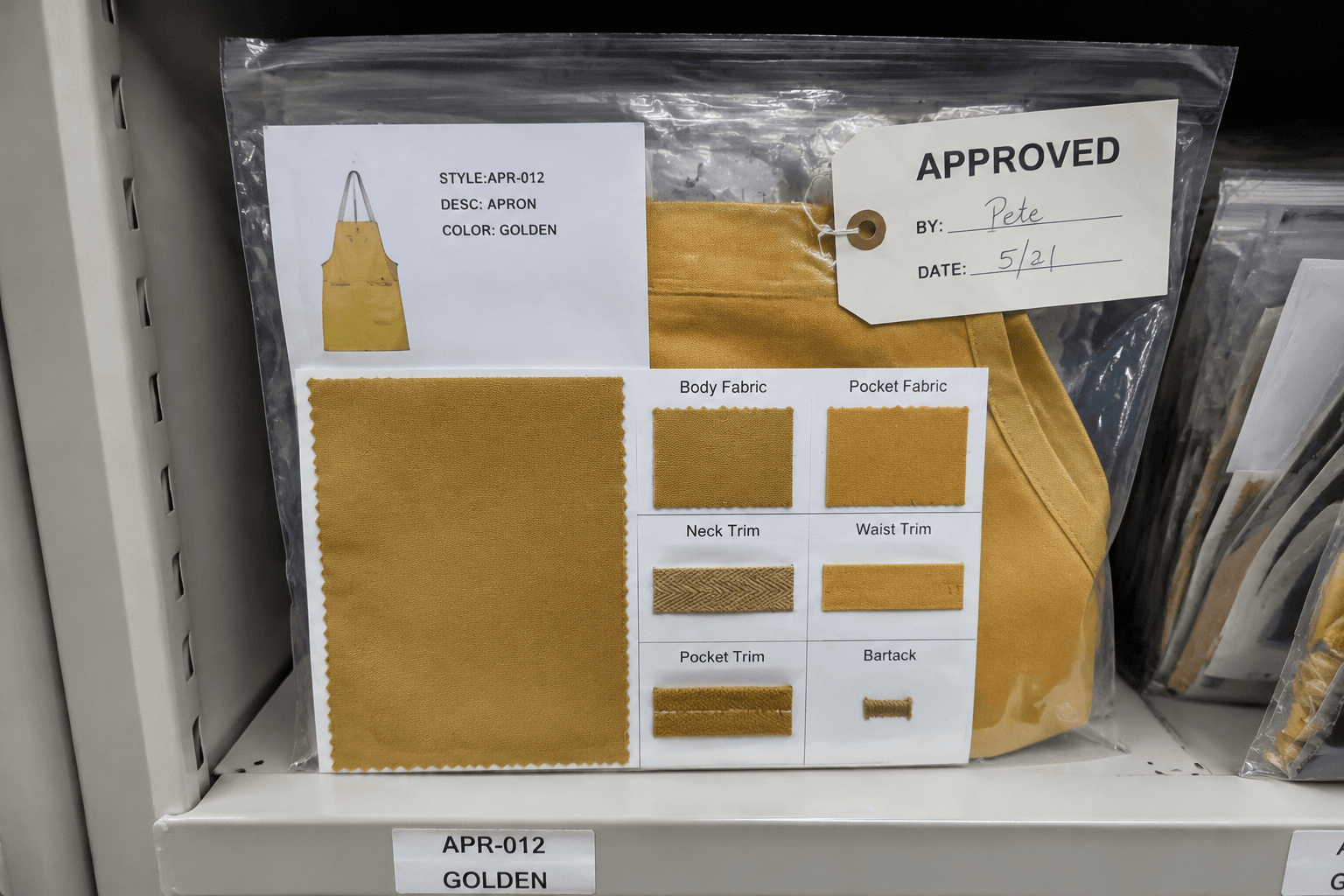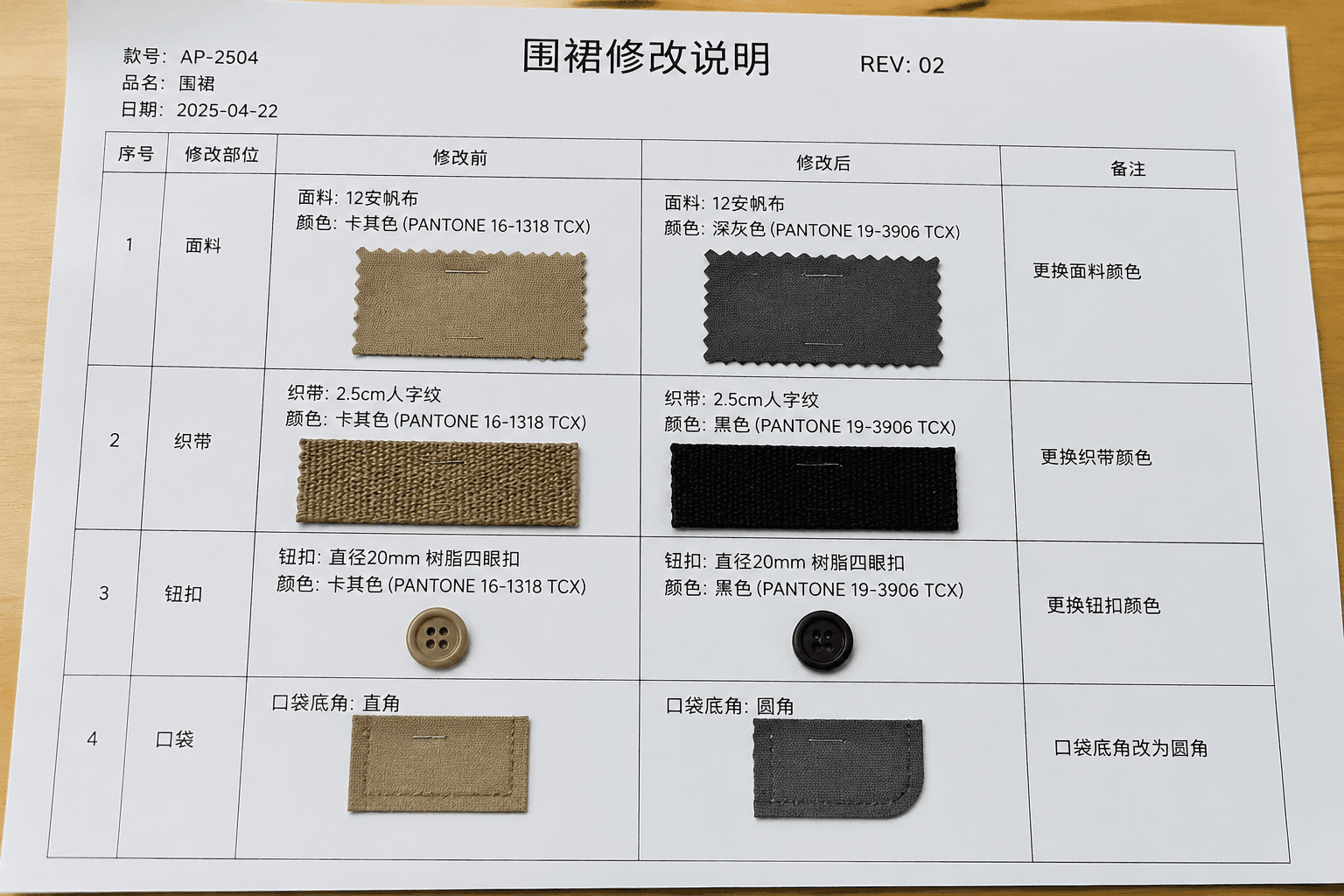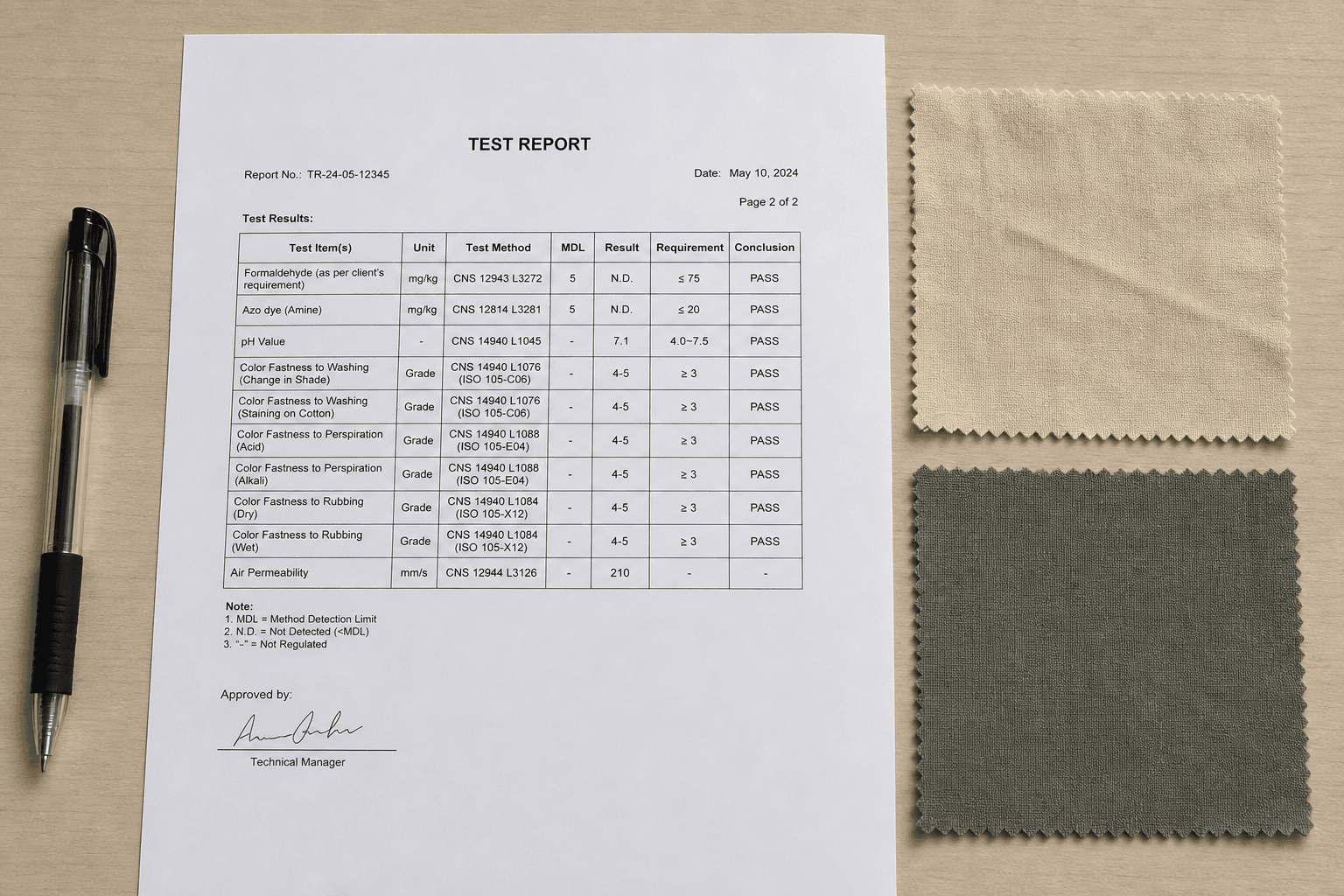
Professional buyers often assume a simple apron should be a fast order because the pattern looks small and trim count appears low. On the factory floor, that assumption fails quickly. Apron line balancing decides whether a 2,000-piece bib apron run in 240 GSM poly-cotton twill leaves in 26 to 30 days or drifts to 34 days, even when shell fabric and labels arrive on time. A style with one body panel, two waist ties and two pockets can still stall if pocket setting takes 70 to 85 seconds, bartacking takes 22 to 30 seconds, and final pressing tops out at 750 to 900 pieces per day.
The sourcing risk is that visual simplicity hides uneven labor content. A basic bib apron in 8 oz cotton canvas, about 270 GSM, often runs slower than a 190 to 220 GSM waist apron because tie turning, edge control and reinforcement points require more handling. On small and mid-size orders, the first 2 or 3 production days may run at only 55% to 68% efficiency while folders are adjusted and QC tightens tolerance on topstitch width, pocket alignment and strap symmetry. That startup loss alone can erase the full buffer on a 1,500 to 3,000-piece order.
For B2B apron sourcing, monthly capacity claims are not enough. The useful question is how the supplier will execute apron line balancing for your exact construction, fabric weight, trim route, MOQ, packing method and requested ex-factory date. A 3,000-piece order in 260 GSM cotton canvas with webbing straps and antique-brass sliders behaves very differently from a 12,000-piece order in 210 GSM poly-cotton twill with self-fabric ties, even if both are sold as standard promotional aprons.
- Simple appearance does not equal fast output; pockets, straps, bartacks, hardware and visible topstitching commonly add 1.5 to 4.5 hidden labor minutes per apron.
- The slowest station controls the line; one 90-second operation inside a line averaging 40 to 55 seconds can cut real daily output by 18% to 30%.
- Fabric weight changes capacity; 180 to 220 GSM twill usually runs faster than 300 to 380 GSM washed canvas, waxed cotton or rigid denim.
- MOQ affects lead-time behavior; 500 to 1,000 pieces absorb setup loss poorly, while 5,000 to 10,000 pieces recover efficiency after day 3 more easily.
- Reliable lead-time confirmation needs process data; ask for SAM, planned line size, target efficiency, helper ratio, finishing throughput and inspection allowance at AQL 2.5 major / 4.0 minor.
- Ship-date protection starts before bulk cutting; frozen PPS comments, trim readiness and realistic packing requirements prevent avoidable 2 to 5 day delays.
What apron line balancing means on a real sewing line
In apron manufacturing, line balancing means matching sewing and finishing operations so material flows at a controlled rate from cutting to packed cartons. Buyers see a simple apron code and expect speed. The factory sees separate tasks: body panel preparation, pocket folding, pocket setting, tie turning, strap attachment, bartacking, pressing, thread cleaning, inline inspection, final inspection and pack-out. If those steps are not aligned, work-in-progress accumulates at one station and the whole line slows to that station's pace.
For a 24 to 28 operator line making a bib apron in 210 to 240 GSM twill, balanced output after stabilization often reaches 900 to 1,150 pieces per day. The same line can drop to 680 to 780 pieces per day if one operator owns a 95-second pocket-setting step without parallel support. On a 5,000-piece order, that difference can add 3 to 5 production days before final packing and inspection are even counted.
This is why apron line balancing matters more than style labels such as basic or standard. A waist apron with three divided pockets may use less fabric than a bib apron, yet still require more sewing minutes because pocket divisions, alignment tolerance and reinforcement points are harder to balance than buyers expect.
- A balanced apron line usually keeps most operations within 35 to 60 seconds per piece.
- If one station runs 30% to 40% slower than the line average, output typically drops across the full order.
- Suppliers should confirm SAM, line size, helper support and target daily output before promising lead time.
Why simple apron styles still miss ship dates
The most common forecasting error is to estimate lead time from pattern count alone. A cross-back apron may have fewer visible parts than a classic bib apron, but if it uses 320 GSM garment-washed canvas, 30 mm finished straps, X-box reinforcement and branded metal sliders, it often sews and finishes slower than a lighter bib apron in 210 GSM twill. The sketch looks clean, but the process route is labor-heavy.
Startup loss is the second reason simple-looking apron orders slide. A factory may quote 30 days ex-factory for 2,500 pieces, assuming fabric arrives on day 7, cutting starts on day 9 and sewing reaches stable rhythm by day 12. In real bulk production, day 1 and day 2 often run at only 55% to 70% efficiency while folders are tuned, operators adjust handling and inline QC checks pocket position, topstitch width and strap balance. On short runs, those weak first days matter more than buyers expect.
The third issue is production calendar disruption. If neck adjusters arrive 3 to 4 days late, PPS comments close after cutting, or barcode sorting changes after the packing spec is issued, the line may be loaded and then interrupted. Once that slot breaks, operators are commonly reassigned to another urgent export order. The apron is still a simple style, but its ship window is no longer protected.
- A 1,000-piece order carries far more setup loss per unit than an 8,000-piece order.
- Heavy canvas or washed fabrics often reduce operator speed by 12% to 25% versus standard 190 to 220 GSM twill.
- Late approvals or pack changes can consume 2 to 5 calendar days without any sewing defect at all.
- Visible topstitch requirements raise inspection and rework time, especially on light-color canvas and denim aprons.
The bottlenecks that break apron line balancing
Most delayed apron orders trace back to a small group of bottleneck operations. Pocket work is one of the most common. A patch pocket with a double-turn hem, center division and bartack reinforcement can add 30 to 75 seconds per piece depending on size, seam allowance and tolerance. If the pocket must align to yarn-dyed stripes or a printed logo position, the station slows further and defect risk rises.
Strap construction is another regular constraint. Self-fabric ties require accurate cutting, turning, pressing and clean insertion. Webbing straps usually run faster, but once the design adds metal sliders, D-rings, rivets or eyelets, output depends on separate hardware processes with their own ceiling. A hardware station producing 650 to 750 sets per day will cap a sewing line capable of 1,000 apron bodies per day.
Finishing is often underestimated in apron sourcing. A heavy bib apron packed with tissue, insert card, belly band, size sticker and barcode sorting can bottleneck after sewing is complete. A line may finish sewing on day 6, then lose day 7 and day 8 waiting for pressing, final inspection and retail folding. Rework has the same effect. If 4% of a 6,000-piece order returns for pocket correction at 60 to 90 seconds each, several real labor hours disappear from capacity that the original quote never priced.
- Pocket setting, strap turning and bartacking are the most frequent throughput bottlenecks on apron lines.
- Metal hardware, eyelets and rivets often require dedicated stations that run slower than core sewing.
- Retail folding and barcode sorting can add 1 to 2 finishing days on medium and large apron orders.
- A rework rate above 3% usually signals that real capacity is below the quoted plan.
How buyers should check apron line balancing before placing a PO
A capable apron supplier should not answer capacity with one broad claim such as 100,000 pieces per month. That number has little value unless the style mix, fabric weight and process route match your apron. Capacity needs to be broken into process minutes and compared against real sewing operators, cutting capacity, hardware support, inspection headcount and finishing space during your requested ship window.
The best starting point is SAM. A lightweight waist apron in 180 to 210 GSM twill may run at 4.0 to 5.2 minutes SAM. A standard bib apron with one chest pocket, one lower pocket and self-fabric ties often sits at 5.8 to 7.4 minutes. A 12 oz cotton canvas apron, roughly 340 GSM, with rivets, contrast topstitching and webbing straps can rise to 8.5 to 11.0 minutes. These styles cannot share the same output assumption simply because each is called an apron.
After SAM, the factory should show a realistic efficiency curve. Repeat apron styles in standard twill may stabilize at 68% to 75% efficiency after the first 2 days. New heavy-canvas styles with strict branding placement may begin at 45% to 55% and improve only if the line has the right skill mix. Buyers should also ask how final inspection is built into the plan. For export apron orders, AQL 2.5 major and 4.0 minor is common, and that inspection time needs to be scheduled instead of added at the end.
- Request SAM, planned line count and expected efficiency on day 1, day 3 and day 5 before PO approval.
- Confirm that lead time includes fabric in-house, PPS approval, trim readiness, final inspection and packing.
- Ask whether the apron depends on shared bartack, eyelet, embroidery, printing or washing capacity already booked by other orders.
- For a 3,000 to 5,000-piece apron order, a typical sewing window is 5 to 9 production days depending on construction.
- Keep an ex-factory buffer of 2 to 4 days instead of planning against the last available calendar day.
Practical output targets by apron construction and fabric weight
Good apron line balancing does not require every operation to be identical, but it does require a controlled range. If most stations run between 38 and 55 seconds and one process sits at 92 seconds, the planner should split the method, add another operator, assign a stronger sewer or change the attachment sequence. Without that action, the slow station becomes the pace setter for the whole line.
A standard bib apron in 240 GSM twill with one chest pocket, one lower pocket, neck loop and waist ties often falls in the 6.0 to 7.0 minute range when construction is clean and packing is simple. A heavy canvas bib apron with webbing straps, rivets, contrast topstitching and a logo patch can move beyond 9.0 minutes quickly. The visual difference may be modest, but the balancing challenge is materially higher because more operations are skill-sensitive and harder to parallel.
Method engineering matters here. Some suppliers keep one 100-second combined operation because the sample room handles multiple steps in sequence. In bulk production, splitting that method into two 48 to 52 second operations frequently improves flow, lowers waiting time and raises actual output. That is the practical value of apron line balancing: matching method, skill and station count to the real sewing content of the apron.
- Waist aprons in 180 to 220 GSM fabric often run at 4.0 to 5.5 minutes SAM.
- Standard bib aprons with self-fabric ties commonly run at 5.5 to 8.0 minutes SAM.
- Heavy canvas, waxed cotton or hardware-rich apron styles often reach 8.0 to 12.0 minutes SAM.
- If one operation exceeds the line average by more than 30%, balancing action is usually required immediately.
How MOQ, price and lead time interact in apron sourcing
Unit price, MOQ and lead time are tied directly to line balance. When an apron style runs smoothly, labor cost per piece stays controlled and the factory can protect the quoted ex-works price. For example, a basic 210 to 240 GSM poly-cotton bib apron at 3,000 pieces may price around $2.30 to $3.50 per piece ex-works, depending on print count, pocket construction and packaging. A 300 to 340 GSM cotton canvas apron with hardware, contrast stitching and retail presentation packing may move to $4.20 to $6.90 per piece ex-works because both material cost and labor minutes rise.
MOQ changes the economics as well. Many OEM apron factories accept 500 to 1,000 pieces per color on standard programs, but marker planning, PPS handling, machine setup and startup learning are spread over fewer units. At 5,000 to 10,000 pieces, the line has time to stabilize and recover its early losses, often improving effective output by 10% to 18% after day 3. Buyers asking for low MOQ and compressed lead time at the same time should expect either a higher piece price or a narrower margin for schedule disruption.
The commercial discussion should therefore stay specific. What efficiency assumption supports the quote? What daily output is planned? What buffer protects ex-factory? If a supplier prices a bib apron on 72% efficiency but the real style can sustain only 58%, the order often ends with margin pressure, quality shortcuts or a late ship date. None of those outcomes supports a stable apron sourcing program.
- Lower MOQ usually means higher setup cost per piece and less time to recover startup loss.
- Heavier fabrics and visible sewing details increase labor content and inspection time, not just raw material cost.
- Faster lead times may require extra line allocation, overtime or split production, which should appear in the quote.
- Quoted prices are most reliable when based on tested sample SAM and confirmed process flow rather than sketch review alone.
Steps that reduce ship-date risk on apron orders
The most effective way to protect delivery is to challenge bottlenecks before production starts. During PPS review, buyers should ask which operations will control output. Replacing a self-fabric strap with ready webbing, reducing strap width from 35 mm to 30 mm, removing a non-critical bartack or simplifying a divided pocket can cut labor minutes without changing the apron's commercial function.
Calendar timing matters as much as method. If the PO lands just before a holiday break or during peak seasonal loading, the line may lose continuity even with ready fabric and trims. In practice, losing 3 effective production days on a 20,000-piece apron program can move ex-factory by nearly a week once finishing, final inspection and booking are added. Buyers should treat those lost days as real capacity, not as a minor scheduling inconvenience.
The strongest sourcing teams ask for a process map rather than a generic promise. They want the top three bottlenecks, daily output by stage, planned line count and whether the supplier intends to run one line or split the order across two lines. That level of detail keeps the conversation on execution. In apron sourcing, ship dates are protected by process clarity and disciplined apron line balancing, not by optimistic quotations.
- Freeze PPS comments, artwork, carton marks and fold method before bulk cutting whenever possible.
- Ask the supplier to name the top three bottleneck operations before line booking.
- Consider switching from self-fabric ties to webbing straps if delivery matters more than exact fabric continuity.
- For urgent programs, discuss split shipment or color-by-color completion instead of one final packed date.
- Add 5 to 7 calendar days of sourcing buffer when the apron includes washing, hardware or retail display packing.