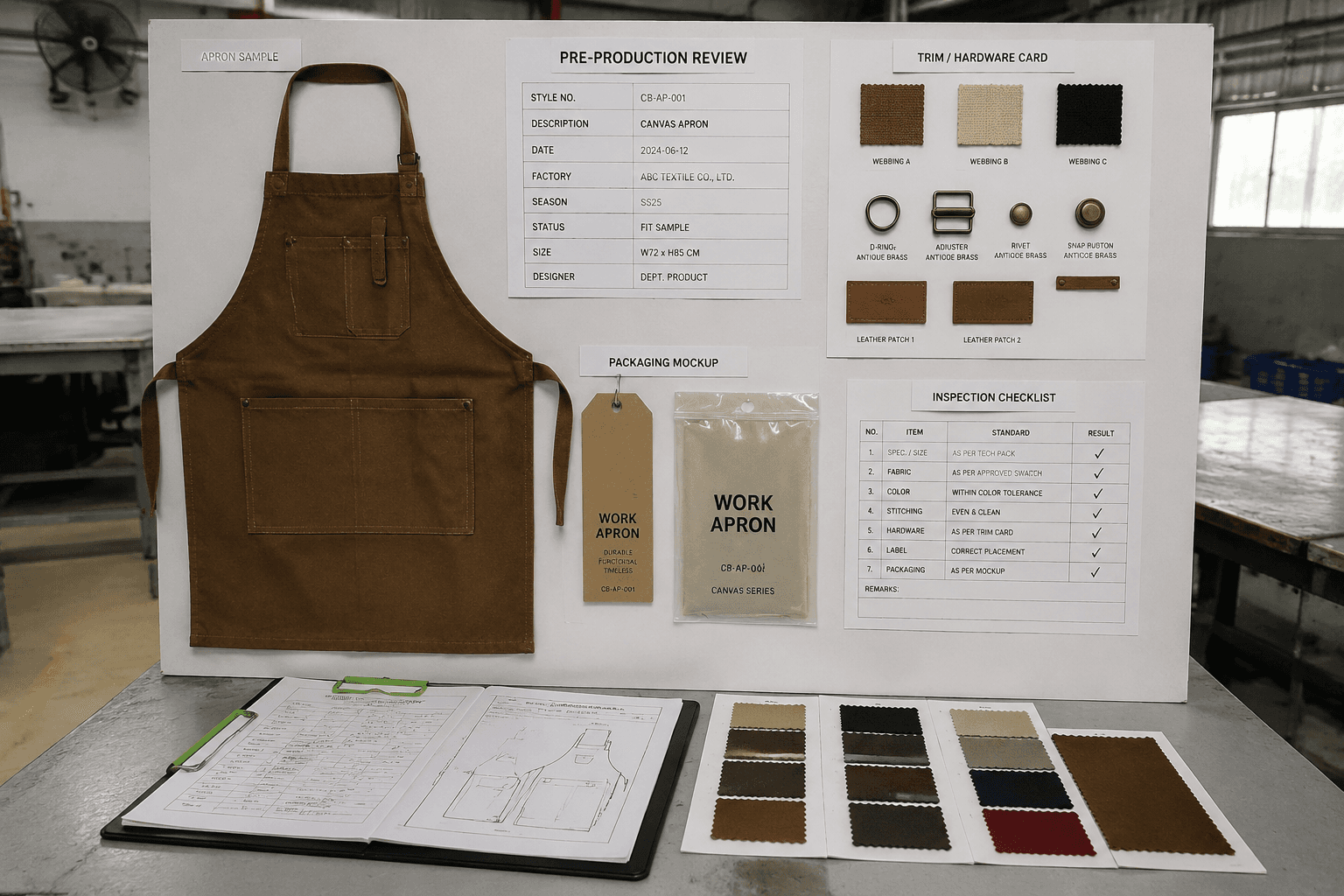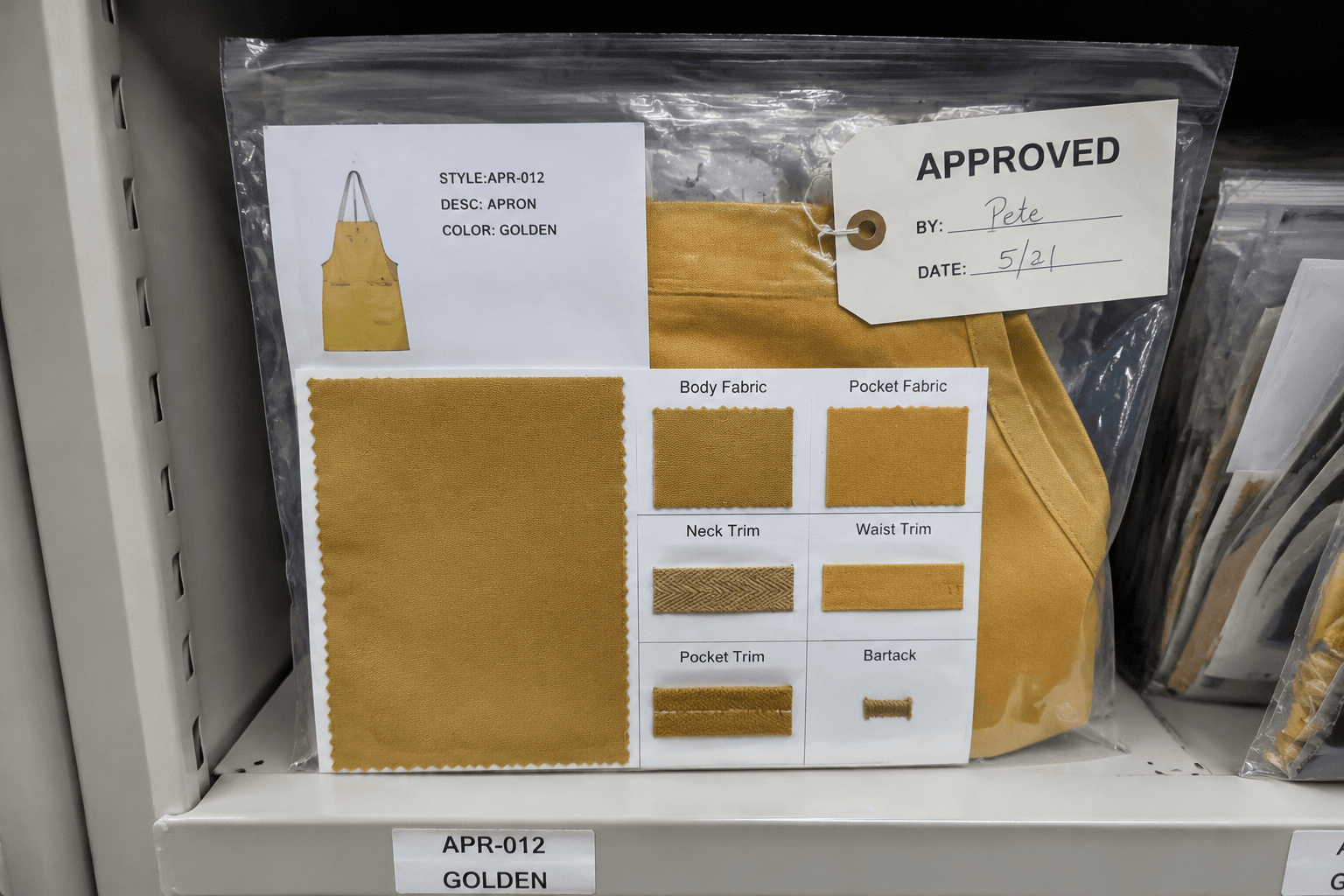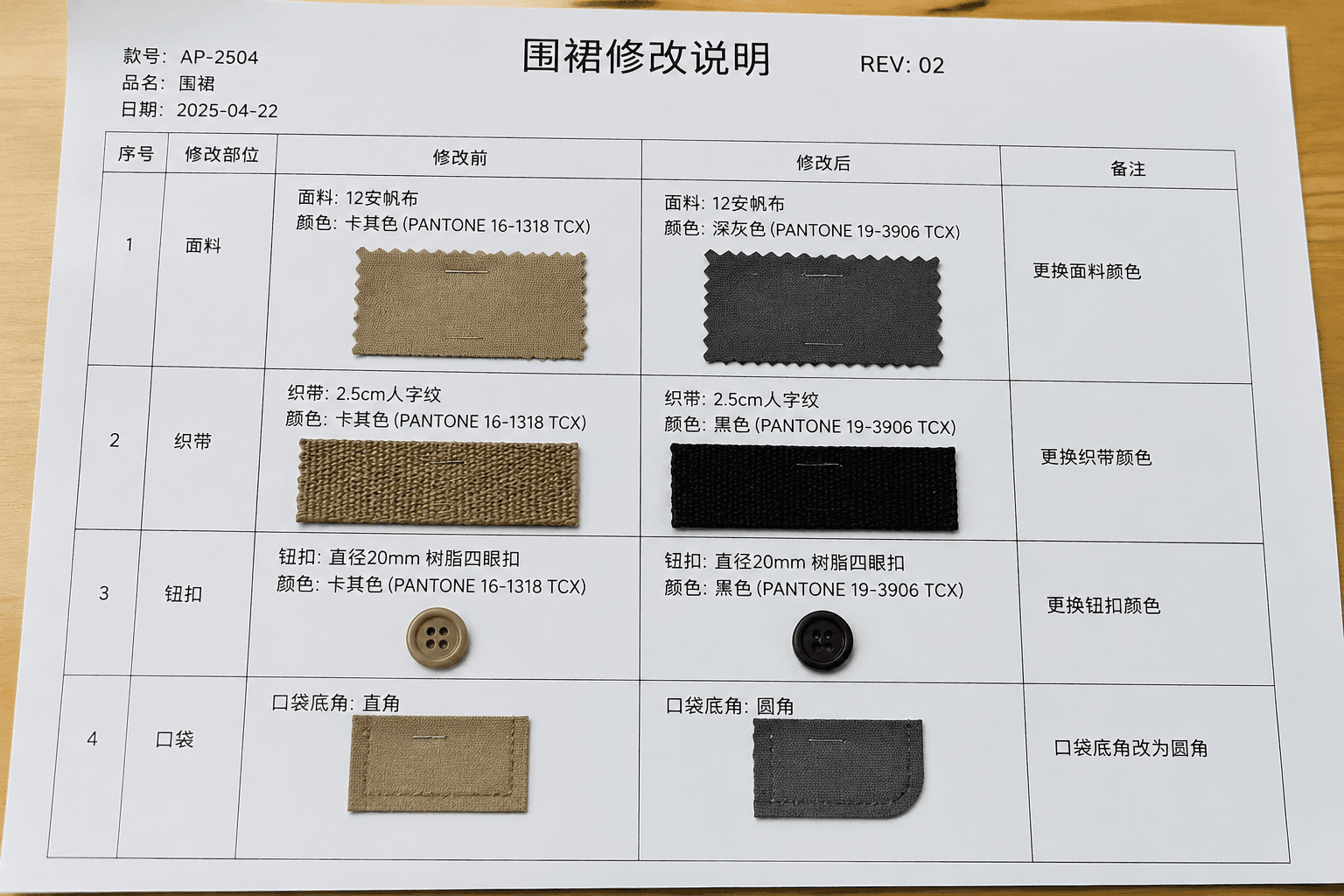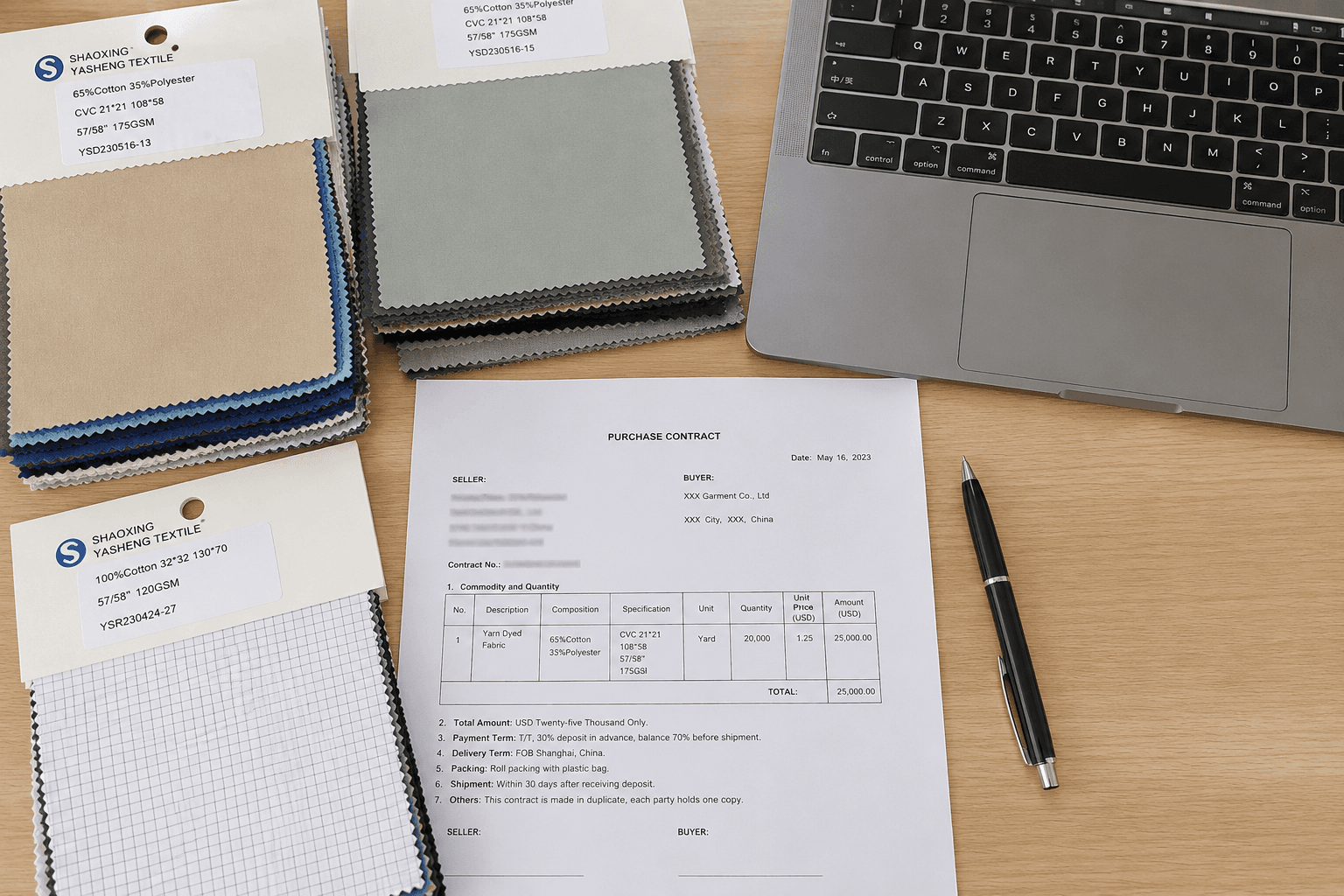
For bulk apron programs, the real decision is not only price. Buyers are choosing between an apron sourcing agent and a direct factory apron relationship, and that choice affects sample speed, communication clarity, QC depth, payment terms, and how much margin is visible at each step.
In China apron sourcing, the difference is most visible on repeat programs. A sourcing agent may help with multilingual communication, factory shortlisting, and issue handling, but that service comes with a fee structure, an extra decision layer, and less direct visibility into the actual mill, trim supplier, and sewing line. A direct factory apron purchase can reduce landed cost by $0.20 to $1.20 per piece depending on fabric and embellishment, but it also requires tighter spec discipline from the buyer.
For sourcing managers and brand buyers, the right answer depends on order size, customization level, target price, and internal procurement capacity. If you are buying 500 pieces for a seasonal test, the flexibility of an apron buying agent may matter more than a few cents of margin. If you are buying 20,000 pieces with custom woven labels, screen print, and coordinated packaging, the direct factory path usually gives stronger control over cost, lead time, and final quality.
- Use an apron sourcing agent when your team lacks China procurement bandwidth, but expect an added service fee or embedded margin that reduces price transparency.
- Direct factory apron buying usually wins on unit cost once you reach stable specs, repeat orders, and MOQ levels of 1,000 to 3,000 pieces per color or style.
- A sourcing agent can reduce communication friction, but it also adds a control layer that can slow approvals for fabric, color, and artwork.
- Most apron quality disputes come from weak spec sheets, not factory location; clear GSM, stitch count, strap length, and wash test requirements matter more than the intermediary.
- For branded aprons with custom packaging, the factory route often lowers total landed cost by 8% to 18% compared with agent-managed buying.
- The best model for many buyers is hybrid: use an apron buying agent for initial factory audit and price benchmarking, then move to direct factory apron production for repeat orders.
What an apron sourcing agent actually does
An apron sourcing agent is usually paid to find factories, request quotes, collect samples, check basic compliance, and manage day-to-day communication. For buyers who do not have staff in China, that service can be practical. It reduces the number of vendor conversations, especially when the program includes multiple apron styles such as bib aprons, waist aprons, chef aprons, and canvas retail aprons.
In practice, the value depends on how much work the agent truly performs. A good apron sourcing agent should understand fabric options like 240 gsm cotton canvas, 280 gsm enzyme-washed denim, 7 oz poly-cotton twill, or 12 oz heavy cotton duck. They should also know which details change the cost structure: neck hardware, adjustable cross-back straps, pocket count, bartacks, embroidery size, and individual polybag packaging. If the agent cannot explain those items in cost terms, they are mostly forwarding emails.
The strongest case for an apron sourcing agent is when the buyer needs market access rather than just production. For example, a startup brand may need 3 factories quoted in 48 hours, sample photos translated, and a quick read on which factory can handle 5,000 pieces with a 20-day production window. In that case, the service may save internal time even if the per-piece price is slightly higher.
- Typical agent services include factory search, quote comparison, sample coordination, negotiation, and inspection booking.
- Common fee models are 5% to 10% service fee, embedded margin in the factory quote, or a fixed project fee of $300 to $2,000.
- Useful agent output should include fabric composition, GSM, MOQ, lead time, packaging method, and defect risk notes.
- A weak agent often adds delay without adding technical clarity, which is expensive on custom apron programs.
Direct factory apron buying: where the savings come from
A direct factory apron relationship removes one commercial layer. That matters because apron pricing is usually built from fabric cost, cutting loss, trim cost, labor, packaging, and a factory margin. If an apron sourcing agent is involved, the margin may appear as a separate fee or may be hidden inside the quote, which makes true cost comparison harder. Direct factory buying does not eliminate margin, but it does make the pricing structure easier to challenge.
The savings are not abstract. On a 10,000-piece order for a 240 gsm cotton canvas apron with one front pocket, adjustable neck strap, and one-color screen print, the factory may quote $2.10 to $2.45 per piece ex-works depending on fabric source and packaging. A sourcing agent-managed quote can land $0.20 to $0.60 higher per piece, and in some cases more if the agent is adding both service fee and supplier margin. On a 20,000-piece re-order, that difference becomes material.
Direct factory apron buying also improves accuracy on engineering details. The factory can confirm whether the bartack at pocket corners should be 42 stitches or 48 stitches, whether the waist ties should be 90 cm or 110 cm each side, and whether a 1.5 cm topstitch allowance is realistic for the selected fabric weight. These details are not cosmetic; they determine whether the apron keeps its shape after repeated wash cycles.
- A direct factory quote is usually more transparent on fabric, labor, trim, and packing cost.
- MOQ is often easier to negotiate directly, especially for repeat customers with stable artwork and sizes.
- Sampling tends to move faster when the buyer can speak to the sample room or merchandiser without relay delay.
- Quality issues are easier to trace because the buyer can map the problem to cutting, sewing, washing, or packing.
Sourcing agent vs factory: the cost structure that buyers miss
The most common mistake is comparing only the unit price on paper. A sourcing agent vs factory comparison must include sample cost, revision cycles, communication delay, inspection cost, remade goods, and payment processing risk. A quote that is $0.15 lower can become more expensive once the program needs one extra sample round or one corrected carton label print.
For apron programs, sample iteration is often where hidden cost accumulates. A custom apron with logo placement, contrast stitching, and branded swing tag may require 2 to 4 sample rounds before approval. If the buyer works direct with the factory, the sample feedback loop can be one or two days shorter each round. Across three rounds, that can save a week or more. In a seasonal program, a week is often worth more than a small per-piece discount.
There is also the issue of MOQ economics. Many factories price 500-piece trial runs higher because cutting waste, setup, and color matching are spread over fewer units. A sourcing agent may claim to help secure a lower MOQ, but the real cost often appears elsewhere, such as extra sample fee, fixed packaging charge, or reduced flexibility on minor artwork revisions.
- Direct price is only one part of landed cost; sample loops, remakes, and time-to-approval matter too.
- A $0.30 per piece saving is not meaningful if it adds 7 to 10 days of coordination delay on a time-sensitive order.
- High-MOQ factories may offer better fabric sourcing and sewing efficiency than agent-assembled small workshops.
- For complex decoration, the cheapest quote is often the one with the least defined spec, which creates later risk.
When an apron sourcing agent is useful
An apron sourcing agent is most useful in three situations. First, when the buyer is new to china sourcing apron programs and does not yet know which factories are real producers versus trading companies. Second, when the order includes mixed product categories, such as aprons, oven mitts, and table linens, and the buyer wants one coordinator. Third, when the internal team lacks time to manage multiple time zones, sample follow-up, and inspection booking.
This model can also help when the buyer needs informal market intelligence. For example, an agent may know that a certain denim apron factory is overloaded for the next 30 days, while another workshop has available capacity but cannot do discharge print. That kind of capacity map is practical. It can prevent wasted sample cycles and unrealistic delivery promises.
Still, buyers should separate coordination value from procurement value. If an apron sourcing agent cannot show factory names, business scope, machine capability, and production photos, then the buyer is not buying sourcing expertise. They are buying a message relay. That is a weak basis for a bulk apron program.
- Useful for first-time buyers who need factory vetting and quote collection.
- Useful for multi-category home textile programs where one coordinator reduces workload.
- Useful when the buyer needs local problem solving, especially for language, logistics, or inspection scheduling.
- Less useful when the buying team already has a stable factory list and a clear technical package.
When a direct factory apron order is the better path
A direct factory apron order is usually the better path when the program is repeatable, the spec is stable, and the buyer is responsible for long-term margin. This is especially true for private label food service aprons, café aprons, hospitality uniforms, and retail gift aprons where the product will be reordered in the same fabric and construction.
Direct factory buying gives stronger control over the real drivers of cost. A factory can explain whether a 300 gsm cotton twill apron needs pre-shrinking, whether the dye lot will vary by more than Delta E 3.0, and whether the selected strap hardware will survive 50 wash cycles. That level of control matters more than whether the commercial contact is fluent in English. Most apron quality failures are execution failures, not communication failures.
The direct model also supports cleaner commercial terms. If the buyer is placing a 12,000-piece order with 30% deposit and balance against bill of lading copy, the factory relationship can be built around production milestones and inspection checkpoints. In agent-managed buying, those checkpoints are sometimes obscured by the intermediary. That does not always create a problem, but it reduces accountability clarity.
- Best for stable repeat orders with clear artwork, packaging, and size specs.
- Best for buyers who can manage technical communication and approval timing internally.
- Best when the program needs tighter cost control and fewer middle-layer decisions.
- Best when the buyer wants direct visibility into sample development, line capacity, and QC escalation.
How to compare quotes on custom aprons correctly
A serious buyer should compare quotes on the same technical basis. The most common mistake is asking three suppliers for a price without locking the same apron size, fabric weight, printing method, pocket count, strap type, packaging, and carton spec. The result is a false comparison. One supplier may quote a 220 gsm apron, another a 280 gsm apron, and a third may include a woven label and tissue insert without saying so.
For custom apron sourcing, a proper quote should state fabric composition, GSM or ounce weight, color standard, logo method, MOQ, sample charge, lead time, and shipment term. A direct factory apron supplier usually answers these points faster and more precisely because they control the production line. An apron sourcing agent can also collect this data, but the buyer should verify it directly with the factory before approval.
A good benchmark example: a 7 oz poly-cotton waist apron with two pockets, one-color screen print, and basic folded packaging may fall around $0.95 to $1.35 per piece at 3,000 pieces, depending on trim and labor. A 12 oz canvas bib apron with cross-back straps, four-color embroidery, and custom belly pocket can move into the $3.80 to $6.50 range at 1,000 to 3,000 pieces. Those numbers are not universal, but they show how much the specification matters.
- Lock the same fabric weight, dimensions, and decoration method before requesting quotes.
- Ask whether pricing includes sample, tooling, label, hangtag, and export carton charges.
- Confirm whether lead time starts from deposit date, sample approval date, or artwork approval date.
- Check whether quoted MOQ is per color, per style, or per total order.
Risk control: quality, lead time, and payment terms
Risk control is where the sourcing model becomes visible. An apron sourcing agent may reduce coordination burden, but the buyer still needs hard controls on fabric inspection, first article approval, inline QC, and final pre-shipment inspection. Without those controls, the risk of wrong stitching, off-color dyeing, loose pockets, or incorrect packaging remains. A middleman does not eliminate production defects.
Lead time is another area where buyers should be precise. For a standard apron program using stocked fabric, a direct factory apron order may need 20 to 35 days after sample approval, plus 5 to 7 days for shipping depending on route. If the fabric must be dyed to custom color, add 12 to 18 days for dyeing and lab dips. If the project passes through an apron buying agent and additional sample approvals are needed, the calendar can extend by another 5 to 10 days before production starts.
Payment terms also matter. Many factories want 30% deposit and 70% before shipment or against copy documents. An agent may ask for payment to them first, then pay the factory later, which increases counterparty risk unless the buyer has verified the structure carefully. For larger orders, it is often safer to pay the factory directly and use an independent inspection before balance release.
- Use AQL inspection or a buyer-specific defect standard before final payment.
- Confirm color against approved lab dip or sealed sample, not just digital images.
- Ask for production photos at cutting, sewing, and packing stages on custom programs.
- Do not confuse an intermediary with a quality system; inspections must still be specified.