Every emerging brand has felt it: you find a factory whose work you love, request a quote, and the response opens with “our MOQ is 500 pieces per design.” You needed 100. You move on.
This is a guide to the levers we've seen actually work for emerging brands sourcing aprons in the 50-200 pc range. Some are about how you frame the request; some are about which factory you ask; some are about how you structure the order.
- Stocked fabric drops MOQ from 300 to 150 pcs per design — always ask first
- Consolidate SKUs onto shared fabric runs to share MOQ floors across multiple designs
- Pilot pricing in exchange for case-study rights works for design-led emerging brands
- Drop-ship from factory warehouse lets you start small without holding inventory
- Sample-line pricing is a real lever for 50-150 pc orders — ask explicitly
- Don't lie about order size or send identical RFQs to 10 factories — both backfire
Lever 1: Ask for stocked-fabric pricing first
A factory's MOQ is usually driven by fabric procurement, not by sewing. They need to buy a minimum length of fabric to run the order, and bespoke fabric typically requires 200-500m minimum at the mill.
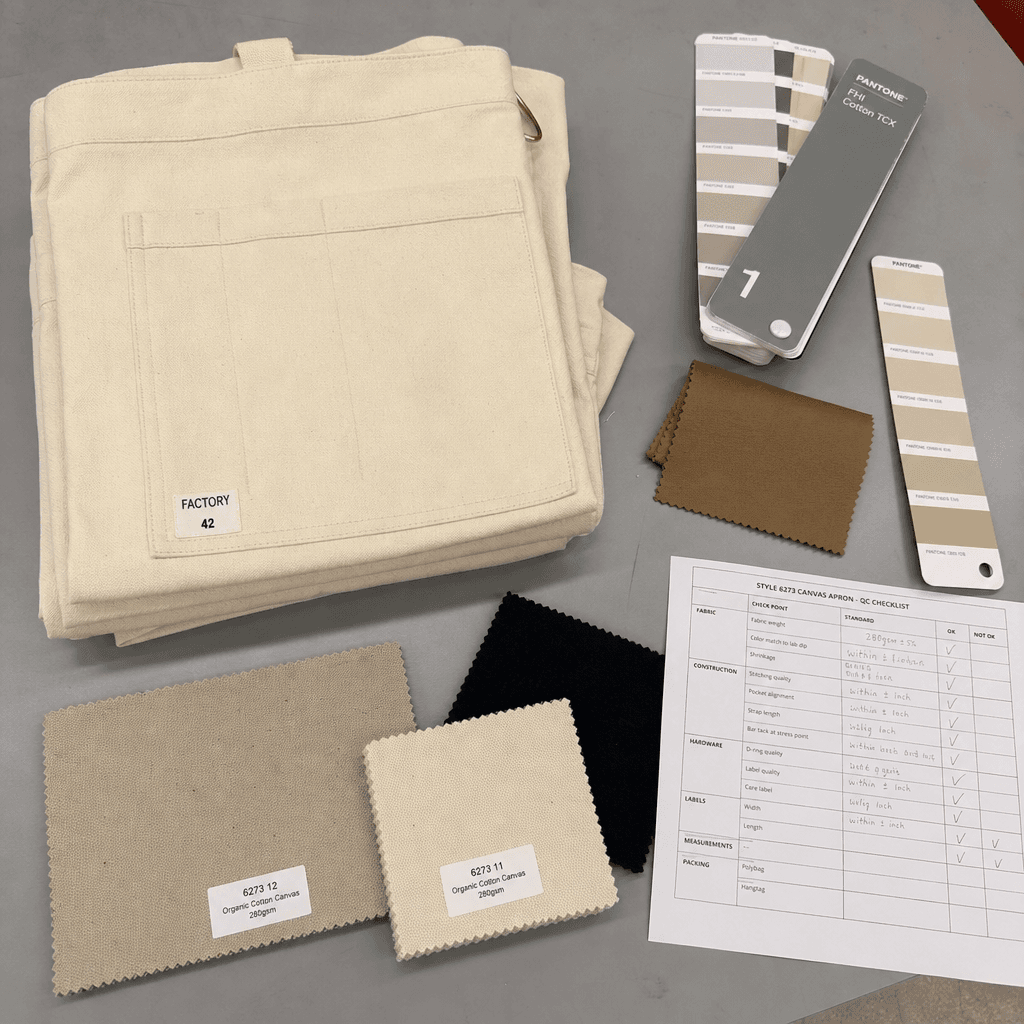
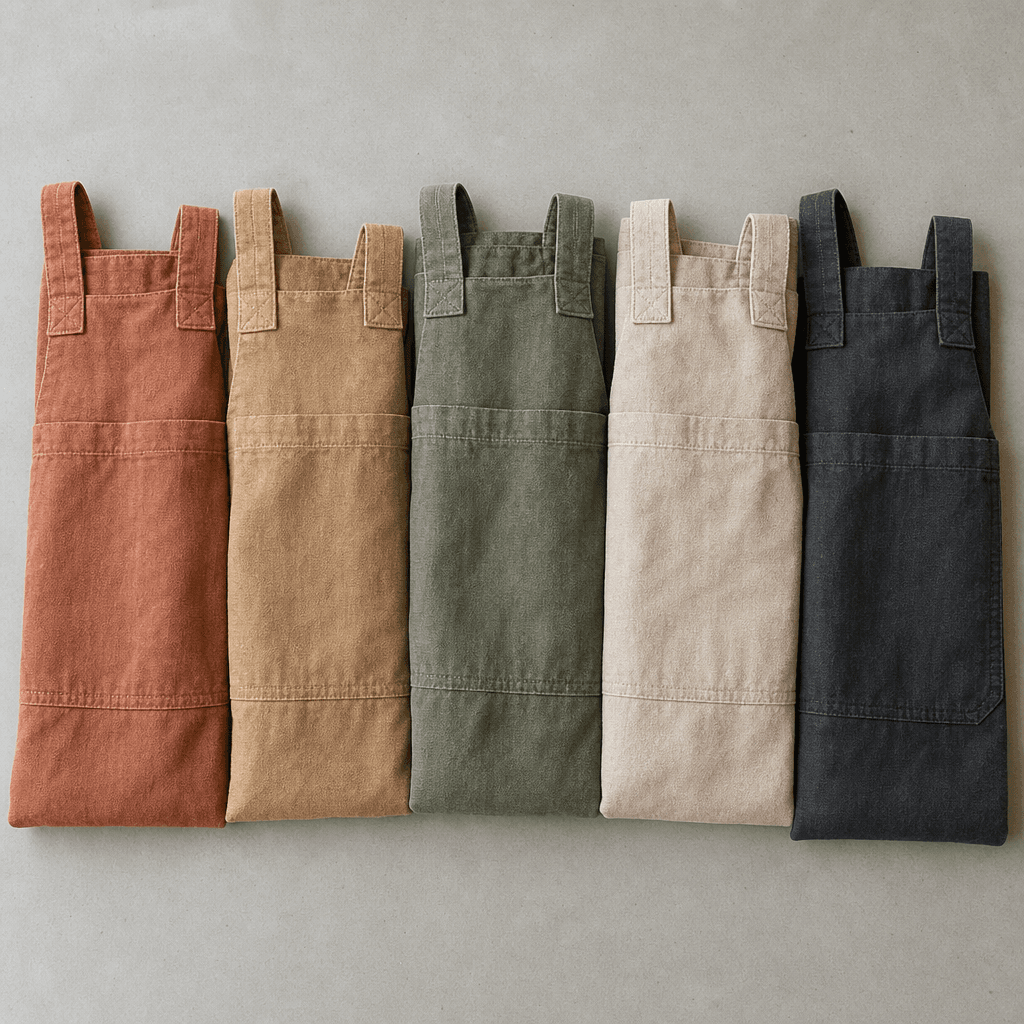
If you use a fabric the factory already stocks (we stock 20+ canvas colors, 15+ waxed canvas finishes, 10+ linen colors), the fabric-procurement floor disappears. Our stocked-fabric MOQ drops to 150 pcs per design.
Lever 2: Consolidate SKUs to share MOQ floors
If you need 100 chef aprons and 100 barista aprons in the same fabric and color, ask the factory if MOQ can apply to the fabric block (200 pcs total) rather than per design (which would be 300+300 = 600). Many factories will agree — they're cutting the same fabric.
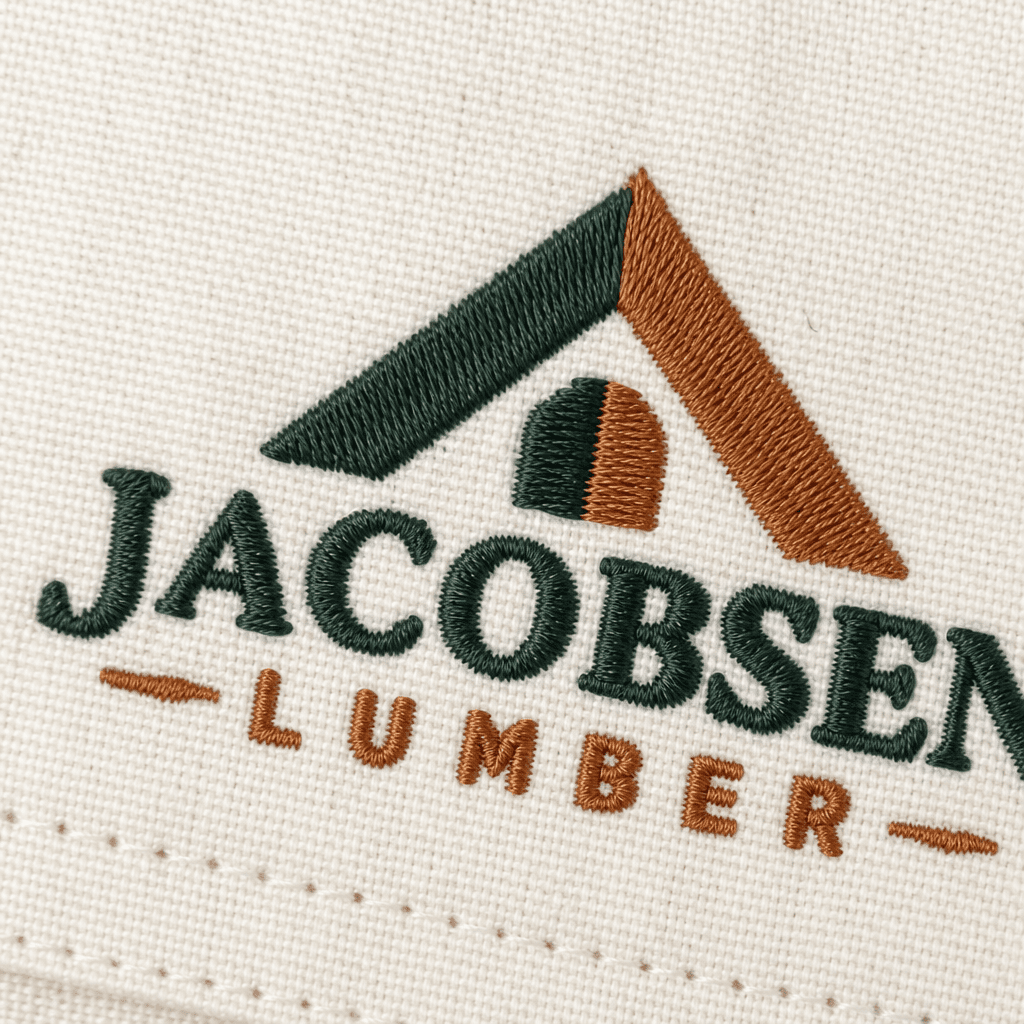
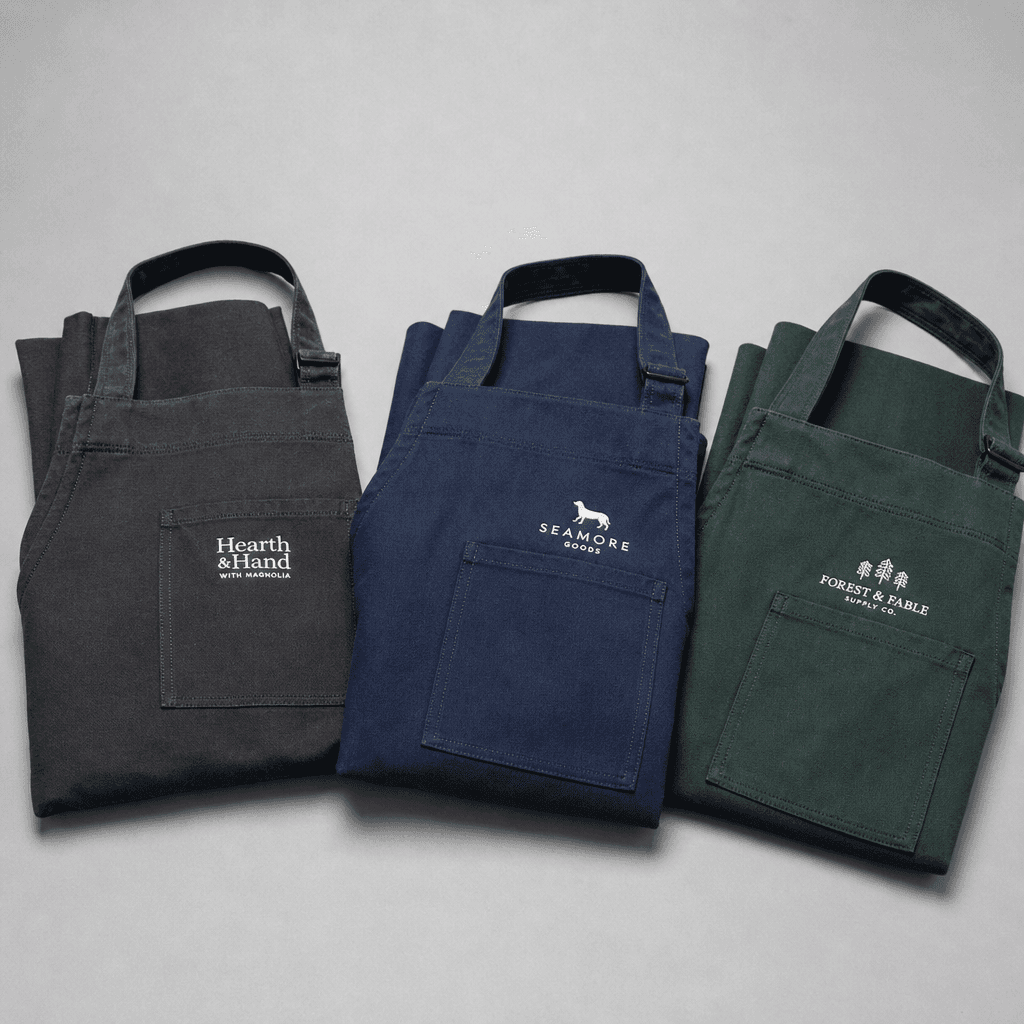
Even better: keep the silhouette identical and vary only the embroidery. Two designs with the same cut + same fabric + different embroidery = one fabric run, two patterns — typically priced as a single design at the cutting/sewing level.
Lever 3: Skip techniques that need their own setup
Every customization technique has a setup cost that gets amortized across the order. For small orders, this setup cost can dominate the unit price.
- Embroidery — setup ~$25-60 per design, becomes negligible above 200 pcs
- Screen print — setup ~$30-80 per color, dominates unit price below 100 pcs
- Custom Pantone dye — setup ~$300-600 in dye changeover, only works above 500 pcs
- Woven label — setup ~$80-200, amortizes at 500+ pcs
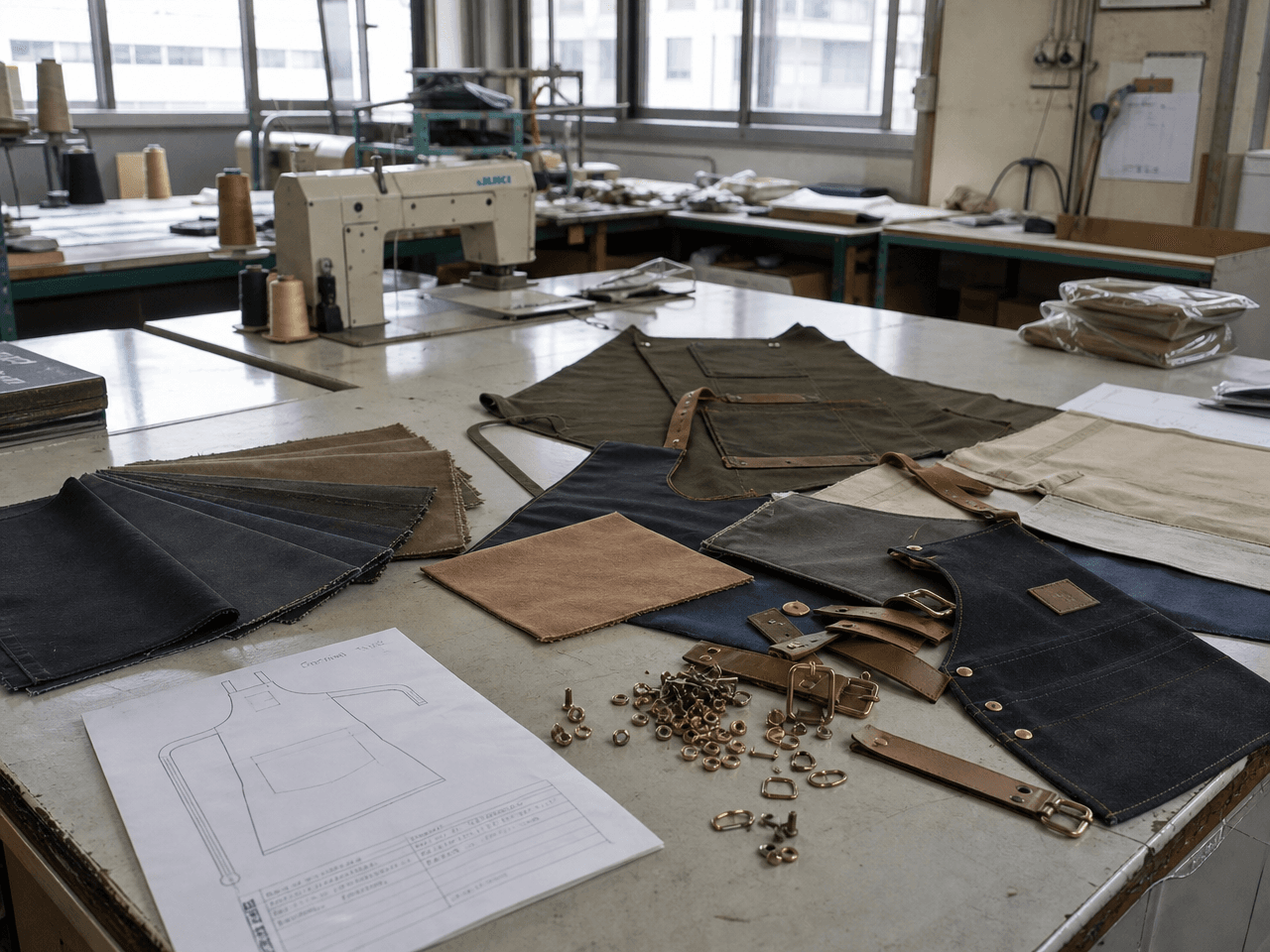
- Leather patch — minimal setup ($15-30), works down to 50 pcs
Lever 4: Add the factory's drop-ship to make smaller orders profitable
If you're a Shopify or Etsy seller, factory drop-ship can let you sell smaller initial batches without holding inventory. We drop-ship from a US-bonded warehouse with 5-business-day fulfillment. Order 200 pcs, hold them in our warehouse, sell direct-to-customer, replenish quarterly.
This works for promotional and workshop aprons. It doesn't work for hospitality or salon orders, which typically need bulk delivery to a single buyer warehouse.
Lever 5: Pilot pricing in exchange for case study rights
If you have a credible brand and a public roadmap (existing customer base, social following, press coverage), some factories will accept a pilot order below their published MOQ in exchange for case study rights — the ability to feature your brand on their site, in their sales pitch, on their factory tour.
This works well for design-led brands. Worth asking — the worst case is “no.”
Lever 6: Combine your order with a stock-replenishment order
Factories sometimes have ongoing stock-replenishment orders for their own retail or for distributor partners. If your design uses the same fabric / color / cut as one of these orders, the factory can sometimes “piggyback” your 100 pcs onto their existing cut.
This isn't advertised — you have to ask. Specify exactly the fabric / color / cut you want and ask “is anything currently running in this combination?”
Lever 7: Pay a sample-to-bulk premium
For very small orders (50-150 pcs), some factories will run your order at sample-line pricing — typically 30-60% above their bulk unit price. The factory wins because they fill capacity on the sample line; you win because you get the order without committing to 500 pcs.
Be explicit about wanting this option in your inquiry: “If MOQ is firm, can you quote at sample-line rate for the trial run?”
What doesn't work
Two tactics commonly recommended online don't actually work and damage your relationship with the factory:
- Asking 10 factories the same question expecting one to break — sourcing managers talk and you get blacklisted
- Lying about your final order size — “we'll do 100 now and 1,000 later” rarely converts, factories track this
- Demanding free samples for very low MOQ — sample costs are real; offering to pay shows seriousness