Half the quote delays we see at Linwa Apron are caused by incomplete spec sheets. Buyers send us a Pinterest reference, a target quantity and a budget — and we send back four follow-up questions before we can put a number on the page.
This guide is the 12-field checklist we ask every buyer to fill in. Use it as a template; fill in what you know; mark what you don't. A spec sheet with 8 fields filled and 4 marked “TBD — recommend us” is more useful than a spec sheet with one paragraph of prose.
- 12 fields, not 12 paragraphs — checklist format works better than prose for B2B sourcing
- Stocked fabric + stocked color cuts MOQ to 150 pcs and lead time to 25-30 days
- Send vector files (AI / EPS / PDF) for embroidery and screen print, hi-res raster for DTF
- Target landed cost is the most important field — without it, the factory can't propose intelligent trade-offs
- Mark unknowns as “TBD — recommend us” rather than leaving fields blank
1. Product line and use case
State the use case in one sentence: chef apron for a 5-star hotel restaurant, barista apron for a specialty coffee chain, workshop apron for a woodworking supply brand. This determines the fabric weight range, the cut, the hardware and the durability expectations.
2. Quantity (total) and SKU breakdown
How many pieces total, and how does that split across colors / sizes / styles. Example: 2,000 pcs total = 800 charcoal + 800 navy + 400 olive, all in one size, all in the same cut. Factories price per SKU; total quantity matters less than SKU breakdown for MOQ.
3. Fabric weight and composition
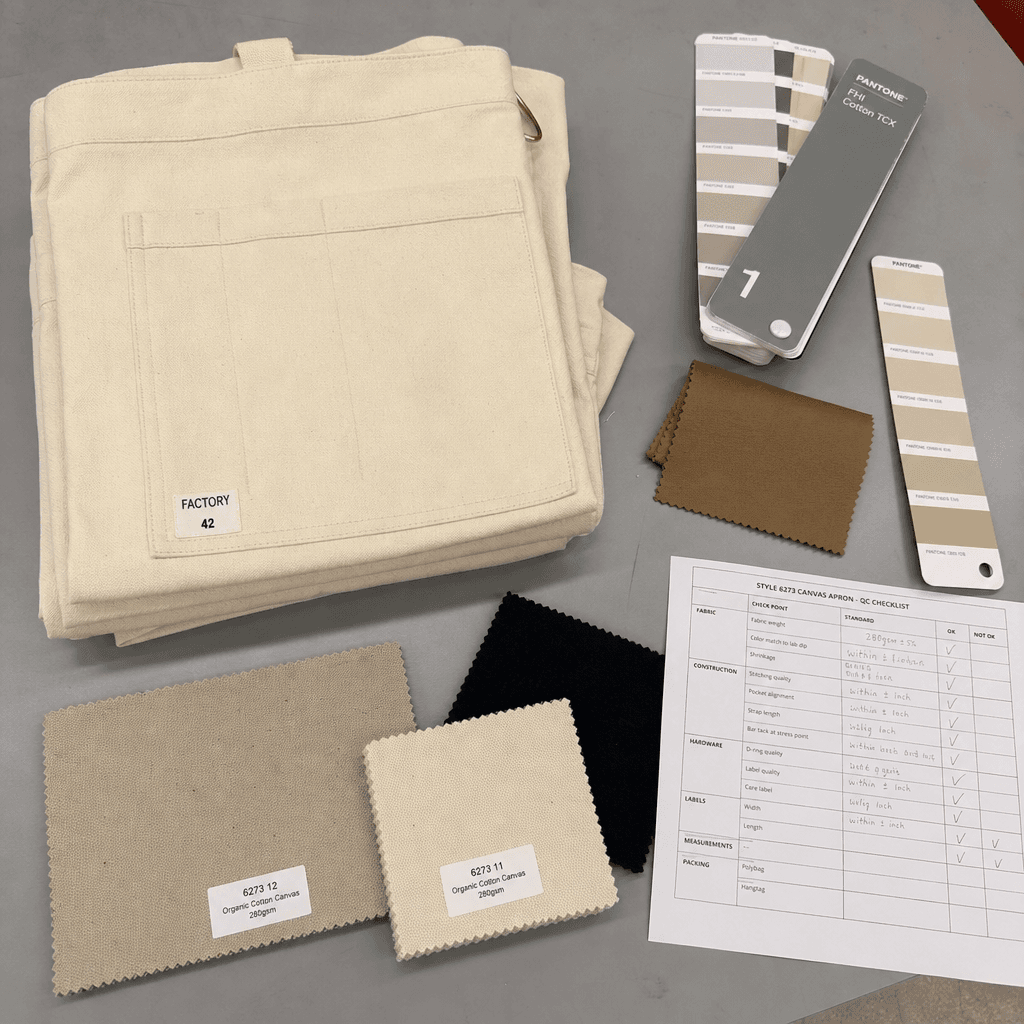
Either pick from the factory's stocked library (lowest MOQ, fastest lead time) or specify your own. For aprons the typical range is 180-540 GSM. If you don't know which weight you want, ask the factory to recommend based on use case — but specify the use case clearly.
- Hospitality / chef: 240 GSM cotton-poly 65/35 twill
- Barista cafe: 10-14 oz cotton canvas (or waxed canvas)
- Workshop / utility: 14-18 oz duck canvas
- Linen home retail: 180-200 GSM linen or linen-cotton
- Salon / wellness: 180 GSM cotton-spandex stretch
4. Cut / silhouette
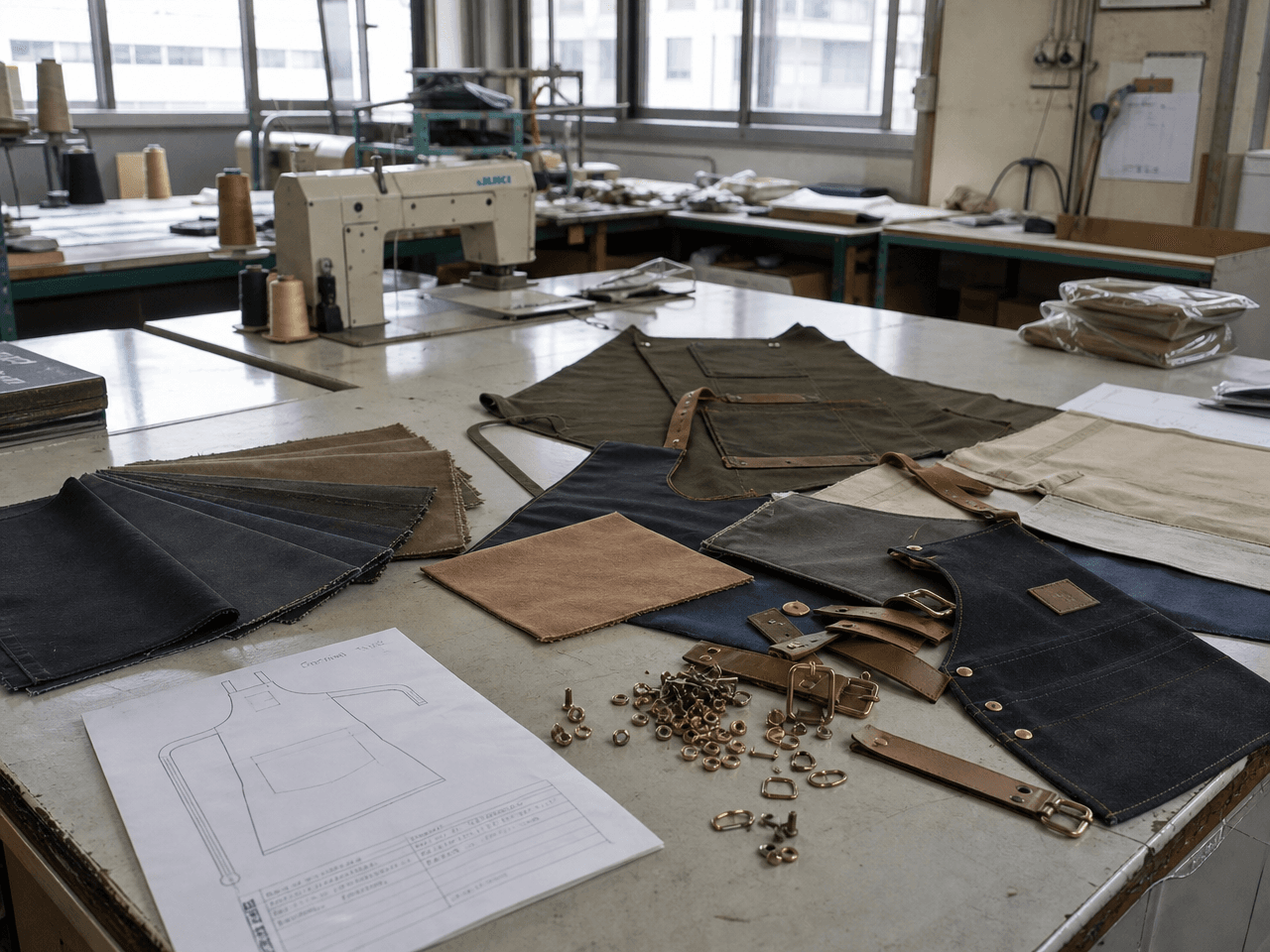
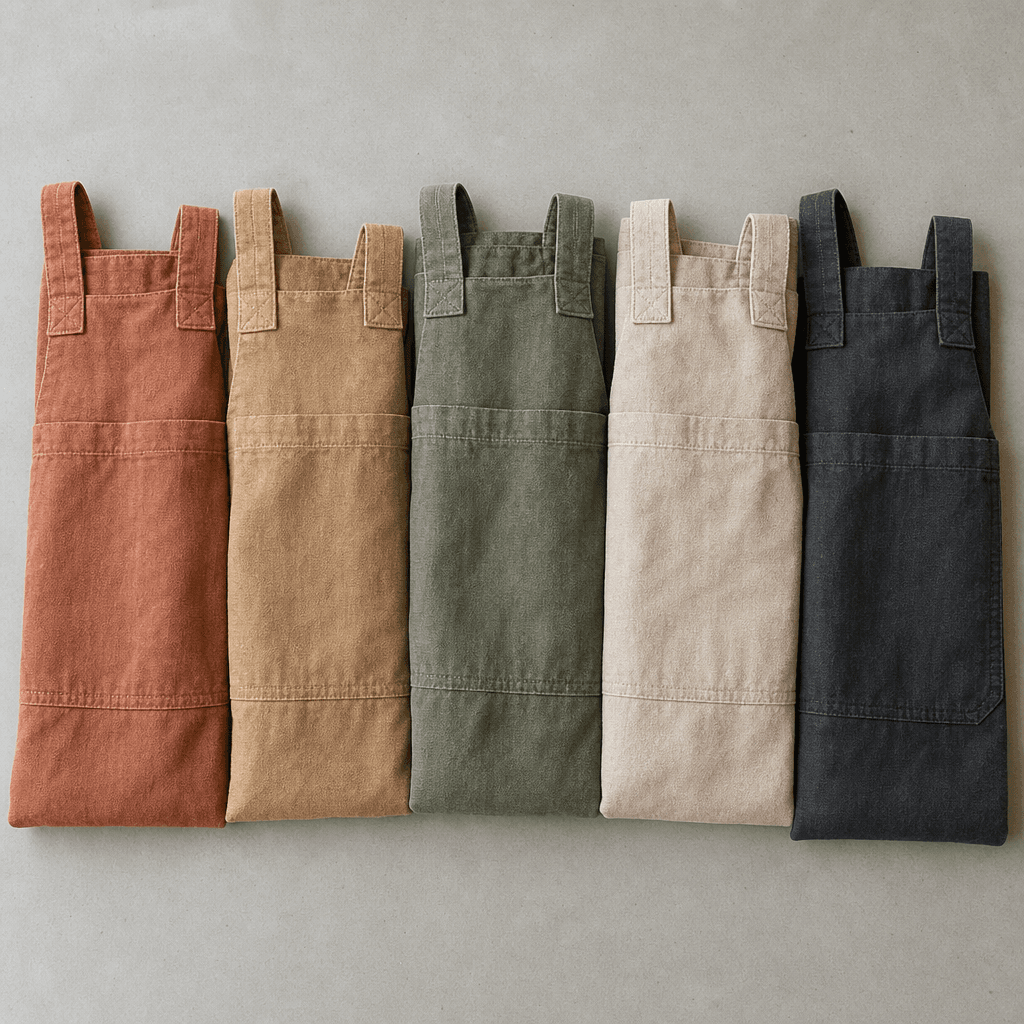
Full bib, French bistro half, crossback yoke, bib + skirt, half-only? Include a sketch or reference photo. If you have a sample apron already, ship it with the brief — factories pattern from physical samples 10x faster than from photos.
5. Color (with Pantone references)
Stocked colors → lower MOQ, faster lead time, but limited choices (typically 6-20 per fabric). Custom Pantone → 200-300 m fabric minimum. List Pantone codes for each color SKU. If your brand uses a custom in-house color, send a fabric or chip sample.
6. Customization method
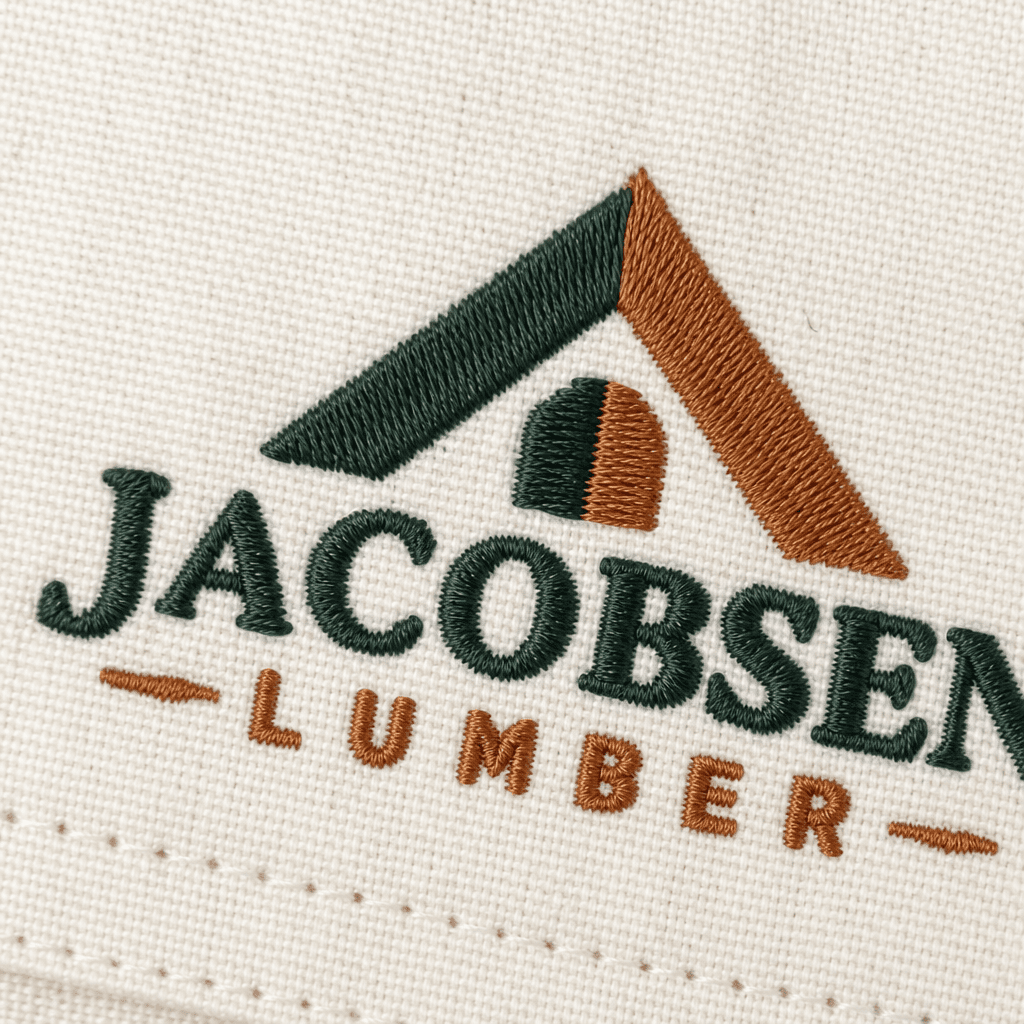
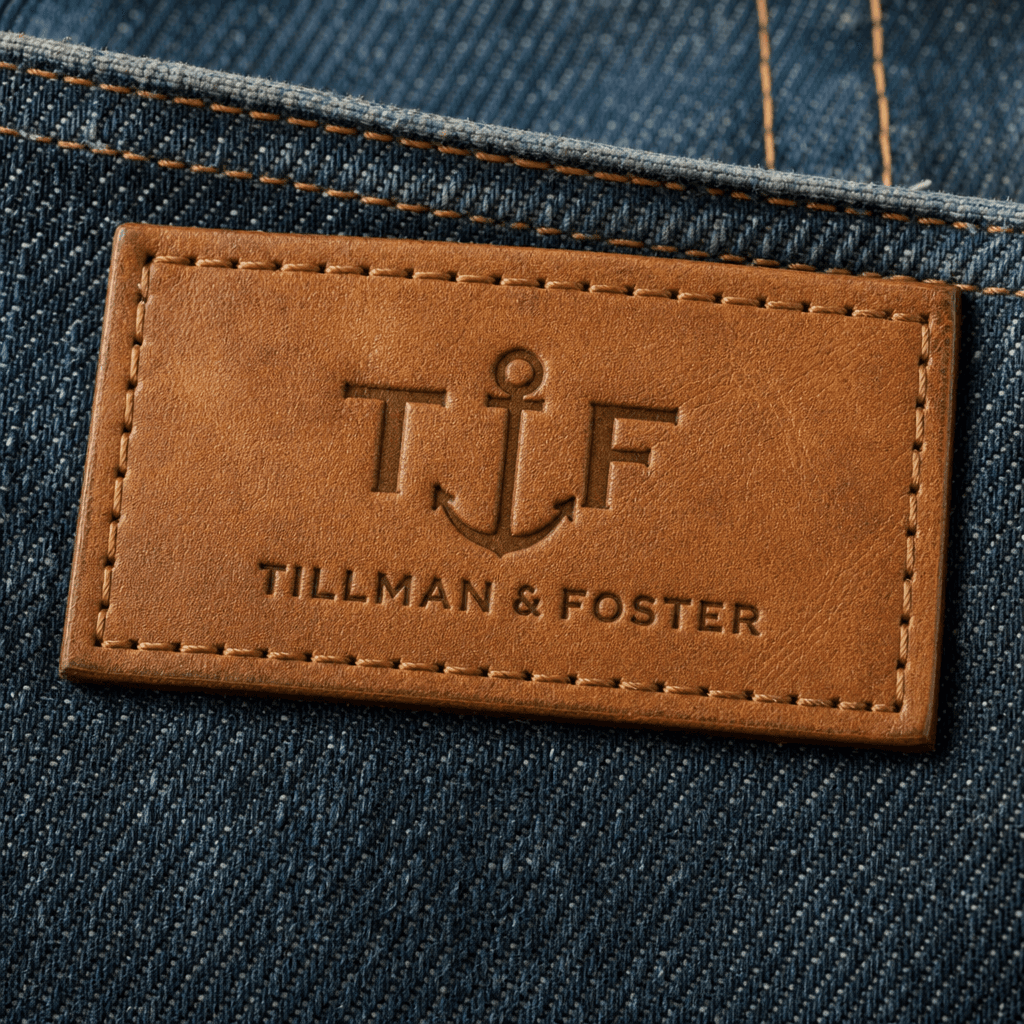
Specify which technique for which area: embroidery on chest pocket, debossed leather patch above heart, screen-printed wordmark on back hem. Each technique has its own lead time and cost — combining them is fine but each adds setup cost.
- Embroidery — sew-out proof in 5-7 days, $0.30-1.20/pc depending on stitch count
- Screen print — color separation proof in 3 days, $0.20-0.80/pc depending on colors
- Leather patch — pattern + leather in 5 days, $0.80-2.50/pc depending on patch size
- Woven label — proof in 7 days, $0.10-0.40/pc
- Heat-transfer DTF — proof in 2 days, $0.15-0.50/pc
7. Logo files
Send vector AI / EPS / PDF for embroidery and screen print. Send hi-res JPG / PNG (≥300 dpi) for DTF and heat transfer. Mark which file is for which technique. Specify Pantone codes for ink and thread color.
8. Hardware
Buckle vs D-ring vs cross-back vs traditional tie? Solid brass / nickel / antique copper / black matte? Specify size (usually 25mm or 38mm for apron buckles). For leather neck straps, specify width (15mm / 20mm / 25mm typical) and color.
9. Packaging
Bulk poly bag (cheapest, for laundry-bound hospitality use), individual poly + hangtag (mid-tier, for retail), kraft sleeve + tissue + ribbon + hangtag (premium gift / retail). Each adds $0.20-1.50 per piece. Tell the factory if branded inserts are required.
10. Target landed cost
This is the field most buyers leave out — and the field that lets the factory propose the right fabric weight and customization mix. Target landed cost = unit price + freight + duty + last-mile. If you have a maximum target, share it. The factory can engineer down to your target by adjusting fabric weight, customization, packaging.
11. Target ship date and Incoterm
When do you need the goods in your hands? Add 30-45 days production + 25-35 days sea freight + 5-10 days customs / last-mile. So a December 1 in-hand date means a brief acceptance by August 1 at the latest. State the Incoterm: FOB Ningbo (cheapest, most flexible), CIF (factory arranges sea freight), or DDP (factory delivers to your door).
12. Compliance requirements
List any certifications you need on the goods: OEKO-TEX, GRS, GOTS, REACH (EU), Prop 65 (CA), CPSIA (children's aprons), etc. The factory needs to know up-front because these affect material sourcing and audit documentation.