Fabric is the single decision that most shapes an apron's cost, durability and feel — and the most common place buyers either over-spec (paying for 18oz duck on a cafe apron) or under-spec (a 180 GSM apron that pills in a hard-laundry kitchen).
This guide gives you a way to choose deliberately. We walk through the three fabric levers — weight, weave and finish — then map them to the five use cases we build for most, with the stocked fabric we'd recommend as a starting point for each.
- Three levers drive fabric choice: weight (durability/hand), weave & fiber (structure/feel), finish (performance)
- Mid-weight 220-280 GSM is the all-round sweet spot; reserve 16-18oz duck for heavy utility
- Match finish to the failure mode — water-repellent for wet work, stain-release for kitchens/salons
- Start from a stocked fabric + color to keep MOQ ~150 pcs and skip mill lead time
- Don't over-specify — state use case, laundering and target cost, then let the factory recommend
Lever 1: Weight (GSM / oz)
Weight is the headline durability and hand trade-off. Heavier fabric lasts longer and feels more substantial but costs more, is hotter to wear, and takes longer to dry. The apron range runs roughly 180-540 GSM.
- Light (180-200 GSM): retail, salon, lightweight home — soft, drapey, lower cost
- Mid (220-280 GSM): chef, hospitality, promotional — the all-round sweet spot
- Heavy (10-14 oz canvas): barista, brewery, general workshop — durable, structured
- Very heavy (16-18 oz duck): woodworking, metalwork, heavy utility — maximum abrasion life
Lever 2: Weave and fiber
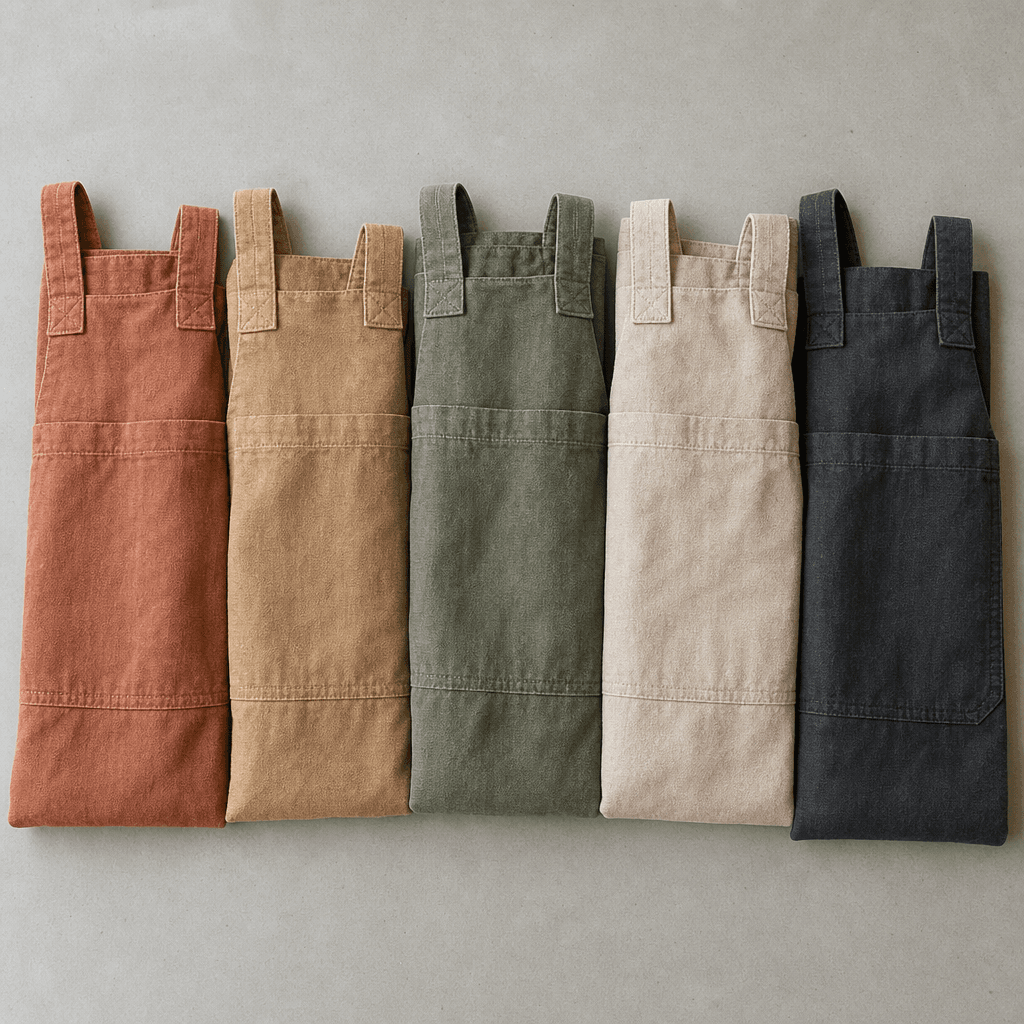
Weave determines structure and surface; fiber determines feel, care and price. Twill is smooth and sheds wrinkles; plain canvas/duck is sturdy and structured; linen drapes and breathes; blends add stain release or stretch.
- Cotton-poly twill — crisp, stain-releasing, industrial-launder friendly (hospitality)
- Cotton canvas / duck — sturdy, structured, ages well (barista, workshop, BBQ)
- Linen / linen-cotton — breathable, drapey, premium retail hand
- Denim — heritage look, fades with character (cafe, restaurant)
- Cotton-spandex — stretch and movement (salon, wellness)
- Recycled cotton (GRS) — sustainability claim with documented chain of custody
Lever 3: Finish
Finishes change performance after the fabric is woven. They add cost but can be the difference between an apron that works and one that fails its use case — a water-repellent finish on a brewery apron, a stain-release finish on a salon apron.
- Garment/stone wash — softer hand, pre-shrunk, lived-in look
- Stain-release — easier soil removal (kitchen, salon)
- Water-repellent / DWR — sheds splashes (brewery, fishmonger, florist)
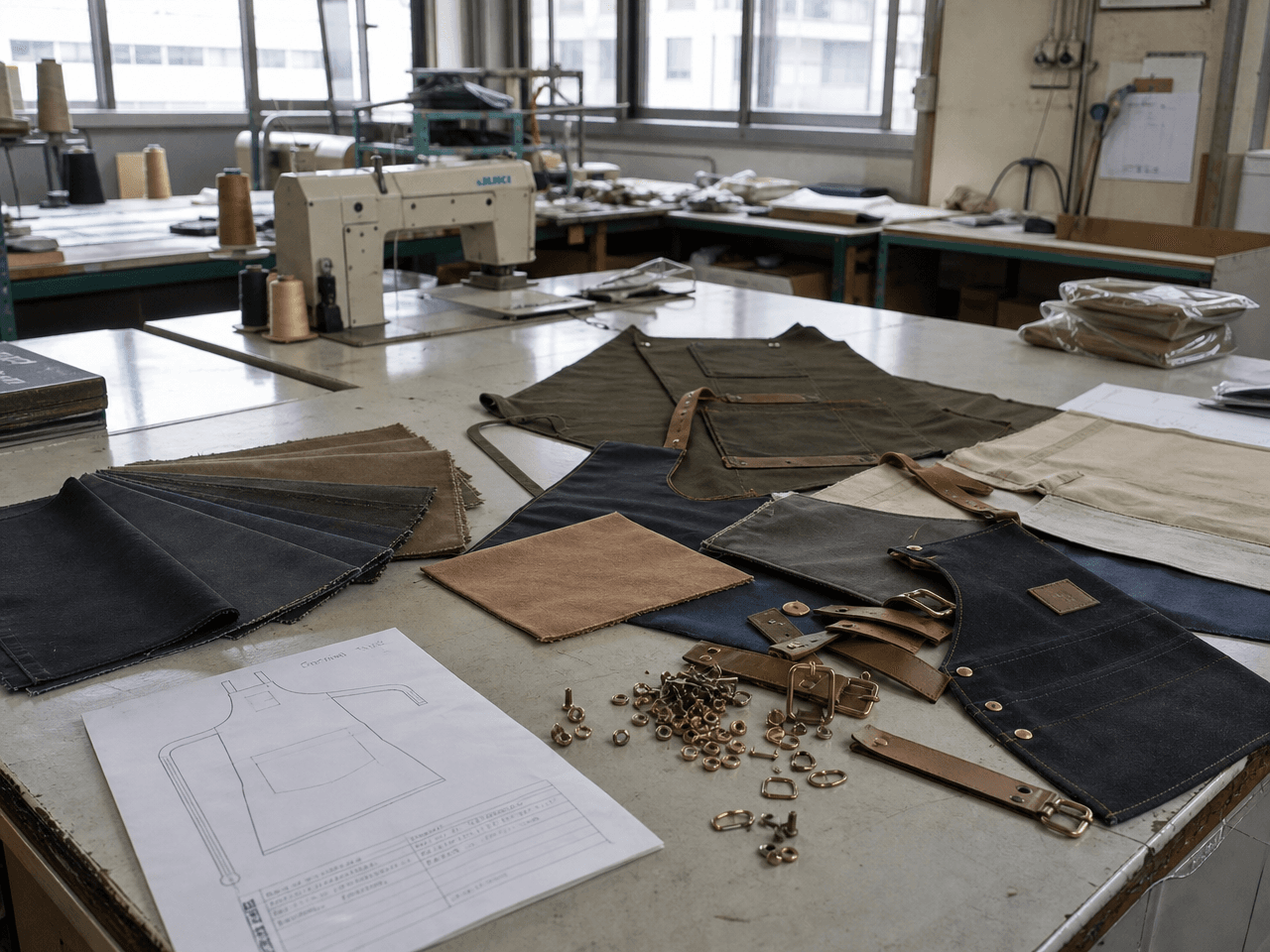
- Waxing — water resistance + patina (barista, heritage workshop)
- Antimicrobial — odor/hygiene management (food, wellness)
Use case → recommended starting fabric
These are our default starting points, not the only options — but they get you to a sensible sample fast. Each is available from stocked inventory, which keeps MOQ and lead time down.
- Chef & hospitality: 240 GSM 65/35 cotton-poly twill, stain-release
- Barista & cafe: 12oz cotton canvas or waxed canvas; denim for heritage looks
- Workshop & utility: 16oz cotton duck, optional water-repellent
- Linen home & retail: 180-200 GSM linen or linen-cotton, stone-washed
- Salon & wellness: 200 GSM 94/6 cotton-spandex, stain-release
- Promotional & brand: 10oz cotton canvas; GRS recycled cotton for eco programs
Stocked vs custom fabric
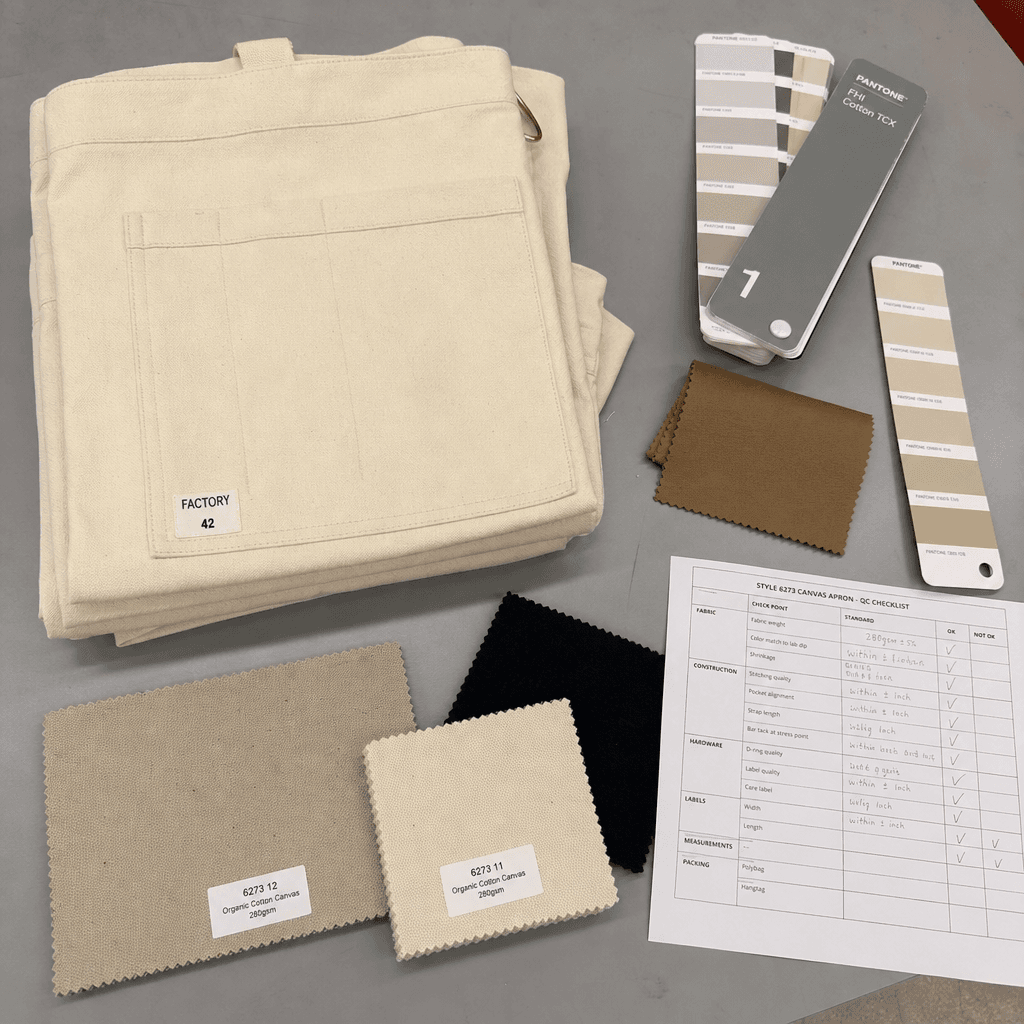
Starting from a stocked fabric and stocked color drops MOQ to around 150 pcs and removes the mill-minimum fabric lead time. Custom-woven fabric or a custom Pantone color is worth it for established programs, but it adds a 200-500m fabric minimum and weeks of lead time. For a first run, start stocked.
How to brief fabric without over-specifying
You do not need to name a fabric to get a good apron — you need to state the use case, the durability expectation and the target landed cost, then let the factory recommend. The fastest path to the right fabric is a clear use case plus a physical reference if you have one.
- State the use case and laundering reality (home wash vs industrial wash)
- Give a target landed cost so the factory can engineer weight/finish to it
- Ask for 2-3 fabric options at different weights to feel before committing
- Ship a reference apron if you own one — hand and weight are hard to describe in words