The same logo can be embroidered, screen-printed, heat-transferred or built into a leather patch — and the right choice depends less on taste than on your artwork, your fabric, your quantity and how the apron will be laundered.
This guide compares the four methods we use most at Linwa Apron across the factors that actually drive the decision, then gives a quick decision framework so you can land on the right one without a dozen back-and-forth emails.
- Embroidery = premium, laundry-proof, best for compact logos on heavy fabric
- Screen print = bold few-color graphics at volume; use water-based ink for wash durability
- DTF = full-color and small-run friendly with minimal setup, thinner surface hand
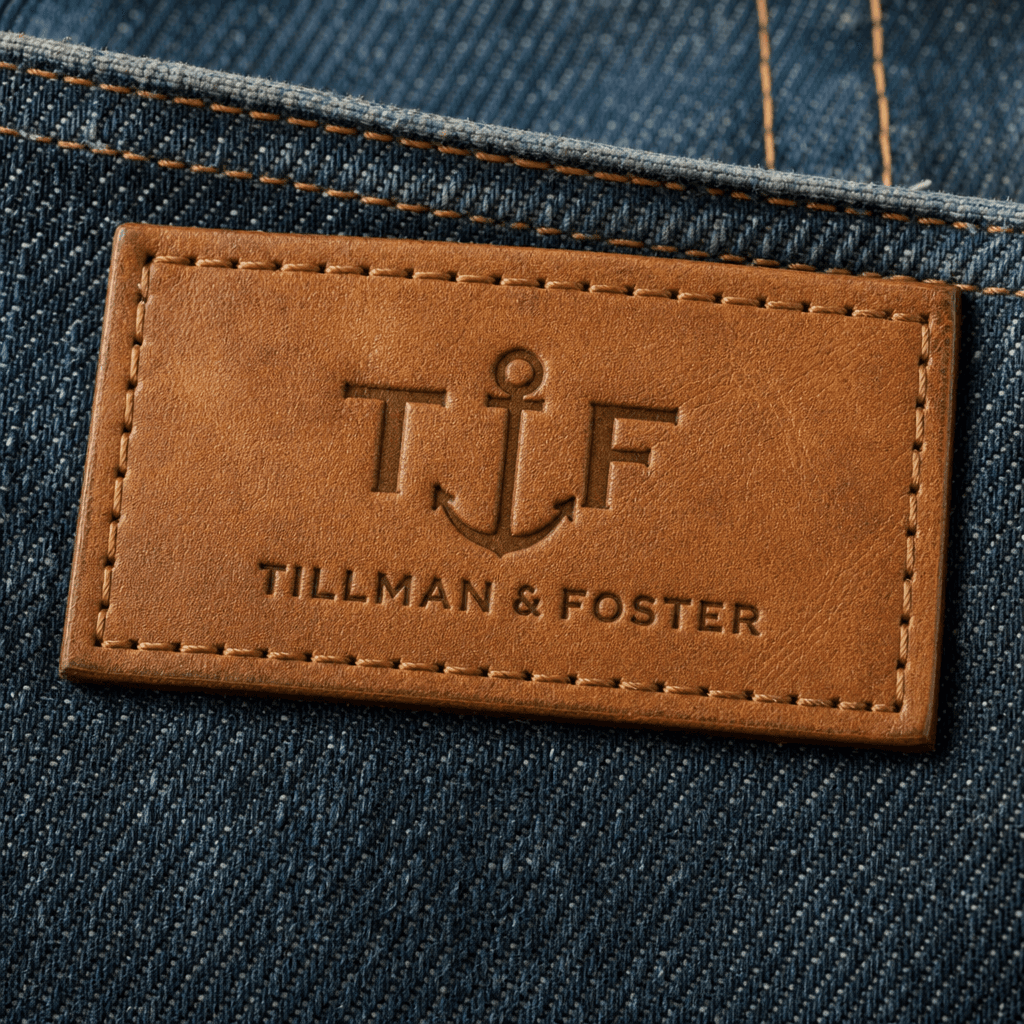
- Leather patch = heritage look on waxed canvas/denim, low setup, viable at 50 pcs
- Under ~100 pcs, avoid per-color screen setup — lean DTF or leather patch
Embroidery
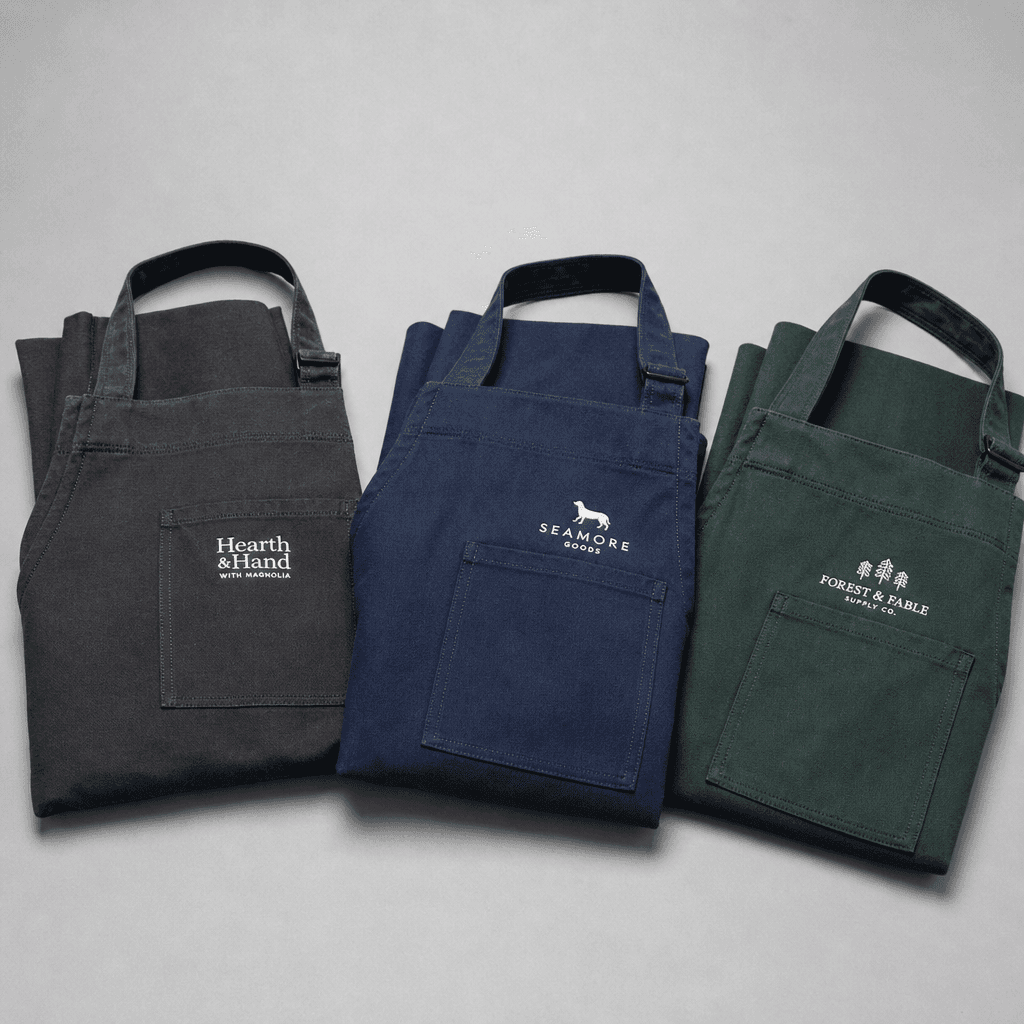
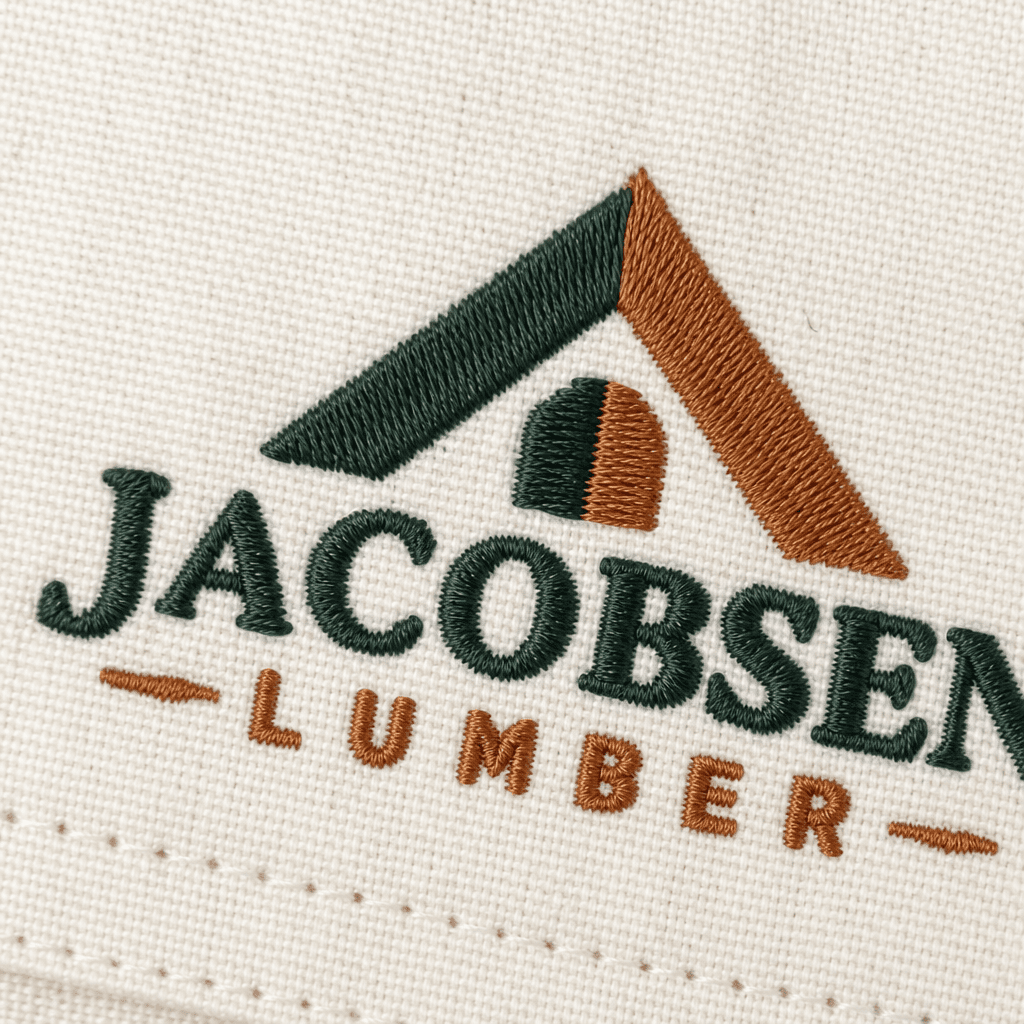
Stitched thread. The premium default for hospitality and workwear: it reads as quality, survives industrial laundering, and looks right on heavy canvas and twill. Cost is driven by stitch count, so it is great for compact logos and expensive for large or highly detailed artwork.
- Best for: logos, crests, monograms on canvas, twill, denim
- Durability: excellent — outlasts the fabric in most cases
- Cost: $0.30-1.20/pc by stitch count; one-time digitizing ~$25-60
- Limits: not for fine detail, gradients, photographic art, or very large coverage
Screen print
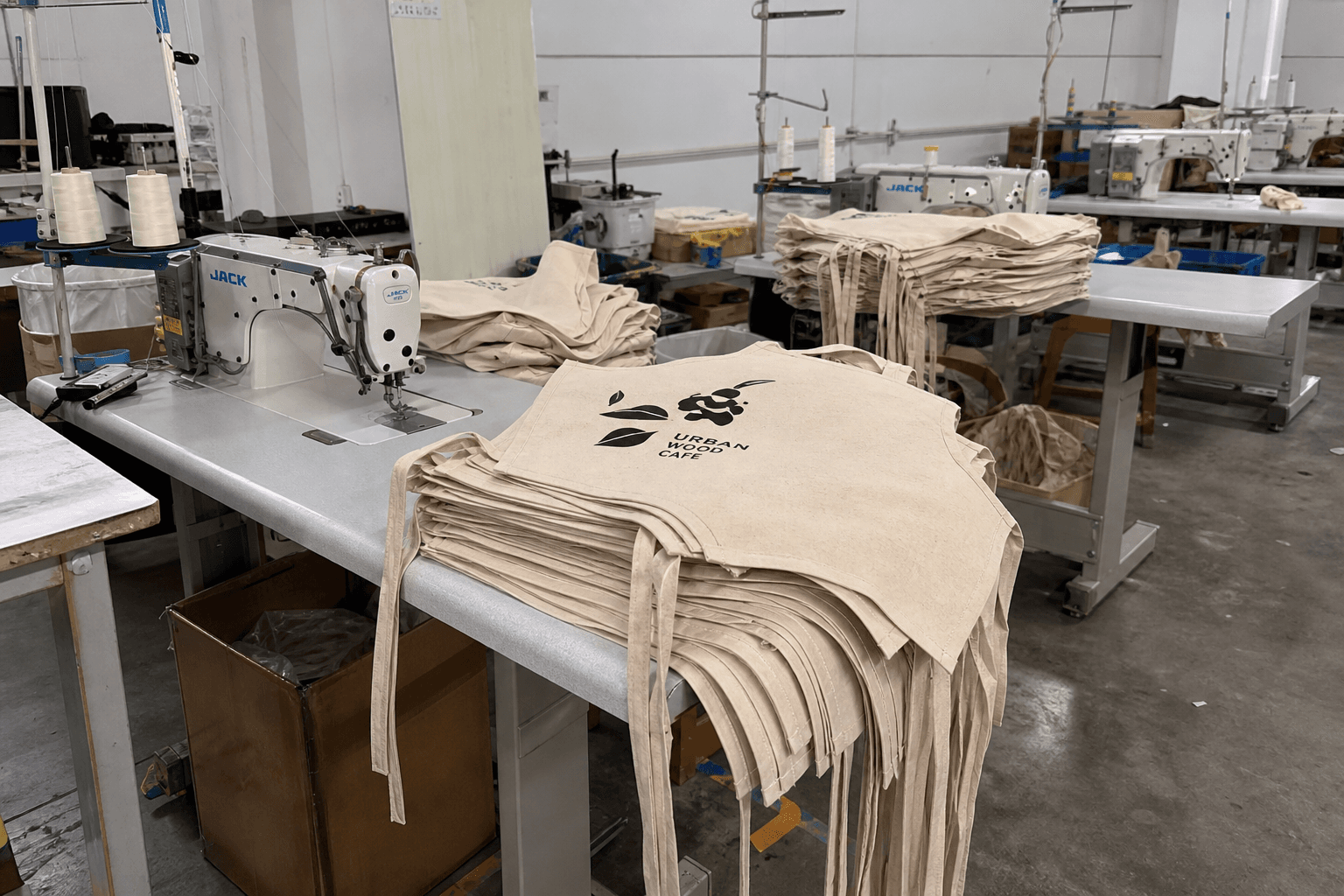
Ink pushed through a stencil, one screen per color. The workhorse for flat, bold, few-color graphics at volume — promotional aprons live here. Water-based ink penetrates the fiber and survives washing far better than thick plastisol on a work apron.
- Best for: bold 1-4 color graphics, large front prints, high volume
- Durability: very good with water-based ink; plastisol can crack on heavy-wash items
- Cost: $0.20-0.80/pc; setup ~$30-80 per color (so it scales badly below ~100 pcs)
- Limits: each color is a screen — full-color or photo art is impractical
DTF / heat transfer
A full-color print bonded to the fabric with heat. The right tool for complex, multi-color or photographic artwork and for small runs where screen setup would dominate the unit cost. Hand feel is a thin film on the surface rather than ink in the fiber.
- Best for: full-color, gradients, photo-real art, small quantities, fast turnaround
- Durability: good on lighter aprons; less suited to the harshest industrial laundry
- Cost: $0.15-0.50/pc; minimal setup, so it wins at low MOQ
- Limits: surface film hand; large solid areas can feel plasticky on heavy canvas
Leather patch
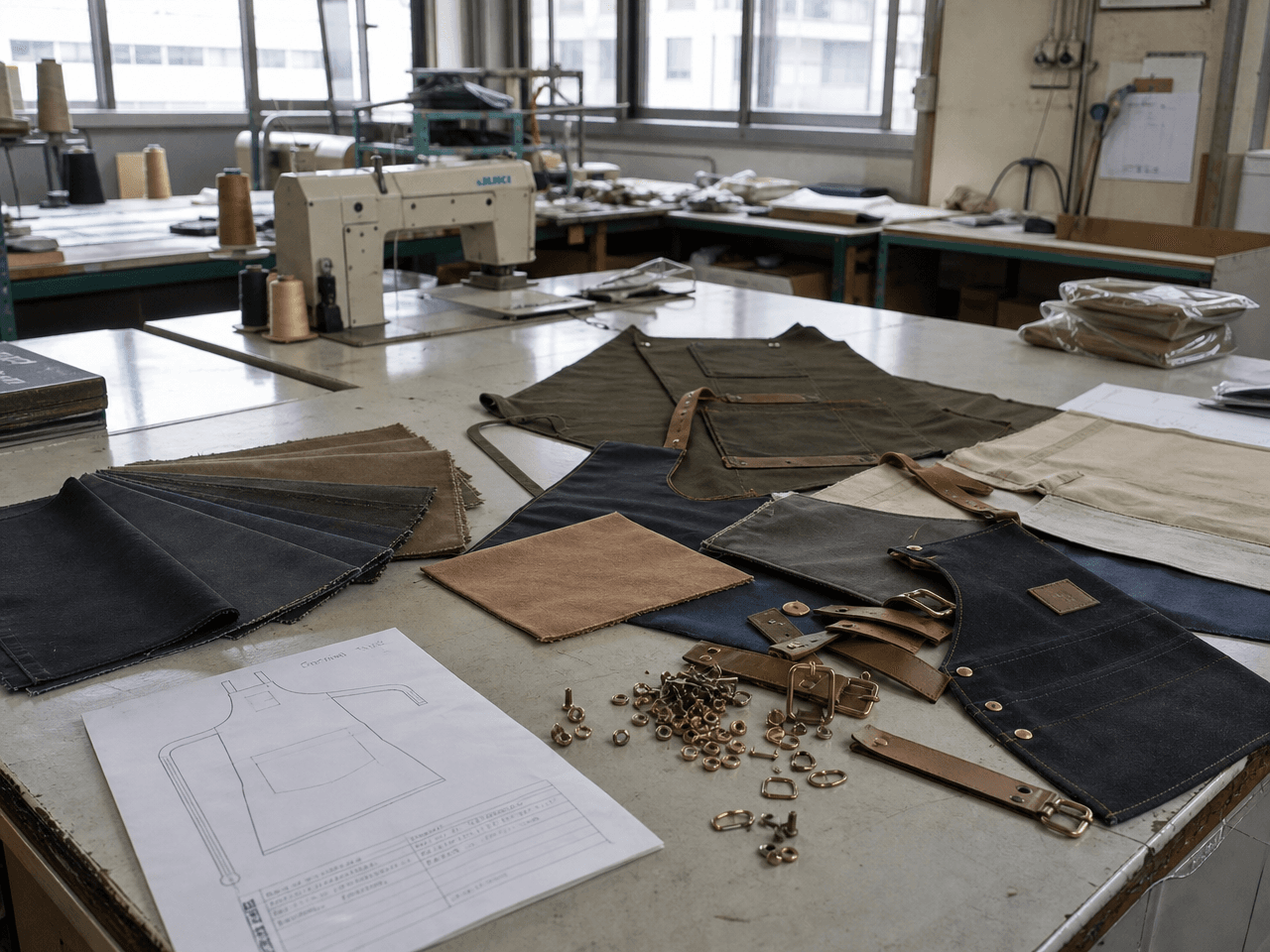
A debossed (or embossed) leather patch stitched on. The signature look for barista, workshop and heritage aprons. Minimal setup makes it viable even at low MOQ, and it pairs beautifully with waxed canvas and denim. Vegetable-tanned leather develops a patina with use.
- Best for: heritage/craft branding on waxed canvas, denim, duck
- Durability: excellent; ages into character rather than wearing out
- Cost: $0.80-2.50/pc by patch size; low setup (~$15-30), works down to 50 pcs
- Limits: not vegan; not for fine logos; adds a premium price position
The decision framework
Run your logo through these questions in order and the method usually picks itself.
- Is the artwork full-color / photographic? → DTF
- Is it a compact logo on canvas/twill and laundered hard? → Embroidery
- Is it a bold few-color graphic at 200+ pcs? → Screen print
- Is it a heritage look on waxed canvas/denim? → Leather patch
- Is your quantity under ~100 pcs? → DTF or leather patch (avoid screen setup cost)
Combining methods
These are not mutually exclusive. A common premium combination is an embroidered chest logo plus a debossed leather care/size patch on the hem, or a screen-printed back graphic plus an embroidered front crest. Each added technique carries its own setup cost, so combine deliberately, not by default.