Barista Apron Wholesale Supplier Batch Lot Coding for United States Buyers
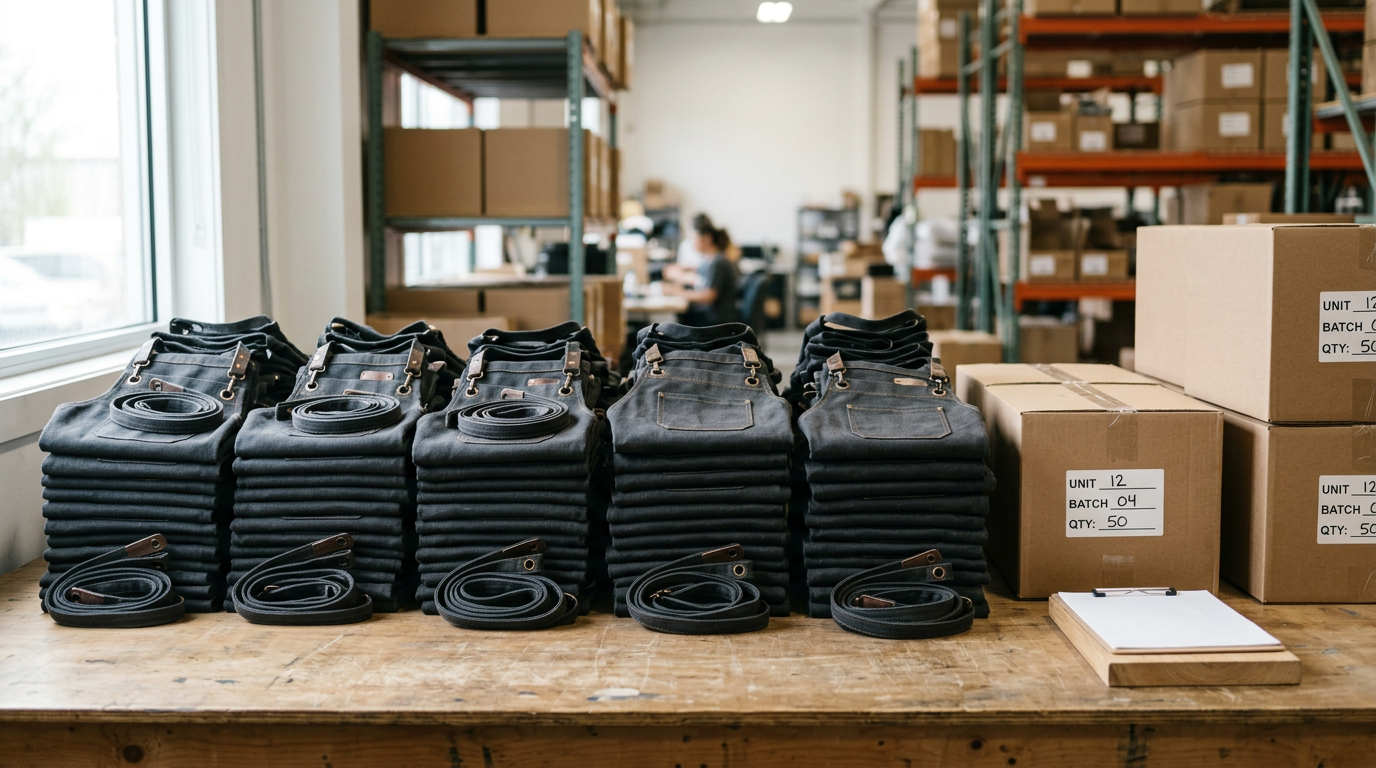
A barista apron wholesale supplier batch lot coding plan helps United States buyers keep a large apron order identifiable from approval through delivery and repeat ordering. When every batch carries a clear lot code, the buyer can link the aprons received to the sample approved, the fabric and construction agreed, the labeling requested, and the packing list supplied with the shipment. That link matters most when an order arrives in more than one carton, when a later order should match an earlier order, or when a question arises after the aprons reach a cafe, roastery, restaurant group, or retail location. For buyers considering Linwa Apron, the useful starting point is not a general description of aprons. It is a written agreement that defines what a lot means, where the code appears, what records travel with each lot, and how a mismatch is handled before acceptance.
Wholesale buyers in the United States often order barista aprons for teams that work across shifts, locations, and seasons. A shared apron style can still vary in small ways that matter in daily use, such as pocket placement, strap length, tie length, stitching, color tone, and fabric hand. Batch lot coding gives the buyer a practical way to ask whether the aprons in one delivery match the aprons approved earlier, and whether a replacement or repeat order can be matched to the same agreed details. The code itself does not improve an apron. The value comes from the process around it: a defined lot, a consistent code format, a readable label, a matching packing record, and a clear acceptance check on arrival.
What Batch Lot Coding Means for Barista Apron Wholesale Supply in the United States
Batch lot coding, in this buying context, means assigning a distinct code to a defined group of barista aprons produced under one agreed set of order details. The buyer and supplier should agree in writing what defines a lot before production begins. A lot may be defined by order number, production run, fabric batch, color run, size mix, or a combination agreed for that order. The definition should be simple enough for a receiving team to use without extra explanation. If the definition changes during production, the buyer should receive a revised definition before shipment, so the receiving record still matches the goods.
The code should be short, readable, and consistent across the order documents. A useful code format separates the order reference, the lot reference, and any size or color reference in a way that staff can read without a separate decoder. The buyer should agree where the code appears on the product label, on the inner packing, on the outer carton, and on the packing list. When the same code appears in each place, the receiving team can check a carton without opening every apron. When codes differ between the carton and the packing list, the buyer has a clear reason to pause acceptance and ask for clarification.
For United States buyers, batch lot coding also supports internal distribution. A cafe group may send aprons to several locations, while a roastery may keep spares at a warehouse and issue aprons as staff join. A lot code lets the buyer record which location received which lot, which lot was issued to a new team, and which lot should be used first when older stock remains. That record helps the buyer answer a practical question later: whether a concern affects one lot, one location, or the whole order. The buyer should decide before ordering how that internal record will be kept, who will update it, and how long it will be retained for repeat ordering and follow-up.
Comparing Barista Apron Wholesale Supply Offers by Lot Control
A wholesale supply comparison should focus on the controls the supplier will apply to the lot, not only on the apron style. Two offers may describe a similar barista apron, yet differ in how a lot is defined, labeled, recorded, and checked. The buyer should compare offers on the same questions, using the same written specification, so the decision reflects process control rather than a difference in description. Ask each supplier to confirm the lot definition, the code format, the label locations, the packing method, and the documents that will arrive with the shipment. Ask also how a split shipment is handled, how a partial delivery is coded, and how a repeat order is linked to an earlier lot.
The table below turns those questions into a buyer decision check. Use it to compare offers side by side and to record the agreed answer for the chosen supplier. Keep the agreed answers with the purchase order, the approved sample record, and the packing list, so the receiving team can check the delivery against the same terms.
| Decision area | Buyer check before ordering | Batch lot coding agreement |
|---|---|---|
| Lot definition | Ask how a lot is defined for this order and what changes would create a new lot | Agree the lot definition in writing and require notice before any change |
| Code format | Ask for a sample code and confirm that staff can read it without extra guidance | Agree the code structure, order reference, and lot reference before production |
| Product labeling | Ask where the code appears on the apron label and whether it remains readable after handling | Agree label wording, placement, and attachment method for every size and color |
| Carton and packing | Ask how cartons are marked and how aprons are grouped inside each carton | Agree carton marking, size and color grouping, and the packing list format |
| Receiving and acceptance | Ask what documents arrive with the shipment and how a mismatch is reported | Agree the acceptance check, the record to keep, and the next step for a mismatch |
| Repeat ordering | Ask how a repeat order is linked to an earlier lot and what must match | Agree whether the repeat uses the same lot definition or a new lot code |
How to Specify Batch Lot Coding in a Barista Apron Order
A clear specification starts with the apron itself. Describe the style, fabric type, color, size range, pocket layout, strap and tie arrangement, stitching, and any trim in plain terms that a receiving team can check by sight and handling. Avoid relying on a trade name or a short style name alone. Add the lot coding requirements as a separate part of the same specification, so the supplier can confirm the product details and the lot controls together. The specification should state the lot definition, the code format, the label locations, the carton marking, and the documents required with delivery.
The buyer should also agree on the approval step. Before bulk production, the supplier can provide a sample that shows the apron, the label, and the lot code format. The buyer should check the sample against the written specification and record the approval with the sample reference, the date of approval, and any change requested. If a change is requested, the buyer should ask for a revised sample or a written confirmation that the change is understood. The approved sample then becomes the reference for the lot, rather than a memory of a conversation or a brief product description.
During production, the buyer should agree on the points where lot information is confirmed. Useful points include confirmation of the lot definition, confirmation of the code format, confirmation of label placement, and confirmation of carton grouping before shipment. The buyer does not need to control the factory floor. The buyer needs a written confirmation at each point that can be checked against the delivery. If the supplier reports a change in fabric, color, size mix, or packing, the buyer should ask whether the change creates a new lot and whether the code and documents will reflect that change.
On arrival, the receiving team should check the outer cartons first, then the packing list, then a sample from each lot. The check should confirm that the lot codes on the cartons match the packing list, that the size and color mix matches the order, that the labels are present and readable, and that the aprons match the approved sample in the agreed visible details. Any mismatch should be recorded with the lot code, the carton reference, and a short description of the difference. That record gives the buyer and supplier a shared basis for the next step, whether that step is clarification, replacement, or a revised delivery record.
Labeling, Records, and Repeat Orders for Barista Apron Wholesale Supply
Labeling is the part of batch lot coding that staff see every day. A label should carry the lot code in a place that is easy to find during receiving and stocking, without interfering with wear or washing in normal cafe use. The buyer should agree whether the code appears on a sewn label, a hang tag, a carton label, or a combination of those. The buyer should also agree what other information appears with the code, such as size, color, order reference, and care information agreed for the order. Keep the label simple. A label that tries to carry too much information becomes harder to read and harder to check.
Records turn a code into a usable buying tool. The buyer should keep a short order record that links the purchase order, the approved sample, the lot codes received, the quantities by size and color, the delivery date, and the locations that received each lot. The supplier should provide a packing list that uses the same lot codes and the same size and color descriptions. When both records use the same terms, the buyer can reconcile the delivery quickly and can answer a later question about a specific lot without searching through unrelated messages. The buyer should decide who keeps the master record and where it is stored, so a repeat order does not depend on one person remembering the earlier details.
Repeat ordering is where batch lot coding shows its practical value. A buyer who wants the same barista apron again should be able to state the earlier lot code, the approved sample reference, and the specification that applied to that lot. The supplier can then confirm whether the repeat order will use the same specification and lot definition, or whether a change requires a new lot code. If a fabric, color, or construction detail has changed, the buyer should ask for a revised sample or a written note that describes the change in plain terms. That step protects the buyer from assuming that a repeat order matches an earlier order when the underlying details have moved. It also helps the buyer plan stock, because a new lot can be issued separately from older stock rather than mixed without a record.
RFQ Checklist
Use this checklist to prepare a request for quotation that keeps batch lot coding at the center of the barista apron wholesale supply decision. Send the same specification and the same lot coding questions to each supplier, and keep the replies with the purchase order.
- Ask the supplier to confirm the lot definition for this order and state what change would create a new lot code.
- Require the supplier to provide a sample lot code and confirm where the code will appear on the product label, inner packing, outer carton, and packing list.
- Specify the barista apron style, fabric type, color, size range, pocket layout, strap and tie arrangement, and stitching in the same written specification as the lot coding requirements.
- Ask the supplier to confirm the approval step for the sample, including the sample reference and the written record of any change requested.
- Require the supplier to state how split shipments, partial deliveries, and repeat orders will be coded and documented.
- Specify the acceptance check on arrival, including carton marking, packing list reconciliation, label readability, and the record to keep for each lot received.
- Ask the supplier to confirm the packing method by size and color within each carton and the format of the packing list that will travel with the shipment.
Discuss Your Requirements
Review our manufacturing capabilities, then share your specifications for a supplier-fit review.