Barista Apron Sourcing: Customization Options for Procurement in Canada
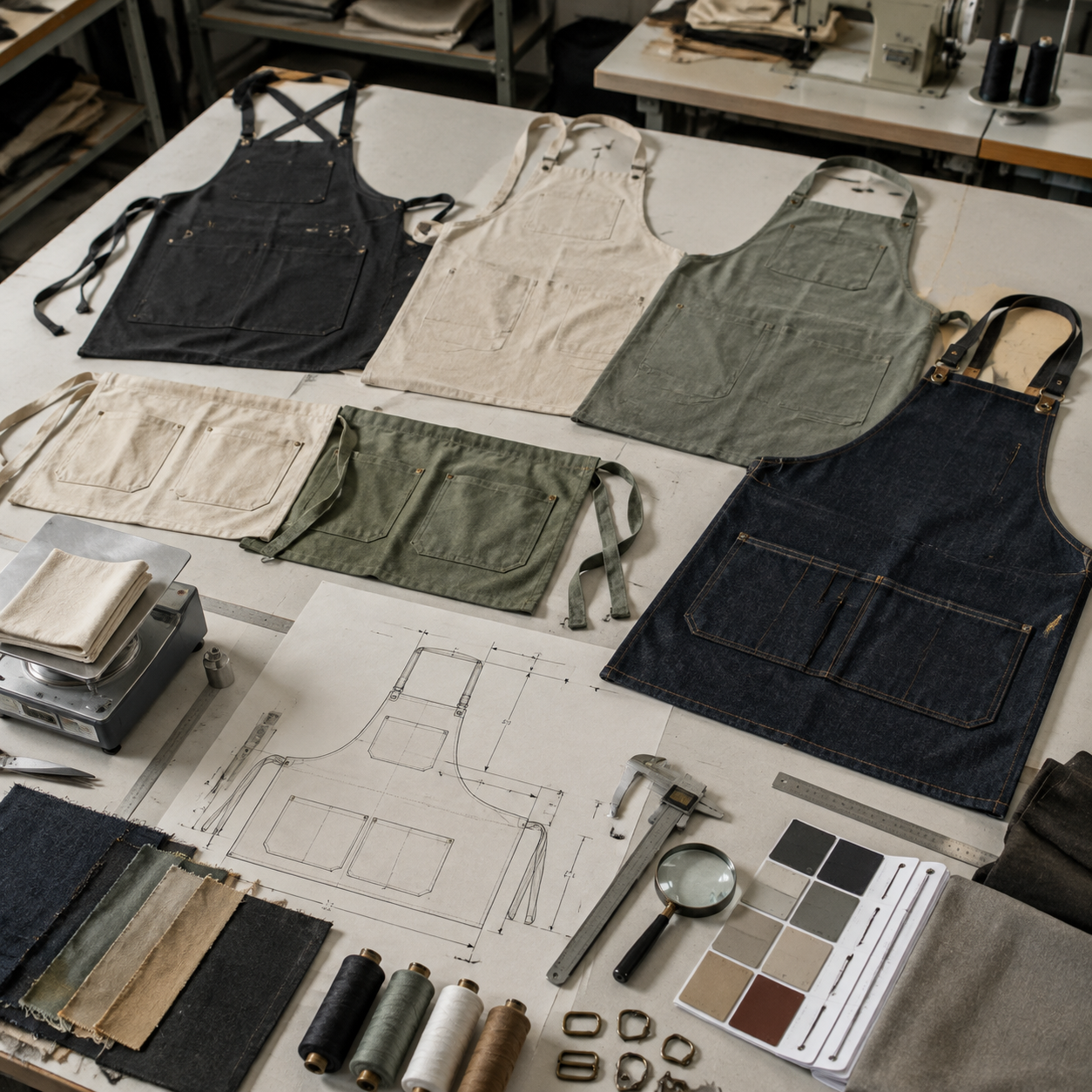
By Vincent Xi, Editorial Author
Author experience note: The approved author profile identifies Vincent Xi as Editorial Author. It does not document first-hand product testing, factory visits, personal use, or sourcing outcomes, so none is claimed here.
For procurement teams in Canada, a useful barista apron sourcing process turns customization options into fields that suppliers can quote, sample, and document consistently. Give every shortlisted supplier the same role brief, material specification, measurement method, pocket map, strap requirements, artwork, quantity, packaging basis, and Canadian delivery destination. Compare written deviations instead of relying on terms such as custom, durable, or premium.
This article treats barista-apron as the requested product family. The options below are RFQ alternatives, not representations of any supplier's current capability. Availability, performance, pricing, documentation, and timing must be confirmed in the supplier's current quote and sample record.
The supplied bulk-apron guide connects job requirements with fabric, cut, decoration, minimum order quantity, proofing, budgeting, and delivery. The supplied restaurant-apron role guide discusses role, pocket, strap, and decoration choices. These sources support a structured RFQ, but they do not establish a Linwa product specification or a Canada-specific commercial commitment.
Compare barista apron customization options for procurement in Canada
| Customization field | Define in every RFQ | Evidence to request | Approval point |
|---|---|---|---|
| Apron format | Bib, waist, or another role-specific cut; required coverage; movement needs | Flat technical drawing, finished measurements in centimetres, measurement method, and tolerances | Physical sample meets the approved role brief |
| Material | Fiber composition, blend percentages, fabric weight in grams per square metre, weave or finish, color reference, and care basis | Current material specification, physical swatch, and scoped support for any performance claim | Sample matches the approved material reference |
| Strap system | Neck or crossback route, construction, width, length, adjustment range, attachment, and hardware | Drawing, hardware description, and complete sample | Adjustment and placement remain acceptable during the buyer's role review |
| Pocket layout | Carry list, pocket arrangement, opening, depth, width, placement, closure, and reinforcement | Dimensioned pocket map and sample | Defined items fit without an unapproved layout change |
| Decoration | Embroidery, print, or no decoration; artwork, method, finished dimensions, placement, and colors | Artwork proof and decorated sample | Appearance and placement match the approved proof |
| Color | Base shade, contrast details, physical reference, and change rule | Swatch or another agreed physical color reference | Approved shade can be identified for the order and reorder record |
| Pattern and reorder control | Item code, approved pattern reference, permitted variations, and revision conditions | Drawing, sample record, artwork file, swatch, and change log | Quote and production release use the same approved revision |
Use identical field names and units across supplier responses. Each quoted variation should point to the same role brief, drawing, material reference, artwork, sample condition, and delivery basis. A product-family label alone does not establish construction, fit, or supplier capability.
Define customization options from the barista role
The bulk-apron guide frames job, fabric, cut, and decoration as connected buying decisions. The restaurant-apron role guide also discusses matching apron choices to a role. Use those source contexts to prepare a buyer-owned role brief before selecting materials or decoration.
Include these fields:
- Station and tasks: Record the actual work assigned to the wearer and the items handled at that station.
- Exposure: Identify the buyer's relevant contact with liquids, food, heat, abrasion, or other operating conditions without assuming a material will provide protection.
- Coverage and movement: Define the required coverage and the reaching, bending, turning, and standing movements to assess on the sample.
- Carry list: Name each item that must be carried and map it to a specified pocket. Remove pockets that do not serve the approved role.
- Care route: State the intended cleaning process, inspection responsibility, replacement trigger, and care information required from the supplier.
- Visual reference: Define base color, contrast details, decoration position, and the physical reference that will control approval and reorders.
Where roles require different coverage, pockets, or decoration, quote them as separate variations. Give each approved variation an internal item code so a reorder is controlled by records rather than a photograph or informal description.
Specify material, fit, pockets, and decoration
Material and surface
The supplied Gallant wholesale-apron guide lists organic cotton, denim, poly-cotton, and linen in a business-apron context. That list identifies possible materials to investigate; it is not comparative test evidence, certification evidence, or confirmation that a particular supplier offers them.
For each proposed material, request:
- Exact fiber composition and blend percentages.
- Fabric weight in grams per square metre, weave, finish, and color reference.
- A physical swatch tied to the quoted variation.
- Care instructions and the stated basis for shrinkage, color behavior, stain resistance, water resistance, or other performance claims.
- The method, result, scope, date, and issuing party for any test claim used in the buying decision.
If a material is described with a certification-related term, require the current supporting document and confirm that its scope covers the quoted material and variation. A material description by itself is not evidence of certification.
Fit, straps, and pockets
Request a flat drawing with finished dimensions in centimetres for the apron body, bib, ties, straps, adjustment range, and every pocket. Define the reference points, whether each measurement is taken flat or worn, and the permitted tolerance. A generic size name should not be the sole fit control.
The restaurant-apron role guide discusses crossback arrangements and role-specific pocket layouts. Treat those as design prompts rather than performance guarantees. Compare the proposed neck, crossback, or adjustable system on the physical sample, and assess every pocket against the approved carry list.
Decoration and color
The bulk-apron guide notes that fabric affects decoration choice, while the restaurant-apron role guide discusses embroidery and print. Neither source provides a durability result, price, or care outcome for the buyer's exact apron variation.
Ask each supplier to state the decoration method, artwork requirements, finished dimensions, placement measured from garment edges, thread or ink colors, backing or finish, proof format, and care basis. Require separate pricing and sample conditions for each method under consideration. Approve the final appearance on a decorated sample and record the controlling artwork file and physical color reference.
Price customization options on a common RFQ basis
The bulk-apron guide treats minimum order quantity, budgeting, proofing, and delivery as bulk-buying variables. Use those topics as quote fields rather than assuming a universal minimum, price, or lead time.
Require the supplier to itemize:
- Quantity and minimum order quantity basis for each approved variation.
- Base garment price and the price effect of each selected customization option.
- Material, pattern, artwork setup, proof, sample, and revision charges.
- Packaging basis, packing quantity, and any customization-related packaging charge.
- Quote currency, validity, payment terms, and exclusions.
- Ship-from point, Canadian destination, delivery term, freight basis, and included or excluded delivery charges.
- Events that start or pause artwork, sampling, production, dispatch, and arrival commitments.
Keep supplier statements separate from buyer-side verification. The supplied sources contain no Canada-specific regulatory evidence, so this article makes no Canadian compliance conclusion. Requirements applicable to the actual goods and destination should be checked against current authoritative information before the order is released.
If the buyer's specification names a standard, distinguish the standard's requirements from the supplier's own operating practice. A supplier statement is also distinct from third-party certification. Require a current document showing the issuer, scope, applicable product or material, and validity before treating certification as established.
Practical RFQ checklist for barista apron customization options in Canada
Use this checklist in the request sent to every shortlisted supplier. Keep answers in the same order so specifications, deviations, evidence, and commercial terms can be compared directly.
- [ ] Identify the apron format, barista role, required coverage, movement needs, and internal item code.
- [ ] Attach a flat technical drawing and state the measurement points, units, measurement method, and permitted tolerances.
- [ ] Specify fiber composition, blend percentages, fabric weight in grams per square metre, weave or finish, color reference, and intended care route.
- [ ] Define the strap route, construction, width, length, adjustment range, attachment method, and hardware.
- [ ] Attach a pocket map showing each opening, depth, width, placement, closure, reinforcement, and intended carried item.
- [ ] Supply the controlling artwork file and define the decoration method, finished dimensions, placement, colors, and proof format.
- [ ] Ask the supplier to list every deviation from the RFQ rather than substituting materials, dimensions, construction, or decoration without written approval.
- [ ] Request a physical material swatch, complete sample, decorated proof, and the conditions and charges associated with each approval stage.
- [ ] State the sample acceptance checks for material, dimensions, workmanship, fit, pocket access, decoration, and any buyer-defined care trial.
- [ ] Request itemized pricing for the base garment, each customization option, setup, sample, revision, packaging, and other quoted charges.
- [ ] Record the order quantity, minimum order quantity basis, quote currency, quote validity, payment terms, and exclusions for each variation.
- [ ] State the ship-from point, Canadian delivery destination, delivery term, freight basis, and which delivery charges are included or excluded.
- [ ] Require separate timing commitments for artwork review, sampling, revisions, production, dispatch, and arrival, including the event that starts each commitment.
- [ ] Request the method, result, scope, date, and issuing party for any test or performance claim used in the purchasing decision.
- [ ] Request current supporting documents for any certification-related claim and verify the issuer, validity, product or material scope, and quoted variation.
- [ ] Define packaging, approved pattern and artwork revisions, reorder references, change-control conditions, and the records required before production release.
A complete response should distinguish confirmed specifications from optional alternatives and unresolved questions. Do not convert a blank field, marketing description, or unsupported claim into an order assumption.
Approve the customized barista apron sample before production
Use the approved drawing, measurement sheet, swatch, artwork proof, and quote as the sample-review record:
- Compare the sample's material, color, finish, and stated fabric weight with the approved reference.
- Measure the apron body, straps, ties, adjustment range, and pockets using the agreed method and record deviations against the quoted tolerances.
- Inspect hems, seams, pocket joins, strap attachments, reinforcement, closures, and hardware, recording defects specifically.
- Check decoration dimensions, placement, edge definition, coverage, and color against the approved proof and physical reference.
- Have buyer-designated wearers assess movement, strap adjustment, coverage, and pocket access in the defined barista role. Record this as buyer feedback, not laboratory evidence.
- If the buyer requires a care trial, define its method and acceptance points before testing and retain the result with the approved sample record.
Set acceptance criteria and responsibility for revisions before authorizing production. The release record should identify the final item code, pattern revision, material reference, measurements, tolerances, artwork, sample, quote, approver, and change conditions.
Use source-reported data only as customization RFQ prompts
The supplied Nanmeiyi hospitality-apron article reports the following data for Jiangxi Nanmeiyi. Each figure is limited to the named company's reported scope and is included only to sharpen supplier questions.
| Reported data point | Scope, date, and source | Appropriate procurement use |
|---|---|---|
Custom hospitality-apron sample turnaround: 7 days | Reported for Jiangxi Nanmeiyi's custom hospitality-apron sample process on a source page presented as dated May 18, 2026: Nanmeiyi hospitality-apron article. | Ask the quoted supplier for the turnaround applicable to the exact barista-apron specification and the event that starts that commitment. |
Existing catalogue-style sample turnaround: 1 to 3 days | Reported for Jiangxi Nanmeiyi's existing catalogue-style sample process on a source page presented as dated May 18, 2026: Nanmeiyi hospitality-apron article. | Ask whether the quoted variation is treated as an existing style or a custom sample and which requested changes alter timing. |
Reported production-line count: 28 fully automatic production lines | Reported for Jiangxi Nanmeiyi's equipment scope on a source page presented as dated May 18, 2026: Nanmeiyi hospitality-apron article. | Ask what production allocation, process, and subcontracting conditions apply to the quoted variation. Do not treat an equipment count as a quality result. |
These source-reported figures are not independent verification, a Linwa capability, a Canadian delivery commitment, or a market benchmark. The shortlisted supplier must state the timing and production conditions for the actual order in writing.
Evidence, method, and limitations
Source contexts
- The Vincent Xi author profile supports the author's name and Editorial Author role only.
- The bulk-apron guide supplies context for job-led selection and for treating fabric, cut, decoration, minimum order quantity, proofing, budgeting, and delivery as procurement variables.
- The restaurant-apron role guide supplies context for role matching, strap arrangements, pocket layouts, and decoration choices.
- The Gallant wholesale-apron guide supplies the cited list of possible apron materials.
- The Nanmeiyi hospitality-apron article supplies only the attributed sample-timing and production-line figures shown above.
Method
Factual statements were retained only where they could be attributed to a supplied URL and kept within that source's stated context. Material, construction, commercial, and approval guidance is framed as buyer requests, comparison fields, or verification steps rather than supplier capabilities. Source-reported numerical data was transcribed with its unit, named-company scope, displayed page date, and source. No average, forecast, or transfer to another company was made.
Limitations and what to verify
The supplied evidence includes no current Linwa technical pack, sample record, test report, certification document, or commercial quote for the barista-apron product family. It therefore does not establish available materials, fabric weight, dimensions, tolerances, minimum order quantity, pricing, sample availability, production timing, or delivery terms for the requested variation.
The third-party buying guides are not independent laboratory comparisons. Verify each material, construction, care, decoration, and performance statement against the current supplier specification, physical sample, scoped test record, or other applicable document. Verify delivery charges, documentation, and order timing for the actual Canadian destination.
A Canadian procurement comparison is ready for approval only when each customization option is tied to a measurable specification, physical or documentary evidence, an itemized price, and a written acceptance point. Any unanswered field should remain an open RFQ question rather than becoming an order assumption.
Discuss Your Requirements
Review our manufacturing capabilities, then share your specifications for a supplier-fit review.