Barista Apron OEM Communication Workflow Review for European Manufacturing Buyers
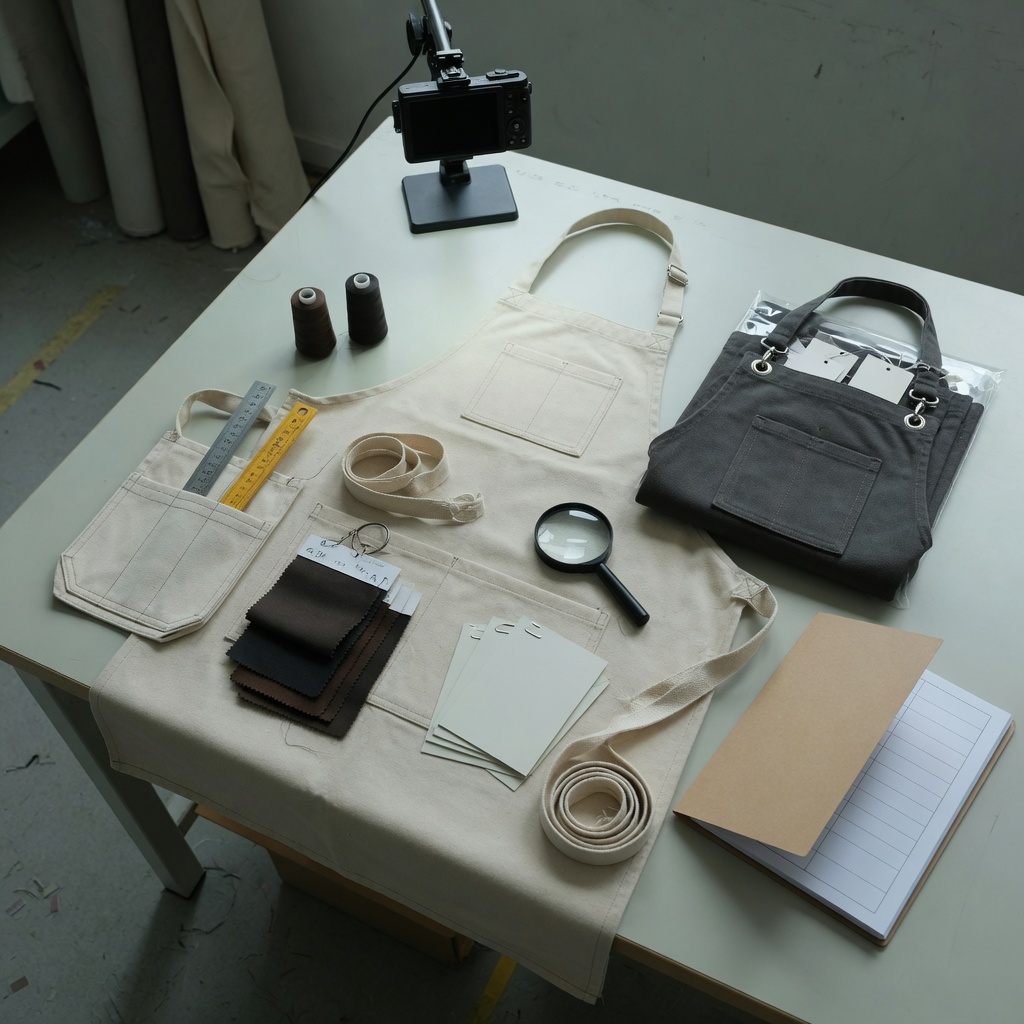
Byline: Vincent Xi, Editorial Author, Linwa Apron. Author URL: https://linwaapron.com/authors/vincent-xi/. This page attributes editorial compilation to that named Person profile only. It does not add factory-visit, tenure, test, award, certification, or named-customer claims.
European café groups, hotel F&B buyers, and multi-site uniform programmes should not release bulk fabric on a barista apron OEM order until the factory’s communication file can be audited. This barista apron OEM communication workflow review is a manufacturing freeze test: it compares how a partner samples, comments, records, and attaches destination documents—not a style catalogue and not a generic country guide.
Freeze the purchase order only when four written conditions exist:
- A named sample type (fit proto or sales sample) approved against a complete tech pack.
- A dated accept/revise/reject comment log with matching photos.
- A sealed sample and a one-page construction sheet sharing one revision ID.
- A destination-country label, chemical, and invoice pack attached to that same ID.
Custom clothing is a chain of micro-decisions on fit, fabric, colour, and trim. One factory-communication article on custom clothing orders states that a 24-hour email delay can cost between $500 and $5,000 in production stoppages, fees, and lost sales (Why Is Fast Factory Communication Essential for Custom Clothing Orders?). That figure is USD; scope is custom clothing orders generally, as presented in the cited excerpt; as-of dating and study method are not stated in the excerpt; it is not a barista-apron audit and not a Linwa measurement; it is not converted to euros. Ask each supplier to price idle-line, recut, and air-freight risk in the contract currency.
Why a communication workflow review belongs in barista apron manufacturing
Barista aprons are worn in wet, hot, high-frequency stations. A missed comment on pocket height or neck-strap hardware shows up as a team-wide fit complaint after garments have already been cut. The cited factory-communication article frames custom clothing as hundreds of micro-decisions and contrasts WeChat-style photo and voice sharing plus email-for-records with email-only delay, stating that combined channels can resolve issues in minutes rather than hours (Why Is Fast Factory Communication Essential for Custom Clothing Orders?). That minutes-versus-hours contrast is the source’s qualitative claim for custom clothing communication, not a timed barista-apron trial. European procurement should keep the split: instant media for diagnosis, email or a shared folder for the auditable file. Do not require one chat brand.
Issue a freeze, hold, or reject on the workflow itself before comparing unit price:
- Freeze bulk only if intake, sample type, comment log, sealed-sample ID, and destination document pack match.
- Hold if photos exist but the revision ID, comment owner, or destination country is missing.
- Reject a bulk cut if the factory starts from a mood photo, treats messenger chat as the spec, or answers labels as OK for Europe without naming the country.
Speed without a revision number produces conflicting samples. Records without photos leave stitch density and colour drift unproven. Photos without a spec freeze allow later construction changes after the buyer thought production had started. That is a double time risk: once in the sample loop, again in recuts. A buyer-ready workflow costs more coordination hours up front and is intended to reduce change orders after fabric is issued.
Do not treat origin, chat app, or English fluency as a substitute for process. A manufacturing-origin reference is not a European sales-market claim and does not replace destination labelling, chemical, and invoice rules. The review question is whether the factory will attach the same SKU, size, and revision ID to every photo, comment, and packing list.
Mapping the OEM sampling, spec-approval, and revision loop
Work the loop as named gates. Incomplete intake is a hidden delay; a factory that cuts a “quick sample” from a mood photo is not yet in a controlled workflow.
Gate 1 — intake completeness. Graded measurements, fabric and finding list, artwork with print method and placement, hardware finish, stitch type, and packing.
Gate 2 — proto sample. Specify whether the first piece is a fit proto (construction only) or a sales sample (fabric, colour, and branding). A 2026 custom-apron editorial describes ordering a sample first to verify fit and print before committing to full team production, including water- and stain-repellent denim styles used in coffee-shop programmes (Best Chef Aprons (2026): Bib, Bistro, Cross-Back & Barista Picks). Copy that sequence as a buyer-side rule for Europe: one approved sample per colourway and size strategy, then a written freeze. That colourway/size freeze is a procurement control, not a measured result from the cited editorial. European multi-site operators should add a wear trial on the bar—steam, milk splash, and towel-tuck—because café layout is designed to cut extra steps (How to Set Up an Efficient Coffee Bar: Barista Workflow & Speed of Service). Pocket layout, strap geometry, hem length, and towel loops belong in the same OEM thread as fabric and print.
Gate 3 — written comments. Photo mark-ups help; they are not the freeze. Require a comment log with date, comment owner, and accept / revise / reject on each point (neck drop, bib height, pocket bag depth, bartack count, strap adjuster, logo size). State units on every measurement comment (cm for garment points; count for bartacks; mm for logo height if that is how the artwork is dimensioned). Voice notes are useful for urgency; transcribe the decision into email the same day so the record survives staff change.
Gate 4 — sealed sample and spec freeze. After approval, both parties hold a reference sample and a one-page construction sheet. Any later change needs a new revision ID and a named person authorised to freeze.
Gate 5 — pre-production (PP) sample or size set if the first bulk run covers more than one size.
Gate 6 — in-line and final inspection with photo evidence against the sealed sample. Do not skip Gate 4 to save a week; the skipped week can return as a recut risk.
Example assumptions to verify in the supplier quote, not measured factory SLAs and not published Linwa capacity figures: two to three sample revision rounds, with each round starting only after a complete comment pack; proto lead time of 10–18 calendar days after a complete tech pack, plus 5–10 calendar days per revision.
Example assumptions to verify in the supplier quote, not tested specs: measurement tolerance of ±0.5 cm on pocket placement and ±1.0 cm on bib height and hem length; visible topstitch at 8–10 stitches per 2.5 cm. Put the agreed tolerance table on the same revision ID as the sealed sample.
Tools, records, and response-time trade-offs
Map tools to jobs. Instant media diagnoses a defect; the freeze pack is what finance, customs, and a second reviewer can open without reading a chat history.
- Instant messenger: stitch close-ups, colour-under-daylight photos, short voice notes on a defect.
- Email or shared drive: tech packs, comments, proforma invoices, test reports, packing lists, and the spec freeze.
- Spreadsheet or PLM row: SKU, revision, size, quantity, fabric lot, inspection result.
Ask for a single file-name pattern on every photo and PDF (SKU, revision, checkpoint, date).
Speed versus audit. Messenger-only threads are fast and hard to hand to finance or customs. Email-only threads are slower. A dual-channel rule—photo in minutes, decision in writing the same business day—captures both. Require colour comments against a named light condition (window daylight and a colour-neutral lightbox). Do not freeze colour from a single unlabelled phone photo.
Time-zone overlap with Europe. Ask for a named contact window in Central European Time or the buyer’s local zone, plus an emergency path for line-stopping defects. Overlap hours are a commercial term, not a quality certificate. Example assumption to verify: photo acknowledgement within 2 clock hours during the agreed window; written commercial replies within 1 business day (buyer’s calendar, stating whether UK bank holidays or a named EU or EEA member-state holiday calendar applies).
Language. English may be enough for the tech pack; care labels and fibre composition must match the destination market’s rules. Do not assume one label file covers the EU, the EEA, and the UK. Put language and label artwork on the same revision tree as the apron body.
File format. Vector logos, pantone or lab-dip references, and measurement tables beat lifestyle photos. If a buyer only has phone photos of an existing apron, say so in the RFQ and budget an extra proto to reverse-measure. Photograph the barista’s dominant-hand pocket while wearing the proto, not only on a flat table.
Quality checkpoints, MOQ, and lead-time assumptions for European orders
Communication fails when QC is oral. Specify checkpoints in the purchase contract so photos and comments attach to the same revision:
- Incoming fabric and findings: mill roll number, colour shade band, width, and claimed mass. Example assumption to verify: cotton or cotton-blend canvas in an apparent 340–410 g/m² class (often described in mill language as 10–12 oz/yd²) for barista bibs—confirm g/m² on the quote; do not treat this range as a tested spec.
- Cutting: marker efficiency and size ratio against the order. A silent size substitution is a communication failure.
- In-line: bartacks at pocket corners, strap joins, and tie ends; topstitch evenness; hardware orientation.
- Branding: print or embroidery size against the artwork on the sealed sample. Print methods need a strike-off or sales sample; the 2026 custom-apron editorial treats print verification as a reason to sample before team production (Helt Studio).
- Final: measurements versus tolerance, appearance versus sealed sample, packing list versus carton marks.
MOQ and lead time are commercial terms, not quality certificates. Example assumptions to verify in the supplier quote: first bulk of 100–300 pieces per colour after freeze; production of 25–45 calendar days after PP approval and fabric in house; sample cost credited only if bulk is placed within a stated window. Example calculation to verify, not a quote: a 200-piece recut at an assumed €12 ex-works unit cost is €2,400 of cut-make-and-fabric waste before freight and VAT. Use the supplier’s actual unit cost and the contract currency (EUR or GBP as specified); do not assume one currency for all of Europe.
Stain- and water-repellent finishes, if requested, need method and care limits in writing. The Helt Studio excerpt refers to custom water- and stain-repellent denim for coffee shops; that is that publisher’s described offering, not a claim about Linwa and not a certification (Helt Studio). Ask for the finish chemistry family, wash-test method, and whether the finish affects REACH-type, UK REACH, or other chemical files for the named destination.
Europe, the EEA, and the UK: documents that must travel with the thread
Keep product and RFQ intent primary. The Europe-specific task is to attach the right file pack to the same communication workflow so goods are not stopped after they are sewn. Do not apply one rule across all of Europe. EU member-state, EEA, and UK obligations diverge on labelling, product safety, chemicals, VAT invoicing, and post-Brexit markings. Confirm the current official text for the destination, not a supplier slogan.
Minimum document list to request inside the OEM thread:
- Fibre composition and care label artwork scoped to the destination (EU member state, EEA state, or UK as applicable), including the language set required for that country.
- Chemical and restricted-substance statements relevant to textiles and metal hardware for that destination; treat REACH-type duties, UK REACH, and any country add-ons as separate checks.
- Product-safety and traceability contacts for the importer of record in that market. If the apron is ordinary café workwear, do not treat protective-clothing files as a substitute for fibre and chemical files. If the buyer specified protective clothing, say so and request current documents; never imply certification without a current document.
- Commercial invoice, origin statement, and Incoterms that match the contract (FOB, CIF, DAP, or DDP change who handles VAT and customs). VAT and import accounting differ across the EU, EEA, and UK; do not assume one invoice rule.
- Test reports if the buyer specified a method (colour fastness, seam strength, nickel on hardware). A report is not a certification of the factory unless the document says so and is current.
A factory that only messages that labels are OK for Europe has failed the communication review. The buyer-ready answer names the destination country, the label language set, and the file revision. Country-specific add-ons (for example additional language or packing rules) belong in the RFQ, not in a later chat. This section is not a legal opinion; see limitations below.
Buyer decision table: compare OEM communication workflows
Every row is a specify / compare / verify item for European barista apron manufacturing. Fill it from the supplier’s written reply, not from a sales call. Use the Buyer-ready signal column as the freeze test.
| Decision criterion | Weak signal (hold or reject bulk) | Buyer-ready signal (freeze only if true) | How to verify before PO |
|---|---|---|---|
| Intake completeness | Starts sample from lifestyle photos only | Written gap list within the agreed window; sample type named (fit proto vs sales sample) | Send a deliberately incomplete pack and record whether missing measurements are flagged |
| Channel split | Messenger-only or email-only | Photos/voice for diagnosis; email/drive for freeze, invoices, and test files (factory-communication article) | Require one sample comment issued in both channels with the same revision ID |
| Response clock | ASAP; no time zone | Photo ack and written decision clocks stated in CET/CEST or the buyer’s zone, holidays named for the UK vs a named EU/EEA state | Time-stamp a test photo and a commercial question |
| Sample-before-bulk | Bulk fabric ordered before fit/print sign-off | Sample first to verify fit and print, then team production (Helt Studio 2026 article) | Contract: no bulk cut before signed freeze |
| Revision control | Comments in scattered chats | Comment log: date, owner, accept/revise/reject, photo evidence, named freezer | Audit the log against the sealed sample |
| Barista-use fit | Flat-table photos only | Worn photos of pocket reach, strap slide, towel loop; movement considered (coffee-bar workflow) | Wear trial on a working bar, then written deltas |
| QC photo protocol | Looks good at final only | Incoming, in-line, final photos vs sealed sample, defects classified | Add photo set as an inspection deliverable |
| Europe destination pack | Europe labels included | Country-named fibre/care, chemical file, importer identity, Incoterms, invoice fields | Compliance review of the actual files, EU vs EEA vs UK separately |
| MOQ and recut risk | MOQ stated, recut cost silent | MOQ, sample credit, recut unit cost, air-freight option in contract currency | Example check: recut qty × quoted unit cost; verify in quote |
| Change after freeze | Silent construction tweaks | Engineering change request with new revision and cost/time impact | Clause: unauthorized change is rejectable |
RFQ checklist for a barista apron manufacturing order
Use this list in the first commercial email. Each item helps specify, compare, verify, approve, or order. Delete nothing silently; mark not applicable with a reason.
- Destination country (name the EU member state, EEA state, or UK), delivery address type (DC, café, or 3PL), and importer of record.
- Incoterms, contract currency (EUR or GBP as specified), and whether quoted prices exclude VAT; do not assume one VAT or currency rule for all of Europe.
- Style (bib, bistro, cross-back, or waist), gender/fit strategy, and size run with quantities.
- Fabric: fibre, claimed mass (g/m², with oz/yd² only if the mill uses it), colour reference, finish (including any water/stain-repellent chemistry), and mill-side test methods to provide.
- Construction: stitch types, bartack positions, pocket count and bag depth in cm, strap hardware, and tolerance table.
- Branding: method, size, colour, placement from defined points, and whether a strike-off is required before PP.
- Tech-pack completeness date; request a written gap list if files are incomplete.
- Sample plan: proto vs sales sample, number of rounds included, sample cost, and whether cost is creditable.
- Communication tools: messenger ID, email address, file-folder path, photo file-name pattern, and who owns the comment log.
- Response clocks: photo acknowledgement and written decision, time zone, and coverage on buyer holidays (UK vs named EU/EEA calendar).
- Revision rule: when a change gets a new ID; named person who may freeze the spec.
- PP sample / size set rule before bulk cut.
- In-line and final inspection: AQL or other method if the buyer requires one, plus mandatory photo set versus sealed sample.
- Packing: individual poly or band, carton size, mixed-size rules, carton marks in the destination language set.
- Label and chemical file pack scoped to the named destination, with document dates; state café workwear vs specified protective clothing; no implication of certification without a current document.
- MOQ per colour, surcharge below MOQ, and lead time from freeze and from fabric-in-house (calendar days).
- Recut and delay commercial terms, including who pays air freight if the factory misses a written date.
- Wear-trial feedback format: photo plus measurement delta, aligned to barista station tasks.
- Spare hardware and extra labels quantity for European multi-site replacements.
- Named commercial and technical contacts, with backup, valid through the inspection date.
Approve bulk only when items 7–15 are complete in writing. Hold if any destination-country file is generic to Europe. Order with the sealed sample ID on the PO line.
How this review was compiled and what to verify
Source contexts. First, a custom-clothing factory-communication article arguing that delayed email on fit, fabric, colour, and trim can stop production, quoting a $500–$5,000 cost band for a 24-hour delay and describing WeChat photos/voice plus email records that resolve issues in minutes rather than hours (https://shanghaigarment.com/why-is-fast-factory-communication-essential-for-custom-clothing-orders/). Second, a 2026 custom-apron editorial that describes sampling to verify fit and print before full team production and discusses water- and stain-repellent denim barista-relevant styles (https://www.heltstudio.com/blogs/news/best-chef-aprons-2026-bib-bistro-cross-back-barista-picks). Third, a coffee-bar operations resource on movement, short floor phrases, and placing tools by frequency of use, used here only to justify why pocket and strap comments belong in the OEM thread (https://onlinebaristatraining.com/resources/how-to-set-up-an-efficient-coffee-bar-barista-workflow-speed-of-service/). Author attribution follows the Linwa Apron editorial author profile for Vincent Xi, Editorial Author (https://linwaapron.com/authors/vincent-xi/).
Evidence points used in this page. (1) $500–$5,000 USD attributed by the factory-communication article to a 24-hour email delay; scope: custom clothing orders generally; as-of dating and method not stated in the supplied excerpt; not converted to euros. (2) Combined photo/voice plus email channels described by the same source as resolving issues in minutes rather than hours; qualitative, undated in the excerpt. (3) Sample-before-bulk-team-production sequence described in the 2026 Helt Studio editorial, including print verification and water- and stain-repellent denim coffee-shop styles as that publisher’s account. Example calculation to verify in the supplier quote, not a source measurement: 200 pieces × €12 ex-works = €2,400 cut-make-and-fabric waste before freight and VAT.
Methodology. Claims with exact figures are limited to those excerpts and labelled with unit, scope, and source. OEM commercial numbers (sample days, MOQ, unit cost, recut waste, g/m² class, stitch density, measurement tolerances, response clocks) are explicit example assumptions for RFQ comparison. Research-source evidence supports editorial process claims only; it is not used as keyword-demand evidence. No Linwa factory SLA, certification, test result, or customer name is added beyond the public author URL. Editorial structure is a freeze / hold / reject communication workflow review for barista-apron manufacturing orders into Europe, not a generic country guide.
Limitations / what to verify. The $500–$5,000 band is the cited article’s claim for custom clothing, with no independent study date or method in the supplied excerpt and no euro conversion. Minutes rather than hours is that article’s qualitative contrast, not a timed Linwa trial. Helt Studio’s sample-first process and named coffee-shop examples are that publisher’s account of its own programme, not Linwa case studies. Café workflow guidance is operational, not a garment test protocol. Example g/m² and oz/yd² ranges are planning conversions to verify against mill tickets, not laboratory results. European chemical, labelling, safety, VAT, and marking rules change and split across the EU, EEA, and UK; this page does not consolidate official texts and is not legal advice. Verify against current official publications and qualified counsel for the named destination country. Confirm every lead time, MOQ, response clock, test report, and cost in the live supplier quote before approving bulk manufacturing.
Discuss Your Requirements
Review our manufacturing capabilities, then share your specifications for a supplier-fit review.